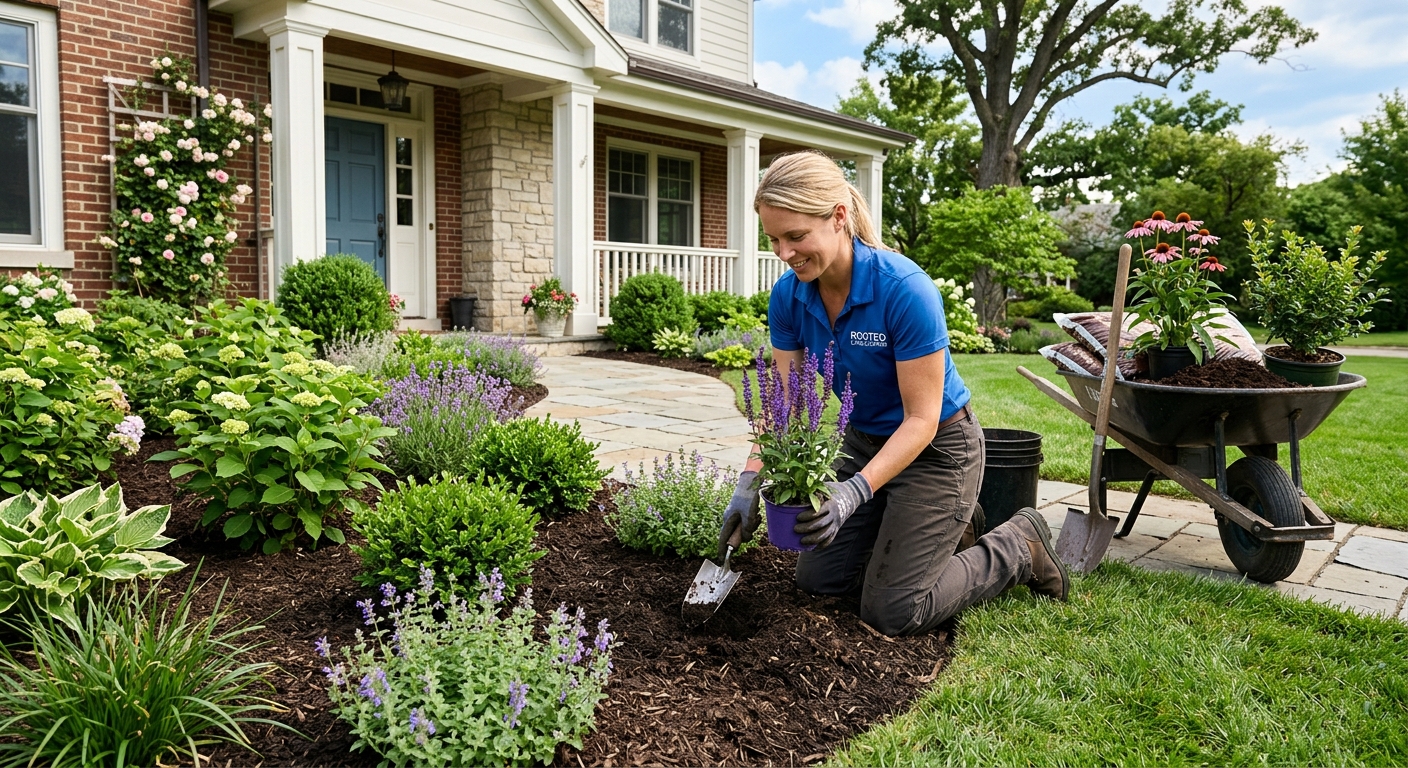
Landscaping options and costs in Red Lake
Red Lake homeowners usually have plenty of yard space to work with—especially since 81.5% of dwellings are single-detached homes—and most households are investing in long-term improvements because 75.1% of households own their home (Statistics Canada, 2021 Census). That combination helps explain why landscape upgrades are common around town, from curb appeal to practical drainage fixes near foundations.
In Northwest Ontario, landscaping costs are shaped by a shorter working season and freeze-thaw cycles that stress both plants and hardscape. Contractor availability can also tighten around spring startup and fall wrap-up, because earlier frost compresses install windows. Plan for heavier base preparation when building patios or retaining walls, and expect more labour for excavation, material hauling, and compaction in northern conditions.
In Red Lake, trade demand tends to run highest in well-established residential areas such as the Red Lake townsite core, where driveways, walkways, and front-yard drainage are frequently updated during property refreshes. Most projects start by matching plant selection to local hardiness conditions and then sizing the base and drainage system correctly—because “looks good at first” isn’t the same as “holds up through winter.”
Below is a practical comparison of common landscaping options and typical price bands you’ll see in Red Lake quotes, before we break down what drives differences between bids.
| Service |
Description |
Season |
Price Range |
| Full landscape design and installation |
Site visit, concept plan, plant/hardscape layout, grading guidance, supply & installation of selected features |
Late spring to early fall (weather-dependent) |
$5,000–$18,000 |
| Sod installation (supply, grade, lay, roll) |
Base prep, soil amendments as needed, sod placement, rolling, initial watering plan |
Late spring to early fall (before freeze) |
$1,500–$6,000 |
| Lawn seeding (grade, seed, starter fertilizer) |
Light grading/tilling, seed blend, starter fertilizer, first mow guidance |
Spring (and limited early fall) |
$1,000–$4,200 |
| Interlocking patio or walkway |
Excavation, compacted base, edge restraints, interlocking stone pavers, joint sand |
Late spring to early fall |
$4,000–$16,000 |
| Retaining wall (interlocking block) |
Footing/base prep, block system, drainage fabric & backfill, cap as applicable |
Late spring to early fall |
$4,000–$20,000 |
| Tree and shrub planting |
Soil preparation, planting, watering plan, staking as required, mulch rings |
Spring to early fall (before hard frosts) |
$800–$4,500 |
Prices are estimates only and vary by project scope, site access and material selection.
What affects the price of landscaping in Red Lake
For the same general landscaping idea, quotes in Red Lake can differ by 30–50% across Northwest and even within Ontario because you’re paying for three things: how much base and drainage work is required, how much material handling is involved, and how well the plan matches our climate reality (freeze depth, soil conditions, and short install windows). In northern communities, contractors often have higher mobilization and more time spent moving and staging materials before any “visible” work begins.
The plant hardiness zone and frost dates directly determine both plant survival and the working season in Northwestern Ontario. Work that touches the ground must be done before freeze complicates excavation or compaction, and retaining wall base depth typically needs to reach below the frost line to reduce heave. Prairie-like cold conditions also favour hardy, wind-tolerant species rather than lush, fast-growing ornamentals that struggle through winter. By contrast, coastal BC (Zone 7–8) typically allows a longer growing season and broader planting palettes, but demands strong drainage design for heavy rainfall. In dry BC interior and parts of Alberta, irrigation design and water constraints shape costs; in southern Ontario (Zone 5–6), the season is more forgiving, and irrigation is often needed mainly during summer dry spells.
In Red Lake specifically, two concrete cost drivers show up often. First, yards with poor grading or downspout runoff can require drainage beds or French drains before sod ever looks good—pushing costs toward the higher end of the $4,000–$20,000 hardscaping band when hardscape must be reworked later. Second, the age of many homes (67.7% built before 1981, Statistics Canada, 2021 Census) means more variability in soil, drainage patterns, and existing foundation interfaces, which can add excavation and soil amendments. That’s why a basic planting project can stay near the $800–$4,500 range, but a “simple” wall on a difficult slope can quickly move higher after excavation and proper backfill are accounted for.
| Price Factor |
Why It Matters |
Cost Impact |
| Yard size in sq ft — the primary cost driver for softscape |
More area means more base prep, soil, seed or sod, and more labour for grading and finishing |
Low to moderate increases for softscapes; doubles quickly on complex lawns |
| Grading and drainage work — slope corrections add significant cost |
Fixing pooling near foundations often requires regrading and sometimes re-laying edges |
Can move a project into a higher band when hardscape is involved |
| Drainage bed or French drain installation |
Cold-climate freeze-thaw makes effective sub-surface drainage critical |
Frequently adds substantial material and excavation time |
| Plant material tier — native shrubs vs. ornamental vs. mature specimen trees |
Specimen trees cost more to source and install; hardy natives are usually better value and reliability |
Small layouts stay near the lower band; larger tiers climb quickly |
| Hardscape vs. softscape ratio — walls and patios cost more per sq ft than lawn |
Pavers/blocks require excavation, base, restraints, and compaction quality control |
Shifts pricing toward the retaining walls & hardscaping range |
| Irrigation system design and installation |
Shorter growing windows still benefit from efficient watering; design complexity drives cost |
Can add moderate to high costs depending on zones and controller |
| Soil amendment and topsoil required |
Heavier amendments and imported topsoil may be needed for new beds or lawns |
Can noticeably raise costs if existing soil is poor or uneven |
| Tree removal or stump grinding before new planting |
Extra equipment time and disposal impacts the schedule and labour budget |
Often the difference between a mid-range and high-range quote |
Permits & regulations in Ontario
In Ontario, most landscaping activities you’d do as a homeowner—planting beds, sodding, lawn seeding, and typical softscape work—usually do not require a permit. However, retaining walls can be different. In many Ontario municipalities, a building permit is commonly required when retaining walls exceed a height threshold (often 1.0 m, or 3.3 ft), especially when the wall creates a meaningful change in grade or slope stability concerns. If your plan includes significant regrading, drainage redirection toward storm infrastructure, or changes that could affect how water runs across the lot, you may need municipal approval or confirmation to ensure drainage is handled properly.
Concrete next steps for a Red Lake homeowner:
- Permits commonly NOT required: sod and seed installation, mulch and shrub planting, most small bed edging, and typical walkway/patio installation where drainage and grading remain within standard site practices.
- Permits commonly required (confirm locally): retaining walls above the local height threshold and any wall designs that suggest engineering due to load or height.
- Always trigger utility locates: before digging planting holes or wall footings, call to have buried services marked.
- Confirm water rules: check irrigation and water-use bylaws (especially if you’re installing a system or watering during drought concerns in other parts of Ontario).
To verify a contractor in Ontario, ask for: (1) their Ontario licence/registration details (if applicable to the trade they’re working as), (2) a certificate of liability insurance showing sufficient coverage, and (3) proof of WSIB/WCB coverage (or a clearance letter where required). Then check the certificate dates and ensure the named insured matches the contractor you’re hiring. Don’t rely on “we’re covered” without paperwork—get it in writing before the first scoop of dirt moves.
Planning a landscape that thrives in Red Lake's climate
In Red Lake, the best landscaping plans start by working with the cold, the wind, and the short window between spring thaw and early freeze. Your goal is to select plants that match our hardiness conditions and to build the groundworks so freeze-thaw doesn’t heave pavers, lift sod, or push water toward foundations.
1) Plant selection: choose zone-appropriate, hardy species (native where possible) that don’t require constant winter protection. Wind exposure and moisture swings are common stresses—so plan for mulch rings, proper spacing, and watering that finishes before hard freezes.
2) Sod vs. seed: sod gives instant coverage and can be a lifesaver for curb appearance, but it often costs about 3–4x per sq ft compared with seeding, and sod must be installed early enough to root. For many Red Lake yards, seeding with correct grading and starter fertilizer is a more economical route if timing is tight.
3) Drainage and grading: pooling after melt or rain can ruin lawns and accelerate foundation moisture. Northwest conditions make sub-surface drainage and proper slopes a must, not an afterthought.
4) Hardscape base prep: patios and retaining walls need a properly compacted base and drainage backfill; if base thickness and compaction are rushed, frost action can move stone.
5) Low-maintenance design: groundcovers, mulch, and perennials reduce annual upkeep while maintaining year-round structure. Xeriscape-style ideas (where appropriate) can include hardy shrubs plus mulch-heavy borders; true “zero irrigation” planting often depends on establishment, but efficient drip irrigation can help you water smarter during the growing window.
For example, if your yard needs both drainage correction and new turf, spending toward the upper sod range—think $1,500–$6,000—can be justified when you want quick coverage and your base prep is already solid. If the grade is the main issue, it’s usually better to put the budget into drainage first, then seed or sod once the yard can hold moisture correctly rather than paying to replace lifted turf.
| Element |
Climate Consideration |
Maintenance Level |
Price Band |
| Sod lawn installation |
Needs installation early enough to root before freeze; winter heave risk if drainage/base is off |
Moderate during establishment (watering schedule + first mow) |
$1,500–$6,000 |
| Native perennial garden |
Hardy plants survive winter stress with less replacement; mulching helps stabilize soil |
Low to moderate (spring clean-up, occasional dividing) |
$800–$4,500 |
| Mulched shrub border |
Mulch buffers freeze-thaw and wind desiccation; choose cold-tolerant shrubs |
Low (weed suppression + topping mulch) |
$1,000–$5,000 |
| Interlocking stone patio |
Requires compacted base that resists frost movement; edge restraints prevent spreading |
Low (occasional joint sand top-up) |
$4,000–$16,000 |
| Retaining wall (block) |
Proper footing below frost impacts stability; drainage fabric/backfill prevents blowouts |
Low (periodic inspection of settling + drainage) |
$4,000–$20,000 |
| Drip irrigation system |
Efficient watering within a shorter growing season; helps reduce freeze-stress by managing moisture cycles |
Moderate (seasonal winterization + monitoring) |
$900–$3,500 |
How to choose a landscaping contractor in Red Lake
Choosing the right contractor in Red Lake comes down to verification, clarity, and workmanship. First, confirm Ontario coverage items before you sign. Ask for a certificate of liability insurance (and make sure it’s current), plus proof of WSIB/WCB coverage or an appropriate clearance letter where applicable. Then verify the contractor’s Ontario licence/registration details where relevant to the scope—don’t accept verbal assurance. If they’re doing work that touches excavation or hardscape components, they should be comfortable providing documentation on request.
Second, get 2–3 itemised written quotes that split labour and materials. You want line items like excavation, base material, paver/block quantities, soil amendments, drainage materials, disposal, and installation of the irrigation controller if included. A lump-sum quote that doesn’t explain what’s included often hides cost drivers—especially when drainage issues are discovered during digging.
Third, read the scope carefully: what is excluded? Is disposal of removed sod/topsoil included? Are utility locates included (or is it your responsibility)? Is a permit pull included if required for a retaining wall above the local threshold? Confirm warranty terms—workmanship warranty length, how long product warranties last, and whether the warranty is transferable if you sell your home.
Finally, payment schedule matters. Never pay more than about 10–15% upfront; keep a holdback until the job is complete and walk the site together. Get a start date and an estimated completion window in writing because weather and freeze risk can shift schedules mid-season.
- Request insurance certificate and verify dates.
- Confirm WSIB/WCB coverage or clearance letter.
- Ask for proof of Ontario licence/registration relevant to their trade scope.
- Get 2–3 itemised quotes (labour + materials), not one lump sum.
- Ensure drainage scope is explicit (French drain, drainage bed, outlets, filter fabric).
- Confirm disposal/trucking of removed materials is included.
- Ask whether utility locates are handled before digging.
- Check whether retaining wall permit steps are included (if your wall exceeds the local threshold).
- Verify base thickness/compaction approach for patios and walls.
- Review plant list by common and Latin names with quantities.
- Ask about warranty: workmanship term, product warranty term, and transferability.
- Agree on payment schedule with a holdback until punch-list items are done.
Red flags to watch for in Red Lake: contractors who refuse to provide insurance/WSIB documentation, quotes that omit drainage details while still promising “no pooling,” vague scope language like “materials included” without quantities, pushing for large upfront payments, and starting excavation without confirming utility locates. If you see any of these, pause and request revisions before signing.
Frequently asked questions — landscaping in Red Lake
Sod vs seed — which is better for a Red Lake lawn?
Sod is usually the better choice when you need fast results and a clean, uniform look right away—common for front-yard curb appeal in Red Lake’s townsite core. The trade-off is cost: sod typically lands in the $1,500–$6,000 range depending on area and prep, and it must be installed early enough to root before early freeze. Seeding is often the better value when timing is tight or when your yard needs grading and soil improvement first. In practical terms, if water pools or the grade is off, both sod and seed can fail—so the “better” option is really the one paired with correct drainage and prep. Ask your contractor to outline the grade plan and whether starter fertilizer, topsoil amendments, and first-mow guidance are included.
How much does a retaining wall cost in Red Lake?
In Red Lake, retaining walls priced by block systems typically fall within the $4,000–$20,000 band depending on height, length, and how much excavation and drainage are required. The big cost swings usually come from slope changes, footing/base depth needed for freeze stability, and whether a proper drainage fabric/backfill system is included to relieve hydrostatic pressure. If the job also requires re-grading or ties into a patio, you can see costs climb toward the higher end. For older homes common in the area (many built before 1981), expect some variability in how drainage has been managed historically, which can increase labour for excavation and soil conditioning. Get an itemised quote so you can see footing prep and drainage materials listed clearly.
When is the best time to landscape in Red Lake?
The best window in Red Lake is late spring through early fall, timed around ground conditions and freeze risk. Sodding and hardscape work need frozen-free soil so excavation can be completed and base material can be compacted properly. Seeding can be done in spring and sometimes limited early fall, but the seedlings still need time to establish before hard freeze. Planting trees and shrubs typically goes best when the soil is workable—spring into early fall—so roots can establish before winter wind and temperature swings. Even if a crew says “we can do it anytime,” ask for the planned start date and completion estimate in writing, because weather can shift the install sequence quickly in Northwest Ontario. If you’re planning a retaining wall, earlier summer scheduling also helps avoid delays that create re-freeze compaction issues.
Do I need a permit for a retaining wall in Ontario?
Often, yes—retaining walls can require a permit in Ontario depending on local thresholds and site conditions. Many municipalities commonly require a permit when a wall is above about 1.0 m (3.3 ft), and more complex situations (higher walls, complex grade changes, or stability concerns) may trigger additional steps. For homeowners, the practical approach in Red Lake is to ask your contractor to confirm whether your proposed wall exceeds the local threshold and whether engineered drawings are required. Also note that changes to grading that affect drainage toward neighbouring properties or storm sewer connections may require approval. Before any digging, ensure utility locates are completed for wall footings and planting holes. Always verify the permit responsibility in the contract: ask whether the permit pull is included or on you to arrange.
How do I improve drainage in my yard?
Improving drainage usually starts with correcting grading and directing water away from the foundation, then adding sub-surface solutions when pooling persists. In Red Lake, freeze-thaw makes it especially important to avoid “surface-only” fixes—if water stays trapped under turf or beds, winter movement can lift sod and damage hardscape. Contractors often propose a drainage bed or French drain installation with filter fabric and proper backfill, then tie it into an appropriate outlet route. If downspouts discharge near low spots, re-routing can sometimes lower the problem enough that you don’t need extensive excavation. Ask for an itemised drainage scope: what drains, where outlets go, and how the contractor ensures the system is built to work through winter. If you’re also installing patios or a wall, drainage must be planned before base work begins.
What is xeriscaping and does it suit Red Lake?
Xeriscaping is a landscaping approach designed to reduce water use by selecting drought-tolerant plants, using mulch, and grouping plants by water needs. In Red Lake and Northwest Ontario, it can suit portions of a yard—especially shrub borders and perennial beds—because hardy plant choices and mulch reduce stress between watering windows. That said, Red Lake’s challenge isn’t only summer dryness; it’s also freeze-thaw and short establishment periods. So “xeriscape” here usually means efficient design rather than zero water: you may still use drip irrigation during establishment or early summer. If you’re comparing options, remember sod often costs in the $1,500–$6,000 range, while a mulched, native-leaning border can be far less intensive to maintain after installation. A well-planned xeriscape-style border can absolutely work, as long as drainage and soil quality are handled properly.