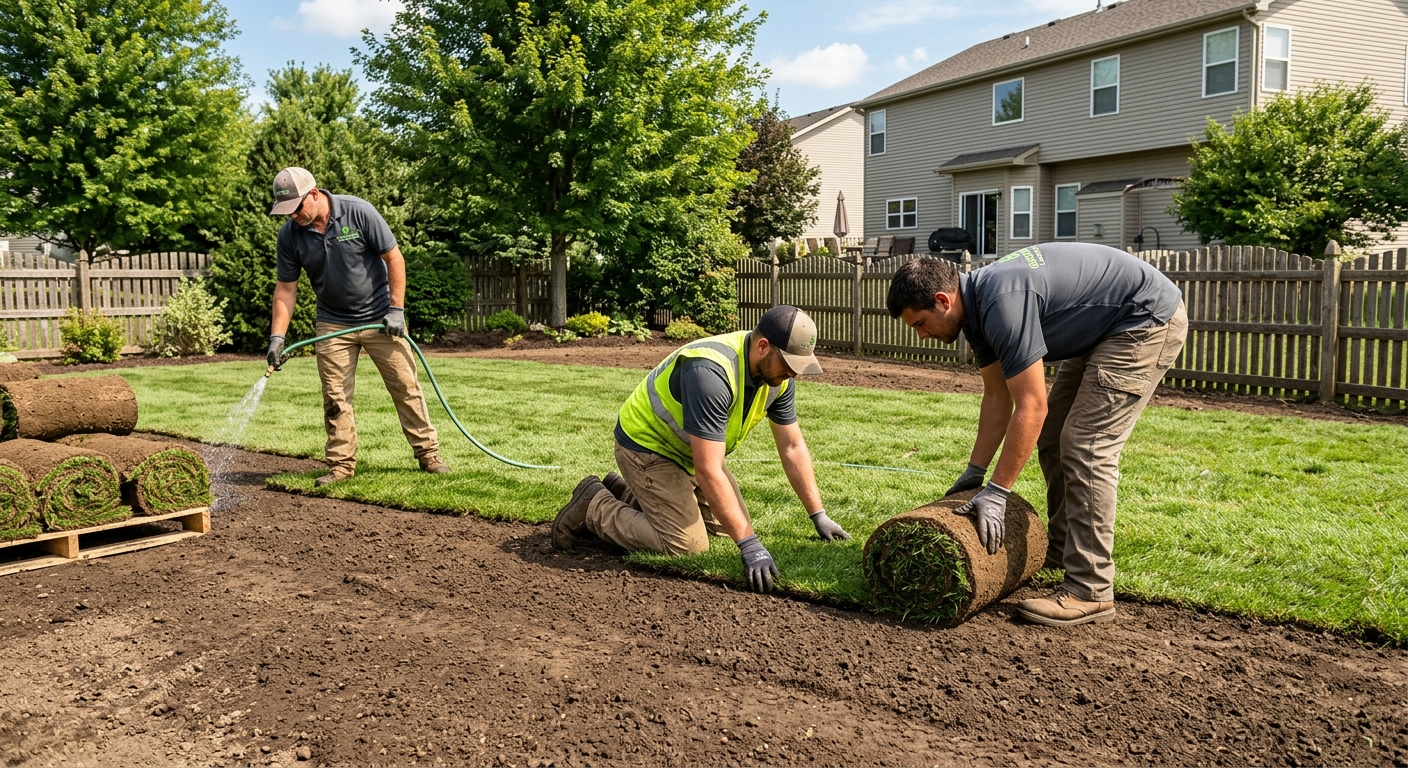
Landscaping options and costs in Terrace Bay
Terrace Bay homeowners typically have a lot to work with—most properties here are single-detached homes, and 86.6% of the dwellings are exactly that kind of housing (Statistics Canada, 2021 Census). With a homeowner-strong mix of 77.6% of households owning, it’s common to see residents invest in curb appeal, better drainage, and low-maintenance planting rather than quick seasonal changes. In a town of 1,528 people (Statistics Canada, 2021 Census), contractors can still get the job done, but material delivery and crew scheduling often factor in extra travel and shorter site work windows.
In Ontario’s Northwest, cost is shaped by the cold-hardy plant palette and by an earlier freeze that compresses spring startup and fall wrap-up. Frost-heave risk also affects excavation depth, base compaction, and drainage design—especially for patios, walkways, and retaining walls. That means even “standard” landscaping can land at different totals depending on how much base preparation and drainage correction your site needs. If you live around the core areas near the waterfront and main residential streets, landscaping demand is often higher because many yards face wind exposure and foundation moisture concerns, and because homeowners tend to update front yards first.
Below is a practical comparison of common landscaping services in Terrace Bay, using Northwest Ontario price bands for estimating your budget before contractors measure and quote.
| Service |
Description |
Season |
Price Range |
| Full landscape design and installation |
Site visit, grading/drainage plan, plant layout, soil prep, installation, cleanup |
Late spring to early fall (weather-dependent) |
$5,000–$18,000 |
| Sod installation (supply, grade, lay, roll) |
Remove old turf, grade/level, install sod, roll and water-in |
Best in late spring; can work early fall if frost hasn’t set in |
$1,500–$6,000 |
| Lawn seeding (grade, seed, starter fertilizer) |
Light grading, seed blend, starter fertilizer, mulch or tackifier as needed |
Late spring through early summer |
$1,000–$4,000 |
| Interlocking patio or walkway |
Excavation, base (crushed stone + compaction), pavers, edge restraints |
Late spring to fall |
$4,000–$16,000 |
| Retaining wall (interlocking block) |
Excavate and compact base, geotextile/backfill, interlocking wall blocks |
Usually late spring to early fall |
$4,000–$20,000 |
| Tree and shrub planting |
Hole prep, soil amendment, staking/adjustments, mulch ring, watering plan |
Spring and early fall (avoid hard freeze windows) |
$800–$4,500 |
Prices are estimates only and vary by project scope, site access and material selection.
What affects the price of landscaping in Terrace Bay
In Terrace Bay, it’s normal to see quotes for the “same” job vary by 30–50% across the Northwest and even within Ontario. The biggest reasons are that northern crews face a shorter workable season, and every site has different frost, drainage, and soil conditions. Labor and transport can also swing because contractors may be scheduled around multiple nearby towns, and moving heavy materials (stone, pavers, retaining wall backfill) in colder conditions takes more labour time.
Plant hardiness and frost dates matter in two ways: they determine what will survive winter, and they influence how long crews have before soils freeze and work becomes unsafe. In regions like ours (colder Northwest conditions), frost-heave risk forces deeper base preparation for hardscape and proper base depth for retaining walls—so the “civil” part of landscaping (excavation, compaction, drainage) can dominate your budget. By contrast, coastal BC (often Zone 7–8) can support a longer growing season and richer planting palettes, but heavy-rain drainage planning is critical there. In dry interior markets, irrigation design is shaped by water restrictions, while Terrace Bay generally isn’t about mandated limits in the same way—yet efficient watering still matters because established roots need help during compressed growth windows.
Here are a few concrete examples that regularly raise or lower costs in Terrace Bay: (1) if your lawn area is uneven or your grade doesn’t shed water, grading and drainage correction can push a sod or seeding project toward the higher end of the $1,500–$6,000 sod band. (2) adding a retaining wall to solve slope issues can move you from basic planting into $4,000–$20,000 hardscape pricing because base excavation and backfill are labour-heavy. (3) older housing stock—80.4% of homes built before 1981 (Statistics Canada, 2021 Census)—often means mature trees, tighter grading, and more unknowns (old service lines, uneven soils), which can add hidden prep time.
| Price Factor |
Why It Matters |
Cost Impact |
| Yard size in sq ft — the primary cost driver for softscape |
More area means more base prep, more sod/seed/soil, and more labour hours |
Low to high: can swing totals the most on sod and seeding |
| Grading and drainage work — slope corrections add significant cost |
Fixing pooling protects foundations and reduces winter freeze-thaw damage |
Can add a substantial “civil works” budget line |
| Drainage bed or French drain installation |
Needed when water lingers near walls, sidewalks, or downspouts |
Moderate to high depending on trench length and outlet plan |
| Plant material tier — native shrubs vs. ornamental vs. mature specimen trees |
Specimen trees cost more and require bigger root balls, heavier handling and staking |
Low for small natives; high for mature specimens |
| Hardscape vs. softscape ratio — walls and patios cost more per sq ft than lawn |
Pavers and retaining blocks require excavation, base compaction and careful edging |
Shifts a project upward quickly in northern sites |
| Irrigation system design and installation |
Proper zoning and line layout reduce waste in short-season watering needs |
Moderate; can increase if trenching and controls are included |
| Soil amendment and topsoil required |
Rocky/poor soils often need imported topsoil, compost and conditioning |
Moderate; can be significant for larger beds and lawn areas |
| Tree removal or stump grinding before new planting |
Stumps interfere with grading and planting and can drive drainage problems |
Moderate to high depending on stump count and access |
Permits & regulations in Ontario
In Ontario, most day-to-day landscaping work—planting shrubs and trees, sodding, seeding, and typical softscape installation—generally does not require a permit. Where homeowners run into permitting is usually with changes that affect structures, grading, or drainage systems near services. Retaining walls above a height threshold (commonly around 1.0 m in many Ontario municipalities, but always confirm locally) typically require a building permit and sometimes engineered drawings, especially for taller or heavily loaded conditions. Also, if you’re changing lot grading in a way that redirects water toward a neighbouring property or toward storm sewer connections, approval requirements can be triggered because drainage impacts are regulated for flood and erosion control.
No matter the scope, call for utility locates before digging—this includes planting holes, irrigation trenches, and retaining wall footings. If you’re adding drainage outlets, make sure the contractor clarifies where water will go and how it will be managed on site.
To verify your contractor’s credentials in Terrace Bay: (1) check their Ontario licensing status through the appropriate online registry your local authority directs you to use for landscaping-related work; (2) request a current certificate of liability insurance showing the contractor and project address; (3) confirm workers are covered under WSIB/WCB—ask for proof and make sure it’s current. Finally, ask for a clearance letter where applicable and keep copies in your project file.
Planning a landscape that thrives in Terrace Bay's climate
Planning for Terrace Bay’s climate is about partnering with winter—not fighting it. Our Northwest season is shorter, and frost cycles mean soil movement can be relentless around beds and hardscape. Start with zone-appropriate, cold-tolerant plants and build your layout around wind exposure and winter salt/sun patterns. For lawns, many homeowners face the “instant gratification” question: sod gives quick coverage but costs more upfront; seeding takes longer to fill in, but it’s often more forgiving within the workable window.
Here’s the practical comparison: sod installation is commonly priced in the $1,500–$6,000 range, while lawn seeding typically comes in lower because you’re paying for grading and seed rather than sod supply and labour-intensive roll-out. As a rule, sod is worth it when you need fast access (like before fall gatherings) or when your yard has erosion-prone slopes where temporary protection matters immediately. If time allows, seeding paired with good soil prep can be the better long-term value for curb appeal.
Drainage and grading are just as important as plant choice. If water pools near foundations, it freezes, expands, and undermines both roots and base materials. For patios and walkways, base preparation must account for frost conditions, including proper compaction and drainage. For low maintenance, use mulched shrub borders, groundcovers, and perennials that stay tidy—then add mulch depth and a simple watering plan for establishment. In wetter pockets, a rain-garden style planting depression can capture roof runoff and keep roots happy, while xeriscape-style choices (drought-tolerant but cold-hardy plants) help reduce ongoing watering during brief dry snaps.
| Element |
Climate Consideration |
Maintenance Level |
Price Band |
| Sod lawn installation |
Needs careful water-in before early frosts; choose hardy turf suited for cold winters |
Medium (initial watering, first-season care) |
$1,500–$6,000 |
| Native perennial garden |
Cold-tolerant roots handle freeze-thaw better; fewer winter losses with correct spacing and mulching |
Low to medium (spring tidy-up, occasional weeding) |
$800–$4,500 |
| Mulched shrub border |
Mulch improves winter root protection and reduces heaving around collars |
Low (pruning and top-ups) |
$1,000–$5,000 |
| Interlocking stone patio |
Proper base depth and compaction reduce frost heave and settling |
Low (occasional cleaning, joint stone checks) |
$4,000–$16,000 |
| Retaining wall (block) |
Needs deep, stable base and correct backfill drainage against freeze pressure |
Low (monitoring for settling, weed control) |
$4,000–$20,000 |
| Drip irrigation system |
Efficient watering for short growing windows; prevents overwatering that can worsen winter vulnerability |
Medium (seasonal adjustments and winterisation) |
$1,200–$5,500 |
How to choose a landscaping contractor in Terrace Bay
Choosing the right contractor in Terrace Bay starts with proof, not promises. In Ontario, request (1) a current Ontario licensing/registration status if applicable to the work they’re doing (and confirm it matches the scope, especially for hardscape and any wall work that may require permits); (2) liability insurance—ask for a certificate showing coverage limits and the project address; and (3) WSIB/WCB coverage proof for workers. You want documents that are current (not expired) and aligned with the dates they plan to work. If they can’t provide these items quickly, treat it as a major red flag.
Next, get 2–3 itemised written quotes rather than a single lump sum. A proper quote should break down labour and materials separately: excavation, base stone, pavers or blocks, geotextile, drainage components, soil/topsoil, plant quantities and sizes, delivery and disposal. Read exclusions: ask whether permit pull fees are included (if required), whether disposal is included for removed turf/soil, and what happens if unexpected rock or poor subgrade is found.
Warranty matters in northern work. Ask for the workmanship warranty length, product/manufacturer warranty coverage, and whether warranties transfer to you if you sell the home. Payment should be structured responsibly—never pay more than 10–15% upfront. Hold back a portion until the job is complete and cleaned up.
Finally, insist on a start date and a completion estimate in writing. In the Northwest, weather delays happen, but timelines should be realistic and tied to site-ready conditions.
- Ask for proof of liability insurance and confirm the certificate is current.
- Verify WSIB/WCB coverage and ask for the clearance letter where applicable.
- Confirm licensing/registration matches the scope (softscape vs hardscape, wall work, drainage).
- Get 2–3 itemised quotes with labour + materials breakdown, not only a total price.
- Check what’s included: site visit, excavation, base, disposal, and restoration.
- Ask whether grading and drainage corrections are included if water pools.
- Require plant list details: species, size, quantity, and whether replacements are covered.
- Confirm base specs for pavers/walls (depth, compaction, geotextile) and that it’s written.
- Ask who supplies and installs edges, restraints, and jointing stone.
- Get warranty terms in writing (workmanship and product/manufacturer).
- Use a payment schedule with only 10–15% upfront; holdback until completion.
- Require a written schedule: start date, milestones, and weather-delay process.
In Terrace Bay, common red flags include: missing insurance or WSIB/WCB paperwork, quoting only a lump sum without a written scope, refusing to put warranty details in writing, starting major grading or wall work without utility locates, and offering to take large cash payments upfront instead of using a staged schedule.
Frequently asked questions — landscaping in Terrace Bay
What plants thrive in Terrace Bay's climate zone?
Terrace Bay landscaping works best with cold-tolerant, zone-appropriate plants that handle wind and winter stress. Homeowners typically get the most reliable results using native shrubs, hardy perennials, and trees suited to colder Northwest Ontario conditions, plus thoughtful mulching to reduce winter root heaving. In yards built up around older housing stock (80.4% built before 1981), you’ll often see compacted soils or leftover root systems, so choosing plants that tolerate less-than-perfect conditions matters. If you’re budgeting for planting, tree and shrub installations are commonly priced in the $800–$4,500 range depending on quantities and plant sizes. Ask your contractor for a plant list with exact species and sizes, not just “assorted shrubs,” and make sure they plan for spacing, staking when needed, and a short establishment watering period.
Sod vs seed — which is better for a Terrace Bay lawn?
For many Terrace Bay yards, sod is the faster path to curb appeal, but seeding can be the smarter value if you can wait for fill-in. Sod installation typically falls in the $1,500–$6,000 band because you’re paying for supply, roll-out, and careful water-in right after installation. Seeding usually costs less because you’re paying for grading, seed, and starter fertilizer, but it can take longer to establish a dense lawn. In our shorter growing windows, sod can be worth it when you need immediate coverage to stabilize soil and avoid erosion. Seeding works well when the site is ready and you’re planning around late spring conditions. Either way, drainage and grading must be correct—if water pools, both sod and seed struggle and you can end up paying again.
How much does a retaining wall cost in Terrace Bay?
Retaining walls in Terrace Bay commonly land in the $4,000–$20,000 range, depending on height, length, block choice, and how much excavation and drainage work is required. In colder Northwest Ontario conditions, base preparation and backfill drainage matter—frost cycles can push on poorly built walls, which is why contractors often spend time on compacted base and drainage layers. Costs also rise if you need geotextile, clean backfill, or additional drainage components like a French drain to route water away from the wall. If your wall is tied to grading changes near a foundation or walkout area, expect a more detailed quote because the site plan needs to prevent water from being pushed toward neighbouring properties or services.
When is the best time to landscape in Terrace Bay?
The best time to landscape in Terrace Bay is typically late spring through early fall, because colder winters and earlier ground freeze compress the usable working window. Most planting is safest when the soil is workable and not near hard freeze—spring and early fall are common targets, while deep excavation and hardscape installation are usually timed for periods with stable ground conditions. Sod and seeding also follow this logic: sod needs good establishment time, while seed benefits from consistent moisture during early growth. If you want hardscape like patios or walkway interlocking, plan it for late spring to fall as well, since base compaction and drainage layers must be installed when soils behave predictably. A good contractor will give you a start date and completion estimate in writing, plus a weather-delay plan.
Do I need a permit for a retaining wall in Ontario?
In Ontario, many landscaping tasks (like planting, sodding, and typical softscape) generally don’t require a permit, but retaining walls often do depending on height and impact. Many municipalities treat walls above a threshold—commonly around 1.0 m—as requiring a building permit, and sometimes engineered drawings are needed for taller or more complex situations. Because rules can vary by site and design, the safest approach is to ask your contractor to confirm permitting requirements before they start excavation or block placement. Also note that drainage-related grading changes can trigger approvals. Before digging, ensure utility locates are completed for wall footings and any trenching for drainage to avoid service strikes. If you’re in doubt, ask your contractor to outline the permit path in their written scope.
How do I improve drainage in my yard?
Improving drainage starts with identifying where water actually goes—toward foundations, toward the street, or pooling in low spots after rain. In Terrace Bay, drainage fixes are often essential because water trapped in compacted soils can freeze and worsen surface heaving. The most reliable solutions usually involve grading corrections (so water sheds correctly), adding a drainage bed, and sometimes installing a French drain system where water collects. For homeowners, drainage upgrades are commonly part of a larger landscape plan rather than a standalone “quick fix,” because the solution must tie into downspouts, surface flow paths, and the base under hardscape. If you’re also adding turf, sod or seeding will only look good if drainage is corrected first—otherwise you pay again. Share photos and note how water behaves during thaw and heavy rain when you request your quote.