Landscaping options and costs in Winchester
Winchester homeowners typically start planning their landscaping around the look they want from the street and how much yard they can afford to maintain. With a population of just 2,394 (Statistics Canada, 2021 Census), Winchester still has a strong number of families and detached-home neighbourhood pockets where people invest in curb appeal—especially because yard space makes it easier to justify improvements that pay back every day, not just for photos. In the broader Toronto housing market, the GTA’s climate is a major cost driver: Winchester sits in plant hardiness territory roughly similar to zone 6a–7a, with winter lows often around –23 to –18°C and frequent freeze–thaw cycles. That combination affects what can be installed reliably, and it raises the stakes for hardscape base prep, drainage, and retaining-wall stability. Costs also reflect the reality that projects need to be scheduled around spring ground conditions and the frost cycle, so labour availability can tighten at peak season. In Winchester, work is particularly in demand around main residential corridors like the town’s Hwy 59/Highway 42 area, where many front-yard and driveway upgrades are planned in the same window.
Because the same “surface” outcome can involve very different excavation, drainage, soil amendment, and plant selections, it’s smart to compare options side-by-side. Use the table below as a practical price range for planning, then we can narrow it once we see your yard size, soil conditions, and desired finish.
| Service |
Description |
Season |
Price Range |
| Full landscape design and installation |
Site walk, concept plan, grading/drainage allowances, plant palette, topsoil/soil amendment, mulch, planting, and hardscape/softscape installation as scoped |
May–October (design can be done earlier) |
$8,000–$40,000 |
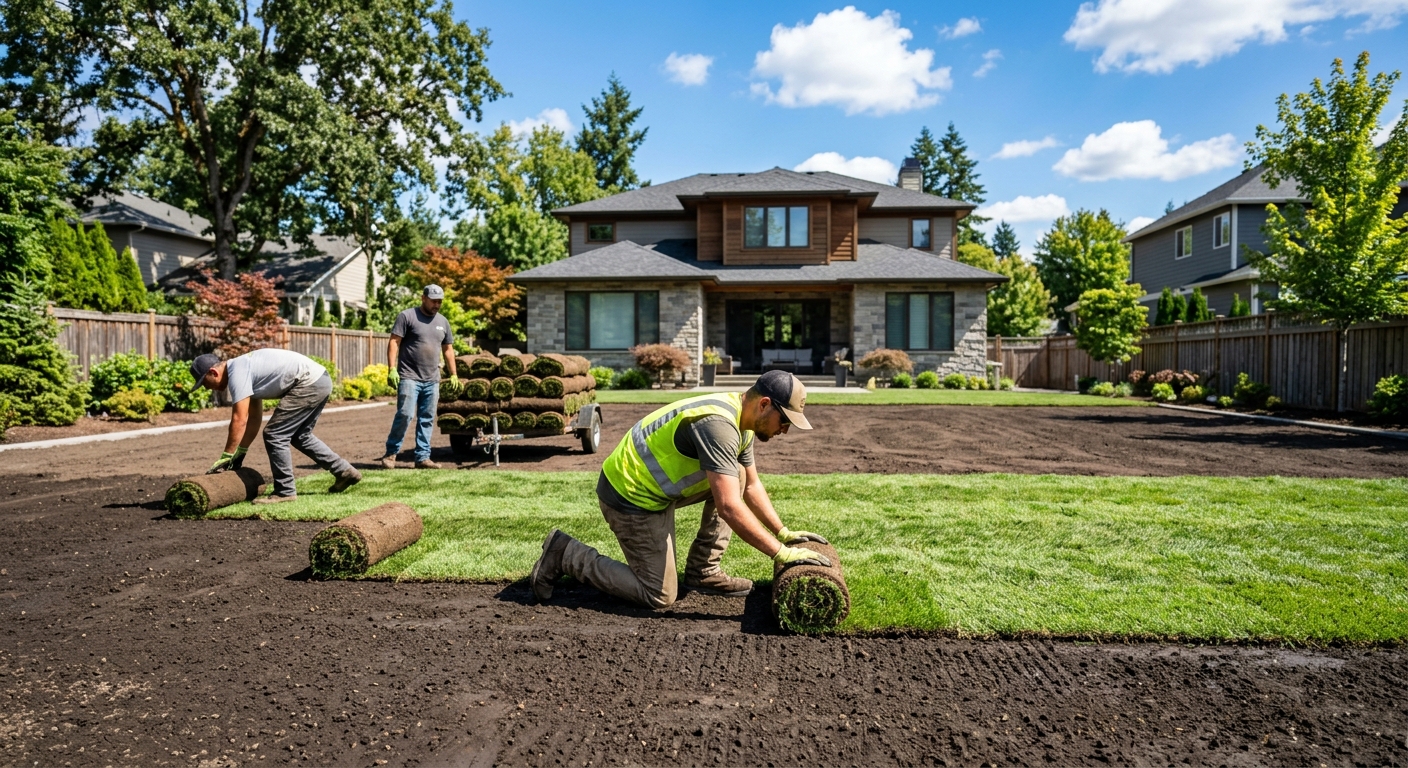
| Sod installation (supply, grade, lay, roll) |
Existing grass removal (if needed), grading to slope for drainage, topsoil, sod supply, install, roll, and establishment watering guidance |
Late April–June and early September (weather-dependent) |
$2,500–$8,000 |
| Lawn seeding (grade, seed, starter fertilizer) |
Light grading, seed selection for sun/shade, starter fertilizer, seeding, light topdressing/rolling as appropriate |
April–May and August (best germination windows) |
$1,800–$6,000 |
| Interlocking patio or walkway |
Excavation, geotextile, base/granular layers, edge restraints, interlocking stone setting, jointing, and compaction |
May–October |
$6,000–$22,000 |
| Retaining wall (interlocking block) |
Wall layout, excavation, compacted granular base, drainage gravel/weep provisions, block installation, cap/finishing |
May–September |
$6,000–$30,000 |
| Tree and shrub planting |
Soil preparation, amendments, staking as needed, mulch rings, and aftercare plan to support establishment through winter |
Spring and fall (best survival windows) |
$800–$6,000 |
Prices are estimates only and vary by project scope, site access and material selection.
What affects the price of landscaping in Winchester
Even when two Winnipeg- or GTA-style homeowners describe the “same job,” Winchester bids can still vary by about 30–50% because contractors price risk and site conditions. In Southern Ontario, labour and equipment time are often similar, but the big swings come from how much excavation is required, whether drainage must be corrected, and what quality tier of plants and hardscape you choose. The GTA’s frost pattern matters too: planting and turf establishment are tied to reliable windows around late spring through early fall, and freeze–thaw cycles in winter can demand deeper, well-compacted bases for patios and walls. That’s very different from Prairie regions (Zone 2–4), where shorter seasons and drier, windier conditions push designs toward ultra-hardy, drought-tolerant palettes and simpler grading. Coastal BC (Zone 7–8) supports a longer growing season, but heavy rainfall in some areas makes drainage detailing and soil structure just as important. In Southern Ontario, we’re generally dealing with a moderate growing season, but summer dry spells still drive irrigation needs—especially when homeowners want sod or larger specimen material.
Here are a few concrete examples of what raises or lowers costs in Winchester. First, heavy clay or fill soils often require more excavation and soil amendment—an “easy” planting bed can turn into a soil-rebuild project that pushes the job toward the higher end of tree and garden planting (for example, $800–$6,000) once topsoil and drainage improvements are added. Second, a small patio that borders an area with poor runoff can require a drainage bed or corrected slope, moving the project from the lower end of interlocking work to the higher end. Third, a retaining wall’s base and drainage provision are not optional: even if the wall looks short, freeze conditions can mean extra granular depth and proper weeping behind the blocks, which commonly lands projects closer to $6,000–$30,000 for a typical interlocking wall scope.
| Price Factor |
Why It Matters |
Cost Impact |
| Yard size in sq ft — the primary cost driver for softscape |
Sod, seeding, mulch, and labour scale with area; larger lawns also require more base prep and topsoil |
Higher end of turf and installation pricing as footprint increases (often the biggest difference between quotes) |
| Grading and drainage work — slope corrections add significant cost |
Proper run-off protects foundations, prevents pooling, and reduces freeze–thaw damage to surfaces |
Often adds excavation hours and more granular/topsoil, pushing projects toward upper bands |
| Drainage bed or French drain installation |
Helps manage persistent damp areas and downspout runoff |
Can substantially increase hardscape prep costs due to trenching and material volumes |
| Plant material tier — native shrubs vs. ornamental vs. mature specimen trees |
Hardier, native or smaller stock generally costs less and establishes more consistently |
Mature specimens and premium ornamentals raise the tree/shrub line item significantly |
| Hardscape vs. softscape ratio — walls and patios cost more per sq ft than lawn |
Stone patios and retaining walls require deeper bases, compaction, and often more trades time |
Projects shift from turf pricing ranges into interlocking/retaining wall pricing bands |
| Irrigation system design and installation |
In Toronto-area summers, irrigation supports establishment and reduces plant stress |
Adds materials, trenching, and labour; can be the difference between low and high overall totals |
| Soil amendment and topsoil required |
Clay and compacted fill can restrict roots and increase water problems |
Delivery and labour for amendments can move a job toward the upper end of design/install |
| Tree removal or stump grinding before new planting |
Clearing impacts schedules, access, and disposal needs |
Can add separate costs and time, especially on narrow lots or with heavy debris |
Permits & regulations in Ontario
In Ontario, most landscaping activities such as planting beds, sodding, and typical softscape work generally do not require a permit. However, work that changes structural elements or lot drainage can trigger approvals. In Winchester-area practice, retaining walls above a height threshold—typically 1.0 m (3.3 ft) in many municipalities—often require a building permit, and sometimes engineered drawings depending on wall height, soil conditions, and proximity to property lines or services. Also, any change to lot grading that alters drainage toward neighbouring properties or storm sewer connections may require municipal approval. Before you dig for trees, planting holes, or wall footings, always confirm utility locates so you don’t damage underground services.
Here’s how a Winchester homeowner can verify a contractor’s credentials step-by-step. First, confirm Ontario licensing status through the contractor’s business profile and ensure the company name matches the quote and invoices. Second, ask for a current certificate of insurance showing liability coverage appropriate for the scope (and ensure it’s active for the project dates). Third, confirm workers’ compensation coverage: in Ontario, you want WSIB/WCB coverage for the workers who will be on your site, not just the owner. You should be given a clearance letter or documentation showing account status and coverage. Finally, ask whether the contractor will include permit pull support if your retaining wall or drainage plan requires municipal review, and get it in writing before work starts.
For anything irrigation-related, confirm local water-use and timing expectations. While the dry BC interior has stricter triggers, Alberta and drought-prone periods across Canada still cause municipalities to enforce sensible water practices—plan for the right system and watering schedule.
Planning a landscape that thrives in Winchester's climate
To plan a yard that thrives in Winchester, work with the realities of the local growing season, hardiness range, and frost behaviour—especially freeze–thaw cycles that can heave poorly prepped bases. Start with plant selection: choose zone-appropriate, hardy species and mix in natives where possible so you’re not over-watering plants that aren’t adapted to our winters. For lawn, decide between sod and seeding based on your timeline and budget. Sod gives instant curb appeal, but it typically costs about 3–4x more per sq ft than seeding once labour and materials are included. In practical terms, if you want the “finished lawn look” quickly, sod can be worth it—especially for front-yard visibility—yet if you’re not rushed, seeding is often the smarter value. Next, drainage and grading are critical in Southern Ontario. Even small pooling areas can lead to foundation moisture issues and create washouts during heavy rain events. We also design hardscape bases (patios and retaining walls) with proper granular layers and compaction so they remain stable through the local freeze line conditions.
Low-maintenance design strategies make a big difference in how your yard feels year to year. Groundcovers and mulched shrub borders reduce weeds, perennials add seasonal colour without the constant replanting cycle, and thicker mulch helps moderate soil temperature. If you want to reduce watering, consider a rain-garden approach or targeted xeriscape features—useful in dry spells—by directing downspout runoff into planted infiltration zones rather than spraying the whole lawn. This can also justify irrigation design only where it’s needed.
Example: upgrading from seed to sod for a mid-sized front lawn often moves the project from the lower turf range toward the sod band (for instance, budgeting in the $2,500–$8,000 range), and that premium can be justified when you’re selling, restoring curb appeal quickly, or replacing a bare patch with urgent timeline pressure. If you can wait a season, seeding typically stretches the budget while still building a durable lawn.
| Element |
Climate Consideration |
Maintenance Level |
Price Band |
| Sod lawn installation |
Best installed in reliable cool-season windows to establish roots before winter freeze; needs consistent moisture during establishment |
Low-to-medium (more watering early) |
$2,500–$8,000 |
| Native perennial garden |
Hardy to our winter lows with better long-term resilience; often handles seasonal rain patterns more reliably than tender ornamentals |
Medium (annual cleanup + light pruning) |
$1,800–$6,500 |
| Mulched shrub border |
Mulch helps moderate freeze–thaw stress and reduces winter desiccation; hardy shrubs stabilize planting beds |
Low (weed suppression and occasional top-ups) |
$1,200–$5,500 |
| Interlocking stone patio |
Requires proper frost-protected base prep to prevent shifting during freeze–thaw cycles |
Low (seasonal sweeping and minor joint maintenance) |
$6,000–$22,000 |
| Retaining wall (block) |
Needs drainage and deep base stability so water doesn’t build pressure behind the wall during thaw cycles |
Low (inspection of drainage + occasional re-stabilization) |
$6,000–$30,000 |
| Drip irrigation system |
Supports targeted watering for hardy plantings and reduces waste during hot, humid Ontario summers |
Medium (seasonal checks and winterization) |
$1,800–$7,500 |
How to choose a landscaping contractor in Winchester
Choosing the right landscaping contractor in Winchester starts with documentation and a clear, itemised scope. First, verify Ontario licensing status where applicable to the contractor’s work. Next, confirm liability insurance: request a certificate of insurance listing the business and coverage limits appropriate for excavation, stonework, and plant installation. For workers, confirm WSIB/WCB coverage—ask for a current clearance letter or proof of account status before any site work begins. If a contractor can’t provide documentation quickly, treat that as a serious warning sign.
Then get 2–3 itemised written quotes—not just a single lump-sum. Look for a breakdown that separates labour and materials for key tasks: excavation, granular base, geotextile, drainage components, topsoil, plant quantities/species, and disposal. Ask if a permit pull is included (or if it’s excluded) for retaining walls that exceed the typical height threshold—often 1.0 m (3.3 ft) in Ontario practice. Clarify what’s excluded: labour hours beyond a defined yard access issue, extra topsoil needs after regrading, or disposal fees for old concrete and stumps.
Warranty matters. Ask for the workmanship warranty length and whether product/manufacturer warranties apply to trees, shrubs, and sod/seed. Confirm if any warranty is transferable to future homeowners if you sell. For payment schedule, never pay more than about 10–15% upfront; keep a holdback until the job is complete and cleaned up to spec. Finally, request a start date and completion estimate in writing so you know when your investment should start improving your yard.
- Provide WSIB/WCB proof (clearance letter or current account status) before work starts.
- Provide certificate of insurance for liability with active project-date coverage.
- Use an itemised quote (labour + materials) for drainage, base prep, and plants.
- Include a disposal/removal line item for old sod, topsoil, stumps, or concrete.
- Confirm whether permit applications are included for retaining walls (above typical thresholds).
- Ask who supplies topsoil/soil amendment and what spec (depth/quality) is being used.
- Require a written timeline with weather-dependent milestones noted.
- Confirm watering/establishment responsibilities for sod, seeding, and newly planted trees/shrubs.
- Check that drainage solutions include base/granular and weeping details where required.
- Get the exact plant list (species/cultivar, container size where applicable) in the contract.
- Clarify warranty terms: workmanship duration, plant replacement rules, and exclusions.
- Hold back payment until final grading, cleanup, and walkthrough sign-off are done.
In Winchester, common red flags include: quotes that don’t break down excavation, base, and drainage components; refusal to provide WSIB/WCB or a current insurance certificate; vague plant descriptions (“assorted shrubs” without sizes/species); promises of “no permit needed” without acknowledging retaining-wall thresholds and grading impacts; and payment demands above 15% upfront with no written schedule or contract.
Frequently asked questions — landscaping in Winchester
When is the best time to landscape in Winchester?
The best time to landscape in Winchester (and across the Toronto region) is usually late spring through early fall, when the ground is workable and plants can establish before winter. For sod, the most reliable windows are late April to June and again in early September, because the soil temperature supports rooting. Seeding can work in spring (as long as frost risk is manageable) and again in August, but germination depends on moisture. Planting trees and shrubs typically does best in spring and fall—cooler temperatures help reduce transplant stress. If you’re planning hardscape like patios or interlocking, May through October is preferred to reduce weather-related delays and ensure proper compaction. Winchester soil conditions and freeze–thaw cycles also mean we avoid rushing installs when the ground is too wet or still thawing unevenly.
Do I need a permit for a retaining wall in Ontario?
In Ontario, many landscaping projects don’t need permits, but retaining walls often do when they exceed a typical height threshold—commonly 1.0 m (3.3 ft) depending on the municipality and wall specifics. In Winchester, you should expect that interlocking block walls near or above that height may require a building permit, and sometimes engineered drawings if the design or soil conditions warrant it. Permits can also come into play if the wall work changes grading or affects drainage paths. The safest approach is to ask your contractor to confirm requirements before they start excavation, and to list in the quote whether permit pulling is included or excluded. This matters because a wall project can fall in the $6,000–$30,000 band, and a delay to approvals can impact the schedule.
How do I improve drainage in my yard?
In Winchester, drainage improvements usually start with correcting grading—making sure water moves away from the house and doesn’t pond near foundations. If you have persistent damp areas, a drainage bed or French drain may be needed to intercept runoff, especially near downspouts or low spots. We also look at soil structure: compacted clay often needs excavation and soil amendment so water can infiltrate rather than stay trapped and freeze in winter. If you’re adding hardscape, drainage detailing becomes even more important; a patio base that doesn’t drain can heave during freeze–thaw cycles. A good contractor will explain the plan and include it in the scope, including where the drain line or bed goes and how it connects to an approved outlet. The right fix can prevent recurring costs that start small and escalate—often faster than homeowners expect.
What is xeriscaping and does it suit Winchester?
Xeriscaping is a landscaping approach that reduces water use by using drought-tolerant plants, efficient layouts, mulching, and—when needed—targeted irrigation like drip. In Winchester and the Toronto region, it can suit many yards because we still get hot summer weeks that stress plants, and homeowners want lower maintenance. That said, “xeric” doesn’t mean no watering ever; it means watering smarter and only where plants need it. In practice, xeriscaping blends well with native perennial gardens, shrub borders, and rain-garden sections that manage downspout runoff instead of sending it across lawn. It’s also a good match for homeowners who don’t want a high watering bill tied to large sod areas. If you’re choosing between seed and sod, a xeric plan can help you keep the sod footprint smaller—since sod projects commonly land in the $2,500–$8,000 range.
How do I plan a low-maintenance yard?
A low-maintenance yard in Winchester is usually designed around three principles: fewer turf areas, stronger planting bed structure, and correct drainage so you’re not constantly repairing washouts or mud. Consider mixing groundcovers and mulched shrub borders to suppress weeds, then add native perennial garden sections for seasonal colour without heavy replanting. Choose hardy, zone-appropriate plants to reduce winter protection needs. If you want instant results, sod is fast—but it requires proper establishment moisture; seeding is slower but can be more budget-friendly. If your plan includes hardscape, invest in correct base prep so you don’t have shifting pavers after freeze–thaw cycles. For a realistic budget, many Winchester homeowners start with either a smaller planting package (tree and garden planting often in the $800–$6,000 band) or a modest patio/walkway that supports the overall layout. The key is to spend on what prevents repeated repairs, not just what looks good on day one.
How deep should a retaining-wall base be for local frost?
For a retaining wall in Winchester, the base depth can’t be guessed from the wall height alone—it depends on wall height, soil conditions, and the engineering/design approach. However, the core principle is that your base must be deep enough and properly compacted to resist movement during Ontario freeze–thaw cycles, and it must include proper granular layers plus drainage provisions behind the wall. A wall without adequate drainage is at risk of water pressure buildup during thaw periods, which can lead to block shifting over time. Because frost behaviour in Southern Ontario drives structural stability requirements, reputable contractors will specify base and drainage details in their plan (and will often include geotextile, granular base depth, and a weeping system where appropriate). If your wall is above the typical 1.0 m (3.3 ft) threshold, expect permit and design requirements. Your best protection is a written scope that states the base build-up—not just “block on gravel.”