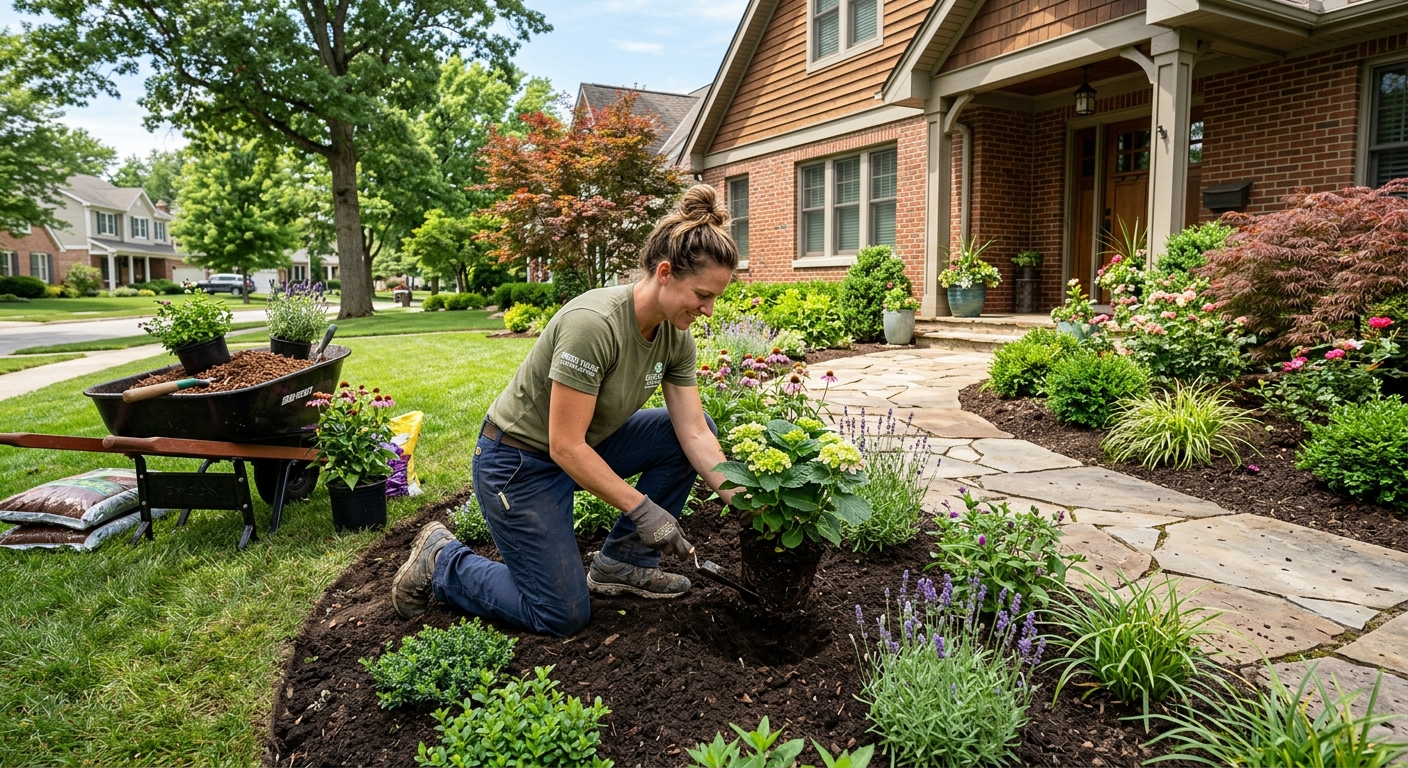
Landscaping options and costs in Athlone
Athlone homeowners have plenty of space to make improvements, and with a 2021 population of 3,116 (Statistics Canada, 2021 Census), you’ll see steady demand for curb-appeal upgrades and practical backyard builds. Many properties in Athlone also sit in the “owner-invests” category—detached homeowners typically have room for both softscape (planting, lawn) and hardscape (patios, walkways), which is why full landscape installs and walk upgrades tend to sell well. In Calgary’s broader market, labour and materials are priced to handle the region’s harsh freeze–thaw cycles, late-spring frosts, and early fall cold snaps. That affects costs in two ways: contractors must excavate deeper for proper bases under patios and retaining walls, and they plan planting around safe soil temperatures to avoid winter dieback and heaving. Availability also follows the working season—most crews are busiest from spring base prep through early fall planting, so late scheduling can push some projects into a higher-demand window. In Athlone, landscape work is especially in demand in the residential areas near local connector roads, where homeowners prioritize drive-by curb appeal and “first impressions” upgrades.
Below is a practical comparison of common scope options so you can sanity-check quotes before site measurements. Use the ranges as a backbone, then expect adjustments once we confirm yard size, access, and base drainage requirements.
| Service |
Description |
Season |
Price Range |
| Full landscape design and installation |
Site walk, grading/drainage plan, hardscape (where applicable), planting plan, irrigation (if needed), and full build-out |
Spring to early fall (frost-safe planting windows) |
$10,000–$35,000 |
| Sod installation (supply, grade, lay, roll) |
Minor grading/levelling, base prep, sod delivery and layout, rolling, and starter watering schedule |
Late spring to early fall |
$2,500–$6,500 |
| Lawn seeding (grade, seed, starter fertilizer) |
Light grading, seed selection for southern Alberta, starter fertilizer, and initial watering guidance |
Spring (and some early fall) |
$1,500–$4,000 |
| Interlocking patio or walkway |
Excavation, compacted base, interlocking stone installation, edging, and clean jointing |
All freeze-safe periods (typically spring to fall) |
$8,000–$30,000 |
| Retaining wall (interlocking block) |
Trench excavation, geo fabric, drainage gravel, reinforced base as required, block and cap installation |
Spring to early fall |
$10,000–$40,000 |
| Tree and shrub planting |
Zone-appropriate plants, soil amendment, staking/anchoring where needed, mulch rings, and seasonal planting care |
Late spring to early fall |
$1,200–$12,500 |
Prices are estimates only and vary by project scope, site access and material selection.
What affects the price of landscaping in Athlone
Even when two Athlone neighbours want “the same” landscaping job, quotes can swing by 30–50% across Calgary and Alberta. The driver is usually the unseen part: base prep depth, drainage complexity, and labour time spent on excavation and hauling. In southern Alberta (Zones 3–4), contractors must plan around late-spring frosts and severe freeze–thaw cycles; that means deeper, well-compacted bases under patios and walkways and drainage that prevents water from sitting near foundations. In coastal BC (Zone 7–8), teams often work longer into the season and can plant more generously, but heavy-rainfall sites demand strong drainage design; those differences change both labour allocation and material mix. Dry interior BC drives xeriscape and drip irrigation design, while southern Ontario (Zone 5–6) typically has a longer growing window but still requires irrigation during summer dry spells—so lawn and planting pricing doesn’t translate perfectly between regions.
In Athlone specifically, pricing rises quickly when your lot needs real slope corrections (grading and re-shaping), because that triggers extra trucking and expanded base material. It also rises when a retaining wall needs proper drainage gravel and reinforced base work—because wall failures from water pressure or frost heave can be expensive to repair. For example, a small interlocking walkway might land in the mid range of $8,000–$30,000, but adding a raised edge treatment or thicker base for frost resistance can push it higher. On the softscape side, sod can cost several times what seeding does—so a “quick lawn” can look affordable until you compare $2,500–$6,500 versus $1,500–$4,000 once you factor in yard size and the base prep both options require.
| Price Factor |
Why It Matters |
Cost Impact |
| Yard size in sq ft — the primary cost driver for softscape |
More area means more excavation, soil amendments, sod/seed, and labour hours |
Low yards may stay near the bottom of ranges; larger lots can push projects toward upper bands |
| Grading and drainage work — slope corrections add significant cost |
Freeze–thaw and foundation moisture risk increase when water can’t shed properly |
Often increases hardscape/softscape scope by adding trucking and extra labour |
| Drainage bed or French drain installation |
Moves water away from problem zones; reduces heaving and settlement |
Can add a meaningful line item, especially on sloped or wet lots |
| Plant material tier — native shrubs vs. ornamental vs. mature specimen trees |
Mature trees and specialty ornamentals cost more and need more handling/staking |
Lower-tier planting keeps budgets closer to the low/mid bands |
| Hardscape vs. softscape ratio — walls and patios cost more per sq ft than lawn |
Hardscape needs excavation, compacted bases, stone/block, and finer finishing |
Shifts the total project toward hardscape-heavy pricing |
| Irrigation system design and installation |
Zones, coverage, and winterization matter in Prairie cold snaps |
Upfront cost is higher, but it reduces plant stress and rework |
| Soil amendment and topsoil required |
Low-quality or compacted native soils can fail under sod or underperform seeded lawns |
Can turn a “simple” lawn into a proper rebuild |
| Tree removal or stump grinding before new planting |
Root disruption and debris removal affect schedule and disposal |
Adds equipment time and hauling; may require phased work |
Permits & regulations in Alberta
In Alberta, many landscaping tasks—like planting shrubs, installing sod, and doing most softscape work—typically do not require a building permit. However, retaining walls can be the exception. In many municipalities, retaining walls above a height threshold (often 1.0 m / 3.3 ft) require a building permit and may need engineered drawings depending on the wall’s height, design, and the soil conditions. Also, if your project includes lot grading changes that affect drainage toward neighbouring properties or storm sewer connections, that can trigger approval requirements. Because drainage disputes are common after renovations, we always design grade so water flows away from foundations and not toward adjacent lots.
Before any digging for planting holes or wall footings, call utility locates so you don’t hit gas lines, power, or buried services—this is critical whether you’re putting in small trees or trenching for drainage. After that, confirm any local irrigation and water-use bylaws, especially during drought conditions that can occur across southern Alberta.
To verify an Alberta contractor for Athlone homeowners, take these steps: (1) confirm their Alberta licence/registration status on the appropriate provincial listing; (2) request a Certificate of Insurance showing liability coverage that matches the scope; and (3) confirm WSIB/WCB coverage (clearance letter or proof of account status). A reputable contractor will provide these documents quickly, before you sign and before work starts.
Planning a landscape that thrives in Athlone's climate
Planning for Athlone’s climate (Prairie hardiness zone 3–4) means working with cold-hardy species, not trying to mimic long, mild coastal growing. Start with plant selection: choose native and zone-appropriate shrubs, perennials, and small trees that tolerate wind and winter drying. Then decide whether you want instant lawn coverage or long-term budget control. Sod gives immediate results, but in Calgary’s freeze–thaw environment it still depends on solid base prep and drainage; it typically costs about 3–4x more per sq ft than seeding, primarily due to the material and installation labour. For drainage and grading, assume pooling is your enemy. Proper grading toward swales or drainage beds protects foundation moisture and prevents the winter heaving that can crack walkways or lift edges.
Hardscape needs careful base preparation to handle the frost line and repeat freeze cycles. Interlocking patios and walkways should sit on a deep, well-compacted base with proper edge restraints—cheap base depth leads to settlement and “wavy” joints within a season or two. For low maintenance, plan for mulch, groundcovers, and perennials that establish quickly and reduce annual weeding and watering. If you want xeriscape elements, consider drought-tolerant beds, layered mulches, and drip irrigation with smart scheduling—Athlone still sees summer dry periods, so efficient irrigation design matters even when water restrictions are not constant.
Where the price difference is justified: if your goal is usability and curb appeal fast (a front patio look, quick access to the door), sod plus a small foundation-to-walk grade correction can be worth the higher spend. If your priority is cost control and you can wait for establishment, seeding is often the smarter choice—especially when $1,500–$4,000 can replace a sod budget of $2,500–$6,500.
| Element |
Climate Consideration |
Maintenance Level |
Price Band |
| Sod lawn installation |
Needs proper base prep to survive freeze–thaw heaving; watering schedule matters in late spring startup |
Medium (initial watering and weed control during establishment) |
$2,500–$6,500 |
| Native perennial garden |
Zone-appropriate plants handle Alberta winters with less winter protection than tender ornamentals |
Low to medium (seasonal pruning and mulch refresh) |
$1,200–$5,500 |
| Mulched shrub border |
Wind-hardy, cold-tolerant shrubs reduce soil exposure and help buffer temperature swings |
Low (weed suppression with mulch, occasional trimming) |
$1,500–$6,000 |
| Interlocking stone patio |
Requires deep, compacted base and correct drainage to prevent frost movement and settling |
Low (washdown and joint maintenance as needed) |
$8,000–$30,000 |
| Retaining wall (block) |
Must include proper drainage gravel and compacted base below frost influence to resist movement |
Low (inspection of drainage outlets and periodic weed control) |
$10,000–$40,000 |
| Drip irrigation system |
Better water efficiency in semi-arid summers; must be winterized for Calgary cold snaps |
Medium (system checks and seasonal shutoff/backflow considerations) |
$2,500–$9,000 |
How to choose a landscaping contractor in Athlone
Choosing the right contractor in Athlone starts with documentation. First, verify Alberta licensing/registration for the scope you’re hiring. Ask for proof of liability insurance and confirm WSIB/WCB coverage—then read the certificates, don’t just accept a verbal “yes.” If you’re emailed documents, check the policy dates and that the coverage applies to the company doing the work. For bigger builds that include excavation and hardscape bases, these protections matter because you’re exposing utilities and creating structural elements that can fail if built incorrectly.
Next, get 2–3 itemised written quotes with a labour + materials breakdown. The best quotes clearly list excavation, hauling/disposal, base materials, compaction layers, edging, stone/block quantities, plant counts, and any irrigation components—no vague “allowances.” Read the scope carefully: what’s excluded (topsoil replacement? tree removal? disposal of excess material?), is permit pulling included if a retaining wall triggers it, and who coordinates utility locates. For warranties, ask for workmanship warranty length and what it covers—plus the manufacturer warranty for products (stone, seed/sod, irrigation components). Confirm whether warranties are transferable if you sell your home.
For payment schedule, don’t pay more than 10–15% upfront; use a holdback until the job is complete and inspected. Also get the start date and completion estimate in writing, including a plan for weather pauses in spring frosts or early fall cold snaps.
- Provide Alberta licence/registration details for the company and the crew actually working on site.
- Show current Certificate of Insurance with liability coverage matching the project size.
- Provide WSIB/WCB proof or clearance letter before starting work.
- Use an itemised quote with line items for excavation, base prep, and disposal (not one lump sum).
- Clearly state whether utility locates are coordinated by the contractor or confirmed by the homeowner.
- Confirm grading specs: drainage direction, topsoil depth (if used), and compaction expectations.
- Ask how freeze–thaw risk is handled under hardscape (base depth, edging restraint, drainage).
- Verify plant list counts, sizes, and substitutions policy if certain plants are unavailable.
- Confirm sod/seed schedule and aftercare instructions for Athlone conditions.
- Request a workmanship warranty in writing (duration and call-back process).
- Use a payment schedule with a holdback until final walkthrough sign-off.
- Get a written timeline that includes weather contingencies.
Red flags in Athlone: (1) contractors who refuse to provide insurance/WSIB/WCB proof; (2) quotes that omit excavation depth and drainage details for patios or retaining walls; (3) “too good to be true” sod or interlocking stone pricing without explaining base preparation; (4) refusing to put scope exclusions in writing (disposal, topsoil, utility locate responsibility); and (5) asking for large upfront payments without a contract and schedule.
Frequently asked questions — landscaping in Athlone
How much does landscaping cost in Athlone?
In Athlone, landscaping cost depends mainly on yard size, how much grading/drainage work is required, and whether your project includes hardscape. For many Calgary-area homes, a mid-sized full landscape can land in the mid five-figure range once you include base prep, planting, and (if needed) irrigation. As a quick reference, sod installations commonly fall around $2,500–$6,500, while lawn seeding is often closer to $1,500–$4,000 when the base is already reasonably level. If you’re adding a patio or walkway, interlocking work frequently starts around the lower end of $8,000–$30,000 depending on thickness, access, and drainage detailing. Because freeze–thaw cycles in Zone 3–4 force deeper, well-compacted bases, quotes can vary significantly if someone underestimates excavation and drainage.
What plants thrive in Athlone's climate zone?
Athlone sits in Prairie hardiness zones 3–4, so you want plants that tolerate winter cold, wind, and occasional dry spells. In practice, that means selecting cold-hardy shrubs and perennials that don’t rely on long, mild seasons to establish. Native and zone-appropriate plants generally perform best with less winter protection, and they handle summer swings better than tender ornamentals. For lawns, choose seed or sod types proven for southern Alberta conditions, and for borders use layered mulches to buffer temperature and reduce moisture loss. If you’re adding trees, consider smaller hardy species or conifers suited to local conditions, and plan staking only where required. A good contractor will propose a plant list with spacing and mature sizes—so the yard stays tidy and durable without constant replanting.
Sod vs seed — which is better for a Athlone lawn?
In Athlone and across Calgary’s semi-arid Prairie conditions, sod and seed can both work, but they fit different priorities. Sod gives instant coverage and reduces erosion quickly, but it’s more expensive—often around $2,500–$6,500 for many typical installs once you include grade and rolling. Seed is a lower-cost option and can be a better fit when your budget is tight—often closer to $1,500–$4,000—but it takes longer to fully thicken and look finished. The key in both cases is base preparation and drainage to reduce freeze–thaw heaving. If your grade is uneven or water pools, seed can fail or create patchy growth, and sod can lift or settle. A solid quote will address grading first, then recommend the right turf method for the timing of your project.
How much does a retaining wall cost in Athlone?
Retaining walls are one of the biggest “quote variance” items in Athlone because design, height, and drainage requirements drive the real cost. Interlocking block retaining walls commonly price around $10,000–$40,000 depending on wall length, height, base depth, and whether drainage gravel/French drain work is included. In Calgary’s freeze–thaw conditions, walls need a properly compacted base and drainage behind the block to manage water pressure and reduce movement. A lower-cost quote that skips drainage layers or doesn’t specify base construction is risky. Also confirm whether your planned wall height triggers a permit in your municipality; many areas require a permit for retaining walls above roughly 1.0 m (3.3 ft). Your contractor should itemise these details so you can compare apples to apples.
When is the best time to landscape in Athlone?
The best time to landscape in Athlone is typically from late spring through early fall, when soil conditions allow work and planting has enough time to establish before winter. For hardscape like patios, walkways, and retaining walls, crews generally prefer frost-safe periods to ensure compacted bases remain stable during the build. For sod, timing is also critical: install when temperatures support rooting, and follow watering and aftercare guidance so the lawn establishes before cold snaps. For planting, late spring is often safest because the soil is warming and reducing the risk of late frosts that can damage new transplants. If you’re planning irrigation, schedule it early enough to test coverage while weather is mild, then confirm winterisation steps. A good contractor will give you a written schedule that accounts for spring delays and early fall weather.
Do I need a permit for a retaining wall in Alberta?
In Alberta, permits depend on the retaining wall’s size and local municipal rules. Many municipalities require a building permit for retaining walls above a height threshold—often around 1.0 m (3.3 ft)—and engineered drawings may be required in certain cases based on design and soil conditions. Most planting and softscape work (like sod and shrub beds) typically doesn’t require a permit, but changes to lot grading and drainage can trigger approval if they affect drainage toward neighbouring properties or storm sewer connections. For Athlone homeowners, the practical approach is to ask your contractor to confirm the applicable permit requirement before excavation begins. Also ensure the contractor coordinates utility locates before digging wall footings and drainage trenching, and verify their insurance and WSIB/WCB coverage so you’re protected if something changes during construction.