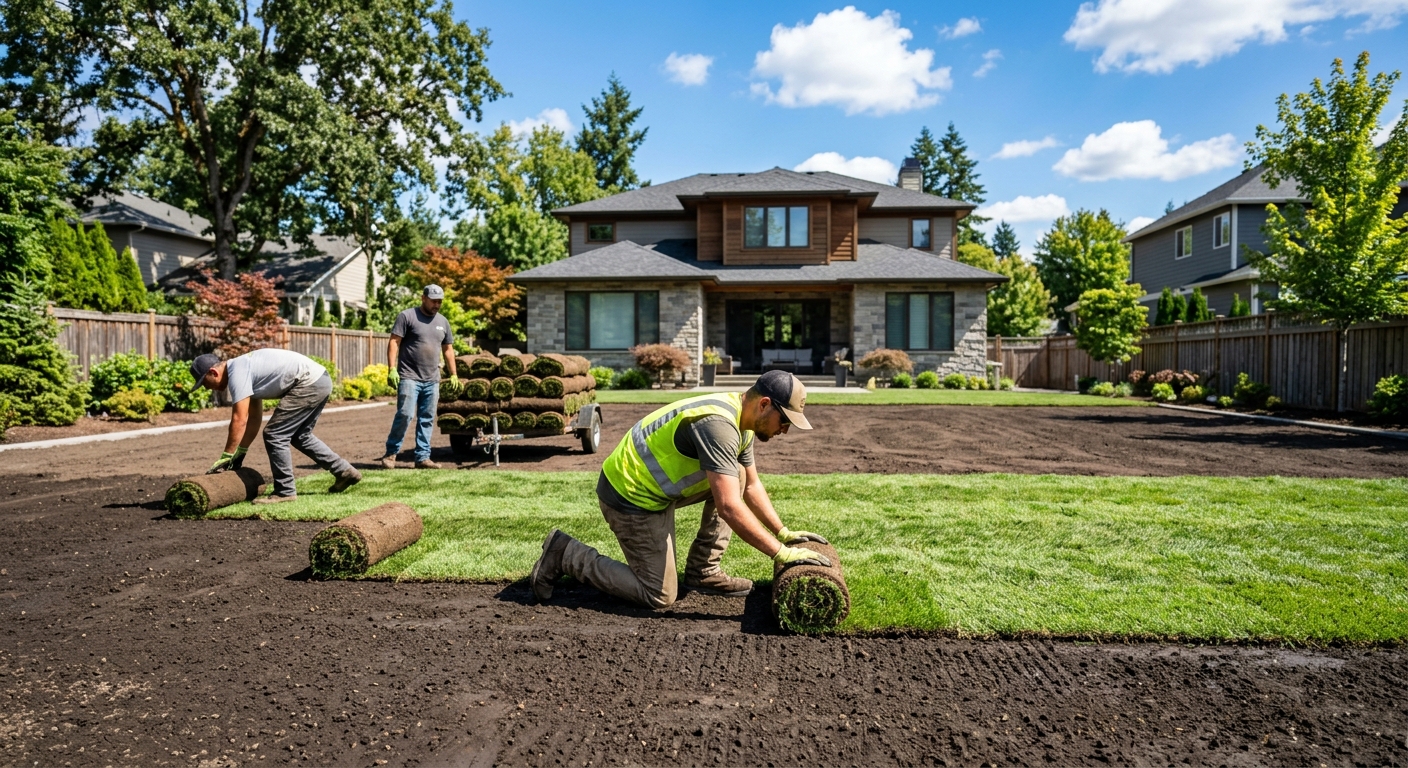
Landscaping options and costs in Kildare
Kildare, Alberta is a small community (2,694 residents per the Statistics Canada, 2021 Census) where homeowners often invest in their properties because detached housing typically comes with real yard space to work with. In a prairie town like this, landscape improvements are most noticeable—and most practical—when you match planting and hardscape to Alberta’s freeze–thaw seasons and wind-driven sun. Calgary-area contractors are busiest around ongoing infill and established communities; in Kildare, demand tends to peak during spring and early fall installs when the ground is workable and crews can stage materials efficiently.
Pricing is also shaped by the regional building pace. In the Calgary economic region, comprehensive landscape projects commonly land in the mid five-figure range once grading, hardscape, planting, and irrigation are bundled. Local labour typically represents about 40–60% of the total for most full builds, so access, crew size, and how much excavation is needed can swing totals quickly. Compared to coastal climates, southern Alberta’s shorter season means contractors schedule more carefully—then charge for frost-risk mitigation like deeper base prep and drainage detailing.
In Kildare, areas where landscaping is especially in demand include the established residential pockets near the main commuter routes toward Calgary, where curb appeal and year-round function matter to people working full-time. If you’re comparing options, start with the table below to see typical service-level costs and which scope items move the price the most.
| Service |
Description |
Season |
Price Range |
| Full landscape design and installation |
On-site layout + planting plan, grading notes, hardscape build (where needed), installation coordination, cleanup |
Apr–Oct (frost-risk planning starts earlier) |
$5,000–$50,000 |
| Sod installation (supply, grade, lay, roll) |
Minor grade correction, soil prep, sod delivery, installation and rolling |
Late Apr–Jun; late Aug–Sep (weather-dependent) |
$1,500–$6,000 |
| Lawn seeding (grade, seed, starter fertilizer) |
Light grading, seed selection for local conditions, starter fertiliser and mulching |
Apr–May or Aug–Sep |
$700–$3,500 |
| Interlocking patio or walkway |
Base excavation, compaction, geotextile, sand setting bed, pavers/bricks, edge restraint and finishing |
May–Oct |
$8,000–$32,000 |
| Retaining wall (interlocking block) |
Excavation, drainage gravel behind wall, proper base, block installation, cap/finish options |
May–Sep |
$10,000–$40,000 |
| Tree and shrub planting |
Soil amendments, digging, staking where needed, irrigation setup (basic), mulching and initial care |
Apr–Jun; Sep–Oct |
$800–$15,000 |
Prices are estimates only and vary by project scope, site access and material selection.
What affects the price of landscaping in Kildare
The same landscaping job can swing by 30–50% in the Calgary region because site conditions and risk management vary from lot to lot—especially under Alberta’s prairie freeze–thaw cycles. One yard may need simple refresh work, while another needs deeper base excavation, drainage repairs, or frost-protection work before any stone or sod goes in. In Kildare, the practical result is that “like-for-like” quotes rarely stay equal unless you compare scope line-by-line.
Hardiness zone and frost dates define both what grows and what crews can do. In Calgary-area Zone 3–4, late-spring frosts and early fall cold snaps mean planting windows are tighter and contractors schedule around weather risk. Retaining walls, patios, and walkways must be built on deep, well-compacted bases with proper drainage to prevent heaving and settlement—so excavation depth and compaction testing directly affect labour and equipment rental. By contrast, coastal BC (Zone 7–8) can support lush broadleaf palettes with a longer growing season, but heavy-rainfall locations still demand drainage detailing; in BC’s drier interior pockets, irrigation design is often more “system-first,” with smart controllers and drip zoning.
Concrete examples that commonly raise or lower cost in Kildare: (1) a sloped backyard that needs grading corrections can push excavation and hauling, adding thousands to your total within a $5,000–$50,000 full-project range; (2) switching from sod to seeding can cut lawn establishment budgets dramatically—often aligning with the lower end of the $1,500–$6,000 sod band when you choose a smaller sod area and seed the rest.
Housing age also matters. Newer lots often have fewer mature trees but more compacted subsoil from construction; that can increase soil amendment and drainage work. Older yards may include hidden roots or unknown grade issues that require extra removal and make full landscape installation more expensive.
| Price Factor |
Why It Matters |
Cost Impact |
| Yard size in sq ft — the primary cost driver for softscape |
More square footage increases materials (topsoil, seed/sod, mulch) and labour for prep and installation |
Often drives the majority of variation; can move a job 20–40%+ |
| Grading and drainage work — slope corrections add significant cost |
Fixing pooling or redirecting surface water requires excavation, re-compaction, and finishing |
Can add thousands, especially on sloped lots |
| Drainage bed or French drain installation |
Interior drainage protects foundations and prevents frost-lift damage near hardscape |
Increases labour and rock/pipe quantities |
| Plant material tier — native shrubs vs. ornamental vs. mature specimen trees |
Large-caliper trees require bigger equipment, more labour, and higher-risk installation |
Can shift shrub borders vs. statement trees by several thousand dollars |
| Hardscape vs. softscape ratio — walls and patios cost more per sq ft than lawn |
Pavers, blocks, base material, and edging require deep preparation and skilled installation |
Hardscape-heavy designs typically raise project totals fastest |
| Irrigation system design and installation |
Zoning, backflow protection, controller programming, and drip vs. spray impact materials and labour |
Often a mid-project add-on that can materially change totals |
| Soil amendment and topsoil required |
Zone-appropriate growing needs improved texture, organic content, and proper grading compatibility |
Costs rise when native subsoil is compacted or poor-draining |
| Tree removal or stump grinding before new planting |
Root mass removal and disposal add equipment time and scheduling |
Can add significant line-item costs, especially if access is tight |
Permits & regulations in Alberta
In Alberta, most planting and typical softscape work (sodding, seeding, shrub and tree planting, mulch placement, and standard lawn establishment) does not require a permit. The common “permit triggers” are more about structure and drainage than about plants themselves. For example, retaining walls above a height threshold—often around 1.0 m (3.3 ft) in many municipalities—typically require a building permit and sometimes engineered drawings. Changes to lot grading that affect how water drains (especially toward neighbouring properties or storm sewer connections) may also require municipal approval.
Before any digging for planting holes, you should confirm utility locates (Dig Safe-style utility marking) so contractor crews don’t hit buried services. Even when permits aren’t required, good practice is to keep drainage and egress paths consistent with how your lot is already graded and serviced.
To verify a contractor in Kildare and across Alberta, you should check three things step-by-step: (1) Alberta licensing/registration status if applicable for the contractor’s scope; (2) liability insurance—ask for a current Certificate of Insurance showing coverage amount and effective dates; and (3) WSIB/WCB coverage where the contractor is required to carry it. Request clearance letters or proof documents directly, then confirm the policy details match the company name on the quote and invoice. If they can’t provide documentation promptly, that’s a red flag.
Planning a landscape that thrives in Kildare's climate
In Kildare, the goal is to design with Alberta’s Zone 3–4 reality: late-spring frosts, early fall cold snaps, and tough freeze–thaw cycles that punish poorly drained bases. Start with plant selection that can handle short seasons and prairie winds—native and zone-appropriate perennials, hardy shrubs, and trees that tolerate cold without constant winter labour. For lawns, sod gives quick curb appeal, but it’s not always the best value everywhere; seeding can be smarter for larger areas if you’re flexible on timing.
Drainage and grading are often the real “make-or-break” items in Calgary-area yards. Pooling water near foundations can increase moisture stress and accelerate frost-related movement under patios and walkways. That’s why proper base prep matters: patios and retaining walls should sit on deep, well-compacted material with drainage provisions behind walls to prevent water build-up and future settling. For low-maintenance design, use mulch in shrub beds, groundcovers that knit together, and a limited palette of perennials sized correctly for mature spread.
Where water context matters, consider xeriscape or a rain-garden approach. Instead of trying to grow a uniform high-water lawn everywhere, you can concentrate irrigation on functional zones (near front walk, beds with young plants) and use drought-tolerant plantings elsewhere with efficient zoned controllers.
A quick cost example: a full sod installation for a larger lawn can fall in the $1,500–$6,000 band depending on area and soil prep. If part of that lawn is prone to compaction or shade, seeding the most difficult zone while sodding a smaller front “wow” strip can protect your budget without sacrificing overall appearance.
| Element |
Climate Consideration |
Maintenance Level |
Price Band |
| Sod lawn installation |
Needs clean grade and good drainage to survive freeze–thaw; best in late spring or early fall |
Low to moderate (watering during establishment, mowing consistency) |
$1,500–$6,000 |
| Native perennial garden |
Hardy in Zone 3–4; usually more drought-tolerant and winter-reliable |
Low (seasonal tidy, mulch refresh, minimal replacement) |
$2,000–$9,000 |
| Mulched shrub border |
Mulch buffers freeze–thaw and reduces moisture swings; choose wind-hardy shrubs |
Low (weeding suppression and mulch top-ups) |
$1,200–$7,500 |
| Interlocking stone patio |
Requires deep, compacted base and correct falls to shed meltwater |
Low (periodic cleaning, joint sand maintenance) |
$8,000–$32,000 |
| Retaining wall (block) |
Needs drainage gravel and proper base depth to prevent heaving and seepage |
Low (inspection after big freeze cycles, occasional repairs) |
$10,000–$40,000 |
| Drip irrigation system |
Efficient for semi-arid prairie conditions; avoids wetting foliage in cold spells |
Low to moderate (seasonal checks, winterisation) |
$2,000–$12,000 |
How to choose a landscaping contractor in Kildare
Choosing the right contractor in Kildare starts with verification. First, confirm any required Alberta licensing/registration for the contractor’s scope, and ask for liability insurance documentation—then check the policy is current and covers landscaping-related work. Next, verify WSIB/WCB coverage (where required) by requesting the appropriate clearance or proof of coverage letter. A legitimate operator should provide these documents without pressure and should match the company name on your quote.
Then get 2–3 itemised written quotes. You want a labour + materials breakdown (for example: excavation/haul, base rock, geotextile, drainage pipe, pavers/blocks, topsoil, sod or seed, and disposal). Avoid comparing only a single “lump sum” number—scope gaps are where costs balloon later. Read exclusions: is permit pulling included (when required), is disposal/hauling included, and what happens if rock or utilities slow excavation? Also ask about warranty terms: workmanship warranty length (often stated by the contractor) versus manufacturer/product warranty on materials like pavers, blocks, or plants. Clarify whether any warranty is transferable to future owners if you sell.
For payment schedule, never pay more than 10–15% upfront. Use holdback until completion (and ideally after a final walk-through). Finally, get a written start date and realistic completion estimate based on weather windows—spring installs in Calgary-area Zone 3–4 can shift if frost returns or if base prep can’t proceed safely.
- Request insurance Certificate of Insurance naming the correct legal company.
- Verify WSIB/WCB clearance/proof where required before work starts.
- Ask for Alberta registration/licensing details that match the work being quoted.
- Get 2–3 itemised quotes with line-by-line labour and materials.
- Confirm base depths/compaction methods for patios, walkways, and retaining walls.
- Confirm drainage provisions (falls, weeping/rock bedding, French drains) where needed.
- Ask whether disposal and equipment hauling are included.
- Check whether topsoil and soil amendment types are specified (and quantities if possible).
- Clarify plant list specifics (species, size, and whether substitutions require approval).
- Review warranty duration for workmanship and product/manufacturer warranties.
- Set payment milestones; avoid large upfront deposits.
- Get a written start date, completion target, and weather-delay approach.
Red flags in Kildare include: vague scope descriptions (“we’ll sort it out”), no proof of insurance/WSIB when asked, quotes that ignore drainage or base prep depth, asking for a large upfront payment (beyond 10–15%), and refusing to provide product specifications or a clear warranty in writing.
Frequently asked questions — landscaping in Kildare
How do I plan a low-maintenance yard?
For Kildare, low-maintenance usually means designing for freeze–thaw and wind from the start, not “adding labour later.” Start by limiting turf to the areas you genuinely use—then use mulch-forward shrub borders and hardy perennials to fill the rest. In Zone 3–4, choose drought-tolerant, winter-hardy plants so you’re not constantly replanting after cold snaps. If you want quick curb appeal without high upkeep, consider a small sod or “front strip” install rather than sod everywhere; sod projects often fall within the $1,500–$6,000 band depending on prep and area. Budget more for drainage and soil amendment once—those base improvements reduce problems like pooling and heaving, which otherwise create repeated repairs.
How deep should a retaining-wall base be for local frost?
In Kildare and the broader Calgary area (Zone 3–4), retaining-wall performance depends on base design and proper drainage more than a single “magic number.” Generally, the wall should be built on a deep, well-compacted base that extends below the frost-impacted zone, with drainage gravel behind the wall so water doesn’t sit and freeze. Your contractor should specify excavation depth, base material type, and compaction method in the written scope. If the wall sits on poor subgrade or compaction layers from past construction, additional excavation and soil replacement is often required, which affects cost within the typical $10,000–$40,000 retaining-wall band. Always confirm drainage details (weep holes and wrapped drains where appropriate) because freeze–thaw damage is commonly caused by trapped moisture.
How much does professional landscape design cost?
Professional design in the Kildare/Calgary market is usually billed either as a stand-alone design fee (for concept + planting plan) or as design included when you hire the same contractor for installation. For full projects, design and installation commonly land in the mid five-figure range; budget within the $5,000–$50,000 band when the scope includes grading, hardscape, planting, and coordination. If your scope is smaller—like planting layout only—you may see lower design charges because the contractor can focus on plant palettes and layout rather than engineering-style grading and drainage detailing. Ask for a clear written scope: what drawings are included, whether a planting schedule is provided, and whether revisions are included before you start construction.
How do I compare landscaping quotes?
To compare quotes fairly in Kildare, insist on an itemised, line-by-line breakdown rather than only totals. Start by matching scope: base preparation depth and compaction, drainage provisions (falls, French drains, weeping rock), edging and restraint details, and whether disposal/hauling is included. For lawn work, confirm whether you’re getting true soil prep (grade correction plus topsoil/seed or sod prep) or just “drop and lay.” If you’re seeing sod quotes across a $1,500–$6,000 range, differences often come from soil prep, quantity, and whether the contractor is addressing compaction and drainage. For patios/walls, verify geotextile use, base rock type, and joint/sand specifications. Finally, check the contractor’s documents: insurance, WSIB/WCB proof where required, and written warranty terms—cheap quotes that skip fundamentals usually cost more after freeze–thaw season.
How long does a landscaping project take in Kildare?
Timeline in Kildare depends on seasonal conditions in Zone 3–4 and on how much excavation and base preparation is required. Many planting-only projects can be done in a day or two once utilities locates and access are confirmed, but bigger installs usually take longer because crews need to stage materials and complete each “build layer” (excavate → base → drainage → finish). Weather can also pause work; late-spring frosts and early fall cold snaps can limit when sod can be laid or when bases can be properly compacted. A smaller interlocking walkway or patio might take about several days to a couple of weeks including curing and finishing, while retaining walls and full landscapes can stretch longer due to grading, drainage, and planting lead times. If you’re budgeting in the $5,000–$50,000 full-project range, ask the contractor for a written schedule with hold points for weather and base inspection.
What is the best grass type for a Kildare lawn?
For Kildare (Calgary region, Zone 3–4), homeowners usually do best with cold-tolerant, hardy turfgrass cultivars suited to shorter growing seasons and winter survival. Many pros recommend bluegrass blends or similar cold-weather lawn options that green up reliably in spring and handle winter stress better than warm-season grasses. The “best” choice also depends on sun exposure and whether your yard has drainage issues; if pooling happens after snowmelt, seed or sod will struggle until grading and drainage are corrected. If you’re planning to establish turf, sod can provide faster results but is sensitive to proper grade and establishment watering; sod projects commonly fall in the $1,500–$6,000 band. If budget is a concern, seeding can be a good fit, provided timing is right (spring or early fall) and the seed-to-soil contact is excellent.