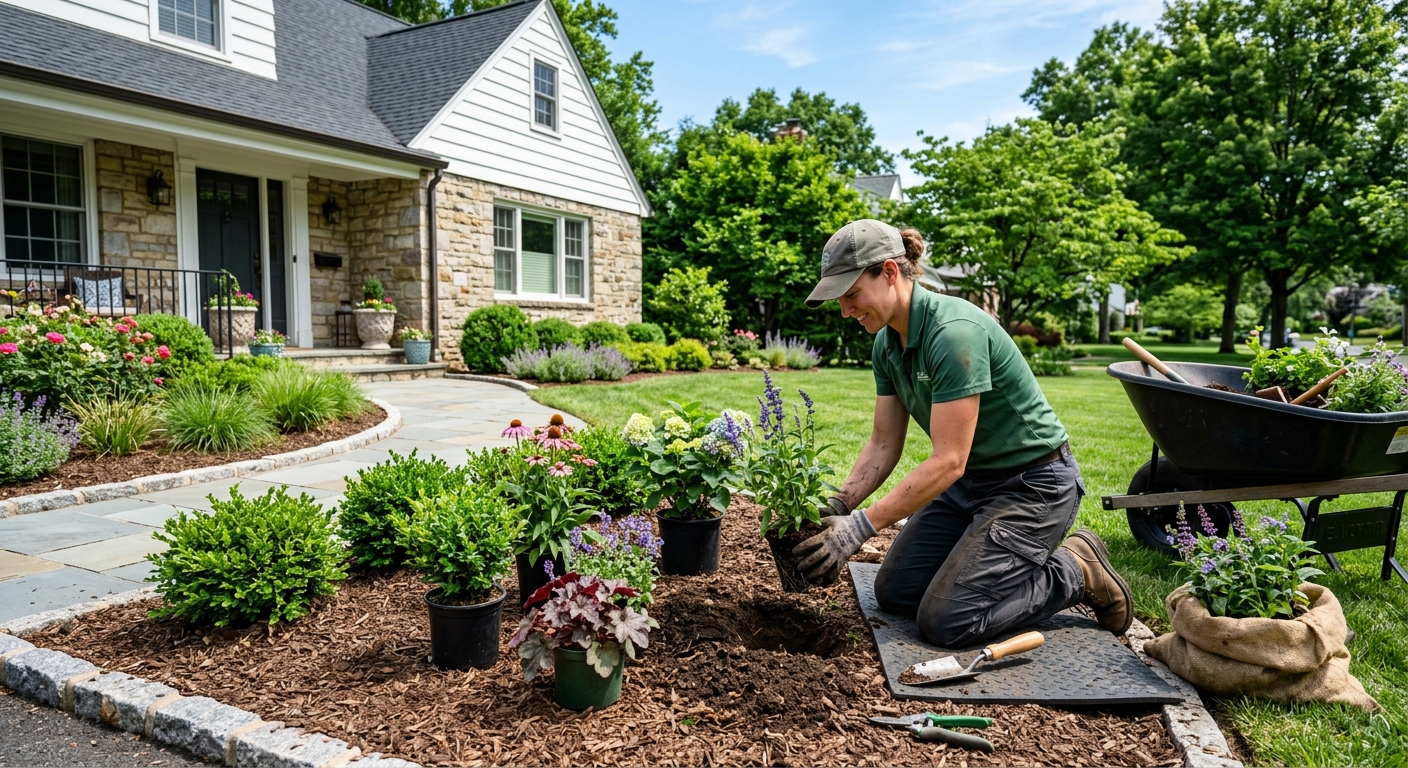
Landscaping options and costs in Bentley
Bentley, Alberta is the kind of place where a practical yard really matters: most homes are single-detached (74.7% of dwellings), and with 80.2% of households owning their homes, owners often invest early to get curb appeal and longer-lasting outdoor spaces. In the Red Deer economic region, landscaping demand tends to be especially strong in established residential pockets like the areas closer to downtown and along main-access corridors, where new driveways, patios, and easy-care gardens are top upgrades.
Because Bentley sits in plant hardiness zones 3a–3b, your effective landscaping season typically runs roughly May–October. Cool nights, chinooks, and pronounced freeze–thaw cycles increase the importance of correct base prep and deep, well-compacted construction under patios and retaining walls—especially before winter heave tests weak drainage and shallow footings. That reality also affects contractor availability: crews concentrate during the short season, so design-to-install scheduling and material lead times can influence your final budget.
Cost can also swing with site specifics common around older housing stock: 61.5% of homes were built before 1981, and those yards often need extra grading, drainage fixes, and soil amendment to support newer planting beds. If your goal is a complete refresh, use the comparison table below as a starting point for a realistic Red Deer-area budget.
| Service |
Description |
Season |
Price Range |
| Full landscape design and installation |
Site measurement, concept + planting plan, grading/drainage coordination, hardscape (where included), soil improvement, and full build-out |
May–October |
$8,000–$35,000 |
| Sod installation (supply, grade, lay, roll) |
Minor grading, soil prep, sod supply and installation, rolling for contact, starter fertilizer |
May–early September |
$1,500–$6,000 |
| Lawn seeding (grade, seed, starter fertilizer) |
Light grading, seed selection, starter fertilizer, seeding and initial water/coverage guidance |
May–August |
$900–$3,200 |
| Interlocking patio or walkway |
Excavation, compacted base (crushed stone), levelling sand, edge restraints, pavers, and final jointing |
May–October |
$4,000–$18,000 |
| Retaining wall (interlocking block) |
Layout, block installation, geogrid (where required), drainage gravel + weep management, compaction |
May–October |
$6,000–$30,000 |
| Tree and shrub planting |
Soil preparation, planting holes, amendments, mulching, staking (as needed), and establishment care guidance |
May–September |
$800–$8,000 |
Prices are estimates only and vary by project scope, site access and material selection.
What affects the price of landscaping in Bentley
In Bentley and the wider Red Deer-area market, the same “headline” landscaping job can come in 30–50% apart from quote to quote. That usually isn’t overcharging—it’s different assumptions about yard size, base preparation, and how much site repair is actually needed. In practice, a prairie-style upgrade that looks simple on paper (lawn + a few beds) often turns into a drainage and soil rebuild once contractors open up the grade and find compacted or poor-draining areas common on older properties.
The plant hardiness zone and frost dates directly shape cost. In zones 3a–3b, we select cold-hardy, drought-tolerant, wind-resilient plants, and we build to survive freeze–thaw cycles. That means deeper, well-compacted bases and proper subdrainage for hardscape—often the difference between a driveway that heaves in year three versus one that stays flat. Prairie regions also compress the workable window into roughly May–October, so design revisions, material delivery, and crew availability can affect labour budgets. Contractors in this region typically operate with local labour rates in the 20–30/hour range for labourers and higher equivalent costs for full crews, which is a big driver when projects require excavation, hauling, and repeated compacting passes.
Two concrete examples show how pricing moves: (1) upgrading from a small lawn seeding to sod generally increases cost fast—so if sod is in your plan, it often aligns with the mid-band of $1,500–$6,000 depending on square footage and how much grading is needed; (2) adding retaining walls can push into $6,000–$30,000 because block height, drainage requirements, and engineered considerations can increase material and labour. If your yard includes thicker frost-affected areas or older topsoil layers, soil amendment and grading can add cost but improves survival and reduces rework later.
| Price Factor |
Why It Matters |
Cost Impact |
| Yard size in sq ft — the primary cost driver for softscape |
More square footage means more labour hours, topsoil, seed/sod, mulch, and materials |
High (often the biggest variable) |
| Grading and drainage work — slope corrections add significant cost |
Proper fall away from foundations prevents pooling, basement seepage, and winter ice issues |
Medium to High |
| Drainage bed or French drain installation |
Intercepts and routes water under patios and near footing lines |
High when existing drainage is poor |
| Plant material tier — native shrubs vs. ornamental vs. mature specimen trees |
Smaller nursery stock is cheaper; mature trees cost more and require more labour for proper placement |
Medium to High |
| Hardscape vs. softscape ratio — walls and patios cost more per sq ft than lawn |
Hardscape requires excavation, compacted base, pavers/block, and finishing |
Medium to High |
| Irrigation system design and installation |
Zone timers, backflow protection, piping, and trenching for consistent watering during short summers |
Medium to High |
| Soil amendment and topsoil required |
Reduces compaction and improves rooting depth for prairie plants and turf |
Medium |
| Tree removal or stump grinding before new planting |
Grinding and disposal add equipment time and scheduling constraints |
Medium |
Permits & regulations in Alberta
For most routine landscaping in Alberta, you typically do not need a permit to plant shrubs, trees, or install sod and standard softscape (like seeded lawns and mulched beds). However, certain projects can require approvals—especially where retaining walls create structural or drainage impacts. As a practical rule of thumb, retaining walls above about 1.0 m (3.3 ft) commonly trigger a building permit in many Alberta municipalities, and you may be asked for engineered drawings depending on height and site conditions.
Grading is another frequent “surprise.” If proposed lot grading meaningfully changes drainage toward a neighbouring property or affects how stormwater connects to municipal systems, that can trigger approval requirements. Also, before digging for planting holes, irrigation trenches, or wall footings, have utility locates done so you avoid damaging buried services.
How to verify your contractor in Bentley (step-by-step): first, confirm their Alberta licence/registration status using the appropriate online provincial registry for the type of work they perform. Second, request a Certificate of Insurance (liability) showing current coverage and limits; ensure the policy matches landscaping/hardscape risk (equipment, site work, and property damage). Third, verify WSIB/WCB coverage (or clearance status if applicable) so you’re not exposed if a worker is injured on your property. Finally, ask for the clearance letter or proof document and keep copies with your contract.
Planning a landscape that thrives in Bentley's climate
Planning in Bentley means designing for survival first—then appearance. With Bentley’s zone 3a–3b conditions, short frost-free periods, and freeze–thaw cycles, your best strategy is to work with the climate rather than against it: choose zone-appropriate, wind-hardy plants, build correct drainage, and prepare foundations of patios and retaining walls for winter movement. That’s the difference between a yard that looks great for one season versus one that rebounds reliably.
1) Plant selection: Prioritise native and proven cold-hardy species that don’t need constant watering or heavy winter protection. Prairie favourites typically establish well and tolerate desiccating winter winds better than delicate ornamentals.
2) Sod vs. seed: Sod gives immediate green but costs roughly 3–4x per sq ft compared with seeding in most cases. The investment makes sense when you need quick visual impact or have erosion-prone areas; it may not be justified if you’re happy waiting through establishment. For budget context, sod installation typically lands in the $1,500–$6,000 band, while seeded lawn work usually costs less and fits well with a phased plan.
3) Drainage and grading: In Red Deer-area conditions, preventing pooling is critical—especially near foundations and downspout discharge points.
4) Hardscape base prep: Build with proper crushed stone layers, compaction, edge restraints, and adequate fall so water doesn’t sit. Retaining wall backfill and drainage gravel matter as much as the face.
5) Low-maintenance design: Use mulched shrub borders, groundcovers, and perennials with clear seasonal structure. Consider xeriscape-style planting and rain-garden pockets where water management helps reduce irrigation reliance during dry spells.
| Element |
Climate Consideration |
Maintenance Level |
Price Band |
| Sod lawn installation |
Needs proper grade and moisture management in May–early September to root before cool nights |
Medium (watering/establishment) |
$1,500–$6,000 |
| Native perennial garden |
Zone-appropriate plants tolerate prairie winds and recover after freeze–thaw |
Low to Medium |
$800–$5,000 |
| Mulched shrub border |
Thick mulch buffers winter wind burn and reduces summer moisture loss |
Low |
$1,200–$6,500 |
| Interlocking stone patio |
Requires strong base and drainage so frost movement doesn’t lift pavers |
Low |
$4,000–$18,000 |
| Retaining wall (block) |
Backfill and drainage gravel prevent water pressure and winter freeze heave |
Low to Medium (periodic checks) |
$6,000–$30,000 |
| Drip irrigation system |
Efficient watering supports drought-tolerant plants during short summers |
Medium (seasonal adjustments) |
$1,200–$5,500 |
How to choose a landscaping contractor in Bentley
Choosing the right contractor in Bentley starts with verification. In Alberta, ask for proof of the company’s licensing/registration relevant to the work they’re quoting, plus current liability insurance (Certificate of Insurance) showing they can cover property damage or on-site incidents. Next, confirm WSIB/WCB coverage: request the clearance letter or coverage documentation so you’re protected if a worker is injured. Don’t accept “it’s covered” without a document you can keep.
Then get 2–3 itemised written quotes that separate labour and materials—especially for excavation, base rock, geotextile (if used), drainage gravel, sod/seed quantities, and plant counts/sizes. A lump sum can hide scope gaps like whether disposal is included, whether compaction is included, and whether the contractor is responsible for replacing unsuitable soil removed during grading.
Read the scope carefully: is a permit pull included when required for retaining walls, and are utility locates included before digging? Ask about warranty terms. Look for a workmanship warranty (often covering settlement or installation issues) and confirm the manufacturer warranty for materials where applicable; also ask whether it’s transferable if you sell your home.
For payment schedule, never pay more than 10–15% upfront. Hold back a portion until substantial completion and final grade/cleanup are confirmed. Finally, insist on a written start date and completion estimate—Bentley’s May–October window is tight, and delays can affect plant survival.
- Ask for current liability insurance and keep a copy
- Verify WSIB/WCB clearance documents before work starts
- Confirm licensing/registration for the type of landscaping and hardscape work quoted
- Request itemised labour + materials quantities (sq ft, tonnes, plant counts)
- Confirm whether grading includes hauling off unsuitable soil
- Ask what the drainage solution is (French drain, bed, or corrected fall) and what gets installed
- Ensure base prep specs are stated (compaction layers, stone depth, edge restraints)
- Check if irrigation is designed for zone-appropriate watering and includes shutoff/backflow where needed
- Confirm sod/seed timing assumptions for Bentley’s season and establishment plan
- Ask who supplies topsoil/soil amendment and what soil quality standard is used
- Get warranty length and exclusions in writing
- Use a payment schedule with a 10–15% cap upfront and a holdback until completion
Red flags specific to landscaping contractors in Bentley: they won’t provide insurance/WSIB proof; they quote a “flat” price without site measurement or drainage assessment; they skip base compaction details but promise “no settling”; they push large upfront payments; or they avoid discussing freeze–thaw protection (base depth, drainage fall, and weep management behind walls).
Frequently asked questions — landscaping in Bentley
How do I compare landscaping quotes?
In Bentley, compare quotes line-by-line, not just the total. Ask for an itemised breakdown of labour hours versus materials quantities (sq ft for turf and patio, wall linear feet, plant counts and sizes, tonnes of base rock, and how much topsoil/soil amendment is included). Make sure grading and drainage scope is clearly described—especially because Red Deer-area freeze–thaw cycles expose weak drainage fast. Confirm whether disposal/hauling is included, whether utility locates are arranged before digging, and whether any required permits are included for retaining wall heights above the common ~1.0 m threshold. If a quote claims sod is cheaper, check if the subgrade prep is included; sod installation in this region is commonly budgeted around $1,500–$6,000, so unusually low pricing often means missing work. Also compare warranty terms for workmanship and plant establishment care.
How long does a landscaping project take in Bentley?
Timing in Bentley depends mainly on scope and weather, because the effective landscaping season is roughly May–October. A small sod job or planting refresh can take a few days once materials arrive, while grading and drainage improvements may add extra time due to excavation, base building, and curing/settling steps. Hardscape work like interlocking patios usually takes longer because of excavation, compacted base installation, and careful finishing. Retaining walls require additional time for block placement plus backfill and drainage gravel. Crew availability in the Red Deer region is also seasonal, so if you’re planning multiple phases (design, demolition, rough grading, then planting), book early. A full landscape design and installation often spans weeks to ensure proper sequencing and plant establishment, especially when soil amendment and irrigation are included.
What is the best grass type for a Bentley lawn?
For Bentley and the Red Deer region, the “best” turf is the one that establishes well in a short season and survives cold winters without constant resodding. In practice, many homeowners choose hard-wearing cool-season turf types blended for durability. The key is matching seed/sod selection to site conditions: sun exposure, soil drainage, and how much watering you can realistically provide during establishment. If your lawn area has uneven grade or tends to hold water, fix drainage first—grass will struggle even with the right seed. If you’re aiming for faster results, sod is typically easier to get instant visual coverage, budgeted around $1,500–$6,000, but it must be installed on properly prepped, compacted grade. If you’re working with a tighter budget, seeding is often a good long-term value when paired with correct grading and starter fertilizer.
When should I aerate and overseed my lawn in Bentley?
In Bentley, aeration and overseeding are typically most successful in late spring or early fall—aiming for periods when the grass can grow actively before cold weather slows recovery. Because freeze–thaw cycles and cool nights are common, avoid overseeding too late in the season if seedlings won’t establish before temperatures drop. Plan aeration when soil moisture is workable (not frozen solid) so cores remove effectively without smearing the ground. Overseed only after you confirm grade is set and that drainage is adequate; otherwise, seed can wash or fail to root in low spots. Use a light starter fertilizer and keep top growth supported during establishment with careful watering (enough to germinate, not constant saturation). If you’re unsure about timing, ask your contractor to propose a calendar based on your actual lawn condition and last frost timing in the area.
What trees grow best in Bentley's climate zone?
For Bentley’s zone 3a–3b climate, look for cold-hardy, wind-tolerant species that can handle -30°C events and winter desiccation. Many successful landscaping plans rely on hardy selections like certain native or adapted deciduous trees and conifers that tolerate Alberta winters. The right choice also depends on your site: whether the tree is exposed to drying winds, how much sun it gets, and whether soil drains well (poor drainage can increase winter stress). If your yard is older and has compacted soil, plan for soil amendment and a planting pit that supports deep rooting. A good contractor will match the species to your spacing needs and maintenance expectations (size at maturity, natural shape, and whether pruning is expected). For budget planning, tree and shrub planting commonly lands around $800–$8,000 depending on whether you’re adding multiple shrubs, a feature tree, or a mix.
How much does sodding a yard cost in Bentley?
Sodding in Bentley typically costs in the $1,500–$6,000 range, depending on yard size, how much grading is needed, and what’s under the existing lawn (compaction, low spots, or drainage issues). The biggest cost difference usually isn’t the sod itself—it’s the prep. If contractors need to correct grade so water drains away from the foundation, add topsoil/soil amendment, and compact the base, your total increases. To compare quotes fairly, ensure each proposal includes supply, grade, lay, and roll, plus starter fertilizer and clear establishment guidance. For best results in Bentley’s short season, sod should be installed in the recommended window (commonly May through early September), so roots can anchor before cool nights slow growth. If you want, ask for a per-sq-ft breakdown so you can see how much of your budget is going to prep versus turf material.