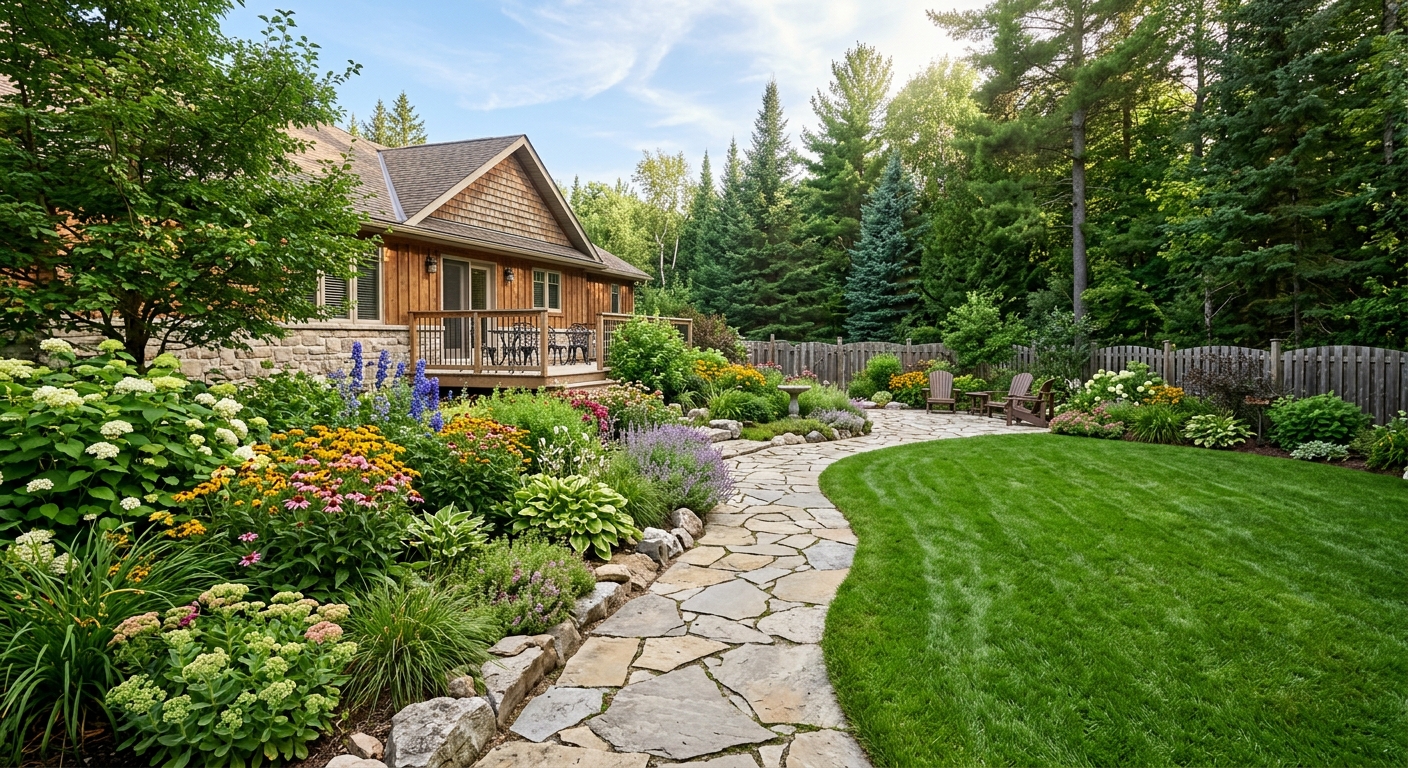
Landscaping options and costs in Delwood
Landscaping in Delwood, Alberta usually starts with a practical question: what will actually survive our freeze–thaw winters and late-spring frosts—without blowing the budget. Delwood is a smaller community (population 3,379, Statistics Canada, 2021 Census), and most properties are single-detached homes with yard space, which is a big reason homeowners here invest in hardscape and plant beds rather than only small “curb refresh” jobs. That incentive matters because Calgary-area labour and materials are priced to match the scope: comprehensive projects across the region often land in the mid five-figure range once grading, hardscape, planting, and irrigation are included.
In Calgary’s Prairie plant hardiness zones 3–4, costs are driven by more than aesthetics. Deep, well-compacted bases and proper drainage are essential for patios and walkways to prevent heaving and settlement. Freeze–thaw cycles also mean retaining walls and steps require robust backfill and drainage layers—those are labour-heavy items even when the visible surface looks straightforward. Availability of experienced crews can tighten during peak spring and early fall, which can affect scheduling and mobilization rates. Demand is especially strong in family-heavy pockets and newer subdivisions around the Delwood area where yards are being upgraded from builder landscaping to mature, low-water designs.
Below is a quick comparison of common options and what they typically cost, so you can map your priorities to a realistic budget.
| Service |
Description |
Season |
Price Range |
| Full landscape design and installation |
Site walk, design, grading plan, base prep, hardscape, planting, and irrigation setup (where required) |
Late spring to early fall (best scheduling window) |
$12,000–$45,000 |
| Sod installation (supply, grade, lay, roll) |
Minor grading, topsoil/compaction prep, premium sod supply, install, roll, and initial watering plan |
May to September |
$2,500–$6,000 |
| Lawn seeding (grade, seed, starter fertilizer) |
Regrade and seed prep, seed and starter fertilizer application, light cover and watering plan |
April to early June; re-seed in August (weather-dependent) |
$1,500–$3,800 |
| Interlocking patio or walkway |
Excavation, deep base, compaction, edging, and interlocking stone set with proper drainage |
May to October |
$8,000–$30,000 |
| Retaining wall (interlocking block) |
Retained wall layout, engineered-style base build (as needed), drainage/weep provisions, and block install |
May to October |
$12,000–$40,000 |
| Tree and shrub planting |
Soil improvement, hardy plant selection, staking (if needed), mulching, and establishment watering guidance |
Spring and fall planting windows |
$800–$15,000 |
Prices are estimates only and vary by project scope, site access and material selection.
What affects the price of landscaping in Delwood
If you get three quotes for the “same” landscaping idea in the Calgary region, it can still swing 30–50%—especially when grading, drainage, and soil prep aren’t identical. A smaller crew might price a lighter base or assume existing drainage is fine, while a more thorough quote accounts for frost-related risks (heaving, settlement, and water migration toward foundations). In Prairie zone 3–4 conditions, even a short walk from a back gate to the backyard can increase labour time, equipment needs, and material handling—so two patios that look similar on a plan can have very different real costs.
Local hardiness and frost timing directly affect what can be installed and how long crews can stay on site. Retaining wall and hardscape bases generally need to be built to withstand deep freeze–thaw cycles; that often means digging deeper, compacting more layers, and using drainage stone. In colder Prairie regions (Zone 2–4), we rely on cold-hardy, wind-tolerant, drought-managed plants rather than lush broadleaf palettes that need more consistent moisture. That’s why irrigation design (zoning, smart controllers, and drip where appropriate) can change both installation time and ongoing watering costs—particularly during periodic restrictions and dry spells.
Two concrete Delwood examples: (1) If your patio abuts a sloped lawn, expect added grading and drainage work that can push the job toward the higher end of typical hardscape pricing (for many homeowners, interlocking work can run in the $8,000–$30,000 band depending on excavation depth and base build). (2) If you’re moving from seed to sod for a full front lawn, sod can add significant cost; many projects land in the $2,500–$6,000 range once prep is included, whereas seeding may be more budget-friendly when timing works.
Finally, housing age matters: older yards often have compacted soils, buried landscaping debris, or settlement lines, which increases soil amendment and labour. In a community like Delwood (population 3,379, Statistics Canada, 2021 Census), most homeowners are balancing “fix what exists” against “upgrade what will last,” and that’s where price differences show up most.
| Price Factor |
Why It Matters |
Cost Impact |
| Yard size in sq ft — the primary cost driver for softscape |
More area means more excavation prep, soil, mulch, and plant material (or turf coverage) |
Can change total price by 20–40% |
| Grading and drainage work — slope corrections add significant cost |
Proper drainage prevents pooling, frost heave, and foundation moisture |
Often adds 10–25% on top of base estimates |
| Drainage bed or French drain installation |
Relieves saturated zones; requires rock, fabric, and controlled discharge |
Commonly increases costs by $1,500–$8,000 depending on length |
| Plant material tier — native shrubs vs. ornamental vs. mature specimen trees |
Hardy natives are more cost-stable; larger specimens cost more and may need extra crew time |
Mature trees can add $500–$5,000 per specimen |
| Hardscape vs. softscape ratio — walls and patios cost more per sq ft than lawn |
Stonework requires deeper excavation, base, edging, and compaction |
Jobs with more patio/walkway area trend higher by 15–35% |
| Irrigation system design and installation |
Zoning, wiring, and freeze-proof components increase labour and materials |
Can add 8–20% to a full install |
| Soil amendment and topsoil required |
Improves rooting and reduces winter stress; clay-compacted yards need more amendment |
Often adds $500–$4,500 based on depth and area |
| Tree removal or stump grinding before new planting |
Access, equipment, and disposal determine cost quickly |
Can add $300–$3,500+ depending on size and access |
Permits & regulations in Alberta
In Alberta, most basic landscaping and softscape work typically does not require a permit, including planting beds, seeding, sodding, mulching, and normal driveway-adjacent grade touch-ups. For retaining walls, however, rules often change with wall height. In many municipalities across the province, retaining walls above roughly 1.0 m (3.3 ft) commonly require a building permit and, in some cases, engineered drawings—because the foundation, drainage, and structural stability risks are higher. If your project involves regrading that changes how water drains toward a neighbouring property or toward storm sewer connections, approvals may also be triggered to ensure you’re not creating new drainage impacts.
Regardless of permit needs, always plan for utility safety: call for utility locates before digging any planting holes, trenching for drainage, or installing wall footings. That protects your driveway, landscaping trench lines, and underground services.
Step-by-step verification for homeowners in Delwood: (1) Confirm the contractor’s Alberta business licence/registration where applicable by checking their official listing information. (2) Request a current certificate of insurance showing general liability coverage and verify the company name and address match the quote and invoice. (3) Ask for proof of WSIB/WCB coverage (or proper clearance where required) before work begins—then keep it on file. (4) For hardscape or wall work that may require permitting, ask who will apply for the permit and whether the quote includes permit fees, drawings (if needed), and inspection scheduling.
Finally, confirm local irrigation and water-use bylaws and install freeze-proof irrigation components—Delwood yards are exposed to sharp freeze cycles, and smart zoning helps you stay compliant while protecting plant roots.
Planning a landscape that thrives in Delwood's climate
To design a landscape that thrives in Delwood, build around our short, cold winters and the reality of freeze–thaw cycles, rather than trying to force a “coastal” look. Start with plant selection: prioritize native and zone-appropriate species that can handle Prairie winds, winter dieback, and dry periods once established. In Calgary’s zones 3–4, winter protection like good mulching and avoiding trapped moisture around crowns can matter more than extra fertilizing.
Next, decide between sod and seeding with full expectations. Sod gives instant curb appeal, but it’s typically more expensive because you’re paying for the grown turf and installation labour; in many Calgary-area quotes, sod may land around the $2,500–$6,000 range for typical front-yard coverage once prep is included. Seeding is usually lower cost (often $1,500–$3,800 depending on soil corrections), but it needs the right timing and consistent early watering to establish roots.
Drainage and grading are non-negotiable in Calgary. If water pools near foundations or patios, you’ll see heaving, settlement, and faster surface wear. That’s why base prep to the frost line and proper drainage layers behind walls and under pavers directly affect long-term cost. For low maintenance, use groundcovers, mulched shrub borders, and hardy perennials rather than broad lawns that need frequent mowing, watering, and spot repairs.
Where budget allows, consider xeriscape strategies: drip irrigation for targeted beds, smart controllers, and rain-garden-style grading to capture downspout runoff. That approach can be more defensible in Alberta’s dry stretches than water-hungry planting layouts.
Dollar example: If you’re tempted to pour money into extra turf instead of fixing poor drainage, it often isn’t justified. A modest drainage correction before seeding can reduce ongoing patching, while adding sod without addressing pooling may still leave you with expensive rework after winter.
| Element |
Climate Consideration |
Maintenance Level |
Price Band |
| Sod lawn installation |
Establishment needs stable spring/early summer conditions; deep compaction and correct base prevent winter heave |
Low to moderate (early watering required) |
$2,500–$6,000 |
| Native perennial garden |
Better survival in zone 3–4; supports wind tolerance and drought resilience after rooting |
Low (mulch refresh and seasonal tidy) |
$4,000–$12,000 |
| Mulched shrub border |
Mulch buffers temperature swings and reduces evaporation; spacing protects from winter damage |
Low (weeding manageable with proper weed barrier strategy) |
$2,500–$9,000 |
| Interlocking stone patio |
Requires deep, well-compacted base and drainage slope to prevent freeze-related movement |
Low (occasional cleaning, joint sand refresh) |
$8,000–$30,000 |
| Retaining wall (block) |
Needs drainage backfill and weeping layers; built to handle freeze–thaw expansion forces |
Low (periodic inspection of drainage outlets) |
$12,000–$40,000 |
| Drip irrigation system |
Zoning protects beds and reduces waste; freeze-proof components required |
Low to moderate (seasonal adjustments) |
$1,800–$8,500 |
How to choose a landscaping contractor in Delwood
Choosing the right landscaping contractor in Delwood starts with proof, not promises. First, verify Alberta licensing/registration information where applicable to the business and ask for their WSIB/WCB coverage status before the first shovel goes in the ground. Next, request a certificate of insurance and confirm general liability coverage is active, with the correct legal business name matching the quote and invoice. If the contractor is doing anything that could injure workers or affect your property (excavation, wall footings, stump grinding, heavy equipment), you want the paperwork on your desk before work begins.
Get 2–3 itemised written quotes—not just one lump-sum number. A solid quote breaks out labour and materials separately for grading, base prep, drainage (if required), stone/blocks, topsoil/soil amendment, plants, and irrigation components. Confirm what’s included: disposal of excess soil, permit pulling (if a retaining wall needs it), utility locates coordination, and whether cleanup and final walk-through are part of the contract.
Warranty matters in Calgary’s conditions. Ask for the workmanship warranty length and what it covers (settlement corrections, stone movement, planter soil performance). Also clarify product/manufacturer warranties for irrigation parts or plant material, and whether warranties transfer if you sell your home. For payments, never pay the full amount upfront—generally keep deposits to 10–15%, then use milestone payments tied to measurable progress. Finally, insist on a start date and completion estimate in writing, because weather windows in zone 3–4 can shift scheduling.
- Ask for Alberta proof of licensing/registration and confirm it matches the contract
- Request current liability insurance and verify policy dates before work starts
- Confirm WSIB/WCB coverage or clearance letter and keep a copy on file
- Insist on utility locates before digging for trenching, drains, or wall footings
- Use itemised quotes (labour + materials), not “one price covers everything”
- Verify inclusions: excavation depth, base layers, compaction, and drainage slopes
- Check exclusions: plant replacements, topsoil quality, disposal, and late-season irrigation
- Confirm permit responsibility for retaining walls (where required) and any inspections
- Require a workmanship warranty term in writing and get details of what’s covered
- Review the payment schedule; avoid paying more than 10–15% upfront
- Request a timeline with weather contingency (how they protect unfinished bases)
- Ask who will manage jobsite cleanup and final grading so runoff doesn’t change
Red flags I see in Delwood: (1) quotes that don’t specify excavation depth or base build for patios/walkways, (2) no written warranty or “we’ll handle it” language without coverage details, (3) refusal to provide insurance/WSIB/WCB proof, (4) large upfront payments beyond 10–15%, and (5) vague scopes that omit disposal, compaction standards, or irrigation freeze-proofing.
Frequently asked questions — landscaping in Delwood
How much does professional landscape design cost?
In Delwood and across the Calgary region, professional landscape design is commonly bundled with installation or priced as a standalone design package. Standalone concept-to-plan work often starts around the lower end of the broader “design & installation” budgeting range, and then the creditable portion is applied when you proceed with construction. For many homeowners, the most practical approach is to budget for full-service design and installation, which commonly falls in the $12,000–$45,000 range depending on the amount of grading, hardscape, and planting. The climate here matters: designers who plan for zone 3–4 hardiness and freeze–thaw drainage needs usually include more detailed base and slope notes, which can raise early cost but reduce expensive rework later. If you want to stay lean, ask for a scaled plan that focuses on one “anchor” area (like the front entry or patio) first.
How do I compare landscaping quotes?
When comparing quotes in Delwood, treat “apples to apples” as the goal. Ask each contractor for an itemised scope: grading and drainage inclusions, base prep depth and compaction steps for stone, drainage rock/French drain details, edging type, disposal, and whether irrigation is included. Quotes can differ by 30–50% if one contractor assumes minimal excavation while another plans for frost-safe base builds and proper drainage slopes. Also compare plant sizing and tier: native shrubs vs. ornamental varieties vs. mature trees will swing price quickly. If the quotes mention sod or seeding, compare area coverage and prep quality—sod jobs in the $2,500–$6,000 range can still differ in topsoil depth and compaction. Finally, verify whether permits (if applicable to retaining walls above about 1.0 m) and inspections are included, and check warranty terms and the payment schedule.
How long does a landscaping project take in Delwood?
Project duration in Delwood depends on weather windows and how complex the base work is. Softscape-only jobs like shrub planting can be completed quickly once plants arrive, but patios, walkways, and retaining walls require deeper excavation and staged base prep to handle freeze–thaw performance. In practical terms, many backyard refresh projects take from one to several weeks, while larger full landscape installs may run longer depending on grading, irrigation trenching, and plant maturity. Spring and early fall are usually the most workable times in zone 3–4, but late spring frosts and early cold snaps can interrupt scheduling. If a site has drainage issues, expect extra time for troubleshooting and correcting slopes before stone or turf goes in. A contractor should provide a start date and completion estimate in writing, plus what happens if weather delays base work—good contractors protect exposed base layers and prevent water pooling. Don’t rely on verbal timing; request a timeline tied to each task.
What is the best grass type for a Delwood lawn?
For Delwood lawns, homeowners typically do best with cold-hardy turfgrass mixes suited to Prairie winters and summer dry stretches. Many contractors recommend blends that handle frost cycles and establish robust rooting in Calgary-area conditions, especially where irrigation is managed efficiently. The “best” grass depends on whether you’re doing sod or seeding and how much sun your yard gets. If you’re looking at sod, choose a turf option that matches your site’s sun exposure and that a contractor can source reliably in peak season. If you’re seeding, it’s important to prep properly (correct low spots, amend compacted soil, and use starter fertilizer) so the lawn can establish before heat and dryness. As a budgeting guide, lawn seeding projects often come in around $1,500–$3,800, while sod installs commonly run $2,500–$6,000 once prep is included. Ask your contractor to explain the turfgrass choice in writing based on your yard’s sun and drainage.
When should I aerate and overseed my lawn in Delwood?
In Delwood and the broader Calgary region, timing is everything because cold snaps and spring frosts can disrupt establishment. Aeration is usually most effective when the lawn is actively growing and can recover quickly—commonly in spring or early fall when temperatures are favourable and soils aren’t frozen solid. Overseeding generally follows aeration once you can keep the seed consistently moist during germination. Because Delwood sits in zone 3–4, you should avoid late-season seeding right before deep cold if you can’t protect the lawn with proper watering. Also, if your lawn has drainage or compaction issues, address those first—core aeration helps, but it doesn’t replace grading fixes if water pools. If you’re choosing between seeding and sod, seeding may be the better route in shoulder seasons when it’s timed right. For homeowners budgeting, seeding often aligns with $1,500–$3,800 depending on grade and prep.
What trees grow best in Delwood's climate zone?
Delwood’s zone 3–4 climate favours hardy trees that tolerate cold, wind, and dry spells once established. In Calgary-area landscapes, popular choices include cold-tolerant varieties such as certain spruces and pines, plus dependable ornamentals and street trees that can handle Alberta winters. The “best” tree depends on your yard’s sun, soil, and how much space you have for mature width—many common problems come from planting too close to houses, fences, or underground utilities. A smart approach is to match tree form to your site: wind-protected areas can handle slightly larger specimens, while exposed lots benefit from more resilient forms and spacing for airflow. If you’re planning a multi-year planting, pair trees with shrub understory and a mulched border to reduce evaporation and winter stress. For pricing, tree and shrub planting jobs often fall in the $800–$15,000 band depending on the number of plants and whether you need soil amendment. Always confirm root-zone clearance and allow for mature size, not just the planting size.