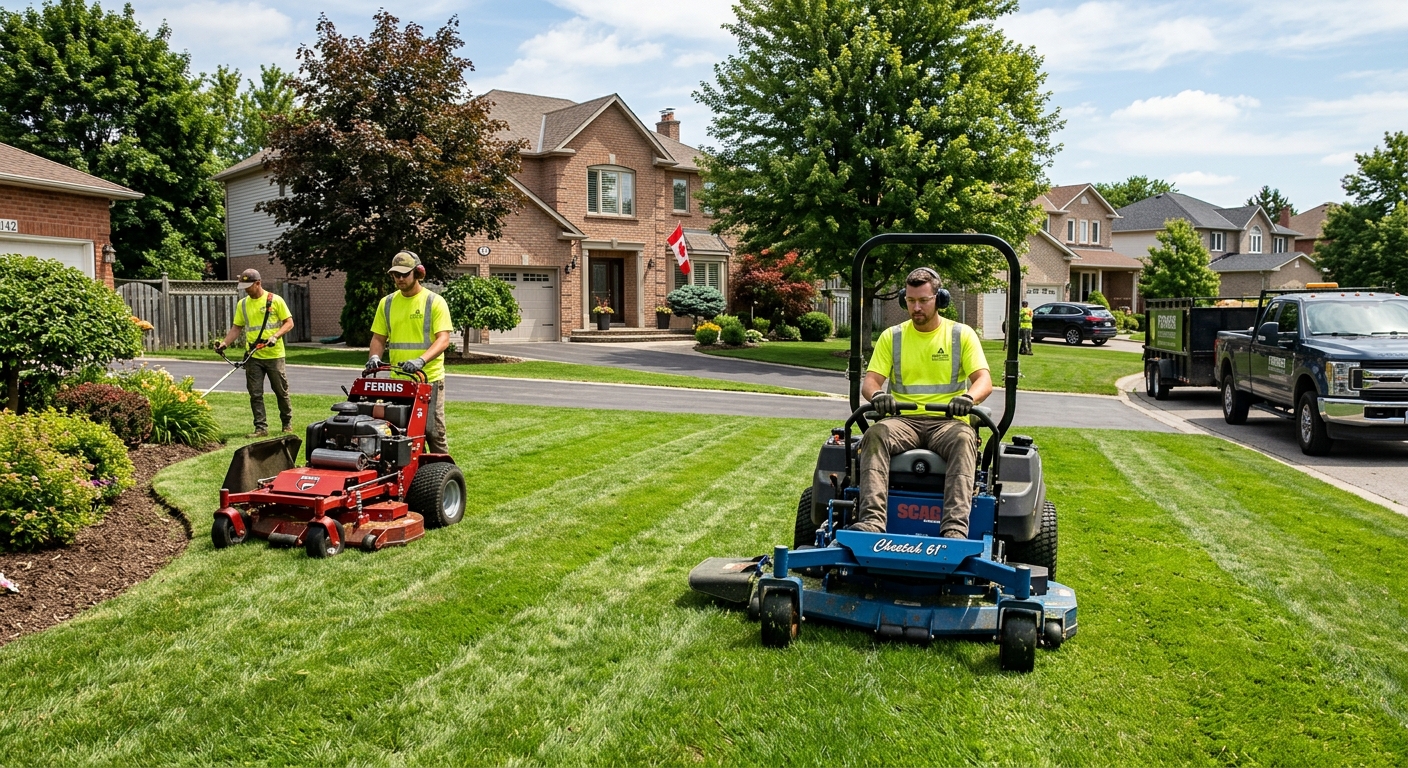
Landscaping options and costs in Dover
Dover, Alberta is a neighbourhood where homeowners tend to invest in their outdoor space, especially given the area’s growing community—Dover sits within a Calgary region of 10,795 residents recorded in the 2021 Census (Statistics Canada, 2021 Census). Most lots have enough yard area to justify either a full makeover or targeted improvements, and in a prairie climate that means your landscaping needs to survive freeze–thaw cycles, wind, and dry spells without constant rework.
In Dover, pricing is shaped by Calgary-area availability and the realities of working in Prairie zones 3–4: late-spring frosts and early fall cold snaps compress the season for planting and soil work. Freeze–thaw can also punish anything built on shallow, poorly compacted bases—especially patios, walkways, and retaining wall footings—so contractors spend more time on deep excavation, drainage, and compaction before any hardscape goes down. Labour remains a major portion of total cost in the Calgary market (often 40–60% across comprehensive projects), and that’s why detailed grading, base preparation depth, and material selection strongly influence your final quote.
Contractor demand is especially high in Dover’s newer, developing pockets such as the residential fringes near schools and main collector roads, where driveways, walks, and curb-to-yard transitions get upgraded soon after occupancy. If you’re comparing scopes, the table below sets realistic ranges for common Dover landscaping packages—then we’ll unpack what moves those numbers up or down.
| Service |
Description |
Season |
Price Range |
| Full landscape design and installation |
Concept + layout, grading/drainage coordination, base prep, hardscape, planting plan, and installation (softscape + hardscape) |
Mid-April to mid-October (weather-dependent) |
$15,000–$50,000 |
| Sod installation (supply, grade, lay, roll) |
Soil prep and levelling, sod supply, lay/roll, starter fertilizer, and initial watering guidance |
Late April to early September |
$1,800–$6,000 |
| Lawn seeding (grade, seed, starter fertilizer) |
Light grading/soil conditioning, seed, starter fertilizer, and topdressing where needed |
May to early July (best germination windows) |
$1,500–$4,200 |
| Interlocking patio or walkway |
Excavate, compacted base, bedding sand, pavers, edging, and joint sand; optional slope/grading tie-in |
May to September |
$8,000–$28,000 |
| Retaining wall (interlocking block) |
Layout, excavation, drainage behind wall (where required), geotextile, compacted base, block installation, cap/finish |
May to September |
$12,000–$40,000 |
| Tree and shrub planting |
Soil amendments, planting holes, setting/mulch, staking if needed, and watering plan for establishment |
Late April to early October |
$800–$15,000 |
Prices are estimates only and vary by project scope, site access and material selection.
What affects the price of landscaping in Dover
For the same “looking” landscaping job in Dover, Alberta, quotes can swing by 30–50% across Calgary and the wider region because contractors often price the unseen work—grading depth, drainage solutions, haul/disposal, and the labour time it takes to get foundations and bases right. In a freeze–thaw landscape, a minor difference in base thickness or compaction effort can mean major differences in longevity, and that’s where costs move. Labour also varies with demand: when multiple crews are booked during the short installation window, scheduling and production rates change.
On top of that, Dover sits in Prairie plant hardiness zones 3–4, where late-spring frosts and early fall cold snaps affect both what survives and how long crews can safely plant, backfill, and finish. Retaining wall base depth must reach below the frost line, and drainage details become non-negotiable to prevent heaving and water pressure. By comparison, coastal BC clients (zone 7–8) can plant over a longer season and often use broader palettes, but heavy-rain drainage design still drives scope. In the dry BC interior, watering rules push drip irrigation and xeriscaping, while southern Ontario (zone 5–6) may have a more forgiving planting rhythm but still faces summer dry spells that influence irrigation and turf choices.
Two common Dover examples: (1) if your yard slopes toward your foundation or neighbour’s property, correcting it with more excavation and drainage can move a walkway/patio from a mid-range build into the higher end of the $8,000–$28,000 band. (2) If you choose mature trees instead of smaller nursery stock, your planting band can jump within the $800–$15,000 range because mature specimens require extra labour, staking, and soil volume for roots to establish before winter.
Finally, housing age matters. Older properties often have settled topsoil, buried debris, or outdated drainage patterns. When we uncover that during excavation, it’s not “extra work”—it’s the work required to keep patios, walls, and planted areas from failing early.
| Price Factor |
Why It Matters |
Cost Impact |
| Yard size in sq ft — the primary cost driver for softscape |
More area means more topsoil/seed/sod, more edging, and more planting labour and material volume |
Small yards can land near the bottom of bands; large reworks can push totals toward the high end |
| Grading and drainage work — slope corrections add significant cost |
Correcting slopes affects how fast water leaves and how stable bases stay through freeze–thaw |
Can add thousands, especially when regrading requires haul and disposal |
| Drainage bed or French drain installation |
Helps manage subsurface water behind walls and under patios/walkways |
Often shifts jobs into a higher pricing tier if excavation is extensive |
| Plant material tier — native shrubs vs. ornamental vs. mature specimen trees |
Cost rises with size, root ball volume, staking needs, and planting labour complexity |
Mature trees commonly push toward the upper portion of the planting range |
| Hardscape vs. softscape ratio — walls and patios cost more per sq ft than lawn |
Pavers, block systems, base materials, and labour are heavier and more time-intensive |
A higher hardscape ratio increases total by the thousands |
| Irrigation system design and installation |
Zoned systems and drip lines reduce watering waste and improve establishment in short seasons |
Complex layouts and more zones increase material and labour |
| Soil amendment and topsoil required |
Inadequate soil can cause poor turf germination and plant stress; amendments add volume and compaction work |
Can be a major swing factor when the yard starts “thin” or compacted |
| Tree removal or stump grinding before new planting |
Clearing changes access, disposal, and excavation requirements |
Often adds significant labour and equipment time |
Permits & regulations in Alberta
In Alberta, most landscaping and planting work—including sodding, lawn seeding, garden planting, and typical softscape installation—usually does not require a permit. Where permits commonly come into play is when you’re altering the structure and drainage in ways that affect safety or neighbouring properties. For retaining walls, permits are typically required above a height threshold (commonly around 1.0 m / 3.3 ft in many municipalities) and may involve engineered drawings depending on height, condition, and soil conditions.
Another area to confirm is lot grading. Changes to drainage that could redirect water toward a neighbour, a storm sewer connection, or that affects how surface water flows off your property can trigger approval requirements. Even when a permit isn’t required, a responsible contractor will document drainage intent in writing and ensure downspouts and weeping points are addressed.
Before digging any planting holes or wall footings in Dover, call utility locates (e.g., Alberta One-Call) to mark underground services. Utility strikes can be costly and dangerous—especially when excavators are deepening trenches for drainage or block wall bases.
To verify a contractor in Dover step-by-step: (1) check Alberta licensing/registration details through the province’s online contractor/registry tools where applicable; (2) request a current certificate of insurance (general liability) naming you as certificate holder if required, and confirm coverage limits are appropriate for the job size; (3) confirm WSIB/WCB coverage and ask for clearance documentation—don’t accept “we’ll insure later.”
Planning a landscape that thrives in Dover's climate
Planning for Dover, Alberta starts with working with the prairie reality: your yard needs cold-hardy plants and strong drainage to handle severe freeze–thaw cycles. In zones 3–4, plant selection is your first cost-control tool—choose native and zone-appropriate species that establish quickly, require less watering, and can handle winter wind and temperature swings. Using mulch and proper spacing also reduces winter heaving risk around perennials and shrub roots.
Next, decide between sod and seed with eyes wide open. Sod gives instant visual results, but it costs roughly 3–4x more per sq ft than seeding once you include preparation and turf supply. If you’re trying to finish curb appeal fast for an upcoming sale, sod can be justified. For example, a typical front-lawn refresh can sit around $1,800–$6,000 for sod installation, while seeding for a similar area often lands closer to $1,500–$4,200, provided the soil is workable and you can manage watering through germination.
In Calgary-area pricing, drainage and grading are where budgets are won or lost. Ensure patio and walkway bases are excavated deep enough and compacted well, and keep water from pooling near foundations. For hardscape like patios and block walls, proper base prep and sub-drain choices reduce settlement later.
Finally, go low-maintenance without going bare. Groundcovers, mulched borders, and perennials help you avoid constant edge trimming and re-sodding. If you want a low-water yard, build a xeriscape foundation using drought-tolerant plants and consider a rain garden or smart zoning with drip irrigation—especially valuable in short seasons where establishment time matters.
| Element |
Climate Consideration |
Maintenance Level |
Price Band |
| Sod lawn installation |
Needs consistent moisture during establishment; must be laid after freeze risk and on properly graded base to avoid heaving |
Medium (initial watering + a first-year mow/weed control) |
$1,800–$6,000 |
| Native perennial garden |
Better survival in zone 3–4 with less winter protection; mulch helps limit soil temperature swings |
Low to medium (spring cleanup and occasional weeding) |
$1,500–$7,500 |
| Mulched shrub border |
Wind-hardy shrubs reduce winter damage; mulch moderates freeze–thaw at the root zone |
Low (annual top-up mulch + light pruning) |
$800–$6,000 |
| Interlocking stone patio |
Requires deep, well-compacted base and correct slope so water doesn’t infiltrate foundation areas |
Low (occasional joint sand top-up) |
$8,000–$28,000 |
| Retaining wall (block) |
Base depth and drainage are critical in freeze–thaw; poor drainage can cause bowing or failure |
Low once built (periodic inspection of drainage outlets) |
$12,000–$40,000 |
| Drip irrigation system |
Zoned drip supports establishment of perennials/shrubs and reduces wasted water in prairie conditions |
Medium (seasonal start-up checks and winterisation) |
$2,000–$8,000 |
How to choose a landscaping contractor in Dover
Choosing the right landscaping contractor in Dover, Alberta is mostly about verifying details before you sign anything. Start with Alberta coverage: ask for proof of general liability insurance (and make sure it’s current), and request WSIB/WCB documentation. Here’s how to check each: (1) licensing/eligibility—look for the contractor’s Alberta registration/licence information through provincial online resources where available; (2) insurance certificate—request a COI with your address (or listed as certificate holder if required), confirm dates and coverage limits, and verify the company name matches the quote; (3) WSIB/WCB—ask for a clearance letter or status confirmation and keep a copy for your records.
Then get 2–3 itemised written quotes. A good quote separates labour and materials (including pavers/block quantity, base materials, soil volume, seed/sod type, and topsoil amount) instead of using one lump sum. Read the scope carefully: what’s excluded (tree removal, disposal, rock/sod base removal), is permit pulling included (when required), and is site cleanup and debris disposal part of the price?
Warranty matters. Ask for the workmanship warranty length and whether product warranties for plants or materials are provided directly by manufacturers. Also confirm if warranties are transferable to future homeowners.
For payment, don’t pay more than 10–15% upfront. Hold back a portion until the job is complete and deficiencies are corrected. Finally, insist on a written start date and realistic completion estimate in Dover’s short installation season—weather delays happen, but you shouldn’t be left without timelines or communication.
- Ask for Alberta insurance and WSIB/WCB proof before scheduling—no exceptions.
- Confirm the quote includes grading and drainage specs, not just “install patio.”
- Require itemised quantities (sq ft, linear ft, cubic yards) for base, topsoil, and materials.
- Check whether disposal/haul-away is included.
- Verify who will do utility locates and when excavation starts.
- Confirm product specs: sod type/seed mix, tree size, block system details, and edging.
- Look for written warranty terms for workmanship and materials.
- Ask how they handle frost/temperature risk in spring/fall for backfill and planting.
- Ensure they include joint sand, compaction method, and slope/grading to drain properly.
- Request a site visit or measurement method—avoid “estimate by photo” only.
- Get a written schedule and weather contingency plan.
- Use a payment schedule with a final holdback until you approve the completed work.
Red flags in Dover typically include: (1) refusing to provide insurance/WSIB/WCB documentation; (2) quoting without site measurements or drainage discussion; (3) starting excavation without confirming utility locates; (4) vague “we’ll do base work” language with no depth/compaction details; and (5) demanding large upfront payments (well above 15%).
Frequently asked questions — landscaping in Dover
What trees grow best in Dover's climate zone?
Dover sits in Alberta’s Prairie planting range (zones 3–4), so the best-performing trees are cold-hardy, wind-tolerant, and available in nursery stock suited to our winters. In practice, homeowners here often do well with hardy options like Manitoba maple (where site and moisture allow), green ash, and certain spruce varieties for structure and year-round presence. Smaller ornamental options can also work, but winter burn and wind exposure are common failure points if the tree is undersized or planted in a harsh microclimate. A contractor should also match the tree size to your soil volume—new developments sometimes have compacted subsoil that needs amendments and good watering during establishment. If you’re investing in larger trees, factor that into your $800–$15,000 planting band because mature specimens typically require more labour, staking, and root-supporting soil volume.
How much does sodding a yard cost in Dover?
Sodding in Dover usually costs based on total sod area plus how much soil prep your lot needs. For many average residential re-sods, homeowners land within the $1,800–$6,000 range when we include grading/levelling, sod supply, laying/rolling, starter fertiliser, and initial establishment guidance. If the yard has soft, uneven grade, buried debris, or drainage issues near a foundation, the prep effort increases—and that’s when quotes move upward. Timing also matters: sod needs stable conditions so it can root before heat and then before fall cold snaps. If you want the fastest visual improvement, sod is worth it; if you want to save, seeding can be a lower-cost alternative in the $1,500–$4,200 range, provided watering is managed through germination.
How do I prevent weeds in my Dover garden?
Weed prevention in Dover is mostly about building the right foundation before you plant. Start with good site prep: remove persistent weeds and roots, then improve soil and topsoil quality so plants establish quickly (healthy plants outcompete weeds). For beds and shrub borders, use a weed-suppressing fabric only where appropriate, then cover with a thick layer of mulch—typically 2–3 inches—staying a small distance away from stems/trunks. Spacing matters too; overcrowding leads to weak growth, while proper spacing supports dense coverage. For perennials, select zone-appropriate species that fill in over time rather than sparse plants that leave bare soil. Finally, commit to early-season weeding and edge control in spring, before weeds seed. Many Dover gardens look “low-maintenance” because they’re built for it—mulched borders and groundcovers reduce ongoing labour without needing constant chemical touch-ups.
How do I design a low-water yard in Dover?
A low-water yard in Dover starts with design choices that respect our prairie climate: shorter growing season, wind exposure, and periodic watering restrictions. First, group plants by watering needs and choose drought-tolerant, cold-hardy varieties appropriate for zone 3–4. Next, focus on soil improvement—organic matter and proper mulching reduce evaporation and help plants handle dry spells. Instead of covering everything with turf, use mulch, groundcovers, and a native or hardy perennial palette to reduce irrigation demand. For irrigation, a zoned drip system is usually the most efficient setup for shrubs and perennials, and it can be paired with smart controllers so watering schedules align with establishment and seasonal changes. If you’re comparing turf options, seeding versus sod can also affect water usage during the first year. When installed as part of a full plan, irrigation design and soil prep often shift costs but pay off in reduced water and fewer plant losses.
How do I find a licensed landscaper in Dover?
In Dover, start by asking contractors for proof of Alberta compliance you can verify: general liability insurance and WSIB/WCB coverage. Request documentation before the project begins, and make sure the company name on the quote matches the insured party on the certificate. For licensing/registration, check the relevant provincial online registry resources available to the public (the exact lookup path depends on the type of work/contractor classification). Then compare quotes that include itemised labour and materials, clear scope exclusions, and any drainage/grading specifications. A reputable contractor should also discuss utility locates before digging and confirm how they handle disposal and site cleanup. If they can’t provide documentation or they offer vague scopes like “we’ll fix the grade,” take it as a sign to look elsewhere. For peace of mind, insist on a written timeline, warranty terms, and a payment schedule with limited upfront payment.
How much does landscaping cost in Dover?
Landscaping cost in Dover depends heavily on how much hardscape and grading/drainage work is included, because freeze–thaw demands deep bases and robust drainage. For a full landscape design and installation, many comprehensive projects fall broadly into the $15,000–$50,000 range once planting, irrigation, and hardscape are included. Softer upgrades are typically lower: lawn seeding often runs about $1,500–$4,200, while sod installation commonly lands between $1,800–$6,000 depending on prep and area size. Patios and walkways are commonly in the $8,000–$28,000 range, and retaining walls can move into the $12,000–$40,000 band based on height, drainage complexity, and base depth. If you tell your contractor whether you’re prioritising curb appeal, drainage fixes, or a long-term low-water plan, you’ll get a quote that matches your goals instead of a one-size-fits-all number.