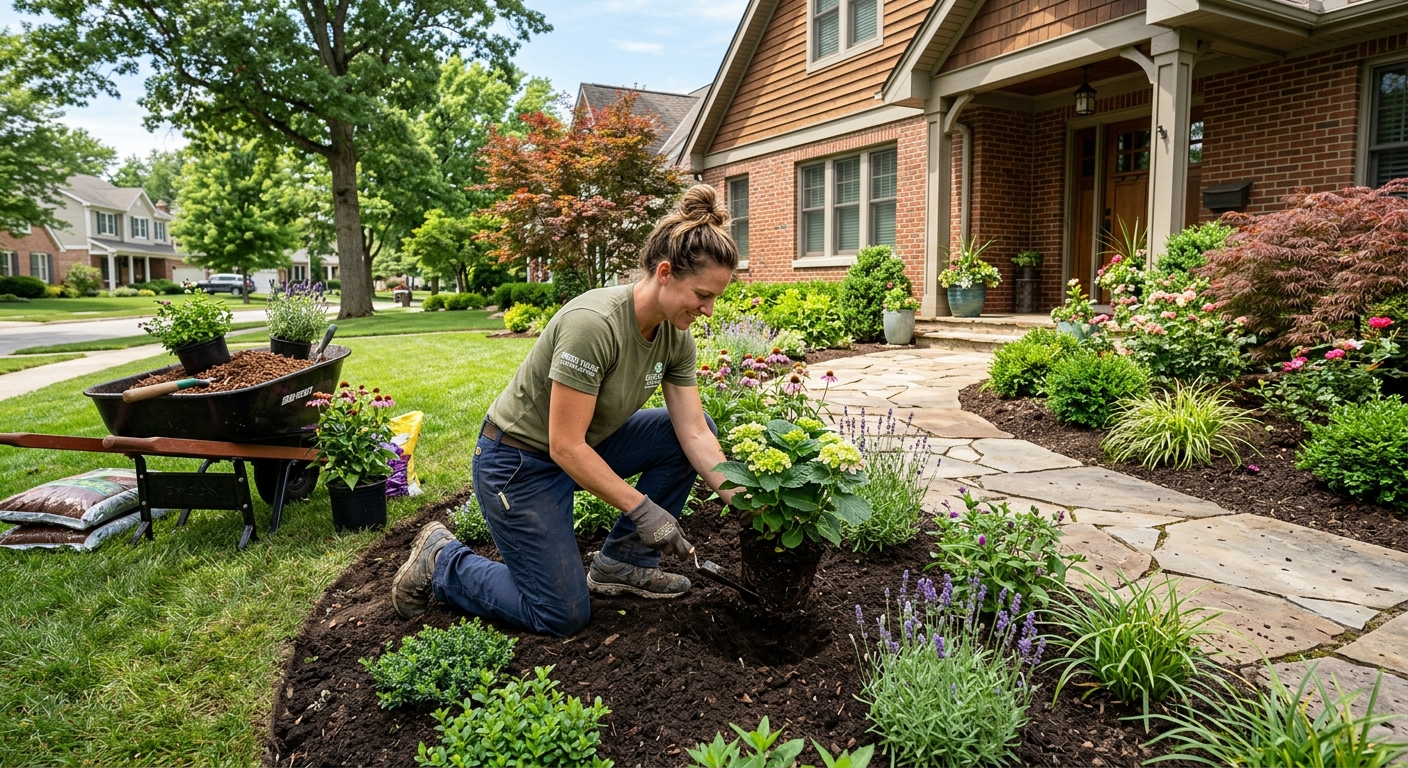
Landscaping options and costs in Dunluce
Dunluce, Alberta is a great place to invest in a well-built outdoor space because many homes sit on lots with room to add real functionality—more than half of Calgary-area residents live in single-detached households, which typically means homeowners are more likely to budget for patios, walkways, and yard upgrades (Statistics Canada, 2021 Census). With Dunluce’s own population at 6,341 (Statistics Canada, 2021 Census), the contractor pool is smaller than in major hubs, and scheduling can tighten during spring grading and early-summer planting windows. In Zone 3–4 conditions around Calgary, landscaping costs are shaped by late-spring frosts and early fall cold snaps, plus aggressive freeze–thaw cycles. That’s why deep, well-compacted bases and proper drainage aren’t “nice to have”—they directly affect whether patios, retaining walls, and walkways heave or settle. Labour also factors in: local trades time is a major portion of comprehensive projects, especially when excavation access and disposal are required.
Demand is especially strong in newer growth areas around Rocky View County-style subdivisions where backyards are being graded from scratch and homeowners want hardscape plus planting that holds up through chinooks and winter. The comparison below will help you map what most quotes include and what typical price ranges look like before you meet a contractor for a site walk.
| Service |
Description |
Season |
Price Range |
| Full landscape design and installation |
Site walk, concept + material selections, grading/drainage plan, hardscape base prep, patio/walks, planting, mulch, and irrigation design (as applicable) |
Late April to mid-October (weather dependent) |
$12,000–$45,000 |
| Sod installation (supply, grade, lay, roll) |
Topsoil/grade correction, soil preparation, sod supply and install, rolling and light watering start-up |
May to early September |
$2,500–$6,000 |
| Lawn seeding (grade, seed, starter fertilizer) |
Minor grading, seed blend selection, starter fertiliser, light incorporation, and early-care guidance |
May to late August |
$1,500–$4,000 |
| Interlocking patio or walkway |
Excavation, compacted granular base, edge restraints, interlocking pavers, and joint sand; basic slope/grading set |
May to September |
$8,000–$28,000 |
| Retaining wall (interlocking block) |
Wall layout, drainage behind wall (weep/drainage rock), compacted base, block installation, and finishing |
May to September |
$10,000–$35,000 |
| Tree and shrub planting |
Soil amendment, planting holes, staking (where needed), mulch ring, and initial watering plan for Zone 3–4 survival |
Late April to late October |
$1,800–$12,000 |
Prices are estimates only and vary by project scope, site access and material selection.
What affects the price of landscaping in Dunluce
In Dunluce and the broader Calgary market, two homeowners can receive quotes that differ by 30–50% for what looks like the same “landscape upgrade” on paper. The reason is usually hidden in site conditions (how hard it is to excavate and dispose), how deep the base has to be to survive freeze–thaw, and how much design work is needed to make plants and drainage perform together. In a Prairie zone like Calgary’s Zone 3–4, frost dates and cold snaps limit the working window, so crews may schedule more efficiently or charge more to protect timelines. Meanwhile, contractors have to build for durability—not just appearance—because chinooks can swing temperatures quickly and severe freeze–thaw cycles stress anything that wasn’t installed on a properly compacted base.
The same job is also affected by what grows: Zone 3–4 requires cold-hardy, wind-tolerant, drought-smart species. Retaining wall base depth and drainage behind the wall must reach below frost influence to reduce heaving risk; that adds labour and granular material compared with lighter, short-term projects. For example, a backyard refresh that stays mostly softscape might land in the $5,000–$15,000 range, while adding a properly built interlocking patio and retaining edge treatment often pushes into $15,000–$35,000 depending on excavation depth and grading.
Two concrete Dunluce scenarios that commonly raise cost: (1) a sloped yard where we correct grade and redirect runoff away from foundations can add significant excavation and base material; (2) an older yard with compacted soils or buried debris—very common in homes built near earlier phases of development—often forces more soil amendment and sometimes stump removal. On the flip side, cost can drop when access is easy (flat driveway approach, no tight gates) and when demolition/disposal requirements are minimal.
| Price Factor |
Why It Matters |
Cost Impact |
| Yard size in sq ft — the primary cost driver for softscape |
More area means more labour hours for prep, topsoil, mulch, and either seeding or sod |
Typically varies widely; can swing total by $3,000–$15,000 |
| Grading and drainage work — slope corrections add significant cost |
Pool-prevention and foundation run-off control require excavation and re-build of grade |
Often adds $2,000–$10,000 depending on depth and slope |
| Drainage bed or French drain installation |
Dry-wet cycles during freeze–thaw can fail flat drainage without proper channels and rock |
Commonly adds $1,500–$8,000 |
| Plant material tier — native shrubs vs. ornamental vs. mature specimen trees |
Mature stock costs more and may require extra labour for installation and staking |
Can shift planting budgets by $1,000–$7,000+ |
| Hardscape vs. softscape ratio — walls and patios cost more per sq ft than lawn |
Patios/walks need excavated, engineered base layers and paver edging |
Hardscape-heavy jobs often add $4,000–$25,000 |
| Irrigation system design and installation |
Zone-based drip planning reduces waste and supports survival in dry spells |
Typically adds $2,500–$9,500 depending on zones |
| Soil amendment and topsoil required |
Compacted Prairie soils may need import and conditioning for root establishment |
Commonly adds $800–$6,000 |
| Tree removal or stump grinding before new planting |
Stumps inhibit planting layouts and require disposal or grinding to grade |
Often adds $500–$4,500+ per area |
Permits & regulations in Alberta
In Alberta, most common yard work such as planting, sodding, seeding, and the typical softscape portion of landscaping generally does not require a permit. Homeowners usually can proceed with lawn installation, mulch refreshes, shrub and tree planting, and straightforward grading that doesn’t alter drainage impacts to neighbouring properties or utility systems. However, retaining walls and any work that may affect drainage toward storm systems can change the approval requirements.
Work that typically DOES require a permit: retaining walls that exceed a municipality’s height threshold—often around 1.0 m (3.3 ft) in many places—may need a building permit and sometimes engineered drawings, especially where stability is a concern. Work that may require approval: changes to lot grading that could redirect runoff toward adjacent lots or storm sewer connections, and any modifications that affect drainage flow paths. Before digging, call for utility locates so you don’t strike buried services during footing, drains, or larger planting holes.
How to verify a contractor in Dunluce (step-by-step): (1) ask for their Alberta licence/registration details (and confirm any trade-specific standing if they perform masonry, hardscape, or related regulated work); (2) request a certificate of insurance showing general liability limits and ensure the coverage matches the project scope; (3) if they employ workers, ask for proof of WSIB/WCB coverage (or confirm their clearance letter/status); (4) ensure the quote includes written scope plus disposal responsibilities. For irrigation tie-ins, confirm alignment with local water-use bylaws and drought-season practices.
Planning a landscape that thrives in Dunluce's climate
Planning for Dunluce means designing for Prairie reality: your yard has to handle Zone 3–4 winter exposure, late frosts, and freeze–thaw cycles that punish shallow foundations and poorly drained bases. Start with plant selection. Choose cold-hardy, zone-appropriate natives and hardy shrubs that can survive wind and dry stretches; that reduces annual replacement and watering demands. Next, decide between sod and seeding. Sod gives instant coverage but is typically installed during a tighter window and costs more; seeding supports long-term savings if you’re comfortable waiting for full density.
Drainage and grading are usually the make-or-break items in Calgary area yards. Pooling water near foundations or low spots can lead to foundation moisture problems and adds winter stress. A properly sloped base, correct subgrade preparation, and—where needed—a drainage bed or French drain keep freeze–thaw from “pushing” layers out of place. For hardscape, use deep, well-compacted bases to the local frost-influenced depth expectations so patios and walkways don’t heave. Finally, build low-maintenance structure: mulch, groundcovers, and a layered perennial border reduce weeding and annual pruning.
If you want a xeriscape or rain-garden element, it’s often worth it when it replaces high-water turf and sits in a managed drainage area. For example, converting part of a lawn to a native perennial bed plus mulch and drip can be justified when you’re already paying for sod in a large area; in many Calgary projects, sod is commonly several times the cost per sq ft of seeding, so shifting that budget into drainage-correct beds can improve long-term performance even if your first season looks “less instant.”
| Element |
Climate Consideration |
Maintenance Level |
Price Band |
| Sod lawn installation |
Needs reliable installation timing; deep watering start-up before freeze risk |
Moderate (first season attention) |
$2,500–$6,000 |
| Native perennial garden |
Zone-appropriate species recover better after cold snaps and dry periods |
Low (weed suppression with mulch) |
$1,800–$8,500 |
| Mulched shrub border |
Mulch buffers temperature swings and conserves soil moisture |
Low to moderate |
$2,000–$9,500 |
| Interlocking stone patio |
Requires deep base prep for severe freeze–thaw durability |
Low (occasional joint sand) |
$8,000–$28,000 |
| Retaining wall (block) |
Needs drainage behind wall and a frost-resistant base |
Low once installed correctly |
$10,000–$35,000 |
| Drip irrigation system |
Supports efficient watering in semi-arid Prairie conditions |
Low (seasonal checks) |
$2,500–$9,500 |
How to choose a landscaping contractor in Dunluce
When choosing a landscaping contractor in Dunluce, verify credibility before you compare prices. First, confirm their Alberta licensing/registration for the specific work they’ll perform and ask how they’re insured for the type of build you need (grading, masonry-style hardscape, irrigation, or tree services). Second, request a certificate of liability insurance and check that the policy covers property damage and that the named insured matches the contractor’s legal business name. Third, ask for proof of WSIB/WCB coverage (for worker protection). If they’re sub-contracting specialised trades, the main contractor should still provide documentation or ensure those subs are properly covered.
Next, get 2–3 itemised written quotes. A good quote breaks labour and materials clearly: excavation and base prep, pavers or wall block specifications, geotextile/drainage rock, soil amendment quantities, plant list with sizes, and whether irrigation is included. Pay attention to exclusions: ask whether permits (if required for a retaining wall threshold), utility locating, disposal/haul-away, and topsoil import are included. Read warranty details too: there should be a workmanship warranty (how long the contractor stands behind installation) and clarity on manufacturer warranties for plants or products, including whether warranties are transferable if you sell.
For payment, keep it controlled: never pay more than 10–15% upfront. Use a holdback until completion and final grading/clean-up are verified. Timeline matters in Calgary’s weather; insist on a start date and an estimated completion window in writing.
- Ask for Alberta licence/registration details and confirm the exact legal business name.
- Request certificate of insurance and verify limits are appropriate for excavation and hardscape.
- Confirm WSIB/WCB coverage or clearance status for any workers on-site.
- Require itemised pricing (labour + materials) instead of a single lump sum.
- Verify what base prep depth and compaction method will be used for patios/walks.
- Confirm drainage provisions (slope, weeping tile/French drain where needed).
- Clarify disposal/haul-away—fill and debris removal can change the budget.
- Check whether utility locates and protection are included before digging.
- Ensure plant quantities and sizes are written (e.g., “#1 container” vs “small shrub”).
- Confirm irrigation design: zones, controller type, and whether drip is included.
- Get warranty terms in writing for workmanship and any product guarantees.
- Use a payment schedule with a holdback until final inspection/acceptance.
Red flags to watch for in Dunluce: vague scopes (“landscaping as discussed” with no quantities), quoting a retaining wall without detailing drainage behind the wall, no proof of insurance or WSIB/WCB documentation, insisting on full payment upfront, and promising unrealistic timelines that ignore frost risk and freeze–thaw season constraints.
Frequently asked questions — landscaping in Dunluce
How much does sodding a yard cost in Dunluce?
In Dunluce, sod pricing depends heavily on how much grading and soil prep your yard needs before the rolls go down. For typical residential lots where we correct grade, prepare the soil, and install sod properly, homeowners often see totals around $2,500–$6,000 for a standard backyard area. Costs rise when there’s heavy excavation, buried debris, or drainage corrections that require more topsoil and compaction. Pricing also depends on the time of year and access—tight gates and long driveway runs can add labour. If you’re trying to hit an early-summer curb appeal deadline, sod can be worth it, but we’ll still plan around Alberta’s late-spring cold risk so the lawn establishes before colder nights return.
How do I prevent weeds in my Dunluce garden?
Weed prevention in Alberta works best when you combine three layers: weed-control groundwork, correct plant spacing, and mulch depth. First, remove existing weeds thoroughly and address the soil condition—compacted areas are where weeds tend to rebound. Second, use a layered planting plan: zone-appropriate shrubs and perennials spaced correctly will reduce open soil where weed seeds germinate. Third, apply mulch at the right thickness (and refresh annually), because mulch buffers temperature swings during Prairie freeze–thaw. In many Dunluce gardens, this approach beats “spray-only” methods and reduces recurring labour. If you’re budgeting, a mulched shrub border typically falls in a mid range (often $2,000–$9,500 depending on size and plant quantities), but the long-term reduction in weeding is where it pays off.
How do I design a low-water yard in Dunluce?
Designing for low water in Dunluce starts with accepting that Zone 3–4 landscapes still need thoughtful irrigation, but you can dramatically reduce usage by changing the mix. Replace high-water turf with drought-tolerant natives, hardy perennials, and mulched shrub borders, then group plants by water need so you’re not watering everything equally. Add drip irrigation with zoning—this is more efficient than broad sprinkler coverage and it matches Prairie wind and evaporation patterns. Where you have seasonal runoff, consider a rain-garden style planting area or a drainage-friendly bed so water is directed where roots can use it. Even with Alberta’s own water rules and seasonal watering awareness, the biggest win comes from soil improvement (amended soil holds moisture longer) and mulch. If you’re deciding between options, seeding is often the cheaper path to coverage versus sod, which is typically priced higher (commonly $2,500–$6,000) once prep is included.
How do I find a licensed landscaper in Dunluce?
Start by confirming the contractor’s Alberta standing for the work they’ll perform and by asking for proof up front. In practice, that means requesting: (1) their business registration/licence details (and the legal name that matches the quote), (2) a certificate of liability insurance, and (3) WSIB/WCB coverage or a clearance/status letter if they employ workers. You can also ask for recent project references in the Dunluce/Calgary area and view photos from similar builds—especially projects that required deep base prep, drainage, or retaining wall drainage. Then compare quotes only after you’ve checked scope details: base depth, drainage plan, disposal, and whether irrigation or controllers are included. Avoid contractors who won’t provide documentation or who quote without measurements and clear quantities.
How much does landscaping cost in Dunluce?
Total landscaping cost in Dunluce varies widely based on how much grading, hardscape, and irrigation are included. Many comprehensive projects land in the mid five-figure range once patio/walkway base prep, planting, and drainage are part of the work. As a quick homeowner-friendly reference point, sod and lawn replacement projects commonly fall in the $2,500–$6,000 band, while interlocking patios or walkway builds often start around $8,000–$28,000 depending on excavation and base depth. Tree and shrub planting typically runs around $1,800–$12,000 for meaningful curb impact. In Calgary’s Zone 3–4 climate, the cost difference you see between quotes is often explained by drainage corrections and how deep a crew must go to build for freeze–thaw durability.
What plants thrive in Dunluce's climate zone?
For Dunluce (Zone 3–4 conditions), thriving plants are typically cold-hardy, wind-tolerant, and able to handle short growing seasons and winter desiccation. A well-designed perennial garden usually includes hardy perennials and groundcovers that establish quickly and don’t demand heavy summer watering. Shrubs should be selected for Alberta’s temperature swings and size at maturity, and trees should be appropriate for open wind exposure and soil conditions. Your best results come from matching plants to micro-sites: sun vs shade, sheltered spots near the house, and any areas that stay wetter due to drainage patterns. If your yard has drainage corrections or a rain-garden bed, you can expand your palette there without increasing water use. A contractor who builds for Alberta’s freeze–thaw reality will also plan mulch coverage and spacing so your planting fills in and suppresses weeds naturally.