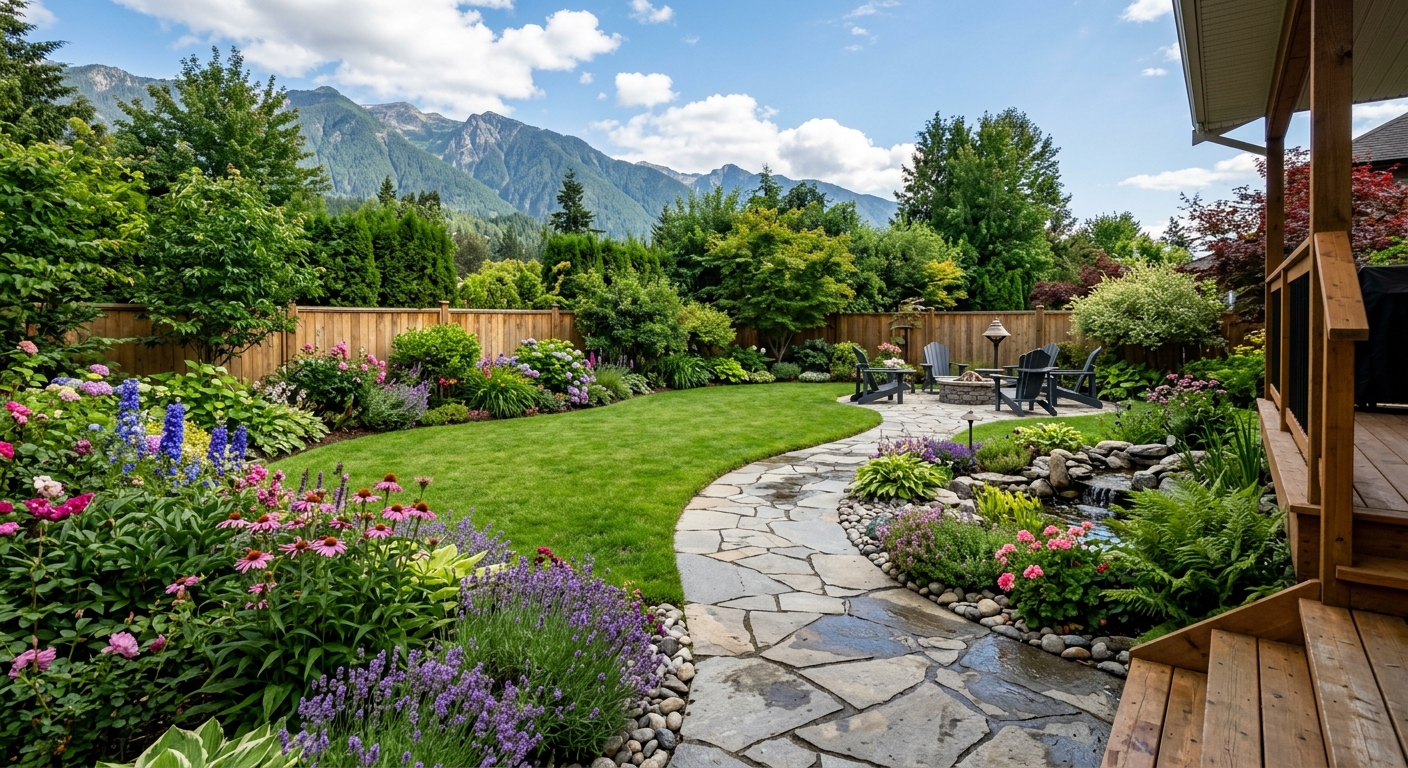
Landscaping options and costs in Whitecourt
Landscaping in Whitecourt is often a “make it work year-round” exercise: you want curb appeal in summer, but you also need materials and plants to survive Alberta’s freeze-thaw cycles and winter lows. With 9,927 residents (Statistics Canada, 2021 Census) and a homeowner-heavy housing mix—2,650 homeowner households, with 68.4% owning their home (Statistics Canada, 2021 Census)—many households invest in yards when they upgrade their exterior, especially on detached properties (52.5% of dwellings are single-detached). That yard space and ownership confidence translates into steady demand for design, sod, and hardscaping around the newer neighbourhoods and growing family areas.
In the Edmonton market, contractor availability and pricing are shaped by a short prairie growing season, periodic frost-out conditions in spring, and rapid establishment requirements for sod and new plantings. Labour and hauling costs can also swing based on site access, how much topsoil and amendments are needed, and whether the job includes drainage corrections. For many homeowners, the biggest cost variable is not the “look,” but the ground preparation—especially if you’re addressing pooling near foundations or adding a retaining wall that must be built on a properly engineered base depth below the frost line.
If you’re comparing options, start with a realistic understanding of the main service categories and typical ranges. Below is a practical budget snapshot for Whitecourt, then you can match scope to the right contractor and materials plan.
| Service |
Description |
Season |
Price Range |
| Full landscape design and installation |
Site walk, layout, grading/drainage plan, plant + hardscape selection, installation coordination |
Spring to early fall |
$8,000–$45,000 |
| Sod installation (supply, grade, lay, roll) |
Minor grading, topsoil/levelling as needed, sod supply and prep, roll + starter watering plan |
Late spring to early fall (establishment window) |
$3,500–$8,000 |
| Lawn seeding (grade, seed, starter fertilizer) |
Grade tune-up, seed blend, starter fertilizer, light covering/rolling as appropriate |
Spring or early fall |
$1,800–$5,000 |
| Interlocking patio or walkway |
Excavation, base course, jointing sand, edging, pattern layout and installation |
Mid-summer to early fall |
$6,500–$16,000 |
| Retaining wall (interlocking block) |
Block wall system with base/gravel drainage layer, compaction, cap and tie-in details |
Mid-summer to early fall |
$45–$120 |
| Tree and shrub planting |
Planting holes, backfill, staking where needed, mulch ring, initial watering setup |
Spring or early fall |
$500–$5,000 |
Prices are estimates only and vary by project scope, site access and material selection.
What affects the price of landscaping in Whitecourt
In Whitecourt and across the Edmonton region, quotes for the “same type” of landscaping can vary by 30–50% because the hidden drivers—site prep, drainage, and the exact plant/hardscape materials—are different even when the finished picture looks similar. A simple lawn project can become a more expensive build if the ground is uneven, if there’s poor drainage near a foundation, or if topsoil and amendments must be hauled in. Similarly, a patio or walkway looks straightforward until you factor in excavation depth, base stabilization, and disposal of unsuitable soil.
Climate and frost timing matter directly. Prairie conditions (typically Zone 2–4 in much of Alberta) mean a shorter growing season, so contractors plan planting to get roots established before hard freezes. Freeze-thaw also affects structural work: retaining walls and any base-heavy hardscaping need proper depth and drainage so the ground can expand and contract without moving the wall. By contrast, coastal BC (Zone 7–8) can support longer planting seasons and more lush palettes, but still demands good drainage in wet areas—so their pricing may differ due to different labour schedules and irrigation-style designs. In the dry interior, water restrictions push efficient irrigation design; in Edmonton-area markets, smart establishment watering is still common, which influences irrigation scope even if no long-term water “landscape soaking” is planned.
Two concrete Whitecourt examples: (1) If your yard slopes toward the house, adding a French drain and drainage bed can shift a smaller “planting” budget into a full design & installation project; (2) choosing sod for speed can raise lawn costs quickly—moving you toward ranges like $3,500–$8,000 for sod rather than seeding budgets—because sod also requires careful grading and fast establishment watering. Housing age plays in too: with 32.6% of homes built before 1981 (Statistics Canada, 2021 Census), older lots sometimes have settled grading patterns, mature trees to work around, or original drainage that needs correction, which adds labour and material.
| Price Factor |
Why It Matters |
Cost Impact |
| Yard size in sq ft — the primary cost driver for softscape |
More area means more materials, more labour hours, and more soil amendment or irrigation run time |
Often the largest single swing; doubling area can more than double total |
| Grading and drainage work — slope corrections add significant cost |
Fixing pools and directing runoff affects excavation volume and how long base prep takes |
Commonly adds major cost beyond basic planting or seeding |
| Drainage bed or French drain installation |
Includes excavation, perforated pipe, geotextile, gravel, and tie-in details |
Can reclassify the job from “landscaping” to “site works” |
| Plant material tier — native shrubs vs. ornamental vs. mature specimen trees |
Mature plants and specialty stock cost more and require more careful handling/possibly staking |
Can shift pricing from “planting packages” into multi-thousand additions |
| Hardscape vs. softscape ratio — walls and patios cost more per sq ft than lawn |
Hardscape needs base courses, compaction, edging, and thicker materials |
More hardscape pushes budgets toward the higher design/install ranges |
| Irrigation system design and installation |
Zone layout, trenching, backflow prevention components, and valve placement affect labour |
Can add substantial cost, especially if drainage work is also required |
| Soil amendment and topsoil required |
Alberta clays can be compact; amendments and proper topsoil depth improve rooting |
Hauling and spreading volume can quickly add thousands |
| Tree removal or stump grinding before new planting |
Equipment time, disposal, and restoration grading affect total scope |
Often adds unexpected cost if not included in the original quote |
Permits & regulations in Alberta
In Alberta, most typical yard softscape work—planting, sodding, seeding, mulch installation, and related groundcover upgrades—does not require a permit. The two areas that more often trigger permitting are (1) certain retaining wall projects and (2) grading/drainage changes that affect how water leaves your lot. In many municipalities, retaining walls above a height threshold—commonly around 1.0 m (3.3 ft)—require a building permit and sometimes engineered drawings, particularly where the wall supports significant grade change or soil loads. Grading that alters drainage toward neighbouring properties or toward storm sewer connections may also require approvals.
Before any digging, call for utility locates. That applies to planting holes and, especially, wall footings, French drains, and irrigation trenching. Even if the work is “just landscaping,” hitting buried services can shut down a job and create repair costs.
For Whitecourt homeowners, here’s a practical way to verify a contractor in Alberta:
- Ask for their Alberta business/contractor registration details (and confirm they’re the legal entity on the quote and invoice).
- Request a current certificate of insurance (liability) showing adequate coverage for exterior construction work.
- Confirm WSIB/WCB coverage: ask for clearance status or proof of coverage, depending on how the contractor is set up.
- Verify they will request utility locates before trenching or wall excavation.
- Get the permit responsibility in writing: who pulls it if required, and what happens if the wall height or grading scope changes?
Planning a landscape that thrives in Whitecourt's climate
To get a yard that thrives in Whitecourt, plan around your local hardiness zone, Edmonton-region freeze-thaw behaviour, and the reality that establishment is the make-or-break period. Start with plant selection: choose zone-appropriate, hardy species (and preferably locally available cultivars) and use native or well-adapted shrubs/perennials that need less winter protection. Next, decide sod vs. seed. Sod gives instant coverage and helps reduce erosion, but it’s usually about 3–4 times the per-sq-ft cost of seeding once you include grading and establishment watering labour. Seeding is slower to look finished but can be a smarter choice where you’re budgeting tightly or where soil prep is already solid.
Drainage and grading are critical in the Edmonton market. Pooling around foundations leads to moisture problems and winter heaving risks, so build with proper slope away from the house and consider drainage beds or French drains where runoff collects. For hardscape—patios and retaining walls—base preparation should be built for the local frost depth behaviour: adequate excavation, compacted base layers, and drainage layers behind walls reduce movement over years.
Low-maintenance strategies help you keep curb appeal without constant upkeep. Use mulch beds, groundcovers, and a perennials-forward layout to reduce weeding and water demand. If you want a more water-smart approach, xeriscape-style plantings and rain-garden pockets can work well—especially in areas where runoff flows after spring melt. A clear budget example: if your lawn area is just filling a strip near the driveway, switching from sod to seeding can keep the project closer to seeding ranges while reserving the “higher cost” for trees, shrubs, and a walkway that you’ll use daily.
| Element |
Climate Consideration |
Maintenance Level |
Price Band |
| Sod lawn installation |
Needs quick establishment during the short growing window; freeze-thaw stresses thin topsoil if grading is off |
Medium early on (watering/monitoring first weeks) |
$3,500–$8,000 |
| Native perennial garden |
Zone-appropriate species handle wind and winter better; mulch helps roots through cold snaps |
Low to medium (spring clean-up, occasional weeding) |
$1,200–$4,500 |
| Mulched shrub border |
Reduces evaporation and improves soil consistency during summer moisture stress |
Low (annual mulch refresh, pruning as needed) |
$900–$3,000 |
| Interlocking stone patio |
Base and compaction must tolerate freeze-thaw; proper edging prevents washout |
Low (occasional joint sand/top-ups) |
$6,500–$16,000 |
| Retaining wall (block) |
Requires drainage behind the wall and base depth that accounts for frost movement |
Low once built (visual checks for settling) |
$45–$120 |
| Drip irrigation system |
Efficient watering supports establishment without waste; winterize to protect lines |
Medium (season start/season shutdown) |
$1,800–$6,500 |
How to choose a landscaping contractor in Whitecourt
Choosing the right contractor in Whitecourt starts with proof, not promises. In Alberta, ask for their current liability insurance certificate (so you’re not exposed if something damages your property or a worker is injured). For coverage, confirm they have WSIB/WCB (workers’ compensation) in place for their workers—then ask how they can provide clearance status or proof. Also confirm the legal business entity on the quote matches the contractor you’ll pay, so there’s no mismatch if you need to address warranty issues.
Next, get 2–3 itemised written quotes. The best quotes break down labour and materials separately—topsoil/soil amendments, sod or seed type, drainage components, base materials for patios, and disposal/hauling—rather than a single lump sum. Read the exclusions: ask whether the quote includes permit pulling (if a retaining wall height triggers it), disposal of excess soil, and topsoil depth targets. Make sure they specify site protection and how they’ll handle existing plants/trees near the work zone.
For warranty, ask for both workmanship and product/manufacturer terms. Clarify the warranty length, what it covers (settling, grading failures, plant survival terms), and whether it’s transferable to the property owner if you sell. Payment schedule matters too: in landscaping, never pay more than 10–15% upfront; pay the remainder in milestones and use a holdback until completion and cleanup.
Finally, request a written timeline with start date and estimated completion, and confirm how they’ll handle weather delays caused by spring thaw or extended wet periods.
- Request their liability insurance certificate and confirm the coverage amount.
- Verify WSIB/WCB coverage status and ask for clearance/proof documentation.
- Confirm the contractor’s legal business name matches the invoice.
- Get 2–3 itemised quotes with labour + materials line items.
- Ask what’s included in soil prep (topsoil depth, amendments, compaction method).
- Clarify drainage responsibilities (who corrects pooling, what components are installed).
- Ensure irrigation scope is spelled out (supply, trenching, zones, winterization).
- Ask whether disposal and hauling are included or billed separately.
- Request a written schedule and what triggers a re-scheduling due to weather.
- Confirm base construction details for patios/walls (depth targets and geotextile use).
- Review warranty terms in writing (workmanship length and product warranty details).
- Keep a holdback until final grading, cleanup, and walk-through are complete.
Red flags to watch in Whitecourt: vague scope (“we’ll fix it later”), no itemized materials breakdown, insurance documents that are expired or missing project-specific coverage, promises that ignore Alberta frost timing (e.g., installing sod when establishment windows are unlikely), and contractors asking for large upfront payments without milestones or a signed completion plan.
Frequently asked questions — landscaping in Whitecourt
How much does landscaping cost in Whitecourt?
In Whitecourt, landscaping cost depends heavily on how much site prep and drainage work is required. For a full design and installation, many homeowners land in the $8,000–$45,000 range once grading, plants, and any hardscape are included. If you’re focused on the lawn, sod supply and installation commonly comes in around $3,500–$8,000, while seeding projects are often less expensive if the existing grade is already suitable. Costs also swing because prairie conditions mean quick establishment and freeze-thaw-friendly base construction; a patio or wall built on a weak base can fail early, so reputable contractors include proper excavation, base course, and compaction. If you’re comparing quotes, make sure drainage and disposal are clearly stated to avoid budget surprises.
What plants thrive in Whitecourt's climate zone?
Whitecourt landscaping works best with zone-appropriate and hardy plants that tolerate cold winters, wind, and summer moisture stress. In Alberta’s prairie climate, choose shrubs and perennials known for winter resilience and strong root performance, then support them with mulch and a soil amendment plan for consistent rooting. Many homeowners do well with native-style perennial groupings and hardy shrubs in mulched borders because they establish and then require less constant watering. If you’re planning trees, select species that match the site’s sun/wind and avoid tender varieties that struggle after freeze-thaw cycles. Your contractor should propose plant choices based on your yard’s light exposure (front vs. sheltered areas) and your drainage pattern, especially near foundations where winter melt can trigger moisture stress.
Sod vs seed — which is better for a Whitecourt lawn?
Sod is usually better when you need instant coverage, want faster erosion control, or you have a high-traffic area that needs stability. The trade-off is cost and establishment pressure: sod often ranges around $3,500–$8,000 depending on area and prep, and it needs prompt, consistent watering during establishment. Seeding is often more budget-friendly and can be a good option if your grade is already correct and you can manage longer timelines for a thick lawn. In Whitecourt’s Edmonton-region conditions, freeze-thaw can expose thin patches, so the quality of grading and soil prep matters as much as the lawn method. For many yards, the best “value” is choosing sod only for priority zones and using seeding elsewhere.
How much does a retaining wall cost in Whitecourt?
Retaining wall pricing varies by wall height, length, soil conditions, and whether a drainage system is required behind the wall. For budgeting, many quotes fall into the general band of $45–$120 (commonly quoted per sq ft or similar sizing basis depending on the contractor and design). The wide range is normal because proper base depth, compaction, and drainage materials behind the wall can meaningfully increase labour and material cost—especially on freeze-thaw-sensitive sites. Older lots in Whitecourt sometimes have settled grading patterns that add excavation and regrading requirements before a wall can be built safely. Always confirm whether drainage components (gravel, weeping systems, geotextile) are included and whether the wall height triggers permits.
When is the best time to landscape in Whitecourt?
For Whitecourt, most installation happens from late spring through early fall, because you need workable soil and enough warm weather for roots to establish before hard freezes. Sod and seeding typically follow establishment windows: sod generally performs best in periods when you can maintain consistent watering until roots knit in, while seeding is often timed for spring or early fall conditions that support germination. Planting trees/shrubs is commonly done in spring and fall when temperatures are milder and plants can recover with less heat stress. Hardscape like patios and walkways is usually planned for mid-summer to early fall to avoid frost-out and unstable base conditions. Your contractor should also factor weather risk and provide a timeline that includes what happens if the yard is too wet to excavate properly.
Do I need a permit for a retaining wall in Alberta?
In Alberta, retaining wall permitting depends on height and the scope of the project. Many municipalities require a building permit for retaining walls above about 1.0 m (3.3 ft), and some projects may require engineered details, especially if the wall supports a significant grade change. Softscape work like planting, sodding, and most lawn installation typically does not require a permit. That said, changes to lot grading or drainage that affect runoff direction can also trigger approval requirements. For a Whitecourt homeowner, the practical step is to confirm the wall height and how drainage will be managed before work starts—then ask the contractor whether they will pull the permit (if needed) and clearly document the responsibility in the contract.