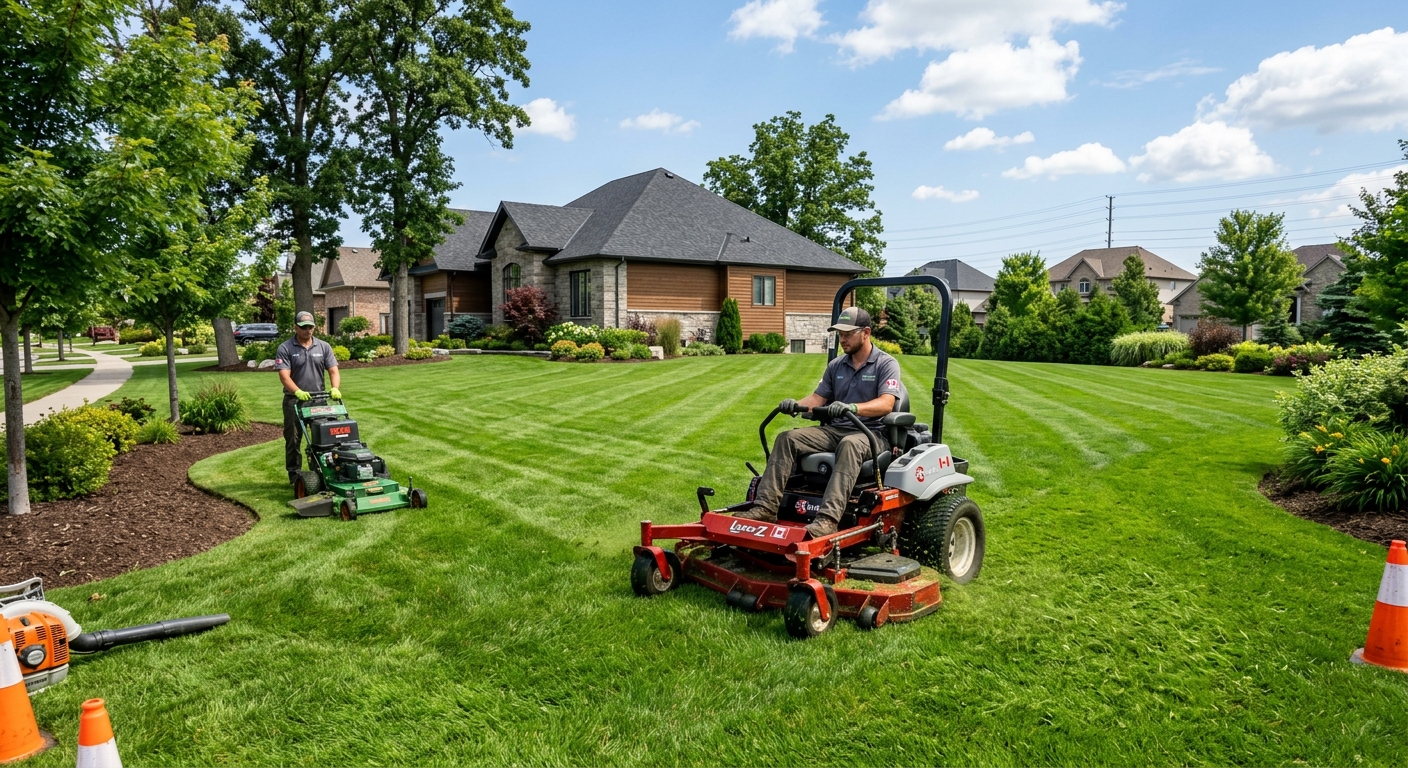
Landscaping options and costs in Silver Springs
Silver Springs homeowners typically start with three big goals: curb appeal, usable outdoor space, and lower hassle through the harsh Prairie seasons. With a population of 8,570 (Statistics Canada, 2021 Census), there’s enough local demand to support contractors, but labour availability can still tighten on the best-weather installation windows. In practice, most landscape upgrades happen on detached properties in established pockets where owners are willing to invest in long-lasting improvements for winter durability and summer usability.
In Silver Springs, landscaping costs are shaped by Calgary’s semi-arid climate and Prairie plant hardiness zones 3–4, meaning late-spring frosts and early fall cold snaps dictate what can be planted and when. Freeze–thaw cycles are severe, so patios, walkways, and retaining walls all require deep, well-compacted bases and proper drainage to avoid heaving and premature failure. That reality—plus strong demand in nearby communities like Airdrie and Cochrane—pushes project pricing toward robust materials, more excavation, and higher-quality drainage work.
Trade demand is especially noticeable around residential growth corridors and active family neighbourhoods where backyards are being expanded and regraded. Once scope expands beyond simple planting into grading, irrigation, and hardscape, labour often represents a large share of the full budget across Calgary’s region.
Below is a practical comparison of common landscaping options and what you can expect to pay before we talk about what drives those differences.
| Service |
Description |
Season |
Price Range |
| Full landscape design and installation |
Site walk, design concept, grading/drainage plan, hardscape + planting + irrigation (as needed) |
Late April to early October |
$10,000–$45,000 |
| Sod installation (supply, grade, lay, roll) |
Minor grading, soil prep, sod delivery and rolling, post-install watering guidance |
May to August |
$2,000–$6,000 |
| Lawn seeding (grade, seed, starter fertilizer) |
Grading touch-ups, seed mix, starter fert, light rake and watering schedule |
April/May or late August |
$1,500–$4,000 |
| Interlocking patio or walkway |
Excavation, compacted base, edging, interlocking stones, slope and drainage details |
May to September |
$8,000–$30,000 |
| Retaining wall (interlocking block) |
Block wall build, drainage stone/weep details, base excavation and compaction |
May to September |
$12,000–$35,000 |
| Tree and shrub planting |
Plant selection suited to Zone 3–4, planting holes, backfill, staking (if required), mulch |
April to early June or September to early October |
$900–$14,000 |
Prices are estimates only and vary by project scope, site access and material selection.
What affects the price of landscaping in Silver Springs
In Silver Springs and the wider Calgary region, it’s common to see quotes for the same landscaping plan swing by 30–50%. The biggest drivers aren’t just the “look”—they’re the hidden build costs: how much excavation is needed, whether drainage is engineered properly, and how deep the base must be to survive Prairie freeze–thaw. Labour also plays a major role; comprehensive projects across Calgary and surrounding communities often land in the mid five-figure range once grading, hardscape, planting, and irrigation are included. When crews are busy during the best weather windows, scheduling and crew sizing can also add cost.
Climate controls the working season. In hardiness zones 3–4, late-spring frost and early fall cold snaps limit when certain planting and soil prep can safely happen. Retaining wall base depth should extend below the frost-affected zone, and patios/walkways need deep, well-compacted bases. If you compare this to coastal BC (zones 7–8), you’ll see why costs shift: BC can offer a longer growing season, but heavy rainfall pushes more emphasis on drainage and erosion control. Dry interior conditions still require smart irrigation (often zoned, sometimes drip), but Southern Alberta’s shorter season means you pay for faster, more reliable establishment—especially when sod or irrigation is involved. Prices also reflect demand differences: when supply and scheduling are tight, material delivery and crew time can change quickly.
Concrete examples in Silver Springs: (1) a simple sod job can move from around $2,000–$6,000 to the top end when grading and soil amendments are required; (2) adding proper drainage and a frost-safe base under an interlocking walkway can be the difference between a standard build and a higher end project closer to $8,000–$30,000; (3) a retaining wall that needs deeper excavation and drainage stone will price closer to $12,000–$35,000 versus a shorter, simpler wall.
| Price Factor |
Why It Matters |
Cost Impact |
| Yard size in sq ft — the primary cost driver for softscape |
More area means more labour hours for prep, seeding/sod, edging, and mulch |
Often increases total by the largest margin (sometimes the biggest multiplier) |
| Grading and drainage work — slope corrections add significant cost |
Fixing uneven slopes prevents pooling and foundation moisture |
Can add thousands, especially where regrading is major |
| Drainage bed or French drain installation |
Freeze–thaw damages poorly drained systems; proper underdrain reduces risk |
Typically mid-range add-on, but becomes high cost if access is difficult |
| Plant material tier — native shrubs vs. ornamental vs. mature specimen trees |
Hardier natives cost less and establish reliably; larger specimens cost more |
Can swing by several thousand depending on tree size and quantity |
| Hardscape vs. softscape ratio — walls and patios cost more per sq ft than lawn |
Hardscape requires excavation, base stone, compaction, and materials |
Shifts budgets upward quickly once interlocking and edging are added |
| Irrigation system design and installation |
Zoned systems handle wind exposure and seasonal variability; drip can improve efficiency |
Can move a project from “planting only” into the higher end of mid five-figures |
| Soil amendment and topsoil required |
Poor native soil needs amendment for root establishment in a short growing window |
Often a noticeable cost increase on clay-heavy or compacted lots |
| Tree removal or stump grinding before new planting |
Removal/disposal and site clearing add labour and equipment time |
Can add thousands depending on stump size and access |
Permits & regulations in Alberta
For most landscaping in Alberta, planting and softscape work typically do not require a permit. That includes turf/sod installation, lawn seeding, shrub and tree planting, mulching, and most general groundcover work. However, retaining walls can trigger permit requirements. In most Alberta municipalities, retaining walls above a threshold—commonly around 1.0 m (3.3 ft)—may require a building permit and sometimes engineered drawings, especially where loads, site slope, or proximity to structures are involved. The safest approach is to confirm your lot conditions with your municipality before building anything that behaves like retaining infrastructure.
Also watch grading: changes to lot grading that affect stormwater flow toward neighbouring properties or storm sewer connections can require approval. Even when you’re not “building,” drainage impacts can become a regulatory topic. Before any digging for planting holes, wall footings, or underdrains, always call for utility locates so you can avoid surprises underground.
Here’s a practical step-by-step homeowner check for Silver Springs:
- Ask the contractor for proof of their Alberta business registration/contractor authorization where applicable to their work scope.
- Request a certificate of insurance showing liability coverage for landscaping/hardscape work, and confirm the dates cover your project.
- Check WSIB/WCB coverage paperwork (workers’ compensation) so you’re not assuming risk if labour is injured.
- For bigger builds, request their permit-plan responsibility in writing (who pulls permits, if required).
- Verify the certificate details on the insurer’s issued document—avoid photos that don’t clearly show coverage and project period.
Finally, confirm watering rules and any drought-season restrictions for irrigation timing and methods. Calgary-area water guidelines can shift season to season, and designing zoned irrigation in line with local expectations helps protect your yard and your budget.
Planning a landscape that thrives in Silver Springs's climate
Designing a landscape for Silver Springs means working with Zone 3–4 realities—cold snaps, wind exposure, and freeze–thaw—rather than fighting them. Start with plant selection: choose hardy, zone-appropriate natives and drought-tolerant perennials that don’t demand heavy watering or constant winter protection. In Calgary’s market, homeowners often overbuy delicate ornamentals because they look great on a nursery tag; in this climate, those choices can increase labour and replacement costs. Next, decide between sod and seeding based on your timeline and budget.
For turf, sod gives instant coverage but costs more because you’re paying for sod supply, handling, and often additional base prep. As a rule of thumb, sod installation can cost about 3–4x more per sq ft than seeding in comparable projects. In one common Silver Springs scenario, moving from a lawn seeding approach in the $1,500–$4,000 band to sod in the $2,000–$6,000 band is justified if you need fast curb appeal or you’re repairing an erosion-prone area that can’t wait through germination.
Drainage and grading are non-negotiable. In Calgary-area freeze–thaw conditions, pooling water and poor subgrade drainage can cause heaving under patios and lead to foundation moisture. Build bases for hardscape down to frost-safe depth with proper compaction and slope away from the house. Consider low-water strategies like mulch, groundcovers, and targeted drip irrigation or rain-garden style planting beds. These approaches reduce maintenance and help your yard look good even during drier stretches and occasional watering restrictions.
Done right, the result is a yard that holds its shape through winter, stays attractive in summer, and avoids expensive repairs.
| Element |
Climate Consideration |
Maintenance Level |
Price Band |
| Sod lawn installation |
Needs consistent early watering and soil preparation before spring/fall cold swings |
Medium (watering establishment period, light top-ups) |
$2,000–$6,000 |
| Native perennial garden |
Hardy perennials handle winter and wind; shorter season encourages reliable establishment |
Low to medium (annual cleanup, occasional weeding) |
$1,800–$8,000 |
| Mulched shrub border |
Mulch buffers freeze–thaw and reduces evaporation during Prairie dry spells |
Low (mulch refresh and seasonal pruning) |
$1,200–$6,500 |
| Interlocking stone patio |
Requires deep, well-compacted base and drainage slope to prevent heaving |
Low (occasional joint weed management) |
$8,000–$30,000 |
| Retaining wall (block) |
Base and drainage stone must be built for frost movement and water control |
Low (periodic inspection of weep/drain performance) |
$12,000–$35,000 |
| Drip irrigation system |
Zoned drip matches short season growth and improves efficiency in semi-arid conditions |
Low (seasonal checks, winter blowout if recommended) |
$1,500–$6,500 |
How to choose a landscaping contractor in Silver Springs
Choosing a contractor in Silver Springs is mostly about confirming three things: licensing/authority, insurance, and real site experience with Prairie frost and drainage. Start by verifying Alberta business/contracting credentials for the type of work they’re doing (especially for hardscape and any retaining wall scope). Next, request a certificate of liability insurance that clearly lists the coverage amount and the insured period—your quote should include the certificate as an attachment or provided on request. For workers’ compensation, ask for WSIB/WCB coverage documentation; this matters because it protects you if an installer is injured on your property.
Then get 2–3 itemised written quotes. You want a breakdown that separates labour from materials and shows line items like excavation, base stone, compaction, drainage components, and disposal. Avoid “lump sum” only quotes where it’s unclear what’s included. Read exclusions carefully: will the contractor pull permits if required? Is waste disposal included? Are topsoil/soil amendment quantities specified? Are you getting edging, proper slope correction, and proper underdrain details for freeze–thaw longevity?
Warranty matters: ask for workmanship warranty length and what it covers (settling, base issues, plant replacement terms). Also ask whether product/manufacturer warranties apply and if they’re transferable to you. Payment schedules should be conservative—never more than about 10–15% upfront. Hold back a portion until key milestones are complete and you’re satisfied with grade, drainage, and installation quality. Finally, insist on a written timeline: a start date window and an estimated completion date.
- Ask for Alberta proof of coverage (liability certificate) before work begins.
- Confirm WSIB/WCB coverage is active for the crew that will be on your site.
- Request licence/authority details relevant to hardscape/contracting scope in Alberta.
- Insist on an itemised quote with quantities (sq ft, linear ft, number of trees/shrubs).
- Check what’s included for excavation, disposal, and base depth/compaction method.
- Verify drainage plan details (French drain, daylighting, or slope corrections).
- Ask if retaining walls need permits and who is responsible for pulling them.
- Confirm plant list is written and includes sizes (e.g., 2-gal, 5-gal, caliper).
- Ask about irrigation: zoned coverage and freeze-season shutoff/blowout approach.
- Review warranty terms for workmanship and plant/grass establishment.
- Agree on a payment schedule with holdback until final grading/cleanup.
- Get a start date and completion estimate in writing, not just “weather permitting.”
Red flags in Silver Springs include: using vague “base” descriptions with no compaction method; quoting a retaining wall without discussing drainage stone and weep details; starting without written scope and exclusions clearly listed; requesting large deposits beyond 10–15% before any measurable work; and refusing to provide insurance/WCB documentation in advance.
Frequently asked questions — landscaping in Silver Springs
How much does sodding a yard cost in Silver Springs?
Sodding in Silver Springs typically lands in the $2,000–$6,000 range, depending on yard size, how much grading is required, and whether the base needs soil amendment. In Calgary’s Prairie freeze–thaw conditions (Zone 3–4), sod establishment is all about correct prep: compacted subgrade, good topsoil depth, and a watering plan that helps roots knit before colder shoulder-season weather. If your existing lawn is patchy, you may also see extra charges for raking, regrading low spots, and adding fill or compost. For many homeowners, seeding can be the budget route, but sod is worth the premium when you need quick curb appeal and a fast “finished” look.
How do I prevent weeds in my Silver Springs garden?
Weed prevention in Alberta works best when you combine physical suppression with the right soil preparation. For shrub and perennial beds, start by removing established weeds (including roots), then add a proper layer of weed-suppressing mulch (not thin “decor” coverage). Weed barrier fabric can help in certain bed setups, but it shouldn’t replace good planting density—bare soil is what invites weeds. If you’re sowing or establishing new perennials, a clean, amended bed and correct plant spacing reduce the “open gaps” weeds love. Also, control drainage: freeze–thaw and pooled moisture often lead to weaker plants, which creates opportunities for weeds to take over. A well-planned mulched border is usually one of the most cost-effective upgrades for long-term control.
How do I design a low-water yard in Silver Springs?
A low-water yard in Silver Springs should use drought-tolerant, Zone 3–4 plants and efficient irrigation (or none in the right beds). Focus on mulched shrub borders, groundcovers, and native perennial groupings that can handle dry spells without constant watering. Pair this with smart drainage: in semi-arid conditions, you want water to soak in where roots are, not run off. If you do install irrigation, ask for zoned design and consider drip lines for beds rather than broad sprinkling. Compared with sod, planting-focused designs are often less costly to maintain over time—sod commonly sits in the $2,000–$6,000 band, while native perennial gardens and mulched borders can keep ongoing watering needs lower. Finally, avoid high-water turf areas by using targeted lawn only where you truly need it.
How do I find a licensed landscaper in Silver Springs?
In Alberta, you’ll want to verify the contractor’s authority and confirm coverage before hiring—especially for hardscape and any retaining wall scope. Start by asking for proof of liability insurance (certificate showing coverage amount and the project period). Next, confirm WSIB/WCB coverage so you aren’t exposed if a worker is injured. Then request documentation of their Alberta authorization relevant to the scope of work. For larger projects, ask who is responsible for permits if the work triggers approvals (for example, retaining walls above common thresholds). A practical method is to compare 2–3 itemised quotes and verify they match: line items, drainage details, and the written warranty terms. If a contractor can’t provide insurance/coverage documents promptly, treat that as a stop-and-review signal.
How much does landscaping cost in Silver Springs?
Landscaping in Silver Springs varies widely based on whether you’re doing planting only, adding hardscape, or including grading and irrigation. For a full design-and-install approach, budgets commonly fall in the $10,000–$45,000 range. Softer projects like tree and shrub planting usually sit around $900–$14,000 depending on quantities and plant sizes. If you’re focusing on turf, sod is often $2,000–$6,000, while seeding is typically lower at about $1,500–$4,000. Hardscape-only builds like interlocking patios or walkways commonly land around $8,000–$30,000, and retaining walls are often $12,000–$35,000 when base excavation and drainage are included. Calgary-area labour typically represents a large portion of these budgets, and the more excavation/drainage complexity you have, the faster costs climb.
What plants thrive in Silver Springs's climate zone?
In Silver Springs (Prairie Zone 3–4), the best-performing plants are hardy, cold-tolerant, and able to handle wind and periodic dry spells. Homeowners typically do well with native perennial mixes, drought-tolerant grasses, and shrubs selected for Alberta winter performance (rather than delicate ornamental varieties that struggle with late-spring or early fall frosts). Mulched beds help stabilize soil temperatures and moisture, which improves establishment. For trees, focus on species known for Alberta survivability and choose appropriate sizes for the site (large specimens increase upfront cost, but they can reduce the “empty yard” period). A local contractor can suggest a plant palette tailored to sun exposure and drainage on your lot—especially important where freeze–thaw and pooling water can undermine roots.