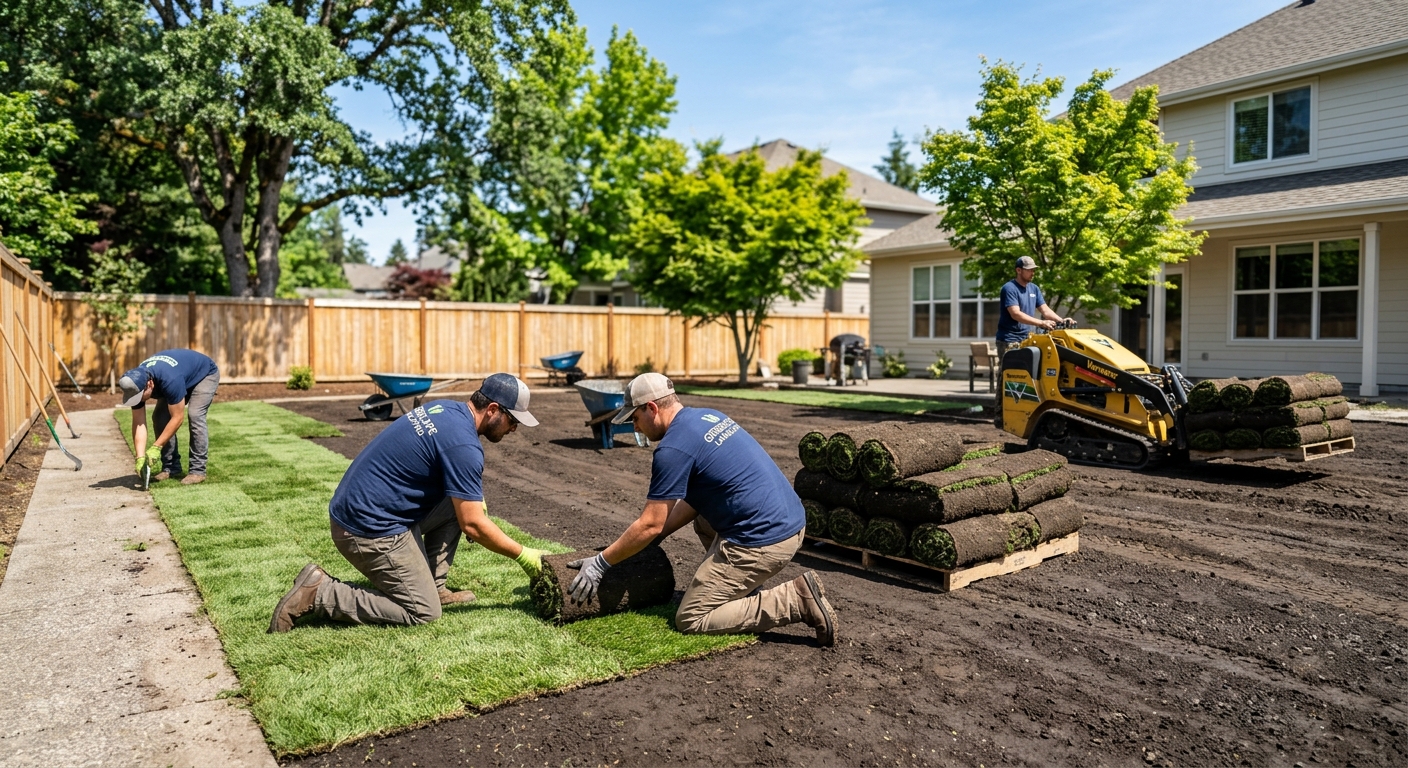
Landscaping options and costs in Edmonton
Edmonton homeowners often invest in landscaping because detached homes are a big part of the local housing mix—single-detached dwellings make up 49.6% of homes—so there’s usually more yard to work with, and you’ll feel the payoff at curb appeal and day-to-day use. With 252,150 homeowner households across the city, many projects start as a weekend upgrade and expand once people see how freeze–thaw affects patios, edging, and grading. Edmonton’s short prairie growing season, cold winters, and freeze-thaw cycles also shape costs: materials must be winter-tough, excavation tends to be more complex, and contractors coordinate around limited soil-working windows. Labour demand can spike after spring melt in neighbourhoods with lots of older properties; notably, 40.5% of Edmonton homes were built before 1981, and retrofits often require reworking drainage, soil quality, or walkways to deal with settling and water movement. You’ll also see higher demand in areas like Terwillegar Towne, where newer subdivisions still need establishment watering and durable planting plans as landscaping matures.
In the pricing below, we assume a typical residential lot with normal access. Your exact number depends on yard size, how much grading is required, whether irrigation and topsoil are included, and how much hardscape you choose versus planting. Use this as a baseline before you compare quotes, then move into the cost drivers to see why similar projects can land in different price bands.
| Service |
Description |
Season |
Price Range |
| Full landscape design and installation |
Site visit, concept + layout, grading plan, material selections, hardscape/softscape install |
Late spring to early fall (best in June–September) |
$8,000–$45,000 |
| Sod installation (supply, grade, lay, roll) |
Light regrading, soil prep, sod delivery + layout, rolling, initial establishment watering plan |
May–September (roots take best when soil temps are warm) |
$3,000–$8,000 |
| Lawn seeding (grade, seed, starter fertilizer) |
Fine grading, seed + starter fertiliser, straw or erosion control (as needed), first watering guidance |
Spring or early fall (with quick establishment care) |
$1,800–$4,500 |
| Interlocking patio or walkway |
Excavation, base (crushed stone), edge restraints, interlock install, jointing sand |
Late spring to early fall |
$4,500–$18,000 |
| Retaining wall (interlocking block) |
Timber/soil removal as needed, excavation + proper base, block wall, drainage gravel + geotextile |
Late spring to fall (freeze protection planning) |
$10,000–$35,000 |
| Tree and shrub planting |
Plant selection for local hardiness, planting holes, soil amendment, mulch, stake/secure as required |
Spring (or fall) planting windows |
$500–$5,000 |
Prices are estimates only and vary by project scope, site access and material selection.
What affects the price of landscaping in Edmonton
In Edmonton, two quotes for what looks like the same job can differ by 30–50% because the “hidden” work varies—especially grading, soil, drainage, and how much hardscape is tied into the layout. Edmonton sits in a colder prairie climate with a short working season, so contractors have less flexibility if excavation must be redone or if the soil is too wet to compact properly. Plant hardiness zone and frost timing also drive both what you can plant and how long crews can safely work outdoors. Prairie conditions (roughly Zone 2–4 depending on your specific site) mean you’ll generally lean toward drought-tolerant and wind-hardy options, while retaining walls must be built with base depth and drainage that sit below frost influence to reduce shifting. Coastal BC (Zone 7–8) can support longer, lush growing seasons and more delicate palettes, but they also require careful drainage in heavier rain zones; dry interior BC often pushes efficient irrigation and lower-water plant mixes. Southern Ontario (Zone 5–6) typically has a longer season than Edmonton but still needs moisture-smart planning during summer dry spells.
Concrete examples that change Edmonton costs: (1) If your yard slopes toward a foundation or garage, we often need additional grading and a drainage plan before sod or interlock—this is where budgets can jump from a $3,000–$8,000 sod range into the higher end of a full landscape project once excavation and haul-off are included. (2) If you’re adding an interlocking patio alongside an older home (many Edmonton properties predate modern site drainage), we sometimes see extra base prep and rework to prevent heaving after freeze-thaw. (3) If you choose mature specimen trees, the planting cost per tree rises quickly due to labour, equipment, and root ball requirements.
| Price Factor |
Why It Matters |
Cost Impact |
| Yard size in sq ft |
Softscape (seed/sod) expands directly with area; hardscape increases with square footage and layout complexity |
Largest swing—can move a job by thousands |
| Grading and drainage work |
Correcting slopes and establishing proper runoff direction reduces pooling and foundation moisture risk |
Often adds significant excavation + compaction time |
| Drainage bed or French drain installation |
Intercepts groundwater and manages downspout/yard runoff issues common after thaw |
Can meaningfully increase project totals |
| Plant material tier |
Native shrubs and hardy perennials generally cost less than ornamental selections and mature specimen trees |
Higher tiers raise both material and labour |
| Hardscape vs. softscape ratio |
Patios and walls require deeper bases, more material, and more precise installation to survive freeze-thaw |
Hardscape typically costs more per sq ft than lawn |
| Irrigation system design and installation |
Efficient zoning helps establishment watering during Edmonton’s summer heat while managing water use |
Can add a noticeable line item even for smaller yards |
| Soil amendment and topsoil required |
Edmonton soils vary; poor drainage or low organic content can force higher-quality import |
Often increases hauling and material costs |
| Tree removal or stump grinding before new planting |
Stumps and roots affect excavation depth, drainage, and future planting locations |
Adds equipment time and disposal/cleanup |
Permits & regulations in Alberta
For most Edmonton landscaping, permits are not the first hurdle. In Alberta, planting, sodding, and most softscape work typically do not require a permit. That means jobs like seeding, installing sod, laying mulch beds, and planting trees and shrubs are usually handled through standard contracting practices (plans, workmanship standards, and proper site prep) rather than formal municipal permitting.
Where permits can come into play is with hard construction. Retaining walls above a common threshold—often around 1.0 m (3.3 ft) in many municipalities—can require a building permit and sometimes engineered drawings, depending on the wall design, height, and soil conditions. Also, if you’re changing lot grading in a way that affects drainage toward a neighbouring property or a storm sewer connection, approvals may be triggered because you’re altering runoff patterns.
Before any digging for wall footings or planting holes, call for utility locates. It’s a must for safety and to avoid damaging underground services. Finally, confirm irrigation and water-use bylaws for Edmonton and how they’ll be enforced during dry conditions—while the most restrictive patterns are often discussed in drier regions, Edmonton still sees watering requirements during establishment.
To verify your contractor: (1) check their Alberta licence status via the appropriate provincial registry for the trade they’re claiming, (2) request a certificate of liability insurance and ensure it matches the work, and (3) confirm WSIB/WCB coverage—then ask for a clearance letter or documentation showing they’re in good standing. A reputable crew provides these promptly before the first shovel hits the ground.
Planning a landscape that thrives in Edmonton's climate
To plan a yard that truly survives Edmonton weather, design around the local hardiness expectations, frost calendar, and drainage realities instead of relying on summer looks. Start with plant selection: choose zone-appropriate, hardy natives and proven perennials that can handle winter lows and spring melt cycles with less watering and more natural resilience. Next, match your lawn strategy to your timeline. Sod gives instant green and erosion control, but it’s typically more expensive—sod installation often lands in the $3,000–$8,000 range for a typical residential scope, while seeding is commonly less, since you’re paying for seed and starter fertiliser plus grade work rather than supply and roll-out. In practice, sod is worth the price if you need quick coverage or have bare spots that blow or wash after spring melt; if you can wait and water carefully during establishment, seeding usually offers better value. Drainage and grading should be treated as part of the landscaping, not an afterthought—Edmonton pooling near foundations is a common failure point when grades aren’t corrected and bases aren’t built properly.
For hardscape like patios and retaining walls, base preparation must respect frost movement. Proper crushed stone base thickness, compaction, and drainage layers prevent heaving and keep joints from shifting over time. For low-maintenance design, add groundcovers, mulched shrub borders, and durable perennials to reduce annual upkeep. Xeriscape and rain-garden concepts can work well here, too: they focus on efficient watering and capturing runoff rather than fighting it. In a prairie yard, that often means grouping plants by water needs and using mulch plus selective irrigation only where establishment is needed.
| Element |
Climate Consideration |
Maintenance Level |
Price Band |
| Sod lawn installation |
Need reliable establishment watering before winter; soil prep affects root take |
Medium (watering + light care after install) |
$3,000–$8,000 |
| Native perennial garden |
Better tolerance to Edmonton winters and dryer stretches once established |
Low to medium (seasonal pruning/cleanup) |
$1,200–$6,000 |
| Mulched shrub border |
Mulch insulates roots and moderates moisture swings during freeze–thaw |
Low (weeding reduced with proper bed prep) |
$800–$4,500 |
| Interlocking stone patio |
Requires engineered base prep to resist frost heave and joint washout |
Low (occasional cleaning/re-sanding) |
$4,500–$18,000 |
| Retaining wall (block) |
Needs proper base depth and drainage to handle freeze–thaw movement |
Low (periodic inspections for drainage block-out) |
$10,000–$35,000 |
| Drip irrigation system |
More efficient establishment watering during Edmonton summers; helps during dry spells |
Medium (seasonal adjustments/spring turn-on) |
$1,500–$7,500 |
How to choose a landscaping contractor in Edmonton
Start by verifying Alberta licensing and coverage. Ask for (1) the specific Alberta licence number relevant to their trade scope, (2) a current certificate of liability insurance naming you as the certificate holder if available, and (3) WSIB/WCB coverage documentation. In Edmonton practice, I recommend you request a clearance letter or proof they’re in good standing before work begins—if they can’t provide it, that’s a major planning and risk issue for you.
Next, get 2–3 itemised written quotes—not just one lump sum. A strong quote breaks labour and materials by line item (excavation, base material, geotextile, block/interlock, soil/topsoil, disposal, and any irrigation components). Carefully read what’s excluded: hauling away existing sod or excess soil, restoring lawn edges, utility locating responsibility, permit pulling (if required), and whether your interlock patio includes base depth and edge restraints. For warranties, confirm workmanship warranty length, what it covers (settling/heaving, drainage performance, material replacement), whether product warranties apply to the manufacturer, and if any warranties are transferable if you sell the home.
For payment, never pay more than about 10–15% upfront. Hold back a portion until key milestones are completed, especially after drainage and base work are inspected. Finally, get a written timeline: proposed start date and an estimated completion window should be on the contract.
- Provide Alberta licence info and the exact scope of work they’re covering.
- Show WSIB/WCB (or clearance documentation) before booking equipment.
- Confirm liability insurance is current and appropriate for landscaping/heavy work.
- Use itemised quotes: labour, materials, disposal, and any site access charges.
- Ask who is responsible for utility locates and whether they’ll mark before digging.
- Confirm grading and drainage specs (slope directions, base depth, compaction method).
- Verify materials: interlock/block brand, thickness, and colour/finish options.
- Require written start and completion dates (or weather-dependent ranges).
- Insist on a workmanship warranty and clarify how long it lasts for base/hardscape.
- Check payment schedule: keep upfront to 10–15% and hold back to completion.
- Ask about restoration: topsoil/seed/sod tie-ins at edges after hardscape.
- Discuss accessibility: gates, driveway slopes, and whether extra labour is needed.
Concrete red flags I see in Edmonton include: (1) quotes that don’t describe base prep or drainage layers for interlock/walls, (2) refusal to provide proof of insurance or WSIB/WCB, (3) very low prices that don’t include disposal/hauling or topsoil, (4) pressure to pay large deposits upfront, and (5) vague timelines with no written weather plan for freeze-thaw sensitivity.
Frequently asked questions — landscaping in Edmonton
How much does a retaining wall cost in Edmonton?
In Edmonton, the cost of a retaining wall depends heavily on wall height, length, excavation difficulty, and—most importantly—drainage detailing and base prep for freeze–thaw. For many residential block walls, homeowners typically budget in the $10,000–$35,000 range for a common yard retrofit scope (material + excavation + proper base + drainage gravel). If you’re planning a smaller segment or a short wall with easy access, the total can land lower; if you need significant grading correction, haul-off, or extra drainage measures, it pushes toward the upper end. Always ask whether the quote includes geotextile, drainage gravel, and weep outlet/behind-wall drainage work, because that’s what prevents shifting later.
When is the best time to landscape in Edmonton?
The best time is usually late spring through early fall, when soils are workable and plants can establish before the first hard cold. For sod installation, contractors typically target May to September, because root take is strongly tied to warm soil temperatures. Tree and shrub planting is commonly done in spring (and sometimes fall) to reduce stress during summer heat. For hardscape like interlocking patios and wall work, aim for the window when crews can excavate and compact base material properly without excessive freeze risk. Edmonton’s freeze–thaw cycles also mean you should avoid leaving baseless excavations late into cold snaps; a good contractor sequences drainage and base work first.
Do I need a permit for a retaining wall in Alberta?
In Alberta, retaining wall permitting can be required depending on the wall height and the specific municipality’s rules. In many Edmonton-area cases, walls above a threshold—often around 1.0 m (3.3 ft)—may require a building permit and, sometimes, engineered drawings. Landscaping tasks like planting and sodding typically do not need a permit. Grading changes that affect drainage direction toward neighbouring properties or storm connections may also trigger approval requirements. To verify what applies to your exact situation, your contractor should confirm the need based on the proposed wall height and the drainage impacts, and you can also check with the city’s development/building requirements before construction starts.
How do I improve drainage in my yard?
In Edmonton, good drainage is about controlling where runoff goes during spring melt and after heavy summer storms—then protecting soil stability through freeze–thaw. The most effective improvements usually combine grading corrections with a drainage component, such as a French drain or a properly designed drainage bed, tied into a safe outlet path. For soft areas, adding topsoil without fixing the slope can worsen pooling. If your patio or walkway area traps water, the base and subgrade around that feature may need rework, not just a surface patch. A reputable contractor will inspect downspout connections, low spots, and soil saturation, then propose a plan that includes geotextile and correct stone drainage layers where needed.
What is xeriscaping and does it suit Edmonton?
Xeriscaping is a design approach that reduces watering by grouping plants by water needs, using drought-tolerant species, and improving soil structure with mulch and compost. Edmonton suits xeriscape concepts well because once plants are established, many hardy natives and perennials can handle prairie moisture stress better than high-water lawns. That said, establishment watering still matters—especially in the first season—so you may pair xeriscape with efficient irrigation zoning or drip lines. Many homeowners use xeriscaping to replace thin, stressed lawn areas or to create low-maintenance planting zones. If you’re budgeting, compare a full sod install in the $3,000–$8,000 band to replacing part of the lawn with shrubs and perennials; the savings can be meaningful when watering and maintenance are reduced.
How do I plan a low-maintenance yard?
Plan low maintenance by reducing the amount of turf and creating stable, mulched beds with hardy plants. In Edmonton, start with a drainage-corrected base so plants don’t struggle in wet pockets during spring melt. Choose zone-appropriate, native shrubs and perennials with good winter structure, and use groundcovers to suppress weeds. Add 2–3 inches of mulch over properly prepped soil to reduce weeding and help moisture retention through freeze–thaw swings. If you want “instant” results, sod can work, but you’ll usually lower ongoing effort by limiting lawn to functional areas and investing in edging and bed boundaries. For hardscape, interlocking patios and block walls tend to be lower upkeep long-term when the base and drainage are built correctly—often making the initial investment worthwhile.