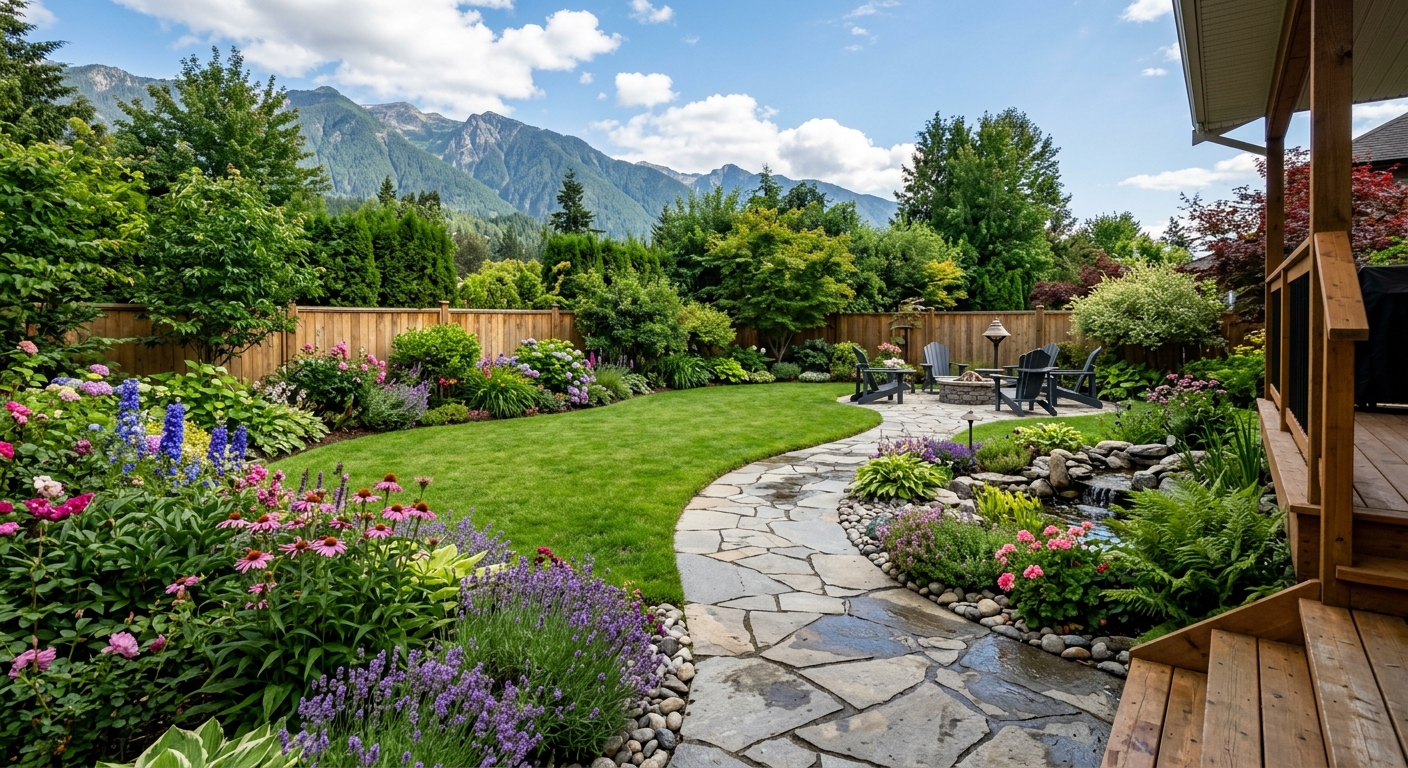
Landscaping options and costs in Fort Macleod
Landscaping in Fort Macleod is all about making your yard look great while staying realistic for prairie winters and hot, dry summers. With Fort Macleod homeownership strong (1,025 homeowner households, or 77.4% of households own) and many homes sitting on single-detached lots (77.0% of dwellings are single-detached), most properties have the space for real curb appeal upgrades—patios, walkways, shrub borders, and better drainage.
In the Lethbridge–Medicine Hat region (Canadian plant hardiness zone 4b), costs tend to reflect two big drivers: a shorter May–September working window and freeze–thaw cycles that make base prep and drainage non-negotiable. You’ll also see pricing differences because crews capable of deeper excavation and properly compacted aggregates are in higher demand during the summer rush. In Fort Macleod, many homeowners in areas like downtown/rail-street corridors often prioritize front-yard grading, walkways, and low-water planting to sharpen first impressions while protecting older home foundations (60.8% of homes were built before 1981).
Typical project budgets for Fort Macleod usually land within the regional bands for design & installation and hardscape/planting. If you’re comparing bids, use the table below as a practical baseline before you get into specifics like slope, soil condition, access, and whether irrigation is included.
| Service |
Description |
Season |
Price Range |
| Full landscape design and installation |
On-site design, grading plan, plant layout, topsoil/amendment, labour & installation for softscape and select hardscape |
May–September |
$8,000–$35,000 |
| Sod installation (supply, grade, lay, roll) |
Remove minor debris, grade/level, compact base, supply and install sod, rolling and first watering plan |
Late spring to early fall (weather dependent) |
$4,000–$8,000 |
| Lawn seeding (grade, seed, starter fertilizer) |
Light grading, seed blend selection, starter fertilizer, seeding and initial soil coverage |
May–July (best germination windows) |
$1,500–$4,500 |
| Interlocking patio or walkway |
Excavation, engineered base depth, compaction, interlocking stone, edging, and finishing |
May–September |
$3,500–$15,000 |
| Retaining wall (interlocking block) |
Block retaining wall installation with drainage gravel, geotextile separation, and proper base for frost |
May–September |
$6,000–$18,000 |
| Tree and shrub planting |
Soil amendment, digging, planting, staking (as needed), mulch rings, and early-care watering plan |
May–June or early fall |
$500–$8,000 |
Prices are estimates only and vary by project scope, site access and material selection.
What affects the price of landscaping in Fort Macleod
You can see the same landscaping job priced 30–50% differently across Lethbridge–Medicine Hat and even within Alberta, and it usually comes down to time, risk, and how detailed the scope is. In Fort Macleod, the plant hardiness zone (zone 4b) and local frost timing dictate both what will survive and what can be installed. Prairie sites also have a short working season—contractors need to schedule excavation, deliveries, and planting so materials aren’t sitting in the yard or getting compromised. That’s why quotes for full landscape builds often sit inside the broader design & installation band (commonly $8,000–$35,000), while “small upgrades” can still climb quickly if drainage and base work are involved.
How the working season affects cost matters. Prairie regions need drought-tolerant, wind-hardy plants, and retaining wall base depth must reach below the frost line—so excavation isn’t optional. By contrast, coastal BC (zone 7–8) allows a longer growing season and lush planting palettes, but heavy-rainfall sites demand robust drainage and erosion control. Dry interior BC also shapes irrigation design with more water-efficiency controls. Southern Ontario (zone 5–6) tends to offer a moderate season with irrigation needs that are more about summer dry spells than repeated freeze–thaw stress.
Concrete examples from Fort Macleod: (1) a sloped lot that needs re-grading to stop water running toward the house can add significant labour and topsoil/amendment, pushing a project toward the upper end of interlocking patio/walkway work instead of staying closer to the low thousands; (2) replacing tired clay topsoil with amended soil and proper drainage gravel can be worth it, but it changes the price structure more than most homeowners expect; (3) older homes (many built before 1981) often have foundation drainage issues, so builders frequently must include base rebuilds and corrected fall, which also increases materials and disposal costs.
| Price Factor |
Why It Matters |
Cost Impact |
| Yard size in sq ft — the primary cost driver for softscape |
More area means more topsoil, grading, sod/seed, mulch, and plant quantity |
Can shift total costs by several thousand dollars even with similar plant types |
| Grading and drainage work — slope corrections add significant cost |
Proper drainage reduces foundation moisture and pooling; requires re-contouring and compaction |
Often increases labour and excavation, pushing projects toward upper design/hardscape ranges |
| Drainage bed or French drain installation |
Captures and redirects water; needs clean gravel, geotextile, and outlet planning |
Frequently adds a noticeable “hidden” line item that can double base excavation time |
| Plant material tier — native shrubs vs. ornamental vs. mature specimen trees |
Hardy native plants cost less and handle wind/drought; mature specimens are pricier and riskier to transplant |
Can swing tree & garden planting from hundreds to several thousand per feature |
| Hardscape vs. softscape ratio — walls and patios cost more per sq ft than lawn |
Patios and retaining walls require deeper base, heavier materials, and precise alignment |
Interlocking areas can consume a large portion of the budget quickly |
| Irrigation system design and installation |
Drip lines and efficient controllers prevent plant loss while controlling water use |
Upfront cost can be moderate, but it changes ongoing maintenance and watering effectiveness |
| Soil amendment and topsoil required |
Improves rooting for zone-appropriate plants; depends on existing soil quality |
May require multiple loads and re-compaction, increasing hauling and material costs |
| Tree removal or stump grinding before new planting |
Impacts excavation access and stump re-growth risk |
Can add a few hundred to over a thousand depending on quantity and access |
Permits & regulations in Alberta
In Alberta, most routine landscaping and planting work does not require a permit. That typically includes sodding and seeding, planting shrubs and trees, installing mulch beds, and most softscape upgrades like grading for garden beds (as long as it doesn’t create drainage issues for neighbouring properties). In Fort Macleod, the work that most often triggers permits is retaining-wall construction above the local threshold—commonly around 1.0 m (3.3 ft) in many municipalities—because taller walls can affect structural loading and drainage.
Permits may also be required when changes to lot grading affect how water drains, especially if it alters runoff direction toward neighbouring properties or storm sewer connections. Before any digging for planting holes, fence posts, or wall footings, ensure utility locates are completed. This is the step that prevents costly damage to buried services (and delays). For water and irrigation, confirm irrigation and water-use bylaws applicable in your area; even when restrictions are not as strict as some dry BC interior regions, conservative, efficient watering design is still expected.
To verify contractor readiness in Alberta, ask for (1) their Alberta licence details (and confirm on the appropriate provincial registry), (2) proof of liability insurance showing coverage for landscaping scope and jobsites, and (3) WSIB/WCB coverage confirmation (request a clearance letter or coverage status document). If they can’t provide documents promptly, it’s a major risk indicator.
Planning a landscape that thrives in Fort Macleod's climate
Planning a landscape for Fort Macleod means choosing plants and building details that cooperate with zone 4b winters and the freeze–thaw cycle that comes with them. Start with plant selection: prioritise prairie-hardy, wind-tolerant species and native or well-adapted perennials and shrubs that need less watering and fewer special winter treatments. Then plan your soil and moisture strategy—mulch, weed control, and targeted irrigation (often drip) help young plants survive heat and drying winds during the summer.
Sod vs. seed is a key decision for how fast you want results. Sod gives instant coverage but costs about 3–4x more per sq ft than seeding, because you’re buying mature turf and paying for heavier handling. Seeding is slower, but with good grading and starter fertilizer, it can establish a durable lawn that matches prairie conditions.
Drainage and grading are critical in the Lethbridge–Medicine Hat region to prevent pooling and foundation moisture. A proper slope away from the house, plus drainage beds or French drains where needed, protects your investment. For hardscape, base preparation matters: interlocking patios and retaining walls must be built on a well-compacted base with the right frost-resilient depth so they don’t heave. Finally, use low-maintenance design strategies: groundcovers in open areas, layered mulch for shrub borders, and perennials that return reliably year after year.
To make it practical: if sod alone is pushing your budget toward the higher end of sod installation estimates (for many yards, that’s where budgets can land near the $4,000–$8,000 band), consider using seeding for larger lawn areas and investing the difference into drainage corrections or a properly built walkway. That trade often delivers better long-term curb appeal than trying to “buy speed” everywhere.
| Element |
Climate Consideration |
Maintenance Level |
Price Band |
| Sod lawn installation |
Fast establishment, but roots still need winterization and careful early watering through short prairie seasons |
Low (after establishment), higher during the first growing season |
$4,000–$8,000 |
| Native perennial garden |
Zone-appropriate plants handle wind and drought better; deep roots improve resilience after dry spells |
Low to moderate (weeding in year one, then seasonal trimming) |
$1,500–$6,000 |
| Mulched shrub border |
Mulch moderates soil temperature through freeze–thaw and reduces evaporation |
Low (annual refresh of mulch and light pruning) |
$1,000–$4,500 |
| Interlocking stone patio |
Requires engineered base and drainage to resist heaving during freeze–thaw |
Low (occasional joint sand/edge adjustments) |
$3,500–$15,000 |
| Retaining wall (block) |
Needs proper base depth and drainage gravel behind the wall to manage water pressure |
Low (inspections after spring melt are smart) |
$6,000–$18,000 |
| Drip irrigation system |
Efficient watering supports drought-tolerant planting and reduces water waste in short growing windows |
Moderate (seasonal checks and winterization) |
$1,800–$7,500 |
How to choose a landscaping contractor in Fort Macleod
Choosing the right landscaping contractor in Fort Macleod starts with proof and paperwork, not just a friendly site visit. In Alberta, you should verify the contractor’s Alberta licence details (where applicable to their scope), liability insurance covering work and people on the jobsite, and WSIB/WCB coverage. Ask for a current clearance letter or coverage confirmation. If they can provide certificates quickly, it usually indicates they manage compliance and scheduling more professionally.
Next, request 2–3 itemised written quotes. You want a breakdown that separates labour and materials (for example: excavation/base prep, disposal, stone/sod/seed, topsoil/soil amendment, edging, and irrigation if included). A lump-sum number can hide the real differences between bids. Read the scope carefully: what’s excluded (rock removal, disposal, sprinkler tie-ins, utility locate fees, permit handling)? Is site cleanup included? Are materials allowances listed, especially for plants and hardscape?
Warranty matters too. Ask for a workmanship warranty length and whether product/manufacturer warranties apply to irrigation parts, turf, or stone. Also confirm if warranties are transferable if you sell your home. For payment, never pay more than about 10–15% upfront; hold back the final portion until the job is complete and corrected. Get a timeline in writing: a start date and a realistic completion estimate for Fort Macleod’s short May–September window.
- They provide insurance certificates and WSIB/WCB clearance documents on request.
- Quotes are itemised (labour vs. materials vs. excavation/base work).
- Clear scope includes disposal, topsoil/subgrade prep, and site cleanup.
- They specify plant quantities and sizes (not just “shrubs” or “mixed perennials”).
- Hardscape bids include base depth, compaction approach, and edging details.
- Retaining wall quotes include drainage gravel and weep/exit considerations.
- They explain how they’ll handle utilities: utility locates before digging.
- They provide a detailed schedule that fits the weather window.
- They state warranty terms in writing (workmanship and product coverage).
- Payment terms follow a staged approach with a holdback until completion.
- They show you examples of similar work in Fort Macleod or nearby prairie sites.
- They document changes with written amendments if surprises come up.
Red flags: (1) bids that don’t mention grading/drainage when your lot is sloped or the yard pools; (2) contractors asking for large upfront payments well above 10–15%; (3) no written timeline or vague “we’ll start soon” dates; (4) missing insurance/coverage paperwork; and (5) hardscape quotes with no base prep details (depth/compaction), which is a common cause of heaving after freeze–thaw.
Frequently asked questions — landscaping in Fort Macleod
What is xeriscaping and does it suit Fort Macleod?
Xeriscaping is a landscaping approach that reduces water use by matching plants to the site and climate, improving soil, and using efficient irrigation. In Fort Macleod (zone 4b), it suits most yards well because prairie conditions include hot, dry summers, windy exposure, and a short growing window. A xeriscaped yard typically combines drought-tolerant shrubs, prairie-hardy perennials, thick mulch, and drip irrigation—so plants don’t rely on frequent, wasteful watering. If you’re budgeting, you can still keep some lawn, but many homeowners find savings by seeding larger areas instead of installing sod everywhere. For example, sod installation often lands near the $4,000–$8,000 band, while seeding can be more budget-friendly if drainage and soil prep are done right (then you invest in trees/shrubs and edging where it shows most).
How do I plan a low-maintenance yard?
To plan a low-maintenance yard in Fort Macleod, start with fewer, better plants rather than lots of high-maintenance ornamentals. Choose zone-appropriate shrubs and native perennial groupings that can handle wind and drought; then support them with mulch, weed barrier where appropriate, and a simple irrigation layout. Next, make drainage part of the design: if water pools during spring melt, you’ll fight weeds and plant stress every year. Keep hardscape purposeful—paths and patios reduce muddy traffic areas and limit the grass you must keep trimmed. Finally, use “set-and-forget” structure: groundcovers, layered mulch borders, and repeatable plant palettes so you’re not hunting different species for watering and pruning.
How deep should a retaining-wall base be for local frost?
For a retaining wall in Fort Macleod, the base has to be built for freeze–thaw movement, not just “looks level.” In practice, reputable contractors design the base so it’s below the frost-affected zone and includes proper drainage behind the wall (drainage gravel + separation fabric) so water doesn’t build up and increase pressure. Because exact depth depends on wall height, soil type, and local conditions, you should insist on an engineered or spec-driven base design from the contractor—especially if the wall height may fall into permit territory (commonly around 1.0 m in many Alberta municipalities). If you’re getting bids, ask directly: what base depth is included, what material is used, and how do they ensure compaction and drainage?
How much does professional landscape design cost?
Professional landscape design in Fort Macleod is often bundled with installation if you hire a design-and-build contractor, and that’s where many homeowners see better value. In the Lethbridge–Medicine Hat region, full landscape design and installation commonly falls within the $8,000–$35,000 band depending on yard size, grading/drainage complexity, and how much hardscape and planting is included. If you want only design work, the price can be lower, but you’ll still need a site plan and planting palette that’s realistic for zone 4b and the short working season (May–September). A good design should explicitly address drainage around older homes (many built before 1981) and show how your patio/walkway base and planting bed elevations will interact with spring melt.
How do I compare landscaping quotes?
Compare quotes by converting them into “scope apples-to-apples,” not just total dollars. Ask each contractor to provide itemised pricing: labour and materials, excavation and base prep, disposal, topsoil/soil amendment, plant quantities/sizes, and whether irrigation is included. Confirm what’s excluded (utility locates, permit handling if required, stump grinding, rock removal, or additional drainage work). Look for hardscape details: base depth, compaction method, and edging—these impact how long the patio/walkway lasts after freeze–thaw. Also compare timelines: crews that can’t commit to start and completion dates may be less reliable during the short prairie season. If one quote is far below the rest but is vague on base/drainage, treat it as a risk—not a deal.
How long does a landscaping project take in Fort Macleod?
Timing depends on scope and weather, but most Fort Macleod landscaping happens within the May–September window because of frost and soil conditions. Small projects (like a shrub border refresh or minor planting) can take about 1–3 days once materials arrive. Sod or seeding jobs depend on weather and soil readiness; they can be a few days to a week, plus additional time for establishment. Patios and walkways usually take longer due to excavation, base compaction, curing/settling considerations, and finishing—often about 1–2 weeks depending on size. Full design-and-install projects are more variable; budgets that fall in the $8,000–$35,000 range often require coordination of grading, drainage, deliveries, and planting, which can stretch across several weeks. Always get a written start date and completion estimate.