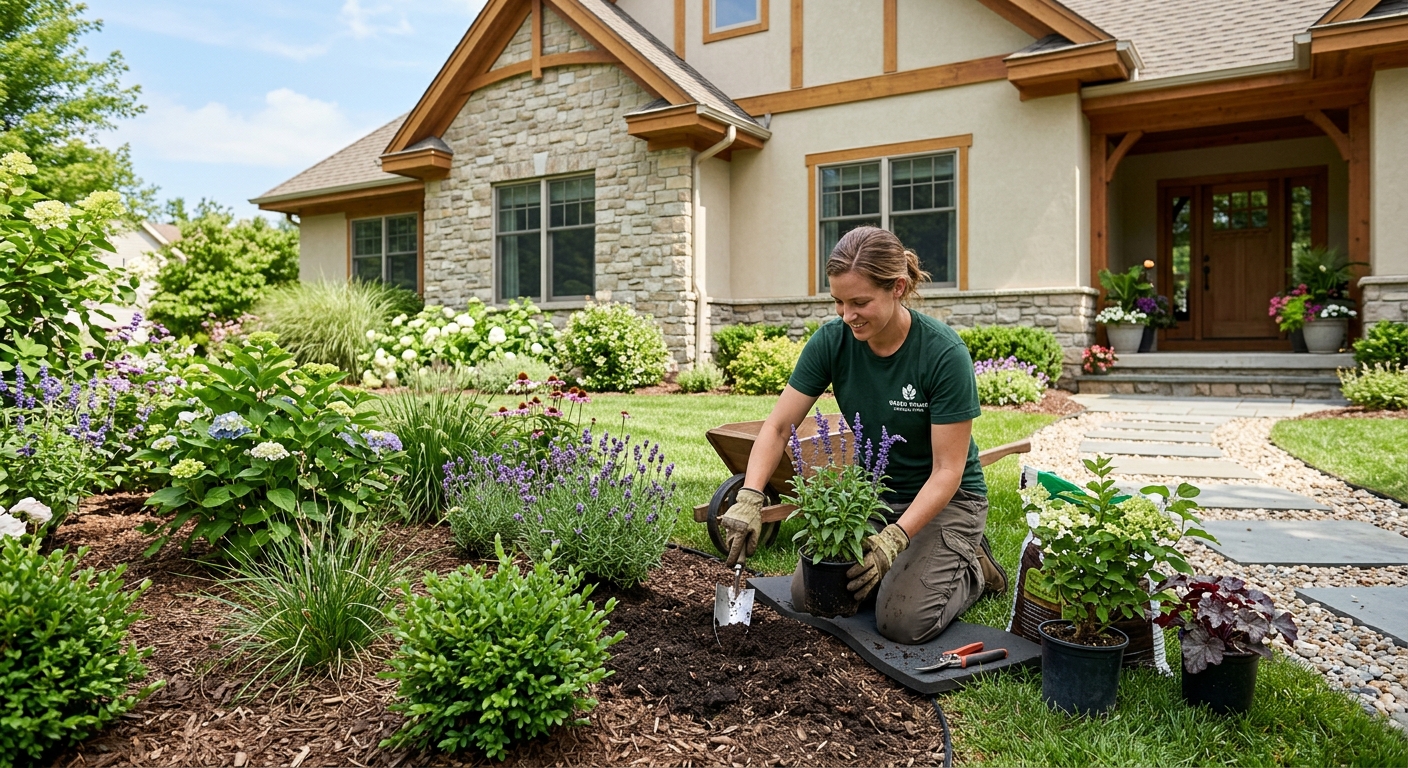
Landscaping options and costs in King Edward Park
Landscaping in King Edward Park, Alberta typically falls into a few repeatable project types—design-led makeovers, lawn refreshes, and hardscape upgrades. With a population of 4,215 (Statistics Canada, 2021 Census), local contractor availability is strong enough to support both quick turnarounds and multi-trade builds, especially around established residential pockets near the LRT corridor. In this neighbourhood, many homeowners invest because detached homes are common in Calgary-area suburbs and they come with the yard space to benefit from proper grading, drainage, and plant selection. That’s why you’ll see consistent demand for backyard patios and frontage curb upgrades, particularly where mature trees and wind exposure create microclimates.
Pricing is shaped by Calgary’s Prairie plant hardiness zones 3–4, severe freeze–thaw cycles, and a working window defined by late-spring frosts and early fall cold snaps. These conditions affect how deep bases must be compacted for patios and walkways, and how long it takes crews to complete projects that rely on drainage work and soil stabilization. Labour also remains a major driver in the Calgary market—often representing roughly 40–60% of a full project—because careful excavation, hauling, and regrading are not optional in this climate. In King Edward Park, trade demand is especially high for hardscaping and yard drainage solutions that protect foundations from pooling and heaving.
Use the table below to compare common landscaping scopes and realistic price bands before you request itemised quotes.
| Service |
Description |
Season |
Price Range |
| Full landscape design and installation |
Site assessment, layout, grading/drainage strategy, hardscape base prep, plant palette, irrigation plan (if needed), and installation |
Late spring to early fall |
$5,000–$50,000 |
| Sod installation (supply, grade, lay, roll) |
Rough/finish grading, soil conditioning, sod supply, installation, rolling, and initial watering setup |
May to September (best results in warmer weeks) |
$1,500–$6,000 |
| Lawn seeding (grade, seed, starter fertilizer) |
Minor regrading, seed selection, starter fertiliser, seeding, light topdressing, and establishment care |
April to mid-June or early fall overseed |
$900–$3,500 |
| Interlocking patio or walkway |
Excavation, deep base and compaction, geotextile, pavers, edging, and joint sand installation |
June to September (weather dependent) |
$8,000–$35,000 |
| Retaining wall (interlocking block) |
Block retaining wall with proper drainage rock, geotextile, compacted base, and cap (if applicable) |
May to September |
$10,000–$40,000 |
| Tree and shrub planting |
Soil improvement, planting, staking (as needed), mulching, and first-season care guidance |
Spring and fall (tree establishment focus) |
$800–$15,000 |
Prices are estimates only and vary by project scope, site access and material selection.
What affects the price of landscaping in King Edward Park
In King Edward Park, two homeowners can receive quotes that differ by 30–50% for what sounds like the same landscaping job. The most common reason isn’t “better or worse” contractors—it’s differences in yard size, excavation depth, grading complexity, and how much drainage and soil work is truly required for Calgary’s freeze–thaw conditions. In Prairie zones like ours (hardiness zone 3–4), what survives the winter and what your soil can handle matters immediately. That’s why crews price the base and drainage depth carefully, because shallow foundations and poor water routing can lead to heaving, settlement, and premature failure.
To understand the spread across Alberta and beyond, compare climates: coastal BC (zone 7–8) supports a longer growing season and lush broadleaf palettes, so softscapes can be planted and established more flexibly, though heavy-rain drainage detailing still matters. In the dry BC interior, watering restrictions push drip irrigation and xeriscaping, which changes irrigation design cost. Southern Ontario (zone 5–6) often has a moderate season, but you still pay for summer irrigation coverage during dry spells. In Calgary, our shorter working window and spring/fall temperature swings mean fewer days for foundation-level excavation and paver base compaction—so scheduling and labour become a bigger portion of the total.
Concrete examples from local sites: (1) a small patio over existing compacted base may land near the lower band, but a patio requiring regrading and deeper base prep can push toward the mid-range of the $8,000–$35,000 band. (2) Tree and shrub planting can stay near $800–$15,000 if soil is workable, but if you need major soil amendment and wind-anchoring for multiple trees, the price rises quickly. Also, older Calgary-area housing stock often has older drainage patterns; fixing that can add costs in the grading stage rather than the “plant” stage.
| Price Factor |
Why It Matters |
Cost Impact |
| Yard size in sq ft — the primary cost driver for softscape |
More square footage increases excavation, material, and labour hours |
Softscape totals can rise rapidly with each added 500–1,000 sq ft |
| Grading and drainage work — slope corrections add significant cost |
Freeze–thaw failures often start with pooling and incorrect surface pitch |
Can add thousands when regrading and re-compaction are required |
| Drainage bed or French drain installation |
Intercepting water prevents foundation moisture and heaving |
Significant excavation and stone volume increases labour and material spend |
| Plant material tier — native shrubs vs. ornamental vs. mature specimen trees |
Mature trees require larger equipment, bigger root balls, and longer install time |
Swapping tiers can move a planting from the low end to the upper end quickly |
| Hardscape vs. softscape ratio — walls and patios cost more per sq ft than lawn |
Walls and pavers need deeper bases, edging, and compaction |
High hardscape projects commonly land in the higher bands |
| Irrigation system design and installation |
Zoned systems and controllers improve survival in Calgary’s heat and wind |
Upfront cost increases, but reduces plant loss and wasted water |
| Soil amendment and topsoil required |
Clay-heavy or compacted soils need structure for roots and infiltration |
Hauling and spreading add cost, especially for thicker amendment layers |
| Tree removal or stump grinding before new planting |
Access, disposal, and root disturbance change the excavation scope |
Can add a noticeable chunk to the schedule and total |
Permits & regulations in Alberta
In Alberta, most typical softscape work—sodding, seeding, planting, mulch installs, and most grading/landscaping changes for drainage—usually does not require a permit. However, retaining walls are the common exception. In many Alberta municipalities, a retaining wall above a threshold height—often around 1.0 m (3.3 ft)—typically requires a building permit and may require supporting documentation, such as engineered drawings. If you’re changing lot grading in a way that affects drainage toward a neighbouring property or toward a storm sewer connection, you may also need approvals. Because requirements can vary by local jurisdiction, the safe approach for King Edward Park homeowners is to confirm with the municipality before the contractor starts excavation for wall footings or major regrading.
Before any digging: request utility locates. Utility marking is essential before planting holes, sprinkler trenches, or wall footing excavation. For irrigation, verify local water-use bylaws and seasonal restrictions (even if restrictions are more commonly discussed in dry periods), and ensure your plan matches permitted watering days and times.
To verify a contractor properly: (1) confirm the contractor’s Alberta licence/credentials as applicable on the proper online registry; (2) ask for a current certificate of insurance for general liability (and name your property correctly); (3) verify WSIB/WCB coverage where required for workers; and (4) request a clearance letter or proof of account status. Your quote should include these documents or you should be able to receive them before work starts.
Planning a landscape that thrives in King Edward Park's climate
A landscape that thrives in King Edward Park has one goal: work with zone 3–4 realities—cold winters, freeze–thaw cycles, and a shorter reliable growing window—rather than trying to force broadleaf or drought-sensitive choices. Start with plant selection. Choose zone-appropriate, wind-hardy species and, where possible, native varieties that are better adapted to Alberta’s dry, variable conditions. For many yards, you’ll also want winter structure: evergreens for wind shelter and shrubs that can handle snow cover and temperature swings.
Next, decide sod vs. seed. Sod looks instant, but in Calgary conditions it costs about 3–4x more per square foot than seeding once you factor in materials and installation labour. Seed is slower to establish, but it’s easier on the budget when your base is corrected and you follow establishment watering guidance. Drainage and grading are the make-or-break items: Calgary pooling can drive foundation moisture and frost heave, so plan for correct surface pitch and, where needed, drainage beds or French drains.
For hardscape—patios and retaining walls—base preparation must account for the frost line. Deep, well-compacted bases and proper drainage behind retaining walls reduce settlement. Low-maintenance design strategies work especially well here: mulch and groundcovers, perennials that return reliably, and layered shrub borders that reduce annual weeding.
Example of value: if you’re trying to cover a larger lawn area, choosing seeding instead of sod can keep you closer to the lower end of typical lawn budgets (often under $1,500–$6,000 for sod-style installs), which leaves funds for soil amendment and drainage—often the better long-term investment in Calgary.
| Element |
Climate Consideration |
Maintenance Level |
Price Band |
| Sod lawn installation |
Needs timely installation and consistent moisture while roots establish through late-spring warmth |
Medium during establishment; lower after it’s established |
$1,500–$6,000 |
| Native perennial garden |
Better cold tolerance and wind resilience in zone 3–4; supports pollinators with less fuss |
Low to medium (spring cleanup and occasional dividing) |
$800–$15,000 |
| Mulched shrub border |
Mulch moderates soil temperature swings and helps limit winter desiccation |
Low (weeding reduced, pruning seasonal) |
$1,000–$10,000 |
| Interlocking stone patio |
Requires deep, compacted base to survive freeze–thaw and drainage routes to prevent pooling |
Low (sweep/weed control; occasional joint sand top-up) |
$8,000–$35,000 |
| Retaining wall (block) |
Needs drainage rock and proper backfill to reduce frost pressure and water buildup |
Low (periodic inspection and cap/edge check) |
$10,000–$40,000 |
| Drip irrigation system |
Zoned drip reduces water waste during dry stretches and supports roots through heat and wind |
Low (controller management and seasonal checks) |
$1,500–$8,000 |
How to choose a landscaping contractor in King Edward Park
Choosing the right contractor matters in King Edward Park because the biggest long-term failures in Calgary landscaping usually come from shortcutting the base, drainage, or plant establishment. Start by verifying Alberta credentials: ask whether the company holds the required Alberta licence/registration for the work they’re performing, and verify it using the applicable online registry. Next, request proof of general liability insurance (certificate of insurance showing your property listed correctly) so you know you’re protected if something is damaged on site. For workers, confirm WSIB/WCB coverage where applicable—ask for clearance evidence and ensure it matches the legal business entity you’re hiring.
Get 2–3 itemised written quotes, not lump sums. Your quote should separate labour and materials (pavers vs. base material, topsoil and amendments, drainage rock, geotextile, plant quantities, and irrigation components). Read the scope carefully: what’s excluded (tree removal? disposal? concrete cutting?), whether permits are included if required for a retaining wall, and whether drainage systems include trenching, pipe, gravel, cleanout/access points, and connection details. Confirm warranty terms: workmanship warranty length, what it covers (settlement, heaving, failing plant materials due to improper install), product/manufacturer warranty, and whether any warranties are transferable to you.
Payment schedule should be conservative—never more than 10–15% upfront. Hold back a portion until the job is complete and documented (final walkthrough, photo record, and care instructions). For timeline, request a start date and a completion estimate in writing, tied to weather realities in Calgary.
- Ask for site-specific references from Calgary-area projects with freeze–thaw hardscape.
- Confirm Alberta licence/registration details for the company and any subcontractors.
- Require a certificate of insurance and verify dates and coverage limits.
- Verify workers’ coverage (WSIB/WCB) and ask for clearance/proof.
- Get itemised labour and materials breakdown—not only totals.
- Ask who provides geotextile, base depth specs, and compaction method.
- Clarify drainage scope: slope targets, drainage pipe/rock, and discharge routing.
- Confirm disposal included for excavated material and old turf/trees.
- Request a planting list with quantities, sizes, and spacing.
- Ask about irrigation: zoned controller, backflow preventer (if applicable), and coverage map.
- Review warranty length in writing for both workmanship and materials.
- Set a payment schedule with a holdback until final acceptance.
Red flags to watch for: contractors who won’t provide insurance/coverage documentation, quotes that omit base depth and compaction details for patios/walkways, vague scopes that don’t state what drainage includes, requests for heavy upfront payment (more than 15%), and no written timeline tied to weather and curing/establishment periods.
Frequently asked questions — landscaping in King Edward Park
How much does a retaining wall cost in King Edward Park?
In King Edward Park, retaining wall pricing depends heavily on wall height, length, soil condition, and the amount of excavation and back-drainage required for freeze–thaw stability. For typical interlocking block retaining walls, many projects fall into the $10,000–$40,000 band, with the lower end usually for shorter walls and straightforward access. Costs rise when contractors need deeper, well-compacted bases below frost influence, add proper drainage rock and geotextile, or address poor drainage that contributes to pooling and heaving. If your yard slopes toward the house or you’re replacing an older failing wall, the grading work can be a significant part of the total.
When is the best time to landscape in King Edward Park?
For Calgary-area landscaping, the best timing is generally late spring through early fall, because crews need consistent conditions to excavate, compact bases, and complete paver and drainage work. Sod is typically best installed during warmer weeks in spring through summer, while seeding can work in spring and also in early fall if conditions stay favourable. Tree and shrub planting often succeeds in spring and fall when plants aren’t dealing with peak summer heat and when the ground is workable. Because King Edward Park experiences late-spring frosts and early cold snaps, good contractors schedule around weather and avoid installing anything that would be exposed to damaging freeze events during establishment.
Do I need a permit for a retaining wall in Alberta?
Often, yes—retaining walls are the most common landscaping item that triggers permitting in Alberta. Many municipalities require a building permit when a wall is above a threshold height, commonly around 1.0 m (3.3 ft), and some situations may also need engineered support drawings. In addition, if the project involves significant lot grading changes that affect drainage direction toward neighbouring properties or storm connections, you may need approval. The practical step for homeowners in King Edward Park is to confirm the wall height and scope with the municipality before excavation. A reputable contractor should tell you whether the permit is required and whether they can include permit support in the quote.
How do I improve drainage in my yard?
In King Edward Park, drainage improvements usually start with correcting surface grading so water doesn’t pool near foundations or walkways. If pooling is more than a simple pitch issue, contractors often add a drainage bed or a French drain—installed with trenching, pipe placement, cleanout access, and properly sized gravel/rock. Because Calgary’s freeze–thaw cycles are severe, drainage design can’t be an afterthought: water must have a predictable path away from structures. If you’re planning a patio or wall, ask whether base preparation includes drainage routing and whether the project ties into your site’s runoff strategy. In many “fix drainage + install hardscape” projects, total pricing aligns with the broader hardscaping bands like $8,000–$35,000, depending on excavation and base depth.
What is xeriscaping and does it suit King Edward Park?
Xeriscaping is a landscaping approach that reduces water use by choosing drought-tolerant plants, improving soil, and using efficient irrigation (often drip) or none for established areas. Yes, xeriscaping suits King Edward Park because Alberta’s semi-arid climate and windy conditions mean lawns are the most water-intensive part of many yards. Even with water restrictions and periodic watering limits, smart designs—zoned irrigation, mulch, and resilient plant palettes—help plants survive without constant watering. That said, xeriscaping doesn’t mean “no greenery.” Many homeowners blend hardy perennials, shrubs, and ornamental grasses, then reserve limited irrigation for young plants and areas that need quick establishment.
How do I plan a low-maintenance yard?
A low-maintenance yard in King Edward Park is planned around fewer, stronger decisions: correct grading and drainage first, then plant choices that can handle zone 3–4 winters and windy drying. Use mulch and groundcovers to suppress weeds, layer shrubs for year-round structure, and pick perennials that return reliably so you’re not replanting every season. For lawns, consider seeding over sod if you want to reduce cost and you can manage establishment watering. If you want fast results, sod can be worth it, but it’s usually higher cost—sod-style installs often fall within $1,500–$6,000. For upkeep reduction, consider hardscape for high-traffic zones, and use drip irrigation with zoned controllers so you’re not watering everything equally.