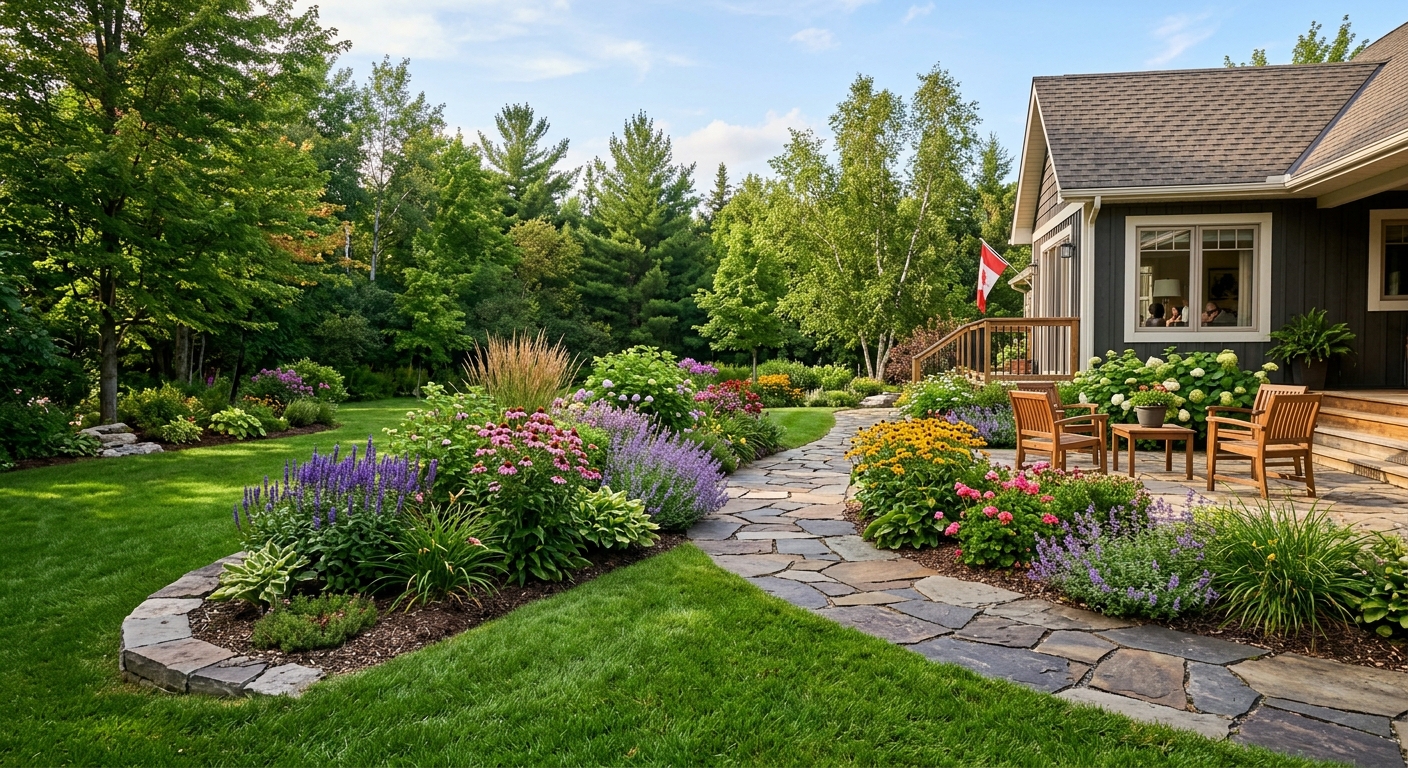
Landscaping options and costs in Forest Heights
Forest Heights, Alberta is a great place to invest in curb appeal—especially for homeowners who want outdoor comfort that actually survives our chinooks, hail, and freeze–thaw cycles. With a population of 5,985 (Statistics Canada, 2021 Census), demand is steady, and the housing mix here typically includes many single-family properties where owners have the yard space (and the motivation) to improve softscape, walkways, and planting beds. As a result, contractor availability can be better than in smaller towns, but pricing still moves with the realities of Calgary-area site work.
In Prairie plant hardiness zones 3–4, late-spring frosts and early fall cold snaps shape both plant selection and how long crews can work on site. Freeze–thaw is severe, so patios, interlocking walks, and retaining walls need deep, well-compacted bases and drainage that protects foundations from heaving and pooled meltwater. Labour typically represents 40–60% of the full project, and comprehensive jobs across the Calgary region often land in the mid five-figure range once grading, hardscape, planting, and irrigation are included.
In Forest Heights, neighbourhood pockets with heavier traffic to established schools and community amenities—along busy residential corridors near local transit routes—tend to see more requests for clean walkways, interlocking repairs, and front-yard planting refreshes. If you’re comparing options, the table below helps you understand typical scope-based pricing before we talk design details.
| Service |
Description |
Season |
Price Range |
| Full landscape design and installation |
Site visit, concept + planting plan, grading/drainage coordination, hardscape, planting, topsoil/soil improvement, and optional irrigation layout |
Late April–October (weather-dependent) |
$8,500–$42,000 |
| Sod installation (supply, grade, lay, roll) |
Remove/prepare existing grade, compact base, supply sod, lay and roll, starter fertiliser, and initial watering guidance |
May–September |
$2,000–$6,000 |
| Lawn seeding (grade, seed, starter fertilizer) |
Light grading, seed blend, starter fertilizer, lawn rollers, and establishment watering schedule |
May and early August (best odds for germination) |
$1,500–$3,500 |
| Interlocking patio or walkway |
Excavate, compacted base + bedding sand, edge restraints, interlocking stone placement, and final cleanup |
May–September |
$4,500–$22,000 |
| Retaining wall (interlocking block) |
Block wall build with proper base depth, drainage layer, filter fabric, and weeping tile where needed |
May–October |
$8,000–$35,000 |
| Tree and shrub planting |
Soil improvement, planting holes, root-safe backfill, staking (as needed), mulch rings, and initial care notes |
April–October (frost-free conditions for best results) |
$900–$12,500 |
Prices are estimates only and vary by project scope, site access and material selection.
What affects the price of landscaping in Forest Heights
In Forest Heights (and across the Calgary economic region), two homeowners can receive quotes that differ by 30–50% for what sounds like the same job because the “real” scope is often hidden in site conditions. A flat front yard with good access and clay-free topsoil is very different from a sloped lot with drainage issues, mature trees, or older hardscape that needs partial removal and re-base. Labour costs also swing with scheduling—crew availability is highest when late-spring weather cooperates, and that can move pricing quickly.
Hardiness zones 3–4 and our working window matter. Short growing seasons mean you pay for efficient installs: sod laid late can fail if establishment is rushed, while seed can take longer to blend in. Retaining wall base depth must reach below the frost line, and that adds excavation, imported granular material, and compacted layers—exactly the work that drives cost beyond just “materials.” Prairie-style planting palettes also tilt toward drought-tolerant, wind-hardy species; if you want ornamental colour or more mature sizes, the plant tier (and sometimes transport) pushes pricing up.
To show how this plays out locally: (1) a drainage correction (regrading + French drain) can shift a project from “top dressing and planting” into a full hardscape rebuild because pooling near foundations forces base redesign. (2) If your yard needs deep topsoil and soil amendment, it can move you from the lower end of a tree/shrub install into the mid range. And if you’re choosing sod versus seeding, the difference can be meaningful—sod projects commonly sit around $2,000–$6,000, while seeding is often closer to $1,500–$3,500 once grading and establishment time are considered.
Also remember housing age: older neighbourhood properties may have undersized drainage or compacted fill from past renovations, which can lead to extra base prep and soil improvement—work that protects your foundation and reduces future “rework” costs.
| Price Factor |
Why It Matters |
Cost Impact |
| Yard size in sq ft — the primary cost driver for softscape |
More area means more excavation, material, labour hours, and establishment time |
Large lots can push projects from the lower into the mid band for full installs |
| Grading and drainage work — slope corrections add significant cost |
Fixing ponding and redirecting water protects foundations and reduces heaving |
Commonly adds major labour + equipment days, raising total cost 20–40% |
| Drainage bed or French drain installation |
Permeable layers and piping are essential where soils hold water during melt |
Often increases costs substantially; may require hardscape removal |
| Plant material tier — native shrubs vs. ornamental vs. mature specimen trees |
Hardier native species cost less and establish reliably in Zone 3–4 |
Switching to larger specimen stock can move costs from low hundreds to several thousand |
| Hardscape vs. softscape ratio — walls and patios cost more per sq ft than lawn |
Stone, base materials, and compaction drive per-square-foot pricing |
More stone typically pushes the project toward the upper landscape bands |
| Irrigation system design and installation |
Zoned controls and drip or sprinkler layouts reduce water waste and plant stress |
Adds material + tech time; usually increases project cost but improves success |
| Soil amendment and topsoil required |
Improves root development and reduces compacted-base failures |
Can add truckloads of soil and labour; especially noticeable on older lots |
| Tree removal or stump grinding before new planting |
Roots and stumps affect grading and can delay planting schedules |
Often adds significant equipment time and disposal considerations |
Permits & regulations in Alberta
For most homeowners in Alberta, planting, sodding and routine softscape work typically do not require a permit. That usually includes grading for planting beds, laying sod, seeding lawns, installing mulch, and planting trees and shrubs, provided you’re not making major changes that impact drainage to neighbours or municipal storm systems.
Where permits become relevant is usually in two areas: (1) retaining walls above the local height threshold (commonly around 1.0 m in many municipalities), which often require a building permit and sometimes engineered drawings depending on the wall design and site conditions; and (2) lot grading changes that alter drainage patterns, especially if you’re redirecting water toward property lines, adjacent lots, or storm sewer connections.
Before any digging—plant holes, wall footings, or drainage trenches—have utility locates completed so crews don’t hit buried services. Also confirm water-use practices with local guidance, because drought conditions can affect outdoor watering expectations even when Alberta restrictions aren’t as strict as some other provinces.
To verify your contractor in Forest Heights, follow a practical step-by-step check: (1) confirm their Alberta contractor credentials online (where applicable) and ensure their business details match the quote; (2) ask for a certificate of insurance showing liability coverage appropriate for landscaping work; (3) confirm WSIB/WCB coverage where required for the contractor and any subcontractors; (4) request a written clearance letter if they state they have good standing; and (5) verify the exact scope they’ll perform so the permit-related work (if any) isn’t left vague.
Planning a landscape that thrives in Forest Heights's climate
Planning in Forest Heights is all about working with our short, cold-hardened season rather than fighting it. With Prairie plant hardiness zones 3–4, you’ll want plants that handle late-spring frosts, dry winds, and fall cold snaps—then support them with soil and drainage that survive freeze–thaw. Start with (1) plant selection: choose zone-appropriate natives and proven hardy shrubs/perennials that require less summer irrigation and better winter resilience.
Next decide on sod versus seed. Sod gives instant colour and immediate erosion control, but it’s more labour- and material-intensive—commonly priced around $2,000–$6,000 depending on yard size and grade prep. Seeding is usually more budget-friendly (often $1,500–$3,500) and can work well when seeding windows align with weather, but it takes longer to fully establish.
In Calgary and nearby communities, (3) drainage and grading are critical. Poor slopes lead to pooling near foundations, which increases freeze damage risk. If you’re adding hardscape—(4) patios or retaining walls—plan for deep, well-compacted bases that sit properly through the frost cycle. For low-maintenance success, (5) use mulch, groundcovers, and perennials with structured bed edges; they look intentional and reduce annual cleanup versus high-water turf.
If you’re looking for water-smart options, consider xeriscape beds or a small rain-garden where water naturally collects—paired with drip irrigation and a smart controller. One practical cost example: paying for correct base prep and drainage on a walkway can be worth the extra few thousand because it prevents the trip hazards and rework that show up after winters. That’s also why “cheapest” quotes can become expensive when base depth and compaction aren’t properly addressed.
| Element |
Climate Consideration |
Maintenance Level |
Price Band |
| Sod lawn installation |
Establish quickly before heat stress; protect from late frosts and drying winds |
Medium (watering until rooted, then regular mowing) |
$2,000–$6,000 |
| Native perennial garden |
Hardy to Zone 3–4; benefits from wind tolerance and low-water roots |
Low to Medium (spring tidy, occasional weeding) |
$1,800–$9,500 |
| Mulched shrub border |
Mulch moderates temperature swings and helps retain moisture during dry spells |
Low (light pruning and refresh mulch annually) |
$1,500–$8,000 |
| Interlocking stone patio |
Needs correct base drainage to prevent lift from freeze–thaw |
Low (occasional joint sand top-up) |
$4,500–$22,000 |
| Retaining wall (block) |
Frost-safe base depth + drainage prevents bowing and water pressure build-up |
Low (visual inspection and drainage checks) |
$8,000–$35,000 |
| Drip irrigation system |
Targets water where roots need it; reduces waste in semi-arid prairie conditions |
Medium (seasonal winterisation and occasional emitter checks) |
$1,200–$6,500 |
How to choose a landscaping contractor in Forest Heights
Choosing the right contractor in Forest Heights starts with confirming credentials. In Alberta, ask for proof of liability insurance and verify the certificate of insurance includes landscaping-related work and your property as appropriate. For work involving employees or subcontractors, confirm WSIB/WCB coverage (workers’ compensation) where required; reputable contractors provide a clearance letter or evidence on request. If they discuss regulatory obligations like permits for retaining walls above the typical height threshold, they should explain how they handle the process before mobilizing.
Then, get 2–3 itemised written quotes rather than a single lump sum. A strong quote breaks down labour and materials for excavation, compacted bases, drainage, stone/sod/topsoil, planting quantities, and irrigation components. Ask what’s excluded: soil hauling/disposal, tree removal, temporary fencing, concrete cutting, electrical tie-ins for irrigation controllers, and whether permit pulling (if needed) is included. Ensure warranty details are specific: workmanship warranty length, product/manufacturer warranty coverage, and whether warranties are transferable to you if you sell.
For payment scheduling, avoid large upfront cheques. A safe approach is to keep deposits to about 10–15% upfront, then release remaining payments after key milestones—base inspection completed, hardscape finished, and final planting established/cleaned. Also request a written timeline with a start date and an estimated completion window that accounts for weather.
- Ask for a written, itemised quote (labour + materials) with unit pricing for major items.
- Confirm who is doing the work: contractor vs. subcontractors, and whether they’re insured.
- Check liability insurance certificate before any site work begins.
- Verify WSIB/WCB clearance (or evidence) for labourers on your project.
- Request a sample contract or terms that include warranty and change-order process.
- Ensure the quote specifies base depth and compaction expectations for patios/walkways.
- Confirm drainage design details (slopes, outlets, filter fabric, and weeping tile if required).
- Ask whether utility locates are arranged prior to digging.
- Clarify disposal/hauling: is it included or an extra line item?
- Ask about irrigation readiness: stub-outs, zoning, and controller type if included.
- Check for realistic start/completion dates that match Calgary-area seasonality.
- Confirm warranty coverage for workmanship and whether plant replacements are included.
Red flags in Forest Heights: contractors who won’t provide insurance/WSIB proof, quotes with vague “hardscape included” language, offers to skip drainage/compaction to “save money,” unrealistic timelines (like promising fall installation without frost risk planning), and withholding warranty details or refusing to itemise disposal and base materials.
Frequently asked questions — landscaping in Forest Heights
How do I find a licensed landscaper in Forest Heights?
Start locally: ask neighbours in Forest Heights who recently had patios, retaining blocks, or full yard makeovers and request their contractor name. From there, verify documentation before you sign. Ask for their proof of liability insurance (certificate of insurance) and confirm WSIB/WCB coverage evidence, since landscaping labour is often a key risk point. If you’re considering a retaining wall, the contractor should also be able to explain whether a permit is typically required based on wall height and site drainage changes. Finally, look for a contractor who provides itemised quotes and a clear scope—companies that can’t break down labour vs. materials are harder to hold accountable later. (Statistics Canada, 2021 Census) shows Forest Heights has a small but steady resident base; that generally means referrals are useful and contractors know one another’s work quality.
How much does landscaping cost in Forest Heights?
Landscaping costs in Forest Heights vary widely based on whether you’re doing softscape only (planting/sod) or a full rebuild with grading, hardscape, and drainage. For lawn work, sod installation often lands around $2,000–$6,000, while seeding is commonly closer to $1,500–$3,500 once grade prep is accounted for. If you’re adding stone, interlocking patios and walkways frequently range roughly from $4,500–$22,000 depending on size and base work. Comprehensive designs with planting plus drainage and hardscape can move into the mid five-figure range. In our Zone 3–4 climate, base prep and drainage details meaningfully impact price because freeze–thaw failures are expensive to fix. (Statistics Canada, 2021 Census) reports Forest Heights’ population at 5,985, which supports consistent contractor demand during the short working season.
What plants thrive in Forest Heights's climate zone?
Forest Heights sits in Prairie hardiness zones 3–4, so the best-performing plants are cold-hardy and generally more drought-tolerant once established. Look for proven shrubs and perennials that handle wind exposure and short growing seasons. Native perennial gardens and hardy shrub borders usually do well because they’re built for our temperature swings and freeze–thaw cycles. For lawns, choose grass varieties that can germinate and then tolerate summer drying winds; however, you still need correct grade and a reasonable watering plan during establishment. If you want colour and structure, plan for a mix: a backbone of shrubs, a recurring layer of perennials, and mulch to moderate soil temperature. If your lot has drainage issues, fix grading and/or install a drainage bed first—planting into saturated spots is where many yards struggle. The payoff is a yard that needs less intervention after winter.
Sod vs seed — which is better for a Forest Heights lawn?
For Forest Heights, sod is usually better when you need instant visual results and erosion control—especially if you have bare soil, foot traffic, or slope areas near foundations. But sod costs more because you’re paying for supply and installation; typical sod installs are often around $2,000–$6,000 depending on yard size and how much grade prep is required. Seeding is more budget-friendly at roughly $1,500–$3,500 for many projects, but it takes longer to look full and requires consistent watering for establishment. In Zone 3–4 conditions, timing matters: seed done too late can struggle before cold snaps. If you’re comparing options, prioritize correct grading and soil prep first; either method can succeed when drainage is fixed and watering is scheduled for establishment.
How much does a retaining wall cost in Forest Heights?
Retaining wall cost in Forest Heights is driven by wall length, height, excavation depth, and—most importantly—drainage and base requirements to resist freeze–thaw movement. A typical interlocking block wall project often falls in the range of $8,000–$35,000, with the higher end more common when there’s extensive grading, complex site access, or drainage work like filter fabric and weeping tile. If your design requires a permit (commonly when walls are above about 1.0 m in many municipalities), the timeline and documentation can also add to the total. The best quotes specify base depth, compacted layers, and drainage components rather than focusing only on block quantities.
When is the best time to landscape in Forest Heights?
In Forest Heights and the wider Calgary area, the best time is late spring through early fall when the ground thaws reliably. For most installs, crews prefer late April to October, but exact dates depend on weather. Sod and seeding have different windows: sod is usually targeted for May–September so it can root before heat stress, while seeding often works best in May and again in early August. For hardscape (patios, walkways) and retaining walls, plan for work when you can excavate and compact bases without freeze complications—typically May through September/October (weather permitting). Planting can be done over a wider window, but it’s safer when soils are frost-free. If you schedule too late, establishment can be compromised before winter. Also remember that freeze–thaw cycles are severe here, so rushing base prep and drainage is where problems start.