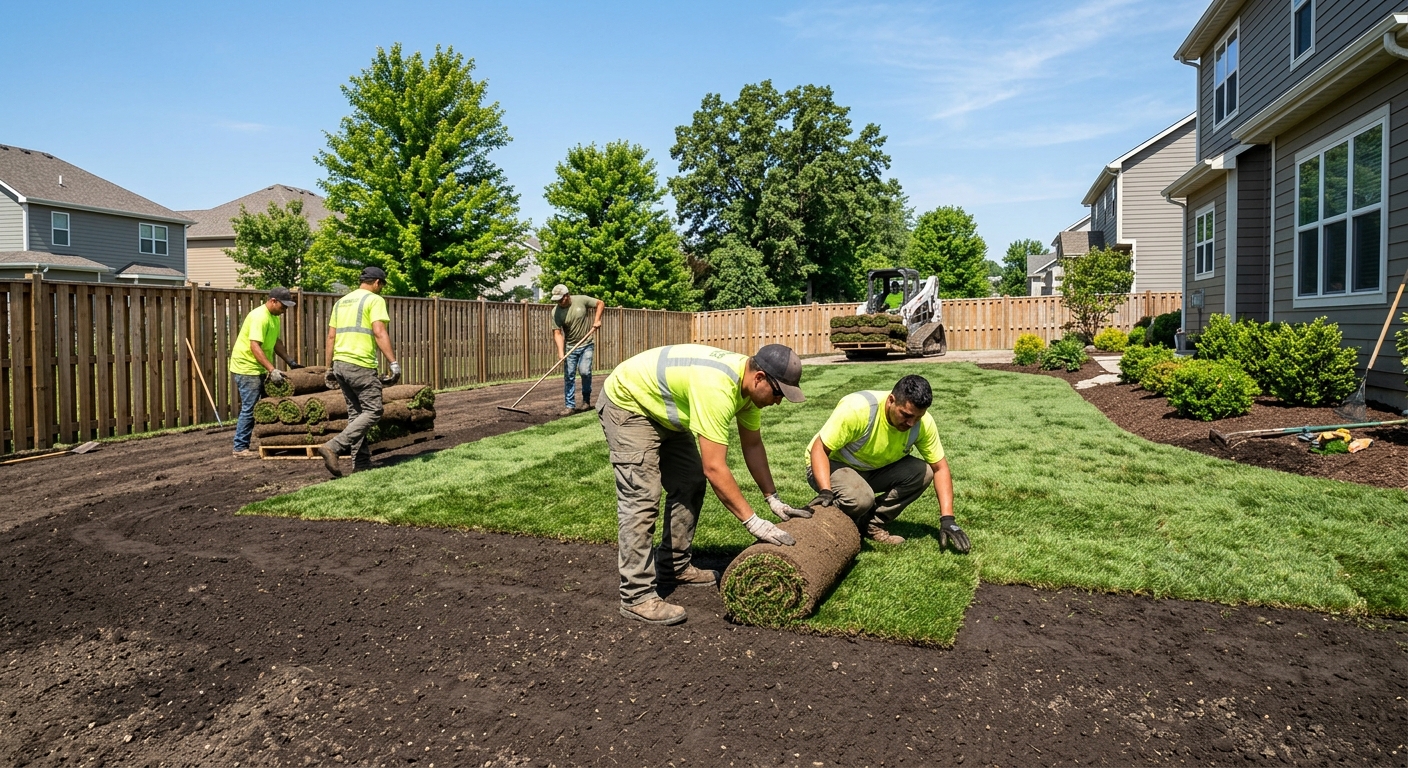
Landscaping options and costs in McKenzie Towne
In McKenzie Towne, Alberta, homeowners typically invest in landscaping because many residents are living in neighbourhoods where yard space is a key part of day-to-day use. With a population of 17,505 (Statistics Canada, 2021 Census), the area has enough turnover to keep trades busy—especially in spring and early fall when weather windows open. You’ll also find a lot of households in mature residential pockets where upgrades matter, because freeze–thaw cycles can quickly expose weak grading, shallow bases, and drainage issues.
Calgary’s Prairie hardiness zone 3–4 means late-spring frosts and early cold snaps shape both plant choices and the contractor’s usable work season. That’s a big reason quotes can swing: excavation and hardscape work depend on deep, well-compacted bases to prevent heaving, while planting must be timed so roots establish before winter. Neighbourhoods like the newer phases around McKenzie Towne’s retail corridor and adjacent residential streets see extra demand every year because access is straightforward and yards are often being refreshed after initial home build-outs.
Below is a practical price comparison you can use to sanity-check proposals—then we’ll break down the specific factors that move the numbers up or down.
| Service |
Description |
Season |
Price Range |
| Full landscape design and installation |
Site walk, layout, grading/drainage plan, hardscape (patio/walk), planting, soil improvement, and irrigation (as applicable) |
May–Oct (planting best mid-spring to early fall) |
$8,000–$35,000 |
| Sod installation (supply, grade, lay, roll) |
Remove debris/top dress, fine grade, supply sod, install, roll/compact, initial watering plan |
Late Apr–Jun; Aug–Sep |
$2,500–$6,000 |
| Lawn seeding (grade, seed, starter fertilizer) |
Light dethatch (if needed), grade touch-ups, seed + starter fertilizer, mulching/blanket where recommended |
Apr–Jun; Aug–Sep |
$1,500–$4,500 |
| Interlocking patio or walkway |
Base excavation, compaction, edging, interlocking stone, joint sand, simple grading tie-in |
May–Oct |
$8,000–$25,000 |
| Retaining wall (interlocking block) |
Wall layout, excavation to depth, drainage/gravel bed, geotextile, block install, caps/finishing |
May–Sep |
$10,000–$40,000 |
| Tree and shrub planting |
Soil amendment, planting layout, hardy species selection, staking (if needed), mulch ring, first watering plan |
Apr–Jun; Sep–Oct |
$1,200–$12,000 |
Prices are estimates only and vary by project scope, site access and material selection.
What affects the price of landscaping in McKenzie Towne
For the same general landscaping job in Calgary and the surrounding area, quotes can legitimately vary by 30–50%. The biggest reasons are (1) how much base prep is actually required under the frost-behaviour zone, (2) how complex drainage and grading get on your lot, and (3) what plant and hardscape tiers you choose. Labour shares are typically high—often 40–60% of the full job—so anything that adds excavation time or material handling will move the budget quickly.
Because McKenzie Towne sits in Prairie hardiness zones 3–4, late spring frosts and early fall cold snaps tighten the working season. That means contractors must be efficient, and it also influences plant selection—cold-hardy, drought-tolerant, and wind-firm choices cost more up front when you buy higher-quality stock. Retaining walls, patios, and walkways rely on deep, well-compacted bases and proper drainage; shallow work can lead to heaving after freeze–thaw cycles. By contrast, in coastal BC (zones 7–8), long growing seasons allow a broader planting palette, but wet-site drainage demands can shift costs to water-management systems. In southern Ontario (zones 5–6), season length is moderate, yet summer dry spells still require reliable irrigation planning.
Concrete examples from McKenzie Towne that swing pricing: a larger yard footprint can push you from a small seeding-only refresh into full sod replacement, where costs often fall in a range closer to $1,500–$4,500 for seeding jobs versus $2,500–$6,000 for sod on similar areas. Another example: if your site needs a slope correction to protect foundations or redirect runoff, grading and drainage work can add significant excavation and disposal, pushing a basic planting plan toward the mid five-figure zone typical of comprehensive installs (often within $8,000–$35,000 depending on scope).
| Price Factor |
Why It Matters |
Cost Impact |
| Yard size in sq ft — the primary cost driver for softscape |
More area means more topsoil, soil amendments, seed/sod, mulch, and labour hours |
Low to high (can double total cost on larger lots) |
| Grading and drainage work — slope corrections add significant cost |
Improper slope causes pooling, foundation moisture risk, and faster turf/plant failure |
Medium to very high (excavation + hauling) |
| Drainage bed or French drain installation |
Addresses persistent wet spots; requires trenching below grade and clean-out access |
Medium to high (materials + depth labour) |
| Plant material tier — native shrubs vs. ornamental vs. mature specimen trees |
Mature trees and specialty ornamentals cost more and may require additional handling |
Medium to very high (specimen supply) |
| Hardscape vs. softscape ratio — walls and patios cost more per sq ft than lawn |
Patios and retaining blocks need base depth, compaction, and sometimes reinforcement |
High (shifts project into hardscape pricing) |
| Irrigation system design and installation |
Zoned layouts, controllers, backflow prevention considerations, and trenching add up |
Medium to high (especially with grading) |
| Soil amendment and topsoil required |
Calgary soils often need improvement for rooting and nutrient availability |
Low to medium (volume-based) |
| Tree removal or stump grinding before new planting |
Extra labour, disposal, and root disturbance can change grading needs |
Medium (sometimes high on larger stumps) |
Permits & regulations in Alberta
In Alberta, most planting, sodding, and day-to-day softscape work typically does not require a permit. That includes new grass installation, seeding, mulch, shrub planting, and normal grading limited to preparing planting beds (as long as drainage isn’t being redirected in a way that affects neighbours or storm infrastructure). Retaining walls are different: in many Alberta municipalities, retaining walls above a height threshold—commonly around 1.0 m (3.3 ft)—require a building permit and sometimes engineered drawings, especially if soil pressure and design complexity are higher.
Also watch for approval requirements when you change lot grading so drainage shifts toward a neighbouring property or ties into storm sewer connections. Before digging for wall footings or planting holes, utility locates are essential—always confirm services are marked to avoid surprises. Finally, check local irrigation and water-use bylaws. Even though McKenzie Towne is in Alberta, drought conditions and broader municipal restrictions can tighten watering schedules; smart controllers and zoned drip systems help you stay compliant and protect plants.
To verify your contractor in McKenzie Towne and across Alberta, do it step-by-step: (1) confirm they’re licensed/eligible for the scope (where applicable to their trades), (2) request a current certificate of liability insurance naming you as additional insured (for the work period), and (3) ask for WSIB/WCB clearance or account confirmation that matches the workers assigned to your project. If they can’t provide documents up front, treat it as a warning sign—especially for excavation, hardscape base work, and retaining wall construction.
Planning a landscape that thrives in McKenzie Towne's climate
Planning in McKenzie Towne means working with Prairie climate realities—Prairie Zone 3–4, late spring frosts, and freeze–thaw cycles that punish shallow bases and poor drainage. Start with plant selection: choose hardy, zone-appropriate native or adapted shrubs and perennials that handle wind and short summers, then add winter protection only where needed (mulch depth, windbreak placement, and careful spacing). For lawns, sod gives fast curb appeal, but it still needs proper soil prep and consistent watering during establishment.
Between sod and seed, sod usually costs more because you’re paying for material and tighter installation labour. As a rule of thumb in Calgary, sod can be about 3–4x more per sq ft than seeding. That’s justified when you need instant coverage (for pets/entertainment) or when you’re correcting bare patches quickly. For example, if a homeowner wants a fast solution for a backyard play area, sod budgets commonly land in the $2,500–$6,000 band for typical residential footprints, while a seed-and-starter-fertilizer refresh may land closer to $1,500–$4,500—but it will take longer to look “finished.”
Drainage and grading are non-negotiable in Calgary. Pooling around foundations can lead to moisture problems, and freezing water expands and lifts weak bases. For patios and retaining walls, base preparation should extend to the depth needed to resist frost heave, with proper compaction and drainage layers. Finally, go low-maintenance: mulch, groundcovers, and perennials reduce watering and annual labour. Xeriscape elements (drought-tolerant plantings, layered mulch, and drip irrigation) or a simple rain-garden depression can help manage runoff while keeping your yard looking deliberate—without fighting the climate.
| Element |
Climate Consideration |
Maintenance Level |
Price Band |
| Sod lawn installation |
Establishment needs consistent moisture in warm spells; late frosts mean timing matters |
Medium (watering + early mowing) |
$2,500–$6,000 |
| Native perennial garden |
Cold-hardy roots survive short seasons; wind and dry stretches are less stressful |
Low to medium (spring cleanup + occasional watering) |
$1,800–$7,500 |
| Mulched shrub border |
Mulch buffers temperature swings and reduces moisture loss during chinook-driven dry periods |
Low (weed control + top-ups) |
$1,200–$6,500 |
| Interlocking stone patio |
Requires deep, well-compacted base and drainage to prevent heaving |
Low (sweeping + joint sand checks) |
$8,000–$25,000 |
| Retaining wall (block) |
Needs drainage/gravel bed behind the wall to manage freeze–thaw moisture |
Low (occasional inspection) |
$10,000–$40,000 |
| Drip irrigation system |
Efficient water delivery supports drought-tolerant planting under restrictions |
Medium (seasonal setup + monitoring) |
$1,800–$6,500 |
How to choose a landscaping contractor in McKenzie Towne
Choosing the right contractor in McKenzie Towne starts with proof, not promises. First, verify Alberta eligibility/licensing where applicable to the trades they use, and confirm they carry current liability insurance—ask for a certificate of insurance that covers the work period and names you appropriately per their process. Next, request WSIB/WCB clearance or documentation confirming coverage for their workers. This matters because excavation, compacted base construction, and hardscape installations carry real site risk.
Second, get 2–3 itemised written quotes, not a single lump-sum number. A good quote breaks out labour and materials: excavation volumes, base material (and depth/compaction method), stone/sod/seed quantities, topsoil/soil amendment amounts, drainage components, and irrigation hardware if included. Read the scope carefully for what’s excluded—disposal, utility locating, replacing damaged sprinkler heads, or additional grading due to low spots are common gaps.
Third, clarify warranty. Ask for workmanship warranty length (often a defined period for installation issues) and separate product/manufacturer warranties where relevant. Confirm whether the warranty is transferable to you as the homeowner.
Fourth, keep payment sensible: never pay more than 10–15% upfront. Use progress payments tied to milestones, and hold back a portion until the job is complete and defects are corrected. Finally, demand a timeline in writing: start date, weather-dependent windows, and an estimated completion date.
- Provide a detailed item list (quantities + unit prices) for sod/seed, stone, blocks, and soil products
- State base thicknesses and compaction approach for patios/walks/walls (freeze–thaw depends on this)
- Include drainage details (weep routes, French drains, gravel beds) where your lot needs it
- Confirm utility locating will be arranged before digging
- Show how they’ll protect your home foundation and existing landscaping during grading
- Specify irrigation scope: zones, heads/bubblers/drip, controller type, and backflow considerations
- Explain turf establishment plan (watering schedule and first mowing timing)
- Include disposal/haul-away in the estimate or list it as an add-on
- List exclusions clearly (rock removal, stump grinding, tree removal, unforeseen subsoil conditions)
- Confirm product source and warranty terms for sod/seed/plant material
- Provide a written workmanship warranty and what it covers/doesn’t cover
- Set a payment schedule with a holdback until final walk-through
Red flags I see often in McKenzie Towne: contractors who won’t put base prep and drainage details in writing, quotes that are “lowest price” but omit disposal and utility locating, vague irrigation descriptions (no zoning or components listed), refusing to show insurance/WSIB/WCB documentation, and asking for large upfront payments (beyond 10–15%) without a signed milestone schedule.
Frequently asked questions — landscaping in McKenzie Towne
How long does a landscaping project take in McKenzie Towne?
Timelines in McKenzie Towne depend on weather windows and how much excavation and base prep is needed. Softscape-only refreshes (mulch, planting, or seeding) are often measured in days to a week, while hardscape-heavy projects take longer because we need excavation, deep compaction, and proper drainage layers before stone goes down. Sod installation is typically fast once the grading is complete, but establishment still requires ongoing watering for the first couple of weeks. For many full installs across Calgary’s communities, scheduling in May–Oct is realistic, with weather interruptions possible from late frosts or sudden cold snaps. If you’re planning a comprehensive job in the $8,000–$35,000 range, a common expectation is a few weeks from start to finish, with lead times for materials and scheduling near peak season.
What is the best grass type for a McKenzie Towne lawn?
In Alberta (including McKenzie Towne), the “best” grass type is the one proven for cold tolerance and quick recovery after stress. Most homeowners do best with cool-season turf grasses, typically blends that include Kentucky bluegrass and/or turf-type perennial ryegrass, because they establish in Alberta’s shorter growing season and handle winter better than warm-season options. The biggest success factor isn’t only species—it’s soil prep, correct seeding/sod timing, and mowing height. If you’re replacing thin areas, seeding with a starter fertilizer plan can work well in the $1,500–$4,500 band, but it requires patience as germination and density take time. If you need instant coverage sooner, sod in the $2,500–$6,000 range can deliver results quickly as long as grading and watering during establishment are done correctly.
When should I aerate and overseed my lawn in McKenzie Towne?
For McKenzie Towne lawns, aeration and overseeding are usually best in the active growth window: late spring after the risk of late frost eases, or in early fall when temperatures are still supportive but the weather is cooling. Because zone conditions here (Prairie Zone 3–4) can bring early cold snaps, avoid trying to overseed too late—seed needs enough time to germinate and form roots before the ground freezes hard. Aeration is most beneficial when soil is workable and grass is actively growing so the plugs don’t just sit on top of the thatch. If your yard is patchy or compacted, an aerate/overseed program can be part of a broader seeding plan like the $1,500–$4,500 range. If you’re moving from bare areas to full lawn quickly, ask your contractor whether sod or a hybrid approach is more realistic for your timeline and budget.
What trees grow best in McKenzie Towne's climate zone?
In McKenzie Towne and across Alberta’s Prairie conditions, focus on hardy trees that tolerate winter cold, wind, and rapid temperature swings. Common strong choices include Manitoba maple (where appropriate), green ash (where disease resistance considerations allow), and hardy varieties of spruce such as Alberta spruce for conifer structure. For smaller yards, ornamental crabapples can add colour and still remain manageable in Alberta’s conditions if placed with the right spacing and soil prep. The “best” tree also depends on your yard’s sunlight, drainage, and how close the tree is to the house or services. Many homeowners bundle tree and shrub planting with soil amendment and mulch, often fitting within $1,200–$12,000 depending on the number and maturity of trees. A good contractor will also advise on staking, watering during establishment, and winter protection like anti-desiccant methods if wind exposure is high.
How much does sodding a yard cost in McKenzie Towne?
Sodding cost in McKenzie Towne mainly comes down to yard size, grading needs, and whether drainage corrections are required. If your subgrade is solid and only needs fine grading, the project can be straightforward. If there are low spots, heavy clay, or drainage adjustments, cost increases because we need proper base prep for long-term performance through Calgary’s freeze–thaw cycles. For typical residential footprints, many sodding projects fall into the $2,500–$6,000 band when supply, grade touch-ups, delivery, and installation are included. If you’re also adding irrigation or tackling drainage issues, expect the budget to move toward the higher end or into a broader full landscape scope. Always ask for an itemised quote so you can see how much is sod vs. labour vs. soil/topsoil adjustments—this is where misunderstandings often happen.
How do I prevent weeds in my McKenzie Towne garden?
Weed prevention in McKenzie Towne is mostly about blocking light, controlling soil disturbance, and establishing healthy plant coverage early. For shrub borders and perennial beds, a proper weed barrier approach (geotextile where appropriate) combined with 2–3 inches of quality mulch helps reduce germination. Preparing the bed is just as important: remove existing weed roots, grade the bed to avoid water pooling, and improve soil structure so plants establish quickly—weak growth invites weeds. If you’re installing new plants, choose hardy, zone-appropriate species that fill space rather than leaving bare soil. In practical terms, an installed mulched shrub border is often budgeted within $1,200–$6,500, depending on plant quantities and whether grading and soil amendment are included. Finally, plan a simple maintenance cadence: early spring cleanup, targeted hand weeding, and topping up mulch annually before weeds take hold.