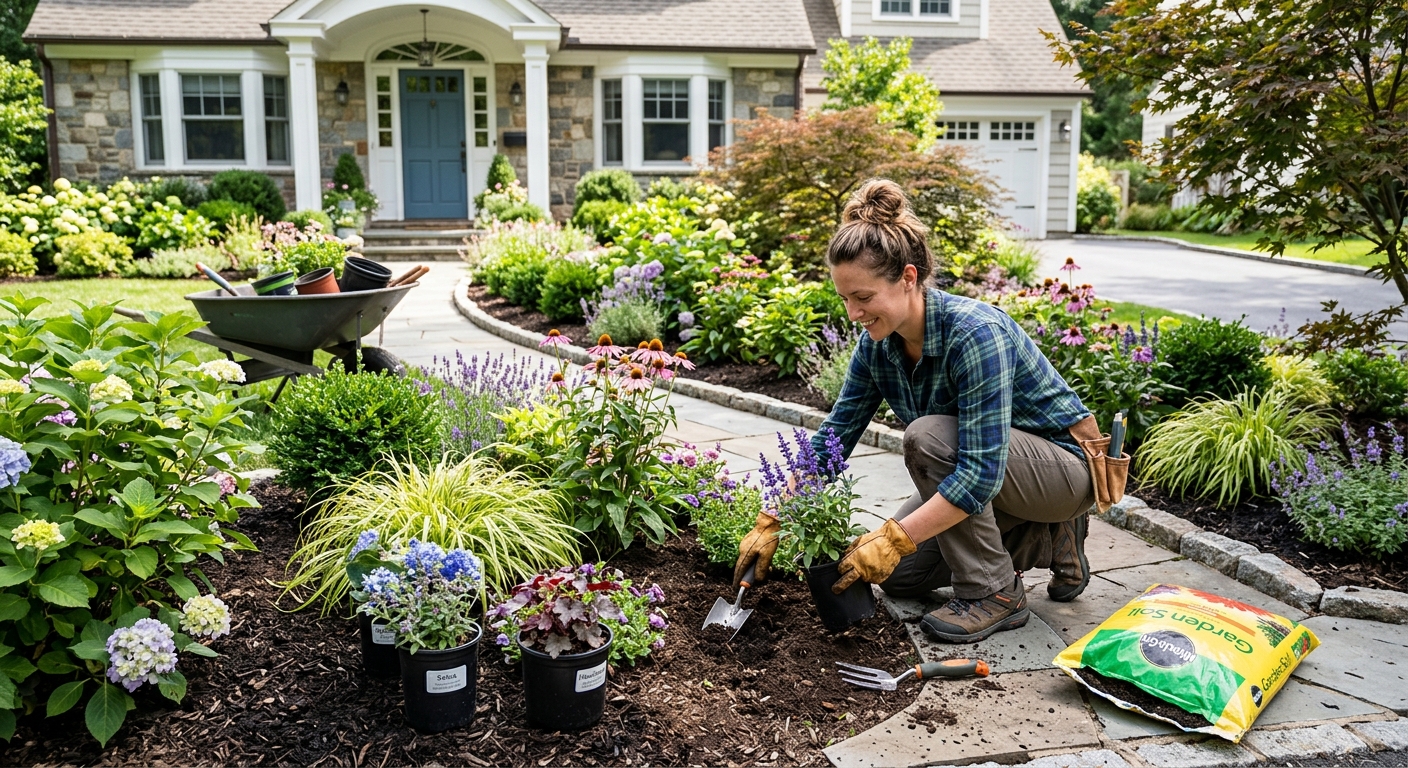
Landscaping options and costs in Woodlands
In Woodlands, Alberta, homeowners typically start by picking a landscaping “level”: quick curb upgrades, a full front-yard transformation, or a yard build-out that includes grading, hardscape, irrigation, and plantings. With a population of 5,830 (Statistics Canada, 2021 Census), the community has enough demand for solid contractor availability, but not so much that every specialty trade is instantly booked—so scheduling and material lead-times can affect price. Woodlands’ housing mix also matters: many properties are detached, which generally means more yard area to improve, more flexibility for drainage corrections, and more incentive to invest in long-term soil and plant health. When you roll that into Calgary’s Prairie hardiness zones (3–4), you get a season that’s defined by late-spring frosts and early fall cold snaps, plus harsh freeze–thaw cycles. That reality is why contractor quotes often hinge on base prep depth, compaction, and drainage details for patios, walkways, and retaining walls.
Local work is especially in demand around newer development pockets and high-traffic frontage areas near local main roads, where homeowners want fast curb impact and low-maintenance results. In that market, labour commonly represents 40%–60% of full projects across the Calgary region, and comprehensive builds frequently land in the mid five-figure range once grading, hardscape, planting, and irrigation are included. Use the options below as a realistic comparison before you move on to itemised quotes.
| Service |
Description |
Season |
Price Range |
| Full landscape design and installation |
Site walk, grading/drainage plan, hardscape, planting, and irrigation (where needed) |
Late spring to early fall (avoid heavy freeze periods) |
$5,000–$50,000 |
| Sod installation (supply, grade, lay, roll) |
Topsoil/till to grade, sod delivery, installation, rolling, and start-up watering plan |
Late spring (after frost) through early fall |
$1,500–$6,000 |
| Lawn seeding (grade, seed, starter fertilizer) |
Fine grading, seed blend for Prairie zones, starter fertiliser, and light mulch |
Spring (best) and early fall (second window) |
$900–$4,000 |
| Interlocking patio or walkway |
Excavate, base course, compacted sub-base, pavers, edging, and joint sand |
Late spring to early fall (weather-dependent) |
$3,500–$18,000 |
| Retaining wall (interlocking block) |
Block system with proper footing, drainage fabric, weeping tile or aggregate drain |
Late spring to early fall |
$8,000–$40,000 |
| Tree and shrub planting |
Soil preparation, backfill, staking as required, mulch rings, and watering strategy |
Spring and early fall (after soil is workable) |
$800–$15,000 |
Prices are estimates only and vary by project scope, site access and material selection.
What affects the price of landscaping in Woodlands
In Woodlands and across the Calgary economic region, two quotes for the “same” job can land 30–50% apart because the scope that affects labour time is often hidden in the site details: excavation depth, compaction targets, drainage routing, and what must be redone when freeze–thaw reveals weak base work. Calgary-area labour is a meaningful share of the total (often 40%–60% on full builds), and contractors price to protect schedule risk—especially when frost limits what can be installed and when suppliers are busy in late spring. That’s why prairie projects that include robust hardscape base prep and drainage commonly move toward the higher end of the bands, such as $8,000–$40,000 for retaining walls and $5,000–$50,000 for full installations.
Prairie conditions in zones 3–4 change both plant survival and how long crews can work. In Woodlands, short growing windows push us to use cold-hardy, drought-tolerant species and to plan for winter establishment (mulch, root protection, and wind management). Also, retaining wall base depth generally needs to go below the frost-impacted zone and be well-compacted; if the wall sits on poorly prepared or wet material, heaving risk rises and costs later increase. By contrast, coastal BC zones 7–8 often support lush planting palettes and longer seasons, but heavy-rain areas demand drainage engineering that can also drive cost. Alberta’s semi-arid climate still means irrigation design matters—smart controllers and zoned drip can prevent wasted water and dead plantings—but the bigger cost lever is usually base prep and drainage, not plant “aesthetics” alone.
Concrete examples from Woodlands: (1) if your downspouts currently discharge toward a foundation or low spot, adding grading + a drainage bed/French drain can shift a mid-range patio toward the upper end because excavation becomes deeper and disposal time increases; (2) if you’re converting older lawn to a new sod area, removing compacted turf and hauling topsoil can add thousands; and (3) if there’s a slope in front of the garage, grading and terracing often become unavoidable, and that’s where projects can jump toward the mid five-figures even when the patio itself looks “small.”
| Price Factor |
Why It Matters |
Cost Impact |
| Yard size in sq ft — the primary cost driver for softscape |
More area means more topsoil, seed/sod, labour hours, and materials |
$500–$10,000+ depending on acreage and access |
| Grading and drainage work — slope corrections add significant cost |
Freeze–thaw and pooling can wreck base layers and foundation moisture control |
$1,000–$7,000+ |
| Drainage bed or French drain installation |
Proper under-drainage protects patios, walls, and planted beds |
$1,500–$9,000 |
| Plant material tier — native shrubs vs. ornamental vs. mature specimen trees |
Mature stock costs more and often needs extra handling and staking |
$800–$12,000 |
| Hardscape vs. softscape ratio — walls and patios cost more per sq ft than lawn |
Interlocking base compaction and stone quantities drive material and labour |
$2,000–$20,000+ |
| Irrigation system design and installation |
Zone planning, backflow prevention, and drip/sprinkler choice affect cost |
$1,200–$8,000 |
| Soil amendment and topsoil required |
Correcting poor native soil improves establishment and reduces future failures |
$900–$6,500 |
| Tree removal or stump grinding before new planting |
Access, root disruption, and haul-away time can be labour-intensive |
$500–$5,000 |
Permits & regulations in Alberta
In Alberta, many landscaping tasks do not require a building permit. Typically, planting, sodding, and most softscape work (seed, mulch, shrub installation, and general grading that doesn’t alter drainage to a prohibited direction) are handled as non-permitted yard improvements. Where permits do come into play is usually tied to retaining structures and drainage changes.
Work that DOES often require a permit includes retaining walls above a height threshold—commonly around 1.0 m (3.3 ft) in many municipalities—because these projects may require structural review and, in some cases, engineered drawings. Work that may trigger approval includes changes to lot grading that affect how stormwater flows toward neighbouring properties or storm sewer connections. If you’re adding or altering drainage connections, it’s worth confirming before excavation.
Before any digging for planting holes, footings, or drainage lines, call for utility locates (and confirm marks on-site) so you don’t hit buried services. Then check irrigation and water-use bylaw requirements; even though those can differ by circumstance, Alberta-wide enforcement is typically stricter during drought conditions.
To verify an Alberta contractor in Woodlands, do it step-by-step: (1) confirm their Alberta licence/registration status on the relevant online registry for trades where applicable; (2) request a Certificate of Insurance showing liability coverage; (3) ask for proof of WSIB/WCB clearance or coverage for workers; (4) ensure the quote references who supplies permits (if any) and where responsibility sits if inspection is required.
Planning a landscape that thrives in Woodlands's climate
Planning in Woodlands means working with Prairie zones 3–4, not against them. Start by aligning plant selection to cold hardiness and wind tolerance, then build a schedule around frost. For example, choosing native and zone-appropriate shrubs and perennials helps reduce watering demand and winter die-off. Next, decide between sod and seeding: sod delivers instant coverage, but it costs about 3–4 times more per sq ft than seeding and should only be installed when the soil is workable and frost risk is lower. In Alberta projects, that often translates to faster results for families who want immediate curb appeal, but slower—and usually cheaper—establishment for seeding jobs.
Drainage and grading are non-negotiable in Calgary-area freeze–thaw cycles. Pooling water saturates sub-base and topsoil, and when temperatures swing, heaving can crack pavers or buckle walkways. That’s why patios and interlocking stone work need deep, well-compacted bases and correct slope away from foundations. For hardscape, we plan base preparation with the local frost-impacted depth in mind, and we incorporate proper edging and jointing to limit movement.
For low-maintenance design, aim for mulch-first beds, groundcovers that don’t become weed magnets, and perennial structures that return each year. Calgary’s semi-arid climate also rewards xeriscape and rain-garden ideas—like directing roof runoff into a designed soak bed—so you get a yard that looks intentional without constant irrigation overhead. A practical decision example: if you’re comparing a small sod lawn at roughly $1,500–$6,000 versus seeding at closer to $900–$4,000 for similar area, sod may be justified when timing is tight (kids moving in, event season, or erosion control right away). Otherwise, seeding plus soil amendment typically delivers better value for long-term growth.
| Element |
Climate Consideration |
Maintenance Level |
Price Band |
| Sod lawn installation |
Needs fast root contact before freeze; soil must be graded and firm |
Medium (watering plan until established, then routine mowing) |
$1,500–$6,000 |
| Native perennial garden |
Zone-appropriate plants handle cold snaps and reduce drought stress |
Low to medium (spring clean-up, occasional weeding) |
$800–$7,500 |
| Mulched shrub border |
Mulch buffers roots against freeze–thaw; shrubs stay wind-protected |
Low (refresh mulch, targeted pruning) |
$1,200–$9,000 |
| Interlocking stone patio |
Deep base and drainage prevent movement from freeze cycles |
Low (sweep joints, spot repairs if needed) |
$3,500–$18,000 |
| Retaining wall (block) |
Proper footing below frost-affected zone plus drainage behind wall |
Low to medium (periodic inspection of drainage and settling) |
$8,000–$40,000 |
| Drip irrigation system |
Better water efficiency in semi-arid conditions; protects plants during dry spells |
Medium (seasonal checks, winter blowout/lockout) |
$1,200–$8,000 |
How to choose a landscaping contractor in Woodlands
Choosing the right landscaping contractor in Woodlands starts with verification, not just price. In Alberta, ask for proof of liability insurance—so if a crew damages your driveway, yard, or services, you’re protected. For workers’ coverage, request WSIB/WCB clearance or documentation showing they have appropriate coverage for staff. Then confirm licensing/registration where applicable for the type of work being quoted (especially if a project includes specialized equipment, drainage work, or permit-triggering structures like taller retaining walls).
Next, get 2–3 itemised written quotes. “Itemised” matters: you want labour and materials separated by line (excavation, base materials, pavers, topsoil, seed/sod, plant list, irrigation parts), not a single lump sum. Read the scope carefully for what’s excluded: is disposal/haul-away included, are locates included, and is topsoil quality specified? For patios and walls, confirm base prep depth targets and compaction method. If permits are required, clarify who pulls them, who pays, and what happens if an inspection fails.
Warranty should be specific: ask for the workmanship warranty length (how many months/years), product/manufacturer warranty coverage for irrigation and plants, and whether warranties transfer to you if you sell. On payment, never pay more than 10–15% upfront; use progress payments tied to milestones, and hold back until the job is complete and clean. Finally, insist on a written start date and completion estimate—weather can push timelines, but a clear plan prevents surprises.
- Ask for Certificate of Insurance and verify the expiry date.
- Request WSIB/WCB clearance or coverage documentation.
- Confirm Alberta registration/licence for the contractor’s trade category (where applicable).
- Get utility locate confirmation before any digging.
- Require an itemised quote (labour vs materials, with quantities).
- Confirm what’s included in base prep (depth, compaction, and slope).
- Ask who handles disposal/haul-away of sod, soil, and debris.
- Check whether a drainage plan is included for low spots or downspout tie-ins.
- Request a written plant list with sizes (e.g., balled-and-burlapped vs container) and quantities.
- Clarify warranty terms for workmanship and for irrigation/components.
- Agree on payment schedule: no more than 10–15% upfront; hold back to completion.
- Get a written timeline with start date and completion estimate.
Common red flags I see in Woodlands: quotes that don’t specify base prep depth for stonework, vague “topsoil” wording with no thickness, refusal to provide insurance/coverage paperwork, very low pricing that omits drainage or disposal, and pressure to pay large deposits before the plan is finalized.
Frequently asked questions — landscaping in Woodlands
How do I compare landscaping quotes?
To compare quotes in Woodlands, you need them to match scope and specifications, not just total dollars. Start by line-comparing: excavation and base prep depth, whether grading includes drainage corrections, what disposal/haul-away is included, and the exact materials listed (paver thickness, block system type, and whether drainage fabric/weeping tile is part of retaining wall work). For lawns, confirm seed type or sod variety, topsoil depth, and whether fertiliser/starter amendments are included. For irrigation, check whether it’s zoned drip/sprinkler, includes controller programming, and how winterisation is handled. A good way to sanity-check pricing: if one patio quote is far below others but includes no under-drain or shallow base prep, it’s likely to fail under Calgary freeze–thaw cycles and cost you more later.
How long does a landscaping project take in Woodlands?
Timelines in Woodlands depend on season and complexity, but you can plan around the realities of late-spring frosts and early fall cold snaps. Softscape-only jobs like mulching or new shrub planting are often quick—typically days to a week for smaller yards. Sod installation usually takes about a day or two for lay-down once base is ready, but the grading/soil prep can add time. Interlocking patios and walkways require excavation, base compaction, and curing intervals for materials, so they commonly take about 1–3 weeks depending on size and weather. Retaining walls often run longer because proper base work, drainage behind the wall, and careful block alignment can’t be rushed; a full wall build may take several weeks. Full landscape projects that include design, grading, irrigation, planting, and hardscape frequently span multiple weeks to a few months, especially if materials are backordered.
What is the best grass type for a Woodlands lawn?
For Woodlands and the Calgary area (Prairie zones 3–4), the “best” lawn grass is usually a cold-hardy, durable turfgrass blend selected for wear tolerance and quick establishment in spring or early fall. In practice, contractors often recommend cool-season mixes rather than warm-season turf because Alberta winters and freeze–thaw cycles demand plants that can survive cold and recover reliably. A proper seeding blend should also be matched to sun exposure (full sun vs partial shade) and soil condition. If you want the fastest visual result, sod is installed when soil is workable and it must be watered to establish roots quickly. If you’re budgeting, compare sod at roughly $1,500–$6,000 versus seeding, which is often lower cost for the same general area but takes longer to fully thicken.
When should I aerate and overseed my lawn in Woodlands?
In Woodlands, aeration and overseeding are usually best timed around the periods when the grass can grow roots efficiently without getting caught by early frosts. Many homeowners do aeration and overseeding in spring after soil is workable and night temperatures stabilise, or in early fall when the weather is cooling but the ground is still warm enough for germination. The key is timing: aerate to relieve compaction, then apply seed and starter fertiliser, and keep moisture consistent until the new seedlings establish. Avoid aeration during freeze conditions or when the ground is waterlogged, because you can tear roots or create uneven bare patches. If your lawn struggles, ask your contractor to test topsoil quality or recommend soil amendment—seed alone won’t fix compacted or poorly draining areas, which are common in yards that need grading and drainage attention.
What trees grow best in Woodlands's climate zone?
For Woodlands (Prairie zones 3–4), the best tree choices are cold-hardy, wind-tolerant, and able to handle variable moisture. Common “reliable” options in this region often include species such as Manitoba maple (where suitable), Alberta spruce (great for privacy and structure), and some ornamental trees like crabapple cultivars that offer hardiness and good form. You can also consider hardy deciduous options depending on your site exposure, soil drainage, and how much space you have at maturity. Planting location matters as much as species: protect young trees from wind tunnels and avoid planting where water pools. If your project includes larger stock, budget accordingly—tree and shrub installation ranges can be around $800–$15,000 depending on size, number, and preparation needed for staking and soil amendments. A good contractor will recommend spacing and root-zone soil improvements so the tree establishes instead of stalling.
How much does sodding a yard cost in Woodlands?
Sodding a yard in Woodlands typically falls into the range of $1,500–$6,000, with the final number driven by yard size, how much grading is required, and whether you need soil amendment or removal of compacted turf. If your existing lawn is uneven or draining toward a foundation, the “true” cost can rise because proper grading is part of making sod succeed through Calgary’s freeze–thaw cycles. A contractor should quote not only the sod supply and labour, but also base preparation, topsoil thickness (if added), and a watering/starter plan until roots knit into the ground. If you’re trying to reduce cost, seeding can be a lower-cost alternative, but sod gives instant coverage and can provide faster erosion control—especially for front slopes or areas that stay muddy after spring melt.