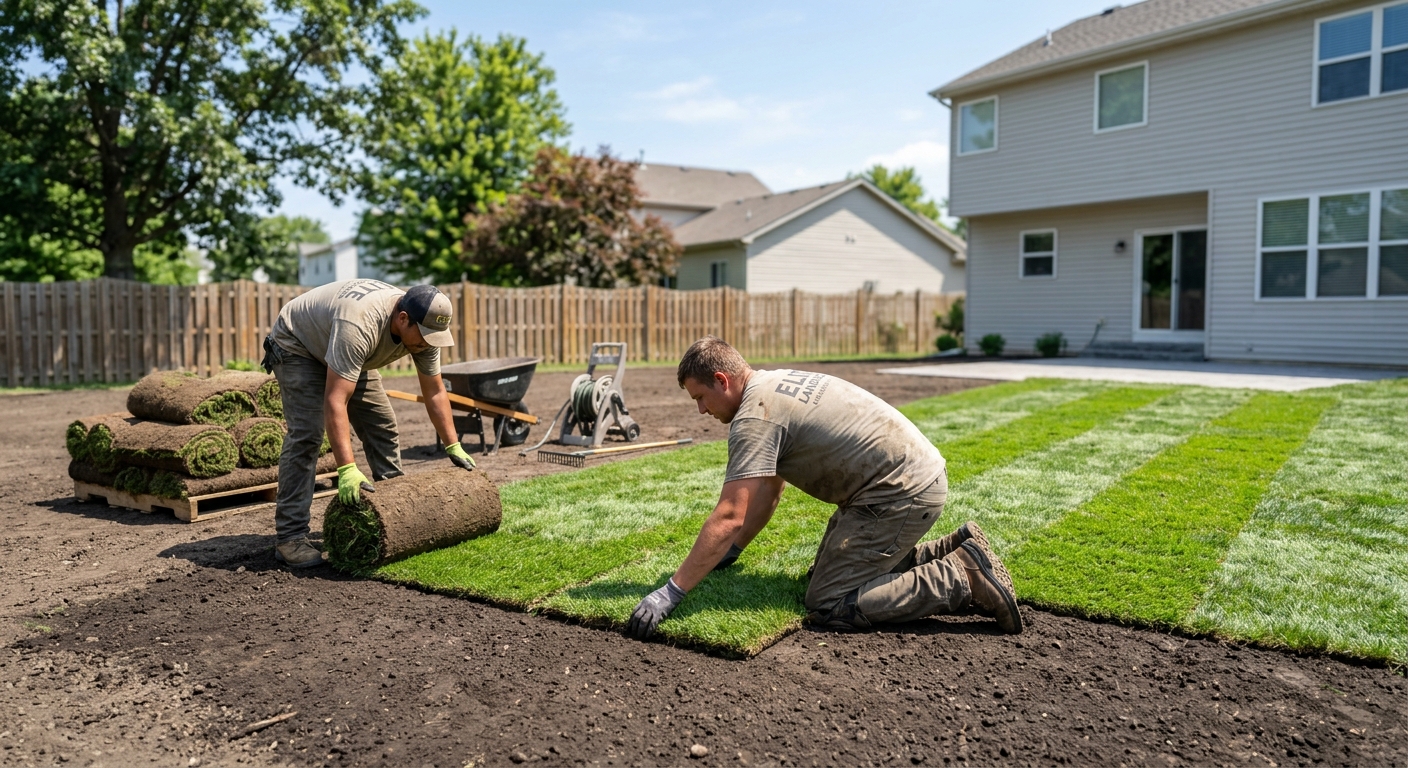
Landscaping options and costs in Manning
Manning, Alberta is made up of homeowners with enough yard space to care about day-to-day comfort and curb appeal—especially since single-detached houses make up 78.7% of dwellings, and 70.4% of households are owner-occupied (Statistics Canada, 2021 Census). That ownership mix matters: detached properties usually mean more softscape area, more drainage responsibility toward the foundation, and more willingness to invest in upgrades that hold up through winter.
In the Athabasca–Grande Prairie–Peace River region, landscaping pricing is driven less by “how green it can look” and more by durability. A short working season limits when we can excavate, compact, and install sod or hardscape reliably, while late spring and early fall frost risk pushes contractors to plan around colder ground and freeze-thaw cycles. On top of that, Manning’s winter severity and typical Prairie conditions mean we choose cold-hardy, drought-tolerant plants, and we build patios and retaining walls with proper base depth and drainage so they don’t heave.
These factors also affect availability and mobilization. Crews may be scheduled tighter across nearby service areas, and hauling materials can vary—so two quotes for the “same” yard can differ noticeably. In Manning, demand tends to be especially high around the downtown/core and established residential streets where older homes built before 1981 (43.9% of dwellings) often need grading correction, refreshed drainage, and replanting.
Below is a practical comparison of common landscaping scopes and typical price bands for Manning projects. Use this table to align expectations before you request itemised quotes.
| Service |
Description |
Season |
Price Range |
| Full landscape design and installation |
Site walk, concept + planting plan, grading/soil prep, softscape and hardscape install, cleanup |
Late spring to early fall |
$5,000–$20,000 |
| Sod installation (supply, grade, lay, roll) |
Grading correction, topsoil/seed-bed prep, sod supply, lay and roll, initial watering guidance |
May to early September (weather permitting) |
$3,500–$12,000 |
| Lawn seeding (grade, seed, starter fertilizer) |
Light grading, seed blend, starter fertiliser, seeding and cover, establishment follow-up |
May to early August |
$1,800–$7,500 |
| Interlocking patio or walkway |
Excavation, base and compaction, edging, interlocking brick/pavers, jointing and cleanup |
Mid-June to late September |
$8,000–$24,000 |
| Retaining wall (interlocking block) |
Layout, excavation, compacted base, geotextile, drainage/gravel behind wall, block installation |
June to early October |
$8,000–$30,000 |
| Tree and shrub planting |
Soil amendments, planting holes, placement, staking (as needed), mulch rings, first-season care plan |
Spring and early fall |
$1,500–$10,000 |
Prices are estimates only and vary by project scope, site access and material selection.
What affects the price of landscaping in Manning
In Manning and the wider Athabasca–Grande Prairie–Peace River region, it’s common to see pricing for the “same” landscaping concept swing by 30% to 50% between contractors. The biggest reasons are (1) what can actually be done inside the short working season, (2) how much site prep is uncovered once excavation begins, and (3) what level of materials and long-term drainage detailing is included. Even when two quotes are within the same general budget band—say $5,000–$20,000 for a design-and-install approach—differences in grading, drainage, and plant maturity can move the final cost quickly.
Climate directly shapes both plant viability and labour scheduling. Manning sits in colder Prairie zones typical of the north interior, where late spring frost risk and early fall cool-down shorten the window for sod laying, soil amendments, and proper compaction. Short seasons also encourage selecting drought-tolerant, wind-hardy species that can survive winter without heavy protection. Retaining walls must be engineered in practice with deeper, well-compacted bases that reach below the frost line; that increases excavation volume and backfill/gravel work. In contrast, coastal BC’s long growing season (often Zone 7–8) supports lush planting palettes, but moisture-heavy conditions require different drainage and irrigation planning; meanwhile, dry interior irrigation design is constrained by local water-use expectations.
Two concrete examples in Manning: if your yard has a slope that sends water toward the foundation, drainage repairs and grading can add significant labour and base material, which can push a typical sod project beyond the lower end of $3,500–$12,000. If you want an interlocking patio that won’t move through freeze-thaw, you’ll pay more for deeper excavation and proper bedding than a surface-level “quick install.” For older homes built before 1981, drainage deficiencies are more common—so updating soil structure and improving water flow can be the difference between a cosmetic refresh and a durable rebuild.
| Price Factor |
Why It Matters |
Cost Impact |
| Yard size in sq ft — the primary cost driver for softscape |
More area means more material (topsoil, sod/seed, mulch) and more labour hours |
Higher yard footprint commonly increases totals by 20% or more as scope grows |
| Grading and drainage work — slope corrections add significant cost |
Foundation moisture control requires correct slopes and compacted subgrade |
Often one of the largest “hidden” add-ons; can shift price by 15%–40% |
| Drainage bed or French drain installation |
Freeze-thaw durability depends on removing excess water from the wall/patio zone |
Can add thousands depending on length, depth, and discharge location |
| Plant material tier — native shrubs vs. ornamental vs. mature specimen trees |
Hardiness and winter performance improve with the right species and size |
Upgrading to mature specimens can raise planting budgets by 30%–70% |
| Hardscape vs. softscape ratio — walls and patios cost more per sq ft than lawn |
Pavers/interlocking block require deeper excavation, base, and precision finishing |
More hardscape typically increases total project cost faster than additional planting |
| Irrigation system design and installation |
In drier Prairie summers, timing and coverage prevent plant loss and waste |
Can add a meaningful line item; savings only occur if irrigation is actually needed |
| Soil amendment and topsoil required |
Compacted or sandy soils need amendments for roots and drainage balance |
Heavy hauling and additional products can increase costs materially |
| Tree removal or stump grinding before new planting |
Roots and stumps change grading and can obstruct drainage and new beds |
Often an extra mobilization—can add significant cost depending on size |
Permits & regulations in Alberta
In Alberta, most landscaping tasks such as planting, sodding, and typical softscape work generally do not require a permit. This includes installing shrub borders, laying sod, seeding lawns, and placing mulch and topsoil. The work that more often triggers permits is structural or drainage-affecting construction: retaining walls above a local threshold (commonly around 1.0 m, or 3.3 ft, in many municipalities) typically require a building permit and sometimes engineering drawings depending on height, conditions, and design. Also, changes to lot grading that alter drainage patterns—especially if water will be directed toward a neighbouring property or tied into storm sewer connections—may require approval.
For Manning homeowners, start with utility locates before any digging. Call to have underground utilities identified before you install planting holes, French drains, irrigation lines, or retaining wall footings. Then confirm any water-use rules that can apply during drought conditions. While water restrictions are often discussed nationally, the best practice is to check Alberta and local guidance for any limits on irrigation timing and frequency.
To verify a contractor’s Alberta credentials step-by-step: 1) ask for their proof of applicable Alberta licence (when required by the work), 2) request a certificate of insurance showing liability coverage, and 3) confirm WSIB/WCB coverage (or a clearance letter where applicable). For transparency, review certificates directly and ensure the jobsite address matches coverage. Don’t rely only on a company brochure—ask for documents before signing.
Planning a landscape that thrives in Manning's climate
To plan a landscape that thrives in Manning, design for the reality of cold winters, Prairie winds, and a working season that’s shorter than in much of southern Canada. The goal is not lushness at any cost—it’s a yard that performs reliably through snow load, freeze-thaw cycles, and dry stretches.
1) Plant selection: Choose native and zone-appropriate shrubs and perennials that can handle cold and intermittent drought. In northern interior conditions, wind-hardy structure matters as much as leaf colour. Groupings should be arranged to reduce exposure and help plants establish.
2) Sod vs. seed: Sod gives instant results, but it’s typically more expensive than seeding. As a rule of thumb in this market, sod can cost about 3–4x per sq ft compared to seeding when you compare like-for-like site preparation. For example, if you’re budgeting for a full lawn refresh, the sod installation band commonly lands at $3,500–$12,000, while seeding projects often sit closer to the lower end of lawn establishment costs.
3) Drainage and grading: Proper grading prevents pooling and foundation moisture—critical in the Athabasca–Grande Prairie–Peace River region where freeze-thaw can punish poorly drained subgrade. If water naturally collects near the house, plan for drainage first, then surface materials.
4) Hardscape base preparation: Patios and interlocking walkways need deeper, well-compacted bases and correct bedding so they don’t heave.
5) Low-maintenance strategies: Use mulch, groundcovers, and hardy perennials to reduce annual labour. Consider xeriscape elements and rain-garden style swales where runoff management is needed—these can improve performance without increasing watering demands.
| Element |
Climate Consideration |
Maintenance Level |
Price Band |
| Sod lawn installation |
Needs reliable establishment window and good drainage so roots anchor before temperature drops |
Low to moderate during first season; more care early on |
$3,500–$12,000 |
| Native perennial garden |
Cold-hardy species reduce winter losses and typically handle Prairie dry periods |
Low after establishment; seasonal pruning and occasional weeding |
$1,500–$6,500 |
| Mulched shrub border |
Mulch moderates soil temperature and helps retain moisture through hot/dry stretches |
Low; refresh mulch and shape pruning as needed |
$2,000–$7,500 |
| Interlocking stone patio |
Freeze-thaw durability depends on base depth, compaction, and edge restraint |
Low; occasional joint maintenance and cleaning |
$8,000–$24,000 |
| Retaining wall (block) |
Requires drainage behind wall and proper frost-resilient base for movement prevention |
Low after proper installation; periodic inspection |
$8,000–$30,000 |
| Drip irrigation system |
Targeted watering reduces waste during dry Prairie summers and supports establishment |
Moderate; winterization and seasonal adjustments |
$1,200–$6,000 |
How to choose a landscaping contractor in Manning
Choosing the right contractor in Manning starts with verifying coverage and credentials. In Alberta, first request proof of liability insurance—make sure it’s valid for the time of the project. Next, confirm WSIB/WCB coverage: ask for a clearance letter (where applicable) or documentation showing the business is covered for the work they’ll perform. If the scope includes trades beyond basic landscaping (for example, certain electrical or engineered components), ask who holds the relevant coverage and licence for that part.
Then get 2–3 itemised written quotes. Don’t accept a vague lump sum without line items. You want labour and material breakdowns, including topsoil/soil amendments, sod/seed type, base materials for patios, drainage components, and any disposal costs. A good quote will also list what’s excluded (for instance, tree removal, stump grinding, existing walkway removal, or additional grading discovered during excavation).
Check warranty details. Ask for a workmanship warranty length (for example, settling, drainage performance, and installation defects) and whether any manufacturer warranty for pavers, block, sod, or irrigation components is included—and if it’s transferable to you as the homeowner.
On payment schedule, keep it practical: never pay more than 10–15% upfront, and hold back a portion until the job is substantially complete and cleaned up. Ask for a start date and a completion estimate in writing; in Manning’s shorter season, weather-driven delays should be stated clearly.
- Confirm liability insurance certificate is current and matches the job dates.
- Verify WSIB/WCB coverage via clearance letter/documentation before work starts.
- Request a detailed site plan of scope: where sod, beds, drainage, and hardscape will go.
- Ask whether permit pulls are included (if applicable) and who is responsible.
- Confirm disposal/recycling of removed sod, soil, or concrete is included or priced separately.
- Get a breakdown for materials: sod type, seed mix, base gravel, edging, block/paver size.
- Require compaction and drainage methods to be described (geotextile, gravel bed, slope).
- Ask who supplies topsoil/soil amendments and the quantities/quality basis.
- Check warranty: workmanship duration, what defects are covered, and claim process.
- Review payment schedule: maximum upfront 10–15% with a holdback until completion.
- Ask for timeline in writing, including weather allowances common to Manning.
- Make sure the crew lead understands winter protection responsibilities for plants.
Concrete red flags to watch for: (1) a quote that’s only a single number with no itemised materials or labour, (2) no proof of liability insurance or unclear WSIB/WCB status, (3) promises to install sod “any time” without considering frost and establishment window, (4) vague drainage language like “we’ll fix it as we go” for yard water issues, and (5) a request for large upfront deposits (well beyond 10–15%).
Frequently asked questions — landscaping in Manning
How deep should a retaining-wall base be for local frost?
For Manning, your retaining wall base depth is driven by frost penetration plus engineering of the wall and drainage design. In practical contracting terms, we plan for a frost-resilient base with excavation going below the frost-affected soil layer, then we build a properly compacted granular base (often with geotextile) and a clear drainage zone behind the wall. The exact depth depends on wall height, soil type, and whether the wall is retaining only a small grade change or a larger slope. Because freeze-thaw and poor drainage are the main causes of wall movement in Alberta, the “right” approach is to follow the wall design requirements for your specific site and block system—especially if you’re in the range where permits may apply.
How much does professional landscape design cost?
Professional design pricing in Manning typically varies with how much drafting and planning is included (concept, planting layout, grading notes, and material specs) and how complicated the site is. In many projects, design and installation are bundled, which is why full landscape packages often land in the $5,000–$20,000 range depending on scope. If you’re doing only planting plans, costs are usually lower than full buildouts, but you still pay for the site walk, layout work, and cold-hardy plant selection suitable for Prairie winters. A good design should also address drainage direction away from the foundation, not just curb appeal—particularly important for older housing stock in the community.
How do I compare landscaping quotes?
To compare landscaping quotes in Manning, focus on like-for-like scope: ask each contractor to provide line items for labour and materials, not just totals. Confirm what’s included for soil preparation, drainage work, base depth/compaction for hardscape, and disposal of removed material. Pay attention to plant quantities (count and size), sod type, seed mix, and whether amendments are included. For example, a sod project can fall into the $3,500–$12,000 band, but one quote may include grading correction and drainage while another may not. Also check timeline and weather constraints—if one contractor schedules installation without considering frost risk and establishment time, the lowest price can become the most expensive after failures.
How long does a landscaping project take in Manning?
Most Manning projects are completed during the late spring to early fall window, but the schedule depends on scope and weather. Tree and shrub planting can often be done quickly (days to a week for typical yards), while sod and grading-heavy work may take longer because we need proper prep and good conditions for compaction and establishment. Hardscape like patios or retaining walls usually requires excavation, base preparation, drainage detailing, and then curing/settling time before final finishing. A full design and installation can range from a few weeks to a couple of months depending on material lead times and whether excavation reveals extra drainage or removal work. Ask for a start date and completion estimate in writing so you can plan around Manning’s short season and potential early frost.
What is the best grass type for a Manning lawn?
For Manning and much of the north interior Alberta climate, homeowners generally do best with cool-season turf varieties that handle cold winters and Prairie drought cycles. In practice, the “best” grass depends on whether you’re laying sod or seeding and how much sun/shade your lawn receives. Many contractors recommend blends suited for Alberta’s colder conditions rather than warm-season grasses that struggle in winter. The key is also site prep: grading for drainage, proper seeding rate, starter fertiliser, and consistent early watering during establishment. If you want a faster result, sod can be ideal—often budgeted in the $3,500–$12,000 range—but seeding is usually more cost-effective if you can wait a bit longer for full coverage.
When should I aerate and overseed my lawn in Manning?
In Manning, aeration and overseeding are best timed to support strong root establishment before temperatures drop. A common approach is to aerate in late spring once the lawn is actively growing, or in early fall while soil temps still support germination. Overseeding should be matched to the aeration schedule and followed with light top-dressing (if included in your plan), starter fertiliser, and appropriate watering guidance. Avoid pushing the work too late in the season; early fall frost risk can interrupt germination and reduce success. If your lawn is showing compaction, patchiness, or thinning from summer stress, aeration plus overseeding helps—but drainage issues must be addressed too. Otherwise, seed may germinate temporarily and then fail under freeze-thaw and pooling.