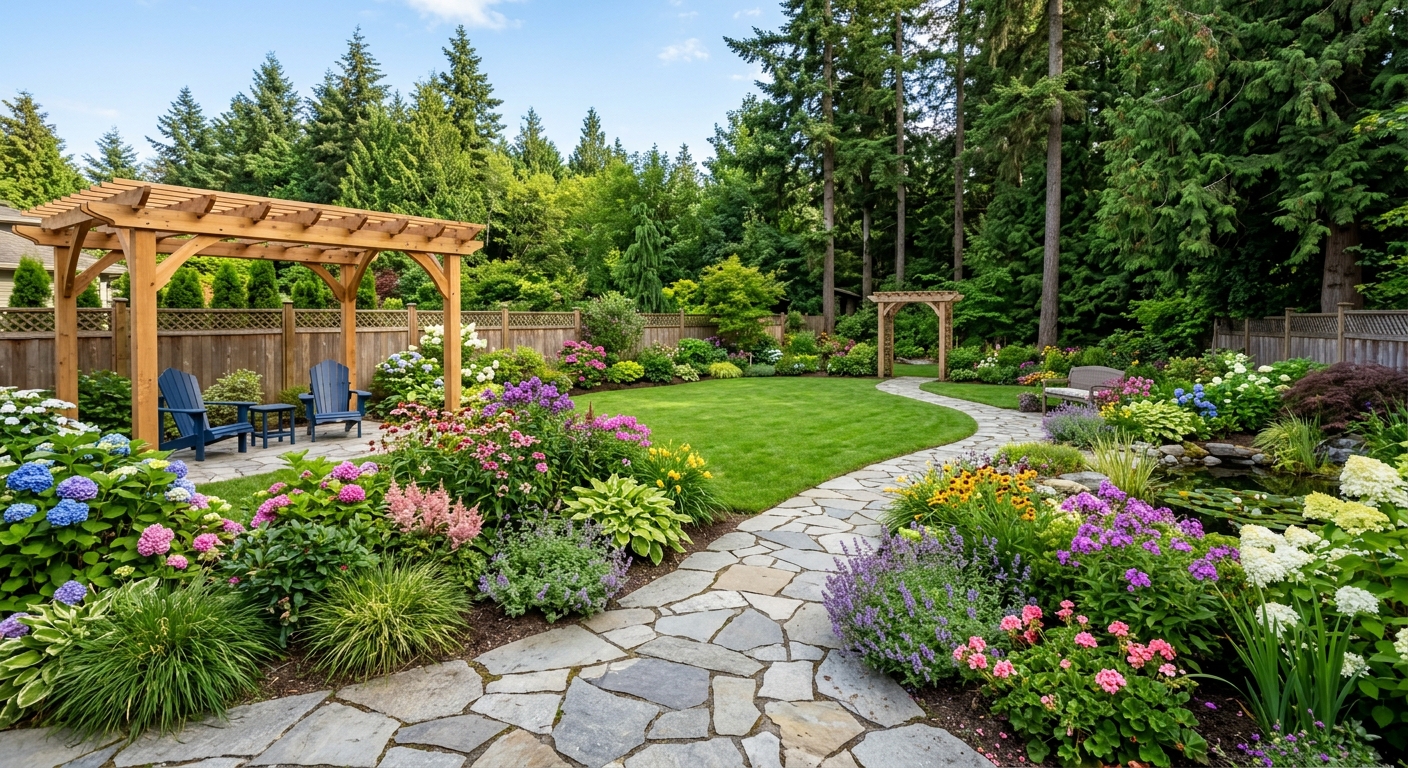
Landscaping options and costs in Sage Hill
Sage Hill, Alberta is a fast-growing community where homeowners often want landscaping that looks good quickly, yet holds up through prairie freeze–thaw cycles. With a population of 9,345 (Statistics Canada, 2021 Census), there’s a steady mix of new builds and established lots—especially around Sage Hill neighbourhood pockets—creating demand for both “instant curb appeal” work (sod, patios) and longer-term upgrades (grading, drainage, planting). In practical terms, most detached properties in the area have enough yard space to justify investing in hardscape and soil improvement, because the yard is one of the biggest day-to-day living spaces.
In the Calgary region, pricing is shaped by short working seasons and the need for deep, well-compacted bases. In Prairie hardiness zones 3–4, late-spring frosts and early fall cold snaps mean contractors plan around temperature windows, and freeze–thaw severity makes drainage and base prep non-negotiable. That’s why comprehensive projects in Calgary’s broader market commonly land in the mid five-figure range once grading, hardscape, planting, and irrigation are combined—labour alone is often 40–60% of the full job.
If you’re comparing quotes, it helps to separate what’s “softscape” (planting, turf) from what’s foundation-protection work (drainage, wall footings, patios). Next, use the table below as a realistic starting point for services in Sage Hill.
| Service |
Description |
Season |
Price Range |
| Full landscape design and installation |
Site walk, grading/drainage plan, base prep, patio/walkway, planting beds, turf solution, and (if needed) irrigation layout |
May to early October |
$8,000–$45,000 |
| Sod installation (supply, grade, lay, roll) |
Topsoil/sub-base adjustments, grading to slope away from house, sod delivery, laying, rolling, and initial watering set-up |
Late May to August (best results) |
$2,200–$5,800 |
| Lawn seeding (grade, seed, starter fertilizer) |
Light grading/weed clean-up, seed selection for zone, starter fertilizer, seeding, and initial watering guidance |
May to early September |
$1,500–$3,500 |
| Interlocking patio or walkway |
Excavation, deep compacted base, edge restraints, sand setting bed, pavers, joint sand, and cleanup |
May to October |
$8,000–$28,000 |
| Retaining wall (interlocking block) |
Wall layout, excavation, drainage gravel + weep system, geotextile, block installation, and backfill compaction |
June to October |
$12,000–$38,000 |
| Tree and shrub planting |
Soil testing where needed, amendments, planting, staking (if required), mulch rings, and initial watering plan |
May to late September |
$900–$14,000 |
Prices are estimates only and vary by project scope, site access and material selection.
What affects the price of landscaping in Sage Hill
In Sage Hill and across the Calgary region, the same-looking landscaping project can come back 30–50% different from one contractor to another. The biggest driver is usually not the plants—it’s the unseen foundation work: excavation depth, how well drainage is handled, and how compacted the base is to survive Alberta’s severe freeze–thaw cycles. Labour rates also move with demand; when many homeowners schedule patios, walls, and planting in the same May–August window, schedules tighten and crew availability can affect pricing.
Hardiness zone 3–4 and the region’s frost behaviour shape both what can be installed and how long contractors can work. Prairie yards also need drought-tolerant, wind-hardy species and a soil approach that holds moisture without staying waterlogged. Retaining wall costs swing sharply because the base depth must reach below the frost line and the wall needs proper drainage gravel and compaction, or you risk heaving and failure.
To illustrate why local conditions change cost: (1) If your lot has a slope toward the foundation, drainage/grading corrections can add several thousand dollars before any planting begins; (2) if the site has compacted subsoil from construction, soil amendment and deeper excavation for a patio or wall can raise the price but prevent settlement; and (3) if you’re replacing older turf with sod, the grading has to be dialled in, otherwise you’ll pay again for repairs. In budget terms, a typical lawn refresh may sit closer to the $1,500–$6,000 turf band, while adding drainage plus a wall can shift you toward the higher $8,000–$40,000 hardscaping band. Housing-stock age matters too: newer builds often have rough grading and more utility-locate needs, while older lots can have hidden issues like compacted topsoil or poor drainage that show up later as pooling.
| Price Factor |
Why It Matters |
Cost Impact |
| Yard size in sq ft — the primary cost driver for softscape |
More area means more turf/soil, more labour hours, and more material |
Often the largest single line-item swing |
| Grading and drainage work — slope corrections add significant cost |
Correct slopes protect foundations and stop freeze–thaw lift |
Can add thousands before turf/planting starts |
| Drainage bed or French drain installation |
Collects and redirects subsurface water away from structures |
High impact on total project price |
| Plant material tier — native shrubs vs. ornamental vs. mature specimen trees |
Mature stock costs more and takes more labour for planting and handling |
Broad variance depending on size/type |
| Hardscape vs. softscape ratio — walls and patios cost more per sq ft than lawn |
Deep bases, pavers/blocks, and compaction are labour- and material-intensive |
Shifts you into higher price bands quickly |
| Irrigation system design and installation |
Zoned heads and smart controllers prevent waste and support drought-tolerant planting |
Adds cost, but reduces long-term maintenance |
| Soil amendment and topsoil required |
Improves drainage and nutrient availability for zone-appropriate plants |
Can be moderate or substantial depending on current soil |
| Tree removal or stump grinding before new planting |
Removes competition and prepares the ground for beds/turf |
Often increases the job by one extra crew day |
Permits & regulations in Alberta
For most landscaping in Alberta, you typically do not need a permit for day-to-day softscape work—things like planting trees and shrubs, sodding, seeding, mulching, and installing low-profile garden beds. However, there are important exceptions that homeowners in Sage Hill should plan for early, especially when the project affects grading, foundations, or retaining structures.
Work that typically does require a permit: Retaining walls above a local height threshold (commonly 1.0 m / 3.3 ft in many Alberta municipalities) often trigger permitting, and some projects may require engineered drawings depending on height, soil conditions, and design. Also, changes to lot grading that meaningfully affect drainage patterns toward neighbouring properties or storm sewer connections may require approval.
Work that usually does not require a permit: Installing patios and walkways, normal mulch/plant bed creation, turf seeding/sodding, and standard irrigation hookups—assuming you’re not materially changing drainage to neighbouring properties and you’re staying within typical hardscape parameters.
Before digging, always request utility locates for planting holes, irrigation trenches, and wall footings. For contractor verification in Sage Hill, homeowner checks should include: confirm the landscaping contractor’s Alberta licence/registration (where applicable), ask for a current certificate of insurance (general liability) and review that it covers the work area, and request proof of WSIB/WCB coverage—and keep a copy of the certificate. If a contractor provides a clearance letter or current status documentation, that’s a strong sign they maintain compliance.
Planning a landscape that thrives in Sage Hill's climate
Planning for Sage Hill’s climate means working with Alberta’s Prairie hardiness zone 3–4, rather than forcing plants to behave like they do in milder regions. Start with selection: choose hardy, often native or well-adapted species that handle cold snaps and wind, and plan winter protection like mulch depth and proper spacing. For turf, decide early between sod and seeding. Sod gives instant curb appeal but costs more because you’re paying for rolled turf, logistics, and labour; seeding is slower to “fill in” but typically fits tighter budgets.
Next, protect your foundation with grading and drainage. In Calgary-area yards, pooling is more than an aesthetic issue—water trapped in freeze–thaw cycles increases the risk of heaving under patios, steps, and any wall base. For patios and retaining walls, base preparation must be deep, properly compacted, and drained. That’s why a well-built interlocking surface often lasts far longer than a cheaper install that skipped depth/compaction.
For low maintenance, use groundcovers, mulched shrub borders, and perennials that re-establish reliably after winter. Add xeriscape or rain-garden elements where appropriate: drought-tolerant plantings with a zoned irrigation design (or targeted drip) reduce watering demand while still looking intentional. One realistic decision example: if you’re adding a small front patio, spending closer to the higher end of the patio band (often $8,000–$28,000) may be justified when it replaces mud, improves drainage, and connects to a better walkway layout. If you’re trying to stretch your dollar, seeding usually wins over sod for cost per usable lawn area, but keep in mind sod can be worth it when you need immediate function (pets, traffic flow) and the grading is correct.
| Element |
Climate Consideration |
Maintenance Level |
Price Band |
| Sod lawn installation |
Best planted in frost-safe windows; grading and compaction matter to prevent winter heaving |
Low to moderate (watering until established) |
$2,200–$5,800 |
| Native perennial garden |
Hardy plants handle prairie winters; mulch protects crowns during freeze–thaw cycles |
Low (spring clean-up, occasional weeding) |
$1,800–$6,500 |
| Mulched shrub border |
Wind tolerance and cold hardiness reduce winter dieback; mulch buffers temperature swings |
Low (mulch refresh, seasonal pruning) |
$1,500–$6,200 |
| Interlocking stone patio |
Deep base and drainage prevent movement during freeze–thaw; edges keep paving aligned |
Low (occasional joint sand/top-up) |
$8,000–$28,000 |
| Retaining wall (block) |
Requires proper drainage gravel and compaction; frost-protected base reduces heave risk |
Low (inspection and occasional minor touch-ups) |
$12,000–$38,000 |
| Drip irrigation system |
Targets water to roots efficiently; zoned control helps during semi-arid conditions |
Moderate (seasonal adjustments/checks) |
$1,200–$6,000 |
How to choose a landscaping contractor in Sage Hill
Choosing a contractor in Sage Hill is mostly about verification and clarity. First, confirm Alberta compliance: ask for their licence/registration (where applicable), request a current certificate of general liability insurance, and verify WSIB/WCB coverage. How to check: look for the document’s effective dates, ensure the coverage matches the work type, and confirm the certificate lists your address or the insured work location (when provided). Don’t rely on verbal promises—keep copies of insurance and clearance documentation.
Next, get 2–3 written, itemised quotes with a labour + materials breakdown. You want line items for excavation/base prep, drainage work, pavers/blocks, topsoil/soil amendments, plants (with quantities and sizes), and irrigation supplies if included. Make sure the scope is consistent between bids, including what’s excluded: for example, turf disposal, hauling, utility locate fees, or extra excavation for unstable subsoil.
Read the warranty terms carefully. Ask for: (1) the workmanship warranty length, (2) the product/manufacturer warranty for pavers, block, and sod/seed (where applicable), and (3) whether warranty coverage is transferable if you sell the home. For payment schedule, never pay more than 10–15% upfront; hold a reasonable holdback until the job is complete and deficiencies are addressed. Finally, require a start date and completion estimate in writing—Alberta timelines shift because patios and sod are temperature-dependent, and crews often book months ahead during peak season.
- Insist on itemised quotes (no “lump sum” only), with quantities and unit pricing.
- Confirm insurance COI is current and matches the scope (liability + any relevant endorsements).
- Verify WSIB/WCB clearance or status documentation before work starts.
- Check whether utility locates are included and who pays.
- Ensure drainage/grading notes are in the contract (slopes away from house, tie-in details).
- Ask for base build-up specs: excavation depth, geotextile use, compacted layers.
- Clarify disposal: soil/rock hauling included or extra?
- Confirm permit responsibility: if required for a retaining wall, who pulls it?
- Ask about irrigation winterization and controller setup (if installing irrigation).
- Request a planting list with plant names, sizes, and counts (not vague “shrubs” wording).
- Make sure warranty is written and includes workmanship, not just product.
- Keep payment milestones tied to completed stages, not just “time.”
Common red flags in Sage Hill include: quotes that skip base depth/compaction details, refusing to provide insurance/WSIB documentation, “too good to be true” pricing that omits drainage work, contracts that don’t include disposal/haul-away terms, and starting work without a written timeline or site-prep plan for Alberta freeze–thaw realities.
Frequently asked questions — landscaping in Sage Hill
When is the best time to landscape in Sage Hill?
The best time to landscape in Sage Hill is typically late May through September, when soil temperatures support rooting and crews can work without constant weather interruptions. Sod and seeding have different “sweet spots”: sod usually performs best when installed in late spring to summer (and not right before cold snaps), while seeding can work from spring through early fall. For hardscape like patios and walkways, contractors often prefer May to October because base materials compact correctly and finishing stays stable. If you’re planning a larger project (grading + wall + planting), booking early matters because labour availability tightens mid-summer across the Calgary region. For planning, align the biggest disruption items first (drainage/grading, excavation), then install turf/planting once base work is settled.
Do I need a permit for a retaining wall in Alberta?
In Alberta, the answer depends mainly on the retaining wall’s height and how local rules apply. Retaining walls above a common threshold—often around 1.0 m (3.3 ft) in many Alberta municipalities—typically require a permit, and some designs may need engineered drawings based on site conditions. In Sage Hill, it’s smart to treat any wall near or above that height as permit-likely and confirm with your contractor and the municipality before digging. Soft landscaping like mulched borders, planting, and sodding usually does not require permits, but grading changes that affect drainage toward neighbours or storm connections can also trigger approvals. Your contractor should tell you who pulls the permit and include it clearly in the scope, because delays are common when permits aren’t planned early.
How do I improve drainage in my yard?
Drainage improvements in Sage Hill usually start with understanding where water goes during thaw and after heavy rain (even in semi-arid conditions). Common solutions include re-grading slopes away from the house, adding a drainage bed or French drain, and ensuring downspouts discharge correctly. Because Alberta freeze–thaw cycles are severe, drainage isn’t optional if you’re installing patios or a retaining wall—trapped water under bases can lead to movement and heaving. A contractor may recommend a compacted base build-up and geotextile layering, plus proper weep/drainage gravel behind a block wall. If you’re budgeting, drainage-focused work can push a project from the turf band (such as $1,500–$6,000 for lawn work) into the hardscaping/walls range (often $8,000–$40,000) depending on how much excavation is needed.
What is xeriscaping and does it suit Sage Hill?
Xeriscaping is a landscaping approach that reduces water demand by using drought-tolerant plants, smart soil preparation, mulch, and efficient irrigation design (often drip with zoned controls). Yes—xeriscaping suits Sage Hill extremely well because zone 3–4 conditions include winter cold, prairie wind, and periods of dryness where “high-water” turf and tender plants can struggle. A good xeriscape plan still considers beauty: native perennial gardens, mulched shrub borders, and groundcovers can look lush without constant watering. In the Calgary region, homeowners can often remain within water-wise practices while still achieving curb appeal by prioritizing soil amendment, root-depth planting, and targeted irrigation. If local watering restrictions tighten during dry periods, a well-designed drip layout helps you comply while keeping plants established.
How do I plan a low-maintenance yard?
For a low-maintenance yard in Sage Hill, plan around hardy plant selection, durable materials, and fewer “high-touch” features. Start with a mulched shrub border and perennial structure that returns reliably after winter—then avoid over-complicated layouts that require frequent edging and constant replanting. Use groundcovers to suppress weeds, and install a proper patio/walkway base if you expect regular foot traffic. For turf, choose sod only where you need quick coverage; otherwise, seeding can be a more economical path to a manageable lawn. Maintenance also depends on irrigation: in semi-arid conditions, a zoned system (or drip for beds) reduces waste and prevents plants from oscillating between overwatering and drought. As a budgeting reference, many homeowners combine a foundational patio (often in the $8,000–$28,000 band) with planting and mulch to create a yard that stays tidy with seasonal clean-up rather than constant labour.
How deep should a retaining-wall base be for local frost?
Retaining-wall base depth is driven by frost behaviour, soil conditions, and the wall’s design—not just a rule of thumb. In Calgary-area freeze–thaw conditions, a wall footings/base must extend below the local frost penetration to reduce the risk of heaving. In practice, contractors determine the required depth based on engineering guidance where needed, plus soil compaction specs and drainage design. Even when a wall is “only” a short height, proper excavation depth, geotextile separation, drainage gravel, and thoroughly compacted backfill are what keep the wall stable year after year. If your wall is near permitting thresholds, also expect extra documentation. For the most accurate answer on your site, request the contractor’s base build-up details and confirm whether engineering is required for your specific retaining wall plan.