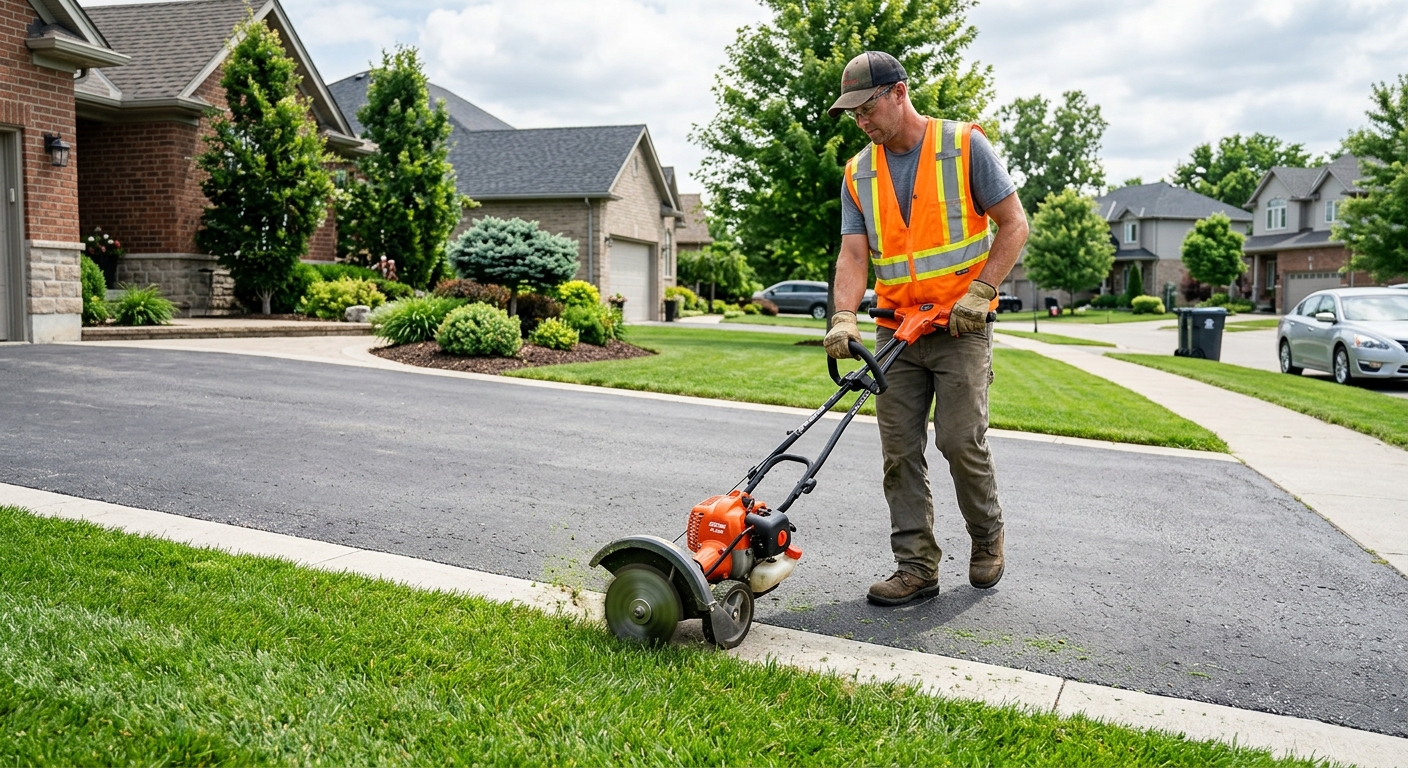
Landscaping options and costs in Lethbridge
Lethbridge is a great place to invest in outdoor living, especially with the strong homeownership base that supports long-term yard improvements. In fact, 27,440 homeowner households (68.2% of households own) means many residents are willing to budget for upgrades like patios, drainage fixes and hardy planting that will still look good after harsh prairie winters. With single-detached houses making up 62.6% of dwellings, most lots have the space for true “front and back yard” makeovers rather than only small curb touches.
Costs in the Lethbridge–Medicine Hat region are shaped by prairie weather and the building realities that come with it. Southern Alberta sits in hardiness zone 4b, with average annual minimums around −31.7°C to −28.9°C, so landscaping must be designed for cold snaps, freeze–thaw cycling and wind-dry conditions. That cycle drives up structural work: retaining walls, paved areas and base aggregates need deeper, well-compacted foundations and proper drainage to prevent heaving and movement. The short growing/work season (roughly May–September) also compresses planting and sod scheduling, which can affect labour availability around peak weeks.
In Lethbridge, this trade is especially busy in established neighbourhoods with older housing stock—areas like Varsity Village and University area streets often see full curb refreshes, walkways and foundation-friendly drainage improvements before summer planting. If your goal is to compare options and budget realistically, the table below breaks down common services and typical pricing ranges.
| Service |
Description |
Season |
Price Range |
| Full landscape design and installation |
Site visit, concept + layout, grading/drainage plan, plant palette, procurement, labour, and installation for front/back scope |
May–September |
$8,000–$35,000 |
| Sod installation (supply, grade, lay, roll) |
Soil prep, grading for drainage, soil amendment if required, sod supply and installation |
Late May–August |
$4–$8 |
| Lawn seeding (grade, seed, starter fertilizer) |
Fine grading, seed selection for prairie conditions, starter fertilizer, light topdressing if needed |
May–early August (weather dependent) |
$1,200–$3,500 |
| Interlocking patio or walkway |
Excavation, base compaction, geotextile, edging, interlocking stone installation, leveling and cleanup |
June–September |
$120–$300 |
| Retaining wall (interlocking block) |
Wall layout, excavation, compacted base, drainage gravel + weep setup, interlocking block installation |
June–September |
$120–$300 |
| Tree and shrub planting |
Plant selection suited to zone 4b, planting holes, soil amendment, watering-in plan, staking as needed |
May–September (frost-free windows) |
$500–$8,000 |
Prices are estimates only and vary by project scope, site access and material selection.
What affects the price of landscaping in Lethbridge
Even when two homeowners ask for the “same” landscaping job in Lethbridge–Medicine Hat, quotes can swing by roughly 30–50% once the details are known. That’s because the hard part is rarely just plant material—it’s achieving long-term performance under prairie freeze–thaw cycles, wind exposure and drought-prone summers. In older neighbourhoods (and especially where homes built before 1981 make up 44.8% of the housing stock in the region), you often run into legacy grading, compacted soils, buried debris, or foundation-area drainage issues that require more excavation and soil work.
What grows and how long crews can work also drives cost. In zone 4b, cold winter temperatures and spring/fall frosts set the planting windows and influence how much “preparation” time is needed. Retaining walls and paved edges require base depths below the frost-impacted zone, which increases excavation and base aggregate volumes—directly impacting budgets within the $8,000–$35,000 design & installation band for full projects. Meanwhile, sod and seed choices affect cost timing: sod typically costs more upfront than seeding, but can reduce the number of “wait-and-see” seasons for appearance.
Concrete examples of why pricing rises in Lethbridge: (1) if your yard has poor drainage, correcting slope and adding a drainage bed can add significant labour and trucking, even before plants arrive; (2) if you need a retaining wall base with deeper, better-compacted material to stabilize the wall through freeze–thaw, you may see the project jump toward the higher end of wall work and hardscaping allowances. Conversely, your cost can be lower when the site is already level, drainage is working, and we can use smaller foundation pours or avoid major base reconstruction—keeping budgets closer to mid-range hardscape/softscape pricing.
Compared to milder climates, the prairie reality is simple: you pay for compaction, drainage and hardy plant stock now to avoid movement, rework and bare patches later. That’s why a “quick curb refresh” often lands at one price point, but anything that includes grading, drainage beds and structural base work moves into higher ranges fast.
| Price Factor |
Why It Matters |
Cost Impact |
| Yard size in sq ft — the primary cost driver for softscape |
More area means more soil prep, more plants/seed, more mulch, and more labour hours |
Often the biggest swing; expand scope and total cost can rise 20%–60% |
| Grading and drainage work — slope corrections add significant cost |
Pooling and foundation moisture protection require correct slope and surface flow paths |
Can add thousands on larger lots; frequently the reason bids differ by 30%+ |
| Drainage bed or French drain installation |
Subsurface fixes add trenching, gravel, perforated pipe and sometimes outlets |
Medium to high impact depending on trench length and tie-in complexity |
| Plant material tier — native shrubs vs. ornamental vs. mature specimen trees |
Mature specimens and specialty ornamentals cost more and require deeper planting and staking |
Low tier can be budget-friendly; mature trees can multiply plant costs |
| Hardscape vs. softscape ratio — walls and patios cost more per sq ft than lawn |
Paving and retaining structures require excavation, base aggregates, and compacting |
Shifting 200 sq ft from lawn to patio often increases cost materially |
| Irrigation system design and installation |
Even efficient prairie yards may need drip for establishment; design affects parts and labour |
Can add substantial cost but prevents plant loss during May–September heat |
| Soil amendment and topsoil required |
Correcting clay/compaction improves root growth and drainage performance |
Delivery and bulk placement can be a major line item |
| Tree removal or stump grinding before new planting |
Root systems, stumps and debris removal affect excavation and planting layout |
Highly variable; can add cost quickly on mature lots |
Permits & regulations in Alberta
In Alberta, most typical landscaping work—planting, sodding, seeding, mulch installation, and most softscape adjustments—typically does not require a permit. Where it changes is with structural elements and drainage/grading that can affect neighbouring properties. In most municipalities, retaining walls above a threshold of about 1.0 m (3.3 ft) commonly require a building permit and may need engineered drawings depending on height, location and design. Also, any change to lot grading that alters how water drains—especially toward neighbouring properties or toward storm sewer connections—can trigger approval or inspection requirements.
Before digging in Lethbridge (for planting holes, French drains, or wall footings), call for utility locates. That step helps protect gas, power, communication and water lines and is essential for any crew planning excavation.
To protect yourself, verify your contractor’s credentials in writing:
- Alberta licence/registration (where applicable): check for the relevant business registration and any trade/designation the contractor claims.
- Liability insurance: request a certificate of insurance naming you (or the property) as applicable and confirming coverage limits.
- Work coverage: ask for WSIB/WCB clearance for the contractor’s employees (or their applicable coverage documentation).
- Clear scope before permitting: ask who pulls the permit (if required) and confirm it’s included in the contract or excluded clearly.
Finally, confirm irrigation and water-use rules for your area. While southern Alberta restrictions are generally less severe than dry interior BC, Alberta communities can still tighten limits during dry periods—so an efficient drip plan with a smart controller is a smart way to stay compliant and protect establishment.
Planning a landscape that thrives in Lethbridge's climate
Planning for Lethbridge’s climate is about working with zone 4b winter lows, wind-dry summers and short frost-free windows—not fighting them. Start with plant selection: favour native, prairie-hardy shrubs and perennials suited to zone 4b and prioritize species that tolerate heat once established. Use wind-tolerant forms and build in realistic winter protection where needed (mulch depth, staking, and correct planting depth). Because Lethbridge yards often face quick drying and temperature swings, plants that handle drought and temperature stress will maintain curb appeal with less annual rework.
Sod versus seed is a common decision point. Sod gives instant results and helps reduce erosion right away, but it costs about 3–4 times more per sq ft than seeding once labour and material are included. For many homeowners, seeding wins when you’re working on a budget or planning a longer-term “fill-in” season. Where drainage is poor, however, the best turf option won’t fix the problem—grading and drainage work come first.
Drainage and grading are critical in the Lethbridge–Medicine Hat region to prevent pooling and foundation moisture. If water runs toward your house, investing in slope correction and a drainage bed can cost more than planting—but it protects your foundation and reduces future landscape failures. For hardscape like patios or retaining walls, base preparation must account for freeze–thaw movement: deeper excavation, well-compacted base aggregates, and proper drainage behind walls are what keep surfaces level.
To keep yearly upkeep low, build the yard around mulch beds, groundcovers, and a repeatable perennial shrub structure. Add xeriscape elements such as drought-tolerant grasses and drip irrigation for establishment. For example, if you’re tempted to spend extra to replace a failing lawn patch with sod, consider whether fixing drainage first is the better spend—often that prevents repeated “re-sodding” in the $4–$8 per sq ft range and instead supports stable planting.
| Element |
Climate Consideration |
Maintenance Level |
Price Band |
| Sod lawn installation |
Needs strong establishment watering during May–September heat; choose drought-capable blends for zone 4b |
Medium (watering-in and mowing until established) |
$4–$8 |
| Native perennial garden |
Prairie-hardy species handle wind and summer dryness once rooted |
Low to medium (weeding in year one, then selective trimming) |
$500–$8,000 |
| Mulched shrub border |
Mulch buffers freeze–thaw and reduces evaporation; plant spacing matters for airflow and winter survival |
Low (annual top-up and light pruning) |
$500–$8,000 |
| Interlocking stone patio |
Base must resist freeze–thaw heaving; proper slope prevents puddling |
Low (occasional joint sand top-up) |
$120–$300 |
| Retaining wall (block) |
Requires compacted base and drainage behind the wall to handle winter movement |
Low (inspection of drainage and settling) |
$120–$300 |
| Drip irrigation system |
Efficient water delivery during the short growing season; designed for drought-tolerant planting |
Low (seasonal adjustments and controller checks) |
$1,000–$6,000 |
How to choose a landscaping contractor in Lethbridge
Choosing a contractor well in Lethbridge is mostly about verification and clarity. Start with Alberta coverage: ask for a certificate of liability insurance showing the policy is active and what limits apply. Next, request WSIB/WCB clearance (or applicable worker coverage documentation) so you’re not exposed if someone is injured on your property. If the contractor claims specific trade eligibility, ask how it applies to your scope and check any online business registries or licence listings they reference.
Then get 2–3 itemised written quotes, not a single lump sum. A useful quote breaks labour and materials apart (excavation, base aggregate, geotextile, stone, soil/topsoil delivery, plant quantities, and installation hours). Read the scope carefully: what is excluded (permits, topsoil amendments, disposal, tree removal, irrigation upgrades)? Confirm whether disposal is included—truckloads of excavated soil can change the total quickly. Ask who is responsible for pulling permits if a retaining wall or grading approval is needed.
Warranty matters too. Look for a workmanship warranty length, ask whether plant warranties are manufacturer-based and what happens if plants fail within the first season. Also clarify whether warranties are transferable if you sell your home.
For payment, never pay more than 10–15% upfront. Use a holdback until the job is complete and you’ve reviewed walkthrough notes. Finally, request a firm start date and a completion estimate in writing, since the May–September window can fill rapidly.
- Provide an itemised quote with line-by-line quantities (sq ft, linear ft, plant counts/sizes).
- Show proposed drainage direction and how runoff will be handled during snowmelt.
- Confirm base build-up specs for patios/walkways and drainage behind retaining walls.
- List soil amendment and topsoil type (and how many truckloads or cubic yards).
- Confirm plant sources/sizes (containers, balled-and-burlapped, mature heights/widths).
- Include disposal/trucking fees or state them explicitly as excluded.
- State whether utility locates are included and when they’ll be booked.
- Ask for a projected planting schedule (and backup plan if weather delays occur).
- Review the warranty in writing: workmanship duration and call-back process.
- Require a clear payment schedule tied to milestones, not vague “progress.”
- Ask for references from similar zone 4b prairie yards in Lethbridge.
- Get a signed contract with start/end targets and scope attachments (plans, drawings).
Red flags to watch for in Lethbridge: (1) quotes that don’t specify drainage or base depth decisions for freeze–thaw; (2) no written scope—only “we’ll figure it out on site”; (3) refusing to provide insurance/WSIB/WCB clearance documentation; (4) asking for large upfront payments beyond 10–15% without a staged schedule; (5) vague warranties like “we guarantee the work” with no timeframe or process.
Frequently asked questions — landscaping in Lethbridge
How do I improve drainage in my yard?
In Lethbridge, drainage fixes usually start with grading—making sure surface water flows away from the house and doesn’t pool near foundations during spring melt. A contractor should inspect where water travels after a heavy irrigation or rainfall, then recommend slope corrections and possibly a trench-based solution like a drainage bed or French drain. Because freeze–thaw cycles can worsen soft, saturated soil, we also focus on proper base compaction and correct outlet points. If your project is part of a full upgrade, drainage is often included in the design & installation scope that typically falls in the $8,000–$35,000 band. If you only need a targeted drainage bed, you may be able to reduce cost by limiting excavation to the problem area.
What is xeriscaping and does it suit Lethbridge?
Xeriscaping is a landscaping approach that reduces water demand by using drought-tolerant plants, efficient watering methods and soil practices that hold moisture longer. In Lethbridge’s zone 4b climate—where hot, dry summers and wind can dry beds quickly—xeriscaping is usually a strong fit when it’s built correctly. The goal isn’t “no water ever,” but smart water use: drip irrigation for establishment, deep mulch, and prairie-hardy species that don’t rely on frequent sprinkling. If you compare options, xeriscape beds often lower ongoing maintenance versus a high-water lawn, while still protecting curb appeal. Many homeowners choose this during a full yard refresh that aligns with the broader $8,000–$35,000 design & installation range, especially when drainage and irrigation are redesigned at the same time.
How do I plan a low-maintenance yard?
A low-maintenance yard in Lethbridge comes from reducing “problem inputs,” not just adding more plants. Start with soil and drainage so plants aren’t stressed by pooling or poorly aerated ground. Next, design beds with mulch depth and drought-tolerant shrubs/perennials that match zone 4b and wind exposure. Use groundcovers strategically to suppress weeds and limit bare soil. For turf, consider whether seeding is enough or whether sod is justified only for high-traffic appearance areas—sod costs more upfront than seeding (often several times higher per sq ft once labour is included). Finally, use a simple irrigation plan (drip with a smart controller) timed for establishment during May–September. In many homes built before 1981, correcting compacted soils and drainage near the house is what makes the yard actually “easy” long term.
How deep should a retaining-wall base be for local frost?
Retaining-wall base depth is determined by wall height, soil conditions and how the base is designed to resist frost movement, not a single universal number. In Lethbridge, you should expect the base to be built below the frost-impacted zone and supported by proper compaction, drainage gravel and controlled backfill. This is why retaining walls can be one of the more expensive scope components: deeper excavation and base aggregates are required to prevent heaving or movement through freeze–thaw cycles. For accuracy, a reputable contractor will review your soil and the proposed wall height, then state base build-up details in writing. If your wall is approaching the typical ~1.0 m threshold, you may also need a permit and potentially engineered guidance depending on municipal requirements.
How much does professional landscape design cost?
In Lethbridge, the “design” cost is often packaged within the full design & installation project, which typically lands around $8,000–$35,000 depending on yard size, drainage complexity, and how many hardscape/planting elements are included. Some contractors offer design-only proposals, but most homeowners end up tying design to installation so the contractor can manage drainage decisions, plant lead times and the short May–September schedule. Since the Lethbridge–Medicine Hat region operates in zone 4b with a compressed planting window, design that accounts for frost timing and prairie-hardy plant selection can prevent rework that drives costs higher later. If your budget is tighter, ask for phased options: drainage/grading first, then planting/hardscape in subsequent steps.
How do I compare landscaping quotes?
To compare landscaping quotes in Lethbridge, insist on itemised written proposals with labour and materials broken out—not just one lump sum. Make sure each quote includes the same scope items: soil/topsoil amount, base prep specs, drainage approach, disposal/trucking, utility locates, and whether permits are included. Pay attention to differences in plant quantities and sizes (container size vs. mature specimen), and confirm irrigation design if it’s part of the work. Quotes that land in the same overall band can still perform very differently if base prep or drainage is missing. As a price anchor, full design & installation commonly ranges $8,000–$35,000, and larger hardscape components are priced using per-area allowances. If one quote is dramatically lower, it may be cutting out drainage, soil amendment or proper base compaction—often the true cost-driver in zone 4b yards.