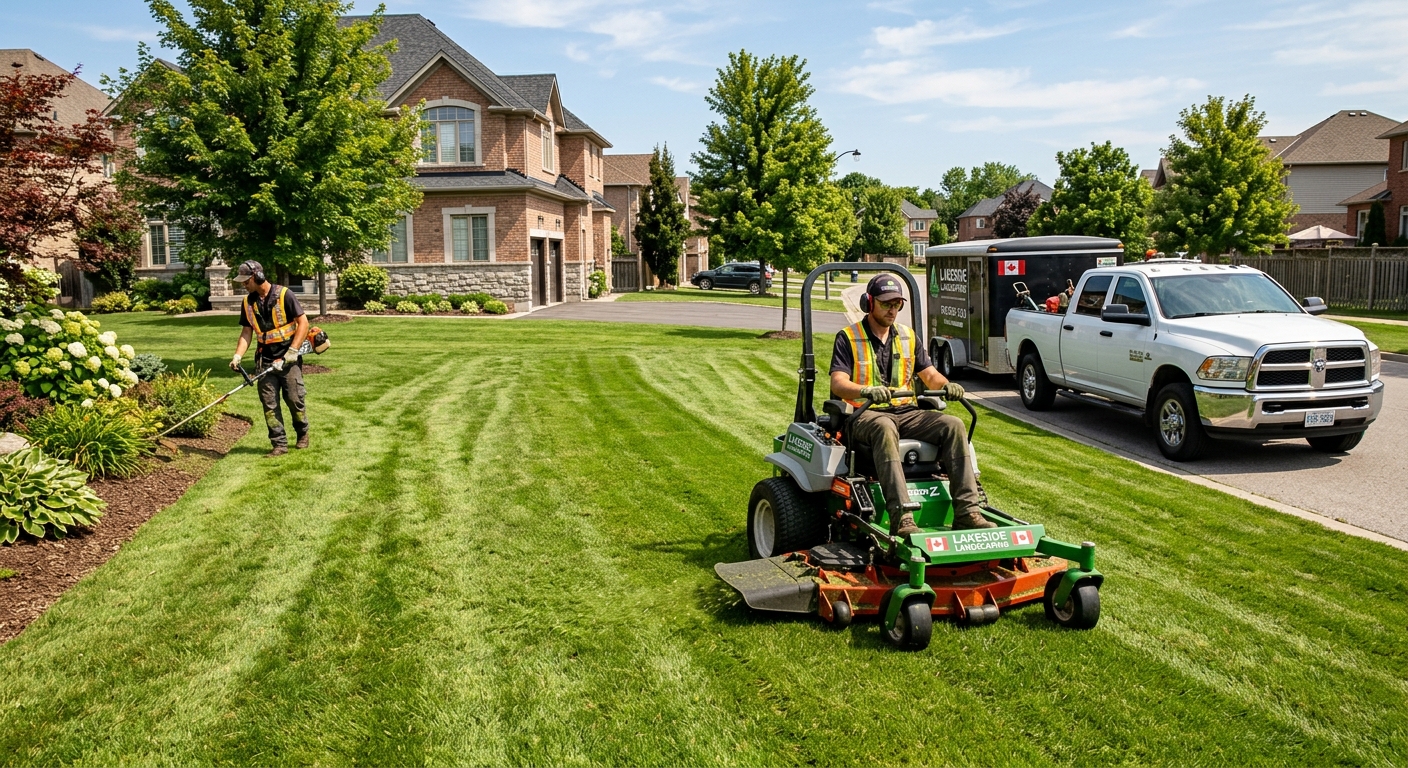
Landscaping options and costs in Shawnee Slopes
In Shawnee Slopes, landscaping planning starts with reality: Calgary-area yards must perform through freeze–thaw cycles in Prairie plant hardiness zones 3–4, plus late-spring frosts and early fall cold snaps. Homeowners here have strong reasons to invest—each of the community’s detached homes typically comes with yard space that can be upgraded for curb appeal and usability. With Shawnee Slopes sitting at 2,020 people in the 2021 Census (Statistics Canada, 2021 Census), demand is steady, and contractors often stay busy in the short working window when weather allows grading, base prep, and installation.
That winter/spring pressure is one reason quotes can feel “tighter” than in milder regions: in southern Alberta, we need deep, well-compacted bases and correct drainage for patios, walkways, and retaining walls to prevent heaving and failures. At the same time, Calgary’s labour market shapes pricing—labour commonly represents a large share of total project cost (often 40–60%), so access (driveway width, backyard gates), hauling, and site grading can materially change your final number.
If you’re in demand for a refreshed front yard, these projects come up most often in established pockets near main community routes where homeowners want clean hardscape edges and wind-tolerant planting. From there, the simplest way to compare budgets is to look at a few common scope options side-by-side—then match one to your site and goals.
| Service |
Description |
Season |
Price Range |
| Full landscape design and installation |
Site walk, grading & drainage plan, base prep, hardscape (patio/walk), planting layout, topsoil/soil amendment, irrigation option |
Late April to late October (weather-dependent) |
$8,000–$35,000 |
| Sod installation (supply, grade, lay, roll) |
Light grading, weed barrier where appropriate, topsoil/compaction, sod supply and installation, first watering pass guidance |
May to early September |
$2,000–$6,000 |
| Lawn seeding (grade, seed, starter fertilizer) |
Fine grading, seed selection, starter fertilizer, hydromulch optional, initial watering plan |
May or August (best frost-safe timing) |
$1,500–$4,500 |
| Interlocking patio or walkway |
Excavation, compacted base (often deeper for freeze stability), bedding sand, pavers, edging, clean finish |
May to October |
$8,000–$28,000 |
| Retaining wall (interlocking block) |
Wall layout, reinforced base/compaction, drainage gravel & weep provisions, block install and finishing |
June to October |
$12,000–$38,000 |
| Tree and shrub planting |
Soil amendment, planting holes, staking as needed, mulch rings, watering plan and cold-weather guidance |
May to October (or fall planting with care) |
$900–$15,000 |
Prices are estimates only and vary by project scope, site access and material selection.
What affects the price of landscaping in Shawnee Slopes
In Shawnee Slopes, it’s common to see quotes for the “same” yard swing by 30–50% across Calgary and Alberta. The difference usually comes down to how much hidden work is required before plants ever go in: base depth, drainage corrections, soil condition, tree removals, and how efficiently a crew can access and stage materials. Even if your wish list looks similar, contractors may build to different standards for freeze stability and compaction—those choices affect both performance and cost.
Calgary sits in Prairie zones 3–4, so late frosts and early cold snaps shorten the workable season. That means labour costs and scheduling carry weight: crews can’t do base work on frozen ground, and they have to compress timelines during peak months. Compare that to coastal BC (zones 7–8), where you typically get longer planting windows and broader plant palettes but still need robust drainage in heavier-rainfall areas. Meanwhile, Alberta and the dry interior drive more efficient irrigation designs and soil improvement rather than relying on high-water turf.
Two concrete examples from Shawnee Slopes: (1) If your yard has a slope that drains toward the house or into a neighbour’s property, we often add grading and sub-drain work. That can push a basic planting-only budget into full hardscape drainage territory—an item that can move you from a tree/shrub scope near $800–$15,000 into a larger design-and-install plan often landing mid five figures once base prep and drainage are included. (2) Mature trees or difficult stump removal can add significant labour and disposal, while simple bare-soil installs stay cheaper and faster.
Housing age matters too. In older communities, we often find compacted fill or previous drainage patterns that need rebuilding—sometimes adding topsoil and amendments that can change the totals by thousands of dollars before we even talk about plants. For planning, it helps to anchor your expectations on the regional hardscaping and full-scope bands, such as $5,000–$50,000 for design & installation depending on the depth of grading, irrigation, and hardscape included.
| Price Factor |
Why It Matters |
Cost Impact |
| Yard size in sq ft — the primary cost driver for softscape |
More area means more topsoil, more seed/sod, more mulch, and more planting holes and watering |
Softscape costs scale quickly; small yards may cost proportionally more due to minimum crew/site setup |
| Grading and drainage work — slope corrections add significant cost |
Freeze–thaw performance depends on directing runoff away from foundations and preventing pooling |
Often one of the biggest swing factors; can add multiple line items (excavation, hauling, compaction) |
| Drainage bed or French drain installation |
Captures and routes water under patios, along fence lines, or away from wet spots |
Increases material and labour; typically raises costs noticeably compared with planting-only jobs |
| Plant material tier — native shrubs vs. ornamental vs. mature specimen trees |
Hardier native selections cost less and handle Alberta winters better; mature specimens cost more and may need staking/extra prep |
Can move a planting job from the lower hundreds to mid five figures depending on sizes |
| Hardscape vs. softscape ratio — walls and patios cost more per sq ft than lawn |
Pavers and retaining walls require deeper excavation, base materials, and precision installation |
High hardscape ratios quickly push total budgets upward |
| Irrigation system design and installation |
Zoned drip/smart controllers improve efficiency and reduce winter stress on plants |
Adds cost, but can reduce long-term watering and replace weak “set-and-hope” watering plans |
| Soil amendment and topsoil required |
Compacted or sandy fill affects rooting; amendments improve water holding and winter stability |
May add hauling and spreading; increases cost if the base soil is poor |
| Tree removal or stump grinding before new planting |
Impacts excavation around roots and affects how quickly you can install bases and plantings |
Can add day(s) of work plus disposal; often a major driver in redevelopment yards |
Permits & regulations in Alberta
For homeowners in Shawnee Slopes, most landscaping work does not require a permit. Planting, sodding, seeding, and the majority of softscape installations are typically “no permit” jobs. You’ll usually also see no permit for routine grading adjustments that don’t impact drainage direction toward neighbouring lots or storm connections.
Where permits often do come into play is retaining wall construction above the local threshold height—commonly around 1.0 m (3.3 ft) in many Alberta municipalities. In those cases, you may need a building permit, and sometimes engineered drawings depending on the wall design and site conditions. Another area to watch is significant lot grading that changes how water drains—especially if it redirects runoff toward a neighbour’s property or toward a storm sewer connection. Utility-locate requirements are also practical: call to locate buried utilities before digging for planting holes or wall footings to avoid service disruptions and safety risks.
To verify a contractor properly in Alberta, follow a simple step-by-step process: (1) Confirm their Alberta licence/credentials through the appropriate online registry for the contractor’s trade (search the company name and licence number). (2) Ask for a current certificate of insurance showing general liability with an active coverage date. (3) Request WSIB/WCB clearance or proof of coverage for the period of the project (or a legitimate exemption statement if applicable). (4) Ensure the proposal states who is responsible for permits/locates if they’re required for your specific retaining wall or grading scope.
Planning a landscape that thrives in Shawnee Slopes's climate
Planning in Shawnee Slopes means designing with the zone, not against it. Prairie zones 3–4 and Calgary’s freeze–thaw cycles push you toward cold-hardy, drought-tolerant species, with wind protection and efficient watering. Start with plant selection: choose native and zone-appropriate shrubs/perennials that establish with minimal winter fuss. For lawns, decide early between sod and seeding—sod gives instant coverage but costs about 3–4 times more per sq ft than seeding, and it still needs good site prep and initial watering to root.
Next is drainage and grading. Calgary yards often struggle with pooling because of subtle slope issues or older fill. Proper drainage prevents foundation moisture and helps stop freeze heave around patios and walkways. For hardscape, base preparation must consider the local frost line—deep, well-compacted bases reduce shifting and “paver bounce” later. If you’re adding a retaining wall, the cost isn’t just the wall itself: proper drainage gravel, weep pathways, and reinforcement details are what keep it stable through Alberta winters.
For low-maintenance design, use mulch, groundcovers, and perennials that naturally fill space and suppress weeds. Xeriscape strategies can work well here even with periodic watering limits: drip irrigation with zoned control, deep-soak scheduling, and soil amendment generally outperform high-water turf in summer stress. A rain garden in a controlled depression can also capture runoff and support hardy plants.
Dollar reality check: if your budget is tight and you’re replacing a lawn area, seeding is usually the smarter start—an “all-in” seeding package often sits in the $1,500–$4,500 band. Jumping to sod in the $2,000–$6,000 band may be justified when you need immediate curb appeal, but only if the grading and compaction are done right.
| Element |
Climate Consideration |
Maintenance Level |
Price Band |
| Sod lawn installation |
Roots must establish before late-spring frosts; risk of winter stress if drainage/compaction is off |
Medium (watering + weed control during establishment) |
$2,000–$6,000 |
| Native perennial garden |
Zone-appropriate plants handle cold and wind better; deeper roots improve drought resilience |
Low (seasonal pruning and light spring cleanup) |
$900–$6,000 |
| Mulched shrub border |
Mulch buffers freeze–thaw and helps retain moisture; choose hardy, drought-tolerant cultivars |
Low to medium (mulch refresh and occasional shaping) |
$1,200–$7,500 |
| Interlocking stone patio |
Requires deep base and proper drainage to prevent heaving and shifting under Alberta freeze cycles |
Low (occasional cleaning and joint sand top-ups) |
$8,000–$28,000 |
| Retaining wall (block) |
Wall stability depends on base depth, compaction, and drainage gravel/weeps below frost influence |
Low (inspection and vegetation management) |
$12,000–$38,000 |
| Drip irrigation system |
Zoned drip reduces water waste and supports drought-tolerant planting; improves timing before cold snaps |
Low (seasonal inspection and winterization) |
$2,000–$8,000 |
How to choose a landscaping contractor in Shawnee Slopes
Choosing a contractor in Shawnee Slopes comes down to proof, not promises—especially in Alberta where freeze stability and base construction quality determine long-term performance. Start with verification: ask for their Alberta licence/registration for the trade they claim to perform, and confirm the licence status through the relevant online registry. Next, request a certificate of insurance that includes general liability and shows the coverage dates active for your project. For work crews, ask for WSIB/WCB clearance or proof of coverage for the project period; if they’re not covered, that should be a major red flag for homeowners.
Then get 2–3 itemised written quotes. “Itemised” matters: you want line items for excavation/base prep, drainage provisions, topsoil/soil amendment, labour for installation, material allowances, and any equipment/hauling. Avoid lump-sum quotes that don’t explain disposal (landfill/hauling), whether existing turf is removed, and what’s excluded (for example, utility locates, rock removal, or permit handling for retaining walls above the height threshold). If permits are required for your wall or grading plan, confirm who pulls them.
For warranty, ask for a workmanship warranty length in writing, plus product/manufacturer warranty details for pavers, block, sod/seed, and irrigation components. Also confirm whether warranties are transferable to future owners. On payment, never pay more than 10–15% upfront; use a schedule that includes partial payments tied to completed milestones, and hold back a reasonable portion until cleanup and final touches are complete. Finally, get a start date and completion estimate in writing, with weather contingencies noted for spring and fall.
- Provide licence/registration details and confirm status before signing.
- Show current general liability insurance on request.
- Include WSIB/WCB clearance or proof of coverage (or legitimate exemption).
- Use an itemised estimate with labour and materials clearly separated.
- State what drainage work includes (sub-drain? gravel depth? tie-in points?).
- Confirm base prep depth standards for patios/walkways/walls.
- Clarify soil amendment and topsoil quantity, not just “some topsoil.”
- Specify sod/seed cultivar/variety and seeding rate/fertilizer type.
- Include erosion control measures during grading.
- Confirm disposal/hauling is included or listed as an extra.
- Get warranty terms in writing (workmanship and product components).
- Use milestone-based payments; keep a holdback until final inspection.
In Shawnee Slopes, red flags I commonly see are: missing insurance or unwillingness to provide WSIB/WCB proof, quotes that skip drainage/base prep details, “too good to be true” pricing without an itemised breakdown, pressure for large upfront payments, and vague timelines with no written completion target.
Frequently asked questions — landscaping in Shawnee Slopes
How do I prevent weeds in my Shawnee Slopes garden?
Weed prevention in Shawnee Slopes starts with the prep work most people skip: controlling soil disturbance and building a strong weed barrier where appropriate. For garden beds, use a properly sized mulch layer (usually 2–3 inches) and keep soil from being exposed after planting. Pull weeds early in spring before they set seed, then refresh mulch after the first growing surge. If you’re doing new borders, ask your landscaper about edging and selective barrier use under mulch (not under everything—grasses and some perennials need airflow). Also choose denser, zone-appropriate plants so bare soil isn’t left for weeds to colonize. Finally, if your yard has pooling or poor drainage, fix it—stressed plants open the door for opportunistic weeds. (Statistics Canada, 2021 Census)
How do I design a low-water yard in Shawnee Slopes?
A low-water design in Alberta’s Prairie zone 3–4 is about deep roots and smart watering, not just “less watering.” Start with drought-tolerant, cold-hardy plants and group them by water needs so you can zone the irrigation. In practice, I often recommend drip irrigation with a smart controller, because it applies water slowly at the root zone and reduces evaporation losses. Add soil amendment and compost to help the soil hold moisture longer between waterings. Replace high-water turf with a mixed planting area (native perennials, mulch, and groundcovers) where it makes sense. If you need lawn, seeding is often the more budget-friendly entry point (commonly within the $1,500–$4,500 band), but it still requires establishment watering. During Alberta drought-style periods, expect stricter watering schedules and plan your irrigation runs accordingly.
How do I find a licensed landscaper in Shawnee Slopes?
To find a licensed landscaper in Shawnee Slopes, verify credentials before you pay a deposit. First, ask for the contractor’s licence/registration details and confirm the status through the relevant Alberta online registry for their trade. Next, request a current certificate of general liability insurance with active coverage dates and the company’s name matching the quote. Then ask for WSIB/WCB clearance or proof of coverage for the period of the work—this is important for homeowner protection and payroll compliance. Make sure the contractor provides itemised pricing and a written scope. A good contractor will answer questions about drainage/base depth standards, material choices, and warranty terms without getting defensive. If they refuse to show insurance or coverage documents, treat that as a major stop sign.
How much does landscaping cost in Shawnee Slopes?
Landscaping cost in Shawnee Slopes depends mostly on yard size, drainage/base work, and how much hardscape is included. For example, sod installation with supply and lay is commonly estimated in the $2,000–$6,000 range for many typical small-to-medium residential areas, assuming grading and access are straightforward. If you’re planning interlocking patios or walkways, budgets often land around $8,000–$28,000 depending on the depth of excavation and base compaction needed for Alberta freeze stability. For a full design and installation, many projects across Calgary land in the mid five-figure territory once grading, planting, and any irrigation are included (regional band often cited as $5,000–$50,000). A proper quote will itemise labour, materials, disposal, and drainage so you can compare apples to apples.
What plants thrive in Shawnee Slopes's climate zone?
For Shawnee Slopes and the Calgary area, plan around Prairie hardiness zones 3–4 and the reality of wind, droughty summers, and cold winters. Thriving shrubs and perennials are typically cold-hardy and tolerant of periodic dry spells. In practice, I recommend focusing on native and zone-appropriate varieties and building a layered design: a shrub backbone for structure, perennials for year-round texture, and mulch-based groundcovers for weed suppression. Avoid tender plants that need long, mild seasons or heavy water. Also match plants to your site conditions—south/west wind exposure needs sturdier choices, while low spots may need more drought-tolerant plants if drainage is improved. A well-zoned irrigation plan supports establishment, especially in the first full season after planting.
Sod vs seed — which is better for a Shawnee Slopes lawn?
Sod vs seed depends on your timeline, budget, and how good your soil prep is. Sod gives instant coverage, which is great when you want curb appeal immediately after winter or you’re hosting in the summer. However, sod typically costs more—often in the $2,000–$6,000 band—because you’re paying for the sod supply and labour-intensive lay/roll work. Seeding is more flexible and usually cheaper, commonly falling in the $1,500–$4,500 range, and it can work well if you can commit to proper watering during establishment and protect the seed bed from erosion. In Alberta, both methods need correct grading and compaction. The “better” option is usually the one that fits your site: if drainage or base issues are present, fix those first—otherwise both sod and seed struggle through Calgary’s freeze–thaw cycles.