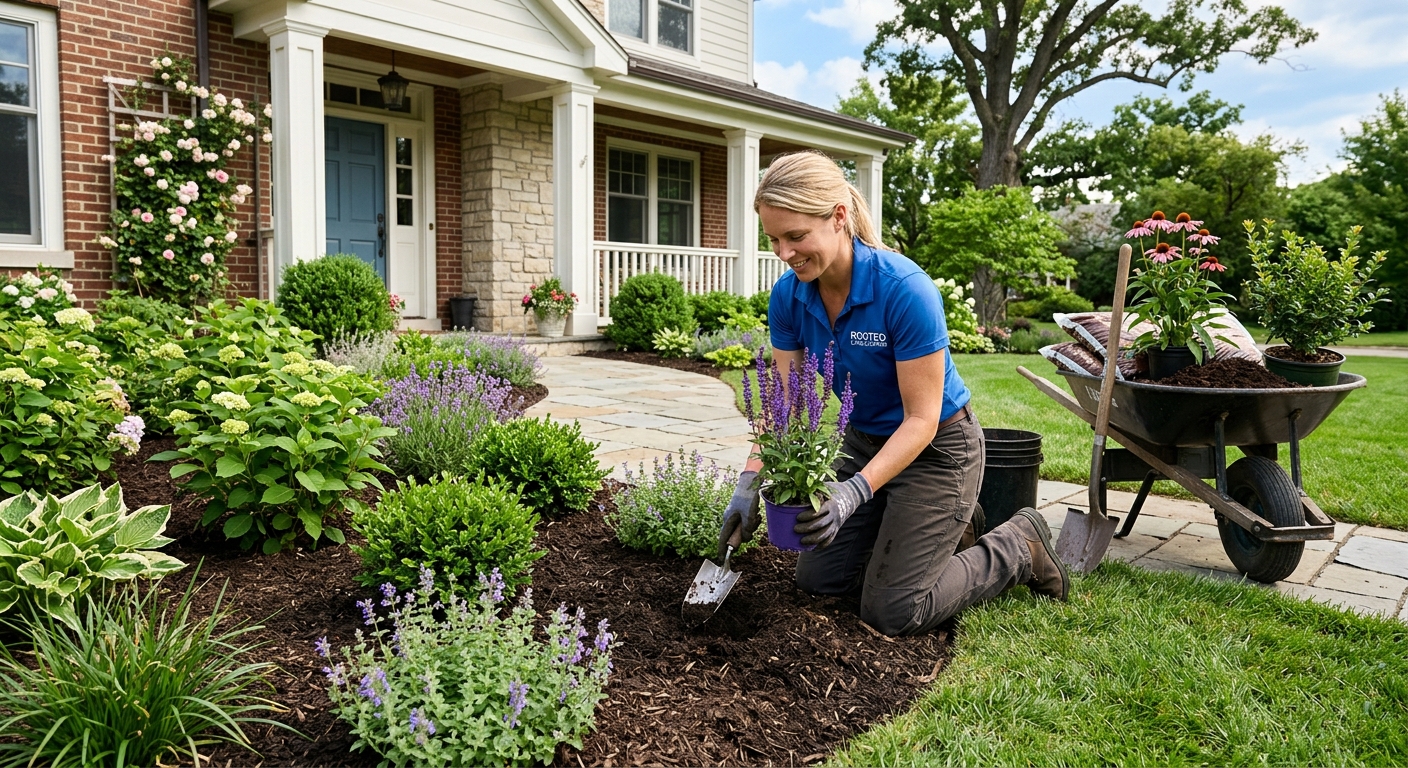
Landscaping options and costs in Skyrattler
Skyrattler homeowners usually start with a simple question—what will make the yard look finished without creating problems next spring. In a community of 1,947 residents (Statistics Canada, 2021 Census), most properties are set up for meaningful front- and back-yard upgrades, and that matters because detached homes commonly bring more yard area to work with than condos or townhomes. With Calgary’s market in mind, labour and materials have to account for Prairie plant hardiness zones 3–4, where late-spring frosts and early fall cold snaps can delay planting and extend site protection needs. Freeze–thaw cycles are severe, so patios, walkways, and retaining walls depend on deep, well-compacted bases and proper drainage to prevent heaving or settling.
Contractors are busiest where people notice curb impact first—South of Glenmore and around the newer-growth edges of communities in the Calgary orbit—because that’s where homeowners most often want a clean, winter-ready look before the next snow season. In Skyrattler, the “right” approach often comes down to whether you want instant turf coverage or long-term resilience, and whether your project needs grading and drainage to protect foundations.
Below is a practical range of common options contractors price in the Calgary region, which typically land in the mid five-figure range for comprehensive work once grading, hardscape, planting, and irrigation are included.
| Service |
Description |
Season |
Price Range |
| Full landscape design and installation |
Site walk, concept + planting plan, grading/drainage as needed, hardscape (patio/walkway), planting, mulch, and optional irrigation |
Late spring–early fall |
$10,000–$45,000 |
| Sod installation (supply, grade, lay, roll) |
Minor grading, soil prep, supply and installation of sod, roll and light topdressing/seed touch-ups at edges |
Mid-May–September |
$2,500–$6,000 |
| Lawn seeding (grade, seed, starter fertilizer) |
Light grading, seed selection for zone 3–4, starter fertilizer, raking/rolling, and initial watering schedule |
April–June (or early fall where weather allows) |
$1,500–$3,500 |
| Interlocking patio or walkway |
Excavation, deep compacted base, edging, interlocking stone installation, and jointing with polymeric sand (where specified) |
May–September |
$8,000–$28,000 |
| Retaining wall (interlocking block) |
Block wall layout, engineered-style base prep (as required), drainage gravel + weeping line, and proper backfill |
May–September |
$8,000–$40,000 |
| Tree and shrub planting |
Soil improvement, planting layout, staking/anchoring where needed, mulch ring, and post-plant watering guidance |
Late spring–early fall |
$1,200–$12,000 |
Prices are estimates only and vary by project scope, site access and material selection.
What affects the price of landscaping in Skyrattler
In Skyrattler and across the Calgary region, homeowners can see the same “type” of project quoted 30–50% apart because the scope behind the scenes isn’t always equal. Two contractors might both say “patio + planting,” but one may include deep base excavation, subdrainage, soil amendment, and a full irrigation layout—while another assumes existing grade and drainage will be “fine.” Labour can also swing depending on crew availability; local work commonly lands in the mid five-figure range for comprehensive projects, largely because hardscape, grading, and irrigation add up quickly.
Climate and hardiness drive cost in practical ways. Calgary sits in Prairie zones 3–4, so frost dates and freeze–thaw cycles directly affect how much base depth you need for patios and retaining walls. In zones with long, mild seasons like coastal BC (Zone 7–8), planting palettes can be lush, but you still must plan for drainage in heavy rainfall. Southern Alberta, by contrast, needs cold-hardy, drought-tolerant species and wind protection, plus efficient irrigation and soil improvement rather than “set-and-forget” turf.
Here are concrete examples that raise or lower costs in Skyrattler. (1) If your yard has a low spot that pools after spring melt, drainage correction and a proper drainage bed can add several thousand dollars—often the difference between a basic installation and a project that holds up. (2) If you upgrade from sod to seeding, you may save money—seeding commonly starts around $1,500–$3,500 compared with sod closer to $2,500–$6,000 depending on prep and size. (3) If your home is older with mature trees, stump grinding and root impacts can add labour and disposal costs; that’s why two “tree and shrubs” quotes can differ dramatically.
| Price Factor |
Why It Matters |
Cost Impact |
| Yard size in sq ft — the primary cost driver for softscape |
More area means more excavation, more soil/topsoil, more seed/sod, and more edging |
Often 20%–60% of the total swing on lawn and planting projects |
| Grading and drainage work — slope corrections add significant cost |
Pooling and foundation moisture risk requires regrading and compacted sub-base |
Can add $2,000–$10,000+ depending on how far grade must change |
| Drainage bed or French drain installation |
Freeze–thaw performance depends on removing trapped water |
Commonly $1,500–$8,000+ for trenching, rock, and discharge considerations |
| Plant material tier — native shrubs vs. ornamental vs. mature specimen trees |
Larger caliper trees and premium ornamentals cost more and require stricter installation |
Can move a planting budget by 2x or more (e.g., $1,200–$12,000+) |
| Hardscape vs. softscape ratio — walls and patios cost more per sq ft than lawn |
Hardscape requires deeper excavation, base, stone/blocks, and proper edging |
Often increases total cost faster than turf and mulch |
| Irrigation system design and installation |
Zoning, controller setup, and freeze-ready components affect both cost and longevity |
Can add several thousand dollars based on coverage and complexity |
| Soil amendment and topsoil required |
Urban clay and compacted fill need improvement for roots and drainage |
Typically $500–$6,000+ depending on volume and import requirements |
| Tree removal or stump grinding before new planting |
Access, stump diameter, and disposal add time and equipment costs |
Often $300–$3,000+ depending on site conditions |
Permits & regulations in Alberta
In Alberta, most day-to-day landscaping work—like planting, sodding, seeding, and typical softscape—generally does not require a permit. Where you start needing paperwork is often with retaining walls above a height threshold (commonly around 1.0 m / 3.3 ft in many municipalities), especially when the wall affects safety, drainage, or relies on structural considerations. Changes to lot grading can also trigger approval if they alter how water drains toward a neighbour or connect toward storm sewers.
Before digging in Skyrattler, call utility locates so you don’t hit buried services—this matters for planting holes, irrigation trenching, and retaining wall footings. Always confirm your contractor’s plan aligns with local water-use rules, especially if you’re installing irrigation in drier periods or adjacent to any restricted watering seasons that may apply during drought conditions.
Step-by-step for homeowners:
- Verify the contractor is licensed/registered for the scope they perform in Alberta (use the relevant online registry for the contractor category they claim).
- Ask for a current certificate of insurance for liability coverage and confirm the start/end dates.
- Request proof of WCB/WSIB coverage (or a clearance letter showing they’re covered/registered as required), and check it’s valid for the work term.
- Confirm permit responsibility in writing: who pulls permits if the wall height or grading triggers one.
- Keep utility locate documentation on file when they start trenching or footings.
If a quote says “no permits needed” without discussing retaining wall height or major grade changes, that’s a yellow flag—those are the items that commonly decide whether approval is required.
Planning a landscape that thrives in Skyrattler's climate
To design a yard that thrives in Skyrattler, plan around Prairie zones 3–4, freeze–thaw intensity, and a working season that can be shortened by late frosts and early cold snaps. Start with plant selection: choose zone-appropriate, hardy trees and shrubs with proven cold tolerance, and layer in wind-hardy choices near the house corners where gusts pick up. Mulch is your friend—thicker mulch rings and groundcovers help buffer temperature swings and reduce winter heaving on shallow-rooted areas.
Second, decide between sod and seeding based on your timeline and budget. Sod gives instant visual coverage but costs roughly 3–4x more per sq ft than seeding because you’re paying for pre-grown turf and handling. In Skyrattler, seeding is often a smarter value when you can accept a slower “finish” and are willing to follow a tight watering and mowing schedule. For example, you may spend about $1,500–$3,500 for seeding vs $2,500–$6,000 for sod once site prep is included—where the extra cost is justified if you need fast curb appeal before an event or you want a uniform base quickly.
Third, treat drainage and grading as non-negotiable. Calgary yards that pool in spring melt often lead to foundation moisture problems or turf failure. Proper slope and compacted base prep (below the frost-affected zone for patios and walls) are what prevent heaving. For low maintenance, use mulch, perennials, and repeating structures like shrub bands instead of constantly refreshing turf edges. Consider xeriscape-inspired planting or rain-garden pockets where runoff can be directed—paired with a zoned, smart controller to match Alberta’s semi-arid cycles.
| Element |
Climate Consideration |
Maintenance Level |
Price Band |
| Sod lawn installation |
Best installed when the ground is thawed; roots need consistent moisture before cold weather |
Medium (watering + first mowing/edge trims) |
$2,500–$6,000 |
| Native perennial garden |
Performs in zone 3–4 with less watering and better winter survival when mulched properly |
Low–Medium (spring cleanup + occasional weed control) |
$800–$5,500 |
| Mulched shrub border |
Mulch buffers freeze–thaw and reduces wind-drying stress around shrubs |
Low (annual top-up + selective pruning) |
$1,200–$6,500 |
| Interlocking stone patio |
Requires deep, compacted base and correct drainage to resist heaving |
Low (occasional joint top-up/sealing as needed) |
$8,000–$28,000 |
| Retaining wall (block) |
Needs proper backfill, drainage gravel, and weeping line below frost-affected areas |
Low (inspection of drainage points after heavy melts) |
$8,000–$40,000 |
| Drip irrigation system |
Zoned drip reduces water waste; freeze-ready components protect lines |
Medium (seasonal checks + controller scheduling) |
$2,000–$7,500 |
How to choose a landscaping contractor in Skyrattler
Choosing the right contractor in Skyrattler starts with verifying Alberta coverage and then matching quotes to scope. For licensing, use the relevant Alberta online registry for the contractor category they’re claiming, and confirm the business name matches the quote and invoices. For liability insurance, ask for a certificate of insurance showing they’re covered for the current policy period and that your address/project is within the insured work. For WSIB/WCB, request proof of coverage and look for a clearance letter or equivalent documentation that confirms they’re registered and able to do insured work in Alberta—don’t accept “we’re covered” without paperwork.
Next, get 2–3 itemised written quotes. You want labour and materials broken down: excavation/base prep, stone/block quantities, plant list and sizes, soil/topsoil amounts, drainage components, irrigation controller and heads, and disposal/haul-away. Read what’s excluded. Ask whether the contractor includes permit pull (where required), utility locating coordination, and debris/disposal. For warranty, confirm workmanship length in writing and whether product warranties apply to you directly or require registration—also ask if warranties transfer to a new owner if you sell.
Payment schedule matters: never pay more than 10–15% upfront, and use a holdback until completion and final grading/cleanup are verified. Timeline should include a start date and a completion estimate tied to weather windows in Calgary’s freeze–thaw season.
- Copies of Alberta licence/registration details, matching quote/invoice name.
- Current liability insurance certificate (policy dates visible).
- WSIB/WCB clearance or proof of coverage for the work term.
- Itemised quote with quantities (sq ft of sod, sq ft of patio, wall length, plant counts).
- Clear scope: what soil prep depth, base type, and compaction method are included.
- Drainage plan documented (slope directions, drainage gravel, discharge approach).
- Irrigation design noted: zoning, freeze-ready components, controller type.
- Permit responsibility stated (and what triggers a permit in your scope).
- Disposal/haul-away included or identified as extra.
- Warranty terms in writing: workmanship duration + product warranty details.
- Payment schedule that stays at 10–15% upfront, with holdback for final walk-through.
- Weather contingency plan: how late frosts/cold snaps affect install dates.
Red flags I see in Skyrattler: (1) vague quotes with no quantities or base prep depth, (2) “guaranteed to grow” turf promises without a watering plan, (3) no proof of insurance or coverage provided upfront, (4) refusing to put drainage details in writing for patios/walls, and (5) asking for large upfront payments or insisting on cash-only changes.
Frequently asked questions — landscaping in Skyrattler
How much does sodding a yard cost in Skyrattler?
Sodding costs in Skyrattler typically depend on how much grading and soil prep is needed before the turf goes down. In the Calgary market, sod projects commonly land around $2,500–$6,000 for typical residential yard sizes once excavation/grade corrections and proper base preparation are included. If your yard needs significant regrade to fix pooling or uneven slopes, that can push pricing higher because sod will fail over soft, uncompacted areas and trapped water. Because you’re in Alberta’s Prairie zone 3–4, sod also needs timely installation in the warm window and consistent early watering so roots establish before cold snaps. A good contractor should also explain edge details (topdressing at seams, trimming, and soil at borders) to reduce gaps that invite weeds.
How do I prevent weeds in my Skyrattler garden?
Weed prevention starts before planting: control seed and moisture conditions. For Skyrattler gardens, I recommend removing established weeds and roots thoroughly, then improving soil so plants establish quickly—thin, struggling beds invite weeds. Use a clean edging line so grass doesn’t overgrow into mulch. Apply mulch to the correct depth (enough to block light, not piled against stems) and refresh in spring. For perennial and shrub borders, a weed barrier membrane can help in the short term, but I prefer methods that support long-term plant density; once shrubs and perennials fill in, weeds struggle. If you’re doing new mulch beds, plan for drainage too—standing water promotes moss and weed growth. If the bed is near turf, consider replacing grass edging with a defined border and maintaining a mowing line to reduce encroachment.
How do I design a low-water yard in Skyrattler?
Low-water design in Skyrattler is about matching plants to Alberta conditions and using irrigation efficiently, not trying to force water-hungry lawns to survive. Aim for drought-tolerant, zone-appropriate trees, shrubs, and perennials, and reduce lawn area—many homeowners shift from full turf to mulched shrub borders and native perennial beds. If you still want a turf feel, seeding is often a better starting point than sod because it’s less expensive and encourages a resilient grass base when managed well. Incorporate xeriscape principles: group plants by water needs, add 2–3 in (5–8 cm) of mulch, and use groundcovers to shade soil. Where runoff concentrates, consider a rain-garden pocket or swale so water infiltrates instead of leaving the yard. Install a zoned drip irrigation system with a smart controller so watering cycles match the freeze–thaw season and do not overwater during cooler periods.
How do I find a licensed landscaper in Skyrattler?
In Alberta (including the Skyrattler area), don’t rely on word-of-mouth alone. Start by verifying the contractor’s Alberta registration/licensing for the work category they claim—use the appropriate online registry and confirm the business name matches the quote. Next, ask for a current certificate of liability insurance; check policy dates and ensure it covers the type of landscaping work being proposed (excavation, hardscape, irrigation). For WSIB/WCB, request proof of coverage or a clearance letter that shows they’re registered and covered for employees/contractors for the job duration. Then compare quotes: request itemised labour and materials rather than a lump sum, and confirm whether permits and utility locates are handled when needed (retaining walls and major grading are the typical triggers). Finally, do a site-specific walkthrough and ask about drainage details—if they can’t explain how they’ll prevent freeze–thaw heave, keep looking.
How much does landscaping cost in Skyrattler?
Total landscaping cost in Skyrattler varies widely based on grading, hardscape, and irrigation scope, but most homeowners will recognize the mid five-figure pattern once patios/walkways, drainage work, planting, and irrigation are included. For quick yard refreshes, tree and shrub planting often starts around $1,200–$12,000 depending on plant sizes and how much soil amendment is required. For lawn changes, sod typically lands around $2,500–$6,000, while lawn seeding commonly falls closer to $1,500–$3,500. Interlocking patios and walkways can range from $8,000–$28,000 depending on square footage and base prep depth. Retaining walls (interlocking block) are frequently priced in the $8,000–$40,000 band because drainage gravel, compaction, and weeping lines are essential for freeze–thaw longevity. A proper, site-specific quote is the only way to confirm your real budget after inspection.
What plants thrive in Skyrattler's climate zone?
Skyrattler sits in Prairie plant hardiness zones 3–4, so the best performers are cold-hardy, wind-tolerant plants that handle short growing seasons and winter stress. In Alberta yards, you’ll usually see good results with hardy shrubs like snowberry, saskatoon, and serviceberry (depending on your sun/wind exposure), plus perennials such as hardy sedums and local prairie-style plants that tolerate drought once established. For trees, look for cold-tolerant species and proper spacing for mature size; choosing the right caliper and planting depth matters as much as the species. Mulch and protection on the first winter can make a noticeable difference for younger stock. Because Calgary’s freeze–thaw cycles are severe, avoid delicate plants that require consistent moisture—use soil improvement and mulch instead. A local planting list should also account for your yard’s drainage: plants near downspouts or low spots need different choices than those on higher, well-drained areas.