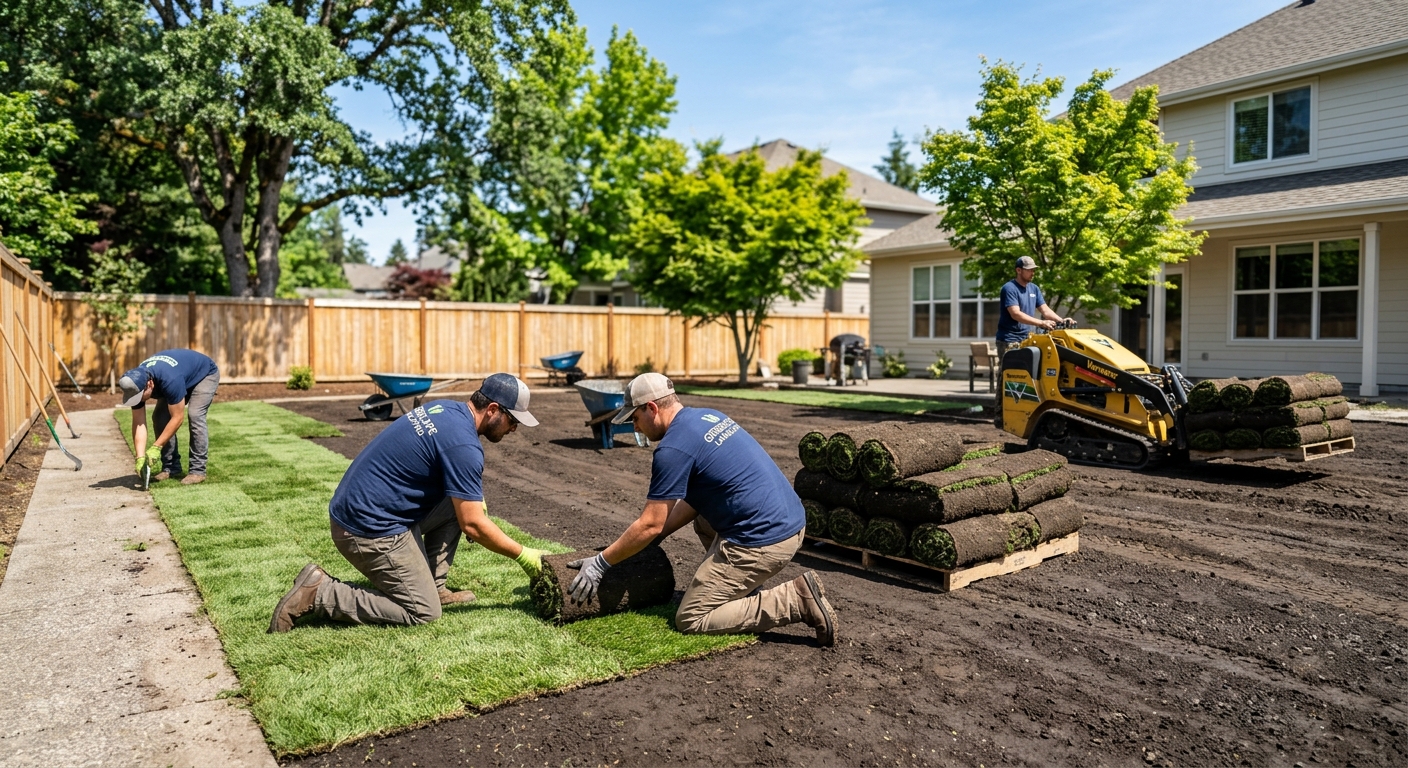
Landscaping options and costs in Strathmore
Strathmore homeowners typically start with a practical goal: make the front yard look finished, improve drainage, and invest in hardy plants that can handle Alberta’s freeze–thaw swings. With 58.7% of dwellings being single-detached homes (Statistics Canada, 2021 Census), you’ll often have the yard space to upgrade both softscape (lawn, shrubs, trees) and hardscape (walkways, patios, retaining walls). And because 77.2% of households own their homes, many projects shift from “nice-to-have” to “protect the property value,” especially for properties built before 1981, when mature landscaping and older drainage patterns are common (Statistics Canada, 2021 Census).
In the Lethbridge–Medicine Hat region (Canadian plant hardiness zone 4b), landscaping costs are shaped by short growing windows (roughly May–September) and the higher structural demand of deeper base work for pavements and retaining walls. Contractors also price for wind exposure and drought-prone summers, which means selecting prairie-hardy, water-efficient species and designing irrigation for efficiency—often with drip rather than sprinklers. In Strathmore, trade demand is especially strong around the newer residential pockets near the east end (growth areas tend to get early landscaping, fencing, and walk upgrades after service connections).
Below is a quick comparison of common landscaping options you’ll see in Strathmore quotes, and the typical price bands contractors use to account for materials, excavation, and zone-appropriate plant stock.
| Service |
Description |
Season |
Price Range |
| Full landscape design and installation |
On-site measurements, concept + planting plan, grading/drainage scope, soil prep, hardscape and softscape installation |
May–September |
$8,000–$35,000 |
| Sod installation (supply, grade, lay, roll) |
Site grading/leveling, soil amendment where required, sod delivery and installation, light rolling and first watering plan |
Mid-May–August |
$4–$8 |
| Lawn seeding (grade, seed, starter fertilizer) |
Fine grading, seed selection for prairie conditions, starter fertiliser, rolling, first watering schedule |
Late April–July (best in dry intervals) |
$2–$4 |
| Interlocking patio or walkway |
Excavation, compacted base, geotextile, edging, interlocking stone/asphalt-step finishing and jointing sand |
May–September |
$120–$300 |
| Retaining wall (interlocking block) |
Layout, excavation to frost-depth base, compacted backfill, drainage gravel and weep provisions, block installation |
May–September |
$120–$300 |
| Tree and shrub planting |
Soil preparation, planting holes, amendments, stakes/anchors where needed, mulch ring, first-season watering guidance |
Spring and early fall (weather-dependent) |
$500–$8,000 |
Prices are estimates only and vary by project scope, site access and material selection.
What affects the price of landscaping in Strathmore
In Strathmore and the wider Lethbridge–Medicine Hat economic region, two contractors can quote the “same” job and still land 30–50% apart because the differences usually sit in the groundwork, plant quality, and the way drainage is handled. Southern Alberta’s zone 4b climate sets both what can survive and how long crews can work, which compresses timelines into roughly May–September and increases labour costs when demand is high. Retaining wall and paving base prep also matters more here: freeze–thaw cycles drive a need for deeper, well-compacted aggregates and proper drainage layers. Contractors also differ in how much they include for soil amendment (topsoil, compost, or amendments), debris haul-away, and irrigation readiness.
It also helps to think in terms of prairie constraints versus wetter or milder regions. Coastal BC’s long growing season (zone 7–8) allows lush palettes, but heavy-rain drainage demands can push costs for grading and waterproofing in certain neighbourhoods. Dry interior BC climates often require drip systems and drought-rated turf to comply with water-use expectations. In Southern Alberta, you still plan for efficient irrigation, but the typical driver is frost-depth structure plus wind-tolerant, drought-tolerant plantings.
Concrete examples from Strathmore: (1) a lawn conversion can look inexpensive, but if your yard needs regrading or imported topsoil, that pushes you toward the upper end of the $4–$8 sod band per sq ft; (2) adding a drainage bed or French drain behind a retaining wall is often the difference between a basic install and the higher end of the $8,000–$35,000 full-scope landscape band; and (3) older homes built before 1981 may have settlement or shallow ditching, so foundation-adjacent grading and drainage can increase excavation and base material volumes, impacting total cost.
| Price Factor |
Why It Matters |
Cost Impact |
| Yard size in sq ft — the primary cost driver for softscape |
Lawn, mulch beds, and planting areas scale almost linearly with square footage; larger yards require more labour hours and materials |
Typically the biggest single swing; can move totals by thousands |
| Grading and drainage work — slope corrections add significant cost |
Fixing slopes protects homes and reduces puddling; it requires excavation, re-contouring and hauling/returning soil |
Often adds major cost; can push a “small” refresh into full-scope pricing |
| Drainage bed or French drain installation |
Proper sub-drainage reduces freeze-related heaving risks and keeps water away from walls and foundations |
Material + installation labour increases project cost noticeably |
| Plant material tier — native shrubs vs. ornamental vs. mature specimen trees |
Hardy natives are often less expensive than mature ornamentals; larger caliper stock and specialty items raise material cost |
Can swing a planting phase from a few hundred to several thousand |
| Hardscape vs. softscape ratio — walls and patios cost more per sq ft than lawn |
Pavers, compacted base aggregates, and edging require more equipment time and precision construction |
Higher hardscape content increases total cost faster than adding lawn |
| Irrigation system design and installation |
Efficient drip zones, backflow prevention needs (where applicable), and controller setup affect both labour and parts |
May add significant line items, especially if retrofitting an existing setup |
| Soil amendment and topsoil required |
Prairie soils can be rocky or uneven; amendments improve rooting and reduce patchy lawns/struggling shrubs |
Imported material and delivery can add mid-to-high hundreds or more |
| Tree removal or stump grinding before new planting |
Access, stump size, and disposal impact equipment time and labour |
Can add unexpected costs if removal wasn’t included at estimate time |
Permits & regulations in Alberta
In Alberta, most typical yard landscaping activities—like planting, sodding, seeding, and most softscape work—generally do not require a permit. However, there are a few situations in Strathmore where permits or approvals are commonly required. Retaining walls above a height threshold (often 1.0 m or 3.3 ft in many municipalities) typically require a building permit and, in some cases, engineered drawings depending on wall design and height. Also watch for projects that change lot grading in a way that could redirect drainage toward a neighbour’s property or toward storm sewer connections; those grading alterations may trigger approvals.
Before digging, always call for utility locates—especially for planting holes, pipe trenches for drainage, and wall footings. Even if it’s “just shrubs,” your contractor should document locate numbers and excavation boundaries to keep everyone safe.
To verify your contractor is properly set up in Alberta, take a step-by-step approach: (1) check their Alberta business information and any applicable professional licensing for the work they’re offering (ask them for the licence/registration number and verify it online); (2) request a current certificate of liability insurance showing coverage amounts and confirm the address/service area listed; (3) ask for WSIB/WCB clearance paperwork and ensure it’s not expired—if they’re subcontracting trades, get the subcontractor’s proof too. If a contractor won’t provide documents or timelines in writing, treat it as a red flag.
Planning a landscape that thrives in Strathmore's climate
Planning a yard in Strathmore means designing for the limits of Canadian plant hardiness zone 4b, prairie wind, and a frost calendar that compresses growth into roughly May–September. Start with plant selection: choose native or zone-appropriate species that can handle dry spells and winter cold with minimal protection. For lawns, compare sod versus seed based on your timeline and budget—sod gives instant curb appeal and quicker erosion control, but it costs about 3–4x more per sq ft than seeding because you’re paying for living turf and installation. If your goal is a durable “finish” quickly, sod can be worth it; if you can wait for establishment, seeding often stretches your dollars further.
Drainage and grading are non-negotiable in Lethbridge–Medicine Hat conditions. Pooling water and foundation-adjacent moisture can show up quickly during spring melt and after summer storms, and then freeze–thaw amplifies movement. For hardscape like patios and retaining walls, base preparation must reach below the frost line with a well-compacted granular structure; shortcuts here show up later as settling, uneven pavers, or wall movement.
Low-maintenance design strategies work exceptionally well in this market: mulched shrub borders, groundcovers that suppress weeds, and prairie-ready perennials reduce annual upkeep while keeping a tidy look. For water context, consider xeriscape zones using drought-tolerant grasses, shrub groupings, and mulch depth, or include a rain-garden-style depression where allowed to capture roof runoff and reduce irrigation demand.
A simple dollars-and-sense example: if sod is running in the $4–$8 per sq ft range, and you’re laying 500 sq ft, that’s roughly $2,000–$4,000 for sod alone (before any grading/soil repairs). If your yard also needs regrading, you may be better off investing that difference into drainage and topsoil, then seeding in the remaining areas to get long-term balance.
| Element |
Climate Consideration |
Maintenance Level |
Price Band |
| Sod lawn installation |
Best when soil warms; must be watered consistently after install to root before summer dry spells and early fall cooling |
Medium (watering for establishment, periodic mowing) |
$4–$8 |
| Native perennial garden |
Prairie-hardy plants handle wind and cold once established; choose species that can survive zone 4b winters |
Low (mulch replenishment, light spring cleanup) |
$500–$3,000 |
| Mulched shrub border |
Wind tolerance and drought resistance reduce summer irrigation; mulch helps moderate soil temperature and moisture |
Low to medium (weed management first season) |
$1,000–$5,000 |
| Interlocking stone patio |
Freeze–thaw demands correct compacted base and drainage so pavers don’t shift or heave |
Low (occasional joint sand/top-up) |
$120–$300 |
| Retaining wall (block) |
Needs frost-depth base, backfill, and drainage provisions in prairie freeze–thaw conditions |
Low (inspection for drainage performance) |
$120–$300 |
| Drip irrigation system |
Delivers water efficiently during the warm season; helps protect drought-tolerant planting and reduces waste |
Low (seasonal adjustments, controller checks) |
$1,500–$6,500 |
How to choose a landscaping contractor in Strathmore
Choosing the right landscaping contractor in Strathmore starts with proof, not promises. First, verify Alberta licensing where applicable for the type of work being quoted, and confirm liability insurance coverage with a current certificate of insurance. Next, request WSIB/WCB clearance (or the applicable clearance documentation for the contractor’s situation) and confirm dates—coverage and clearance should be current on the start date you’re booking. If they subcontract paving, excavation, or irrigation components, ask how those trades are insured and documented.
Second, get 2–3 itemised written quotes instead of a single lump sum. A good quote separates labour and materials (e.g., excavation and base, geotextile, drainage gravel, pavers/block, plant stock sizes), lists equipment and disposal inclusions, and specifies the irrigation or grading approach. Read exclusions carefully: is disposal included for topsoil/aggregate removals? Is permit pulling included if a retaining wall requires it? Are utility locates and protection included before digging?
Third, check warranty. Ask for the workmanship warranty length and whether it’s transferable if you sell your home. Product warranties vary—plant warranties are often limited by establishment conditions, while hardscape warranties should specify workmanship coverage clearly. Finally, control payment: never pay more than 10–15% upfront; hold back a portion until the job is complete and final clean-up is done. Get the start date and completion estimate in writing, including the weather sensitivity of spring installs.
- Ask for insurance and WSIB/WCB clearance documents before signing.
- Confirm licence/registration details relevant to their scope and verify them online.
- Require itemised quotes (labour vs materials; line-by-line quantities).
- Check for explicit drainage/grading scope (not “allowance” only).
- Ensure disposal/haul-away is clearly included or excluded.
- Verify topsoil/soil amendment volumes and whether they’re tested or specified.
- Ask which base build-up is used under patios/walks (geotextile, compacted aggregate layers).
- Confirm whether utility locates are ordered and documented before digging.
- Get planting specs: plant sizes (height/canopy), spacing, and mulch depth.
- Ask about irrigation design: number of zones, type of emitters, controller and timer.
- Require a written timeline with weather contingencies and milestones.
- Clarify warranty terms in writing (workmanship vs product; start/end dates).
Red flags in Strathmore include: (1) a contractor refusing to provide insurance/WSIB/WCB clearance or offering only verbal assurances; (2) quotes that use one vague line like “landscaping package” without quantities or plant sizes; (3) skipping drainage/grading details and relying on sod/seed to “fix” pooling; (4) demanding a large deposit (well above 10–15%) before any work begins; and (5) inconsistent starting dates with no written schedule or no plan for weather delays in May–September.
Frequently asked questions — landscaping in Strathmore
How much does sodding a yard cost in Strathmore?
In Strathmore, sod pricing is often quoted by area and typically lands around $4–$8 (per sq ft, supply and install depending on scope). The final number can rise if your yard needs regrading, removal of old dead turf, or importing extra topsoil/soil amendments so the sod roots evenly. In southern Alberta’s zone 4b conditions, timing also matters: sod should be installed when soil is workable in late spring and managed through establishment watering during warm stretches. For best value, many homeowners combine sod for high-visibility areas with seeding for wider back/lateral zones to control overall cost while still achieving a clean front look.
How do I prevent weeds in my Strathmore garden?
Weed control starts before planting. For Strathmore gardens, proper soil prep and weed suppression fabric (where appropriate) help, but the biggest improvement usually comes from mulch quality and depth. After a thorough first-season tidy-up, apply a consistent mulch layer and keep it off plant crowns to avoid rot. For shrub borders, spacing plants correctly reduces bare soil exposure, which is where weeds take hold in wind-swept prairie conditions. If you’re doing a new planting bed around an older property (common in homes built before 1981), you may also need extra soil amendments and removal of persistent roots. A contractor should explain their approach clearly in the proposal, not just “weed control” after the fact.
How do I design a low-water yard in Strathmore?
A low-water yard in Strathmore works best when it’s designed for drought-tolerant species and efficient irrigation rather than trying to force traditional “high-water” lawns. Start with a mixed plan: native perennial and shrub groupings, mulched beds, and selective turf (or seed) where you actually need traffic tolerance. For irrigation, drip systems are commonly used to avoid wasted water on wind drift and evaporation—especially during Alberta’s dry, hot summer stretches. You can also reduce irrigation demand with groundcovers and thicker mulch, and by grading so water flows where plants need it instead of pooling. If you’re comparing budgets, remember sod can run $4–$8 per sq ft, so shifting some of the area to seeding or planting can quickly justify the investment in drainage and drip design.
How do I find a licensed landscaper in Strathmore?
Begin by asking for documentation: confirm the contractor’s Alberta registration/licensing relevant to their scope, then request a current certificate of liability insurance and WSIB/WCB clearance (and verify dates). In Strathmore, a reputable landscaper should also order and document utility locates before digging for planting holes, drainage, or retaining wall footings. Next, compare 2–3 itemised written quotes so you can see labour vs materials and whether drainage/grading, disposal, and base preparation are included. Don’t rely on one total price—watch for missing quantities or vague exclusions. If a quote uses a broad “allowance” for critical items like base build-up under pavers or drainage gravel behind walls, request clarity before you sign.
How much does landscaping cost in Strathmore?
Total landscaping costs in Strathmore vary widely because drainage, base prep, and plant selection can change the project scope quickly. For typical homeowners, design + installation often falls in the $8,000–$35,000 range depending on whether you’re adding hardscape, irrigation, drainage correction, and upgraded plant stock. A sod refresh alone may be lower, while patios/walkways and retaining walls typically drive cost because they require excavation and deeper, well-compacted bases for freeze–thaw. Tree and garden planting can range from a few hundred to several thousand depending on quantities and whether you’re planting smaller stock or larger specimens. The best way to budget is to ask for an itemised quote that breaks out drainage/grading and base work separately from plant and surface finishing.
What plants thrive in Strathmore's climate zone?
Strathmore is in Canadian plant hardiness zone 4b, so the best plants are prairie-hardy, wind-tolerant, and drought-ready once established. Look for native or zone-appropriate shrubs and perennials that can survive winter cold and handle hot, dry summers without constant watering. In a well-designed yard, you’ll typically see hardy shrubs grouped with mulch to moderate moisture, plus perennials that regrow reliably after winter dieback. If you want a lawn, use seed/turf types suited to Alberta’s short establishment window and manage establishment watering in late spring and early summer. For trees, focus on species that tolerate cold snaps and prairie winds, and ask your contractor for the exact mature size so planting distances don’t become a problem later. A knowledgeable landscaper will match plant choices to your yard’s microclimate (sun, wind, and drainage).