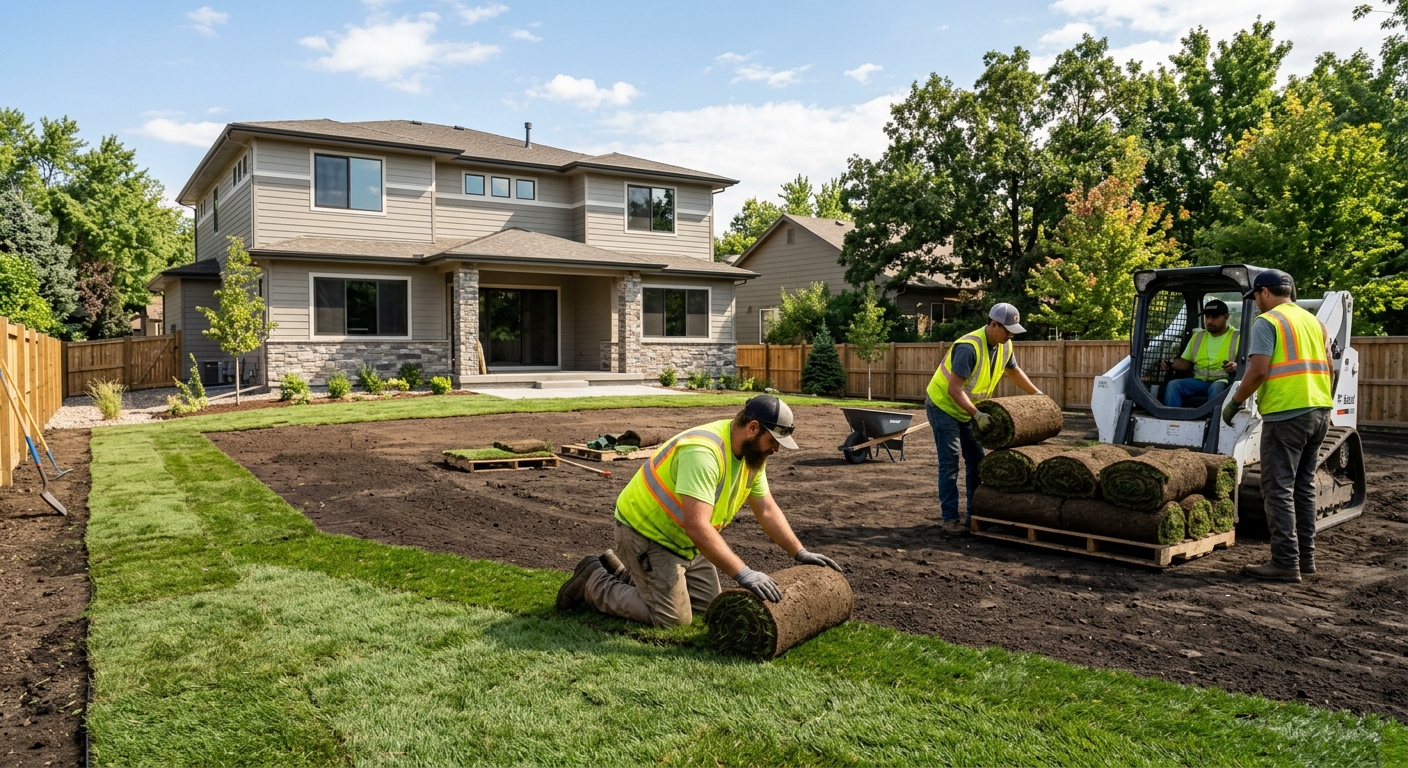
Landscaping options and costs in Spruce Avenue
In Spruce Avenue, landscaping choices often start with what fits your yard layout, your timeline, and how the site handles Calgary-area freeze–thaw cycles. With a small local population of 2,120 people (Statistics Canada, 2021 Census), contractor availability can be good, but peak spring scheduling is still competitive when lots of homeowners want grading, drainage and planting done at once. Spruce Avenue’s housing mix—where many properties are detached and come with meaningful outdoor space—also pushes more owners toward full updates rather than “quick fixes.”
Because the region sits in Prairie plant hardiness zones 3–4, late-spring frosts and early fall cold snaps define what survives and when contractors can safely work on soil, sod base prep, and planting beds. Freeze–thaw is severe, so patios, walkways and retaining wall bases need deep, well-compacted material and proper drainage to avoid heaving and settlement. That’s why full landscape projects in Calgary commonly cluster around mid five-figure totals once hardscape, planting and irrigation are bundled.
Work is especially in demand around Calgary’s more established neighbourhoods and the broader Spruce Avenue–area infill pockets where older lots need updated grading, drainage and soil improvement before new landscaping can perform. If you’re comparing proposals, the best way to start is with a clear baseline of typical ranges, then adjust for site access, yard size, and how much base preparation is required—see the comparison table below.
| Service |
Description |
Season |
Price Range |
| Full landscape design and installation |
Initial site visit, layout, grading/drainage plan, hardscape, planting, topsoil/soil amendments, and optional irrigation |
Late April to October (best: May–September) |
$5,000–$50,000 |
| Sod installation (supply, grade, lay, roll) |
Existing turf removal (as needed), grading, base prep, sod supply, roll/trim, start-up watering |
May to early September (weather-dependent) |
$1,500–$6,000 |
| Lawn seeding (grade, seed, starter fertilizer) |
Light grading, weed control prep (where required), seeding, starter fertiliser, initial watering guidance |
Late April to mid-June; again in August (where temperatures allow) |
$700–$4,000 |
| Interlocking patio or walkway |
Excavation, compacted base (typically deeper than you’d assume), edge restraints, interlocking stones, joint sand |
May to September |
$8,000–$40,000 |
| Retaining wall (interlocking block) |
Block wall layout, excavation, compacted granular base, weeping/drainage stone, cap units |
May to September (and late spring weather permitting) |
$10,000–$35,000 |
| Tree and shrub planting |
Soil prep, amendments, planting holes, staking (where needed), mulch rings and initial watering setup |
Late April to October (frost-safe planning windows) |
$800–$15,000 |
Prices are estimates only and vary by project scope, site access and material selection.
What affects the price of landscaping in Spruce Avenue
In Spruce Avenue and across Calgary, it’s common to see quotes for the “same” landscape work vary by 30–50%. The difference usually isn’t the labour crew—it’s the hidden scope: how much grading and drainage is needed, how deep the base must be for freeze–thaw resistance, what soil amendments are included, and whether the contractor is pricing for long-term performance rather than just surface finish. In short, one estimate may include deep-compacted base and drainage bed work, while another assumes existing ground will perform—often it won’t in zones 3–4.
Hardiness zone and frost timing matter because they directly affect plant survival and the usable working season. In Prairie conditions (zones 3–4), contractors need drought-tolerant, wind-hardy species and must build retaining wall bases below the frost-influenced zone to reduce heaving. That “extra depth” is a cost driver. Coastal BC’s zone 7–8 supports a longer growing window and lush broadleaf palettes, but heavy-rainfall sites require drainage engineering to prevent water pooling—so costs shift from winter build quality to runoff management. In the dry BC interior, water rules often push drip systems and xeriscape design. Southern Ontario (zones 5–6) tends to have fewer early cold snaps, but summer dry spells still call for irrigation planning. Calgary’s semi-arid climate and periodic watering restrictions mean owners benefit from zoned controllers, efficient irrigation layouts, and smarter soil improvement rather than high-water turf.
Concrete examples: (1) If your yard has a slope toward the house, drainage corrections and catch-basin tie-ins can add significant cost—often enough to move a patio project into the higher end of the $8,000–$40,000 band. (2) Replacing struggling topsoil with screened loam and amendments can raise a planting budget, but it protects tree and shrub establishment within the $800–$15,000 range. (3) Older housing lots commonly have compacted subgrade and buried debris; removing it can add labour and disposal, changing the final total for a full build that otherwise might land nearer $5,000–$50,000.
| Price Factor |
Why It Matters |
Cost Impact |
| Yard size in sq ft — the primary cost driver for softscape |
More area means more base material, labour hours, seed/sod quantity, and seasonal maintenance |
Low to high: small yards may land near the bottom of bands; larger yards quickly expand totals |
| Grading and drainage work — slope corrections add significant cost |
Proper drainage protects foundations and prevents pooling that accelerates plant failure and base movement |
Often increases costs substantially, especially on uneven or older lots |
| Drainage bed or French drain installation |
Installations are labour- and material-heavy; they’re critical where water gathers or freezes |
Moderate to high add-on, depending on length and tie-in requirements |
| Plant material tier — native shrubs vs. ornamental vs. mature specimen trees |
Mature trees cost more and require staking, root-ball handling, and more careful planting |
Can shift planting budgets from the lower range toward the top end |
| Hardscape vs. softscape ratio — walls and patios cost more per sq ft than lawn |
Stones/blocks require excavation, base build, and compaction depth beyond typical turf prep |
High impact: patios/walls commonly dominate project totals |
| Irrigation system design and installation |
Zoned layout, backflow protection, and freeze-safe components affect both performance and price |
Moderate to high depending on turf size and number of zones |
| Soil amendment and topsoil required |
Zone 3–4 success depends on workable soil structure, drainage, and nutrient base |
Low to moderate for light top-up; high if deep replacement is needed |
| Tree removal or stump grinding before new planting |
Disposal and equipment time can be significant, particularly on compacted, fenced, or narrow lots |
Often adds a noticeable fixed cost before planting even starts |
Permits & regulations in Alberta
In Alberta, many straightforward landscaping tasks—like planting, sodding, and most softscape installation—typically do not require a permit. Most homeowners can proceed with turf replacement, new shrub and tree planting, and mulched bed upgrades without formal approvals. However, retaining walls are the big exception: when walls are above a local height threshold (commonly around 1.0 m or 3.3 ft in many municipalities), permits are often required and engineered or detailed drawings may be requested.
Also watch for grading changes. If your project alters lot grading in a way that redirects drainage toward a neighbour or changes how water ties into a storm sewer connection, that can trigger approval requirements. Even if the wall itself is small, drainage modifications around it matter in Calgary-area winters because improper runoff paths can contribute to freeze damage and settlement.
Before any digging for planting holes or wall footings, contractors should arrange utility locates. For homeowners in Spruce Avenue, the practical steps are:
- Ask the contractor to provide proof of utility locate confirmation before excavation.
- Confirm whether your retaining wall height crosses the permit threshold.
- Verify the irrigation and water-use approach complies with any applicable local water bylaws during drought conditions.
To verify a contractor in Alberta: check licensing on the appropriate provincial registry (when applicable for their trade), request a current certificate of liability insurance, and confirm WSIB/WCB coverage through the contractor’s clearance letter or employer account documentation. For both insurance and clearance letters, ensure the dates are current and the project location is covered.
Planning a landscape that thrives in Spruce Avenue's climate
Planning in Spruce Avenue means working with a short, sometimes sharp growing season and a tough freeze–thaw cycle—especially if you’re adding patios, walkways, or any hardscape near the house. Start by selecting plants that match your hardiness zone (Prairie zones 3–4), then build soil and drainage to keep roots healthy through winter moisture swings and summer dry spells. In this market, efficient irrigation design and wind protection are often more valuable than chasing broadleaf, high-water ornamentals.
When deciding sod vs. seed, remember the cost trade-off and the climate reality. Sod gives instant visual coverage, but it’s heavier and more expensive per area. In Calgary-area bids, sod typically lands within the $1,500–$6,000 band, while seeding usually costs less and fits well where you can manage watering and allow a full establishment period. Sod is often worth it if you need fast curb appeal or have high-visibility areas—otherwise, seeding can be a sensible choice for large lawns that you can protect from foot traffic.
Drainage and grading are the difference between “pretty on install day” and “still solid in year five.” Patios and retaining walls must sit on deep, well-compacted bases; otherwise, freeze expansion can heave stone and crack edges. For planting beds, use mulch, choose native and zone-appropriate shrubs/perennials, and consider xeriscape and rain-garden elements—like a shallow swale or planted infiltration area—to handle runoff without overwatering.
Dollar example: if you’re choosing between a seeded lawn and sod for a similar area, it’s common to see the sod option cost multiple times more; that extra spend is justified when you need fast results or the area is difficult to establish from seed. If the site is well-drained and you can water reliably during establishment, seeding can deliver long-term savings.
| Element |
Climate Consideration |
Maintenance Level |
Price Band |
| Sod lawn installation |
Must be established before late-spring frosts and before early fall cold; requires good drainage and reliable start-up watering |
Medium (watering ramp-up, light rolling/edging checks) |
$1,500–$6,000 |
| Native perennial garden |
Zone-appropriate plants handle chinooks/wind better and return reliably after winter; soil structure is key |
Low to medium (spring cleanup, occasional weeding) |
$800–$15,000 |
| Mulched shrub border |
Mulch buffers temperature swings and reduces evaporation; choose cold-hardy, drought-tolerant shrubs |
Low (mulch top-ups and pruning) |
$1,200–$12,000 |
| Interlocking stone patio |
Freeze–thaw demands deeper base prep and correct slope away from the house |
Low (sweep/joint maintenance) |
$8,000–$40,000 |
| Retaining wall (block) |
Base depth and drainage stone/weep routing prevent frost heaving and water pressure behind the wall |
Low (inspection of drainage outlets and joint condition) |
$10,000–$35,000 |
| Drip irrigation system |
Zoned, freeze-aware irrigation supports efficient watering during short growth windows and water restrictions |
Medium (seasonal winterisation and controller checks) |
$1,500–$6,500 |
How to choose a landscaping contractor in Spruce Avenue
Choosing a contractor in Spruce Avenue is mainly about proof: licensing/competency where applicable, insurance, and documented coverage so you’re protected if something goes wrong on a freeze-sensitive build. Start with insurance—ask for a current certificate of liability insurance and confirm the policy is active for the project period. Next, verify WSIB/WCB coverage: request a clearance letter or employer coverage document, and make sure it’s tied to the legal entity performing the work (not just a general contact). If a crew can’t provide these immediately, treat that as a serious warning sign.
Then get 2–3 itemised written quotes, not a single lump sum. A good quote breaks out labour and materials (excavation/base materials, stone or block, soil/topsoil, plant quantities, irrigation components, and disposal). Compare like-for-like: ask whether permit pulling is included (especially for a retaining wall above the typical threshold), and whether old turf, tree debris, or excess soil disposal is in the price. Also ask about what’s excluded—winter work, additional site drainage requirements discovered during excavation, or top-up materials if grades settle after initial compaction.
Warranty matters in Alberta. Request a workmanship warranty length in writing, and clarify product/manufacturer warranties for plants and any irrigation components. Confirm whether the warranty is transferable if you sell the home. For payment schedule, never pay more than 10–15% upfront; hold back a portion until key milestones are complete and the final cleanup is done. Finally, require a written start date and completion timeline estimate—ideally tied to weather windows for sod/planting and curing times for base and hardscape.
- Ask for insurance certificate: confirm effective dates and coverage amounts.
- Request WSIB/WCB clearance letter before work starts.
- Ensure the quote is itemised: labour vs. materials, quantities, and unit pricing.
- Verify permit responsibility for retaining walls and drainage-related grading changes.
- Confirm disposal: who hauls away spoil, sod debris, and stump material?
- Ask for base-build details: depth, compaction method, and drainage approach.
- Get a plant list with common/scientific names and sizes (gallon/height/spread).
- Request an irrigation layout or clearly stated whether irrigation is included.
- Clarify site access: gates, driveway approach, and equipment placement plan.
- Confirm warranty terms: workmanship duration and what “fix” includes.
- Require a payment schedule with small upfront deposit and milestone holdback.
- Get start/completion dates and weather contingencies in writing.
Red flags to watch for in Spruce Avenue: vague quotes with no quantities or base specs; refusing to provide insurance/WSIB/WCB clearance; promising “instant drainage fixes” without a grading plan; cash-only or overly large upfront payments; and no written timeline or warranty terms for hardscape and planting establishment.
Frequently asked questions — landscaping in Spruce Avenue
How do I prevent weeds in my Spruce Avenue garden?
Weed prevention in Spruce Avenue starts before you plant: manage soil contact and reduce exposed ground. After removing existing weeds, keep beds edged so grass doesn’t invade mulch lines, then install a weed barrier under mulch only where appropriate (for example, beneath decorative rock areas). In planted borders, mulch with a proper depth helps suppress weeds while protecting roots during Alberta winter freeze–thaw cycles. Choose dense, zone-appropriate groundcovers and shrubs so sunlight can’t reach bare soil. If you have a lot of bare patches, it’s usually cheaper to correct the drainage and soil structure during bed prep than to fight weeds every season. Also, confirm your contractor includes disposal of weeds/roots; leftover material will re-emerge.
How do I design a low-water yard in Spruce Avenue?
To design a low-water yard in Alberta around Spruce Avenue, plan around Prairie-zone realities: wind, short establishment periods, and periodic watering restrictions. Start with plant selection—native and drought-tolerant species perform best in zones 3–4, and they need less irrigation once established. Build your beds with soil amendments for long-term moisture retention, then use mulch to slow evaporation. Replace high-water turf areas with mulched borders, perennials, and groundcovers where you’re comfortable with seasonal changes in appearance. If you keep lawn, use targeted irrigation and consider zoned controllers so you don’t overwater all turf uniformly. In terms of budget, homeowners often shift from a full sod installation at $1,500–$6,000 to seeding or mixed softscape when designing for efficiency.
How do I find a licensed landscaper in Spruce Avenue?
In Spruce Avenue, “licensed” can mean different things depending on the exact trade scope, so verify the contractor can legally perform the work they’re proposing. Ask for proof of current liability insurance and a WSIB/WCB clearance letter before signing anything—these documents are the fastest way to confirm they’re operating responsibly. If the project includes a retaining wall that’s above typical permit thresholds (commonly around 1.0 m), confirm who is pulling the permit and whether engineered drawings are needed. For your due diligence, request the contractor’s certificate of insurance (with dates that cover your installation window), and ask for the clearance letter tied to the employer performing the work. Then compare itemised quotes and look for base-build and drainage specifics—good landscaping companies document how they prevent freeze heave and water pooling.
How much does landscaping cost in Spruce Avenue?
Landscaping cost in Spruce Avenue typically tracks the broader Calgary and surrounding market. A full landscape design and installation often falls within $5,000–$50,000, depending on how much grading/drainage, hardscape, planting volume, and irrigation are included. For lawn projects, sod installation commonly lands in the $1,500–$6,000 band, while more extensive hardscape like patios or walks can move higher toward $8,000–$40,000 once excavation and deep base preparation are accounted for. Retaining walls and tree/shrub planting have their own common ranges too, and the key pricing difference is almost always base depth, drainage corrections, and soil amendment scope.
What plants thrive in Spruce Avenue's climate zone?
In Spruce Avenue and the Calgary region, you’ll get the best results by choosing plants suited to Prairie zones 3–4 and Alberta’s freeze–thaw cycles. Look for cold-hardy, wind-tolerant shrubs and perennials that don’t require constant watering. Native perennial gardens and mulched shrub borders generally establish well when the soil is structured and drains correctly. Mature specimen trees can thrive, but they need correct planting depth, staking (if needed), and a soil amendment plan that supports root establishment. If you’re planning irrigation, choose efficient watering strategies rather than relying on frequent overhead watering. A well-designed planting within the $800–$15,000 band often includes a mix of shrubs for structure and perennials for seasonal colour, plus mulch to stabilise moisture through winter conditions.
Sod vs seed — which is better for a Spruce Avenue lawn?
In Spruce Avenue, sod is “better” when you need instant coverage and faster curb appeal, but it costs more because it includes supply and delivery and requires careful base prep. Seeding is often the more budget-friendly approach, as long as you can manage watering during establishment and allow time for full coverage. From a market pricing standpoint, sod installation typically falls in the $1,500–$6,000 range, while seeding is commonly lower because it uses less material and labour per square foot—though you do trade for longer visible results. The decision should also reflect drainage: if your lawn area stays wet or freezes unevenly, both sod and seed can struggle unless grading and soil structure are corrected first.