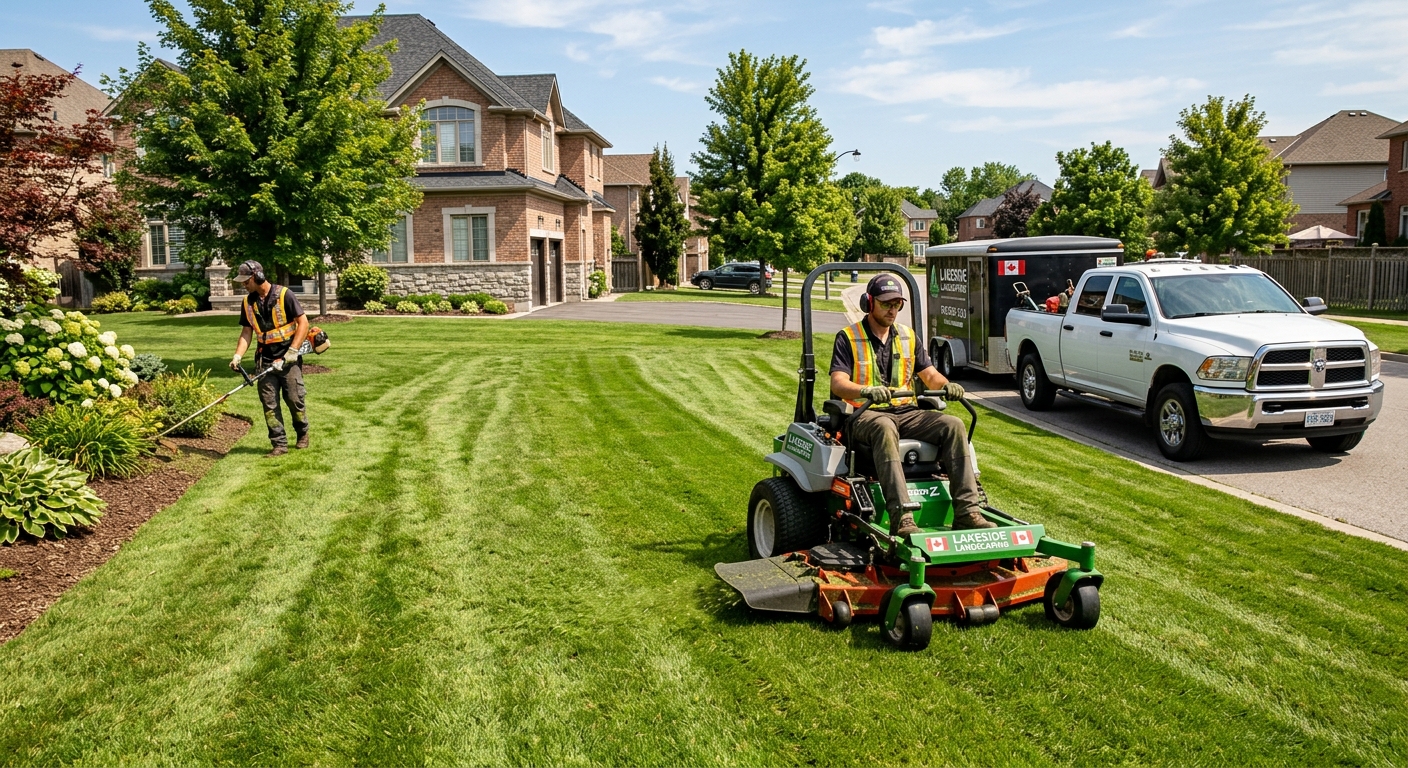
Landscaping options and costs in Cameron Heights
Cameron Heights, Alberta is a neighbourhood where homeowners often invest in their yards because detached homes are common and they tend to come with meaningful outdoor space. In the 2021 Census, single-detached housing made up a large share of dwellings in the broader Calgary area (Statistics Canada, 2021 Census), which is one reason you’ll see steady demand for patios, fences, and garden upgrades. Locally, Cameron Heights also has a smaller population base (1,123 people in 2021 per Statistics Canada, 2021 Census), so contractor availability can swing a bit during peak spring and late-summer installation windows.
In Calgary’s semi-arid climate (Prairie hardiness zone 3–4), costs are shaped by late-spring frosts, early fall cold snaps, and tough freeze–thaw cycles. Those factors don’t just affect what can survive; they change how deep bases must be built for patios and walkways, how long grading and drainage work must be staged, and how fast you can plant without risking damage. Labour is also a key driver here—local crews commonly represent 40–60% of a full project—so tight site access, removal/disposal needs, or additional excavation can move budgets quickly.
Trade demand is especially strong in Cameron Heights areas near established parks and busier residential corridors, where homeowners are trying to upgrade curb appeal before the full summer season. If you’re comparing options, the easiest way is to look at realistic price bands side-by-side—shown in the table below.
| Service |
Description |
Season |
Price Range |
| Full landscape design and installation |
Site walk, concept plan, grading/drainage coordination, hardscape + softscape buildout, irrigation coordination |
Late April to October (weather-dependent) |
$18,000–$38,000 |
| Sod installation (supply, grade, lay, roll) |
Topsoil prep (as needed), leveling, sod delivery, layout, rolling, initial watering plan |
May to early August (best root establishment window) |
$3,000–$6,000 |
| Lawn seeding (grade, seed, starter fertilizer) |
Light grading, seed blend, starter fertiliser, soil contact prep |
May–June or early September |
$1,700–$4,000 |
| Interlocking patio or walkway |
Excavation, compacted base (deep and well-compacted), geotextile, pavers, edge restraints |
May to September |
$12,000–$28,000 |
| Retaining wall (interlocking block) |
Block wall build, proper compaction, weeping/drainage provisions, backfill and finish |
May to September |
$15,000–$35,000 |
| Tree and shrub planting |
Soil amendment, plant layout, staking (where needed), mulch rings, first-season care guidance |
May to early October (avoid hard freezes) |
$2,500–$9,500 |
Prices are estimates only and vary by project scope, site access and material selection.
What affects the price of landscaping in Cameron Heights
In Cameron Heights (Calgary economic region), two quotes for “the same job” can differ by 30–50% because the hidden scope often changes: excavation depth, drainage complexity, soil quality, and how much restoration is needed after removal. Prairie zone 3–4 conditions shorten the reliable working season, so contractors price weather-risk into scheduling and labour allocation. When labour is competing for calendar time, the same design can cost more if it requires more staging, more base prep, or more follow-up visits for frost-safe completion.
Plant hardiness and frost dates define both what grows and what you can install. In Calgary, we typically select cold-hardy, drought-tolerant species and plan for wind exposure and freeze–thaw movement. For retaining walls and hardscape, base prep must reach below where frost will heave material—so “small” walls and small patios can still require deep, well-compacted bases. By contrast, coastal BC’s longer growing season supports a wider palette, but heavy rainfall drives different drainage requirements and often different irrigation strategy. In the interior BC market, water restrictions push drip irrigation and xeriscaping; in southern Alberta, restrictions can still apply during dry spells, and smart controllers with zoned irrigation are increasingly standard. Southern Ontario’s zone 5–6 season is more forgiving, but dry summers still require irrigation planning—just typically with a longer window for adjustments.
Concrete examples in Cameron Heights: (1) If your yard slopes toward the foundation or toward a walk-out, drainage corrections and regrading can add thousands—often bringing a project closer to the mid band of $18,000–$38,000 for a broader install. (2) Upgrading from seeding to sod may jump cost substantially; sod is usually the fastest path to cover, but it often lands in the higher end of $3,000–$6,000 for typical lawn sizes once prep is included. (3) Installing a few larger trees or switching to mature shrubs for immediate screening can move the planting budget toward the upper end because plant size and transport are expensive—and they need correct soil amendment to establish before cold snaps.
| Price Factor |
Why It Matters |
Cost Impact |
| Yard size in sq ft — the primary cost driver for softscape |
More area means more labour hours, more topsoil, more seed/sod, and more edging |
Large projects commonly scale quickly and can swing budgets by thousands |
| Grading and drainage work — slope corrections add significant cost |
Freeze–thaw performance depends on correct slope toward safe discharge points |
Often the difference between “small refresh” pricing and a mid five-figure build |
| Drainage bed or French drain installation |
Intercepting groundwater reduces pooling and foundation moisture issues |
Can add major excavation, pipe, and backfill scope |
| Plant material tier — native shrubs vs. ornamental vs. mature specimen trees |
Larger sizes cost more and require better planting pits, staking, and care |
Usually one of the largest “design choice” movers in the quote |
| Hardscape vs. softscape ratio — walls and patios cost more per sq ft than lawn |
Hardscape needs deeper bases, restraint systems, and more material |
Increases total cost even if the yard surface area stays similar |
| Irrigation system design and installation |
Zoned heads, controller setup, and winterisation add cost but reduce long-term problems |
Often a meaningful add-on for full front-and-back upgrades |
| Soil amendment and topsoil required |
Compacted clay or poor topsoil increases failure risk for sod/seed and plant establishment |
May require hauling, import, and blending material |
| Tree removal or stump grinding before new planting |
Stumps can prevent proper soil grading and require proper disposal |
Time-heavy scope that raises labour and equipment costs |
Permits & regulations in Alberta
In Alberta, most planting, sodding, and typical softscape work generally does not require a permit. That means projects like grading for a lawn base, installing mulch beds, planting trees and shrubs, and building raised planters usually fall under standard contractor scope. However, retaining walls can trigger permitting depending on height and local requirements; in many municipalities, walls above about 1.0 m (3.3 ft) typically require a building permit, and sometimes engineering details for stronger walls or soil conditions.
Another area to watch is grading changes: if your plan changes lot drainage so water is directed toward a neighbouring property or toward storm connections, approvals may be required. Also, any excavation—planting holes, irrigation trenches, or retaining wall footings—should start with utility locates. Call before you dig so you don’t hit buried services.
To verify a contractor’s credentials for work in Cameron Heights, follow a simple step-by-step process:
- Check Alberta licensing/registration where applicable (often tied to the specific trade activity, such as landscape contractor business registration for the company).
- Request proof of liability insurance (ask for certificate of insurance showing your job site as appropriate).
- Confirm workers’ compensation coverage (WSIB/WCB) if they use employees—ask for the clearance letter or confirmation document.
- Ask for written confirmation they will complete required utility locates before trenching or wall excavation.
- For any retaining wall near the permit threshold, request written confirmation whether permits are included and who will apply.
Finally, confirm watering rules and restrictions for the season you’re planning. Even where rules vary by region, winterisation practices and smart, zoned controllers help you stay compliant and protect new plantings through Calgary’s freeze–thaw cycles.
Planning a landscape that thrives in Cameron Heights's climate
To get a yard that thrives in Cameron Heights, think “work with the zone, not against it.” Cameron Heights sits in Prairie hardiness zone 3–4, so your plant choices need cold tolerance and your plan needs to handle late spring frosts, early fall cold snaps, and intense freeze–thaw movement. Start with plant selection: use native or zone-appropriate shrubs and perennials, and group them by sun and wind exposure. Windbreak placement matters—arctic drafts can dry new transplants quickly even when the ground is still frozen.
Next, decide on sod versus seed. Sod gives instant visual results, but it is more expensive because you’re paying for materials and fast installation; typical sod work often lands in the $3,000–$6,000 range depending on prep and area. Seeding is usually lower cost and improves soil structure over time, but it takes longer to fully thicken—often fitting better when you can commit to initial watering and regular mowing during establishment. For Calgary, we also design drainage and grading early: pooling near foundations can drive foundation moisture and winter heaving.
Hardscape should be built for frost performance. Patios and walkways need deep, well-compacted bases and proper edging so pavers don’t migrate. If you’re adding a retaining wall, plan for proper drainage provisions behind the wall (weeping/drainage rock), because water pressure can undermine block systems.
For low-maintenance design, use mulched shrub borders, groundcovers, and perennials to reduce annual weeding, plus xeriscape or rain-garden elements to manage water efficiently during semi-arid summers. If your goal is curb appeal with a controlled budget, it’s often smarter to spend on grading/drainage and a few strong planting focal points rather than trying to “buy” instant coverage everywhere.
| Element |
Climate Consideration |
Maintenance Level |
Price Band |
| Sod lawn installation |
Fast rooting for zone 3–4; time it for May to early August to avoid frost stress |
Medium (watering in establishment; mowing weekly) |
$3,000–$6,000 |
| Native perennial garden |
Cold-hardy selections reduce winter losses and support pollinators |
Low to medium (spring cleanup; mulch refresh) |
$2,500–$7,500 |
| Mulched shrub border |
Mulch stabilises soil temps through freeze–thaw; wind-tolerant shrubs reduce winter burn |
Low (weed control + occasional prune) |
$1,800–$6,000 |
| Interlocking stone patio |
Proper base depth prevents heaving; sloped drainage keeps joints from freezing |
Low (cleaning; joint weed control) |
$12,000–$28,000 |
| Retaining wall (block) |
Freeze–thaw demands deep footing and drainage rock behind the wall |
Low (periodic inspection of drainage/settlement) |
$15,000–$35,000 |
| Drip irrigation system |
Efficient water delivery suits semi-arid summers and helps reduce evaporation losses |
Low to medium (seasonal adjustments; winterisation) |
$2,000–$7,000 |
How to choose a landscaping contractor in Cameron Heights
Choosing the right contractor in Cameron Heights starts with proof, not promises. Ask for their Alberta licensing/registration details where applicable, and verify liability insurance (certificate of insurance should list coverage amounts appropriate for construction work around homes). If they use employees, confirm WSIB/WCB coverage—request a clearance letter or current confirmation document. Then make sure they’re insured for the specific scope: base excavation, hardscape installation, and retaining wall work can carry different risks.
For quotes, get 2–3 itemised written bids. You want a labour + materials breakdown, not just a lump sum. The scope should clearly state what’s included for site prep, base compaction depth, geotextile use, drainage provisions, disposal, and topsoil/supply allowances. Ask whether permits are included for retaining walls where height may trigger requirements and whether utility locates are arranged before any trenching or footing excavation.
Warranty matters too: request the workmanship warranty length (how long they’ll correct settlement or paver movement), plus product/manufacturer warranty details for items like irrigation components or specific plant suppliers. Clarify whether warranties are transferable if you sell your home.
Payment schedule should protect you. Never pay more than 10–15% upfront; use milestone payments tied to visible progress, and hold back a portion until final completion and cleanup. Finally, insist on a start date and a completion estimate in writing—Calgary’s frost and chinook variability can shift timelines, but reputable contractors plan around weather windows.
- Ask for recent Cameron Heights or Calgary-area project photos showing similar hardscape/drainage scope.
- Confirm they will perform proper excavation and compaction before pavers or walls.
- Require a written materials list (paver thickness, base depth, drainage rock specification).
- Ensure disposal/haul-away is included if they’re removing turf, stumps, or excess soil.
- Check whether irrigation design includes winterisation steps.
- Verify plant availability for your target installation window.
- Get confirmation of utility locate responsibility before digging.
- Ask how they handle frost risk for seeding/sodding and late planting.
- Review warranty terms in writing for both labour and products.
- Confirm insurance and WCB/WSIB coverage dates are current.
- Make sure the contract defines change orders and pricing for extras.
- Confirm who supplies topsoil/topdressing and whether it’s tested or specified by grade.
Red flags in Cameron Heights: a quote that won’t specify base preparation depth for patios/walkways, refusal to provide a certificate of insurance or proof of WSIB/WCB coverage, “cash-only” pricing with no written contract, vague scope like “we’ll grade it” without drainage direction, and a payment request for most of the job upfront without milestones.
Frequently asked questions — landscaping in Cameron Heights
How long does a landscaping project take in Cameron Heights?
In Cameron Heights, timelines depend heavily on whether your scope includes drainage correction, hardscape base work, irrigation, and plant establishment. A straightforward tree/shrub planting plan is often a shorter window (commonly a few days), while sod or seeding can require careful staging around soil temperature and frost risk. For hardscape like an interlocking patio, expect time for excavation, deep base compaction, base curing/adjustments, and paver setting—often about 1–3 weeks including prep and weather buffers. Full landscape builds usually take longer because grading and drainage must be sequenced before patios, walls, and planting. Labour availability in Calgary’s peak seasons can affect schedule, too, because crews move quickly between neighbourhoods. If your goal is something like sod (often $3,000–$6,000 depending on prep), ask your contractor for a weather-dependent schedule plan rather than a single fixed date.
What is the best grass type for a Cameron Heights lawn?
For Cameron Heights and the Calgary area (zone 3–4), the “best” lawn grass is typically a blend designed for cold tolerance and good density under freeze–thaw conditions. Most homeowners do well with perennial cool-season types (commonly fescues and/or turf-type varieties) because they hold colour through variable shoulder seasons and recover better after winter. The exact blend should match sun exposure and your watering schedule—south-facing yards dry quicker, while shaded areas need species that tolerate less sun. If you’re starting from scratch, seeding blends can be more flexible and budget-friendly than sod, and they’re easier to tailor to site conditions. For a faster finish, sod is reliable when installed in the proper window (generally May to early August), but it still needs consistent establishment watering. If you’re choosing between seeding and sod, remember that sod budgets often sit around $3,000–$6,000 once prep is included.
When should I aerate and overseed my lawn in Cameron Heights?
In Alberta’s climate around Cameron Heights, timing is everything. Aeration and overseeding should align with soil temperatures and frost risk, usually in spring after the worst cold has passed or in early fall when conditions are still warm enough for germination. In Calgary-area yards, early September is often a practical window for overseeding because cool-season grasses can establish before cold snaps, as long as you don’t overseed too late. Spring aeration works when the lawn can recover quickly and you can keep traffic off the seeded areas. After aeration, top-dressing thinly (with appropriate soil) improves seed-to-soil contact, and a light starter fertiliser helps seedlings establish. If you have thatch or heavy compaction, aeration alone won’t fix it—plan on soil improvement and consistent watering. Your contractor can also suggest seeding rates based on whether you’re dealing with bare patches, winter burn, or thin turf.
What trees grow best in Cameron Heights's climate zone?
In Cameron Heights (zone 3–4 conditions), you’ll generally get the best results with cold-hardy, wind-tolerant trees and varieties proven in the Calgary region. Popular picks often include conifers for year-round structure (they handle wind well) and deciduous trees that tolerate winter swings and chinook temperature shifts. When selecting, match trees to your yard’s sun exposure and space—street-facing wind can dry foliage quickly, and mature canopies require correct placement away from utility lines and the house. Planting success also depends on correct pit sizing, soil amendment where needed, and watering during establishment before temperatures drop. If you’re aiming for immediate screening, mature specimens can look great, but they cost more and need more careful installation. Many planting projects land in a realistic band of $2,500–$9,500 depending on tree size, number of shrubs, and whether staking and soil improvement are included.
How much does sodding a yard cost in Cameron Heights?
Sodding in Cameron Heights varies mainly with yard size and how much base preparation is required. If your soil is compacted or uneven, the contractor may need grading and topsoil adjustments before laying sod—this is often where budgets move. For typical Cameron Heights front-yard or backyard lawn conversions, installed sod commonly lands in the range of $3,000–$6,000 once prep is included. If you’re also adding irrigation adjustments or new edging, expect the overall project to rise accordingly. The best value usually comes from planning sod with proper drainage and soil amendment so the turf roots cleanly before freeze–thaw intensifies. Ask your contractor whether the quote includes rolling, initial watering plan, disposal of old turf, and any grading corrections—those items can materially change what you pay.
How do I prevent weeds in my Cameron Heights garden?
Weed prevention is easiest when you stop weed germination and reduce soil disturbance. In Cameron Heights gardens, a layered approach works best: install a clean weed-suppression foundation (geotextile where appropriate under mulched beds), keep soil levels stable (avoid ongoing settling from uncorrected drainage), and use a thick mulch layer that doesn’t wash away during spring melt. Pulling weeds early matters too—don’t let them go to seed, especially in windy prairie conditions where weed seeds spread quickly. Choose plants that fill space rather than leaving bare soil; mulched shrub borders with dense perennial groupings reduce open ground for weeds to establish. For lawns adjacent to beds, edge management helps stop grass invading and provides a tidy boundary. If you add drip irrigation, aim water at the plants—not the weeds—because wet bare soil is the fastest weed builder. Finally, maintain seasonal tidy-ups so you can spot issues before they become widespread.