Landscaping options and costs in Brocklehurst
Brocklehurst is where homeowners in the Lower Mainland–Southwest often want landscaping that looks established quickly, yet still respects the region’s cool, wet winters and long, workable shoulder seasons. With a population of 16,713 (Statistics Canada, 2021 Census), the demand for reputable crews is steady year-round—especially in neighbourhood pockets such as Hurley View, where many properties sit on sloped or semi-sheltered lots that benefit from drainage-focused designs and layered planting.
One reason quotes can feel “all over the map” here is that local housing patterns influence yard upgrades. In many Brocklehurst neighbourhoods, single-detached homes make up a large share of the local housing stock, and that typically means more softscape area to grade, mulch, plant, and (sometimes) renovate after older lawns fail. Meanwhile, Lower Mainland–Southwest zoning and practical drainage expectations push many projects toward better compaction, deeper base prep, and efficient irrigation—even when the overall design looks similar.
Contractors also tend to plan around frost timing. Near the coast, last spring frost is often early March to early April, with first fall frost commonly not until November, so planting and softscape tasks can happen for longer than in colder parts of British Columbia. Hardscape and retaining walls still require freeze–thaw-proof base work and proper drainage so you don’t get frost heave or wall movement on grades common in Brocklehurst. From there, your budget choices usually come down to whether you prioritize instant results (like sod) or lower cost per square foot (like seeding), and how much of the yard you hardscape versus soften. Use the ranges below as a budgeting baseline before you request an itemised quote.
| Service |
Description |
Season |
Price Range |
| Full landscape design and installation |
Site visit, concept + planting plan, grading/drainage coordination, supply + installation of selected softscape and hardscape |
Spring to fall (most efficient); winter planning possible |
$5,000–$50,000 |
| Sod installation (supply, grade, lay, roll) |
Fine grading, topsoil adjustment, supply of sod, lay/roll, starter fertiliser, initial watering plan |
Late spring to early fall (best results when soils are workable) |
$2,000–$8,000 |
| Lawn seeding (grade, seed, starter fertilizer) |
Light grading, seed blend, starter fertiliser, mulching/tack layer where needed |
Spring or early fall for germination success |
$1,200–$4,800 |
| Interlocking patio or walkway |
Excavation, compacted base, drainage allowance, interlocking stone installation, edging, jointing |
Spring to fall; keep sites dry for base integrity |
$10,000–$45,000 |
| Retaining wall (interlocking block) |
Excavation, compacted granular base, geotextile/drainage provisions, block installation, backfill + finishing |
Spring to early winter (avoid wettest weeks) |
$12,000–$60,000 |
| Tree and shrub planting |
Soil preparation, planting layout, supply of nursery stock, staking where needed, mulch and watering plan |
Spring to fall (avoid frozen ground) |
$1,000–$15,000 |
Prices are estimates only and vary by project scope, site access and material selection.
What affects the price of landscaping in Brocklehurst
In Brocklehurst and across the Lower Mainland–Southwest, the same “look” can come in 30–50% different depending on how contractors price risk, labour time, and materials. This is true across British Columbia because frost dates, soil conditions, and workable seasons change—so crews either spend longer doing careful base preparation or they choose different plant palettes and irrigation strategies.
In coastal BC (commonly plant hardiness zone 7–8 for the region), the long growing season lets us use lush, layered designs—so clients can get quick visual impact. However, Lower Mainland–Southwest yards often see heavy rain events and frequent wet weeks, which means drainage and compaction work can be non-negotiable. Structural items also have to respect freeze–thaw cycles: retaining wall bases and under-patio bases still need to be dug deeper and built with proper granular drainage to prevent movement on sloped properties.
By contrast, Prairie regions (zone 2–4) tend to face short growing seasons and harsher winters, so pricing often shifts toward drought-tolerant, wind-hardy species and more compressed scheduling. In the dry BC Interior, water restrictions push irrigation design (and cost) toward efficient systems, while Southern Ontario (zone 5–6) typically has a moderate season but can require irrigation planning during summer dry spells. Even if your yard design is similar, the labour hours and material choices aren’t.
Concrete examples from Brocklehurst: (1) If your lot drains poorly and we need to add a drainage bed or French drain, the project can move closer to the upper end of the $10,000–$80,000 hardscaping/retaining band. (2) If you’re replacing an older lawn that struggles in shade or compaction, seeding may start near $2,000–$8,000 for sod-style budgets, but doing it correctly with soil amendment and grading can justify costs that otherwise look “high” for small areas. (3) For older homes with mature roots near the foundation, tree/shrub selection and root-safe planting locations can add time—especially when we have to remove a stump or adjust the layout.
| Price Factor |
Why It Matters |
Cost Impact |
| Yard size in sq ft — the primary cost driver for softscape |
More area means more excavation/grade, more topsoil, more plants, and more labour hours |
Low to high; can swing budgets dramatically for lawns and borders |
| Grading and drainage work — slope corrections add significant cost |
Fixing pooling or directing runoff away from foundations requires extra excavation and compaction |
Often one of the biggest drivers on sloped Brocklehurst lots |
| Drainage bed or French drain installation |
Subsurface flow control protects walls, patios, and plant roots in wet winters |
Can add substantial cost vs. “simple” surface grading |
| Plant material tier — native shrubs vs. ornamental vs. mature specimen trees |
Mature specimens cost more and require careful handling, staking, and sometimes additional soil rehab |
Higher-tier palettes push planting budgets upward quickly |
| Hardscape vs. softscape ratio — walls and patios cost more per sq ft than lawn |
Stone and base prep are labour-heavy and require compacted aggregate layers |
Shifts project toward the hardscaping/retaining price band |
| Irrigation system design and installation |
Efficient drip layouts reduce waste, and smart controllers can help with restrictions |
Can raise costs initially but protect your investment in drought years |
| Soil amendment and topsoil required |
Poor native soil increases the amount of amendment/topsoil needed for plant health |
Moderate to high, depending on how much import material is required |
| Tree removal or stump grinding before new planting |
Clearing for beds and hardscape adds disposal, equipment time, and restoration effort |
Variable; can add noticeable cost even on small jobs |
Permits & regulations in British Columbia
For most homeowners in British Columbia, day-to-day landscape upgrades like planting, sodding, and typical softscape work usually do not require a permit. That means you can often add a shrub border, refresh mulch, install sod, or plant trees and perennials without starting a formal approval process. Where things change is with structural projects.
In practice, the work that does typically require a permit includes retaining walls above the local threshold—commonly around 1.0 m (3.3 ft) in many municipalities—especially when the design may need engineered input. Also, if you’re changing lot grading in a way that affects how water drains toward neighbouring properties or storm connections, approvals can be triggered. If you’re unsure whether your plan alters drainage patterns, ask your contractor to confirm the requirement before excavation.
A key safety step: call for utility locates before digging for planting holes or wall footings. Striking buried services can stop work and create costly repairs.
How to verify your contractor in Brocklehurst: (1) Confirm they have the relevant British Columbia licence for the scope they’re offering (ask for their licence number or registry details). (2) Request a certificate of liability insurance naming you as an additional insured where required by the contract. (3) For workers, check WCB/WSIB-style coverage documentation (in BC, this is typically WCB through the BC system). A reputable contractor can provide clearance/coverage proof without delay—before you sign or send deposits.
Planning a landscape that thrives in Brocklehurst's climate
Designing for Brocklehurst means working with the region’s hardiness conditions (often zone 7–8), its wet winters, and the local frost calendar—rather than fighting it with plants and details that aren’t built for freeze–thaw and winter saturation. Start with plant selection: choose native or zone-appropriate species and build seasonal structure with evergreen broadleaf forms, long-blooming perennials, and shrubs that handle the area’s cool, damp periods without constant fuss. This approach reduces watering needs and winter protection labour.
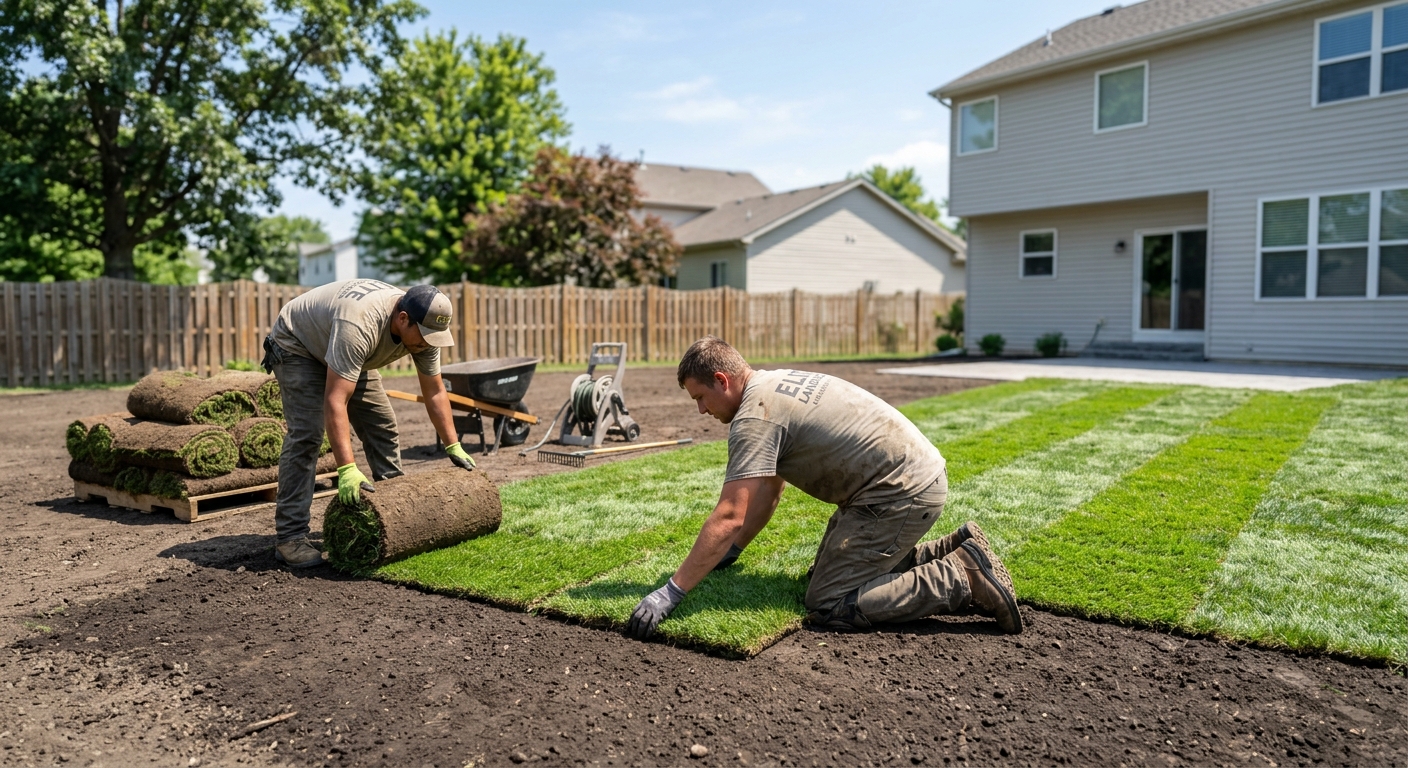
Next, decide between sod and seed. Sod delivers instant coverage, but it costs more; as a rule of thumb, sod installation can run 3–4x the per-square-foot cost of seeding when you compare labour and material. If you need a “finished yard” quickly for a sale or family timeline, sod can be justified. If you’re patient, seeding plus soil correction often stretches your budget further.
Drainage and grading are critical in Lower Mainland–Southwest yards to prevent pooling near foundations and to protect plant roots. Even with mild winters, bases for patios and retaining walls must account for freeze–thaw cycling: adequate depth, proper granular base layers, and controlled runoff reduce frost heave and wall movement. For low maintenance, lean on groundcovers, mulch to moderate soil moisture, and perennial groupings that don’t require frequent replanting.
For water-smart options, consider rain-garden planting in low spots and drip irrigation for beds. For example, spending extra on grading plus a drainage bed may feel like a premium within the hardscape/retaining band, but it can save you from repeated plant failures and prevent foundation-adjacent dampness—issues that are far more expensive to correct later.
| Element |
Climate Consideration |
Maintenance Level |
Price Band |
| Sod lawn installation |
Works best when soils are workable before heavy winter wetness; long growing season helps establishment |
Medium (initial watering + weed control during establishment) |
$2,000–$8,000 |
| Native perennial garden |
Zone-appropriate plants tolerate cool, damp winters better; reduces overwintering risk |
Low to medium (seasonal pruning, mulch refresh) |
$1,500–$6,500 |
| Mulched shrub border |
Mulch stabilises soil moisture through wet/dry swings; helps prevent heaving around root zones |
Low (weeding reduces once beds are established) |
$1,000–$5,000 |
| Interlocking stone patio |
Base prep must handle freeze–thaw; proper drainage keeps joints from washing out |
Low (occasional cleaning and joint maintenance) |
$10,000–$45,000 |
| Retaining wall (block) |
Frequent wet winters demand drainage behind walls; base depth protects against frost movement |
Low (periodic inspection of drainage outlets/settlement) |
$12,000–$60,000 |
| Drip irrigation system |
Efficient watering for beds helps when municipal restrictions are tighter or water costs rise |
Medium (seasonal winterisation + controller updates) |
$1,800–$7,500 |
How to choose a landscaping contractor in Brocklehurst
Choosing a contractor in Brocklehurst starts with verifying credentials and then insisting on clear, itemised paperwork. In British Columbia, ask for their licence details appropriate to the work they’re proposing, and confirm they carry liability insurance (request the certificate of insurance) so you’re protected if something is damaged. For worker coverage, request proof of WCB coverage (and ensure it matches the crew size and timing on the project). A legitimate contractor won’t hesitate—if anything, they’ll be proactive because it’s part of normal jobsite readiness.
Next, get 2–3 written itemised quotes that break labour and materials apart (not just a lump sum). Make sure the scope is truly comparable: is permit pull included (when required)? Is disposal/hauling included for soil, stumps, and construction debris? Are excavation depths and drainage details specified? Are you paying for machine time and base materials or only landscaping labour?
Warranty matters. Ask for a workmanship warranty length in writing, and confirm whether product/manufacturer warranties apply to specific items (like irrigation components or block/paver products). Also ask if warranties are transferable to future homeowners—this is often overlooked.
On payment schedule, never pay more than about 10–15% upfront. Hold back a portion until the job is complete, cleaned, and any deficiencies are corrected. Finally, request a written timeline with a start date and estimated completion window, and align it with weather: in Lower Mainland–Southwest, wet weeks can affect base prep and compaction quality.
- Verify British Columbia licence details and the correct scope for the work
- Request certificate of liability insurance before the first deposit
- Confirm WCB coverage for the crew working on your property
- Get 2–3 itemised quotes with labour and material line items
- Check what’s excluded: disposal, extra excavation, drainage modifications, tree removals
- Confirm base preparation specs (depths, compaction, drainage allowances) for patios/walls
- Ask for irrigation specs if included: controller type, zones, and coverage plan
- Ensure plant lists include quantities and sizes (e.g., container size or caliper where relevant)
- Read the warranty section: workmanship length and how claims are handled
- Confirm product warranties (pavers/blocks/irrigation) and whether you get the paperwork
- Use a payment schedule with a small deposit and a holdback until final walk-through
- Require a written start date and completion estimate, plus weather contingency language
Red flags I see around Brocklehurst: (1) quotes that are “cheap” but omit drainage or base depth details, (2) vague scope language like “hardscape included” with no quantities, (3) asking for large deposits before work starts, (4) no written warranty terms, and (5) refusal to provide insurance/WCB proof or licence details when asked.
Frequently asked questions — landscaping in Brocklehurst
How deep should a retaining-wall base be for local frost?
For Brocklehurst-area retaining walls, the base depth is driven by freeze–thaw behaviour and the stability you need on your slope, not just a single “rule of thumb.” Even with coastal BC’s mild winters (often zone 7–8), freeze–thaw cycles still occur, and proper granular base construction prevents frost heave and wall movement. In practical terms, reputable installers excavate to a depth that reaches a stable, well-compacted bearing layer and then build a properly drained granular base with appropriate backfill and drainage provisions behind the wall. Your exact depth depends on wall height, soil type, and whether you’re tying into existing drainage. If you’re budgeting, retaining walls commonly land in the $12,000–$60,000 range, and part of what you’re paying for is correct base specification.
How much does professional landscape design cost?
Professional landscape design costs in British Columbia vary with the complexity of the site and whether you’re asking for a full plan package or just a layout. For Brocklehurst homeowners, design is often bundled into “design & installation” projects, which typically fall in a broad budget band of $5,000–$50,000 depending on the scope. If you’re only after concept design and a planting plan, costs usually depend on the number of garden areas, existing site constraints (like slope and drainage), and whether irrigation or hardscape details are included. I recommend asking for what’s included: concept, planting palette, drawings, and whether contractors will revise the plan after site measurements. Make sure the design aligns with the Lower Mainland–Southwest moisture reality so you don’t pay twice for changes after installation.
How do I compare landscaping quotes?
To compare quotes in Brocklehurst, insist on apples-to-apples scopes. Start with itemised line items: excavation and grading, drainage work, topsoil/amendment quantity, base materials for patios/walls, plant list quantities and sizes, and irrigation provisions if included. Check exclusions—especially disposal/hauling, extra excavation if rock or poor soil is encountered, and whether permit paperwork is handled when a retaining wall exceeds the typical 1.0 m (3.3 ft) threshold. Also compare timing: quotes that assume dry access for compaction may need adjustments after wet weeks. A good benchmark is to verify that hardscape isn’t being priced like lawn: for example, sod/lawn budgets often align with $2,000–$8,000, while retaining walls typically sit closer to $12,000–$60,000. If a “full backyard” quote lands in the middle but omits drainage base work, that’s usually where cost differences hide.
How long does a landscaping project take in Brocklehurst?
Project timelines in Brocklehurst depend mostly on drainage/grade complexity and the amount of hardscape. Softscape-only installs (mulch, shrub borders, planting) can often complete within a few days to a week, assuming nursery stock is ready and the weather windows cooperate. Sod installation typically needs enough dry, workable ground for grading and base preparation; it’s often scheduled for spring through early fall, when soils aren’t saturated. Interlocking patios and retaining walls take longer because excavation, base building, compaction, and drainage provisions must be done correctly—plus wetter weeks can slow compaction and joint finishing. If you’re planning a full design & installation, many projects run from a few weeks to a couple of months. Ask your contractor for a start date, completion estimate, and a weather contingency plan in writing.
What is the best grass type for a Brocklehurst lawn?
In Brocklehurst and the Lower Mainland–Southwest, homeowners commonly do well with cool-season turf grasses because the region has cool, wet winters and long, cool summers—ideal for establishment when soil conditions are right. The “best” choice depends on sun exposure and your maintenance comfort. For many yards, blends of perennial ryegrass and fescue types help with colour and traffic tolerance, while fine fescues can perform well in partially shaded areas. The biggest success factor, though, is preparation: correcting compaction, adding suitable topsoil/amendments, and seeding or sodding at the right time. If you’re budgeting for an alternative to sod, lawn seeding often fits within a $1,200–$4,800 range, while sod installation commonly aligns with $2,000–$8,000. Ask for the specific seed blend in your quote rather than relying on “best grass” claims.
When should I aerate and overseed my lawn in Brocklehurst?
For Brocklehurst lawns, aeration and overseeding typically work best in spring or early fall, when the grass can recover quickly without heat stress. In the Lower Mainland–Southwest, you can usually plan around frost timing (often early March to early April for last spring frost near the coast, with first fall frost commonly not until November). Spring aeration helps fill thin spots after winter wear, while early fall can improve density before the colder months slow growth. If you’ve installed sod recently, follow your installer’s timing guidance—your lawn may need only light maintenance until roots establish. For overseeding, top-dress lightly with appropriate material (not heavy compost layers) and keep watering consistent during germination. If your lawn struggles in certain spots, it may be drainage or compaction rather than seed choice—so ask for soil and grading notes when you compare quotes.