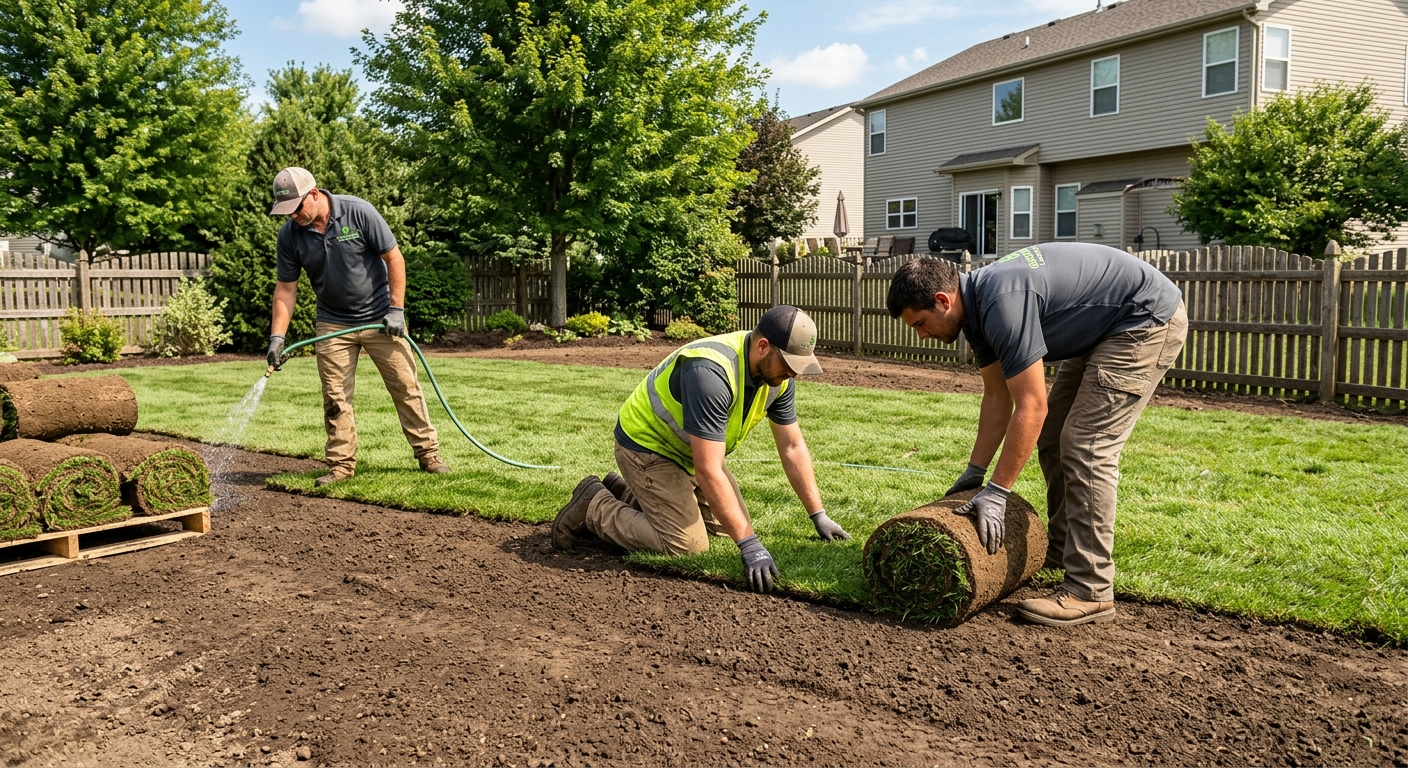
Landscaping options and costs in Mount Pleasant
In Mount Pleasant, most homeowners start with a practical question: “What landscaping options fit my yard and budget?” With a population of about 33,000 (Statistics Canada, 2021 Census), the area has a steady level of residential development and renovation activity, and that translates into consistent contractor availability when weather windows open. Mount Pleasant’s housing stock also includes plenty of detached properties with enough exterior space to justify full upgrades like grading, drainage, new turf, and layered planting beds.
In the Lower Mainland–Southwest, we’re typically working in plant hardiness zone 7–8, with mild, wet winters and long, cool summers. That means you can often keep crews busy longer than in colder regions—so design-to-install scheduling is generally smoother, even though the wettest winter stretches can slow excavation and base preparation. Labour and equipment costs can still swing, and different neighbourhoods in Mount Pleasant feel it differently; for example, trade demand is often higher in areas like Steveston Highway/South Arm-adjacent pockets where homeowners commonly update frontages and add drainage improvements to manage heavier soil and rainfall patterns.
Because many bids include different levels of site prep (soil testing, drainage corrections, and topsoil), it’s helpful to anchor expectations using the ranges below—then match the scope to your property. Here’s a quick comparison table of common options and what they typically run in Mount Pleasant.
| Service |
Description |
Season |
Price Range |
| Full landscape design and installation |
Site walk, design plan, grading/drainage coordination, planting + turf + hardscape package |
Spring to fall (with limited winter softscape when soil is workable) |
$5,000–$50,000 |
| Sod installation (supply, grade, lay, roll) |
Existing lawn removal (as needed), sub-base prep, soil/compost amendment, sod supply and install |
Late spring to early fall (avoid saturated ground) |
$2,000–$8,000 |
| Lawn seeding (grade, seed, starter fertilizer) |
Light regrading, seed/starter fertiliser, seeding and initial aftercare |
Spring or early fall |
$1,000–$5,000 |
| Interlocking patio or walkway |
Excavation, compacted base, interlocking pavers, edging, simple drainage slope |
Spring to fall (permit-dependent if applicable) |
$10,000–$40,000 |
| Retaining wall (interlocking block) |
Block wall installation, drainage gravel/weep system, base excavation and compaction |
Spring to fall |
$10,000–$80,000 |
| Tree and shrub planting |
Plant sourcing, planting holes, amendments, staking (if needed), mulch rings |
Spring to fall |
$1,000–$15,000 |
Prices are estimates only and vary by project scope, site access and material selection.
What affects the price of landscaping in Mount Pleasant
Even when two quotes list the “same” project, costs in the Lower Mainland–Southwest can differ by 30–50% across British Columbia because each bid usually includes different levels of site preparation, drainage work, and plant selection. In Mount Pleasant specifically, the working season is longer in zone 7–8, which can help keep scheduling efficient—but the same mild winter conditions can also mean contractors spend more time managing wet soils and careful compaction. That’s why a seemingly straightforward upgrade can land anywhere from the entry range of about $5,000–$50,000 for design/installation packages up to the higher end when hardscape and drainage complexity increase.
Local conditions that drive cost include frost timing and the functional frost line for bases. In coastal BC (zone 7–8), you can plant broadly from spring through fall, yet patios and walls still need proper sub-base depth to manage freeze–thaw. In practice, that often raises excavation and base material quantities on sloped sites common to many coastal neighbourhood lots. By contrast, Prairie regions (zone 2–4) typically require smaller, drought-tolerant palettes and compressed timelines, so bids often shift toward low-water planting strategies and shorter construction windows; Southern Ontario (zone 5–6) often needs irrigation planning for summer dry spells. The coastal difference is that Mount Pleasant homeowners can choose more lush, layered planting—but they still pay for drainage and soil conditioning.
Two concrete examples: (1) adding a French drain or drainage bed can increase labour and rock/pipe costs significantly compared with “planting only,” and (2) moving from sod to seeding can reduce turf budget—sod installations often sit in the $2,000–$8,000 band depending on area, while seeding may be less if the lawn isn’t heavily compacted. If you’re landscaping around an older home (more established roots and sometimes tighter site access), stump grinding and additional soil correction can also add real dollars before any plants go in.
| Price Factor |
Why It Matters |
Cost Impact |
| Yard size in sq ft — the primary cost driver for softscape |
More area means more labour, more materials (topsoil, mulch, seed or sod), and more installs/time |
Typically the largest swing; can move a project up or down by several thousand dollars |
| Grading and drainage work — slope corrections add significant cost |
Correcting pooling or redirecting water requires excavation, re-compaction, and sometimes new contours |
Often adds a substantial percentage to the quote when drainage is actively addressed |
| Drainage bed or French drain installation |
Pipe/stone systems protect foundations and prevent saturated beds |
Can materially increase hard material and labour totals compared with planting-only plans |
| Plant material tier — native shrubs vs. ornamental vs. mature specimen trees |
Mature trees, specialty ornamentals, and larger caliper stock cost more and take more labour to install |
May double plant-line items versus small/native plant palettes |
| Hardscape vs. softscape ratio — walls and patios cost more per sq ft than lawn |
Hardscape requires base prep, compacted stone, pavers/blocks, and strict slope/leveling |
Shifts budget quickly into higher bands (especially retaining walls) |
| Irrigation system design and installation |
Sprinkler/drip layouts, zoning, controllers, and pressure considerations change labour and parts costs |
Can be a major line item, especially for full-yard systems with smart controllers |
| Soil amendment and topsoil required |
Heavy clay, poor drainage, or low organic matter needs amendments for roots and long-term success |
Increases hauling, labour, and material costs—often worth it for healthier beds |
| Tree removal or stump grinding before new planting |
Removal affects stump disposal, debris handling, and surface restoration |
Can add several thousand dollars depending on access and stump count |
Permits & regulations in British Columbia
In British Columbia, most planting and softscape work typically does not require a permit. That usually includes tasks like sodding, lawn seeding, shrub and tree planting, mulching, and most general grading for planting beds. However, retaining walls above a height threshold—commonly around 1.0 m (3.3 ft) in many municipalities—may require a building permit and, in some cases, engineered drawings. The exact threshold and requirements can vary by local jurisdiction, so it’s important to confirm with your municipality before a crew starts excavation.
Another area that can trigger approval is lot grading changes that affect drainage patterns toward neighbouring properties or tie into storm sewer connections. If you’re installing drainage infrastructure (like a French drain that discharges to a controlled outlet) make sure the contractor reviews how and where the water will go. Also, call for utility locates before digging—especially for planting holes and wall footings—so you don’t hit buried services.
To verify a contractor’s credentials in Mount Pleasant: ask for (1) their business details and any applicable provincial licensing proof (as required for their work), (2) a certificate of insurance showing liability coverage, and (3) confirmation they carry the correct coverage for workers (commonly WSIB/WCB coverage depending on the worker type and employer status). Check online registries where available, then review the certificate for policy dates and limits—if anything is missing or out of date, that’s a red flag. Also request a clearance letter or coverage confirmation if they provide it for new projects.
Planning a landscape that thrives in Mount Pleasant's climate
Designing for Mount Pleasant works best when you lean into zone 7–8 conditions: mild, wet winters, long cool summers, and a frost calendar that allows planting for much of the year. Start with the plant palette—choose native and zone-appropriate perennials, shrubs, and broadleaf evergreens that don’t require constant winter protection. In practice, this lowers ongoing watering and winter losses compared with experimenting with marginal species.
Next, decide between sod and seed. In this region, sod gives instant visual results, but it’s usually around 3–4× the per-sq-ft cost of seeding when comparing comparable areas and prep levels. For example, if you’re trying to make a front lawn look “finished” before a busy season, the sod route that lands in the $2,000–$8,000 band can be justified—especially where erosion control is important. If you can tolerate a longer green-up, seeding is often the smarter long-term budget move.
Drainage and grading are critical in the Lower Mainland–Southwest. Even though soils are rarely frozen solid for extended periods, freeze–thaw and heavy rain can still cause pooling, foundation moisture issues, and plant stress. For hardscape like patios and retaining walls, ensure proper base preparation with frost-aware depth, compacted gravel layers, and correct slope. Finally, keep annual upkeep down with groundcovers, mulched borders, and layered perennials rather than bare soil. Where water costs and future restrictions are a concern, consider rain gardens and targeted xeriscape zones—use drought-tolerant accents in the hottest exposures while letting moisture-loving plants handle naturally wetter corners.
| Element |
Climate Consideration |
Maintenance Level |
Price Band |
| Sod lawn installation |
Fast establishment in zone 7–8; avoid saturated ground during wet periods |
Low short-term, moderate aftercare for root establishment |
$2,000–$8,000 |
| Native perennial garden |
Good long-term fit for coastal BC conditions; mulch helps moderate winter wetness |
Low to moderate (weeding in year one, light pruning) |
$1,500–$7,500 |
| Mulched shrub border |
Handles wet winters and cool summers; promotes soil health and reduces splash/weed pressure |
Low (annual top-up and occasional bed edging) |
$1,000–$6,000 |
| Interlocking stone patio |
Needs proper frost-aware base prep and drainage slope for freeze–thaw performance |
Low (periodic joint sand check/weed control in seams) |
$10,000–$40,000 |
| Retaining wall (block) |
Drainage gravel/weep system is essential to prevent hydrostatic pressure |
Low ongoing (inspection of drainage outlets and drainage performance) |
$10,000–$80,000 |
| Drip irrigation system |
Efficient watering for drought-tolerant zones and smart scheduling |
Low (set-and-monitor; seasonal adjustments) |
$3,000–$12,000 |
How to choose a landscaping contractor in Mount Pleasant
Choosing a landscaping contractor in Mount Pleasant is mostly about verification, clarity, and protection. First, confirm British Columbia credentials and coverage: ask for their proof of licensing/registration where applicable for their scope, then request a current certificate of liability insurance. Next, verify worker coverage—commonly WSIB/WCB coverage depending on the employer/worker arrangement—so you know you’re not stuck with liability if a worker is injured. Where to check: look for online registry listings for the business/contractor profile, review the certificate’s effective dates and policy limits, and request clearance/coverage confirmation for your project.
Second, get 2–3 itemised written quotes. You want a breakdown that separates labour and materials (excavation, base rock, pavers/blocks, sod/seed, soil amendments, drainage rock, disposal, and irrigation components). Avoid quotes that look like a single lump sum with no scope detail. Read exclusions carefully: is permit pulling included if required for a retaining wall, are utility locates included, and is disposal (dump fees) part of the price? Also ask about warranty specifics: a workmanship warranty (often 1–3 years in industry practice) plus the product/manufacturer warranties on irrigation components and selected plant material—confirm whether warranties are transferable to you.
Finally, payment schedule matters. Never pay more than 10–15% upfront; hold a portion back until the job is complete and inspected. Require a start date and a realistic completion timeline in writing, accounting for wet-soil delays during the rainiest weeks.
- Confirm business details and any applicable provincial licensing/registration before signing.
- Request liability insurance certificate with policy limits and confirm it’s active for your dates.
- Verify worker coverage (WSIB/WCB or equivalent as applicable) and ask for clearance/confirmation.
- Get 2–3 itemised quotes with a labour/materials breakdown—not only a total price.
- Ask what’s included: disposal, topsoil/compost amendments, edging, compaction, and clean-up.
- Clarify exclusions: any work not listed (like stump grinding or additional drainage) should be priced separately.
- Confirm whether utility locates are included and when they’ll be requested.
- For retaining walls, verify whether permit pulling/engineering is included (if above the local threshold).
- Ask about base depth, compaction method, and drainage slope for patios and wall performance.
- Review irrigation design: zoning, backflow prevention, and smart controller options.
- Ensure warranty terms are written: workmanship duration, plant replacement expectations, and who supplies replacements.
- Use a conservative payment plan (10–15% deposit cap) and holdback until final completion.
In Mount Pleasant, common red flags include: quotes that omit drainage and base prep details, refusing to provide an insurance certificate, “fast and cheap” pricing that doesn’t include disposal or amendments, vague warranty language, and payment demands that exceed 10–15% upfront without a written schedule or contract milestones.
Frequently asked questions — landscaping in Mount Pleasant
How much does sodding a yard cost in Mount Pleasant?
Sod pricing in Mount Pleasant typically falls in the $2,000–$8,000 range, mainly driven by lawn area, how much grading is required, and whether the contractor needs to remove compacted turf. In zone 7–8, crews can install sod for much of the spring-to-fall period, but saturated ground can delay compaction and increase prep labour. If your yard needs soil amendments (topsoil/compost) to correct drainage or improve root establishment, expect higher end-of-band pricing. Always ask whether the quote includes disposal and how they’ll handle edges near foundations, sidewalks, and driveways—those details often separate a “basic” job from one that holds up season after season.
How do I prevent weeds in my Mount Pleasant garden?
Weed prevention starts before planting. In Mount Pleasant and across coastal BC, weed pressure is often worst where bare soil stays wet and disturbed. A good contractor will remove weed roots, correct soil conditions, and then install a proper mulch layer (not just a thin cosmetic coat). For beds, use a weed-suppressing approach such as landscape fabric only where it makes sense (and avoid trapping moisture incorrectly around tree crowns). Regular maintenance in year one matters most—hand weeding and spot treatment before weeds establish deep roots prevents a cycle. If you’re planning new beds, request soil amendment and a layered planting layout; dense, healthy plants shade the ground and reduce weed germination.
How do I design a low-water yard in Mount Pleasant?
Even though Mount Pleasant has relatively reliable rainfall compared with drier parts of BC, a low-water yard still makes sense for long-term cost control and future restriction readiness. Design with zones: place drought-tolerant plantings in sunnier, wind-exposed areas and keep moisture-loving species where the soil naturally holds more water. Consider a drip irrigation system for efficiency rather than broad sprinkler coverage; smart controllers can further cut water use when temperatures drop. If you’re replacing lawn, start by comparing options—sod budgets in the $2,000–$8,000 band can be offset by transitioning part of the lawn to mulched borders and native perennial beds. You’ll keep curb appeal while reducing annual watering demands.
How do I find a licensed landscaper in Mount Pleasant?
To find a qualified landscaper in Mount Pleasant, start with documentation. Ask for the business’s credentials and check any relevant provincial registration details via the appropriate online registry or business listing resources. Next, request a certificate of liability insurance and verify the policy is active and covers the project period. Then confirm worker coverage (commonly WSIB/WCB depending on the employer/worker situation) and ask for clearance/coverage confirmation for your job. Get 2–3 itemised quotes so you can compare scope: labour, materials, drainage work, disposal, and whether any permits are included for retaining walls. A reliable contractor will answer clearly and provide written timelines and warranty terms.
How much does landscaping cost in Mount Pleasant?
Landscaping cost in Mount Pleasant depends heavily on scope and whether you’re doing softscape only or adding hardscape and drainage. For many homeowners, a full design and installation package commonly lands anywhere from $5,000–$50,000, with the upper end typically tied to retaining walls, patios, and significant site prep. If the project focuses on lawn replacement, sod installs often sit in the $2,000–$8,000 band depending on area and prep. For planting-focused updates, tree and shrub planting is commonly in the $1,000–$15,000 range. Ask contractors to itemise: grading/drainage, soil amendments, irrigation, plant tier, and disposal can change totals quickly even when the “look” seems similar.
What plants thrive in Mount Pleasant's climate zone?
Mount Pleasant is typically in plant hardiness zone 7–8, which supports a broad palette compared with colder regions of British Columbia. Homeowners often do well with layered coastal-style selections: broadleaf evergreens, long-blooming perennials, and native or well-adapted shrubs that tolerate wet winters. If you want lower maintenance, choose plants that match soil moisture conditions—avoid putting drought-tolerant species in consistently soggy beds and vice versa. For lawns, if you’re replacing turf, make sure the contractor selects seed/sod suited to local conditions and establishes proper soil contact. Work with your contractor on a plant schedule aligned to frost timing (spring planting and fall planting within workable windows) to improve establishment.