Landscaping options and costs in Fraser Heights
Fraser Heights, British Columbia is where homeowners often want their yards to look “fully finished,” because the Lower Mainland–Southwest context makes both planting and softscape work feel far more flexible than in colder provinces. With a local population around 25,000 (Statistics Canada, 2021 Census), demand is steady enough that contractors commonly staff crews for both design and installation rather than outsourcing every specialty. In neighbourhoods such as Scott Road/King George corridor-adjacent residential pockets, landscaping is especially in demand because homes typically sit on usable front and side-yard space—great for layered planting, patios, and curb-appeal upgrades.
Cost in Fraser Heights is shaped by the region’s plant hardiness range (Zones 7–8) and the long working/growing season. That usually supports lush, layered designs (more perennials and broadleaf evergreens) and reduces the “lost time” you see where frost-free windows are short. However, softscape and hardscape still aren’t “cheap forever”: wet winters and freeze–thaw cycles on structural elements (patios, retaining walls, slopes) require deeper excavation, proper drainage, and compaction to prevent movement and heaving. For irrigation, even without the same routine bans seen in drier BC interiors, efficient systems are increasingly specified to manage rising water costs and meet municipal expectations.
Below are realistic Fraser Heights price bands to help you compare what different contractors include—then use the table to anchor your budget before you request itemised quotes.
| Service |
Description |
Season |
Price Range |
| Full landscape design and installation |
Concept + planting plan, grading/drainage coordination, topsoil/soil amendments, planting, and hardscape coordination where included |
Almost year-round (softscape best in mild windows) |
$5,000–$50,000 |
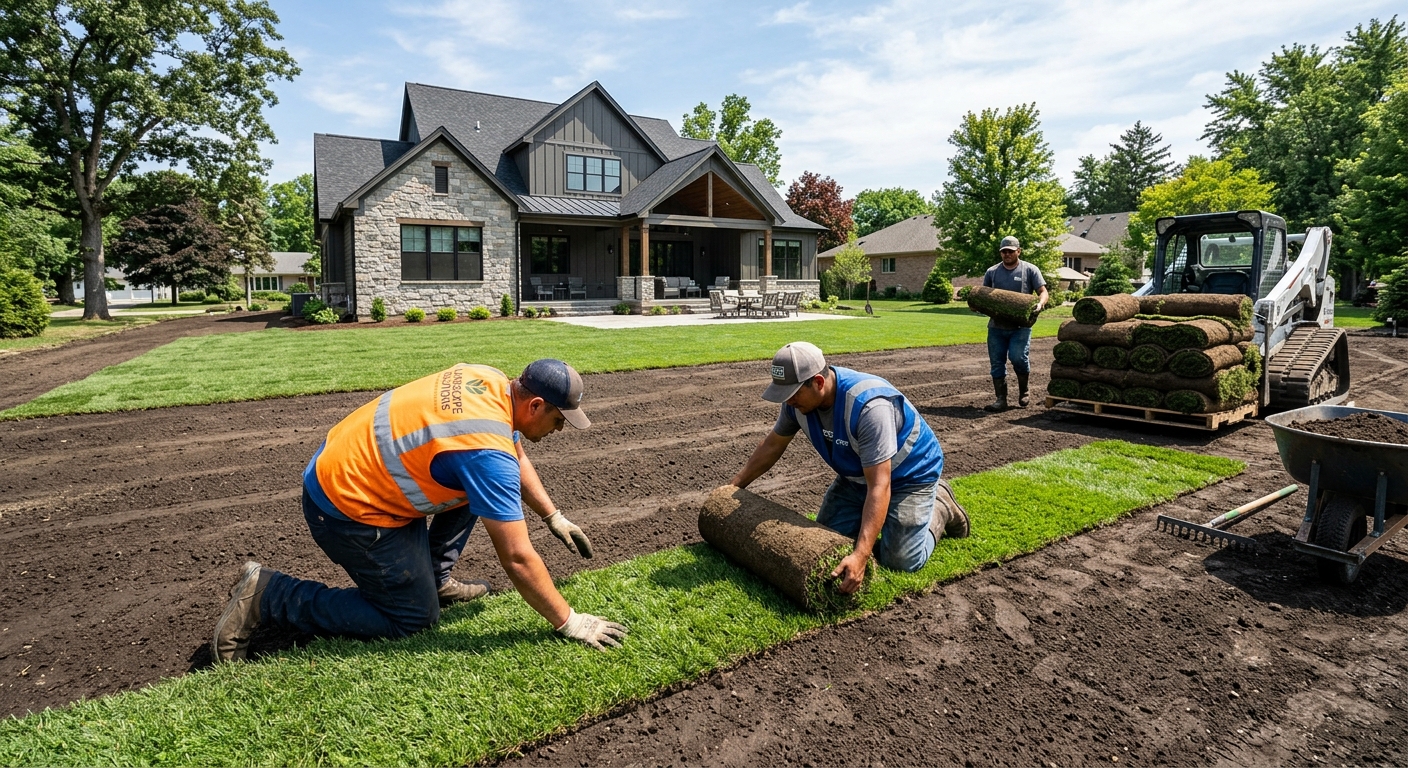
| Sod installation (supply, grade, lay, roll) |
Site prep, grading, base preparation, soil amendment, delivery, laying and rolling |
Late spring through early fall (avoid extreme wet weeks) |
$2,000–$8,000 |
| Lawn seeding (grade, seed, starter fertilizer) |
Light grading, seed selection, starter fertiliser, and establishment care |
Early spring and early fall |
$1,500–$6,000 |
| Interlocking patio or walkway |
Excavation, base (crushed stone/compaction), edging, interlocking stone placement, joint sand |
Spring to fall (timing improves weather reliability) |
$10,000–$40,000 |
| Retaining wall (interlocking block) |
Wall layout, excavation, geotextile/base prep, block installation, drainage weep pathway |
Spring to fall |
$15,000–$60,000 |
| Tree and shrub planting |
Plant supply and install, staking (if needed), compost/soil improvements, mulching, basic post-plant care |
Spring to early fall |
$1,000–$15,000 |
Prices are estimates only and vary by project scope, site access and material selection.
What affects the price of landscaping in Fraser Heights
In Fraser Heights and the wider Lower Mainland–Southwest, it’s common to see quote differences of 30–50% for what looks like the “same” job—usually because the hidden scope isn’t identical. Labour rates, logistics (delivery/haul distance), and the quality of the base work and drainage can swing totals. Even within British Columbia, contractors may plan very differently because hardiness zones and frost windows change what survives and how long crews can work. For example, in Zone 2–4 Prairie regions, customers often need drought-tolerant, wind-hardy species and schedules are constrained by short frost-free periods. In coastal BC (Zone 7–8, like Fraser Heights), the longer season supports larger plant palettes and more layered planting, but contractors still must build structural bases to handle freeze–thaw cycles and wet winters—especially for retaining walls and patios.
Two practical examples that raise costs in Fraser Heights: (1) if your yard is sloped or downspouts discharge toward the foundation, drainage correction and extra grading can quickly add thousands to a budget in the $10,000–$80,000 retaining wall/hardscaping range; (2) if the wall needs a proper drainage bed and weep system, the “block-only” price isn’t the real cost. Conversely, costs can be lower when the site is level and soil is already well-draining—then tree and garden planting budgets in the $1,000–$15,000 band may cover a fuller planting count with less excavation.
Housing stock also matters. Older lots often have compacted fill or unknown drainage patterns; if you’re dealing with heavy soil or old topsoil, soil amendment and topsoil replacement can materially affect the final number. Even a small change—like adding irrigation design instead of “spray heads only”—impacts both materials and labour, but it can protect your investment when seasons shift.
| Price Factor |
Why It Matters |
Cost Impact |
| Yard size in sq ft — the primary cost driver for softscape |
More area means more prep, base, and plant material; unit costs multiply |
Small yards can fall closer to the low end; larger yards typically push toward mid/high bands |
| Grading and drainage work — slope corrections add significant cost |
Coastal BC rain can pool; poor grading increases foundation moisture risk |
Often adds substantial labour + disposal; commonly responsible for 20%+ swings on “similar” quotes |
| Drainage bed or French drain installation |
Proper underdrain reduces hydrostatic pressure near foundations and walls |
Can materially increase totals, especially on sloped or heavy-soil lots |
| Plant material tier — native shrubs vs. ornamental vs. mature specimen trees |
Mature specimens cost more and may require extra crew time for handling |
“Same look” can differ widely—upgrading plants can move projects up the $1,000–$15,000 planting band |
| Hardscape vs. softscape ratio — walls and patios cost more per sq ft than lawn |
Interlocking stone and block require deeper excavation, base materials and compaction |
Shifts budgets toward the $10,000–$80,000 hardscaping/retaining-wall ranges faster |
| Irrigation system design and installation |
Efficient layouts prevent waste and help lawns survive occasional restrictions |
Upfront cost increases, but it can reduce replacement/patching later |
| Soil amendment and topsoil required |
Improves rooting and drainage; reduces transplant shock and patchy lawns |
Extra material delivery and labour can move totals noticeably, especially for new planting beds |
| Tree removal or stump grinding before new planting |
Stumps and debris affect grading and planting layout; removal is labour-intensive |
Often adds a separate line item that can shift a mid-range softscape project upward |
Permits & regulations in British Columbia
In British Columbia, most standard landscaping work—like planting, sodding, and typical softscape installations—generally do not require a permit. The main exceptions I see around Fraser Heights involve retaining walls above a height threshold, which typically require a permit and, in some cases, engineered drawings. Municipal thresholds often centre around about 1.0 m (3.3 ft), but you should confirm with your local permitting office or your contractor’s permitting team before work starts.
Other items that can trigger approval include changes to lot grading that alter drainage flow toward neighbouring properties or storm connections. Because rain and downspouts matter in the Lower Mainland–Southwest, contractors should also coordinate drainage so water doesn’t end up where it shouldn’t.
Before digging for planting holes or wall footings, always call for utility locates. In Fraser Heights, it’s common to encounter underground services near foundations, irrigation lines, and street-side tie-ins.
To verify your contractor in British Columbia, use a simple step-by-step check: (1) confirm they’re properly licensed for the work they advertise (if applicable to their trades/scope); (2) ask for proof of liability insurance and ensure the certificate names your project/address or owner (the certificate of insurance should be current); (3) confirm WSIB/WCB coverage for workers (request a clearance letter or proof documentation, depending on their situation); and (4) request written evidence of current coverage dates and whether subcontractors are covered. If they hesitate to provide documents promptly, that’s a warning sign.
Planning a landscape that thrives in Fraser Heights's climate
Designing for Fraser Heights is about working with the region’s Zone 7–8 climate, frequent moisture and wet winters, and an extended growing window with spring frost typically arriving in the early March to early April range near the coast. Plant selection should prioritise zone-appropriate, often native-friendly species that handle cool seasons well and don’t demand constant winter protection. When clients want “lush” yards, this zone makes it realistic—yet it still requires smart drainage and soil prep to avoid pooling and foundation moisture.
Sod versus seed is a common decision point. Sod gives instant results but generally costs 3–4x more per sq ft than seeding because it includes the turf supply, delivery and labour-intensive laying. In a Fraser Heights renovation where you need your front yard looking finished for an upcoming move, the added cost can be justified—especially if you pair it with proper grading so the lawn roots evenly. For long-term savings, seeding in early spring or early fall often performs well when combined with starter fertiliser and correct soil contact.
Drainage and grading are non-negotiable here. Even when winters are mild, the combination of rain and freeze–thaw cycles means foundations, slopes and retaining-wall bases must be built with deeper excavation, good compaction and proper drainage layers. For low maintenance, use mulch (to stabilise moisture), groundcovers (to reduce weeds), and perennials with staggered bloom times—plus drip irrigation or smart controllers so occasional water restrictions don’t turn into lawn die-off.
If you want a water-wise option without going “all gravel,” consider rain-garden style planting beds that slow runoff and infiltrate where appropriate—this fits the Lower Mainland–Southwest reality of heavy wet periods and helps protect your landscaped investment.
| Element |
Climate Consideration |
Maintenance Level |
Price Band |
| Sod lawn installation |
Best when established in mild windows; needs proper grading to prevent waterlogging in wet weeks |
Low to moderate (watering during establishment; occasional patching) |
$2,000–$8,000 |
| Native perennial garden |
Zone-appropriate selections handle cool seasons and moist periods better than many exotics |
Low (spring tidy-up and occasional dividing) |
$3,000–$12,000 |
| Mulched shrub border |
Mulch helps regulate soil moisture through wet winters and cool summers |
Low (weeding reduced; refresh mulch periodically) |
$2,500–$10,000 |
| Interlocking stone patio |
Requires base prep that accounts for freeze–thaw and drainage around the structure |
Low (annual joint sand top-up; re-level if settling occurs) |
$10,000–$40,000 |
| Retaining wall (block) |
Needs engineered-style drainage approach for wet soils and frost movement |
Low (visual inspection after heavy rain/winter) |
$15,000–$60,000 |
| Drip irrigation system |
More efficient for moisture delivery and easier to manage if restrictions tighten |
Low (seasonal checks; controller programming) |
$1,500–$7,500 |
How to choose a landscaping contractor in Fraser Heights
Choosing the right contractor in Fraser Heights starts with verifying coverage and scope clarity. In British Columbia, ask for (1) liability insurance (certificate of insurance with current dates; the project/owner should be noted where applicable); (2) WSIB/WCB coverage for workers—most responsible employers can provide a clearance letter or proof of coverage; and (3) proof of any applicable professional licensing/registration related to their portion of the work. If the contractor uses subcontractors, confirm they’re also covered.
Next, get 2–3 itemised written quotes. The best bids break labour and materials out separately (excavation, base materials, disposal, plant supply, irrigation parts, and installation labour). Avoid “lump sum only” quotes that don’t specify quantities, product sizes, or what’s included in grading and drainage.
Read the scope carefully: is permit pulling included if needed (often for retaining walls over the height threshold)? Is disposal included for old sod, soil, and debris? Will they stabilise the subgrade before paving/patio work? What’s excluded—topsoil replacement, tree removal, stump grinding, or utility locates? A workmanship warranty should be stated clearly (length, what’s covered, claim process). Product/manufacturer warranties should be listed separately and explain whether coverage is transferable to a homeowner.
For payment, don’t pay more than about 10–15% upfront. Hold back the remainder until the job is complete and inspected, including cleanup, final grading, and establishment instructions. Finally, insist on a written timeline with a start date and estimated completion window.
- Provide insurance and WCB/WSIB proof before you sign anything.
- Show an itemised estimate with quantities (sq ft, linear ft, plant counts/sizes).
- Confirm who pulls permits (if retaining walls exceed local thresholds).
- Clarify what disposal/haul-off is included.
- Ask about base construction details for patios/walkways (thickness and compaction steps).
- Confirm drainage plan: downspouts, grading fall direction, and any drain bed/French drain.
- Verify irrigation scope: zones, controller type, and whether heads are matched to turf/bed layouts.
- Get warranty length for workmanship and how to make a claim.
- Check whether plant material substitutions are allowed and how pricing changes.
- Confirm site protection measures (fencing, walkway covers, soil stabilization).
- Agree on start/completion dates in writing and weather contingency notes.
- Ensure final walk-through includes as-built notes (especially for drainage and irrigation).
Red flags I often see with Fraser Heights landscaping contractors: vague quotes with no quantities; avoiding insurance/WCB proof; promising “cheap” patio or wall pricing without explaining drainage and base preparation; no stated workmanship warranty; and pressure to pay the majority upfront before any materials are onsite.
Frequently asked questions — landscaping in Fraser Heights
How much does professional landscape design cost?
In Fraser Heights, professional landscape design can range widely because it depends on whether you’re getting a simple layout versus a full planting plan with site considerations. Many homeowners budget within the broader design/installation market bands—often starting around the lower end of the $5,000–$50,000 range when design is bundled with installation. If you’re only commissioning design (no build), expect a smaller scope cost tied to yard size and complexity such as grading/drainage and irrigation planning. The Zone 7–8 climate supports more plant options, so the design time can increase if you want a layered evergreen/perennial palette that looks good year-round. (Statistics Canada, 2021 Census) notes Fraser Heights’ population context contributes to steady local demand, which can affect scheduling and availability for design crews.
How do I compare landscaping quotes?
To compare quotes in British Columbia effectively, insist on itemised breakdowns: labour hours, materials list (including plant sizes and stone types), and what’s included for excavation, base prep, and drainage. A quote that lands in the middle may still be cheaper overall if it includes proper drainage and soil amendments—those details influence long-term performance in the Lower Mainland–Southwest’s wet winters and freeze–thaw conditions. Compare apples to apples by asking: Is disposal included? Is topsoil added or only existing soil amended? Are irrigation and controllers included if you want them? For lawn work, compare seeding versus sod options using consistent sq ft coverage. As a quick anchor, sod supply-and-lay often falls in the $2,000–$8,000 band, while larger hardscape projects can move toward the $10,000–$80,000 ranges depending on scope.
How long does a landscaping project take in Fraser Heights?
Timelines in Fraser Heights usually depend on weather windows, drainage complexity, and whether you’re doing softscape, hardscape, or both. Because the region sits in plant hardiness Zones 7–8, crews often have a longer season than colder provinces—spring frost commonly falls in early March to early April near the coast, and first fall frost is often not until November. That said, wettest winter weeks and heavy rain can slow excavation, especially for patios and retaining walls that require dry base conditions and proper compaction. Typical small projects (tree/shrub planting) can be completed in days, while sod or seeded lawn work plus soil prep may take 1–2 weeks including establishment steps. Interlocking patios and retaining walls usually require more time due to excavation, base layers, and cure/compaction checks before turf/finishing work.
What is the best grass type for a Fraser Heights lawn?
For Fraser Heights in coastal BC, homeowners generally get the best results with cool-season turf types suited to Zones 7–8 and frequent moisture. In practice, contractors commonly recommend a blend that includes fine fescue (good tolerance for varied moisture and lower maintenance) and perennial ryegrass or other cool-season varieties for quicker establishment. The “best” choice depends on sun exposure (front yards often differ from shaded side yards), whether you’re seeding or laying sod, and how you plan to irrigate during establishment. Even the right grass struggles if grading is wrong or if water pools near foundations. If you’re choosing sod, your contractor will match turf to site conditions; if you’re seeding, they’ll select seed appropriate for early spring or early fall sowing in the Fraser Heights climate.
When should I aerate and overseed my lawn in Fraser Heights?
In Fraser Heights, plan aeration and overseeding around the mild periods that give grass time to recover before colder, wetter stretches. For most cool-season lawns, aerate and overseed in spring when frost risk eases (often early March to early April near the coast) or in early fall before first frost, which is often not until November. That timing helps new seed germinate and roots establish without heat stress. If your lawn is mostly weeds or bare patches, sometimes first-year “reset” work with seeding or sod is more effective than aeration alone. Also, aeration should be paired with correct topdressing and starter fertiliser to improve seed-to-soil contact. If you previously paid for sod work, ask your contractor whether your turf is mature enough to handle aeration without thinning.
What trees grow best in Fraser Heights's climate zone?
With Fraser Heights falling in Zone 7–8, many broadleaf evergreens and hardy deciduous trees can do well if placed correctly for soil drainage and sun exposure. Common choices often include trees like Japanese maple cultivars (for ornamental interest), flowering cherries, and serviceberry, plus conifers that tolerate coastal conditions for year-round structure. The key is matching the tree to the site: wet areas need drainage improvements first, and sloped properties benefit from careful placement to reduce erosion near foundations. Planting in cool-season windows (spring to early fall) supports better root establishment in British Columbia’s climate. If you’re planning a layered design, a tree plus understory shrubs and perennials is typically more cost-effective than adding one large specimen alone, which can push planting budgets toward the upper end of the $1,000–$15,000 band depending on size and handling needs.