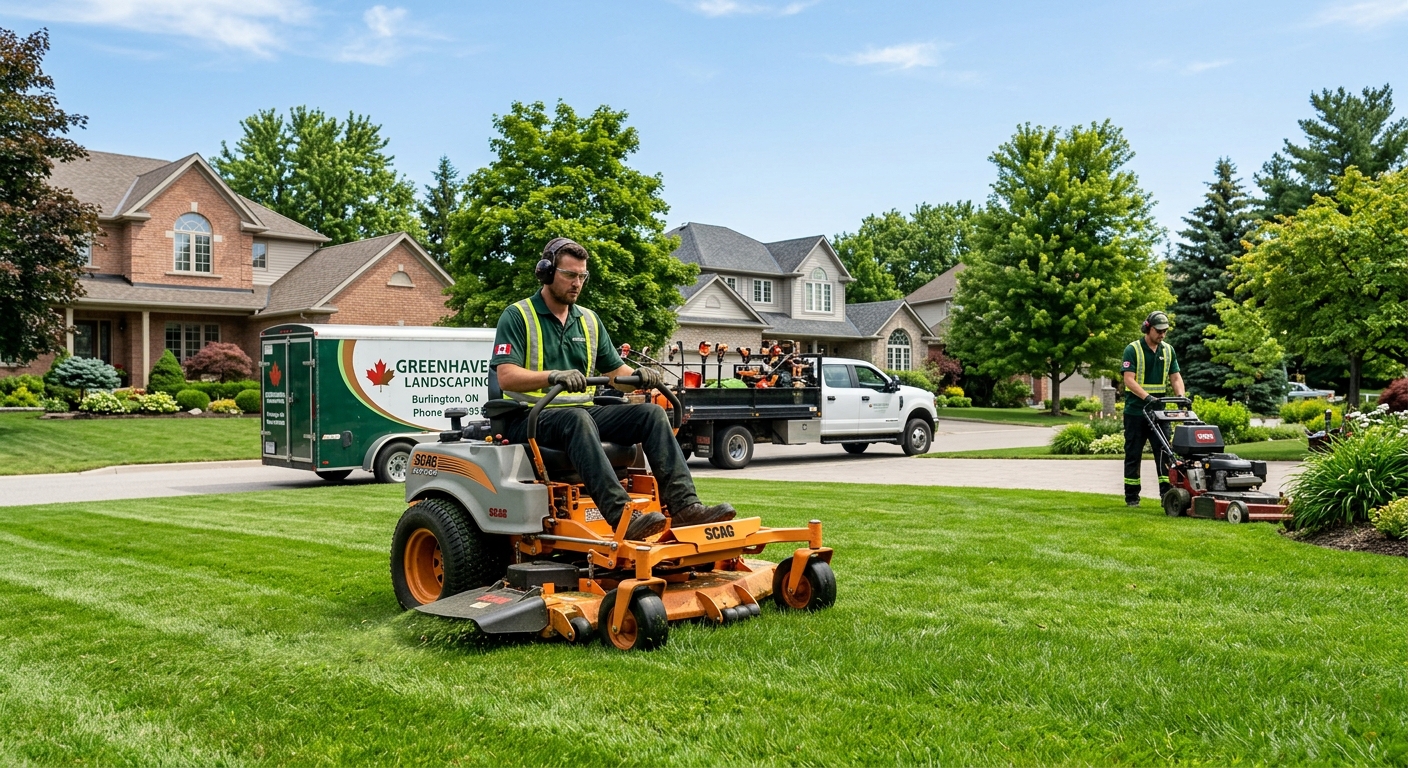
Landscaping options and costs in Vanderhoof
Vanderhoof homeowners usually start their landscaping planning with what fits a detached-house yard, and in this community, that’s a big deal: 68.3% of local dwellings are single-detached, so there’s often meaningful space to shape drainage, add walkways, and establish hardy planting beds. Homeownership is also high (69.8% of households own), which typically supports longer-term yard investments rather than purely cosmetic, short-lived fixes.
In the Nechako region (interior BC), pricing is strongly influenced by the climate and how it compresses the working season. With plant hardiness around zones 3–4, we specify cold-tolerant shrubs, trees, and perennials, and we plan installation around deep frost and freeze–thaw cycling that can extend frost into the spring and return by late fall. That means more subgrade preparation, deeper bases for patios and steps, and drainage work that meets interior standards—costs you won’t see in mild coastal installs. Contractor availability can also tighten during the short window for sod, concrete base prep, and hardscape finishing.
In Vanderhoof, demand is especially common around the town core and the Highway 16 corridor where yards sit closer to wind exposure and compacted soils from traffic. If you want a yard that performs through winter—not just looks good in July—comparing scope and seasonal sequencing matters. Use the ranges below as a starting point, then we’ll narrow the numbers with your yard measurements and soil/drainage observations.
| Service |
Description |
Season |
Price Range |
| Full landscape design and installation |
Site visit, grading/drainage plan, plant palette for zones 3–4, planting, topsoil/compost, mulch, hardscape coordination |
Late spring to early fall (weather permitting) |
$8,000–$60,000 |
| Sod installation (supply, grade, lay, roll) |
Site grading, weed control base, sod supply, lay/roll, light topdressing at seams |
May to early September |
$6–$12 |
| Lawn seeding (grade, seed, starter fertilizer) |
Grade and rake, seed blend for interior conditions, starter fertilizer, light straw or mulch where needed |
Late spring and early fall |
$1,000–$3,500 |
| Interlocking patio or walkway |
Excavation, compacted base, leveling sand, interlocking pavers, edge restraints, basic finishing |
Late spring to early fall (concrete work window dependent) |
$3,000–$25,000 |
| Retaining wall (interlocking block) |
Block retaining wall, deepened footings (as required), drainage gravel, filter fabric, backfill |
Typically late spring to early fall |
$120–$400 |
| Tree and shrub planting |
Soil amendments, planting, staking as needed, mulch rings, watering plan and establishment care |
Spring and fall planting windows |
$500–$15,000 |
Prices are estimates only and vary by project scope, site access and material selection.
What affects the price of landscaping in Vanderhoof
Even when two homeowners request “the same” landscaping in the Nechako region, quotes can land 30–50% apart across British Columbia because the biggest drivers aren’t just materials—they’re winter-readiness, subgrade work, and how long the contractor can safely work before frost impacts the schedule. In Vanderhoof (zones 3–4), we build for prolonged cold and serious freeze–thaw cycling, so costs rise when a job needs deeper bases, stronger compaction, and drainage measures that prevent heaving. In contrast, coastal BC (zones 7–8) can support a longer growing season and broader plant palettes, but it still demands careful drainage where rainfall is heavy. Meanwhile, water restrictions across the dry interior shape how we design irrigation—typically efficient drip and zoned watering rather than high-volume spray systems.
Compared with southern Ontario (zones 5–6), Vanderhoof is more extreme for winter survival, so we often lean more on cold- and drought-tolerant species and winter mulching/anti-wind placement. That shifts costs toward hardy, sometimes larger-caliper stock that establishes quickly in a tough climate.
Two practical cost examples from Vanderhoof: (1) A lawn project in a compacted yard can move from a relatively small seeding job into a larger topsoil and grading package—one reason sod can climb into the higher band (for example, sod supply/installation is commonly quoted in the $6–$12 per sq ft band, while a broader seeding/topsoil scope often sits in the $1,000–$3,500 range). (2) Retaining walls are a different economics story: deeper footings and drainage gravel are not optional in freeze–thaw country, so interlocking block pricing often starts in the $120–$400 band but can rise sharply with height, length, and excavation complexity.
Finally, housing age matters. With 55.6% of homes built before 1981, many yards have older drainage patterns and established tree roots that can mean more prep work. That’s where costs can jump—especially if you’re addressing foundation moisture instead of only adding aesthetics.
| Price Factor |
Why It Matters |
Cost Impact |
| Yard size in sq ft — the primary cost driver for softscape |
More area means more labour for grading, planting, mulch, and ongoing materials |
Softscape costs scale quickly; can change a quote by 15–40%+ |
| Grading and drainage work — slope corrections add significant cost |
Interior BC soils must be shaped to shed water away from foundations and prevent pooling |
Often adds the biggest unexpected line item; 20–30%+ possible |
| Drainage bed or French drain installation |
Freeze–thaw requires robust drainage under hardscapes and low spots |
Can add thousands depending on length and tie-in details |
| Plant material tier — native shrubs vs. ornamental vs. mature specimen trees |
Mature stock costs more and needs better root protection and staking |
May swing planting costs from hundreds to high-end $15,000-style totals |
| Hardscape vs. softscape ratio — walls and patios cost more per sq ft than lawn |
Excavation, base materials, pavers/block, and labour are more intensive than seeding |
High hardscape builds budgets fast; patios/walks can dominate totals |
| Irrigation system design and installation |
Efficient drip/zoning reduces water waste in the dry interior; electrical/manual controls add cost |
May add meaningful cost, but improves establishment and reduces failures |
| Soil amendment and topsoil required |
Old yards often need compost, topsoil depth, and pH/texture improvements for root growth |
Large imports can materially increase total project pricing |
| Tree removal or stump grinding before new planting |
Roots and stumps affect drainage and planting layouts; disposal and site clearing add labour |
Can turn a planting project into a hardscape-ready excavation plan |
Permits & regulations in British Columbia
In British Columbia, most typical landscaping work—like planting beds, sodding, seeding, and standard softscape installation—generally does not require a permit. However, there are important exceptions. Retaining walls above a common municipal threshold (often around 1.0 m / 3.3 ft in many jurisdictions) typically require a building permit, and sometimes engineered drawings depending on height and the load conditions behind the wall. Also, changes to lot grading that could affect drainage toward neighbouring properties or storm systems may trigger approval requirements, especially where water routing and erosion control become concerns.
Before any digging—whether for planting holes, drip irrigation trenches, or retaining wall footings—arrange utility locates. In practice, this is the step that prevents “surprise” utility conflicts once we’re ready to excavate. For homeowners, it also helps your contractor schedule confidently during the narrow working season in Vanderhoof.
To verify a contractor in Vanderhoof, ask for three things up front: (1) a current certificate of insurance (liability) with a clear policy number and coverage limits; (2) proof of WSIB/WCB coverage as applicable for their workers (or clearance documentation showing account status); and (3) licensing/registrations relevant to the scope. In British Columbia, start by checking the contractor’s online standing and professional listings, then request the certificate of insurance directly and confirm they can provide documentation promptly. A reputable crew won’t hesitate to share paperwork before you sign—especially where excavation or hardscape base work is involved.
Planning a landscape that thrives in Vanderhoof's climate
Planning a landscape for Vanderhoof means designing with the frost calendar and harsh winter conditions in mind, not trying to “coast” through on the same plant list you’d see on the BC coast. Vanderhoof sits around plant hardiness zones 3–4, where deep freeze and freeze–thaw cycling can push moisture and materials and where wind exposure can dry plants out fast. Start with plant selection: choose zone-appropriate, cold-hardy, and where possible drought-tolerant varieties that can handle winter protection with a simple mulch layer. Native and locally proven species usually need less fuss than finicky ornamentals, and they’re easier to maintain year after year.
Sod versus seed is another climate-driven decision. Sod gives instant curb appeal, but in Nechako conditions it’s typically about 3–4x higher per sq ft than seeding because you’re paying for turf supply plus the need to establish quickly within a short window. A realistic example: if you’re working around a small front entry, a sod install can land in the $6–$12 per sq ft band, while seeding for the same area is often closer to a $1,000–$3,500-style scope depending on site prep.
Drainage and grading come next. Freeze–thaw punishes poor water management: pooling near foundations can lead to foundation moisture and heaving under patio bases. For hardscape like patios and retaining walls, base preparation must account for deep frost conditions—strong drainage layers and proper compaction are non-negotiable. Finally, low-maintenance strategies matter: groundcovers, mulched shrub borders, and hardy perennials reduce annual upkeep without sacrificing curb appeal. Xeriscape-style design—using efficient drip irrigation and mulching rather than frequent water—fits the drier interior context well, and rain-garden style planting depressions can help capture and absorb stormwater naturally.
| Element |
Climate Consideration |
Maintenance Level |
Price Band |
| Sod lawn installation |
Establishment must occur in the short safe growing window; frost can delay roots from locking in |
Medium early on (watering schedule and seam care), then low |
$6–$12 |
| Native perennial garden |
Zone-appropriate plants handle cold and wind; deeper roots improve drought resistance |
Low to medium (weed control year 1, then tidy/prune) |
$1,500–$8,000 |
| Mulched shrub border |
Mulch buffers freeze–thaw and helps conserve moisture in drier stretches |
Low (spring cleanup, occasional refresh) |
$500–$5,000 |
| Interlocking stone patio |
Needs proper base depth and drainage to prevent heaving during freeze–thaw cycles |
Low (periodic leveling checks and edge maintenance) |
$3,000–$25,000 |
| Retaining wall (block) |
Deeper footings and drainage gravel are essential in frost country |
Low (mostly inspections after heavy freeze–thaw winters) |
$120–$400 |
| Drip irrigation system |
Efficient watering supports drought-tolerant planting and reduces waste in dry seasons |
Medium (winter shutoff and periodic filter/head checks) |
$2,000–$12,000 |
How to choose a landscaping contractor in Vanderhoof
Choosing the right contractor in Vanderhoof starts with verification. In British Columbia, confirm liability insurance (request the certificate and ensure it lists their business name correctly and includes adequate limits for your scope), and verify worker coverage using WSIB/WCB documentation as applicable. Then, check licensing/registrations relevant to the work they’re advertising—especially anything involving excavation, hardscape base preparation, and retaining walls where permits/engineering may apply depending on height and conditions.
Next, get 2–3 itemised written quotes. You want a labour + materials breakdown rather than a single lump sum. Ask for line items for excavation, disposal, topsoil/imported fill, drainage (if included), fabric/rock, base course, pavers/block, and planting stock sizes. For any retaining wall or hardscape, ask whether deepened footings and drainage gravel are included or treated as “extras.” Also clarify what’s excluded: permit pull responsibility, utility locates, rock grading, weed control, and whether seasonal cleanup or establishment watering is part of the contract.
Warranty matters for both workmanship and materials. Ask for the workmanship warranty length (and what it covers), whether plant warranties are from the manufacturer or the supplier, and whether coverage is transferable if you sell the home. A fair payment schedule is typically 10–15% upfront at most, with progress payments tied to completed milestones. Hold back until key items are done—especially drainage tie-ins, base compaction, and final planting/cleanup. Finally, get a timeline with an expected start date and completion estimate in writing, because the Nechako working season can be tight due to frost and freeze–thaw.
- Request insurance certificate and confirm it matches the contractor’s legal name.
- Verify worker coverage status (WSIB/WCB documentation) before work begins.
- Ask for a licence/registration reference relevant to excavation/hardscape scope.
- Get itemised quotes (labour, materials, disposal, drainage, topsoil/imported fill).
- Confirm whether utility locates are included or the homeowner/contractor responsibility.
- Ask if grading/drainage corrections are scoped or treated as an extra.
- Verify base depth and drainage layers for patios/walkways/steps in frost country.
- Clarify planting sizes (e.g., root ball diameter/height) and how many plants per square metre/foot.
- Confirm weed-control approach before sod/seeding and after planting.
- Ask for warranty terms in writing (workmanship and plant material coverage).
- Use a staged payment schedule: keep upfront to about 10–15% and hold back until completion.
- Ensure timeline is written, including material lead times and weather contingencies.
Red flags I commonly see in Vanderhoof: (1) quotes that skip drainage/grading details and assume “level yard” without a site assessment; (2) no written scope, schedule, or exclusions; (3) reluctance to provide insurance/coverage paperwork; (4) large upfront payments; and (5) vague warranties that don’t specify what’s covered for workmanship versus plants.
Frequently asked questions — landscaping in Vanderhoof
What trees grow best in Vanderhoof's climate zone?
In Vanderhoof and much of the Nechako interior, choose trees that handle cold winters and wind. Commonly reliable options tend to include hardy spruce and pine varieties, plus selections of larch that can handle interior temperature swings. The best choice depends on your yard’s sun exposure and whether drainage is good or there’s seasonal moisture near the foundation. Because 55.6% of local homes are older (built before 1981), many yards have established drainage patterns and compacted soil that can stress newer trees—so we often start with soil improvement and proper planting depth. If you’re budgeting, tree planting is typically quoted in the broad $500–$15,000 band depending on the caliper, number of trees, and whether we’re dealing with stump removal or hardscape tie-ins (Statistics Canada, 2021 Census).
How much does sodding a yard cost in Vanderhoof?
For Vanderhoof, sod pricing is usually structured per square foot once site conditions are assessed. The typical range we see for sod supply, grade preparation, and installation sits around $6–$12 per sq ft, with the final total depending on how much grading/topsoil is needed and how accessible the yard is. In the Nechako climate, sod also needs careful installation timing so roots establish before frost slows growth—typically late spring into early fall. If your yard has compacted areas or drainage problems, a “cheap” sod quote can become expensive once drainage/grading is addressed properly. If you want cost control, seeding may be less per sq ft, but sod gives instant coverage when installed in the right window.
How do I prevent weeds in my Vanderhoof garden?
Weed prevention in British Columbia’s interior is mostly about blocking opportunity and reducing seed-to-soil contact. Start by eliminating perennial weeds before mulch goes down—especially in areas where old lawns or disturbed soil remain. For planting beds, use a proper base (often landscape fabric under mulch where appropriate) plus 2–3 inches of quality mulch for insulation through freeze–thaw cycles. In year one, routine spot weeding is still important because interior conditions can bring weed pressure as soils thaw. If you’re doing sod or seeding, insist on prep: raking, leveling, and a consistent seed bed or sod base. In older yards common around town, re-grading can prevent low, damp zones that favor weeds. With the community’s strong detached housing stock (68.3% of dwellings), weed control often needs to be planned across front and side yards, not just a small backyard bed.
How do I design a low-water yard in Vanderhoof?
Designing for low water in Vanderhoof means choosing drought-tolerant, zone-appropriate plants and combining efficient irrigation with soil improvements. Since frost can stay active and return again later, plants also need winter protection (mulch and good root establishment) so they’re stronger going into dry summer stretches. Use a “right plant, right place” layout: taller shrubs near windbreaks, groundcovers in sun, and perennials where drainage is consistent. Consider drip irrigation with zoning rather than sprinklers, and set it to run only long enough for root uptake. Mulch is a major helper because it reduces evaporation between waterings. For budgets, a full irrigation plan can affect total project cost, but it can prevent failed plantings and reduce rework—often a better long-term outcome than trying to stretch watering with a standard lawn plan.
How do I find a licensed landscaper in Vanderhoof?
Start locally in Vanderhoof by asking for documentation before you sign anything. In British Columbia, you should request a current liability insurance certificate and worker coverage documentation (WSIB/WCB coverage as applicable). Then ask for the relevant licence/registration for the scope they’re proposing, especially if there’s excavation, hardscape base work, or retaining wall construction where permitting/engineering may come into play. You can also check online for the contractor’s standing and any professional listings, but the most reliable step is direct paperwork review: certificate of insurance, clearance letters/status documents, and itemised scope. A good contractor will provide these quickly and clearly. If they can’t—or won’t—share documentation, treat it as a red flag given how freeze–thaw conditions can make drainage and base work non-negotiable.
How much does landscaping cost in Vanderhoof?
Landscaping costs in Vanderhoof vary widely based on scope—most homeowners end up choosing a package approach (softscape + planting) or adding hardscape (walkways/patios/walls) and drainage fixes. For a full landscape design and installation, typical interior ranges land around $8,000–$60,000 depending on yard size, grading, and the amount of hardscape. For lawn work, sod is commonly quoted in the $6–$12 per sq ft band, while seeding is often less expensive but takes longer to fully fill in. Retaining walls and block work can start in the $120–$400 band, but the total climbs with height, length, and excavation/dewatering. Because 69.8% of households own their homes (Statistics Canada, 2021 Census), many projects prioritize long-term drainage performance rather than only short-term aesthetics.