Landscaping options and costs in Trail
Trail, British Columbia is a place where your yard has to look good and also survive real winters—freeze–thaw cycles, late spring frosts, and short, frost-defined planting windows. That matters because most homes in town come with yard space and an incentive to invest: in 2021, 68.9% of homeowner households owned their homes (Statistics Canada, 2021 Census), and single-detached houses make up 70.4% of dwellings—so driveways, walkways, and planting beds are among the most common upgrades.
In the Kootenay, landscapes are often designed around hardiness zones roughly 5–6, depending on elevation and exposure. Crews typically plan installations from mid-April through October, but actual work may tighten around last frost in specific valleys and first fall frost on exposed benches. Labour availability can also shift seasonally: peak planting and lawn work runs in a short window, so timelines can affect pricing.
If your property is in areas like Columbia Gardens or the Canal Flats–adjacent hillsides (where slopes and drainage are common), expect more design time for grading, drainage beds, and retaining-wall base prep to reduce heaving. Those foundation-level details are one reason “the same” project can vary significantly in Trail—from straightforward planting to full regrading and drainage.
Below is a practical comparison of common options and typical price ranges so you can benchmark your next quote.
| Service |
Description |
Season |
Price Range |
| Full landscape design and installation |
Site visit, concept + layout, grading/drainage plan, plant list, soil/topsoil amendments, planting, and installation coordination |
Apr–Oct (often mid-April to mid-June for planting; fall options for hardy perennials) |
$8,000–$60,000 |
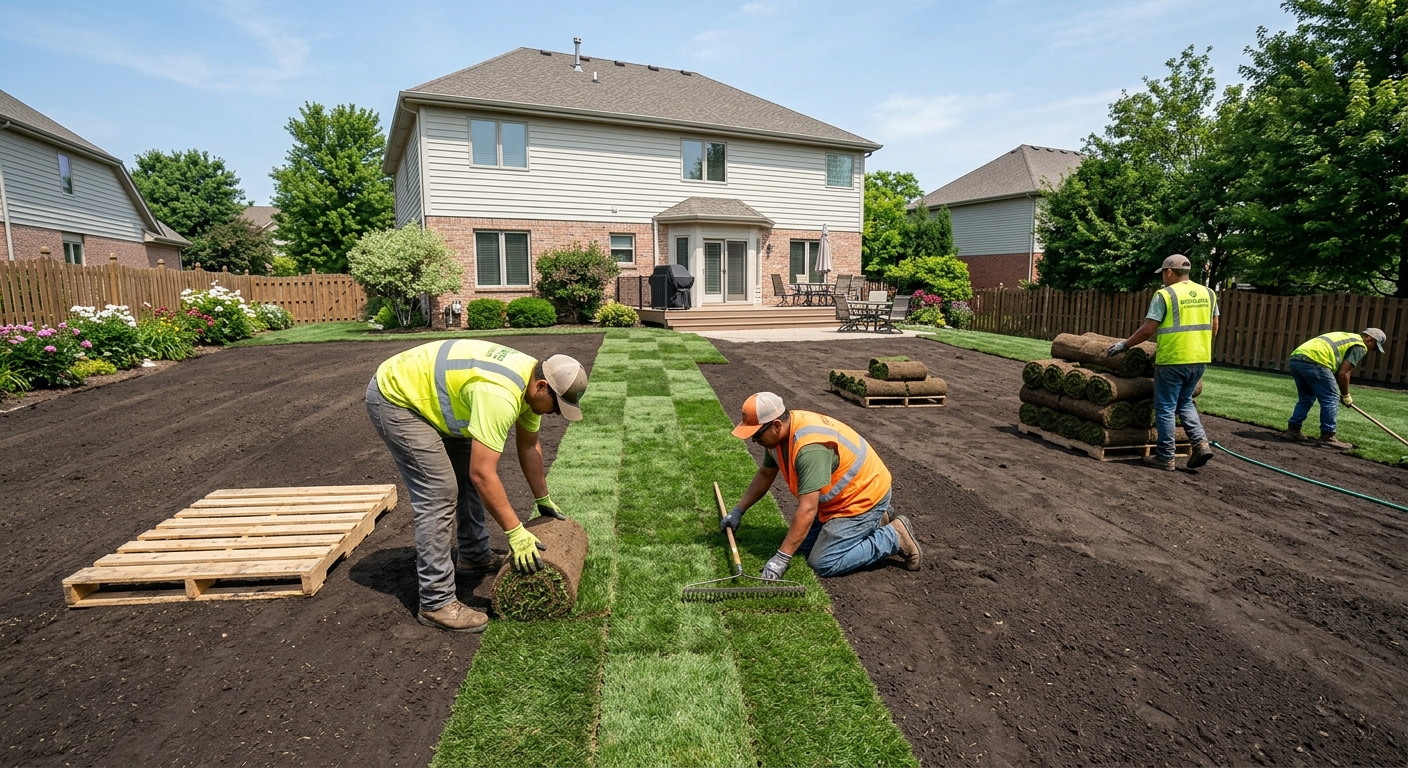
| Sod installation (supply, grade, lay, roll) |
Minor grading, weed mat where needed, supply and install sod, roll/level, starter fertilizer |
Late Apr–Sep (best results in spring and early fall) |
$6–$14 |
| Lawn seeding (grade, seed, starter fertilizer) |
Grading/seedbed prep, compatible seed mix for shade/sun, starter fertilizer and light raking |
Apr–Jun and Aug–Sep |
$1,200–$3,500 |
| Interlocking patio or walkway |
Excavation, compacted base, sand setting layer, interlocking stone pavers, edge restraints |
May–Sep (weather-dependent) |
$2,500–$18,000 |
| Retaining wall (interlocking block) |
Excavate to base depth, geotextile/aggregate, wall blocks, drainage gravel and weep provisions |
May–Sep (frost-free base work) |
$5,000–$45,000 |
| Tree and shrub planting |
Plant supply + install, staking where required, topsoil amendment, watering plan, mulch beds |
Apr–Jun and Sep–Oct (choose hardier stock for fall) |
$500–$15,000 |
Prices are estimates only and vary by project scope, site access and material selection.
What affects the price of landscaping in Trail
In Trail and across Kootenay compared with other parts of British Columbia, the same “basic” landscaping scope can land 30–50% apart because the work is rarely identical once soil, drainage, and frost-proofing requirements are counted. In Kootenay (Zones ~5–6), the frost-defined season shortens the window for proper base compaction and planting, and it also affects how deep footings and wall bases must be built to resist heaving. When crews have to rework drainage or build heavier compaction layers, costs rise even if the visible finish looks similar.
Prairie regions (Zones 2–4) typically require more drought- and wind-tolerant species and careful moisture management, while coastal BC (Zones 7–8) often supports a broader palette and longer growing season, but heavy rain still demands good drainage detailing. In the dry BC interior, including many Kootenay properties, water-use realities steer clients toward drip irrigation, mulch, and lawn-alternative areas—design elements that add planning and sometimes irrigation hardware costs.
Here are concrete local examples from Trail that move the needle:
- A simple shrub refresh can cost far less than a bed rebuild where we remove old fabric, regrade, and import clean topsoil—especially when your yard sits on older clay or compacted fill (and many homes are pre-1981, when common soils and grading practices weren’t as drainage-focused).
- A small patio expansion looks cheap until excavation hits uneven ground and needs a deeper base plus drainage improvements; that’s where a mid-range design/installation budget—often starting around $8,000–$60,000 for full scopes—can be the difference between cosmetic upgrades and a durable finish.
- If you upgrade from seeding to sod, you’re paying for instant cover; the premium is often justified where families want a green lawn fast, but if you’re open to $1,200–$3,500 seeding-based solutions, you can keep costs down.
| Price Factor |
Why It Matters |
Cost Impact |
| Yard size in sq ft — the primary cost driver for softscape |
More area means more excavation, soil, seed/sod, labour hours, and materials |
Can change totals by tens of thousands for full-yard makeovers |
| Grading and drainage work — slope corrections add significant cost |
Kootenay yards can pool or redirect runoff toward foundations; correcting slopes is labour-heavy |
Often adds 20–40% to installation labour on complex sites |
| Drainage bed or French drain installation |
Freeze–thaw performance improves when water has somewhere to go |
Commonly a mid-to-high four-figure to five-figure add-on |
| Plant material tier — native shrubs vs. ornamental vs. mature specimen trees |
Mature specimens cost more and often require larger holes, equipment, and staking |
Can swing “planting” from hundreds to many thousands |
| Hardscape vs. softscape ratio — walls and patios cost more per sq ft than lawn |
Pavers, block, and base prep require heavier excavation and compacted aggregate |
High if you add patios or retaining walls |
| Irrigation system design and installation |
Drip lines, zoning, and controllers are needed for efficient watering in the interior |
Can add several thousand depending on coverage |
| Soil amendment and topsoil required |
Improving structure supports rooting and reduces future rework |
Costs rise quickly with poor native soil depth or contamination |
| Tree removal or stump grinding before new planting |
Old yards often need clearance to regrade, install beds, or run drainage |
Can be a noticeable add-on, especially for larger stumps |
Permits & regulations in British Columbia
In British Columbia, most planting, sodding, and typical softscape work does not require a permit. That said, the parts of a project that involve structural risk or significant lot grading commonly change the permitting picture. For example, retaining walls above a local height threshold—typically 1.0 m (3.3 ft) in many municipalities—often require a building permit and sometimes engineered drawings depending on height, design, and site conditions.
Also watch grading: changes to lot grading that affect how runoff drains toward neighbouring properties or that tie into storm sewer connections may require approval. Before any digging for planting holes, wall footings, or drainage trenches, ensure utility locates are completed to prevent damage to buried services.
Homeowners in Trail can reduce risk by verifying three things before work begins:
- BC contractor licence: check the relevant provincial business and trade listings online (if applicable to the contractor’s work scope).
- Liability insurance: request a current Certificate of Insurance showing coverage limits that match landscaping project risks (excavation, equipment use, property damage).
- Workers’ coverage: confirm WSIB/WCB clearance where required for the contractor’s employees and subcontractors; ask for documentation showing they’re in good standing.
Finally, confirm irrigation and water-use bylaws for your specific area—especially during drought conditions common to BC interior communities. Even if sod or planting is “allowed,” watering limits can change when and how irrigation is installed and used.
Planning a landscape that thrives in Trail's climate
Designing for Trail’s climate means working with hardiness Zone conditions, not fighting them. In the Kootenay (roughly Zone 5–6), late spring frosts and early fall cold snaps can damage tender growth, while winter freeze–thaw stresses pavements, retaining walls, and any areas that hold water. Start with plant selection: choose hardy, zone-appropriate native or well-adapted perennials and shrubs that require less watering and simpler winter protection.
For lawns, your choice between sod and seed affects both budget and timing. Sod gives instant coverage and helps with erosion control, but it typically costs about 3–4 times more per square foot than seeding once you factor prep and material. If curb appearance is time-sensitive, sod can be worth it; if you can wait for a gradual establishment, seeding is usually the smarter value—particularly for large yards.
Drainage and grading are critical in Trail. Pooling around foundations leads to foundation moisture and more freeze–thaw stress. Ensure downspout runoff, swales, and bed edges are shaped to drain away, and consider drainage beds or French drains where the soil holds water.
For hardscape—patios, walkways, and block walls—base preparation matters as much as the finish. We build compacted aggregate layers and, for retaining walls, plan base depth and drainage provisions to handle frost movement. Finally, choose low-maintenance strategies: mulch to moderate soil temperature, groundcovers to suppress weeds, and perennials that repeat reliably each year.
Where water is a concern, consider xeriscape or rain-garden style planting. A targeted conversion—replacing part of a turf area with a mulched shrub border—can be a cost-effective “win” because it reduces irrigation and annual upkeep while improving drainage performance. If your full landscape budget is in the $8,000–$60,000 band, a smaller, drainage-first plan inside that scope often yields better long-term results than expanding turf coverage.
| Element |
Climate Consideration |
Maintenance Level |
Price Band |
| Sod lawn installation |
Needs watering during establishment; best in spring/early fall to reduce winter stress |
Moderate (first season watering, then normal mowing) |
$6–$14 |
| Native perennial garden |
Hardy perennials handle frost and shoulder-season swings with less winter fuss |
Low to moderate (spring tidy, occasional weeding) |
$3,500–$12,000 |
| Mulched shrub border |
Mulch moderates freeze–thaw and suppresses weeds; shrubs suit Zone 5–6 conditions |
Low (mulch refresh, light pruning) |
$2,000–$8,000 |
| Interlocking stone patio |
Requires proper base drainage and compacted aggregate to prevent heaving |
Low (occasional cleaning, joint sand top-up) |
$2,500–$18,000 |
| Retaining wall (block) |
Freeze movement control depends on base depth, drainage gravel, and weep provisions |
Low (periodic inspection of drainage outlets) |
$5,000–$45,000 |
| Drip irrigation system |
Interior water efficiency: drip supports drought-tolerant plantings and zoned watering |
Low (seasonal adjustments, controller settings) |
$1,500–$8,000 |
How to choose a landscaping contractor in Trail
Choosing the right contractor in Trail comes down to proof and process. First, verify British Columbia coverage requirements for workers and the contractor’s ability to handle excavation safely. Ask for:
- Licence/registration (where applicable): confirm the contractor is legitimately set up for the services they’re offering.
- Liability insurance: request the Certificate of Insurance and ensure it covers landscaping activities involving equipment, excavation, and off-site property impact.
- WSIB/WCB coverage or clearance letter: request documentation that they’re covered for workers and compliant for the work being performed.
Next, get 2–3 itemised written quotes—labour + materials breakdown, not a single lump sum. For Trail projects, pay particular attention to what’s included in the “base” and “drainage” sections (aggregate type, compaction, any geotextile, disposal, and whether regrading is required). Also confirm whether permit tasks are included if a retaining wall triggers permitting based on height and design.
Ask about warranty details: workmanship warranty length, product/manufacturer warranty terms, and whether the warranty is transferable to you as the homeowner. For payment, never pay more than 10–15% upfront. Use a holdback until the job is complete and inspected. Finally, get a start date and completion estimate in writing—Kootenay timelines are heavily influenced by last spring frost and the narrow window when soils are workable.
- Itemised quote with quantities (sq ft, lineal ft, number of plants, soil depth amendments)
- Clear scope for disposal (clean-up and hauling included or not)
- Explicit drainage plan details (swales/French drain/bed filter fabric)
- Base build-up specs for patios/walkways (excavation depth, compacted aggregate, edging)
- Plant list with common + botanical names and planting sizes
- Irrigation scope spelled out (spray vs drip, zoning, controller)
- Confirmation of utility locates prior to digging
- Insurance certificates dated and matching the contractor/company name
- WSIB/WCB clearance documentation for workers (if applicable)
- Warranty in writing for labour and a separate manufacturer warranty for plants/hardgoods
- Payment schedule with holdback and completion inspection
- Photo examples of similar Trail projects on slopes or drainage-heavy sites
Red flags to watch for in Trail: vague “lump sum” quotes with no drainage/base details; refusal to provide proof of liability insurance or WSIB/WCB clearance; no written scope about excavation, disposal, or grading; pushy payment requests with large deposits; and a warranty that’s only verbal or missing key workmanship terms.
Frequently asked questions — landscaping in Trail
How do I design a low-water yard in Trail?
In Trail and the wider Kootenay interior, low-water design is less about “no plants” and more about efficient layouts. Start by reducing high-evaporation turf areas and replacing sections with mulched shrub borders, groundcovers, and native perennial beds that handle winter cold (Zone ~5–6). Use a drip irrigation system with zones so plants get water at the root zone, not the air—especially during summer dry spells. Grade beds so runoff doesn’t pool near foundations, and use a thicker mulch layer to moderate soil temperature through freeze–thaw cycles. If you’re planning lawn, consider partial seeding instead of sod for the entire yard to save costs; a seed-based approach can land around $1,200–$3,500 for many typical residential sections. Always verify British Columbia water-use expectations for your area during drought periods so irrigation timing stays compliant.
How do I find a licensed landscaper in Trail?
For landscaping in Trail, begin by asking your potential contractor for documentation—not just a promise. Request proof of liability insurance (a current Certificate of Insurance) and confirm workers’ coverage via WSIB/WCB clearance or equivalent documentation for the team installing your project. Next, confirm the contractor is properly set up for the scope they propose (excavation, hardscaping, and irrigation design). Then, verify the company’s reputation with examples of similar local jobs—especially yards with slopes, drainage issues, or older soil conditions. Good quoting also shows licensing and insurance maturity: itemised labour/materials, written base and drainage specs, and a clear timeline based on Trail’s spring frost and frost-free build window. If a contractor won’t provide insurance paperwork or won’t itemise how they’ll build the base and drainage, treat that as a major risk.
How much does landscaping cost in Trail?
Landscaping costs in Trail depend heavily on softscape area, drainage complexity, and how much hardscape you add. For full design and installation projects, homeowners commonly see budgets that range from $8,000–$60,000 depending on whether the job is a straightforward planting plan or a regrade with drainage, patios, and retaining walls. Sod and lawn work is priced differently than planting: sod often ranges from about $6–$14 per square-foot equivalent once preparation is included, while seeding projects frequently land in the lower-cost band for many typical backyards (often around $1,200–$3,500 total for a manageable lawn area). In Trail’s Zone ~5–6 climate, frost-aware base preparation and proper drainage can push budgets upward—but it’s also what protects your patio and helps prevent heaving over time. Also remember: many homes are older, and older grading can mean additional excavation and soil amendment to get durable results.
What plants thrive in Trail's climate zone?
Trail sits in hardiness zones roughly 5–6, so the best performers are hardy shrubs, grasses, and perennials that tolerate cold winters, late frosts, and the temperature swings that cause freeze–thaw stress. In general, you’ll get better long-term results by choosing native or well-adapted plants suited to the interior—these typically need less watering and simpler winter protection than tender ornamentals. A good contractor will match plants to your exposure: sun-baked front slopes, partially shaded foundation beds, and windier corners all support different species. If your yard had pooling issues, prioritize plants that tolerate well-drained soils while also correcting drainage so roots don’t sit in water. For added reliability, use mulched shrub borders and groundcovers to protect soil structure through winter. Your local quote should include a plant list with sizes and botanical names so you can confirm they’re truly hardy for Trail’s conditions.
Sod vs seed — which is better for a Trail lawn?
Sod is best when you want instant coverage and erosion control, or when you need the lawn to look good quickly. In Trail, sod success depends on soil prep and establishment watering during the growing window. Seeding is often the better value if you can accept gradual establishment and you’re willing to follow correct seedbed prep and watering. Sod typically costs about 3–4 times more per square foot than seeding because you’re buying mature turf and labour for installation. For homeowners watching budgets, seeding projects commonly fall around $1,200–$3,500 for many typical lawn sections, while sod is usually priced by area and total prep scope (often around $6–$14 for installed sod depending on grade and conditions). Choose sod for speed; choose seed for cost efficiency—especially if you’re also doing drainage work or regrading where the lawn is only one piece of the solution.
How much does a retaining wall cost in Trail?
Retaining-wall costs in Trail depend on height, length, site access, and—crucially—how the base and drainage are built for freeze–thaw performance. In Kootenay conditions, wall longevity relies on proper excavation depth, compacted granular base, geotextile where appropriate, and drainage gravel/weeps so water doesn’t build behind the wall. That’s why “block only” pricing can be misleading; you’re paying for build quality. For typical interlocking block retaining walls, many homeowners see budgets that fall within $5,000–$45,000 depending on size and complexity. If the wall approaches the height threshold where permits are commonly required—often around 1.0 m (3.3 ft) in many areas—planning for permit steps can add time and sometimes engineering-related paperwork. Always ask for a detailed scope showing drainage provisions and base build-up, not just the block count.