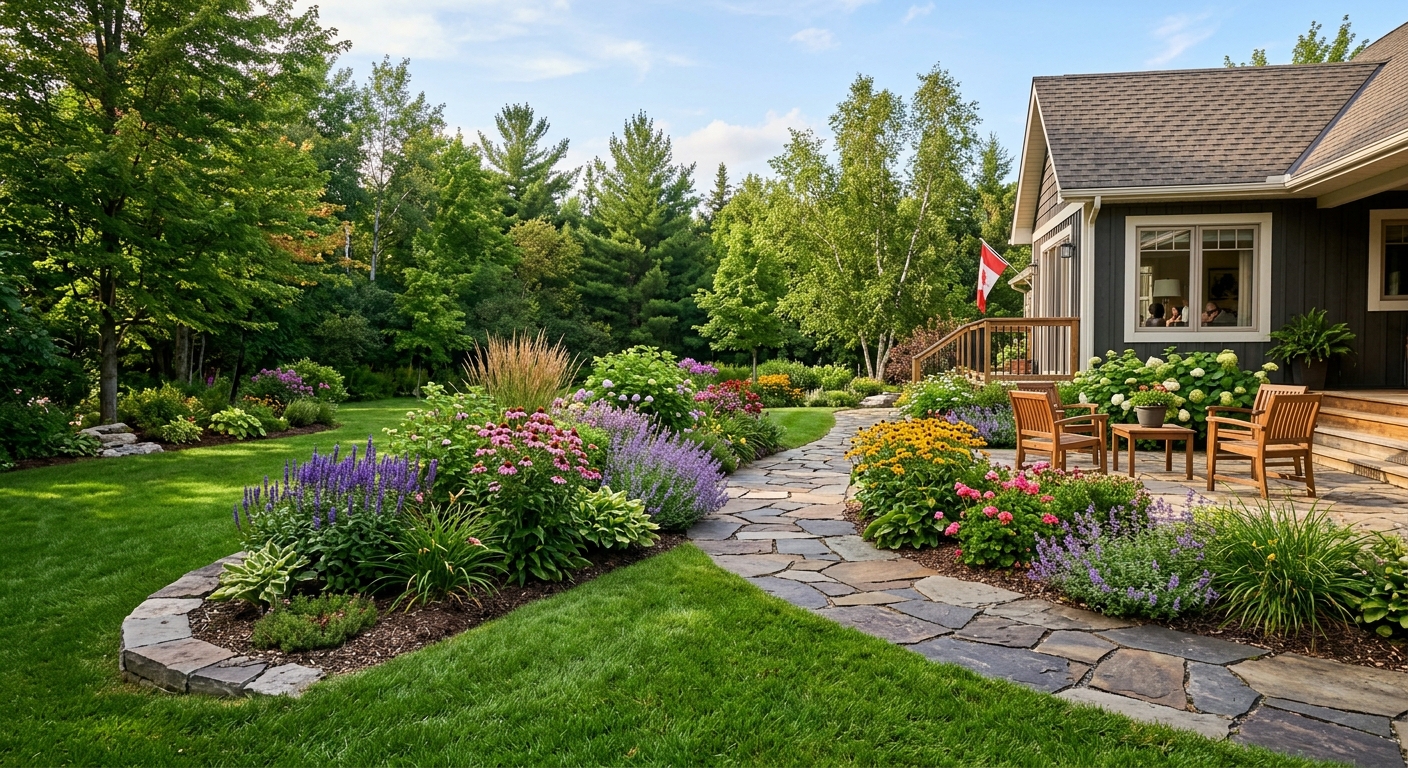
Landscaping options and costs in Lake Cowichan
Lake Cowichan is where a lot of homeowners want their yard to feel like an extension of the outdoors—lush, comfortable, and practical for rainy winters. With 78.2% of homes being single-detached, many properties have the space for proper grading, drainage, and a yard layout that actually works. And because 84.9% of households are homeowners (Statistics Canada, 2021 Census), people are more willing to invest in curb appeal improvements and longer-term plantings rather than “temporary” fixes.
On Vancouver Island and the Coast, landscaping pricing is shaped by the mild coastal plant hardiness zones 7–9 and a longer working season. Contractors often install from early spring through late fall, which helps keep availability better than in short Prairie seasons. The trade-off is that heavy coastal rain makes drainage and base preparation non-negotiable—especially on sloped lots common around neighborhoods such as Cowichan Valley Road area and South Lake Cowichan, where runoff management can become the biggest cost driver. That’s also why quotes for similar yards can swing widely: if your soil needs deeper excavation, a drainage bed, or reinforced wall footings, the hardscape and excavation costs add up quickly.
Below are realistic cost bands for common projects in Lake Cowichan, using the typical range contractors see in the region. Use this table to compare what a “complete yard refresh” usually includes before you review detailed itemised proposals.
| Service |
Description |
Season |
Price Range |
| Full landscape design and installation |
Site walk, layout + planting plan, grading/drainage allowances, hardscape/softscape coordination, installation |
Apr–Nov |
$10,000–$35,000 |
| Sod installation (supply, grade, lay, roll) |
Topsoil/levelling allowance, sod supply, layout, rolling, watering plan |
Apr–Sep |
$2,000–$7,000 |
| Lawn seeding (grade, seed, starter fertilizer) |
Minor grading, seed selection, starter fertilizer, light raking and initial watering guidance |
Mar–Jun (or Sep) |
$1,500–$5,000 |
| Interlocking patio or walkway |
Excavation, compacted base, pavers, edge restraints, jointing sand |
Apr–Oct |
$4,000–$20,000 |
| Retaining wall (interlocking block) |
Wall build, base preparation/compaction, drainage fabric + weeping tile (where required), backfill |
May–Oct |
$6,000–$40,000 |
| Tree and shrub planting |
Plant supply, planting, staking (if needed), mulch rings, initial watering plan |
Apr–Jun / Sep–Oct |
$900–$12,000 |
Prices are estimates only and vary by project scope, site access and material selection.
What affects the price of landscaping in Lake Cowichan
In Lake Cowichan, the same “basic” landscaping job can land 30–50% apart between quotes, even when homeowners believe the scope is identical. The reason is that Vancouver Island and the Coast projects are highly sensitive to site conditions (slope, drainage, and soil), and labour/material availability. In practice, two yards can look similar from the street while one requires deep excavation and a proper drainage bed, while the other is mostly surface-level planting. That difference quickly moves you from the mid range into the higher band—especially when hardscaping is added.
Climate also plays a direct role. The mild coastal zones 7–9 support a long planting and installation window, which can reduce scheduling pressure compared with shorter seasons. However, even in gentler coastal freeze–thaw cycles, freeze depth still matters: retaining-wall base preparation and compaction must be done correctly for a stable wall and to prevent heaving. On the Coast, heavy rainfall means drainage design is crucial, and poor drainage can trigger rework. Meanwhile, water restrictions aren’t as intense as the BC interior, but irrigation design is still priced in—particularly for exposed or south-facing beds where soil dries faster in summer. By contrast, southern Ontario (zone 5–6) has a moderate season but often needs irrigation planning for summer dry spells, and Prairie regions (zone 2–4) typically face shorter working seasons and drought stress that increase the need for wind- and drought-tolerant plants.
Concrete examples from Lake Cowichan: a slope correction that changes drainage patterns can push excavation and disposal costs into the higher side of the retaining wall & hardscaping band (often a jump from the $4,000–$60,000 range). A home built before 1981 may also have older perimeter drains or altered soil compaction near foundations, which can raise labour time for tie-ins and base preparation—sometimes shifting a lawn refresh from a “simple” $1,500–$8,000 sod/seeding allowance into a larger graded solution.
| Price Factor |
Why It Matters |
Cost Impact |
| Yard size in sq ft — the primary cost driver for softscape |
More area means more labour hours, more materials (topsoil, mulch, seed/sod), and longer install time |
Typically the biggest swing; can move a project 15–30%+ |
| Grading and drainage work — slope corrections add significant cost |
Correcting pooling and runoff paths requires excavation, re-shaping, compaction, and often additional soil |
Commonly adds major cost; often the difference between “mid” and “high” quotes |
| Drainage bed or French drain installation |
French drains need proper depth, perforated pipe, gravel sizing, and correct discharge strategy |
Can increase totals by thousands depending on trench length |
| Plant material tier — native shrubs vs. ornamental vs. mature specimen trees |
Premium nurseries and larger caliper trees cost more and take more labour to handle and stake |
May add $800–$10,000+ depending on plant sizes and quantities |
| Hardscape vs. softscape ratio — walls and patios cost more per sq ft than lawn |
Stone/paver systems require excavation, base compaction, and edging/jointing materials |
Higher hardscape mix pushes budgets toward the retaining wall & hardscaping band |
| Irrigation system design and installation |
Zones, controller type, backflow prevention requirements (where applicable) and drip/spray selection affect cost |
Often adds a few thousand for well-designed systems |
| Soil amendment and topsoil required |
Existing soil may be compacted, rocky, or poorly draining; amendments improve rooting |
Small jobs can be minor; larger beds can add substantial delivery/disposal work |
| Tree removal or stump grinding before new planting |
Stumps affect grading and planting layout; removal adds equipment time and debris handling |
Commonly pushes the project higher if access is tight |
Permits & regulations in British Columbia
In British Columbia, most everyday landscape work does not require a permit. Typically, planting, sodding, seeding, and most softscape installations (mulch, garden beds, grading limited to landscaping-level corrections) are handled without a permit. That said, retaining walls above the local height threshold—commonly around 1.0 m (3.3 ft) in many municipalities—often require a building permit and, in some cases, engineered or detailed drawings depending on height, soil conditions, and load considerations. Changes to lot grading that meaningfully redirect drainage toward neighbours or to storm sewer connections can also trigger approvals.
Before any digging for planting holes or wall footings, homeowners should ensure utility locates are completed. Even though the work is “landscaping,” you still need to avoid surprises with buried services. Also confirm irrigation and water-use bylaws for your area—rules can tighten during dry periods even where restrictions are less strict than the BC interior.
To verify a contractor for Lake Cowichan projects, do this step-by-step:
- Ask for their British Columbia licence documentation if they perform work that requires it for their trade category.
- Request a current certificate of liability insurance, confirming the policy is active for your project dates.
- Verify workers are covered for workplace injuries via WSIB/WCB coverage (ask for proof/clearance information).
- Confirm whether a permit is required for your wall or drainage changes and who is pulling it.
- Check for recent job photos and ask for references from similar sloped or drainage-focused yards.
- Look for a registry/verification number online if the contractor provides one—then match it to the certificate they give you.
Planning a landscape that thrives in Lake Cowichan's climate
Planning for Lake Cowichan means designing around the coastal growing conditions—mild winters (zone 7–9), long shoulder seasons, and frequent rain—while still respecting how water moves on your property. Start with plant selection: choose zone-appropriate plants, ideally including native species, so they establish quickly and need less winter protection and less intervention in summer. For lawn areas, decide early whether you want sod (instant coverage) or seeding (lower cost, slower visual payoff).
On Vancouver Island and the Coast, drainage and grading are where projects succeed or fail. Beds and turf must not sit low enough to pool near foundations, and slopes should guide runoff away from structures. For hardscape, base prep matters: patios, walkways, and block walls require proper excavation and compaction so settlement doesn’t leave paver edges dropping or wall faces shifting. Even though freeze–thaw is gentler than the Prairies, local frost depth and soil movement still demand attention to base depth and wall backfill.
For low-maintenance design, aim for groundcovers, mulch, and perennials that fill space without constant weeding. Consider a rain-garden or infiltration-friendly planting areas in downspout catchment zones—this can reduce mud and erosion while still looking intentional. Xeriscape doesn’t mean “no green” here; it means placing water-efficient plants in the spots that dry fastest and using mulch to protect soil.
Price-wise, the choices can be justified. For example, if sod installation is running roughly $2,000–$7,000, going that route can be worth it when you need fast curb improvement before a specific event or when you’re repairing a stressed lawn area. If you can wait, seeding in the $1,500–$5,000 band is often a smarter value—especially on areas with drainage that can be corrected and maintained.
| Element |
Climate Consideration |
Maintenance Level |
Price Band |
| Sod lawn installation |
Establishes quickly in mild coastal seasons; still needs good drainage to avoid winter soft spots |
Medium (watering and first-season care) |
$2,000–$7,000 |
| Native perennial garden |
Zone-appropriate species handle wet winters better and reduce winter die-back |
Low (mulch refresh and seasonal tidy-ups) |
$3,000–$12,000 |
| Mulched shrub border |
Mulch buffers soil during rain events and supports moisture balance through summer |
Low to medium |
$2,000–$9,000 |
| Interlocking stone patio |
Needs compacted base and good fall away from the house to prevent water-related settlement |
Low (occasional cleaning, joint sand top-ups) |
$4,000–$20,000 |
| Retaining wall (block) |
Proper base depth, drainage fabric, and backfill are critical in wet coastal soils |
Low after build (inspection recommended after heavy winters) |
$6,000–$40,000 |
| Drip irrigation system |
Efficient watering supports long growth without over-saturating beds during wet months |
Medium (set-and-check adjustments seasonally) |
$1,500–$8,000 |
How to choose a landscaping contractor in Lake Cowichan
Choosing the right contractor in Lake Cowichan comes down to proof, not promises. Start with BC licensing: ask what licences/credentials apply to their scope (especially if they’re doing hardscape, wall builds, or any work that falls under regulated trade categories). Then verify liability insurance by requesting a current certificate of insurance with your project listed or dates confirmed. For worker protection, ask for proof of WSIB/WCB coverage (or clearance documentation if they provide it). Don’t accept “we’re covered” without documents—insist on seeing the certificate and confirming it’s active.
Next, get 2–3 itemised written quotes—labour and materials broken down separately, not just a single lump sum. Itemisation should show excavation allowance, base material, drainage components, plant quantities, and disposal. Read the scope carefully: what’s excluded (topsoil delivery over a stated depth, tree removal, irrigation plumbing tie-in, permit fees), and whether they include disposal/haul-away. If a wall requires approval, confirm who pulls the permit and whether engineering is included.
For warranty, ask for two parts: the workmanship warranty length and whether product/manufacturer warranties apply to trees, shrubs, sod, or paver systems. Also ask if the warranty is transferable if you sell the home. For payment, keep it conservative: never pay more than 10–15% upfront, and use a holdback until the final walkthrough and close-out paperwork are complete. Finally, get the start date and a realistic completion estimate in writing, factoring for coastal weather delays.
- Confirm BC licensing/credential status relevant to the work they’re quoting.
- Request and review a current certificate of liability insurance.
- Verify WSIB/WCB clearance or proof of coverage for workers.
- Ask for insurance to show it includes your address (or project name/dates).
- Get itemised quotes (labour vs materials) with quantities listed.
- Confirm what excavation, trucking, and disposal are included.
- Ask who is responsible for utility locates before digging.
- Ensure drainage and grading specs are described, not just “make it work.”
- Clarify soil depth/topsoil type and whether amendments are included.
- Ask about base prep standards for patios/walkways/walls (compaction + depth).
- Get a written warranty statement (workmanship + product where applicable).
- Set payment milestones tied to inspection points, with a final holdback.
Red flags we often see around landscaping in Lake Cowichan include: skipping itemised quantities in the quote, refusing to provide proof of liability insurance or WSIB/WCB coverage, offering a “retaining wall” price without discussing drainage and base preparation, and starting work with only a verbal agreement. Also watch for crews that demand large upfront payments (beyond about 10–15%), or who won’t put the timeline and scope exclusions in writing.
Frequently asked questions — landscaping in Lake Cowichan
How much does landscaping cost in Lake Cowichan?
Landscaping cost in Lake Cowichan typically depends on whether your project is mostly softscape (plants and turf) or includes hardscaping like patios and retaining walls. For context, full design and installation often falls in the broader regional range of about $5,000–$40,000, while many “refresh” projects land mid-range. A common lawn path is sod at roughly $2,000–$7,000 or seeding at around $1,500–$5,000, depending on grading and soil prep. Retaining walls and other hardscape work can start around $4,000 and go much higher when drainage, excavation depth, or site access makes the work more complex.
What plants thrive in Lake Cowichan's climate zone?
Lake Cowichan sits in the mild coastal zones 7–9, which is why many homeowners can achieve a lush, mixed garden compared with colder regions. In practice, the best plants are zone-appropriate and suited to wet winters and summer drying, with good drainage being the key factor. Contractors often favour native shrubs and hardy perennials that establish well and reduce winter loss. For structure, broadleaf evergreens and ornamental grasses work well for year-round cover, while flowering perennials add colour without demanding constant replanting. Your specific exposure (sun vs shade, wind, and how quickly the soil drains after rainfall) will influence the final list, and a good design will place plants according to those conditions.
Sod vs seed — which is better for a Lake Cowichan lawn?
Sod and seed can both work in British Columbia, but the better choice depends on timeline and the condition of the lawn base. Sod gives instant coverage and can be worth it when you need the yard to look finished quickly; in Lake Cowichan, sod installation commonly falls in the ballpark of $2,000–$7,000 once grading and base prep are included. Seeding costs less—often around $1,500–$5,000—and can be a smart value if you can correct drainage and you’re comfortable waiting for germination and thickness to build over the season. Where soils stay wet in winter or drainage is off, both options can struggle unless the base and slope are corrected first.
How much does a retaining wall cost in Lake Cowichan?
Retaining wall pricing in Lake Cowichan is heavily driven by wall length, height, soil conditions, and how much drainage and excavation are needed. For interlocking block walls, many typical projects land roughly in the $6,000–$40,000 range, while larger or more complex builds can reach further depending on base depth, access, and rock/soil removal. Coastal BC sites often require strong drainage design—fabric, weeping tile, and properly detailed backfill—so drainage can be a cost driver even when the wall footprint seems “small.” If you’re working near an older foundation or managing water runoff patterns, expect your quote to reflect additional excavation or compaction time.
When is the best time to landscape in Lake Cowichan?
On Vancouver Island and the Coast, landscaping is usually best from spring through fall because you get an extended working window with mild temperatures. Most planting and installation is commonly done from roughly April to November, with spring (and sometimes early summer) being ideal for establishing plants. For lawns, sod is often scheduled in the warmer window (commonly spring through early fall), while seeding may be done in spring or sometimes fall. Weather still matters: heavy rain can slow grading and base compaction, so experienced contractors plan sequencing and schedule around forecasted wet spells. If you have drainage work or wall builds, earlier in the season often helps because you can get base prep and compaction completed before prolonged wet weather.
Do I need a permit for a retaining wall in British Columbia?
Often, yes—depending on wall height and how your municipality classifies the project. In British Columbia, most planting and softscape work typically does not require a permit, but retaining walls above a common threshold (frequently around 1.0 m (3.3 ft) in many municipalities) typically require a permit and sometimes engineered drawings. Also note that drainage and grading changes can trigger approvals if they affect how water flows toward neighbouring properties or storm connections. Before digging in Lake Cowichan, your contractor should also confirm utility locates are completed. The safest route is to ask the contractor to state whether they will pull the permit, and to include it clearly in the written scope.