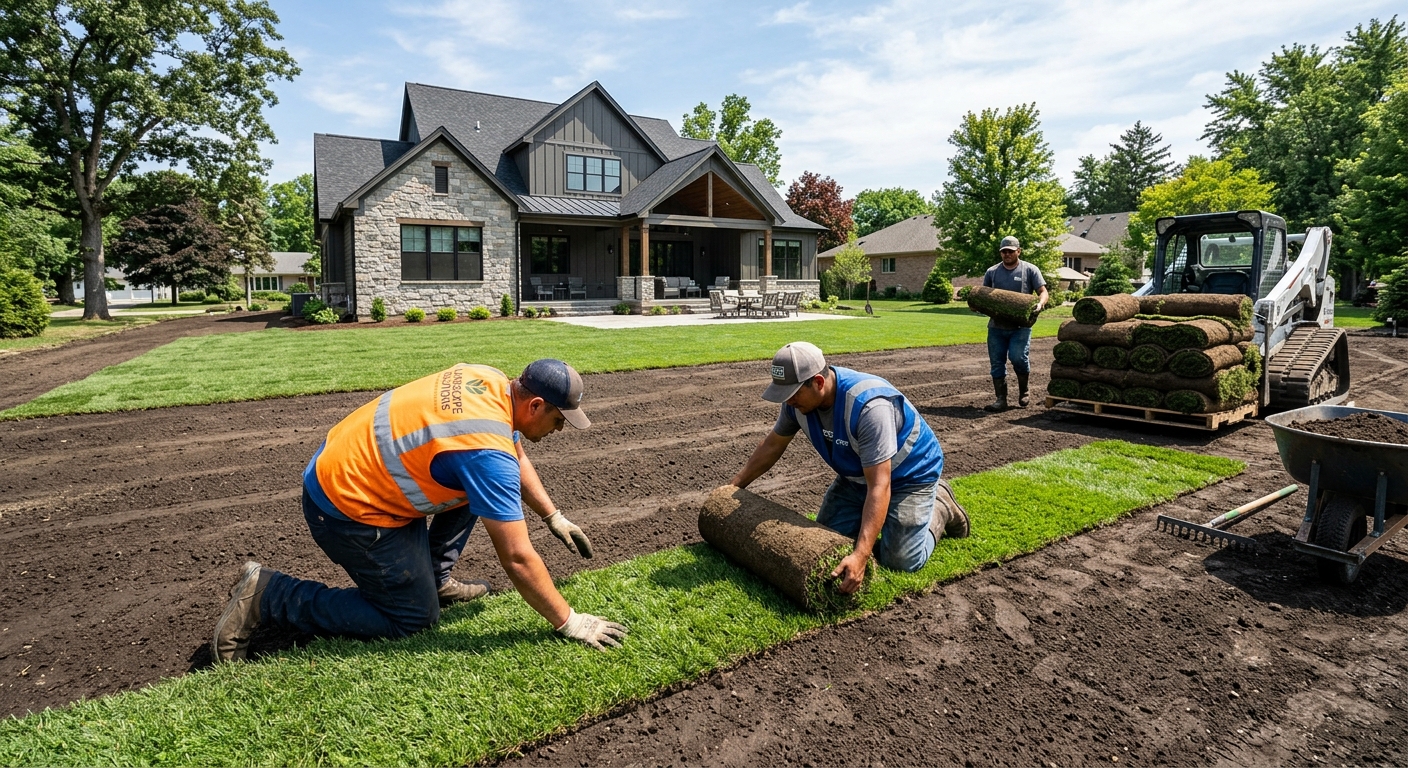
Landscaping options and costs in Langford
Langford homeowners typically have a clear reason to invest in landscaping: with detached homes making up about 35.1% of dwellings (Statistics Canada, 2021 Census), many properties have the yard space where improvements show up fast in curb appeal, comfort, and long-term maintenance costs. It also helps that the region has a strong base of owner-occupants—64.8% of households own (Statistics Canada, 2021 Census)—so many projects start with thoughtful design rather than reactive fixes. For a lot of families, that means planning planting beds, drainage touch-ups, and walkways in the same season.
In Langford and nearby Saanich-facing slopes and neighbourhoods like Royal Bay, landscaping pricing is strongly shaped by the mild coastal plant hardiness zones (7–9) and the longer working season. Contractors can plan for year-round structure—evergreens, ornamental grasses, and four-season layouts—while still booking installs from early spring through late fall. At the same time, wet winters and winter rain events on sloped lots increase the importance of drainage and proper retaining-wall base depth. That’s why two yards that “look similar” can land far apart on budget: one may need only a planting refresh, while another requires grading, French drains, and upgraded soil.
Use the table below as your starting point for comparing common project types, then align the scope to your site access, drainage needs, and how fast you want results.
| Service |
Description |
Season |
Price Range |
| Full landscape design and installation |
Site walk, concept + planting plan, grading/soil, beds, mulch, walkways, and selected hardscape as specified |
Mar–Nov (best value); structure can be planned year-round |
$5,000–$40,000 |
| Sod installation (supply, grade, lay, roll) |
Soil prep, final grade, sod supply and installation, rolling, starter watering guidance |
Apr–Jun and Sep–Oct (cooler, better rooting) |
$1,500–$8,000 |
| Lawn seeding (grade, seed, starter fertilizer) |
Light grading, seed selection, starter fertilizer, tackifier (if needed), initial watering setup |
Mar–May and Sep–Nov (avoid extreme summer stress) |
$800–$3,500 |
| Interlocking patio or walkway |
Excavation, compacted base, paver/stone installation, edging, and basic surface drainage considerations |
Mar–Nov |
$4,000–$30,000 |
| Retaining wall (interlocking block) |
Excavation and compacted wall base, geotextile, block/stone system, drainage backfill, weep/collectors |
Mar–Nov |
$4,000–$60,000 |
| Tree and shrub planting |
Soil amendments, planting layout, staking (as needed), mulching, and establishment watering guidance |
Apr–Jun and Sep–Oct (best establishment) |
$800–$15,000 |
Prices are estimates only and vary by project scope, site access and material selection.
What affects the price of landscaping in Langford
In Langford, you can see the same “type” of job vary by roughly 30–50% across Vancouver Island and Coast projects because the site conditions and the chosen material quality change the amount of labour and base work. Two yards may both call for a “retaining wall and planting,” but one lot may be flat and easy to access while the other has slope corrections, poor drainage, and limited truck access—each one drives additional excavation, compaction, and disposal time. The broader reason this range exists across British Columbia is that climate governs both plant selection and the usable working season, which affects crew scheduling and scheduling availability.
The plant hardiness zone and local frost pattern define what grows and how long contractors can safely install. Prairie regions (Zone 2–4) face short growing seasons and drought-stressed conditions; those projects often require drought-tolerant choices and deeper, well-built drainage/anchoring work during a narrower window. Coastal BC (Zone 7–8) supports lush, mixed palettes and longer installs, but you still pay for drainage design in heavy-rainfall zones—especially where freeze–thaw is gentler yet foundation moisture control remains essential. In the dry BC interior and parts of the Prairies, water restrictions push irrigation design toward drip systems and smart controllers; Southern Ontario (Zone 5–6) has a moderate season with summer irrigation demands during dry spells. That same logic shows up in Langford pricing as higher value placed on efficient irrigation and proper soil structure.
Concrete examples from local work: adding a French drain can move a project that’s near $5,000–$40,000 overall toward the upper side because excavation and outlet connections are labour-heavy. A block wall isn’t just “materials”—a well-compacted base and drainage backfill can raise the retaining-wall portion within the $4,000–$60,000 range, particularly on sloped lots common around Langford’s hillside areas. Finally, housing-stock age matters: with 19.4% of homes built before 1981 (Statistics Canada, 2021 Census), older properties may have legacy drainage patterns, mature root systems, and uneven footing trenches that increase the cost of grading and excavation.
| Price Factor |
Why It Matters |
Cost Impact |
| Yard size in sq ft — the primary cost driver for softscape |
More area means more soil prep, mulch, seeding/sod, labour hours, and materials |
Often the biggest swing; a larger yard can add thousands within the same project type |
| Grading and drainage work — slope corrections add significant cost |
Correcting pitch and directing runoff away from foundations requires excavation and compacted re-fill |
Typically pushes costs upward, especially on sloped Langford lots |
| Drainage bed or French drain installation |
Improper drainage causes pooling, root stress, and wall/base failures |
Can add major labour and materials; often one of the first “hidden” budget line items |
| Plant material tier — native shrubs vs. ornamental vs. mature specimen trees |
Mature stock and specialty ornamentals cost more and require more handling |
Moves projects within the $800–$15,000 planting band and above for larger specimens |
| Hardscape vs. softscape ratio — walls and patios cost more per sq ft than lawn |
Pavers and retaining systems require excavation, base materials, and precise compaction |
High hardscape raises total budget quickly compared with planting-only scopes |
| Irrigation system design and installation |
Drip lines, zones, controllers, and backflow considerations add parts and labour |
Costs rise with complexity (slopes, multiple zones, long runs, smart controllers) |
| Soil amendment and topsoil required |
Coastal soils can be heavy; amended topsoil and compost improve rooting and drainage |
Can add several thousand on larger re-grade or poor soil sites |
| Tree removal or stump grinding before new planting |
Root removal and disposal affects excavation time and prevents future interference |
Often increases costs immediately and delays planting timelines if not coordinated early |
Permits & regulations in British Columbia
In British Columbia, most routine softscape work—planting, sodding, mulch, and typical garden bed renovations—usually does not require a permit. Where permits commonly come into play is for structural items and drainage-altering work: retaining walls above the local height threshold (commonly 1.0 m / 3.3 ft in many municipalities) typically require a building permit and, depending on height and conditions, sometimes engineered drawings. Also pay attention to grading: if your project changes lot drainage in a way that impacts neighbouring properties or storm sewer connections, approvals may be required. Before digging for planting holes, wall footings, or drainage lines, contractors should complete utility locates to confirm where underground services run.
For homeowners in Langford, verifying your contractor is part of managing risk on the BC coast. Step-by-step, ask for:
- British Columbia licence/registration (if applicable): request their business details and check their standing via the relevant provincial contractor/registry information on official websites.
- Certificate of Insurance (liability): confirm it matches your address/job scope and that the policy is active.
- Workers’ compensation coverage: in BC you’ll typically see clearance or coverage documentation—ask for proof and verify it’s current.
- Written scope and exclusions: ensure permit responsibility (if required) is clearly stated.
Finally, confirm water-use rules with your contractor and municipality—especially for irrigation scheduling. Even if Langford’s water restrictions are less intense than the BC interior during drought, smart drip design and efficient controllers remain a best practice.
Planning a landscape that thrives in Langford's climate
Planning a yard for Langford means working with coastal weather patterns, not against them. Langford sits in mild coastal plant hardiness zones 7–9, with winter wet conditions and occasional freeze events—so the goal is reliable structure in all seasons while protecting roots from waterlogging. Start with plant selection: choose zone-appropriate, often native species and mixes that handle our typical rainfall without constant watering. That means fewer winter setbacks, less labour replacing struggling plants, and a garden that holds its shape through wet months and breezier spring weather.
Sod vs. seed is another decision that’s more “budget + timeline” than “right or wrong.” Sod gives instant results and stabilises soil quickly, but it typically costs 3–4x more per square foot than seeding once you include removal of old material and proper prep. On a mid-size lawn refresh near the low end of the sod band (often around $1,500–$8,000 for supply and install), seeding may fit a tighter budget while accepting a longer establishment period.
In Vancouver Island and Coast landscapes, drainage and grading are critical. If water pools near foundations or down-slope beds, you’ll see higher failure rates in plants and lawn patches—so build the correct slope away from structures and consider a drainage bed or French drain on problem areas. Hardscape also needs base preparation for frost and freeze–thaw movement: patios and walkways should be built on compacted base with correct compaction, and retaining walls need a properly built base depth and drainage backfill.
For low maintenance, lean into mulch, groundcovers, and layered perennials—plus efficient edging to keep mulch where it belongs. You can also incorporate rain-garden concepts in swales to absorb roof or downspout runoff. For example, spending extra on drainage groundwork (often part of a full project budget in the $5,000–$40,000 range) can be more cost-effective than repeatedly re-sodding a lawn area that stays too wet.
| Element |
Climate Consideration |
Maintenance Level |
Price Band |
| Sod lawn installation |
Cool rooting windows in spring/fall; keep roots from staying waterlogged in winter |
Medium (watering establishment, then regular mowing) |
$1,500–$8,000 |
| Native perennial garden |
Zone-appropriate structure; handles coastal rainfall patterns with less watering |
Low to medium (seasonal weeding and light pruning) |
$800–$15,000 |
| Mulched shrub border |
Mulch buffers wet/dry swings and protects roots during coastal weather shifts |
Low (top up mulch and occasional shaping) |
$1,000–$10,000 |
| Interlocking stone patio |
Base compaction matters for freeze movement and long-term drainage |
Low (occasional joint stabilization) |
$4,000–$30,000 |
| Retaining wall (block) |
Requires drainage backfill and correct base depth for stability on slopes |
Low (inspection and surface cleaning) |
$4,000–$60,000 |
| Drip irrigation system |
Efficient watering for exposed or south-facing beds; supports drought-tolerant strategies |
Low (seasonal checks, controller scheduling) |
$800–$6,000 |
How to choose a landscaping contractor in Langford
Choosing the right contractor in Langford is less about flashy photos and more about verification, clear scope, and protection for your property. Start with British Columbia coverage checks: request a Certificate of Liability Insurance (confirm it’s active and includes your address/job) and ask for proof of workers’ compensation coverage (clearance/coverage documentation). If a contractor is placing a crew on your site, you want confirmation their workers are covered—this is a practical safeguard for you as the homeowner. For professional licensing/registration, ask for their business credentials and verify their standing using the official online registry resources available in BC.
Next, get 2–3 itemised written quotes that break out labour and materials. Avoid “lump sum” bids where it’s unclear what you’re paying for. The quote should list line items such as excavation, disposal, base materials, geotextile, drainage components, soil/topsoil, plants by size/type, and hardscape units. Confirm what’s excluded: for example, is permit work included if a retaining wall threshold triggers a building permit? Is disposal included for old sod, rocks, or tree debris? Will your contractor handle utility locates?
Warranty matters: ask for the workmanship warranty length and whether it’s transferable to future owners. Separate out the manufacturer warranty on specific products (pavers, block systems, plant material guarantees if offered) from workmanship. On payment, avoid large deposits; a common safe practice is no more than 10–15% upfront, with the remainder tied to milestones and a holdback until the job is complete. Finally, insist on a written timeline with a start date and estimated completion, especially if you’re coordinating with spring planting windows.
- Request licence/registration details and verify through official BC resources.
- Get liability insurance proof and confirm your project is covered.
- Ask for workers’ compensation clearance/coverage documentation and ensure it’s current.
- Use itemised quotes: labour, materials, and equipment/haul/disposal separately.
- Confirm permit responsibility for any retaining wall above the threshold (often ~1.0 m).
- Verify utility locates are included before digging.
- Check grading/drainage language: slope away from house, outlet planning, and drainage bed/French drain specifics.
- Ask who supplies soil/topsoil, compost, and what amendment ratio is used.
- Confirm plant sizes (e.g., container size or height) and replacement policy for failed establishment.
- Clarify irrigation scope: zones, heads/drip type, controller, and smart controller options if relevant.
- Review warranty terms in writing (workmanship vs. product warranty).
- Agree on payment milestones and holdback terms—avoid paying everything early.
Red flags in Langford include: (1) quotes without drainage/grading details on sloped sites, (2) no proof of active insurance or workers’ compensation coverage, (3) vague wording like “allowances” with no quantities or unit pricing, (4) pushing for a large upfront deposit, and (5) starting excavation without confirming utility locates.
Frequently asked questions — landscaping in Langford
When should I aerate and overseed my lawn in Langford?
In Langford, the best timing is usually during the cooler, wetter parts of the year so grass can establish before heat and stress. For most lawns, aeration plus overseeding is most successful in early spring after the ground is workable, or in fall when temperatures are moderating and rainfall helps germination. Because Langford’s growing conditions support year-round planning but winter can still be wet, avoid aerating if the soil is waterlogged. If your lawn is currently thin or patchy, overseeding is often more cost-effective than a full re-sod—where sod projects typically sit in the $1,500–$8,000 range—because overseeding fits smaller repair zones. A good contractor will also recommend seed type suited to coastal conditions and a starter fertilizer targeted to your grass species.
What trees grow best in Langford's climate zone?
Langford sits in coastal plant hardiness zones 7–9, so many common coastal-tolerant trees do well with proper siting and drainage. In general, you’ll have the most success when you match tree size to your yard (and allow for mature spread) and when you choose species that can handle the winter wet season without constant standing water. Many homeowners do well with trees like ornamental cherries and crabapples for spring interest, plus broadleaf evergreens for four-season structure. On slopes near houses, ensure drainage is correct and don’t plant too close to foundations—especially on older properties built before 1981, where legacy drainage patterns can be tricky. A local landscaper should confirm spacing and rooting behaviour before planting and include mulching and establishment watering to reduce transplant shock.
How much does sodding a yard cost in Langford?
Sodding in Langford commonly lands in the $1,500–$8,000 range depending on yard size, how much soil prep is required, and whether grading is needed. Sod usually costs more than seeding because you’re paying for the sod material itself plus the labour to grade, lay, and roll it correctly for rooting. If your lawn area has drainage issues or uneven slope, the final price can move upward because additional re-grading, topsoil, and sometimes drainage corrections are needed before sod goes down. Contractors will often schedule sod installation in spring or early fall when the ground is cooler. When comparing quotes, ask whether the price includes removal of old turf, disposal, soil amendment, and the final grade line.
How do I prevent weeds in my Langford garden?
Weed control in Langford works best when you combine prevention with smart bed preparation. Start by removing existing weeds thoroughly (including roots), then apply a weed-barrier solution only where it makes sense for your plant types—most homeowners get better results by focusing on soil health plus mulch depth rather than relying solely on fabric. A thick, consistent mulch layer helps suppress germination and keeps soil moisture steadier through coastal wet periods. Edge beds clearly so mulch doesn’t wash into turf during rain. If weeds are persistent, it often indicates a drainage or soil quality problem that stresses the plants and creates open “space” for weeds to move in. For new borders, a contractor may recommend a layered planting plan with groundcovers and perennials to reduce bare soil.
How do I design a low-water yard in Langford?
Even though Langford has coastal rainfall and doesn’t face the same severe drought limits as some interior regions, low-water design is still a strong value because it reduces maintenance and keeps plants healthier during dry spells. Start with plant selection: choose zone-appropriate natives and drought-tolerant ornamentals for exposed areas, and place thirstier plants where you’ll actually provide supplemental irrigation. Use mulch heavily, and keep turf to only what you truly need—many homeowners shift from broad lawn areas to mulched borders and perennial beds. Consider efficient drip irrigation with zone control rather than overhead sprinklers; that way you water deeply but only where plants need it. For problem areas, incorporate drainage-aware solutions like rain-garden-style planting in swales so water is captured instead of lost or pooling near foundations. A full design & installation budget can start around $5,000–$40,000 depending on grading and hardscape needs.
How do I find a licensed landscaper in Langford?
In Langford, start by asking landscapers for proof of their British Columbia coverage and credentials before you sign anything. Request (1) their business licensing/registration details and verify their standing through BC’s official online resources where applicable, (2) a Certificate of Liability Insurance that lists your address/project scope, and (3) workers’ compensation coverage documentation (clearance/coverage confirmation) so you’re not left exposed if a worker is injured. Next, compare 2–3 itemised written quotes with labour and materials breakdowns, including whether disposal is included and whether utility locates are part of the work. For retaining walls that may exceed common height thresholds (often around 1.0 m), confirm if permit pulling is included or who is responsible. A responsible contractor will also provide a workmanship warranty and a clear payment schedule—avoid paying large deposits upfront.