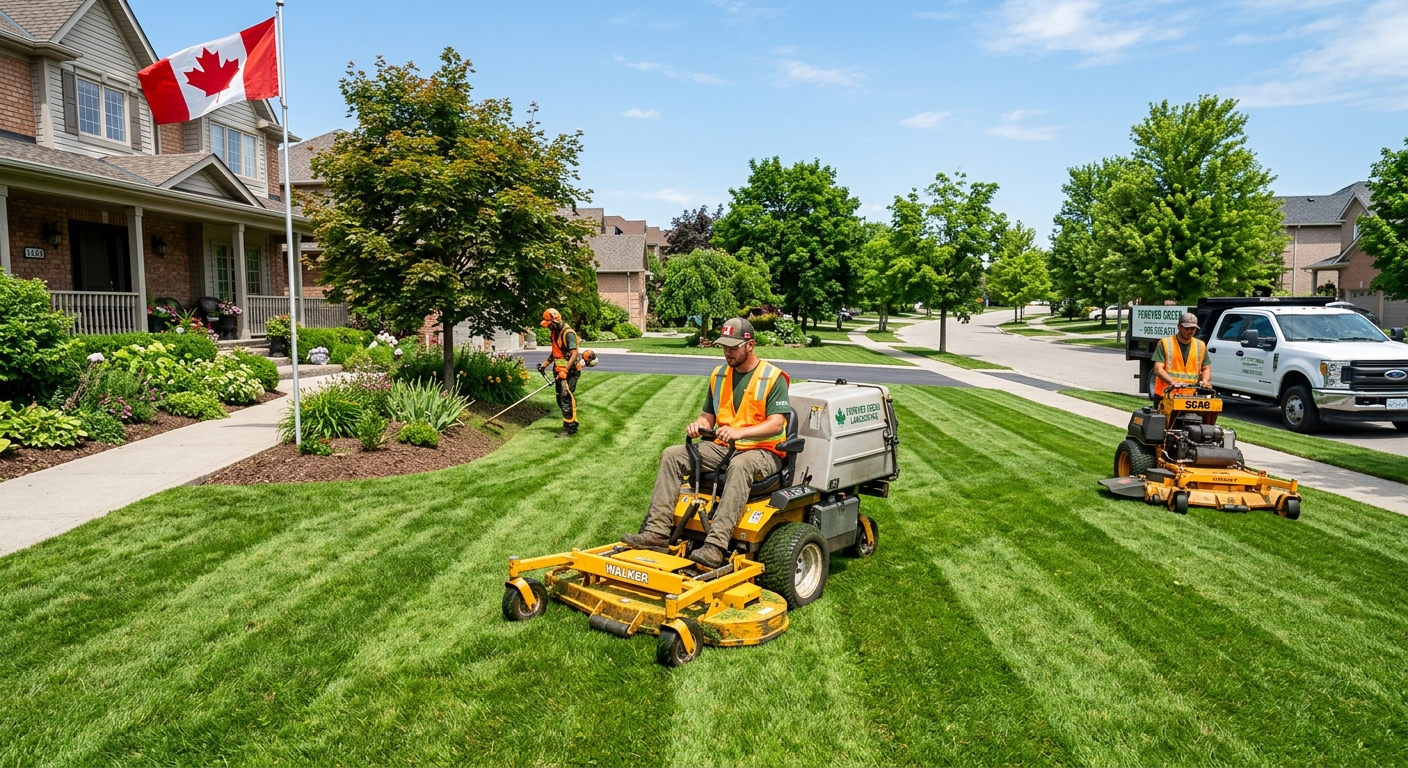
Landscaping options and costs in Port McNeill
Port McNeill homeowners often start with one practical goal—making the yard look better and work better—and the costs can move quickly from there. In the community, 71.9% of dwellings are single-detached homes, which usually means more usable yard area and stronger motivation to invest in a full plan rather than a quick cosmetic upgrade. It also helps that many households are homeowners (69.6% of households own), so upgrades like interlocking walkways, defined garden beds, and proper drainage tend to be scheduled alongside home maintenance.
On Vancouver Island and the Coast, landscaping is shaped by mild coastal growing conditions (hardiness zones 7–9) and a long installation window. Contractors can typically plan from early spring through late fall, which is great for phased projects (grading first, planting next, turf last). That said, the region’s wet winters mean drainage and soil prep aren’t optional—pooling water, softened subgrades, and foundation moisture can raise labour time and material quantities. Access also matters in Port McNeill; sloped sites and narrow side gates around older properties can increase demo, hauling, and re-compaction work.
Demand is especially strong in waterfront-adjacent and hillside neighbourhood pockets around Discovery Passage Road and the Campbell River corridor, where many yards need both curb appeal and practical surface-water management. If you’re comparing quotes, the quickest way to align expectations is to review typical budget bands across common project types—see the table below.
| Service |
Description |
Season |
Price Range |
| Full landscape design and installation |
Site visit, concept-to-final layout, grading/drainage plan, planting palette, irrigation coordination (if used), hardscape build (where included), and full installation |
Apr–Nov |
$5,000–$40,000 |
| Sod installation (supply, grade, lay, roll) |
Remove/prepare existing soil, fine grade, add topsoil/soil amendments as needed, sod supply, lay and roll, starter fertilizer, and first watering plan |
May–Sep |
$1,500–$8,000 |
| Lawn seeding (grade, seed, starter fertilizer) |
Grade to correct low/high areas, seed blend application, starter fertilizer, light soil cover/rolling, and a watering schedule |
Apr–Jun or Aug–Sep |
$1,200–$6,000 |
| Interlocking patio or walkway |
Excavation, base and compaction, sand setting bed, border restraint, paver placement, cutting, polymeric sand (if specified), and clean-up |
Apr–Nov |
$4,000–$28,000 |
| Retaining wall (interlocking block) |
Layout and setbacks, subbase excavation and compaction, weeping/drainage system (where required), block installation, backfill and wall finishing |
Apr–Oct |
$4,000–$60,000 |
| Tree and shrub planting |
Soil conditioning, staking (as needed), planting holes and amendments, mulch rings/beds, and initial watering plan |
Mar–Nov |
$800–$15,000 |
Prices are estimates only and vary by project scope, site access and material selection.
What affects the price of landscaping in Port McNeill
On Vancouver Island and the Coast, two homeowners can receive quotes that look “for the same job” but still differ by 30–50%. The biggest reason is that landscaping pricing isn’t just about the visible plants or stones—it’s about how much work it takes to build a stable base, manage drainage, and install what will thrive in our coastal conditions. Labour and trucking costs, material grade, and the number of design hours all affect total cost. Even with a similar finish look, one contractor may include detailed grading, drainage bed build-up, and irrigation design while another quotes only a surface-level install.
Climate also changes the process. Hardiness zones 7–8/9 and coastal frost behaviour support a long working season, but Port McNeill yards still need correct drainage because wet winters can saturate subgrades. In contrast, Prairie regions (Zone 2–4) have shorter growing seasons and drought-stressed summers, which often drives different plant selections and irrigation choices. Water restrictions in the drier BC interior shape irrigation design budgets. Southern Ontario (Zone 5–6) typically has a moderate season but still needs summer irrigation during dry spells—usually more targeted watering than the heavy rain-driven drainage problems we plan for on the coast.
Local examples that commonly raise cost in Port McNeill: (1) older properties built before 1981 (62.3% of homes) often need more soil correction, reworking of existing edges, and better base preparation under patios or walkways; (2) a sloped front yard that requires retaining-wall tie-ins can shift a project into the retaining-wall pricing band; (3) replacing a tired lawn with sod can push budgets upward compared with seeding when a larger area needs full excavation and topsoil. That’s why many homeowners end up choosing between mid-range full projects (often aligned to the $5,000–$40,000 design-and-install range) or focused hardscaping/planting budgets (like the $4,000–$60,000 retaining wall band) depending on what the site truly demands.
| Price Factor |
Why It Matters |
Cost Impact |
| Yard size in sq ft — the primary cost driver for softscape |
More area means more topsoil, labour time, plant mass, and turf material/seed |
High: can change total by 20–60% |
| Grading and drainage work — slope corrections add significant cost |
Rebuilding contours so water sheds away from foundations requires excavation, re-compaction, and verification |
High: frequently adds thousands to the estimate |
| Drainage bed or French drain installation |
Needed when soils stay wet or when downspouts and runoff create persistent puddling |
Medium–High: often a major line item |
| Plant material tier — native shrubs vs. ornamental vs. mature specimen trees |
Mature stock costs more to source and handle, and may require deeper planting pits and staking |
Medium: can double plant budgets in some designs |
| Hardscape vs. softscape ratio — walls and patios cost more per sq ft than lawn |
Stone, block, base aggregates, and compaction take time and equipment |
High: shifts you from “planting projects” into “hardscaping projects” |
| Irrigation system design and installation |
Drip lines, zones, valves, backflow prevention (as required), and controllers add material and labour |
Medium: can add a noticeable amount even on small yards |
| Soil amendment and topsoil required |
Coastal soils can be clay-heavy or compacted; improving structure can be essential for rooting |
Low–Medium: varies with existing conditions |
| Tree removal or stump grinding before new planting |
Removal adds crew time, disposal, and sometimes root/soil remediation |
Medium–High: can move schedules and budgets |
Permits & regulations in British Columbia
In British Columbia, planting, sodding, and most softscape work typically does not require a permit. That usually includes things like installing garden beds, planting shrubs and trees, laying sod or seeding lawns, adding mulch, and building non-structural edging. However, some work does trigger permitting—especially where structures or drainage changes are involved.
Work that typically DOES require a permit: Retaining walls above the local threshold—commonly around 1.0 m (3.3 ft) in many municipalities—often require a building permit and sometimes engineered drawings depending on height, soil conditions, and design details. Grading changes that alter how water drains, especially if you’re changing flow toward neighbouring properties or connecting to storm infrastructure, may also require review. Any digging should start with utility locates, particularly for wall footings, drainage systems, or planting holes near services.
Work that typically does NOT require a permit: Most shrub and tree planting, small walkways, patios below structural thresholds, and standard irrigation installation (subject to local water-use rules) generally fall under routine landscaping.
To verify a contractor in Port McNeill, request their proof of status before signing: (1) check their British Columbia licence/registration online through the appropriate provincial registry for landscaping/build-related trades (if applicable), (2) ask for their certificate of liability insurance and confirm the coverage limits match your property exposure, and (3) confirm they have required clearance/coverage for workers (commonly WSBC/WCB coverage). Then, store copies of their insurance certificate and any clearance letter in your contract file.
Planning a landscape that thrives in Port McNeill's climate
Designing for Port McNeill is about working with our coastal hardiness zone (7–9), rainfall patterns, and milder frost rather than trying to impose an interior-style drought plan. Start with plant selection: choose native or zone-appropriate species that hold structure in winter and don’t need constant watering or special winter protection. When you build with mulch, correct soil, and plants that tolerate wet winters, your yard stays attractive even when irrigation use is reduced.
On turf, sod versus seed is usually the first decision point. Sod gives instant curb appeal and faster functional use of the area, but costs can be roughly 3–4x higher per square foot compared with seeding once you factor in supply and handling. In Port McNeill, that trade can be worth it when you’re replacing a high-visibility lawn quickly—say you want the front yard usable for a specific season—especially alongside a full project. If timing is flexible, seeding is often the smarter budget option for larger lawns.
Drainage and grading are where projects succeed or fail on Vancouver Island. Pooling water not only damages turf and perennials, it can raise foundation moisture risk. Plan slopes that shed away from the home, and include drainage beds or French drains when soils stay saturated. For hardscape like patios and retaining walls, base preparation must consider frost movement—proper compaction and base depth matter as much as the pavers themselves. Finally, low-maintenance strategies (groundcovers, mulch rings, layered perennials, and evergreen structure) reduce annual upkeep while keeping the yard “finished” year-round.
If you want water-smart options, consider rain-garden planting pockets in low spots and drought-tolerant accents in exposed areas; this blends well with coastal palettes even though restrictions are generally less severe than the BC interior. As a cost reality check: spending toward sod may align with the $1,500–$8,000 sod band for smaller lawns, while a larger area managed with seeding can stay closer to the lower end of turf budgets—freeing funds for drainage improvements, where the long-term payoff is typically highest.
| Element |
Climate Consideration |
Maintenance Level |
Price Band |
| Sod lawn installation |
Fast establishment for cool, wet-coastal seasons; requires correct grade to prevent wet spots |
Low–Medium (watering/monitoring early on) |
$1,500–$8,000 |
| Native perennial garden |
Zone-appropriate plants handle coastal winters and reduce watering once established |
Medium (weeding and seasonal grooming) |
$800–$15,000 |
| Mulched shrub border |
Mulch moderates moisture swings and improves soil structure in wet winters |
Low (refresh mulch annually) |
$2,000–$10,000 |
| Interlocking stone patio |
Base and compaction protect against heave and keep drainage from ponding |
Low (occasional joint maintenance) |
$4,000–$28,000 |
| Retaining wall (block) |
Requires reliable drainage and proper base depth for freeze movement and soil loads |
Low (periodic inspection) |
$4,000–$60,000 |
| Drip irrigation system |
Efficient watering supports reduced runoff and targeted moisture through dry spells |
Medium (seasonal adjustments/checks) |
$1,500–$6,000 |
How to choose a landscaping contractor in Port McNeill
Choosing a contractor in Port McNeill is about verifying credentials and making quotes truly comparable. First, ask for their British Columbia licensing/registration information where required for their scope, and request a certificate of liability insurance—confirm the stated coverage limits and make sure it’s current for the project dates. Next, ask about WSIB/WCB coverage (commonly WSBC/WCB clearance and worker coverage where applicable). You don’t want “subcontractors with no paperwork” showing up mid-job; request proof up front so it’s on file before work begins.
Then, get 2–3 itemised, written quotes that break down labour and materials. A good quote lists what’s included (excavation, base aggregates, soil amendments, drainage bed, hauling/disposal, irrigation components) rather than hiding assumptions inside a lump sum. Compare scope line-by-line: is disposal included or billed separately? Is permit pull included where needed (for taller retaining walls)? Are site protection and cleanup addressed?
Warranty matters too. Ask for the workmanship warranty length (not just “manufacturer warranty” on plants or materials), and confirm whether any product warranty is transferable if you sell the home. Also agree to a sensible payment schedule: never pay more than 10–15% upfront; hold back a portion until substantial completion and final walkthrough.
Finally, require a timeline in writing: a start date or start window and a realistic completion estimate. Coastal BC’s longer season helps, but wet-weather delays still happen—your plan should include weather contingency.
- Provide BC licence/registration info relevant to the work they’re doing
- Share current certificate of liability insurance (and confirm limits)
- Confirm WSBC/WCB clearance/coverage for workers
- Use itemised quotes (labour + materials + equipment + disposal)
- State what’s excluded (e.g., tree removal, topsoil upgrades, additional drainage)
- Include site protection details (covers, barriers, mud control)
- List drainage scope clearly if grading issues exist (French drain, drainage bed, outlets)
- Specify turf plan (sod vs seed, seed rate/blend, establishment steps)
- Provide a planting list or palette and pot sizes/stock grades
- State retaining wall design assumptions (height, drainage behind wall, geotextile/base)
- Confirm warranty terms: workmanship length + how claims are handled
- Agree to payment schedule: small deposit only, holdback until walkthrough
In Port McNeill, red flags include: contractors who won’t provide insurance/clearance documents; “lump sum only” quotes with no drainage/grading detail; promising retaining walls without discussing drainage behind the wall; starting without a written start date and completion estimate; and asking for large upfront payments (well beyond 10–15%).
Frequently asked questions — landscaping in Port McNeill
How much does professional landscape design cost?
In Port McNeill and across Vancouver Island and the Coast, landscape design is usually priced as part of a full design-and-install package rather than as a standalone fee for smaller jobs. For homeowners, the practical budget lens is the overall project band: full landscape design and installation often lands in the $5,000–$40,000 range depending on grading/drainage needs, planting palette complexity, and whether hardscaping is included. If you only want a concept plan or planting layout, some contractors may reduce design cost by tying it to installation later, but you should still expect meaningful design time for accurate elevations and a drainage-aware layout. Remember many homes here were built before 1981, so existing grades can add design and coordination work (Statistics Canada, 2021 Census).
How do I compare landscaping quotes?
To compare landscaping quotes in British Columbia, focus on scope and line items, not just the total. Ask each contractor to itemise labour and materials: excavation and base aggregates, drainage bed/French drain if applicable, soil amendments, disposal/hauling, and irrigation components. Confirm turf details (sod supply/grade prep vs seeding mix, starter fertiliser, and watering plan). For hardscape, compare base preparation and compaction requirements, not just the paver type. If one quote includes drainage and the other doesn’t, totals can swing 30–50% in a coastal market because wet winters and foundation protection drive extra work. For reference, a retaining-wall project can fall in the $4,000–$60,000 band, so missing drainage details is a common reason bids don’t match.
How long does a landscaping project take in Port McNeill?
Most landscape projects in Port McNeill are scheduled for work windows from spring through fall, but actual timelines depend on scope, weather, and access. A focused planting job can be fast—often days to a couple of weeks—while projects involving grading, drainage, and hardscaping can take longer due to curing/compaction time and rain delays. Sod installation is typically timed for when soils are workable and follow-up watering can be managed; interlocking patios and retaining walls often require sequential steps (excavation, base compaction, wall build, backfill, then finishing). If you’re planning a full design-and-install project, build in contingency for wet stretches—coastal BC can still have heavy rain even with a long season. Your contractor should provide a written start date and completion estimate, then update it if site conditions change.
What is the best grass type for a Port McNeill lawn?
For Port McNeill, the “best” grass is one that tolerates cool, coastal conditions and can handle periods of wet soil without failing. Many homeowners do well with standard cool-season turfgrass blends suited to Vancouver Island’s climate, especially when establishment steps are correct (proper grading, topsoil quality, and not overwatering). The bigger success factor is how the lawn is installed: sod can stabilise a yard quickly, while seeding relies on consistent moisture management until germination. If you’re budgeting, sod installation commonly falls in the $1,500–$8,000 range, while seeding can be less expensive when irrigation and timing are right. Ask your contractor what blend they recommend for your light exposure (full sun vs shade) and whether your soil needs amendments before seeding.
When should I aerate and overseed my lawn in Port McNeill?
In Port McNeill and throughout coastal BC, the best window for aeration and overseeding is usually during cooler, steadier growth periods—often early spring or early fall—when temperatures support germination and the turf can recover before winter saturation. Aeration helps if your lawn has compaction from foot traffic or if thatch has built up, which is common in older yards. Overseeding works best when you address the cause of thin spots: uneven grading, persistent wet areas, or poor drainage. If you aerate without fixing drainage, seed will struggle even if grass germinates. For a practical planning approach, get a contractor’s recommendation based on your lawn condition, and time it so you can follow the watering plan during establishment. If you’re replacing the lawn entirely, compare the turf options: sod often aligns with the $1,500–$8,000 band, while seeding typically stays lower.
What trees grow best in Port McNeill's climate zone?
Port McNeill falls within coastal hardiness zones 7–9, which supports a broad palette of trees that handle milder winters. “Best” depends on your yard size, sun exposure, and how much maintenance you want (pruning, leaf drop, and eventual canopy size). Many homeowners choose evergreens for year-round structure and deciduous trees for seasonal interest. Your best bet is to select zone-appropriate, site-suitable trees rather than following a one-size-fits-all list—especially because wet winters make drainage and planting depth more important than in drier climates. Also consider existing housing characteristics: with many homes built before 1981, underground services and older planting areas can affect where new roots can go (Statistics Canada, 2021 Census). A good contractor will match tree selections to soil conditions and spacing, and it’s often easier to budget planting within the $800–$15,000 tree and shrub band when you plan a full palette.