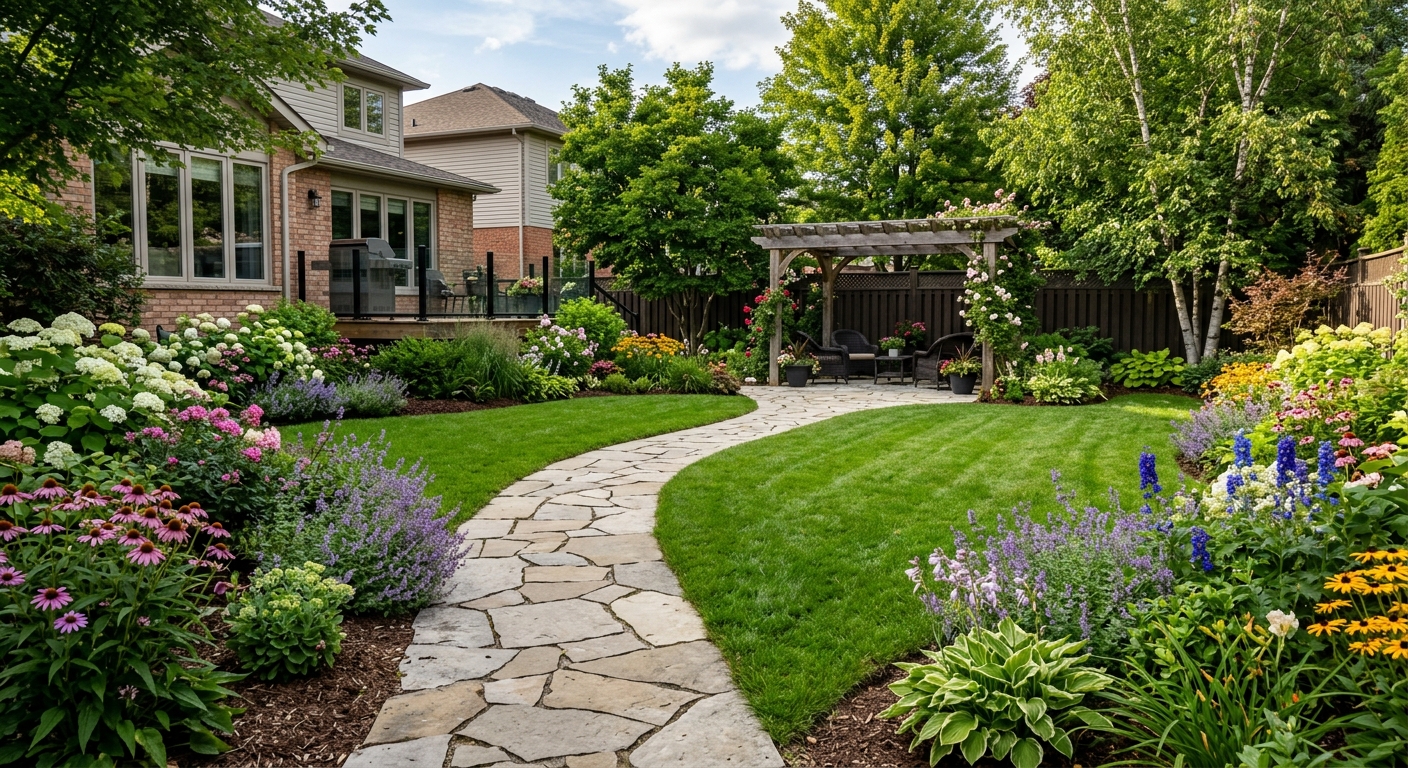
Landscaping options and costs in Kaslo
Kaslo has a small-town feel, but the landscaping bill can be big—mostly because the Kootenay climate compresses the working season and demands extra prep for freeze–thaw cycles. In 2021, Kaslo had 1,049 residents, and 380 homeowner households, with 72.4% of households owning their homes (Statistics Canada, 2021 Census). That ownership rate matters: when people invest in their yards, they often want long-lasting results that look good through shoulder-season mud and winter snow loads.
Most Kaslo homes are single-detached (84.9% of dwellings), and a lot of properties were built before 1981 (58.1%). Older lots typically need more grading correction, soil conditioning, and drainage tuning before sod or hardscape can perform. In Kootenay (roughly plant hardiness zone 5–6 depending on elevation and exposure), crews also plan installations from mid-April through October, but last spring frost and first fall frost narrow planting windows—so labour scheduling can affect price.
Across neighbourhoods, demand is especially steady in and around the residential areas near the waterfront and along main access routes where contractors can stage materials efficiently and minimize travel time. If you’re comparing options, you’ll usually see the biggest swings between a “softscape-first” approach and one that includes patios, retaining work, and an irrigation plan.
The table below gives a realistic starting point for common landscaping packages you’ll see in Kaslo.
| Service |
Description |
Season |
Price Range |
| Full landscape design and installation |
Site review, concept + layout, plant palette, grading/drainage plan, hardscape + planting coordination |
Mid-April through October (best results when scheduled early) |
$8,000–$60,000 |
| Sod installation (supply, grade, lay, roll) |
Spot grading or full prep, soil conditioning as needed, sod supply, lay/roll/edge |
Spring to early summer; avoid heat-stress weeks |
$6–$14 |
| Lawn seeding (grade, seed, starter fertilizer) |
Light grading, seed blend, starter fertilizer, rake, rolling; erosion control where required |
Spring (after frost) and limited early fall windows |
$3–$7 |
| Interlocking patio or walkway |
Excavation, compacted base, edging, pavers/interlock, bedding sand, jointing material |
Typically May through September for best compaction and curing |
$120–$400 |
| Retaining wall (interlocking block) |
Drainage gravel, geotextile, compacted base, block installation, caps/steps if required |
May through September; better access for materials and tooling |
$5,000–$35,000 |
| Tree and shrub planting |
Soil improvement, staking/anchoring when needed, planting layouts, initial mulch and watering plan |
Spring and early fall (weather permitting) |
$500–$15,000 |
Prices are estimates only and vary by project scope, site access and material selection.
What affects the price of landscaping in Kaslo
In Kootenay, you can see quotes for the “same” yard come in 30–50% apart, even when the plan looks similar on paper. The gap is usually driven by how contractors handle climate risk, excavation/disposal realities, and how much labour time is required to achieve proper drainage and compaction for a freeze–thaw climate (roughly zone 5–6). In a region with short, frost-defined seasons, fewer crews are available for mid-season work, and delays caused by weather or material lead times can carry a cost—especially when sod and base materials can’t be left waiting.
Plant hardiness and frost dates affect both survival and working windows. In prairie-like zones (2–4), the goal is drought- and wind-hardy species and deep, resilient preparation because soils can be unforgiving during short growth periods. Coastal BC (zone 7–8) can stretch the planting calendar and often supports lush palettes, but heavy rain means contractors spend extra effort on drainage detailing. In the BC interior, water restrictions and higher summer evapotranspiration shift designs toward efficient drip irrigation and mulch-heavy beds rather than large, water-hungry turf areas. Southern Ontario (zone 5–6) faces a moderate season but still requires irrigation during summer dry spells.
In Kaslo specifically, older homes built before 1981 (Statistics Canada, 2021 Census) often have settling or drainage that no longer performs, which can add cost to grading and drainage work before you ever plant. For example, a lawn-only refresh at the lower end of the sod range may look affordable, but adding a compacted drainage base and a small patio can push you toward the higher side of the interlocking and hardscape bands because base depth and compaction matter for winter heave. Similarly, a retaining-wall project can start in the mid thousands, but wall length, excavation depth, and drainage bedding can quickly move the overall budget toward the upper end of the retaining-wall expectations.
| Price Factor |
Why It Matters |
Cost Impact |
| Yard size in sq ft — the primary cost driver for softscape |
More area means more soil prep, more product (seed/sod/mulch), and more labour time |
Higher square footage can move costs quickly across the lawn bands |
| Grading and drainage work — slope corrections add significant cost |
Freeze–thaw amplifies pooling and heaving; correct slopes protect foundations |
Often one of the biggest swings vs. a “surface-only” quote |
| Drainage bed or French drain installation |
Captures and redirects groundwater before it undermines patios or walls |
Adds material + excavation + pipe/rock labour |
| Plant material tier — native shrubs vs. ornamental vs. mature specimen trees |
Mature trees are heavier, harder to plant, and more labour-intensive to install |
Specimens can dominate the tree/shrub planting band |
| Hardscape vs. softscape ratio — walls and patios cost more per sq ft than lawn |
Hardscape requires deeper base prep and more heavy materials |
Shifts the budget toward hardscaping expectations instead of lawn ranges |
| Irrigation system design and installation |
Zoned drip/soaker lines reduce water waste and protect newly planted areas |
Often increases design & installation cost but improves long-term survival |
| Soil amendment and topsoil required |
Rocky or compacted subsoil needs conditioning for roots and drainage |
Can add truckloads and spread labour depending on existing soil quality |
| Tree removal or stump grinding before new planting |
Stumps limit grading and can cause uneven settlement under pathways |
Frequently pushes projects upward within the overall installation band |
Permits & regulations in British Columbia
In British Columbia, most planting, sodding and typical softscape work does not require a permit. That usually includes: laying sod, seeding lawns, mulching, planting shrubs/perennials/trees, and building non-engineered garden beds. Retaining-wall work is different. In many BC municipalities, retaining walls above a threshold—typically around 1.0 m (3.3 ft)—require a building permit and sometimes engineered drawings, especially if the wall supports loads or significant retained soil. If you’re planning steps integrated with a wall, the “retaining” portion still drives permit requirements.
Also consider approvals when the work changes how water flows off your property. Changes to lot grading that could affect drainage toward neighbouring properties or connections to storm systems may trigger review requirements. Regardless of permits, call for utility locates before digging any planting holes or wall footings. It’s part of doing the job safely and avoiding service disruptions—especially in older neighbourhoods with varied utility routing.
For contractor verification in Kaslo/BC, a homeowner should: (1) confirm the contractor’s BC business/labour authorization where applicable using the online registry tools the province provides; (2) ask for a current certificate of liability insurance showing appropriate coverage for property damage and bodily injury; and (3) request proof of workers’ compensation coverage (WSIB/WCB coverage—look for a clearance letter or account verification that matches the legal name on the quote). Keep copies with your contract and quote so the scope and coverage align.
Planning a landscape that thrives in Kaslo's climate
To plan a landscape that thrives in Kaslo, design around the site’s cold-winter reality and the short, frost-defined season (zone 5–6 depending on elevation and exposure). Start with plant selection: choose native and zone-appropriate species that can handle cold winters and late-spring frosts, then build winter protection into the design—thicker mulch layers for beds, wind protection where possible, and good spacing for airflow to reduce winter dieback. In many Kaslo yards, the biggest win comes from shifting part of the “high-input” turf and thirsty ornamentals into mulched borders and perennial structures that can coast through variable shoulder-season weather.
Sod vs. seed is another key decision. Sod gives instant green and helps control erosion, but it costs roughly 3–4 times more per square foot than seeding because you’re paying for turf product and handling. Seeding is slower to look full, yet it’s usually more cost-effective for large areas—especially if you can accept a partial fill-in period.
Drainage and grading are make-or-break in Kootenay. If water pools near foundations, winter freeze can lift and crack edges, and saturated soils can undermine base layers under patios. For patios and retaining walls, base preparation must be built for frost: proper excavation depth, compacted aggregate layers, and drainage components prevent heaving and movement.
For low maintenance, lean on groundcovers, mulch, and perennial groupings rather than constant “planting and pruning cycles.” Xeriscape and rain-garden thinking also helps in Kaslo because summer evapotranspiration can be high and watering windows are limited by regulation and practical access. As a concrete example: spending more on drainage and a small drip zone can be justified if it keeps newly planted shrubs alive and prevents rework—often cheaper than replanting within a year.
| Element |
Climate Consideration |
Maintenance Level |
Price Band |
| Sod lawn installation |
Needs consistent moisture during establishment; choose timing to avoid late frost/heat stress |
Medium (watering monitoring first season, mowing) |
$6–$14 |
| Native perennial garden |
Zone-appropriate plants tolerate cold and handle shoulder-season swings better |
Low to medium (weeding in year one, then mulched upkeep) |
$3,000–$12,000 |
| Mulched shrub border |
Mulch buffers freeze–thaw and reduces soil moisture loss in summer |
Low (light pruning and top-ups) |
$1,500–$8,000 |
| Interlocking stone patio |
Base compaction and drainage prevent frost heave and settling |
Low (occasional cleaning, joint sand checks) |
$120–$400 |
| Retaining wall (block) |
Requires frost-aware base and drainage backfill to stop movement |
Low (periodic inspection of drainage and caps) |
$5,000–$35,000 |
| Drip irrigation system |
Zoned drip supports efficient watering within water-use limits |
Medium (season start-up/shut-down, occasional repairs) |
$900–$6,500 |
How to choose a landscaping contractor in Kaslo
When you’re hiring in Kaslo, verify more than just “experience.” First, confirm British Columbia licensing/business authorization where applicable and ask for updated liability insurance. You should also require proof of workers’ compensation coverage (WSIB/WCB coverage): a clearance letter or account verification that matches the legal business name on the quote. Don’t rely on a verbal promise—ask to see documents before work begins.
Next, get 2–3 itemised, written quotes. Ideally, the quotes break labour and materials separately (excavation and base prep, stone and geotextile, pipe and fittings, plants and mulch, disposal, and taxes). A lump-sum number can hide scope gaps—like whether topsoil is imported or whether drainage bedding is included.
Read the scope line-by-line. What’s excluded (gravel haul-away, ledge rock removal, utility locate fees, tree removal, or permit pulls)? Is site cleanup and disposal included? If a retaining wall requires a permit, confirm whether the contractor pulls it or if it’s your responsibility.
Warranty matters too: ask for the workmanship warranty length (for example, base settlement/cracking of interlock and plant establishment expectations), the manufacturer warranty terms on products, and whether the warranty is transferable to you as the homeowner.
For payment, never pay more than 10–15% upfront. Use a holdback until completion and final walkthrough. Timing should be written: ask for a start date target and completion estimate that accounts for weather delays in the Kootenay.
- Ask for BC documentation and match the legal name on the quote to the insurance certificate.
- Confirm liability insurance limits and coverage dates; request a copy.
- Verify workers’ compensation coverage (WSIB/WCB clearance letter or account verification).
- Request utility locates evidence or confirm who will call for locates before digging.
- Require an itemised quote (labour, materials, disposal, taxes) vs. a single lump sum.
- Clarify what soil/topsoil is included and whether soil amendment is required.
- For sod: ask about grading depth, compaction, watering plan, and establishment responsibilities.
- For hardscape: confirm base depth, compacted aggregate layers, geotextile use, and edge restraint.
- For retaining walls: confirm drainage gravel, weeping outlets (if used), and backfill specification.
- Confirm plant substitutions in writing if a nursery runs out of a specified species.
- Check warranty details: workmanship, plant warranty terms, and transferability.
- Use a payment schedule with small deposits and a holdback until final cleanup and walkthrough.
Red flags in Kaslo include: (1) quoting without a site visit or without asking about drainage and frost-risk areas; (2) providing only a “best guess” for yard size and then revising upward after excavation; (3) no proof of insurance/WCB coverage; (4) vague scope language like “materials as needed” with no unit pricing; and (5) pressure to pay a large deposit upfront (beyond 10–15%).
Frequently asked questions — landscaping in Kaslo
How do I plan a low-maintenance yard?
A low-maintenance yard in Kaslo starts with reducing “repeat jobs.” Prioritise mulch-heavy beds, groundcovers, and zone-appropriate perennials that can handle Kootenay’s cold winters (zone 5–6) and late-spring frosts. Instead of large turf areas, consider converting part of the lawn into a native perennial garden and a mulched shrub border with a drip irrigation zone. For budgeting, you can treat seeding or sod as the “starter” layer—then spend the design effort where it counts: drainage/grading and plant survivability. Many homeowners in older, pre-1981 neighbourhoods deal with soggy spots near foundations, and fixing that upfront prevents ongoing rework. If you’re looking at sod pricing, professional sod installation is often in the $6–$14 per sq ft band, so smaller sod islands are frequently more sustainable than trying to turf the whole yard.
How deep should a retaining-wall base be for local frost?
In Kaslo, retaining-wall base depth should be designed for frost protection, proper compaction, and stable drainage—not a one-size number. Contractors typically excavate beyond the frost line effect and build a compacted granular base that allows water to drain away from the wall. Because freeze–thaw cycles can push on saturated soils, the drainage backfill and weeping/drainage gravel layer (where specified) are just as important as the base depth. The exact depth depends on wall height, soil type, whether the wall supports loads, and the block system being installed—so your contractor should reference a block manufacturer specification and match it to the site conditions. If your wall is near or above the local permitting threshold (often around 1.0 m), a permit and engineered details may be required in many BC municipalities.
How much does professional landscape design cost?
Professional landscape design in Kaslo is often priced as part of a design + install package rather than as a standalone sketch. For many projects, homeowners end up within the broader landscape design & installation band of $8,000–$60,000, depending on scope (planting-only vs. including patios, drainage, and retaining). If you only need design input for planting layouts, you may be able to pay less than a full build, but you still want detailed planting spacing and a plan that accounts for zone 5–6 survival and frost timing. Given that Kaslo has a high homeownership rate (72.4% of households own, Statistics Canada, 2021 Census), many clients choose a full plan to avoid costly rework after shoulder-season drainage issues appear. Ask for a concept phase deliverable and a final construction-ready plan so you understand what’s included.
How do I compare landscaping quotes?
To compare landscaping quotes fairly in Kaslo, demand apples-to-apples details. Get itemised quotes with labour and materials separated: excavation and disposal, base prep depth, drainage components, edging restraints, soil/topsoil, and plant lists (sizes and counts). Check exclusions (permit pulls if applicable, utility locate responsibility, rock removal, stump grinding, and whether watering/establishment follow-ups are included). Also compare warranty terms—workmanship warranty length, any plant warranty expectations, and whether warranties are transferable. Finally, compare payment schedules; reputable contractors typically keep upfront deposits modest (10–15%) and use holdbacks until the walkthrough is complete. If one quote starts with a lower turf price (like sod in the $6–$14 band) but omits grading/drainage prep, the “savings” often disappears after the first freeze–thaw cycle.
How long does a landscaping project take in Kaslo?
In Kaslo, project length depends on weather timing, excavation complexity, and how much work can be done in the short spring-to-fall window. Many planting-focused projects can be completed faster than hardscape because they’re less affected by base compaction and curing. A full landscape design and installation can range from a few days for small refreshes to multiple weeks for grading, drainage, and patio/retaining work. For example, interlocking stone patios and retaining walls require time for proper excavation, compacted base construction, and correct drainage layers before final paving/block completion. Because last spring frost and first fall frost narrow the planting window, contractors typically schedule installs from mid-April through October and may pause if conditions aren’t suitable for sod or for achieving proper compaction. Ask your contractor for a written start date target and completion estimate that includes weather contingencies.
What is the best grass type for a Kaslo lawn?
The “best” grass in Kaslo usually comes down to cold tolerance, wear resistance, and how you’ll manage water during establishment. For many yards in British Columbia’s interior, the most reliable approach is a cool-season lawn seed blend selected for zone 5–6 conditions and winter hardiness. Sod can work well if installed and watered properly, but seeding is often more practical for large areas because it’s more cost-effective than turf replacement. Since sod installation commonly falls in the $6–$14 per sq ft band, many homeowners choose seeding for broader lawns and reserve sod for high-visibility patches that need quick coverage. Whichever route you pick, the real driver of long-term lawn success is the pre-work: grading to prevent pooling and a topsoil/compaction strategy that survives freeze–thaw. If your yard stays wet after rain, fix drainage first before you spend on seed or sod.