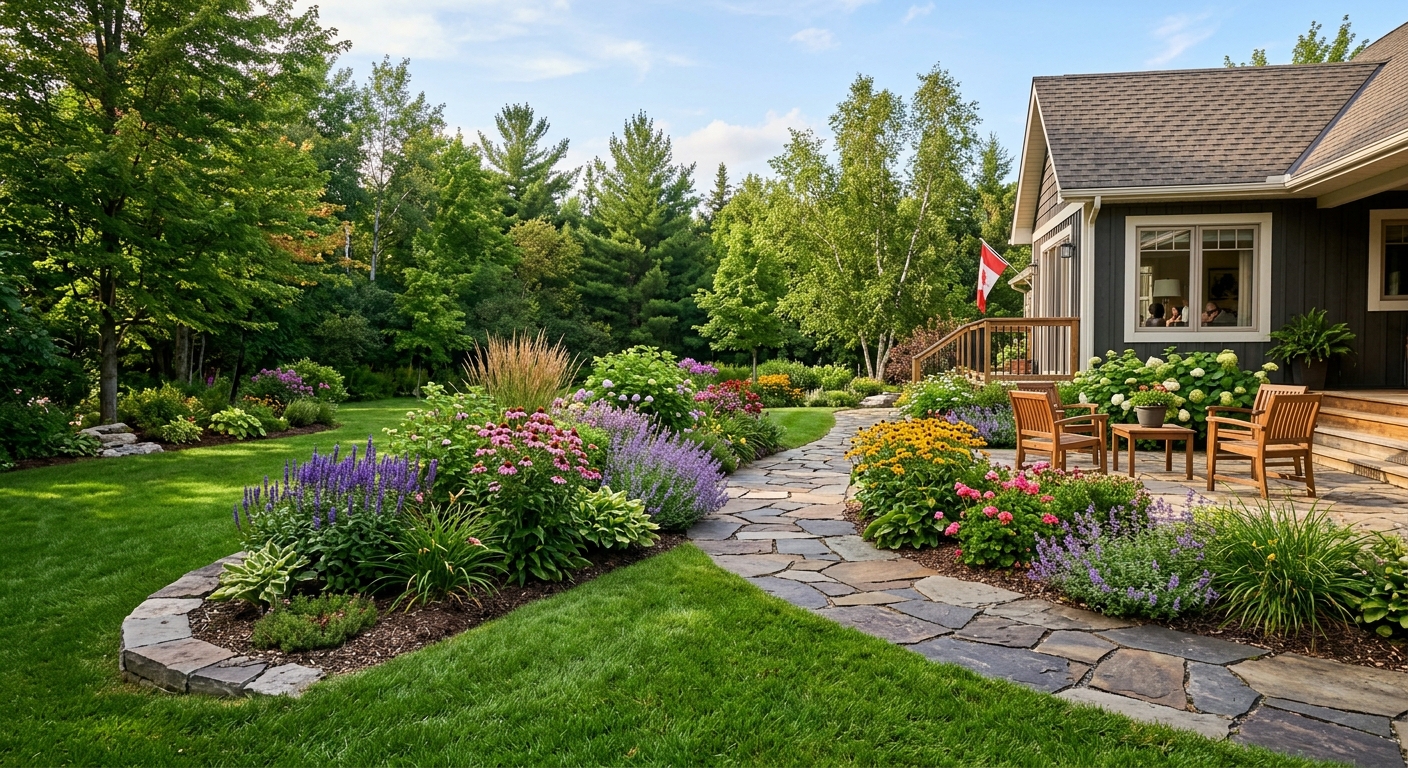
Landscaping options and costs in South Granville
In South Granville, landscaping is a real extension of home life—especially for detached properties where you have the yard space to make improvements that feel permanent. With a population of 24,820 people in the area (Statistics Canada, 2021 Census), demand is steady, and contractors are most booked around the spring-to-fall softscape window. Lower Mainland–Southwest summers are cool and winters are mild and wet (plant hardiness zones 7–8), which supports lush, layered planting and lets many installation crews work through more months than you’d see in harsher regions. That said, South Granville projects aren’t cheap “because it grows well”—they’re priced by material choices, labour availability, and how much site prep is required to handle long rainy spells and freeze–thaw impacts on patios and retaining walls.
Work is especially in demand around Fairview Crescent and the areas closer to Oak Street, where homeowners often renovate front yards for curb appeal while upgrading drainage and irrigation so new planting survives the shoulder seasons. In the Lower Mainland–Southwest market, you’ll typically see more design-led installs (evergreen structure plus perennials) and more efficient irrigation retrofits than basic “plant a few shrubs.” To compare realistic budget ranges, use the table below as a backbone for planning your next quote.
| Service |
Description |
Season |
Price Range |
| Full landscape design and installation |
Site visit, design plan, grading/drainage coordination, planting plan, irrigation coordination, labour and materials for a finished yard |
Mar–Nov (softscape), with winter prep often possible |
$8,500–$45,000 |
| Sod installation (supply, grade, lay, roll) |
Soil testing (as needed), grading for slope, topsoil/turf base, sod supply and installation |
Apr–Jun and Sep–Oct |
$2,500–$7,500 |
| Lawn seeding (grade, seed, starter fertilizer) |
Light grading, seed selection, starter fertilizer, rake-in and protection |
Mar–May and Sep–Oct |
$1,500–$4,500 |
| Interlocking patio or walkway |
Excavation, compacted base (with drainage considerations), bedding sand, pavers, edging |
Apr–Nov (structural work scheduled around wet windows) |
$12,000–$55,000 |
| Retaining wall (interlocking block) |
Excavation, wall block system, filter fabric, drainage gravel, base prep and compaction |
Apr–Nov |
$15,000–$65,000 |
| Tree and shrub planting |
Plant procurement, planting holes, soil amendments, staking (when required), starter watering plan |
Mar–Jun and Sep–Nov |
$1,500–$14,000 |
Prices are estimates only and vary by project scope, site access and material selection.
What affects the price of landscaping in South Granville
In South Granville and across the Lower Mainland–Southwest, the same “surface-level” landscaping scope can come back 30–50% apart between quotes. The difference usually isn’t the brochure—it’s the hidden work: what the contractor includes for grading and drainage, the plant sizes and tiers they specify, the irrigation design, and how labour-intensive access and site conditions are. Compared with other British Columbia regions, Lower Mainland yards generally benefit from zone 7–8 planting and a longer working window, so crews can schedule more efficiently and use lush palettes more often. In Prairie-like conditions (Zone 2–4), contractors commonly plan around shorter growing seasons and limited frost-free windows, often prioritizing drought- and wind-tolerant plants and compressing timelines. In coastal BC (Zone 7–8), winter damage risk is lower, but wet soils mean drainage quality drives plant survival—and drainage work changes the price fast. Water restrictions in the dry BC Interior can also shift irrigation design there, whereas in South Granville you still pay attention to efficiency and controllers because water costs and municipal rules can tighten during dry spells. Southern Ontario (Zone 5–6) often has more summer dry-spell irrigation demand planning, but less coastal rainfall complexity.
In practice, local conditions raise costs when you need to correct slope toward a foundation, replace saturated topsoil, or add a proper drainage bed to stop pooling—especially on sloped lots common near the Granville corridor. Costs can also rise with mature specimens: a larger tree or premium shrub tier typically pushes projects into the higher end of the $1,000–$15,000 planting band. Conversely, seeding can keep you nearer the $2,000–$8,000 lawn range because it avoids sod supply costs—provided soil prep and timing are right. South Granville’s housing stock (many older homes) often means older soils and tighter setbacks, so excavation and disposal are more labour-heavy, even when the final yard looks “simple.”
| Price Factor |
Why It Matters |
Cost Impact |
| Yard size in sq ft — the primary cost driver for softscape |
More area increases topsoil, seed/sod, mulch, plant count, and installation labour hours |
High variability; often the biggest swing |
| Grading and drainage work — slope corrections add significant cost |
Correcting fall away from the house and fixing uneven grades is labour- and equipment-intensive |
Can add a substantial portion of the total |
| Drainage bed or French drain installation |
Wet conditions and foundation moisture require filter fabric, gravel, pipe, and proper discharge planning |
Moderate to high increase depending on complexity |
| Plant material tier — native shrubs vs. ornamental vs. mature specimen trees |
Premium tiers cost more and often need higher-quality planting and staking |
Low to very high increase (largest tier swing) |
| Hardscape vs. softscape ratio — walls and patios cost more per sq ft than lawn |
Base preparation, compaction, and paver/block materials drive per-square-foot costs |
High increase when hardscape dominates |
| Irrigation system design and installation |
Smart controllers, zones, valve boxes, and nozzle selection add cost but reduce long-term losses |
Moderate; increases with more zones |
| Soil amendment and topsoil required |
Poor native soils, clay pockets, and contaminated or compacted areas need replacement/amendment |
Moderate increase if removals are needed |
| Tree removal or stump grinding before new planting |
Extra equipment, disposal, and protection needs add time and risk controls |
Moderate to high depending on size/location |
Permits & regulations in British Columbia
For most South Granville yard work in British Columbia, you typically do not need a permit for planting, sodding, and standard softscape installations. That includes things like installing sod, seeding, most shrub and tree planting, mulched beds, and most garden edging. Where permits commonly come up is for structural retaining walls above a municipal height threshold—often around 1.0 m (3.3 ft) in many communities—where a building permit may be required, and engineering drawings are sometimes requested for taller or more complex walls.
Another permitting trigger is grading: if your contractor proposes changing lot grading in a way that redirects drainage toward neighbouring properties or connects to storm systems, approvals can be required. Also, before any digging—planting holes or wall footings—utility locates are essential. In South Granville, even “just planting” can hit service lines, so you should confirm locates are completed.
To verify a contractor properly, don’t rely only on a bid letter. Step 1: check their BC licence/registration status (via the appropriate provincial online registry relevant to their trade). Step 2: ask for a current certificate of liability insurance showing sufficient coverage for landscaping work and vehicles/equipment on site. Step 3: confirm worker coverage (WSIB/WCB) where applicable—request a clearance letter or verification document rather than accepting a verbal claim. If a contractor won’t provide insurance and coverage proof, pause and re-request it before signing.
Planning a landscape that thrives in South Granville's climate
Planning for South Granville means working with hardiness zone 7–8 conditions, the region’s long growing season, and the reality that heavy rain can arrive in stretches. Start with plant selection: prioritize native and zone-appropriate shrubs, groundcovers, and perennials that tolerate cool winters and don’t require constant winter wrapping or aggressive summer watering. In Lower Mainland–Southwest yards, sod and softscape succeed when you pair good soil prep with correct timing—spring and early fall are usually the best windows for establishment.
Sod vs. seed is a straightforward decision in this market. Sod gives instant visual impact and typically establishes quickly, but it costs about 3–4 times more per square foot than seeding once you include supply and installation. For example, if you have a 400 sq ft lawn area, sod can land roughly in the $2,500–$7,500 range for many typical residential jobs, while seeding may fit closer to the $1,500–$4,500 band—meaning the “speed” can cost you several thousand dollars. If you’re planning a family event or selling soon, sod can be justified; if you can wait for gradual thickening, seeding is often the better value.
Drainage and grading are non-negotiable in the Lower Mainland: avoid pooling near foundations by shaping fall away from the house, and consider drainage beds on consistently wet spots. For hardscape like patios and retaining walls, base preparation matters because even coastal areas experience freeze–thaw cycles—so contractors dig deeper, compact properly, and build in drainage to reduce frost heave and wall movement. Finally, low-maintenance strategies—mulch, groundcovers, and long-blooming perennials—reduce annual upkeep while keeping curb appeal high. If water costs or occasional irrigation limits worry you, include rain-garden elements or targeted xeriscape pockets using soil-based drainage swales and efficient drip where turf is minimal.
| Element |
Climate Consideration |
Maintenance Level |
Price Band |
| Sod lawn installation |
Establishes best in spring and early fall; requires proper grade and drainage to avoid soggy turf |
Low to moderate (initial watering, then routine mowing) |
$2,500–$7,500 |
| Native perennial garden |
Zone-appropriate perennials reduce winter losses and support consistent blooms in cool summers |
Moderate (seasonal pruning, weeding first year) |
$3,000–$12,000 |
| Mulched shrub border |
Mulch improves soil structure and moisture balance through wet winters and dry spells |
Low (refresh mulch and occasional weeding) |
$2,000–$9,000 |
| Interlocking stone patio |
Freeze–thaw calls for a proper base and edge restraint; drainage gaps prevent washout |
Low (seasonal cleaning) |
$12,000–$55,000 |
| Retaining wall (block) |
Wet soils need filter fabric and drainage gravel to avoid saturation behind the wall |
Low to moderate (inspection and vegetation control) |
$15,000–$65,000 |
| Drip irrigation system |
Efficient watering supports healthy planting through cool-wet and occasional dry periods |
Low to moderate (seasonal winterization checks) |
$2,500–$9,000 |
How to choose a landscaping contractor in South Granville
Choosing a landscaping contractor in South Granville comes down to proof and clarity. First, verify British Columbia licensing/registration for the trade they represent (don’t assume—ask for the current registration details). Next, confirm liability insurance: request a certificate of insurance that matches your address and shows adequate limits for both property damage and general liability related to landscaping work. For worker protection, ask how coverage is handled and request documentation confirming WSIB/WCB clearance or coverage—good contractors can provide it without hesitation.
When you request quotes, aim for 2–3 itemised, written proposals. You want a breakdown of labour versus materials (soil, sod/seed, pavers/blocks, drainage components, plants, and irrigation parts), not one lump-sum figure that hides scope gaps. Read the scope carefully for exclusions: is permit pulling included where required (especially for taller retaining walls)? Is disposal included for excavated soil? Are topsoil and compost specified, or is it “as required”? Clarify what happens if rain delays installation—will dates adjust and will there be additional charges?
Warranty matters. Ask for a workmanship warranty length (for grading, base build, and plant installation) and whether product/manufacturer warranties apply to irrigation components and plant material. Also confirm if coverage is transferable if you sell your home. Finally, payment schedules should be conservative: never pay more than 10–15% upfront for materials and set a holdback until the job is complete and inspected.
Timeline is part of accountability. Get the start date and estimated completion in writing, including key milestones like drainage completion, base compaction inspections, and final planting dates.
- Request their BC registration/licence details in writing before signing.
- Collect a current certificate of liability insurance (and verify your project address is covered by the policy’s scope).
- Ask for WSIB/WCB clearance or coverage documentation—don’t accept verbal confirmation.
- Get 2–3 itemised quotes with labour and material line items.
- Confirm disposal is included for excess soil and packaging.
- Ask who is responsible for utility locates prior to digging.
- Verify topsoil/compost and base materials are specified by type and depth.
- Check if irrigation is included (and if not, whether they will connect to an existing system).
- Confirm drainage details: slope away from the home, drain beds/French drains where needed.
- Demand a written warranty for workmanship and clarify plant replacement rules.
- Use a payment schedule with 10–15% maximum upfront and a holdback until completion.
- Get start/completion dates and a rainy-day contingency plan in writing.
Red flags in South Granville: (1) no insurance/coverage proof, (2) quotes that don’t specify materials or base depths, (3) “we’ll handle permits” without naming which items require them, (4) pushing for high upfront payment, and (5) vague timelines with no written milestones.
Frequently asked questions — landscaping in South Granville
How long does a landscaping project take in South Granville?
For South Granville, typical timelines depend on whether you’re doing softscape only or mixing hardscape and drainage. A planting-only job or a refreshed mulched border can often be completed in a day or two. Sod installations usually take a short window for prep and laying, with establishment continuing after—especially if your contractor needs grade adjustments to prevent pooling. Interlocking patios and retaining walls are slower because excavation, base building, compaction, and drainage setup must be done correctly around wet weeks; those projects often run over several days to a few weeks depending on size and access. If your plan is budgeted around a full install (often in the $8,500–$45,000 design/installation range), expect scheduling that balances rain and crew availability.
What is the best grass type for a South Granville lawn?
In British Columbia’s Lower Mainland–Southwest conditions (zone 7–8), the “best” lawn grass is usually a blend designed for cool, moist winters and moderate summer growth. Homeowners commonly do well with perennial ryegrass blends for quick establishment and improved wear resistance, especially where kids, pets, and foot traffic are present. If your lawn area gets shade from mature trees, discuss shade-tolerant seed blends; correct soil prep and drainage matter more than brand names. If you’re choosing between sod and seed, remember sod gives instant coverage but costs more; seeding is often closer to the $1,500–$4,500 band, while sod installation frequently lands in the $2,500–$7,500 band depending on site prep needs.
When should I aerate and overseed my lawn in South Granville?
In South Granville, the most reliable aerate/overseed windows are usually early spring and early fall—timed to when the lawn can grow quickly and recover before winter damp and late-season wear. Early fall is often a strong choice because temperatures are still cool enough to reduce stress, while soil moisture supports germination. If your yard stays soggy after rain, aeration alone won’t fix the root issue—good drainage and correct grading still matter. For compacted lawns, aerating reduces thatch and improves water/seed contact with soil. If you’re planning a full lawn reset, some homeowners skip aeration and move straight to renovation (seed or sod) for cleaner results, especially when budgets allow.
What trees grow best in South Granville's climate zone?
With South Granville sitting in hardiness zone 7–8, many landscape trees perform well, but your best choice also depends on soil drainage and available root space. In typical Lower Mainland yards, homeowners often succeed with broadleaf options that handle wet winters and mild coastal weather—provided the site isn’t chronically waterlogged. It’s also wise to select trees that fit your mature-size footprint and setback requirements from buildings and drainage lines. A mature specimen tree planting typically costs more within the $1,000–$15,000 tree and shrub planting band because labour and plant size are higher. A reputable contractor will match species to light conditions (sun vs shade near mature evergreens) and recommend staking only where it’s genuinely needed.
How much does sodding a yard cost in South Granville?
Sodding in South Granville often comes with a wider range than homeowners expect because grade correction, drainage fixes, and topsoil depth can change the job scope. Many typical residential sod projects land around the $2,500–$7,500 band for moderate areas when prep is straightforward. If the yard has significant slope issues, saturated soil, or foundation drainage problems, the total can move toward the upper end because grading and amendments become part of creating a stable turf base. Always ask whether the quote includes soil/turf base preparation, compaction, and edging—those details affect how long the lawn stays level and how quickly it fills in.
How do I prevent weeds in my South Granville garden?
Weed prevention in British Columbia gardens is mostly about building barriers and maintaining the bed structure. Start with a clean foundation: remove established weeds (including roots) before you add fresh mulch. Use a weed-suppression layer only where appropriate for the plant type—dense groundcovers and well-spaced shrubs still benefit from mulch more than from excessive fabric that can trap moisture in some conditions. In the Lower Mainland’s wet winters, too-thick mulch can stay saturated around crowns, so aim for the correct depth and keep mulch off stems. Once planted, regular light weeding in the first growing season is the easiest time to reduce future weed pressure. A well-planned mulched shrub border can keep ongoing labour low while maintaining curb appeal.