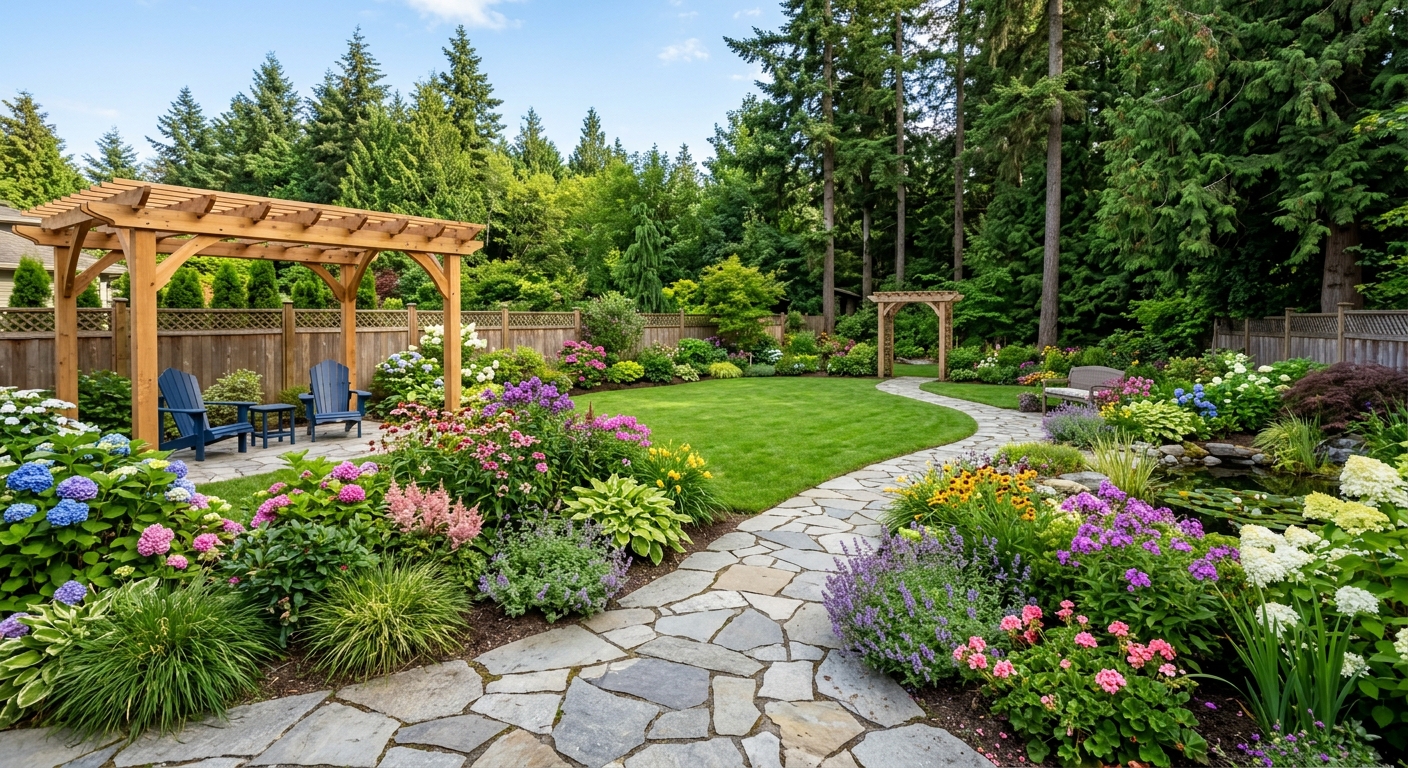
Landscaping options and costs in Musqueam
Musqueam homeowners often start landscape planning with a simple goal—better curb appeal and less weekly upkeep—but the right approach depends on your yard size, soil conditions, and how your home sits on the lot. In Musqueam, the community includes about 1,646 residents (Statistics Canada, 2021 Census), and many properties are in neighbourhoods where detached or small-lot living creates a strong incentive to invest in exterior improvements. In the Lower Mainland–Southwest, landscaping pricing is shaped by a Zone 7–8 climate (broadleaf evergreens and long-blooming perennials do well) plus a long working window because spring and fall frosts are generally mild compared with much of Canada.
That longer season can reduce schedule risk for projects like patios, planting, and irrigation upgrades, but it also means more contractors are available—so design-build quotes can vary widely based on crew size, material choices, and how much drainage or soil prep is included. In areas with heavier rainfall pockets and sloped properties, costs can rise quickly when grading, French drains, or base preparation are required to prevent pooling and foundation moisture. Trade demand is particularly consistent in and around the residential pockets closest to Musqueam’s community areas, where homeowners commonly refresh front entries and side yards with layered planting beds and walkways.
Below is a practical cost comparison for typical work scopes in Musqueam, British Columbia, so you can line up apples-to-apples when you receive bids and start asking the right questions.
| Service |
Description |
Season |
Price Range |
| Full landscape design and installation |
Site visit, concept/layout, planting plan, grading/drainage coordination, irrigation add-ons (if needed), labour and materials to install softscape and hardscape |
Mar–Jun and Sep–Nov (with weather-dependent days in winter) |
$5,000–$50,000 |
| Sod installation (supply, grade, lay, roll) |
Existing removal as needed, soil amendments, fine grading, sod delivery/roll-out, rolling, starter fertilizer and cleanup |
Apr–Jun and Sep–Oct |
$2,000–$8,000 |
| Lawn seeding (grade, seed, starter fertilizer) |
Light topdressing or fine grading, seed selection, starter fertilizer, seeding, light raking and initial watering plan |
Mar–Jun and Aug–Sep (avoid heavy rain windows where possible) |
$1,500–$6,000 |
| Interlocking patio or walkway |
Excavation, compacted base, edge restraint, sand bedding, interlock/pavers, minor drainage detailing, polymeric joint sand |
Apr–Oct (freeze–thaw-safe base planning required) |
$10,000–$30,000 |
| Retaining wall (interlocking block) |
Layout, excavation to proper footing depth, compacted base, block installation, drainage gravel and weeper system where needed |
Apr–Oct |
$10,000–$80,000 |
| Tree and shrub planting |
Soil preparation, planting holes, amendments, staking (if required), mulching, and initial maintenance guidance |
Mar–Jun and Sep–Nov |
$1,000–$15,000 |
Prices are estimates only and vary by project scope, site access and material selection.
What affects the price of landscaping in Musqueam
The same landscaping job can come in 30–50% apart across the Lower Mainland–Southwest and other parts of British Columbia because crews price risk differently: soil prep, drainage complexity, access constraints, and how long materials take to fit the schedule. In Musqueam, we work in plant hardiness zones 7–8 with mild, wet winters and a long growing window, so the “what can grow” piece is easier than in Prairie cities. However, the “what can stay healthy” and “what stays stable under freeze–thaw” still affects labour hours and excavation depth.
First, frost dates and zone performance shape plant selection and protective measures. If you choose lush, layered planting palettes that are appropriate for coastal BC conditions, you can often reduce winter losses—but if drainage is poor, even Zone 7–8 plants can fail and require replanting. Second, retaining walls and patio base work must account for freeze–thaw cycles: even when freezes are milder, proper drainage and compaction are still critical to prevent frost heave and wall movement. That’s one reason a wall can land anywhere from the $10,000–$80,000 band depending on footing depth and drainage detailing.
Concrete examples from Musqueam: (1) a yard with downspout runoff leading toward the foundation typically triggers grading and drainage revisions—often a meaningful addition on top of a straightforward planting scope; (2) a sloped lot can require terracing and extra retaining wall length, pushing hardscape costs into the higher end of the $10,000–$80,000 range; (3) if your soil is heavy clay, adding compost/topsoil and improving permeability is usually non-negotiable, especially before sod. On the softscape side, that’s also why sod tends to sit in the $2,000–$8,000 band more often than seeding when homeowners want fast results, but seeding can be the better value if the grade and soil amendments are already dialled in.
| Price Factor |
Why It Matters |
Cost Impact |
| Yard size in sq ft — the primary cost driver for softscape |
More area means more material (seed/sod, topsoil, mulch) and more labour hours to install evenly |
Typically large swings; small yards still have mobilization minimums |
| Grading and drainage work — slope corrections add significant cost |
Regrading is labour-intensive and often requires re-establishing correct water flow |
Can add major cost when pooling risks exist near foundations |
| Drainage bed or French drain installation |
Under-slab/under-sod drainage reduces moisture issues and prevents plant failures |
Often pushes project price toward the upper band for hard-to-drain sites |
| Plant material tier — native shrubs vs. ornamental vs. mature specimen trees |
Mature stock costs more and needs careful handling, staking, and larger planting pits |
Specimen trees can be the biggest variable in planting budgets |
| Hardscape vs. softscape ratio — walls and patios cost more per sq ft than lawn |
Hardscape requires excavation, base materials, compaction, and precise leveling |
Shifts cost profile quickly from planting-like budgets to hardscape-like budgets |
| Irrigation system design and installation |
Zones, pressure requirements, and layout determine labour and parts costs |
Can add substantial cost but improves plant survival and water efficiency |
| Soil amendment and topsoil required |
Heavy clay or nutrient-poor soil needs compost/topsoil for root development |
Rises when hauling and additional spreading/compaction are required |
| Tree removal or stump grinding before new planting |
Access, stump size, and disposal affect time and equipment needs |
Often a “surprise” line item if not included in the original scope |
Permits & regulations in British Columbia
In British Columbia, most routine landscaping work—planting beds, sodding, and the majority of softscape installations—typically does not require a permit. The work that most often does require approval is structural: retaining walls above the local threshold (commonly around 1.0 m or 3.3 ft in many municipalities) usually need a building permit, and some designs may call for engineered drawings depending on height, soil conditions, and the wall’s purpose. Also watch for grading changes: if you’re re-contouring the lot in a way that affects stormwater drainage toward a neighbouring property or a storm sewer connection, approval requirements can be triggered.
Step one for a Musqueam homeowner is confirming your contractor will call for utility locates before any digging, whether it’s for planting holes, irrigation lines, or retaining wall footings. Step two is verifying credentials before work starts: ask for (1) proof of a valid British Columbia business licensing/contractor registration where applicable, (2) a certificate of insurance showing general liability, and (3) coverage confirmation for workers through the appropriate Canadian workplace insurance system (WSIB/WCB coverage), typically available as a clearance letter or account confirmation from the contractor’s insurer/provider.
Where to look: use online contractor/business registries for licensing status, then ask to see an up-to-date certificate of insurance (and confirm it includes your project address), plus a clearance letter for workers’ compensation coverage. If any of these documents can’t be produced, pause and request them before signing a contract.
Planning a landscape that thrives in Musqueam's climate
Planning for Musqueam means working with coastal conditions in plant hardiness zones 7–8: mild winters, long cool growth stretches, and frequent moisture. Your job is to prevent standing water and foundation moisture rather than to “fight drought” like many Prairie yards. Start with plant selection—native and zone-appropriate species (plus disease-tolerant varieties suited to your sunlight) generally require less watering and less winter protection when you also design proper drainage. For many homeowners, the sod vs. seed decision becomes the fastest way to impact both cost and satisfaction.
Sod gives instant curb appeal and better early erosion control, but it’s usually about 3–4x more expensive per sq ft than seeding because of material cost and installation labour. That can be worth it when you have high visibility front lawns, kids/pets needing usable ground sooner, or erosion risk on freshly graded slopes. For example, moving from seeding into the $2,000–$8,000 sod band might be justified if you’re also upgrading grading and drainage so the lawn can establish without patchy failures.
Drainage and grading are critical in Lower Mainland–Southwest yards. Even if frosts are mild, freeze–thaw cycles still occur—so patio and retaining wall base preparation must include proper excavation depth, compacted base layers, and drainage gravel where appropriate. Keep it low-maintenance with groundcovers, mulched shrub borders, and perennials that bloom in waves rather than requiring constant deadheading. Rain-garden style planting pockets and smart drip irrigation zones can reduce runoff while using water efficiently when municipal watering rules tighten.
| Element |
Climate Consideration |
Maintenance Level |
Price Band |
| Sod lawn installation |
Needs correct drainage and consistent early moisture in coastal wet/dry swings |
Low to moderate (weekly watering guidance during establishment) |
$2,000–$8,000 |
| Native perennial garden |
Zone-appropriate roots handle mild winters; reduces long-term watering once established |
Moderate (mulch refresh and seasonal pruning) |
$3,000–$12,000 |
| Mulched shrub border |
Improves soil moisture retention and helps manage rainfall-runoff patterns |
Low (weed suppression + occasional top-up) |
$2,000–$10,000 |
| Interlocking stone patio |
Requires well-draining base planning to manage freeze–thaw expansion and prevent settlement |
Low (periodic joint material refresh) |
$10,000–$30,000 |
| Retaining wall (block) |
Design must manage soil water behind the wall; proper weeping/gravel is key |
Low (visual checks and drainage performance monitoring) |
$10,000–$80,000 |
| Drip irrigation system |
Efficient water delivery supports plants during occasional drought restrictions |
Low (seasonal checks and controller updates) |
$1,500–$12,000 |
How to choose a landscaping contractor in Musqueam
Choosing the right contractor in Musqueam, British Columbia starts with proof—not promises. First, verify licensing/registration for the business (where applicable), then confirm liability insurance through a current certificate of insurance naming you/addressing the project. Next, check workers’ compensation coverage (WSIB/WCB clearance). Most reputable contractors can provide a clearance letter or account confirmation—request it before signing. If they can’t produce these documents, it’s a red flag.
Second, get 2–3 itemised written quotes, not just a lump-sum number. Ask for a breakdown of labour and materials (excavation/base prep, drainage, pavers/blocks, soil amendments, plant list and sizes, irrigation components, and disposal). Clarify what’s included: permit pull (if required), utility locates, erosion control, haul-away, compaction testing (if used), and the specific restoration scope (topsoil/mulch/seed or sod edges). A good quote will also state exclusions clearly—like unforeseen rock, hidden roots, or extra wall height.
Third, check warranty terms: workmanship warranty length, product/manufacturer warranties, and whether warranties are transferable to the homeowner. For payment schedule, never pay more than about 10–15% upfront; hold back a portion until the job is complete and meets the contract specs. Finally, get a start date and completion estimate in writing—coastal weather still delays schedules in wet weeks.
- Provide current insurance certificate and verify coverage limits match the job scale.
- Request a workers’ compensation clearance/letter for WSIB/WCB coverage.
- Ask for their British Columbia business registration/contractor standing (where applicable) and confirm online.
- Use itemised quotes with line-by-line labour and materials, not one total.
- Confirm whether utility locates are included and who books them.
- Ask who handles disposal/haul-away and whether tipping fees are included.
- Verify grading/drainage responsibilities (who guarantees water won’t pond).
- Ensure base prep details are specified (compaction layers, drainage gravel, restraints).
- Get the plant list with species, sizes, and quantities—no “allowance only” without limits.
- Confirm irrigation scope: controller type, number of zones, and coverage area.
- Ask for warranty length for workmanship and whether product warranties transfer.
- Agree on a payment schedule with a holdback until final walkthrough and cleanup.
In Musqueam, red flags to watch for: (1) contractor refuses to share a certificate of insurance or clearance letter; (2) quote only gives a lump sum without drainage/base prep details; (3) vague plant substitutions without written approval; (4) demanding large upfront payments (well beyond 10–15%); (5) no written timeline or no clear scope for disposal and restoration.
Frequently asked questions — landscaping in Musqueam
How do I find a licensed landscaper in Musqueam?
Start by shortlisting contractors that operate in the Lower Mainland–Southwest and can provide documentation before you sign. In British Columbia, ask for their business licensing/registration status (where applicable), then request a certificate of liability insurance with your project address and confirm coverage limits. For worker protection, ask for evidence of WSIB/WCB coverage—many contractors can provide a clearance letter or account confirmation. Next, look for independent reviews specifically mentioning Musqueam or nearby neighbourhoods and ask for photo examples that match your scope (sod, interlock, retaining walls, irrigation). Finally, compare itemised quotes so you can see whether drainage/grading, soil amendment, and base prep are included—those details are where “cheap” bids often fail.
How much does landscaping cost in Musqueam?
Landscaping cost in Musqueam depends heavily on whether you’re doing mostly softscape (planting/lawn) or a mix that includes drainage, patios, or retaining walls. For many homeowners, a full design-and-install project commonly falls anywhere from $5,000–$50,000, depending on yard complexity and materials. If your goal is lawn improvement, sod installations typically land in the $2,000–$8,000 range, while seeding is often lower if grading and soil are already set. If you’re adding hardscape, retaining walls and larger patio work are usually budgeted within the $10,000–$80,000 band because excavation, compaction, and drainage detailing drive costs. A clear quote that includes drainage and base prep is the fastest way to avoid overruns.
What plants thrive in Musqueam's climate zone?
Musqueam sits in coastal British Columbia’s plant hardiness range (Zone 7–8), so you can grow many broadleaf evergreens, long-blooming perennials, and layered shrub borders with less winter loss than colder regions. The key is matching plants to light and soil moisture—coastal yards can be wet, but proper drainage keeps roots healthy. Many homeowners do well with native shrubs and perennials suited to the Lower Mainland–Southwest, plus a mulch strategy that reduces evaporation when conditions swing between rainy weeks and drier periods. Avoid choosing plants solely for their look; base your palette on your sunlight hours, whether your yard stays soggy after storms, and whether you’re adding irrigation for establishment. A good contractor will propose varieties that tolerate mild winters and frequent moisture, reducing replanting costs over time.
Sod vs seed — which is better for a Musqueam lawn?
Sod is usually the better choice when you want instant coverage, need stronger erosion control quickly, or you’re working on a visible front lawn where you can’t wait for germination and thickening. In Musqueam, sod can be a good fit because you still have a long growing season, but it only performs well if grading and drainage are correct and the new turf gets consistent early moisture. Cost-wise, sod commonly fits the $2,000–$8,000 band, while seeding is typically less expensive if your grade is already right. Seeding can be the smarter value when you have time for establishment and you’re correcting soil condition and topdressing first. For either option, ask your contractor for a watering/establishment plan tailored to rainy vs. drier weeks in British Columbia.
How much does a retaining wall cost in Musqueam?
Retaining wall pricing in Musqueam is driven by height, length, and especially how much excavation and drainage work is needed behind the wall. Even though coastal winters are milder, freeze–thaw cycles still require proper base preparation so you avoid settlement and wall movement. In practice, retaining walls typically fall within the $10,000–$80,000 band, with the higher end common for longer walls, steeper slopes, and projects that need additional drainage gravel/weeper systems. If the wall exceeds common local thresholds (often around 1.0 m or 3.3 ft in many municipalities), a permit is typically required, which also affects schedule and documentation. Ask for a design detail that includes footing depth and drainage behind the wall, not just the block quantity.
When is the best time to landscape in Musqueam?
For Musqueam and the Lower Mainland–Southwest, the best time is usually spring through early summer and again in fall. Planting often works well from about March through June and from September through November, depending on rainfall and ground conditions. Sod is commonly installed in spring or early fall so roots can establish before temperature swings; seeding is similar, but you generally want to avoid heavy, prolonged wet spells right after sowing. Hardscape like interlocking patios and many retaining wall projects are typically scheduled from spring to early fall to reduce risk from saturated soils and colder nights. Winter can still work for certain tasks, but soft, wet conditions can slow excavation and compaction. When you get quotes, ask for weather contingency and a written start/completion timeline in British Columbia.