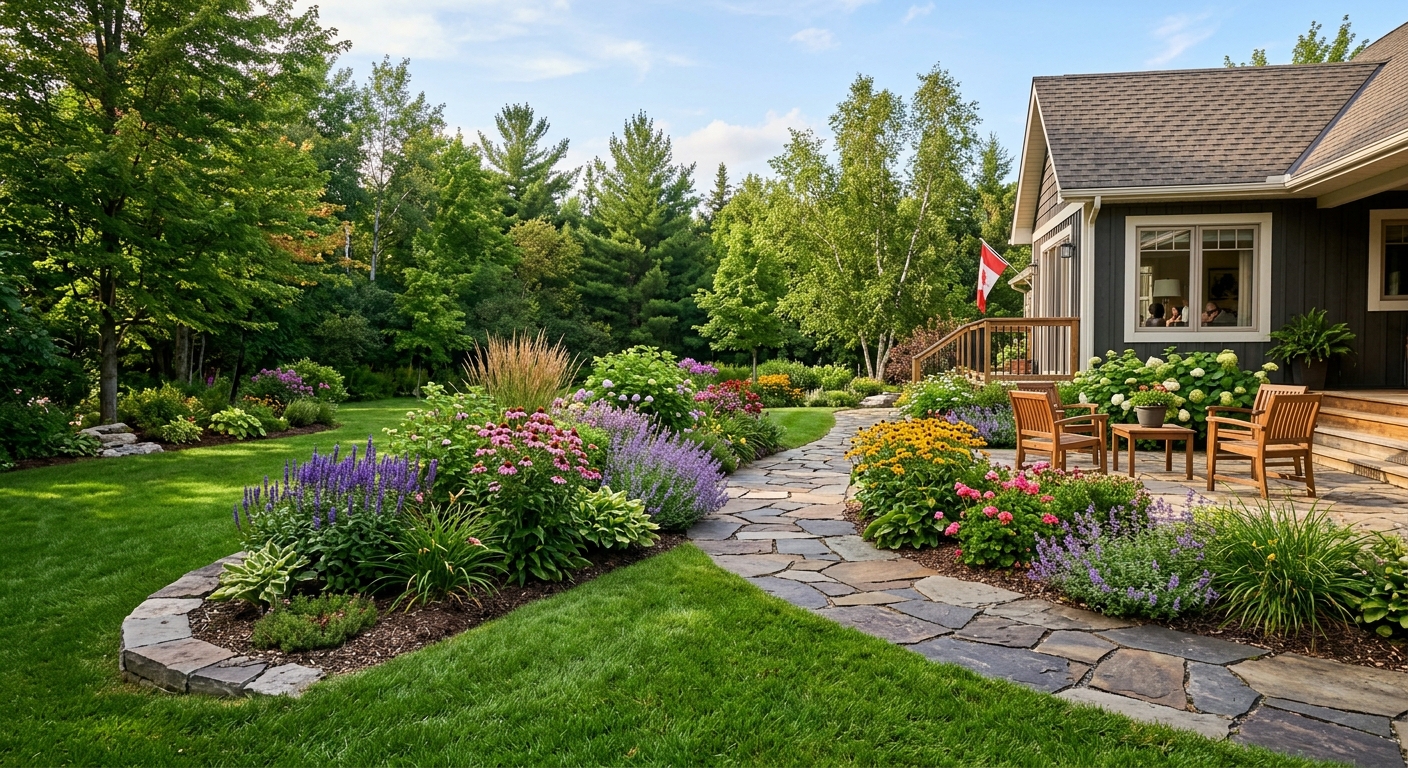
Landscaping options and costs in UDistrict
In UDistrict, British Columbia, homeowners often start with one big question: “What will this cost, and what can we realistically build here?” With a 2021 population of 3,775 (Statistics Canada, 2021 Census), the neighbourhood supports steady demand for landscaping around student rentals, older residential pockets, and family homes—many of which have enough yard space to justify upgrades. UDistrict’s broader Lower Mainland–Southwest market also benefits from a long planting and construction season, because frost timing near the coast is typically early March to early April for the last spring freeze and first fall frost often lands in November. That extended window can lower labour scheduling risk compared with shorter growing regions.
In plant hardiness zones 7–8, winters are mild and wet, so contractors can build layered, lush designs with broadleaf evergreens and long-blooming perennials—provided drainage and soil prep are done correctly. Pricing still moves because heavier winter rainfall means more time is spent on grading, erosion control, and drainage corrections. If you’re working near older foundation footprints or sloped lots common in parts of the area, expect freeze–thaw considerations for hardscape bases and retaining wall footings to protect against movement.
Work is especially busy around University Boulevard and the surrounding residential streets where accessibility and curb appeal matter for rental turnover. The next section breaks down typical line-item costs so you can compare quotes apples-to-apples.
| Service |
Description |
Season |
Price Range |
| Full landscape design and installation |
Site visit, grading/drainage plan, plant palette, hardscape/softscape layout, permit coordination if needed, installation coordination |
Spring to early winter (softscape in wetter windows; hardscape scheduled for drier stretches) |
$12,000–$45,000 |
| Sod installation (supply, grade, lay, roll) |
Soil assessment, rough grade, topsoil/amendments as needed, sod delivery and rolling, starter fertilizer, cleanup |
Late spring to early fall (avoid saturated days) |
$3,000–$7,500 |
| Lawn seeding (grade, seed, starter fertilizer) |
Fine grading, seed and starter fert, light raking, rolling, first watering guidance |
Spring and early fall |
$2,000–$5,000 |
| Interlocking patio or walkway |
Excavation, base gravel, compaction, edging, stone setting, jointing, sealing (optional), disposal |
Spring to fall (avoid freeze risk and very wet soil conditions) |
$9,000–$30,000 |
| Retaining wall (interlocking block) |
Layout, excavation, drainage/gravel backfill, block system installation, geotextile where required, cap/finishing |
Spring to fall |
$18,000–$65,000 |
| Tree and shrub planting |
Soil amendments, staking as needed, mulching, planting holes, watering plan (and replacement guarantee, if offered) |
Most of the growing season; avoid extremes |
$1,500–$14,000 |
Prices are estimates only and vary by project scope, site access and material selection.
What affects the price of landscaping in UDistrict
In UDistrict and across the Lower Mainland–Southwest, the same landscaping idea can land at prices that differ by roughly 30–50% from one quote to the next. The biggest reason isn’t “inflated pricing”—it’s scope definition. One contractor may include proper grading and drainage testing, while another assumes existing soil and slopes are “good enough.” Labour availability also matters: when crews are busy with patios, retaining walls, and mulit-trade jobs, installation timelines tighten and production slows.
Climate and frost dates shape both what you can install and how long crews can work. In coastal BC (zones 7–8), the growing season is long, so plant-heavy designs can be built more confidently, but heavy winter rain means soil conditions can delay excavation and base work. Prairie regions (zones 2–4) often compress work into short frost-free windows and usually require drought-tolerant planting and strict scheduling; retaining wall bases there must be deeper to manage more severe freeze risk. In the BC Interior and Alberta, water restrictions influence irrigation design, often pushing the cost toward drip systems and smarter controllers. Southern Ontario (zones 5–6) has a moderate season, but summer dry spells can raise irrigation demand and lawn establishment costs.
Two common UDistrict examples that move costs: (1) on sloped yards or older lots, correcting grade and draining away from foundations can add significant time and trucking—pushing a “simple refresh” toward the mid-range of the $10,000–$80,000 hardscaping/retaining band; (2) choosing mature specimen trees or a premium ornamental shrub tier can shift planting from the $1,000–$15,000 band upward due to larger root-balls, higher material price, and handling time. If your yard has been underused for years, soil amendment and topsoil replacement can also become the hidden driver, especially where compacted ground holds water.
| Price Factor |
Why It Matters |
Cost Impact |
| Yard size in sq ft — the primary cost driver for softscape |
More square footage increases labour hours, materials, and waste disposal (soil, seed, sod, mulch) |
Often the largest swing factor; small yards can be disproportionately more expensive per sq ft |
| Grading and drainage work — slope corrections add significant cost |
Correcting runoff paths affects foundation moisture and prevents ponding in the wet season |
Can add thousands in excavation, regrading, and additional topsoil |
| Drainage bed or French drain installation |
Collects and redirects subsurface water; crucial when downspouts and foundations are affected |
Frequently a mid-to-high cost add-on depending on length and outlet routing |
| Plant material tier — native shrubs vs. ornamental vs. mature specimen trees |
Higher-tier stock costs more and often needs staking, larger holes, and careful handling |
Mature trees are typically the fastest way to move the project toward the upper planting range |
| Hardscape vs. softscape ratio — walls and patios cost more per sq ft than lawn |
Stone and block work requires deeper excavation, compacted bases, and heavier material movement |
Shifts budgets quickly into patio/wall price territory |
| Irrigation system design and installation |
Drip, bubblers, and efficient layouts protect plants through dry spells and reduce waste |
Adds cost, but often saves money long-term by preventing plant loss |
| Soil amendment and topsoil required |
Wet-clay or compacted soils need amendments for root establishment and drainage |
Can turn “light planting” into a soil-delivery and labour-heavy job |
| Tree removal or stump grinding before new planting |
Creates usable planting space and avoids future root competition |
Often a discrete add-on that can meaningfully change total project price |
Permits & regulations in British Columbia
In British Columbia, most routine landscape work such as planting, sodding, and typical softscape installation generally does not require a permit. The work that more often triggers permitting is structural: retaining walls above the local height threshold—commonly around 1.0 m (3.3 ft) in many municipalities—may require a building permit and sometimes engineered drawings, especially where surcharge loads or complex drainage are involved. Also consider grading changes: if your project alters lot drainage in a way that affects neighbouring properties or storm sewer connections, approvals can become necessary. Before any digging for planting holes or wall footings, arrange utility locates to avoid hitting buried services.
For a UDistrict homeowner, a simple step-by-step verification process helps you hire confidently:
- Ask the contractor for their certificate of insurance (liability) and confirm the policy covers landscaping/excavation-related activities on your address.
- Request WSIB/WCB coverage details (BC commonly uses WCB coverage). Ensure you’re provided a clearance letter or evidence the account is in good standing.
- Confirm they carry the right licensing/registration for the type of work they’re doing, and that their business details match the quote contract.
- Look for these documents before the first shovel goes in, not on demolition day.
- Verify who will pull any required permits (and whether that cost is included) in writing.
Finally, double-check water-use expectations with your contractor—while coastal BC has fewer routine bans than the drier Interior, bylaws and enforcement can still tighten during drought conditions.
Planning a landscape that thrives in UDistrict's climate
To plan a yard that thrives in UDistrict, you want to work with the coastal pattern of wet winters, long cool summers, and plant hardiness zone 7–8 rather than trying to fight it with the wrong turf or drainage. Start with plant selection: choose native and zone-appropriate species that can tolerate occasional wet feet (with proper grading) and recover quickly after cool, damp periods. Even in BC, “low watering” doesn’t mean “no care”—it means smart plant spacing, mulch, and efficient irrigation.
When deciding sod vs. seed, think about timing and your tolerance for establishment time. Sod gives instant visual results but typically costs about 3–4 times more per sq ft than seeding once you account for material and installation labour. Seeding is slower, but it’s often more budget-friendly when the site can be kept moist during germination. In UDistrict’s climate, drainage is the make-or-break item: pooling can cause root stress, moss, and patchy growth. For hardscape such as patios and retaining walls, proper base preparation must respect freeze–thaw movement—so excavation depth, drainage bedding, compaction, and gravel backfill matter even when freeze days are milder than in the Prairies.
For low-maintenance design, layer groundcovers, perennials, and mulched shrub borders to reduce weeding. Consider rain-garden elements in areas that collect water near downspouts, and use xeriscape-style zones where you want drought resilience—just avoid placing drought plants in permanently wet pockets. As a practical example, if you’re choosing between $2,000–$8,000 turf establishment paths, paying for sod can be justified when a rental needs fast curb appeal; otherwise, seeding usually gives better value for long-term yard health.
| Element |
Climate Consideration |
Maintenance Level |
Price Band |
| Sod lawn installation |
Best during the milder growing stretches; keep it out of saturated periods to avoid washouts |
Medium (watering establishment window, then light seasonal care) |
$3,000–$7,500 |
| Native perennial garden |
Zones 7–8 support year-round structure; choose plants that handle wet/dry swings with mulch |
Low to medium (mulch refresh and seasonal tidy-ups) |
$2,500–$10,000 |
| Mulched shrub border |
Helps manage soil moisture and reduces weeds through cool, damp winters |
Low (weeding reduction, periodic mulch top-ups) |
$1,800–$8,500 |
| Interlocking stone patio |
Base compaction and drainage prevent movement during coastal freeze–thaw events |
Low (occasional cleaning/sealing if selected) |
$9,000–$30,000 |
| Retaining wall (block) |
Includes drainage backfill to manage wet-season water pressure |
Low (periodic inspection of joints/caps) |
$18,000–$65,000 |
| Drip irrigation system |
Efficient water delivery supports plant health during irregular dry stretches |
Medium (seasonal checks and controller setup) |
$2,500–$9,000 |
How to choose a landscaping contractor in UDistrict
Choosing the right contractor in UDistrict starts with proof, not promises. In British Columbia, you should verify licensing/registration for the type of work being quoted, confirm liability insurance is active and adequate, and ensure workers are covered under WCB/WSIB-equivalent coverage through their clearances. Ask for the certificate of insurance and check the coverage dates and that the policy names your project address or properly covers the class of work (especially where excavation is involved). For WCB coverage, request a clearance letter or evidence of account status—then keep a copy with your contract.
Next, request 2–3 itemised written quotes. You want breakdowns for labour and materials (not just a single lump sum), and you want to see line items like excavation, base material, drainage work, stone/block supply, plant supply, and disposal. Carefully read exclusions: Is permit pulling included? Who hauls away soil and green waste? Are tree roots and stump grinding included if you’re replacing a damaged stump area? Confirm product warranties separately from workmanship warranties—manufacturers cover plants/stone materials, while contractors cover installation.
For payment, don’t let the job become a cash advance. A safe approach is to keep upfront payments around 10–15% and request staged payments tied to milestones. Agree on a start date and a completion estimate in writing, especially since wet winter periods can shift scheduling.
- Ask whether the quote includes grading/drainage corrections, not just surface work.
- Confirm disposal/trucking is included or clearly excluded.
- Request a written scope map: where the patio/walls/plant beds will sit.
- Check that planting quantities and plant sizes are listed (not “allowance only”).
- Ensure irrigation design is included if you’re replacing lawn or adding shrub beds.
- Verify the subcontractors are insured and covered under the same WCB clearance.
- Require proof of liability insurance before work begins.
- Look for a clear workmanship warranty length (and what it covers).
- Clarify whether the contractor will protect existing lawns/sidewalks/driveways.
- Confirm material specifications: base depths, compaction approach, and stone/block systems.
- Ask how they handle changes—written change orders, not verbal adjustments.
- Use the same scope language to compare quotes fairly across contractors.
In UDistrict, red flags include: quotes that omit drainage/grading but still claim “problem solved,” missing or expired insurance/WCB clearance documents, paying the majority upfront, vague “allowances” with no quantities (especially for topsoil, plant sizes, and stone), and no written timeline for start/completion. If a contractor won’t put details in writing, treat it as a cost and quality risk.
Frequently asked questions — landscaping in UDistrict
How do I improve drainage in my yard?
In UDistrict (Lower Mainland–Southwest), drainage improvements usually start with grading—making sure surface water flows away from the house and doesn’t pool near foundations. If you’re seeing soggy soil, moss spreading, or water tracking toward a crawlspace after rain, the next step is often a drainage bed or French drain tied to a safe outlet. Because coastal BC winters are wet and winters can still include freeze–thaw cycles, drainage needs to be built correctly with proper geotextile, gravel sizing, and backfill so it doesn’t collapse or clog over time. Expect drainage work to be a major driver of cost; it can push a broader refresh into the same range as retaining/hardscaping projects, rather than staying at simple softscape pricing like $2,000–$5,000 for seeding.
What is xeriscaping and does it suit UDistrict?
Xeriscaping is a water-wise landscaping approach that reduces irrigation needs using drought-tolerant plants, smart soil preparation, and efficient layouts (mulch, groundcovers, and targeted watering like drip). In UDistrict, xeriscaping can suit parts of your yard—especially raised beds, sunny slopes, and areas where you want to avoid repeated lawn watering. However, UDistrict’s wet winter pattern means you should not place drought plants in constantly damp, poorly drained pockets; that’s where a rain-garden element or improved drainage usually matters more. Many homeowners do a mixed design: lush, layered perennials where drainage is good, and a xeriscape zone where watering is limited. If your goal is immediate curb appeal, sod can be expensive relative to seeding; most projects choose the more efficient route—often starting around $2,000–$8,000 depending on lawn scope—then layering low-water planting.
How do I plan a low-maintenance yard?
A low-maintenance yard in UDistrict is mostly about reducing “things you must do every week.” Plan for fewer turf complications by replacing high-effort lawn areas with mulched shrub borders, native perennial gardens, and groundcovers that can handle coastal moisture. Add 2–3 inches of mulch to suppress weeds, and group plants by water needs so you aren’t overwatering one area and underwatering another. Drainage and soil health are also maintenance multipliers: when soil stays aerated and water moves correctly, plants establish faster and decline slower. If you’re deciding turf first, remember sod delivers instant results but often costs much more than seeding; seeding is commonly a better long-term maintenance choice when you can manage establishment. For example, lawn seeding typically sits around $2,000–$5,000 in many UDistrict projects, while sod installation can climb to $3,000–$7,500 depending on size and grading needs.
How deep should a retaining-wall base be for local frost?
Retaining-wall base depth depends on wall height, site conditions, and the engineered/block system requirements—not a single universal number. That said, even in coastal BC, you should design with freeze–thaw movement in mind, and we also need to manage wet-season water behind the wall with drainage backfill. In practice, contractors in UDistrict dig to stable subgrade and install a properly compacted granular base, then add geotextile and drainage materials as required so water pressure doesn’t build behind the wall. If your wall is near or above typical permit thresholds (often around 1.0 m in many municipalities), expect stricter design and documentation, which can change excavation depth and overall cost. Because quoting depends on block system details, soil type, and wall layout, your best next step is to ask for a detailed base and drainage specification in the written scope.
How much does professional landscape design cost?
Professional landscape design in UDistrict can vary widely based on whether you’re getting a concept-only plan or a full design package with plant schedules and construction-ready drawings. Many full-project quotes bundle design into the installation pricing, while standalone design services may be priced separately. In terms of total project budgets, full landscape design and installation commonly falls into broad bands such as $12,000–$45,000, especially when the work includes grading, drainage planning, and multiple zones of plants and hardscape. That said, smaller jobs—like planting and mulching—can fit far lower into the tree and shrub planting band (often around $1,500–$14,000 depending on plant sizes and quantities). If you want design, ask for what’s included: layout, estimated quantities, plant list, irrigation notes, and whether permit tasks are part of the package.
How do I compare landscaping quotes?
Comparing quotes is about scope clarity more than sticker price. Start by lining up the same deliverables across bids: exact quantities (sq ft/sq m), plant sizes and counts, hardscape thickness/base specs, drainage work included or excluded, and whether disposal/trucking is part of the price. Ask whether any permits are required and who pulls them—especially for retaining walls over common height thresholds in British Columbia. Next, confirm the contractor’s documentation: liability insurance and WCB coverage evidence/clearance, plus licensing/registration relevant to the work. Then compare payment schedules and warranties; a lower price with weak warranty terms can cost more when repairs are needed. Finally, keep an eye on common budget traps: “allowances” with no quantities and vague grading/drainage assumptions. If your project is a lawn refresh, compare quotes against realistic band expectations like $2,000–$8,000 for sod/lawn work depending on method and preparation, rather than just the final total.