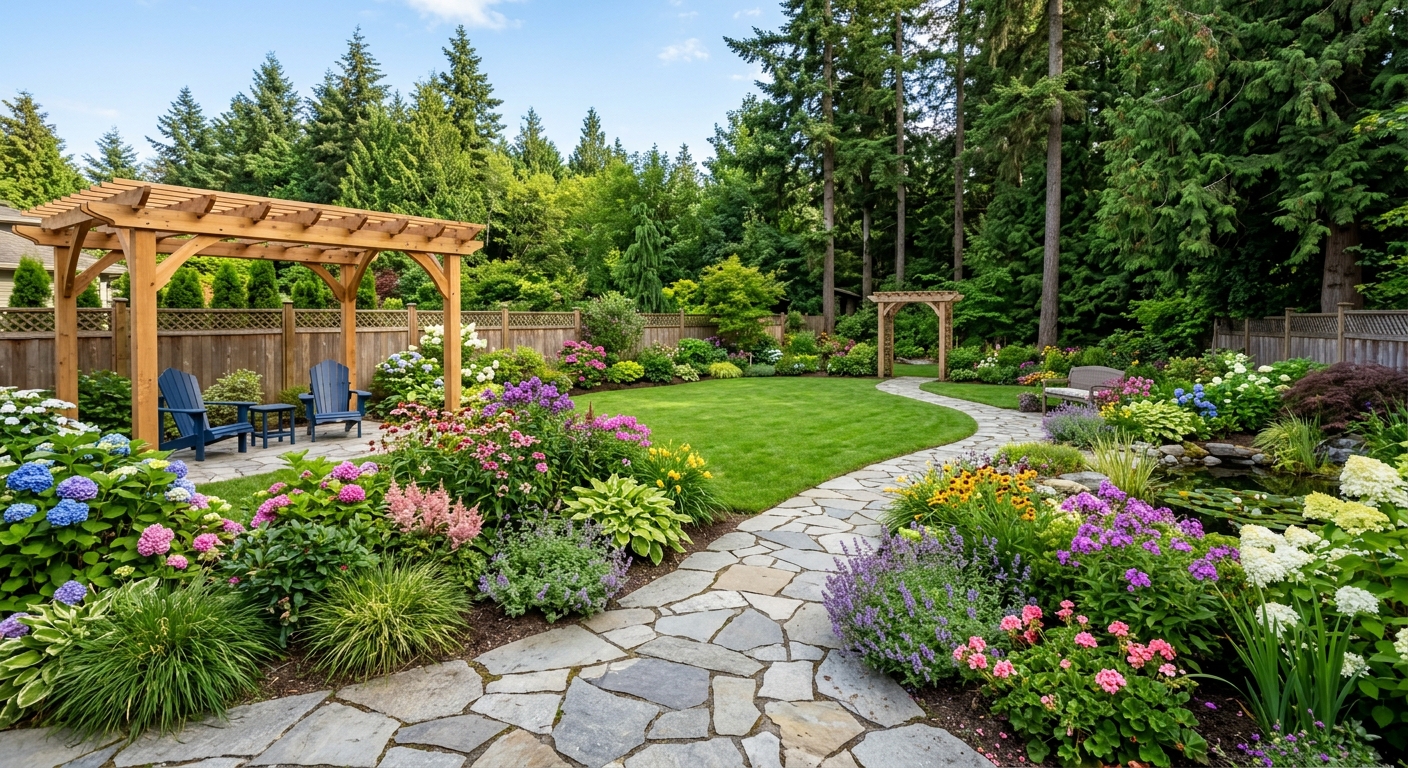
Landscaping options and costs in Oak Bay
Oak Bay homeowners often start landscape planning with one question: what will it realistically cost to make the yard feel finished? With about 5,820 homeowner households (Statistics Canada, 2021 Census), many detached properties have both the yard space and the incentive to invest in year-round curb appeal. In Oak Bay, where roughly 63.0% of dwellings are single-detached homes (Statistics Canada, 2021 Census), landscaping upgrades are common because driveways, walkways, gardens and retaining edges typically form a big part of daily living.
In the Vancouver Island and Coast region, mild coastal hardiness zones (7–9) and a long working season help keep installation timelines practical; contractors can often work from early spring through late fall. That said, Oak Bay’s wet winters and frequent rain mean drainage design can’t be an afterthought—proper base prep and soil amending are what protect foundations and prevent soft, sinking stone. Areas like Foul Bay Road and Beach Drive see especially strong demand because slopes and mature hedges are common, and homeowners often want a neat, low-maintenance look that performs through coastal storms.
Below are typical “turnkey” budget ranges you’ll see for common projects in Oak Bay, with pricing shaped by labour rates, material choices, access, and the amount of grading, drainage and hardscaping needed. Use these as a baseline as you compare quotes.
| Service |
Description |
Season |
Price Range |
| Full landscape design and installation |
Site visit, layout, plant palette, irrigation (if needed), grading/drainage, planting, mulch, and hardscape as scoped |
Early spring to late fall |
$5,000–$40,000 |
| Sod installation (supply, grade, lay, roll) |
Soil prep, minor grading, sod supply, delivery, installation, rolling and initial watering plan |
Spring to early fall (avoid deep drought periods) |
$1,500–$8,000 |
| Lawn seeding (grade, seed, starter fertilizer) |
Light grading/weed control, seed blend, starter fertilizer and seeding/rolling |
Early spring or early fall |
$1,200–$6,500 |
| Interlocking patio or walkway |
Excavation, base (compacted), sand setting layer, interlocking stone, edging and cleanup |
Spring to late fall |
$4,500–$18,000 |
| Retaining wall (interlocking block) |
Wall layout, excavation, compacted base depth, drain material, block installation and backfill |
Spring to late fall |
$4,000–$30,000 |
| Tree and shrub planting |
Soil amendment, planting layout, staking (when needed), mulch rings and initial care instructions |
Spring and fall (often best) |
$800–$15,000 |
Prices are estimates only and vary by project scope, site access and material selection.
What affects the price of landscaping in Oak Bay
In Oak Bay, you can see the same “basic” landscaping job come in 30–50% apart across Vancouver Island and Coast when different contractors include different levels of design, grading, drainage, and material quality. Even though the climate is mild, coastal work still has real constraints: wet soil affects how foundations, wall bases and compaction are completed, and that can change labour hours. Meanwhile, labour availability and overhead can differ by season—builders often book earlier in spring because crews are also lining up for drainage and hardscape starts.
Plant hardiness and timing matter for both what grows and what can be installed. Vancouver Island and the Coast sit in mild zones 7–9, so you typically get a long planting window and can build lush, multi-season palettes. Compare that with Zone 2–4 Prairie areas where shorter seasons and drought stress often push homeowners toward drought-tolerant choices and more scheduling constraints. On the coast, drainage and soil structure still drive costs: heavy rain means we design for runoff, and soft ground can make compaction and base prep more labour-intensive. Water restrictions are less severe than in the BC interior, but efficient irrigation design is still common for exposed or south-facing areas, especially where beds get wind-driven drying.
Here are a few local examples of what raises or lowers your quote in Oak Bay:
- Homes built before 1981: with about 83.2% of homes built before 1981 (Statistics Canada, 2021 Census), older lots often have established drainage patterns—if those are altered, more investigative grading may be required. That can push a mid-range plan from the lower part of the $5,000–$40,000 design-and-install band.
- Slope corrections and retaining drainage: adding proper base depth and a drainage layer can move a block wall project into the upper $4,000–$30,000 range, even if the wall face area looks modest.
- Hardscape intensity: two similar yards can differ greatly if one has a larger patio and the other focuses on planting beds—hardscape typically costs more per square foot than lawn or mulch.
Use the factors below to understand why your “apples-to-apples” comparison needs clear specs, not just a bottom-line number.
| Price Factor |
Why It Matters |
Cost Impact |
| Yard size in sq ft — the primary cost driver for softscape |
More area means more soil prep, mulch/seed or sod, and more planting layout labour |
Often the biggest spread; can move you from lower to upper $5,000–$40,000 project totals |
| Grading and drainage work — slope corrections add significant cost |
Re-contouring requires excavation, disposal, and more labour hours for proper pitch |
Commonly adds thousands; can increase overall scope by 20–40% |
| Drainage bed or French drain installation |
Coastal rain requires controlled flow to prevent pooling and foundation moisture |
Typically increases a retaining/hardscape quote; often pushes projects toward the upper wall bands |
| Plant material tier — native shrubs vs. ornamental vs. mature specimen trees |
Mature stock costs more and needs specialist planting, staking and sometimes root ball adjustments |
Can swing tree/shrub budgets from the lower end of $800–$15,000 to the higher end |
| Hardscape vs. softscape ratio — walls and patios cost more per sq ft than lawn |
Stone, base materials and compaction are labour/material intensive compared to seeding/mulch |
Replacing lawn with stone can raise the “per project” cost quickly |
| Irrigation system design and installation |
Drip systems and smart controllers improve efficiency and reduce wasted water |
Often adds a mid-project premium, especially for multiple zones |
| Soil amendment and topsoil required |
Poor existing soil and compacted subgrade can require additional amendments and proper depth |
Raises costs when truckloads are needed; also increases labour for spreading and shaping |
| Tree removal or stump grinding before new planting |
Stump grinding, hauling and root disturbance affect schedule and backfill needs |
Can add thousands depending on access and debris disposal |
Permits & regulations in British Columbia
In British Columbia, most planting and softscape work typically doesn’t require a permit. That usually includes sodding, seeding, mulch and shrub planting, and common landscape grading when it doesn’t meaningfully affect drainage patterns toward neighbouring properties. For many Oak Bay homeowners, the everyday work—planting holes, topsoil refresh, and adding garden beds—can move ahead once utility locates are arranged.
Where permits can be required:
- Retaining walls above a height threshold (often around 1.0 m / 3.3 ft, though you must confirm with your municipality) usually require a building permit and may involve engineered drawings.
- Significant changes to lot grading that alter drainage toward neighbouring properties or connect to storm systems may require approval and additional documentation.
Step-by-step for Oak Bay homeowners: (1) Ask the contractor what components require permits in your exact scope (especially any wall face height and drainage tie-ins). (2) Request the contractor’s certificate of insurance and confirm they arrange utility locates before digging wall footings or planting trenches. (3) Verify the contractor’s licence status using the appropriate provincial search tools where applicable for their trade. (4) Confirm they carry the correct workers’ compensation coverage (WSBC/WCB) for their workers—ask for a clearance letter or proof of coverage. If the contractor won’t provide documentation promptly, that’s a warning sign before you spend any deposit.
Planning a landscape that thrives in Oak Bay's climate
Planning for Oak Bay means working with the site’s mild coastal conditions—not fighting them. You’ll generally be in coastal hardiness territory (zones 7–9), with precipitation concentrated in wet seasons and periodic dry spells that can stress exposed plantings. Start with plant selection: choose zone-appropriate, hardy natives and proven coastal performers so beds hold structure through winter and don’t require constant winter wrapping or aggressive watering. Layer in four-season structure—broadleaf evergreens, grasses, and reliable perennials—so the yard looks finished even when blooms aren’t happening.
Next, consider sod vs. seeding. Sod gives instant “curb” results and helps with erosion on freshly graded slopes, but in practice it often costs about 3–4 times more per sq ft than seeding once you include prep, supply, and installation labour. Seeding is a strong choice for budget-focused lawn conversions, especially in spring or early fall.
Drainage and grading are non-negotiable in Vancouver Island and Coast yards. Pooling water can soften subgrade, leading to sinking walkways or patchy lawn. Proper grading also reduces foundation moisture risk. If you’re adding hardscape like patios or retaining walls, insist on base preparation that respects how frost and freeze–thaw can move moisture; proper base depth and compaction protect stone and wall stability.
Finally, aim for low-maintenance design: mulch, groundcovers, and well-spaced perennial drifts reduce annual upkeep without turning your yard into a bare rock garden. For water-conscious choices, consider rain-garden style beds or xeriscape elements in drier pockets—especially where beds bake in summer sun.
One realistic dollar example: if you’re converting a small front lawn, seeding might sit closer to the lower end of the lawn band (for instance, around $1,200–$6,500 depending on area and prep), while sod installation typically lands in the $1,500–$8,000 range. The premium can be justified when you need immediate coverage (erosion control, pets, kids, or a scheduled home sale).
| Element |
Climate Consideration |
Maintenance Level |
Price Band |
| Sod lawn installation |
Needs good drainage and careful watering management through coastal rainy periods and occasional dry spells |
Low to moderate (initial watering and weed control) |
$1,500–$8,000 |
| Native perennial garden |
Zone-appropriate plants handle mild coastal winters; mulch helps manage wet winters and moderates summer moisture |
Low (seasonal trimming, occasional weeding) |
$2,000–$12,000 |
| Mulched shrub border |
Broadleaf evergreens and hardy shrubs suit zones 7–9 and reduce evaporation when mulched correctly |
Low (mulch refresh and light pruning) |
$1,000–$9,000 |
| Interlocking stone patio |
Requires compacted base and drainage pitch to withstand wet seasons and gentle coastal freeze–thaw |
Low (occasional cleaning and joint material top-up) |
$4,500–$18,000 |
| Retaining wall (block) |
Needs proper base depth, compaction and drainage layer to protect backfill during heavy rain |
Low (mostly inspection after storms) |
$4,000–$30,000 |
| Drip irrigation system |
More efficient for coastal beds in exposed sites; smart controllers reduce waste during wet periods |
Moderate (seasonal check and controller settings) |
$1,200–$7,500 |
How to choose a landscaping contractor in Oak Bay
Choosing a contractor in Oak Bay is mostly about verifying coverage, clarity, and accountability—because drainage errors and poor base prep are expensive to fix. Start with licensing (where applicable for the trade), then ask for their liability insurance certificate—you want it showing adequate coverage and the correct legal name. For workers, confirm they have WSBC/WCB coverage and request proof such as a clearance letter or current coverage confirmation.
Next, get 2–3 itemised written quotes that break out labour and materials (not a single lump sum). You want separate lines for excavation/grading, base materials, drainage work, stone or block pricing, topsoil/soil amendments, plant supply, delivery, irrigation components, and disposal. Quotes should also state whether permits are included and who handles them if a retaining wall triggers building permit requirements (often around 1.0 m / 3.3 ft in many municipalities—still confirm locally).
Warranty matters too. Ask for: (1) the workmanship warranty length for installation, (2) product/manufacturer warranties for stone, pavers and plants (where applicable), and (3) whether any warranty is transferable if you sell the home.
For payment, never agree to more than 10–15% upfront. Hold back the remainder until the full job is complete, cleaned, and any punch-list items are corrected. Also request a written timeline with a start date and a completion estimate; on Vancouver Island, heavy rain can shift schedules, but good contractors communicate changes early.
- Provide current insurance certificate and WCB/WSBC proof before you sign.
- Use a site visit and confirm exactly what is included (grading, drainage, base, disposal).
- Itemise labour vs. materials and list unit quantities (sq ft, linear ft, count of plants).
- Confirm whether utility locates will be booked prior to digging.
- Ask who supplies and installs drainage rock/pipe and whether a silt barrier is used.
- For walls/patios, require base depth, compaction method, and drainage pitch specs.
- Confirm edging detail and jointing materials for interlocking stone.
- Get planting lists (common name, size/class, and spacing expectations).
- Clarify irrigation: dripline type, number of zones, controller/smart features, and coverage map.
- Request a disposal plan for soil and debris (dump fees included or not?).
- Ensure the warranty is in writing with coverage dates and exclusions.
- Set payment schedule with a small upfront deposit and holdback until final sign-off.
Red flags to watch for in Oak Bay: vague scopes (“we’ll fix it as we go”), no proof of insurance or WCB/WSBC, quotes that don’t address drainage/grading, pressure for large upfront payments, and missing details on retaining-wall permitting or base depth specs.
Frequently asked questions — landscaping in Oak Bay
How much does a retaining wall cost in Oak Bay?
In Oak Bay, retaining walls typically land in the $4,000–$60,000 range depending on wall length, height, whether it’s block vs. more structural options, and how much excavation and drainage work is required. A simple interlocking block wall on a modest slope can often fit the mid part of the band (for example, $4,000–$30,000), but costs climb quickly when access is tight, the yard is steep, or additional drainage (like a French drain bed) is needed to control wet-season runoff. Because coastal yards deal with heavy rainfall, contractors usually must build a compacted base and include proper drainage layers to avoid settlement and washouts.
When is the best time to landscape in Oak Bay?
For most landscaping in Oak Bay, the practical best window is from early spring through late fall, with spring and fall planting often performing best in coastal conditions. Mild coastal temperatures support root establishment, and contractors can schedule grading, drainage, planting, and hardscaping over a longer season than in harsher climates. Still, wet ground can slow excavation and compaction, so your start date matters. If you’re planning a larger interlocking patio or a retaining wall, aim for spring so base materials can be installed and compacted properly before deep winter rain. For planting trees and shrubs, fall can reduce watering demand while plants settle into cooler, stable conditions.
Do I need a permit for a retaining wall in British Columbia?
In British Columbia, a permit is often required for retaining walls once they exceed a typical height threshold—commonly around 1.0 m (3.3 ft) in many municipalities, though you must confirm locally for your exact location in the Oak Bay area. Smaller walls that fall below that threshold usually don’t trigger the same level of approval, and common planting and sodding generally don’t require a permit. However, if your project includes significant changes to lot grading, drainage redirection, or tie-ins that affect how water flows toward neighbouring properties or storm connections, additional approvals may be triggered. The safest approach is to ask your contractor to identify permitting requirements in writing before the job starts.
How do I improve drainage in my yard?
Drainage improvements in Oak Bay usually start with re-grading the surface so water moves where you intend, rather than pooling near foundations. From there, contractors often add a drainage bed or install a French drain system to intercept runoff and protect soil structure during wet winters. A key step is installing a proper base under any hardscape so water can disperse without undermining patios or walkway edges. If you’re dealing with a slope, drainage must match the wall strategy—block walls often need a drain layer behind the face to relieve hydrostatic pressure. Ask for a written plan showing where water will go and what components (pipe, rock, filter fabric) will be used, not just “we’ll improve drainage.”
What is xeriscaping and does it suit Oak Bay?
Xeriscaping is low-water landscaping that relies on drought-tolerant plants, efficient irrigation, and soil strategies like mulch and improved drainage. In Oak Bay and coastal BC, xeriscape ideas can absolutely fit—especially for exposed beds that bake in summer sun or south-facing areas. That said, Vancouver Island’s rainy season means you’re not designing for extreme drought only; you’re designing to manage both wet winters and dry spells without constant maintenance. A “smart hybrid” often works best: use mulch-heavy shrub borders and native perennials for structure, then add rain-garden elements where water naturally collects. If you need a lawn conversion, compare options—sod installation might fall in the $1,500–$8,000 band, while seeding is typically less expensive—yet xeriscape-focused design can reduce long-term watering needs.
How do I plan a low-maintenance yard?
A low-maintenance yard in Oak Bay starts with the right plant palette and good foundational work. Choose zone-appropriate, hardy shrubs and perennials that won’t require constant winter protection, then mulch beds to suppress weeds and moderate soil moisture through wet and dry seasons. For lawn, consider whether seeding makes sense for budget and flexibility, while sod may be justified when you need immediate coverage; compare realistic ranges such as $1,500–$8,000 for sod versus lower seeding budgets depending on prep. Prioritise drainage and grading so rain doesn’t create soft spots or recurring rework. For hardscaping, interlocking stone patios and properly built block walls can reduce ongoing upkeep, but only if the base is compacted and drainage is addressed. Finally, schedule maintenance tasks (mulch refresh, light pruning) early so they don’t become seasonal emergencies.