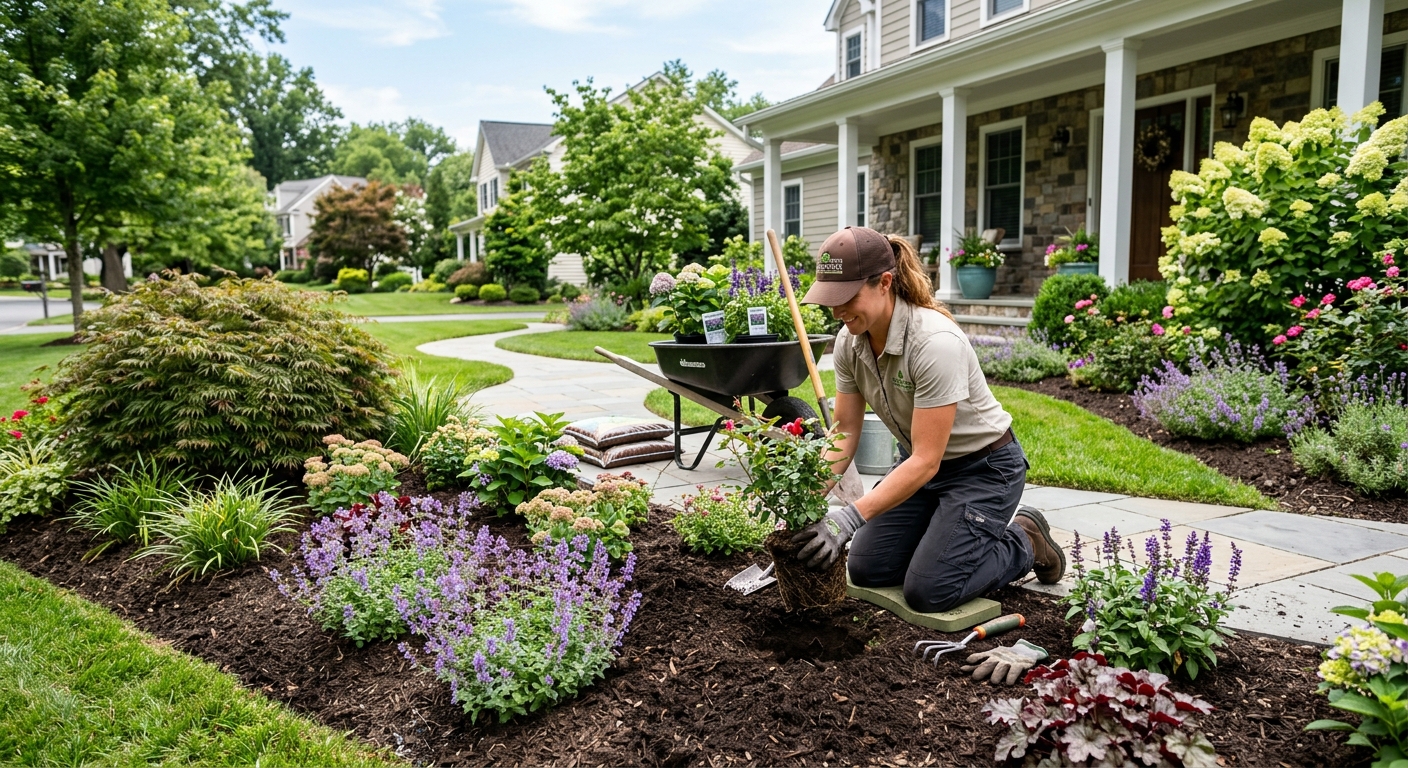
Landscaping options and costs in Victoria-Fraserview
In Victoria-Fraserview, homeowners often invest in landscaping because yards are a defining feature of detached neighbourhood living, and with a population of 31,065 (Statistics Canada, 2021 Census) there’s steady demand for both small curb-appeal upgrades and larger full-yard transformations. Vancouver Island’s housing stock also tends to include older homes and established lots, where reworking drainage, soil, and planting beds can matter just as much as adding fresh greenery.
Costs here are shaped by mild coastal plant hardiness zones 7–9 (with fewer severe freezes than inland Canada) and a longer working season. Many landscaping teams can plan from early spring through late fall, which helps spread scheduling and makes phased projects more practical. At the same time, the coast’s heavy winter rain means contractors must price drainage and base prep correctly—especially on sloped properties common around Saanich Inlet-adjacent areas and through parts of the Victoria core.
In Victoria-Fraserview, trades are particularly busy in high-traffic family areas like Tillicum and the Uptown-to-View Royal corridor, where new landscaping and property maintenance happen year-round. Because those markets see steady turnover in garden beds, lawns, and patios, you’ll usually find multiple crews available for design-build work—yet access, soil conditions, and hardscaping intensity still drive pricing. The easiest way to compare is to start with typical budget ranges, then match your scope to the line items below.
| Service |
Description |
Season |
Price Range |
| Full landscape design and installation |
On-site assessment, concept and layout, planting plan, grading/drainage coordination, softscape and hardscape build-out |
Spring–Fall (year-round planning) |
$5,000–$40,000 |
| Sod installation (supply, grade, lay, roll) |
Site prep, soil amendments, grading, supply and lay sod, roll and initial watering setup |
Late spring–Early fall |
$1,500–$8,000 |
| Lawn seeding (grade, seed, starter fertilizer) |
Fine grading, seed selection, starter fertilizer, light topdressing, watering guidance |
Spring–Early fall |
$900–$6,000 |
| Interlocking patio or walkway |
Excavation, base stone and compaction, edging, interlocking pavers, jointing sand |
Spring–Fall |
$4,000–$30,000 |
| Retaining wall (interlocking block) |
Block wall build with proper base, drainage consideration, reinforcement as required for height and conditions |
Spring–Fall |
$4,000–$60,000 |
| Tree and shrub planting |
Plant supply and installation, staking, soil amendments, mulching, first-season care plan |
Spring–Fall (some fall planting) |
$800–$15,000 |
Prices are estimates only and vary by project scope, site access and material selection.
What affects the price of landscaping in Victoria-Fraserview
In Victoria-Fraserview and across Vancouver Island and the Coast, it’s common to see quotes for the “same” landscaping scope vary by 30–50% between contractors. That spread usually comes down to how each company prices drainage/earthwork, allowance levels for materials, and how much time they allocate for site access, disposal, and proper base preparation. Even within British Columbia, jobsite conditions and scheduling can shift costs: mild coastal zones 7–9 support a longer installation window, but wet winters still require careful sequencing and more labour time for drainage troubleshooting. By comparison, Prairie regions (Zone 2–4) often face short growing seasons and tighter working windows, which pushes crews toward drought-tolerant selections and can raise schedule-dependent costs. Southern Ontario (Zone 5–6) has a moderate season but summer dry spells can increase irrigation needs. Contractors reflect those differences in how they design and budget labour and equipment.
In Victoria-Fraserview specifically, two local examples repeatedly move budgets: first, sloped lots near the coast often need extra grading and drainage correction. Second, the coast’s lush planting palette still demands that drainage beds and downspout routing are handled correctly—otherwise beds stay soggy and plants struggle. On a project where drainage and grading are minimal, you might stay closer to the mid-range landscape design & installation band of $5,000–$40,000. If you’re adding substantial retaining walls and heavy hardscaping, your hardscaping budget can climb well into the $4,000–$60,000 retaining wall range, mainly due to base depth, compaction, and drainage detailing.
Local climate also ties directly to planning. Coastal freeze–thaw cycles are gentler than interior zones, but frost still influences base prep; contractors still set wall and patio bases and compaction with frost behaviour in mind. That’s why “quick” installs without thorough base work often cost more long-term through settling, heaving, or rework.
| Price Factor |
Why It Matters |
Cost Impact |
| Yard size in sq ft — the primary cost driver for softscape |
More area means more labour, more topsoil/seed or sod, and more edging and cleanup |
Large yards can add thousands quickly, especially for lawn and planting |
| Grading and drainage work — slope corrections add significant cost |
Slope corrections must manage water away from foundations and prevent pooling |
Can raise overall project cost by a major share on sloped properties |
| Drainage bed or French drain installation |
Wet winters require properly vented and routed drainage solutions |
Often one of the largest “invisible” line items in quotes |
| Plant material tier — native shrubs vs. ornamental vs. mature specimen trees |
Mature plants cost more and require careful handling, staking, and soil prep |
Upgrades can move a garden from mid-range to premium budgets |
| Hardscape vs. softscape ratio — walls and patios cost more per sq ft than lawn |
Pavers and block systems rely on excavation, base stone, and compaction |
Higher hardscape ratios push budgets toward the upper price bands |
| Irrigation system design and installation |
Even with coastal rainfall, exposed areas and new plantings benefit from efficient irrigation |
Smart controllers and drip lines add cost, especially for multi-zone setups |
| Soil amendment and topsoil required |
Coastal soils can be compacted or poorly draining; amendments support root establishment |
Costs rise with import volumes and regrading thickness |
| Tree removal or stump grinding before new planting |
Root systems, access, and disposal determine equipment and labour needs |
Can add several thousand depending on size and site access |
Permits & regulations in British Columbia
In British Columbia, most typical softscape work—planting, sodding, and most landscaping improvements that don’t change structural elements—generally does not need a permit. However, retaining walls are where permitting often comes into play. In many municipalities, retaining walls above a height threshold (commonly 1.0 m/3.3 ft) typically require a building permit and, in some cases, engineered drawings depending on height and site conditions. Changes to lot grading that could affect how water drains (especially toward neighbouring properties or storm sewer connections) may also trigger approval requirements.
Before any digging, always call for utility locates. This applies to planting holes, trenching for French drains, and excavation for wall footings or pavers. Also confirm irrigation and water-use bylaws for your area. While Victoria-Fraserview typically doesn’t face the same drought pressure as the BC Interior, restrictions and conservation expectations can still apply during dry periods.
To verify a contractor before you sign: check their British Columbia licence/registration status (if applicable to their trade), request a current certificate of liability insurance, and confirm their worker coverage (WSIB/WCB) for employees. If they can’t provide proof, you’re taking on unnecessary risk for injuries on-site. A clearance letter or proof of coverage is often provided on request; review the documents for dates and coverage amounts—not just a verbal assurance.
Planning a landscape that thrives in Victoria-Fraserview's climate
To plan landscaping that truly thrives in Victoria-Fraserview, work with the local hardiness range (zones 7–9) and the coast’s wet winters rather than fighting them. Start with plant selection: native, zone-appropriate species and well-adapted four-season structure tend to need less watering and less winter protection than marginal plants. Use plants that tolerate both cool, damp shoulder seasons and brief dry spells—especially in exposed or south-facing pockets.
When choosing sod versus seed, understand the trade-off. Sod gives instant results and faster early coverage, but it costs roughly 3–4x more per sq ft than seeding because you’re paying for mature turf, haul-in logistics, and the larger supply volume. In practical terms, a small lawn reset might be a smart use of sod if you need a quick curb-appeal payoff before a sale or event; otherwise, seeding can be a better fit for budgets that want to stretch across beds and groundcovers.
Drainage and grading are the make-or-break items on Vancouver Island. Pooling water can keep roots oxygen-starved, leading to patchy lawns and stressed shrubs. Hardscape also needs proper base prep for local frost behaviour: interlocking stone patios and retaining walls should sit on compacted base layers that resist settling and heaving over repeated seasons.
For low maintenance, prioritize mulch, groundcovers, and hardy perennials, then support them with drip irrigation where it’s genuinely needed. Rain gardens and smart drainage swales can be great in yards that receive roof runoff or downspout discharge—helping manage water while adding attractive seasonal texture.
A good example of where costs make sense: spending in the lawn seeding range (often lower than sod) can free budget for improved drainage beds or a more robust planting palette. If you’re seeing quote gaps, ask what’s included in the base prep and drainage—those decisions usually determine whether you’ll be paying again for rework.
| Element |
Climate Consideration |
Maintenance Level |
Price Band |
| Sod lawn installation |
Needs consistent moisture for establishment through coastal seasons; avoid laying if drainage is poor |
Low–moderate first year, then moderate seasonally |
$1,500–$8,000 |
| Native perennial garden |
Zone-appropriate varieties handle wet-to-drier transitions better and support long-term resilience |
Low after establishment; light pruning and weeding |
$1,500–$10,000 |
| Mulched shrub border |
Mulch buffers soil moisture and reduces splash-driven disease in damp winters |
Low; annual mulch refresh and targeted trimming |
$800–$6,000 |
| Interlocking stone patio |
Base drainage and compaction are critical to prevent settlement in wet seasons |
Low; occasional joint sand top-up |
$4,000–$30,000 |
| Retaining wall (block) |
Proper base depth and drainage behind the wall prevent water buildup and movement |
Low once built correctly; inspect after heavy rain/wet winters |
$4,000–$60,000 |
| Drip irrigation system |
Efficient delivery helps during exposed, dry pockets while reducing waste during coastal rainfall |
Moderate (seasonal check and controller programming) |
$1,000–$6,500 |
How to choose a landscaping contractor in Victoria-Fraserview
Choosing the right contractor in Victoria-Fraserview is mostly about verification and clarity. Start with British Columbia licensing/registration status (if the trade is regulated or requires certification). Next, ask for liability insurance: request a certificate of insurance and confirm it covers your property and has current dates. If they have employees, ensure they carry worker coverage (WSIB/WCB). How to check: look for a clearance letter or proof of coverage on letterhead with the correct company name; don’t accept outdated screenshots.
Then get 2–3 itemised written quotes. You want breakdowns for labour and materials (base stone, topsoil volumes, paver/block quantities, plant list, and disposal). A lump-sum quote can hide differences in workmanship scope, which is exactly how projects end up 30–50% apart. Read the exclusions: ask whether the quote includes permits (when required), disposal/haul-away, utility locating, and any soil amendments needed for drainage.
Warranty matters. Confirm the workmanship warranty length (for grading, drainage interfaces, and masonry/stone setting) and whether the manufacturer warranty on materials is transferable to you. Ask for product warranty details in writing—especially for irrigation components and plant guarantees, which often have specific timelines.
Finally, lock in a fair payment schedule: never pay more than 10–15% upfront, and use a holdback until the job is complete and cleaned up. Also require the timeline in writing—start date, milestone dates if the job is phased, and a completion estimate that includes weather contingencies typical for Vancouver Island.
- Ask for BC insurance certificate and verify dates and coverage limits.
- Confirm worker coverage (WSIB/WCB) for any employees.
- Request itemised quote with labour and material quantities.
- Verify utility locate is included before trenching or footing excavation.
- Ask what disposal/haul-away is included (and where it’s taken).
- Confirm base preparation standards: compaction method and base thickness allowances.
- Clarify drainage scope (French drain vs. grading only) and outlets.
- Check plant list specifics (genus/species, size, and warranty details).
- Get a clear start date and completion estimate in the contract.
- Require photos/plan for proof of work at key steps (base, drainage, bed prep).
- Review warranty length for workmanship and product, and whether it’s transferable.
- Use payment milestones with a holdback until final clean and walkthrough.
Red flags in Victoria-Fraserview: they refuse to itemise materials, won’t provide insurance/coverage proof, promise “no drainage needed” on sloped or soggy sites, offer a very low price with unclear base thickness/compaction, or ask for large upfront deposits (beyond 10–15%) without a signed, detailed scope.
Frequently asked questions — landscaping in Victoria-Fraserview
How do I plan a low-maintenance yard?
For Victoria-Fraserview and the wider Vancouver Island and Coast region, low maintenance usually means designing for drainage first, then choosing plants that match hardiness zones 7–9. Start by correcting grades so water moves away from foundations; when pools form, lawns thin and shrubs struggle, which increases annual labour. Next, pick a simple structure: mulched shrub borders plus native perennial pockets, then add groundcovers where mowing would otherwise be frequent. If you’re budget-conscious, consider grass strategy—lawn seeding is typically less costly than sod, and it can free budget for better bed preparation. As a reference point, sod installs often land in the $1,500–$8,000 range, while thoughtful planting and borders can fit into the broader tree and garden planting band. Finally, plan for efficient drip irrigation only where plants truly need it, instead of trying to “water everything.”
How deep should a retaining-wall base be for local frost?
Retaining-wall base depth depends on wall height, block system, and site conditions (including drainage behind the wall), not just frost depth. In Victoria-Fraserview’s coastal climate, freeze–thaw cycles are gentler than the interior, but frost still affects how soils expand and settle. That’s why reputable installers use proven base design: excavate to achieve stable, compactable material; set the base below frost-impacted zones; and include proper drainage behind the wall so hydrostatic pressure doesn’t build up during wet winters. Practically, this is one of the reasons quotes for retaining walls can swing widely within the $4,000–$60,000 band—base prep and drainage are where the real cost and durability come from. Ask your contractor to describe base layers, compaction method, and how they’ll direct water away from the wall.
How much does professional landscape design cost?
In Victoria-Fraserview, professional design and install are often bundled as a design-build package rather than a stand-alone fee, especially when grading, drainage, and multiple trades are involved. For many typical residential scopes, the full design & installation budget commonly sits in the $5,000–$40,000 range, with higher end projects trending upward when hardscape and complex grading are involved. If you’re only doing a small refresh—like a shrub border layout—some contractors will quote a shorter design service, but you’ll still pay for site assessment and a planting plan that reflects zones 7–9 and your drainage reality. If a quote “skips” drainage planning and base prep assumptions, it may look cheaper initially but often creates rework later. Ask whether the quote includes concept drawings, a planting list, and the details required to build.
How do I compare landscaping quotes?
When comparing quotes in Victoria-Fraserview, don’t compare totals alone—compare scope and allowances. Ask for itemised line items: labour hours, material quantities (topsoil/topdressing volumes, base stone, paver/block counts), disposal, and whether utility locates are included. Confirm drainage details: “grading” is not the same as a French drain or drainage bed, especially on wet sites. Look at the planting list: correct sizes and species matter; “similar plants” can hide cost and long-term performance differences. Also ask about exclusions such as permit pulling (where required for certain retaining walls), site clean-up, and watering setup. Finally, compare payment schedules and warranty terms; a quote that is lower but lacks workmanship coverage may cost more after settling or plant loss. Use the local price bands as a sanity check—full projects often fall within $5,000–$40,000, while sod is commonly within $1,500–$8,000.
How long does a landscaping project take in Victoria-Fraserview?
Timing depends on scope, site access, and how much earthwork and hardscaping is involved. In Victoria-Fraserview, the coastal climate generally gives a longer work window than the Prairies, so teams can often install between spring and late fall, with scheduling sometimes extending into early winter depending on conditions. A small planting and mulching job can be completed in a day or two, while sod or seeding plus prep may take several days to a week depending on yard size. Patios and retaining walls require excavation, base preparation, compaction, block/paver installation, and then curing/settling and final jointing—so those typically take longer and may be staged. Full design-and-install projects that combine grading, drainage, planting, and hardscape are often the longest, commonly spanning several weeks. If a contractor can’t give you milestones in writing, or assumes instant drying and “no weather impact,” be cautious.
What is the best grass type for a Victoria-Fraserview lawn?
The “best” grass depends on sun level, foot traffic, and how you’ll maintain watering and mowing in Victoria-Fraserview’s wet winters and milder coastal seasons. Many homeowners choose a turf mix tailored to coastal BC performance—often cool-season grasses that handle cool weather well and recover from normal wear. If you’re laying sod, a well-suited sod cultivar can establish quickly, but the real determinant of success is drainage and soil prep. If drainage is poor, even the best turf struggles, and you end up redoing work. If you’re seeding instead, choose seed that matches your light conditions and plan for establishment watering during the first weeks. As a budget reference, sod installations typically fall within $1,500–$8,000. If your main goal is cost control for a larger lawn area, seeding may fit better while still producing a solid result—provided the grading is correct and you follow watering guidance.