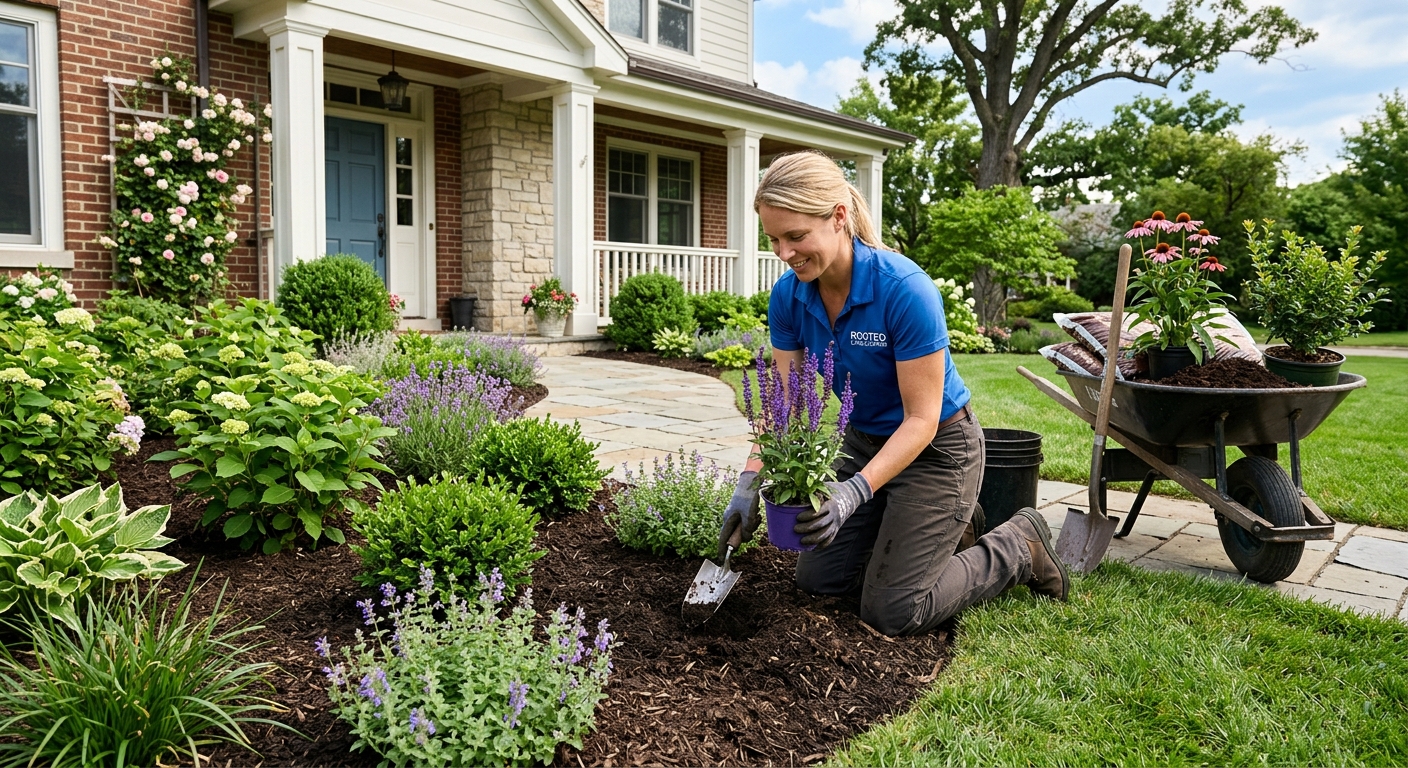
Landscaping options and costs in West Vancouver
In West Vancouver, homeowners typically have strong incentives to invest in curb appeal because the community has a high share of owner-occupied households (70.9% of households own) and many homes are single-detached (55.6% of dwellings). That mix matters: detached properties usually have more frontage, more yard area, and clearer sightlines from the street—so projects like patios, planting beds, and drainage upgrades get prioritized sooner rather than later. With 44,122 residents in 2021 (Statistics Canada, 2021 Census), you’ll also notice demand is steady in established neighbourhoods where lots are often sloped and mature vegetation is common.
Lower Mainland–Southwest conditions (plant hardiness zones 7–8) help keep landscaping moving longer than in colder parts of Canada. Mild, wet winters and long, cool summers mean contractors can often install planting and softscape across a broader calendar, with only the wettest winter weeks slowing work. That said, West Vancouver’s hillside lots still require careful base prep for patios and retaining walls to manage freeze–thaw cycles and prevent drainage problems. Efficient irrigation (drip + smart controllers) is also increasingly popular as water costs rise and homeowners want designs that can tolerate occasional restrictions without lawn failure.
In places like Sentinel Hill and the Dundarave/Gleneagles corridor, we see especially high demand for layered planting, privacy screens, and functional drainage because views and slope stability are top-of-mind. From there, it’s easiest to compare apples-to-apples by looking at typical price bands for common project types.
| Service |
Description |
Season |
Price Range |
| Full landscape design and installation |
Site visit, design concept, grading/drainage plan, plant palette, irrigation plan (if needed), and installation of softscape + hardscape |
Spring–Fall (winter work possible for some phases when conditions allow) |
$15,000–$45,000 |
| Sod installation (supply, grade, lay, roll) |
Minor grading, soil prep, supply and install sod, rolling, top dressing, and initial watering guidance |
Late March–June; Sept–Oct (weather dependent) |
$3,000–$8,000 |
| Lawn seeding (grade, seed, starter fertilizer) |
Light grading, weed suppression strategy, seed selection, starter fertilizer, and early-care plan |
April–May; Sept–Oct (best germination windows) |
$2,000–$5,500 |
| Interlocking patio or walkway |
Excavation, base and compaction, pavers/stone or brick, edge restraints, and final leveling |
Apr–Nov (best for base compaction and curing) |
$12,000–$35,000 |
| Retaining wall (interlocking block) |
Block retaining wall build with proper drainage gravel, geotextile, and wall caps as required |
Apr–Nov (depends on slope and access) |
$18,000–$65,000 |
| Tree and shrub planting |
Soil improvement, planting, staking/anchoring where needed, mulching, and first-season care plan |
Spring–Fall (water management is key in dry spells) |
$2,500–$12,000 |
Prices are estimates only and vary by project scope, site access and material selection.
What affects the price of landscaping in West Vancouver
In West Vancouver and across the Lower Mainland–Southwest, quotes for the “same” landscaping project can vary by roughly 30–50% because site conditions and build details are rarely identical. A backyard that looks similar in photos may have very different excavation depth, soil composition, slope stability needs, tree roots to manage, and drainage complexity. In coastal BC (zone 7–8), the long growing season supports lush, layered designs, but it also encourages higher-end plant palettes—so budgets can expand toward larger shrubs, more perennials, and premium soils. By contrast, Prairie regions (zone 2–4) often need drought-tolerant choices and compressed schedules, which can shift labour intensity and material selection. Southern Ontario (zone 5–6) can have a more moderate season, but summer dry spells and irrigation needs can add recurring operating demands and sometimes increase installation complexity.
Locally, you feel those differences in three common ways. First, slope and drainage: West Vancouver lots are frequently graded for views, so correcting grades and ensuring water flows away from foundations adds major labour and base-material costs—especially before a patio or wall. Second, frost–thaw and base depth: even though the coastal climate is mild, structural work still has to be built to handle freeze–thaw cycles, which means deeper excavations, proper compaction, and robust drainage layers. Third, plant and soil tier: installing a mature specimen tree or larger-than-average shrubs can quickly move a project from a mid-range planting budget into a higher band (for example, tree and garden planting can land around $1,000–$15,000 depending on size, while full installations often fall into the $5,000–$50,000 bracket).
Housing age also plays a role. With 53.8% of homes built before 1981 (Statistics Canada, 2021 Census), it’s common to see older drainage patterns and established hardscape that may need adjustment—like tying into existing downspouts or reworking soil levels near older foundations. Those realities help explain why two “patio + shrubs” bids can land far apart even when the visible area is the same.
| Price Factor |
Why It Matters |
Cost Impact |
| Yard size in sq ft — the primary cost driver for softscape |
More area means more soil prep, more plants, more mulch/topsoil, and longer labour time |
Higher totals; often the biggest driver of labour + materials |
| Grading and drainage work — slope corrections add significant cost |
Correcting pooling and redirecting runoff requires excavation, re-compaction, and sometimes re-leveling |
Can add large line items beyond the “planting” scope |
| Drainage bed or French drain installation |
Hidden drainage solutions protect foundations and prevent washouts and soggy planting zones |
Material-heavy and labour-intensive; common on sloped West Vancouver lots |
| Plant material tier — native shrubs vs. ornamental vs. mature specimen trees |
Plant size and rarity change both the cost of materials and the handling/installation time |
Big swing; a few premium specimens can move the whole project budget |
| Hardscape vs. softscape ratio — walls and patios cost more per sq ft than lawn |
Base prep, compaction, and block/paver quantities increase with hardscape coverage |
Projects with patios/retaining walls usually cost multiples of lawn-only work |
| Irrigation system design and installation |
Zones, controller/smart options, and emitter selection determine the total system complexity |
Can be modest for small beds or substantial for multi-zone layouts |
| Soil amendment and topsoil required |
Coastal soils can vary widely; engineered soil improves rooting and reduces later failure |
Often underestimated; hauling and importing can add meaningful cost |
| Tree removal or stump grinding before new planting |
Roots affect drainage and planting success; removal adds equipment and disposal |
Can raise costs quickly if access is tight or roots are extensive |
Permits & regulations in British Columbia
In British Columbia, most planting and softscape work typically does not require a permit—this includes planting trees and shrubs, installing sod or seeding, laying mulch, and building many garden bed improvements. However, retaining walls can cross into permit territory. In many municipalities, retaining walls above a height threshold (often 1.0 m / 3.3 ft, depending on local interpretation) generally require a building permit and sometimes engineering drawings, especially where soil pressures, drainage, or structural stability are significant. If your project includes changing lot grading in a way that redirects water toward a neighbour or a storm connection, that can also trigger approval requirements because drainage impacts are a public-safety concern.
Before any digging—planting holes, trenching for irrigation, or wall footings—make sure utility locates are completed so crews don’t hit buried services. As a homeowner in West Vancouver, also confirm water-use and irrigation rules for your specific address (even though restrictions can be more visible in the dry BC Interior, efficiency still matters region-wide).
To verify contractor readiness, ask for three items and check them: (1) British Columbia licence/registration status—look it up using the provincial registry associated with the trade/contract type; (2) liability insurance—request a current certificate of insurance naming you as an additional insured where appropriate; (3) WCB/WSIB coverage—obtain proof of clearance/coverage (commonly a clearance letter or account verification). A reputable contractor will provide documents readily and align them with the project start date and declared scope.
Planning a landscape that thrives in West Vancouver's climate
Designing for West Vancouver means working with hardiness zone 7–8 and a coastal precipitation pattern, not fighting it. Choose plants that handle cool, wet winters and periodical summer dryness; in practice this usually means selecting hardy natives or proven ornamentals, and building in winter structure so the yard still looks good when growth slows. Because many homes in the area were built before 1981 (53.8%), you often also inherit older drainage patterns near foundations—so drainage fixes should be treated as part of the “planting plan,” not an afterthought.
Sod vs. seed is a common decision. Sod gives instant coverage and helps reduce erosion on freshly graded areas, but it typically costs 3–4x more per sq ft than seeding once you include prep and material. Seeding is more budget-friendly and works well when you can keep the seedbed consistently moist during germination windows.
Drainage and grading are critical in the Lower Mainland–Southwest: pooling leads to root stress, moss, and wall/patio base issues. For hardscape like patios and retaining walls, base preparation must be built for freeze–thaw cycles—meaning proper excavation depth, compaction, and drainage gravel so water doesn’t freeze in trapped voids. For low-maintenance results, rely on groundcovers, mulched shrub borders, and long-blooming perennials that don’t need constant pruning.
Where water is a concern, consider rain gardens and targeted drip irrigation rather than blanket sprinklers. Example: If a homeowner wants a quick lawn refresh, seeding might land in the $2,000–$5,500 band, while sod can come in around $3,000–$8,000. If the yard slopes toward a patio edge or you’re correcting grade, sod may be worth the premium to stabilize soil immediately—otherwise, seeding is often the better value for budget-conscious owners.
| Element |
Climate Consideration |
Maintenance Level |
Price Band |
| Sod lawn installation |
Best results during mild shoulder seasons; keep new sod evenly moist to establish roots |
Low short-term effort; higher attention during establishment |
$3,000–$8,000 |
| Native perennial garden |
Zone-appropriate species handle coastal winters and develop deeper root structure |
Low to moderate (annual tidy and occasional weeding) |
$4,000–$15,000 |
| Mulched shrub border |
Mulch buffers cool-wet winters and reduces evaporation in dry breaks |
Moderate to low (in-season pruning and mulch top-ups) |
$3,000–$10,000 |
| Interlocking stone patio |
Proper base + drainage reduces heaving and keeps joints stable through freeze–thaw cycles |
Low (periodic joint maintenance and occasional re-leveling) |
$12,000–$35,000 |
| Retaining wall (block) |
Needs drainage gravel and geotextile to prevent water build-up behind the wall |
Low ongoing (inspection after storms is smart) |
$18,000–$65,000 |
| Drip irrigation system |
Targets root zones and supports efficient watering during dry spells |
Low after setup (seasonal checks and controller settings) |
$2,500–$12,000 |
How to choose a landscaping contractor in West Vancouver
Choosing a contractor in West Vancouver is mostly about verifying capacity before you sign. Start with credentials: in British Columbia, ask for your contractor’s proof of trade licensing/registration (as applicable to the work they’re doing), current liability insurance, and WCB/WSIB coverage for their workers. How to check each: (1) Licensing/registration—look up the contractor name using the relevant provincial registry tied to the trade category; confirm the status is active and matches the company that will be on-site. (2) Insurance—request a current certificate of insurance and verify the policy is not expired and covers the types of activities in your scope (excavation, concrete/paver installs, tree work). (3) WCB/WSIB—ask for a clearance letter or account verification showing coverage for the period the job will run.
Then get 2–3 itemised written quotes. You want a breakdown that separates labour and materials (base prep, pavers/blocks, soil and amendments, plants by size, irrigation components, and disposal). Carefully read inclusions and exclusions: is permit pulling included if it’s required for a retaining wall? Is waste hauling and disposal included? Are you paying for extra excavation if conditions differ? Good contractors state assumptions up front.
Confirm warranty details in writing: workmanship warranty length, product/manufacturer warranty (and what’s covered), and whether warranties are transferable if you sell your home. For payment schedule, never pay more than 10–15% upfront; hold back a portion until the job is complete and deficiencies are corrected. Finally, request a start date and a realistic completion estimate in writing—especially important here because weather windows and slope access can affect sequencing.
- Ask for a detailed scope map or drawing (even a simple sketch) showing hardscape dimensions and planting areas.
- Confirm excavation depth assumptions for patios and retaining wall base prep.
- Request plant lists with quantities and mature sizes (not just “assorted shrubs”).
- Check whether irrigation is designed for your bed layouts (drip zoning, emitters, and controller).
- Verify who supplies topsoil/soil amendments and the product specs (not just “good soil”).
- Ask about disposal: how much waste hauling is included, and where debris goes.
- Confirm protection plans for driveways, garden paths, and adjacent landscaping during construction.
- Get a written timeline with key milestones: rough-in, base compaction, paver/block lay, planting, cleanup.
- Ensure the quote includes compaction testing or at least written compaction methodology where needed.
- Ask for warranty terms and a punch-list process for final walk-through.
- Avoid quotes with vague wording like “as required” without describing what triggers cost changes.
- Check references: ask for 2–3 similar West Vancouver projects, ideally on slopes.
Red flags we often see in West Vancouver include: (1) no proof of insurance or coverage provided up front; (2) a quote that’s not itemised and can’t explain base prep/grading assumptions; (3) promises of “no drainage needed” behind retaining work; (4) asking for large upfront payments beyond 10–15%; and (5) refusing to put timeline, warranty, and exclusions in writing.
Frequently asked questions — landscaping in West Vancouver
How do I find a licensed landscaper in West Vancouver?
Start by narrowing to contractors who regularly work in West Vancouver and can show similar slope or drainage projects. Then verify credentials before you discuss pricing in detail. In British Columbia, ask for proof of relevant trade licensing/registration (for the specific work scope), a current certificate of liability insurance, and WCB/WSIB coverage for their workers. You can also look up the company in the applicable provincial registry using the exact legal name. When you request insurance, confirm it covers excavation and hardscape/softscape activities described in the quote. Finally, compare 2–3 itemised bids and confirm they align on base prep and drainage assumptions—this is where “licensed” should translate into safer, more predictable builds.
How much does landscaping cost in West Vancouver?
Landscaping cost in West Vancouver typically depends on whether you’re doing softscape only, adding hardscape, or addressing drainage. For a mid-size approach, many homeowners land in the landscaping design & installation range of $15,000–$45,000, especially when planting beds, grading, and a small patio or steps are part of the plan. If you’re lawn-focused, sod installation usually runs about $3,000–$8,000 depending on area and prep quality; seeding is often less, commonly around $2,000–$5,500. For a retaining wall, costs are frequently higher because of excavation, drainage gravel, and proper base construction—many projects fall around $18,000–$65,000.
What plants thrive in West Vancouver's climate zone?
West Vancouver sits in coastal zones 7–8, so you can use a wide range of broadleaf evergreens, long-blooming perennials, and hardy shrubs with less winter damage risk than colder provinces. Choose plants that suit your sun exposure (coastal shade is common near taller properties) and moisture conditions (wet winters but occasional summer dry periods). Many homeowners do well with native-inspired palettes plus proven ornamentals that don’t require constant watering. Also, because many homes were built before 1981 in this area (Statistics Canada, 2021 Census), yards often sit near older drainage patterns—so plant selection should match whether a bed is naturally moist, seasonally wet, or fast-draining. A good contractor will recommend species by microclimate, not just zone.
Sod vs seed — which is better for a West Vancouver lawn?
In West Vancouver’s coastal climate, both sod and seeding can work well, but the better choice depends on timing, grade, and how quickly you need results. Sod gives instant coverage and is especially helpful when you’ve recently graded, need immediate erosion control, or want a finished look for a season. However, sod is usually more expensive per sq ft—often putting you into the $3,000–$8,000 band depending on prep and area. Seeding is more budget-friendly and often lands around $2,000–$5,500, but it requires consistent moisture during germination and a bit more patience for full thickness. If drainage is off, neither option performs well—so fixing pooling should come first.
How much does a retaining wall cost in West Vancouver?
Retaining wall pricing in West Vancouver depends heavily on wall length, height, slope complexity, access for equipment, and the need for proper drainage behind the wall. Because you’re building to handle coastal freeze–thaw cycles and redirect water safely, costs can’t be compared to simple “landscaping labour” jobs. Many interlocking block retaining wall projects commonly fall around $18,000–$65,000. If your yard is sloped and requires more excavation, geotextile, drainage gravel, and deeper base work, the project naturally trends toward the upper end. Ask your contractor how they’re addressing drainage behind the wall and whether those details are included—not as assumptions, but as clear line items.
When is the best time to landscape in West Vancouver?
The best time to landscape in West Vancouver is typically spring through fall, because crews can work in milder conditions and plants establish well. Spring planting often runs from late March through May, with many projects completed before the wettest stretches in winter. Fall is also strong—especially for planting and many soil/planting phases—since temperatures cool but the ground doesn’t freeze solid for extended periods. For lawns, sod and seeding are usually best during shoulder seasons when consistent moisture is easier to maintain; warm-season peak summer work can require extra irrigation attention. Hardscape like patios and retaining walls also go best in workable weather windows, with proper base prep still designed for freeze–thaw cycles.