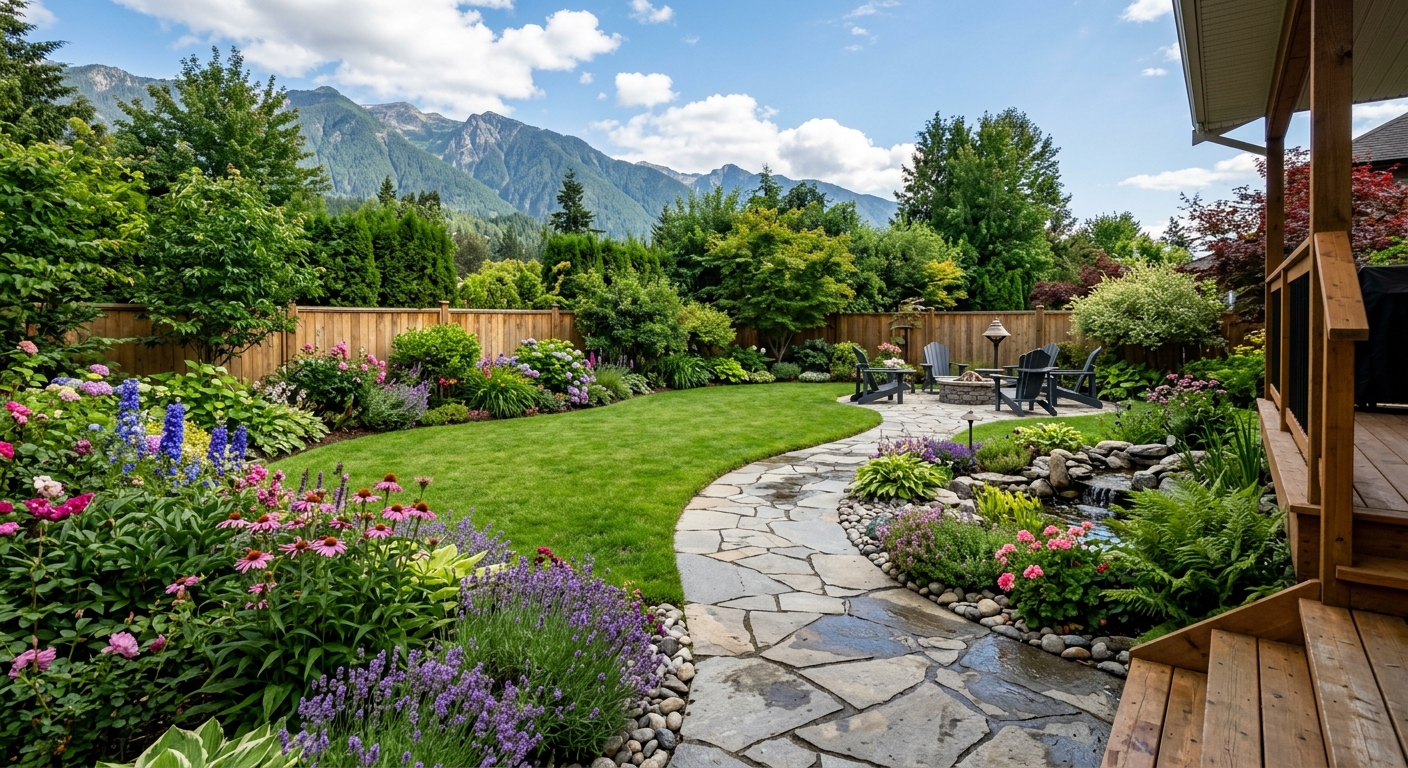
Landscaping options and costs in Thunder Bay
Thunder Bay homeowners typically have a lot of yard potential—especially because 65.5% of local dwellings are single-detached homes, and detached properties usually have enough open space for both softscape (planting, lawn, beds) and hardscape (paths, patios, walls). In a city of 108,843 people, landscaping also tends to be a “value and comfort” upgrade: with 67.7% of households owning their homes (Statistics Canada, 2021 Census), many owners invest in curb appeal, drainage improvements, and low-maintenance planting that can handle long winter conditions. In the Northwest Ontario market, pricing is shaped by shorter working seasons, earlier fall freeze, and freeze-thaw cycles that force contractors to plan base prep and drainage carefully. Plant choice matters too: everything must be reliably hardy through winter stress, and that reduces trial-and-error planting.
Demand is especially strong in established neighbourhoods where yards are already mature but aging—areas like Westfort and Port Arthur tend to see recurring updates such as patio refreshes, shrub reworks, and retaining-wall rebuilds after a period of ground movement. If you’re comparing quotes, it helps to start with common project categories, then refine scope by yard size, access, and whether the contractor needs to rebuild grading or drainage.
| Service |
Description |
Season |
Price Range |
| Full landscape design and installation |
Site assessment, layout plan, planting plan, grading/drainage coordination, and installation of beds, lawn, and hardscape where included. |
Late spring to early fall (schedule depends on frost risk) |
$5,000–$18,000 |
| Sod installation (supply, grade, lay, roll) |
Rough grade, topsoil/sand adjustments as needed, sod delivery, laying pattern, edge finishing, and rolling. |
May to early October |
$1,500–$6,000 |
| Lawn seeding (grade, seed, starter fertilizer) |
Fine grading, seed selection, starter fertiliser application, light raking/rolling, and establishment care. |
May to mid-August (timing affects germination) |
$900–$3,800 |
| Interlocking patio or walkway |
Excavation, compaction, base course, edging, interlocking stone installation, and joint sand. |
June to September |
$4,000–$20,000 |
| Retaining wall (interlocking block) |
Wall layout, excavation, geotextile, granular base, block installation, and drainage adjustments behind wall. |
June to early October (depends on soil conditions) |
$4,000–$20,000 |
| Tree and shrub planting |
Soil prep, staking/anchoring where needed, planting holes, backfill, mulch ring, and first watering guidance. |
Spring and early fall |
$800–$4,500 |
Prices are estimates only and vary by project scope, site access and material selection.
What affects the price of landscaping in Thunder Bay
Two quotes for the “same” landscaping job in Thunder Bay can differ by 30–50% because the scope is rarely identical: yard access, how much grading is required, whether drainage failures exist, and what plant stock level you choose all change labour time and material cost. In the Northwest Ontario climate, the plant hardiness zone and frost timing also influence both what can be installed and how long contractors have to complete excavation and base work before freeze. That’s why the region is typically more hardscape- and drainage-focused than southern Ontario, where contractors may have a longer stretch of stable conditions to finish softer planting work.
Here’s how local realities shift pricing. First, freeze-thaw cycles mean retaining-wall and patio base preparation must be robust—often requiring deeper base and well-compacted granular layers, which pushes retaining wall and interlocking patio costs toward the higher end of the $4,000–$20,000 bands when the soil is poor or access is tight. Second, your planting window is shorter, so contractors may recommend container stock that’s more reliable for survival through winter stress, keeping tree & shrub planting in the $800–$4,500 range. Third, compared with coastal BC (Zone 7–8), Thunder Bay’s colder conditions reduce the “lush palette” effect—design often relies on hardy shrubs and strong structure plants rather than fast-growing soft varieties that don’t winter as reliably.
Concrete cost examples I see often in Thunder Bay: (1) a backyard that “looks flat” can hide a drainage problem—once we remove sod and find low spots, the added grading and topsoil can add hundreds to over a thousand dollars; (2) replacing a 30–60 ft run of edging and rebuilding a compacted base under a walkway often escalates labour because of additional excavation and hauling. Housing age matters too: with 72.9% of homes built before 1981 (Statistics Canada, 2021 Census), older yards commonly have compacted fill, buried downspout runoff paths, or outdated grading that needs correction before new sod or beds go in.
| Price Factor |
Why It Matters |
Cost Impact |
| Yard size in sq ft — the primary cost driver for softscape |
More area means more soil prep, edging, and plant or turf quantities. |
Often the largest swing; can change totals by several thousand dollars |
| Grading and drainage work — slope corrections add significant cost |
Thunder Bay freeze-thaw amplifies pooling and heaving if water can’t drain away. |
Can add substantial labour and topsoil/sand material costs |
| Drainage bed or French drain installation |
Relieves foundation and basement moisture risk; requires excavation depth and outlet planning. |
Commonly pushes hardscape and retaining jobs toward the higher band |
| Plant material tier — native shrubs vs. ornamental vs. mature specimen trees |
Mature stock costs more and requires heavier equipment and proper staking. |
Can double material budgets within the same “number of plants” |
| Hardscape vs. softscape ratio — walls and patios cost more per sq ft than lawn |
Hardscape needs excavation, base materials, compaction, and careful stonework. |
Shifts project pricing to the $4,000–$20,000 range quickly |
| Irrigation system design and installation |
More control needed for efficient watering during short growing windows. |
May add hundreds to over a thousand depending on zone count |
| Soil amendment and topsoil required |
Thin, rocky, or compacted soil needs amendment to support sod/seed and roots. |
Haul and spread costs add up fast on larger properties |
| Tree removal or stump grinding before new planting |
Clearing drives disposal, safety planning, and additional site prep. |
Can add significant labour and equipment charges |
Permits & regulations in Ontario
For most landscaping projects in Ontario, you typically do not need a permit to install planting, sodding, or other softscape work. That includes laying sod, seeding lawns, adding mulch and shrub beds, and installing standard edging that stays within the normal landscape scope. The work that often DOES require a permit is retaining-wall construction above a municipal threshold—commonly around 1.0 m (3.3 ft) in many municipalities—especially when the wall creates significant grade change or has structural implications. Another category that can trigger approval is changing lot grading in a way that affects drainage patterns toward neighbouring properties or changes how water discharges toward a storm sewer connection.
Here’s the practical way a Thunder Bay homeowner should verify requirements before a contractor breaks ground. Step one: confirm the wall height and grade change with your contractor; ask whether they will pull the required permit or confirm it’s not required. Step two: schedule utility locates before digging planting holes, trenching for drainage, or installing wall footings—don’t assume the site is clear. Step three: ask about irrigation water-use considerations where applicable and ensure any system design aligns with local bylaws.
To verify a contractor in Ontario, check the online contractor registry entry (where applicable), request proof of liability insurance, and confirm workers’ protection coverage (WSIB/WCB). Then ask for a certificate of insurance showing your project is covered, and request a clearance letter where their coverage system provides one. If they can’t produce documentation promptly, that’s usually a sign to keep looking.
Planning a landscape that thrives in Thunder Bay's climate
Planning for Thunder Bay means designing around a cold, wind-influenced growing reality: short spring startup, an earlier fall freeze, and freeze-thaw that stresses soil and roots. Start with plant selection—choose hardy, zone-appropriate trees, shrubs, and perennials that can handle winter desiccation and snow-load conditions with less fuss. Native and well-adapted species are usually a safer baseline, because they’re more resilient and typically require less watering than fragile ornamentals. For lawn establishment, pick sod when you need instant coverage for erosion control and curb appearance; sod is more expensive, but it gives quick results. Seeding can work well for budget-friendly renovations, but timing matters more—mid-summer heat swings and early cool-downs can slow germination.
Drainage and grading are non-negotiable in Northwest Ontario. Even a small slope correction can prevent water pooling near foundations, which matters for older homes and older grading patterns common in Thunder Bay’s housing stock. For hardscape, base preparation must extend properly for frost conditions: patio and walkway layers should be compacted to reduce settlement, and retaining walls should include behind-wall drainage so water pressure doesn’t build up during thaw cycles. Low-maintenance design strategies—mulch, groundcovers, layered perennials, and clean-edge layouts—reduce annual cleanup while keeping the yard tidy.
A quick budget example: if you’re deciding between sod and seeding for a similar lawn area, a typical sod installation may fall around $1,500–$6,000, while seeding might land around the $900–$3,800 range. If your yard has bare soil that’s washing or you need rapid stabilization before heavy rains, the higher sod cost is often justified; if your yard is stable and you can manage watering during establishment, seeding can be the better value.
| Element |
Climate Consideration |
Maintenance Level |
Price Band |
| Sod lawn installation |
Fast root establishment before early fall cool-down; handles erosion better than bare seed. |
Low to moderate during first season (watering + mowing once rooted) |
$1,500–$6,000 |
| Native perennial garden |
Winter hardy structure reduces winter dieback and protects soil during freeze-thaw. |
Low (spring clean-up + occasional weeding) |
$800–$4,500 |
| Mulched shrub border |
Mulch buffers soil temperature swings and reduces frost heave exposure. |
Low (top up mulch once or twice per year) |
$1,200–$5,000 |
| Interlocking stone patio |
Requires correct base for frost durability and to limit settlement. |
Low (occasional joint sand topping) |
$4,000–$20,000 |
| Retaining wall (block) |
Needs drainage behind wall to manage thaw water and freeze pressure. |
Low (periodic inspection of drainage outlets/weep holes) |
$4,000–$20,000 |
| Drip irrigation system |
Efficient watering during short growing windows; helps reduce stress before winter. |
Moderate (seasonal maintenance + winter shutoff/flush) |
$900–$3,500 |
How to choose a landscaping contractor in Thunder Bay
Choosing the right contractor in Thunder Bay starts with verification. Ask for their Ontario business registration details (as applicable), proof of liability insurance, and confirmation of WSIB/WCB coverage for their workers. To check each item: (1) request a current certificate of insurance and ensure the policy dates are active; (2) verify WSIB/WCB clearance/coverage evidence rather than just “we’re insured”; and (3) look for their listing in applicable online registries and confirm the business name matches the contract. If a contractor can’t provide documents quickly, treat it as a red flag.
Next, get 2–3 itemised written quotes. The best quotes break labour and materials into line items (excavation, base materials, stone/blocks, plants, disposal, and any drainage work). Avoid comparisons that are only lump sums. Read the scope carefully: is permit pulling included if a retaining wall needs it, and is disposal/hauling included? Clarify what’s excluded, such as repairing buried utilities, replacing damaged irrigation, or addressing hidden drainage issues found during excavation.
Warranty matters. Ask for a clear workmanship warranty length and whether it covers labour only or also parts, and confirm how manufacturer warranties apply to plants or products. Payment should be structured so you never pay more than 10–15% upfront; hold back a portion until key milestones are complete. Finally, insist on a written timeline with a start date and completion estimate, because Northwest Ontario schedules are affected by frost and spring ground conditions.
- Request proof of liability insurance and WSIB/WCB coverage before work begins.
- Use itemised quotes with line-by-line labour and materials breakdown.
- Confirm whether excavation includes haul-away/disposal of sod and excess soil.
- Ask who supplies and installs geotextile, drainage rock, and compaction equipment.
- Verify base depth expectations for patios/walkways and retaining-wall drainage details.
- Confirm the seed blend or sod type and the expected installation date window.
- Ask about soil testing or how they address rocky/compacted soil and topsoil quality.
- Get a written scope for grading: where water will be routed and how it will drain.
- Clarify edging type and finish (straight, stepped, or curved) and the restraint system.
- Confirm watering plan for the first season and who provides it (and when).
- Check warranty terms: workmanship duration, exclusions, and how to file a claim.
- Review payment schedule; avoid large upfront deposits and require milestone holdbacks.
Common Thunder Bay-specific red flags: (1) a quote that says “we’ll handle grading” without stating how drainage will be corrected; (2) no mention of frost-safe base prep for patios or wall footings; (3) inability or refusal to show insurance and WSIB/WCB clearance; (4) vague timelines like “sometime in summer” with no start/completion dates; and (5) no written scope on disposal and cleanup.
Frequently asked questions — landscaping in Thunder Bay
How do I find a licensed landscaper in Thunder Bay?
In Thunder Bay, start by asking contractors directly for proof of their business details and current liability insurance, then request WSIB/WCB coverage evidence for their workers. Many reputable landscaping firms will also be listed in Ontario contractor/business directories—verify that the business name matches the contract and that the insurance certificate is active for the job dates. Next, compare 2–3 itemised estimates so you can see the labour and material breakdown (base course, drainage rock, topsoil, and plant grade), rather than only a single lump sum. If you’re planning a retaining wall that may exceed a typical permit threshold (often around 1.0 m in many municipalities), ask whether they’ll handle the permit question and how they’ll document it. A contractor who can answer clearly and provide documentation is usually the safest choice.
How much does landscaping cost in Thunder Bay?
Landscaping costs in Thunder Bay depend mostly on yard size and whether you need drainage and grading work. For common categories, full design and installation typically runs about $5,000–$18,000, while sod installation (including grade, lay and finish) often lands around $1,500–$6,000 depending on area and soil conditions. Lawn seeding can be lower, frequently in the $900–$3,800 range when the site is straightforward. Interlocking patios and walkways often fall into the $4,000–$20,000 band because excavation and base prep are labour-intensive in freeze-thaw conditions. Retaining walls are similar, commonly $4,000–$20,000 once drainage behind the wall is done properly. Because Northwest Ontario has a shorter working season, contractors may price with the added labour and scheduling risk in mind.
What plants thrive in Thunder Bay's climate zone?
Thunder Bay is built for cold hardiness, so the best plant choices are those proven for local winter survival and wind exposure, not just what looks good in summer. Homeowners in this region typically do well with hardy shrubs and perennials designed for northern Ontario conditions, along with trees that can handle freeze-thaw and early fall cool-downs. Native and well-adapted species often perform better with less winter protection and fewer replanting cycles. For planting, aim for spring or early fall so roots establish before winter stress. If you’re buying in, ask your contractor how the specific plants are expected to perform around full-sun vs. part-shade areas and whether they recommend mulch rings, staking (for certain trees), and an early watering routine. Because most homes in the area are older (Statistics Canada, 2021 Census), yards may also have compacted soil—soil preparation helps plants establish even in challenging beds.
Sod vs seed — which is better for a Thunder Bay lawn?
For a Thunder Bay lawn, sod is usually the best option when you need instant coverage—especially where you want quick erosion control or a finished look before winter. It’s typically priced around $1,500–$6,000, and it can be installed once the ground is workable and the growing conditions support rooting. Seeding is the better value if your budget is tighter and your site is stable, with price often around $900–$3,800. In Thunder Bay, seeding success depends more on timing and consistent establishment watering before cold weather arrives. A practical decision rule: if your yard has bare soil, ruts, or drainage issues, invest in sod plus correct grading; if the lawn is mostly intact and you just need patching or a renovation, seeding can be efficient. Always confirm the seed blend and starter fertiliser plan, since short seasons make “right timing” even more important.
How much does a retaining wall cost in Thunder Bay?
A retaining wall cost in Thunder Bay commonly depends on wall length, height, excavation difficulty, and—most importantly—what drainage is built behind it. When you do it correctly for freeze-thaw conditions, you’re not just stacking blocks; you’re creating a stable base and a drainage system that reduces water pressure during thaws. Interlocking block retaining walls are often budgeted within $4,000–$20,000, with higher totals when access is tight, the soil is poor, or you need additional grading and drainage bed work. If the wall meets a typical permit threshold (often around 1.0 m in many Ontario municipalities), your project may require a building permit and sometimes additional documentation. Ask for an itemised quote that clearly lists base materials, geotextile, drain components, and disposal.
When is the best time to landscape in Thunder Bay?
The best time to landscape in Thunder Bay is usually late spring through early fall, because the ground only stays workable for a limited season. Sod installation is typically scheduled from May to early October, when roots can establish before early fall freeze. Planting trees and shrubs is commonly done in spring and early fall, when soil temperatures support root growth but plants aren’t under extreme summer stress. For hardscape like interlocking patios and walkways, contractors generally schedule June to September (with early October sometimes possible depending on conditions). Retaining walls follow similar timing because excavation and base compaction must be completed before freeze. If you’re planning work in older neighbourhoods like Westfort, bookings can fill faster, so it’s smart to get quotes earlier in the season and confirm the start date in writing. Scheduling flexibility helps, but frost risk drives the real cutoff.