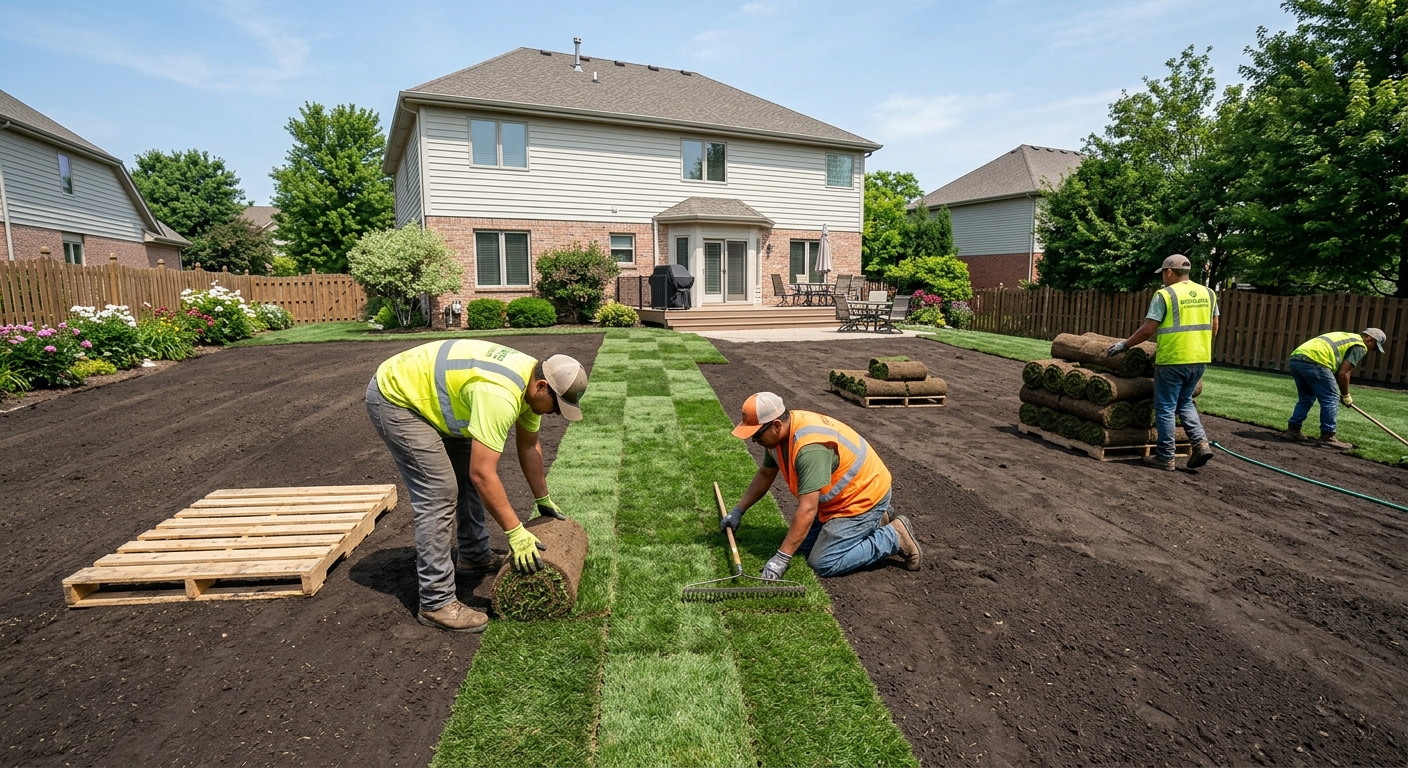
Landscaping options and costs in Lively
Lively, Ontario is where homeowners tend to invest in their yards early—partly because the community’s lot sizes and housing pattern give many properties the space to show off landscaping. In 2021, the population was 5,608 (Statistics Canada, 2021 Census), which supports a steady base of local work and a growing homeowner demand for curb appeal and outdoor comfort. That matters for pricing, because contractors in the Toronto economic region staff up for the busy May–October window, then tighten availability as frost approaches. If you’re in an established area near the Sunshine Coast–style lake views and older neighbourhood pockets in Lively, you’ll often see demand spike for patios, walkways, and foundation-friendly drainage—especially when yards sit on clay fill or have noticeable slope.
Toronto-area landscaping costs are shaped heavily by climate and soil. Lively is typically in plant hardiness zones 6a–7a, so we plan around winter lows near –23 to –18°C and the freeze–thaw cycles that can shift stonework and push water toward foundations. Those conditions increase the importance of deep, compacted granular bases, geotextile/geogrid where needed, and proper drainage—so the “same” job can price quite differently depending on site prep requirements. For many homeowners, the best value comes from designing the hardscape and drainage first, then building planting and lawn around what the soil is willing to do.
Below is a practical comparison of common options and typical price bands in Lively, so you can anchor discussions with contractors before you choose a design.
| Service |
Description |
Season |
Price Range |
| Full landscape design and installation |
Site visit, design concept(s), planting plan, grading/drainage approach, hardscape/softscape installation coordination, and cleanup |
Spring to early fall (typical) |
$8,000–$40,000 |
| Sod installation (supply, grade, lay, roll) |
Spot grading, base/topsoil placement as needed, sod delivery and laying, rolling, and initial watering plan |
Late spring through early fall (best windows) |
$2,500–$8,000 |
| Lawn seeding (grade, seed, starter fertilizer) |
Fine grading, seed selection, starter fertilizer, light raking, and seeding/covering as required |
Spring or early fall |
$1,200–$5,500 |
| Interlocking patio or walkway |
Excavation, geotextile/base, leveling course, paver installation, edge restraints, and joint sand |
May to October |
$6,000–$30,000 |
| Retaining wall (interlocking block) |
Excavation, drainage stone/backfill, block installation, and proper reinforcement details |
May to October (often) |
$6,000–$30,000 |
| Tree and shrub planting |
Soil loosening/amendments, planting, staking/tying where needed, mulching, and basic establishment watering plan |
Spring or fall planting window |
$800–$6,000 |
Prices are estimates only and vary by project scope, site access and material selection.
What affects the price of landscaping in Lively
Even for the “same” backyard, quotes in Toronto and surrounding communities can swing by 30–50% because the work isn’t only materials—it’s access, excavation depth, drainage needs, and how much labour it takes to build for Ontario’s freeze–thaw cycles. In Lively, those cycles push contractors to build more robust bases for patios and walkways, and to detail retaining-wall drainage correctly. That’s one reason some proposals start near the lower end of the $6,000–$30,000 band for patios or retaining walls, while others land closer to the upper end once we open up the ground and find clay fill, soft subgrade, or poor slope.
Climate and growing conditions also define what we can install and when. Lively sits in hardiness zones 6a–7a, so plant choices must handle winter lows and humid summers, typically with a February-to-April transition plan for establishment. In Prairie regions (Zone 2–4), shorter seasons and frequent drought lead to simpler, drought-tolerant palettes and a different soil-prep approach; base depth for retaining works still has to reach below the frost line. In coastal BC (Zone 7–8), longer seasons support lush planting palettes, but heavy rainfall demands excellent drainage design. Dry BC interiors shape costs through drip irrigation and xeric planting. Southern Ontario is more forgiving than Prairies but still expects irrigation during dry spells, so lawn and garden establishment often influences overall spend within the $8,000–$40,000 full-landscape range.
Concrete examples from Lively: (1) A 3–5% grade issue that pools water after rain often adds grading, new topsoil, and sometimes drainage beds before sod can succeed. (2) Older lots may have buried services, roots, or compacted fill—so excavation and disposal rise quickly. (3) If you swap a basic planting plan for mature trees, the tree & shrub planting budget can jump from the lower hundreds into the upper thousands due to size, rigging, and warranty requirements.
| Price Factor |
Why It Matters |
Cost Impact |
| Yard size in sq ft — the primary cost driver for softscape |
More area means more topsoil/seed/sod and more labour time for grading and finishing |
Can change total cost by 20–60% depending on how much is lawn vs planting |
| Grading and drainage work — slope corrections add significant cost |
Fixing low spots and redirecting water protects foundations and reduces repeated repairs |
Often adds several thousand dollars when clay and regrading are required |
| Drainage bed or French drain installation |
Underlying soil conditions determine whether you need a curtain drain, sump connection, or stone trench |
Can be a major cost driver if excavation is deep or footing-adjacent |
| Plant material tier — native shrubs vs. ornamental vs. mature specimen trees |
Hardier natives and smaller stock cost less; mature specimens require larger pits and often extra equipment |
May move a planting budget from hundreds to several thousand |
| Hardscape vs. softscape ratio — walls and patios cost more per sq ft than lawn |
Patios, walkways, and retaining walls need base, restraints, and compaction layers |
Higher hardscape ratios typically push projects toward the upper bands |
| Irrigation system design and installation |
Sprinklers/timers and zoning help lawns and beds; design matters for coverage and overspray control |
Can add thousands, but it improves establishment during dry spells |
| Soil amendment and topsoil required |
Clay-heavy soils often need compost, topsoil, and sometimes re-profiling for root health |
Increases material delivery and placement time |
| Tree removal or stump grinding before new planting |
Stump size, access, and hauling/disposal affect equipment needs and labour hours |
Can significantly raise the “start” cost if hidden obstacles appear |
Permits & regulations in Ontario
In Ontario, most residential landscaping work doesn’t require a building permit—planting beds, sodding, and typical softscape installations are generally handled without permits. Where permits commonly come into play is with retaining walls above a local height threshold (commonly 1.0 m in many municipalities), projects that materially change lot grading, and any work that affects drainage patterns toward a neighbouring property or municipal storm connections. Because thresholds can vary by municipality, confirm the requirement with your local office before work begins.
Utility locates are a must before digging. Call Ontario One Call before any planting holes, trenches, or wall footings so your contractor can mark hydro, telecom, gas (if applicable), and other buried services. This step is especially important when we’re working near driveways, fences, and older service corridors that may not match today’s maps.
To verify a contractor in Lively, start with Ontario licence/registration information through the relevant public registry (and check that the business details match the quote paperwork). Next, ask for a current Certificate of Insurance showing general liability coverage and workers involved in the work. For labour coverage, confirm WSIB/WCB status—your contractor should provide clearance documentation or proof of coverage. When you request these items, ask for dates to ensure they’re active during the project window.
Finally, if the scope involves retaining-wall construction, ask whether engineering or permit documents are included or required—then keep a copy in your job file.
Planning a landscape that thrives in Lively's climate
A landscape in Lively should work with zone 6a–7a winter conditions and Toronto-area freeze–thaw cycles, not against them. Start with plant selection: choose native and zone-appropriate perennials, shrubs, and hardy woody plants so you’re not relying on fragile species for survival. This reduces winter dieback and cuts down on extra watering and winter protection costs. For turf, decide early whether you want sod or seeding. Sod gives instant results but typically costs more—often 3–4x per sq ft versus seeding—so it’s best when you need rapid curb appeal or you have a clean grading-ready base. In many cases, seeding plus proper soil prep is the better long-term value.
Drainage and grading are critical in the GTA: pooling water can lift and crack stonework, rot roots, and push moisture toward foundations. Plan hardscape base preparation for Ontario’s frost line effects: proper excavation depth, compacted granular layers, and restraint edges help your interlocking patio or walkway stay level year after year. For low-maintenance design, use mulch aggressively (2–4 inches), install groundcovers to reduce weeds, and select repeat-bloom perennials for seasonal colour without constant re-planting. Consider rain gardens or xeriscape-style areas in spots that get frequent runoff—especially where runoff carries moisture and where future irrigation could be wasteful.
Dollar example: if a 400 sq ft lawn area is affordable to seed after grading, seeding can land around the lower part of the lawn options (often closer to the seeding band). If you choose sod for that same area, you’re usually paying toward the $2,500–$8,000 sod installation range, but that can be justified when you need the yard usable right away (for example, before a major family event) and the site is properly prepared.
| Element |
Climate Consideration |
Maintenance Level |
Price Band |
| Sod lawn installation |
Establishment must align with frost dates; choose cultivars that handle humid summers and winter snowpack |
Low to moderate during first season (watering until rooted); then moderate with mowing |
$2,500–$8,000 |
| Native perennial garden |
Zone-appropriate plants handle –23 to –18°C lows; strong root systems improve winter resilience |
Moderate (spring clean-up, occasional division, weed control first 1–2 years) |
$1,500–$6,000 |
| Mulched shrub border |
Humid summers and clay soils benefit from mulching and well-prepped beds to reduce root stress |
Low after establishment (pruning and seasonal refresh of mulch) |
$800–$4,500 |
| Interlocking stone patio |
Freeze–thaw drives base design; proper compaction and drainage prevent heaving and settlement |
Low (annual cleaning and joint sand top-ups as needed) |
$6,000–$30,000 |
| Retaining wall (block) |
Needs correct drainage stone/backfill so water doesn’t build up behind the wall |
Low after build (inspection after major storms and quick fixes to minor joint loss) |
$6,000–$30,000 |
| Drip irrigation system |
Helps during dry spells in summer while reducing overspray and runoff into beds |
Low to moderate (seasonal checks, winter blowout where required) |
$1,800–$7,000 |
How to choose a landscaping contractor in Lively
Choosing a contractor in Lively comes down to verifying capacity, not just price. Start with licensing/registration where applicable through Ontario’s public business directories for the company name you’ll be hiring, and match it to the quote and invoice. Ask for Certificates of Insurance (general liability at minimum) and confirm workers are covered through WSIB/WCB. How to check: request the documents, verify the policy is active for your project dates, and ensure the named insured matches the contractor that will be on site—not a related corporate entity.
Next, get 2–3 itemised written quotes. You want labour and materials broken out so you can compare like-for-like: excavation/grade work, base materials, drainage components, paver/stone supply, plant quantities/sizes, and disposal fees. Avoid lump-sum proposals that don’t identify what’s included. Ask about exclusions: is permit work included where required, is equipment access considered, and is topsoil and disposal included? Confirm workmanship warranty length in writing and whether it covers settlement/heaving issues tied to base preparation.
For payment schedule, avoid large deposits—never pay more than 10–15% upfront. Hold back a portion until completion and final grading/cleanup. Also, require the timeline in writing: a start date, weather contingency language, and a completion estimate. In Ontario’s freeze–thaw cycle, delays happen when base materials can’t be compacted properly, so you want clarity before work begins.
- Ask for WSIB/WCB clearance or proof of coverage before the first shovel goes in.
- Confirm general liability insurance and that the policy is current for the scheduled dates.
- Request an itemised quote (labour + materials) with quantities (sq ft, linear feet, tree count).
- Verify site access plan: walkways, driveway protection, and any equipment restrictions.
- Confirm whether geotextile/geogrid is included where needed for soil stability.
- Ask how drainage is handled (slope targets, stone trench/French drain if required).
- Check whether disposal/hauling of excavated material is included in the price.
- Review what topsoil or soil amendment is included (and whether soil testing is referenced).
- Get warranty terms in writing for workmanship and confirm product warranties for plants.
- Require a written start date, weather contingency plan, and completion estimate.
- Confirm payment schedule (no large upfront payments; retainage on completion).
- Make sure changes are handled with written change orders—not verbal add-ons.
In Lively, red flags include: quotes that omit drainage details while promising “leveling”; a lack of WSIB/WCB proof or insurance documents; vague scopes that don’t list quantities or disposal; warranty language that only covers product and not installation; and proposals asking for a large upfront payment (more than 15%) without a signed contract and milestones.
Frequently asked questions — landscaping in Lively
How do I plan a low-maintenance yard?
A low-maintenance yard in Lively usually starts with zoning and plant choices that match Ontario’s zone 6a–7a conditions. Group plants by similar water needs, then build structure with shrubs and hardy perennials so you’re not replanting every year. Use mulch at proper depth in beds to suppress weeds, and install groundcovers where you want fewer mowing passes. For turf, many homeowners in Ontario find seeding reduces ongoing cost compared to sod, unless they need immediate coverage. If your yard has drainage concerns, address grading and pooling first—otherwise, maintenance becomes constant. When planning budget, it helps to separate “base work + drainage,” which is often the hidden driver, from planting. Even a focused planting project can fall in the $800–$6,000 range, but only if the site prep supports it.
How deep should a retaining-wall base be for local frost?
Retaining-wall base depth isn’t a one-size number because it depends on block type, wall height, soil conditions, and drainage requirements. In Lively and the broader Toronto area, freeze–thaw cycles make proper base design critical: the goal is to place the wall on stable, well-compacted material and ensure drainage prevents water build-up behind the wall. As a general rule, we excavate and build a base with the right depth for the wall’s structural needs (often deeper than homeowners expect), then use proper granular layers and reinforcement where required. Also, the base must connect to proper drainage stone and weep provisions so water can escape instead of freezing in place. Because retaining walls above a common height threshold (often around 1.0 m in many Ontario municipalities) may require permits, ask your contractor to include the design details and confirm approval needs before excavation.
How much does professional landscape design cost?
Professional landscape design in the GTA is commonly priced as part of a full project package or as a standalone design fee, depending on how detailed you want the plan. For homeowners comparing options in Lively, the design-and-install path is often most efficient when you’re coordinating drainage, hardscape layout, and planting quantities. Typical full landscape design & installation projects fall within the $8,000–$40,000 band, which usually includes design work, then installation coordination. If you only need concept-level planning, some contractors offer scaled design services; however, the final price can still rise if the site requires regrading or new drainage once the ground is opened. Because your local frost dates and freeze–thaw cycles influence build details, a good design should specify base preparation, drainage direction, and plant hardiness compatibility for winter survival.
How do I compare landscaping quotes?
Start by comparing quotes apples-to-apples. In Lively, that means looking beyond the total number and checking what’s actually included: excavation depth, base materials, whether geotextile/geogrid is specified, drainage approach (slope correction and any French drain), disposal, and protection for existing features like fences and driveways. Ask for an itemised labour + materials breakdown—especially for patios/walkways and retaining walls where base prep is a large cost driver. Confirm the season schedule and whether work will stop if conditions prevent compaction. Compare warranties and payment schedules: a reputable contractor won’t rush you into a large deposit. If one quote lands at the low end but skips drainage, it may fail earlier and cost more later. As a benchmark, retaining walls and patios often sit in the $6,000–$30,000 range depending on size and site prep.
How long does a landscaping project take in Lively?
Project timelines in Lively depend on weather, excavation scope, and whether drainage and soil amendment are required. Most planting-only jobs can be completed in a day or two, while lawn conversions and small bed upgrades may take several days when you include base prep, installation, and cleanup. Larger work—especially interlocking patios, walkways, and retaining walls—can take multiple weeks from start to finish because we must excavate, build compacted granular bases, install and set pavers/blocks, and allow for proper settlement and curing of base layers. Weather delays are real in Ontario due to freeze–thaw conditions, so ask for a written start date and completion estimate with contingency language. If your plan includes sod in the same season, scheduling matters because sod establishment requires consistent watering immediately after installation. For budgeting, keep in mind that phased work can spread costs within the same design, but total duration still depends on site access and drainage complexity.
What is the best grass type for a Lively lawn?
The “best” grass type depends on how sunny your yard is and how you maintain it, but for Lively (Ontario, zone 6a–7a), many homeowners do best with turfgrass blends designed for cool-season climates. Cool-season grasses generally recover better after winter and tolerate Ontario’s hot, humid summers when mowing height and watering are consistent. If you want the fastest results, sod can work well in the right weather window, but it’s more expensive; sod installation typically falls in the $2,500–$8,000 range for many residential lawns once grading and base/topsoil are included. If your goal is value and you can wait a bit longer, seeding is often more budget-friendly and can still produce a strong lawn when soil prep, starter fertilizer, and seed-to-soil contact are done right. In all cases, drainage and slope matter—if water pools, no grass “type” will fully fix it.