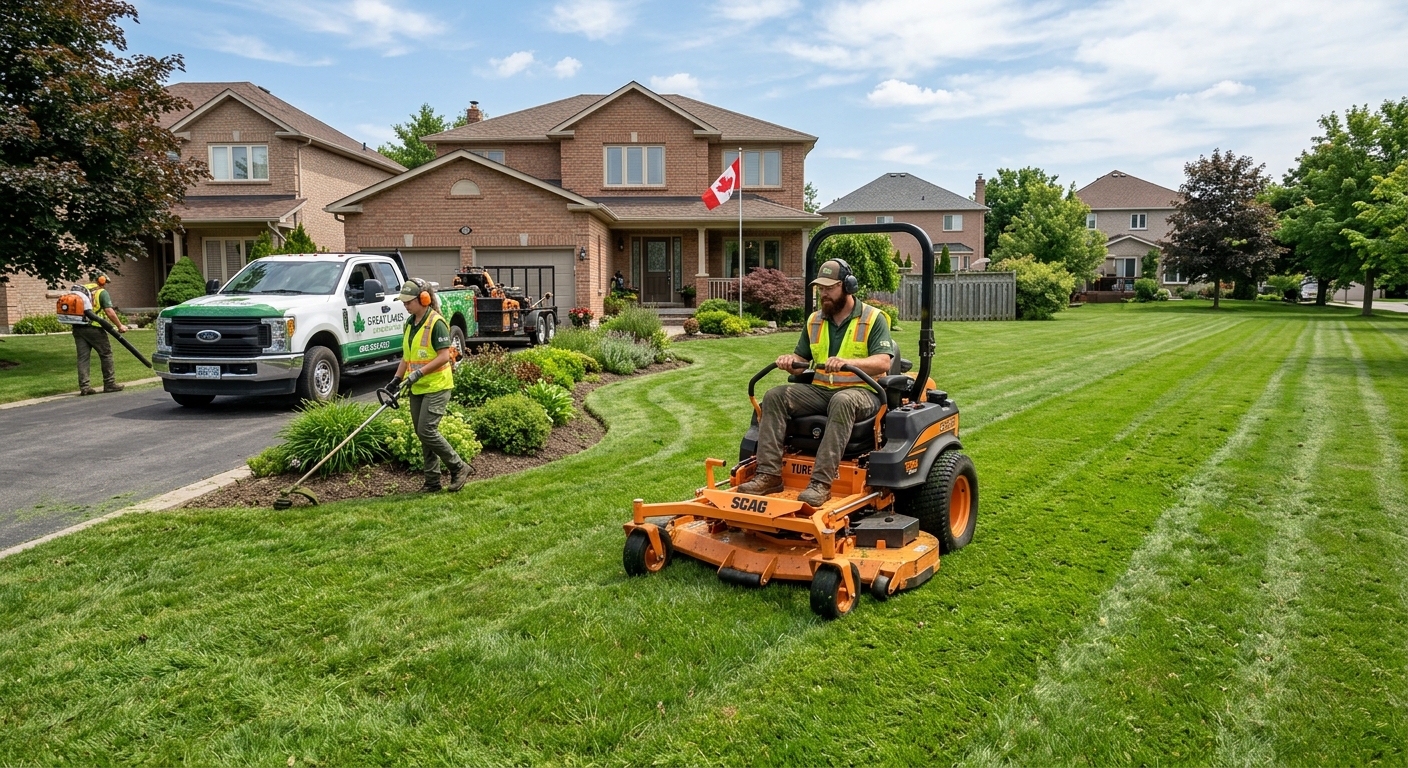
Landscaping options and costs in Centennial Scarborough
Centennial Scarborough is a neighbourhood where landscaping choices usually start with your home’s lot: with a population of 13,362 reported in the 2021 Census (Statistics Canada, 2021 Census), there’s steady demand for reliable curb appeal and practical outdoor space. Much of the housing stock in the GTA is family-oriented, which means many properties have enough yard depth to justify real improvements—sod, interlocking, planting beds, and the occasional retaining wall where the grade drops toward a walkway or driveway.
Pricing in Toronto doesn’t just reflect materials; it’s strongly influenced by climate and soil. The GTA sits in plant hardiness zones 6a–7a, with winter lows roughly near –23 to –18°C and frequent freeze–thaw cycles. Those conditions raise the bar for hardscape base prep (adequate granular layers, proper compaction, and drainage) and for what we plant—so you’ll often see fewer “cheap-and-easy” species options and more woody structure and cold-tolerant perennials. Contractor availability also tightens during late spring and early summer when crews are booked for both softscape and hardscape work.
In Centennial Scarborough, work is especially in demand around the Scarborough Centre and nearby arterial corridors where homeowners want quick visual upgrades before the peak selling season. If you’re comparing approaches, the fastest way is to look at typical ranges by scope—see the table below.
| Service |
Description |
Season |
Price Range |
| Full landscape design and installation |
Site walk, measurements, layout, planting plan, grading notes, hardscape/softscape scheduling, installation of selected scope (beds, lawn, edging/stone where included) |
Apr–Nov (peak May–Sep) |
$8,000–$40,000 |
| Sod installation (supply, grade, lay, roll) |
Light grading, soil prep, starter fertilizer, sod supply and installation, rolling and watering setup |
Apr–Jun and late Aug–Sep |
$2,500–$8,000 |
| Lawn seeding (grade, seed, starter fertilizer) |
Rake and grade correction, seed blend, starter fertilizer, light topdressing, initial watering plan |
Apr–Jun and early fall (weather dependent) |
$1,400–$5,000 |
| Interlocking patio or walkway |
Excavation, base course + compaction, geotextile/geogrid as needed, stone edging, interlocking installation and jointing sand |
Apr–Nov (best May–Oct) |
$6,000–$30,000 |
| Retaining wall (interlocking block) |
Excavate and compact wall footing/base, drainage/gravel behind wall, block installation, geogrid as required, final landscaping tie-in |
Apr–Nov |
$6,000–$30,000 |
| Tree and shrub planting |
Soil loosening, planting hole excavation, amendment/tilling, staking for selected trees, mulch rings, initial soak plan |
Apr–Jun and Sep–Oct |
$800–$6,000 |
Prices are estimates only and vary by project scope, site access and material selection.
What affects the price of landscaping in Centennial Scarborough
In Centennial Scarborough and the wider Toronto area, the same “headline” landscaping idea can come back with a very different number—often 30–50%—because quotes are driven by site conditions, required prep, and how far a contractor goes beyond the visible finish. Two crews can both “install a patio,” but one may budget only stone-and-labour while the other properly corrects drainage, removes unsuitable fill, and builds the base to handle freeze–thaw. Those differences are where cost lives.
Toronto is in plant hardiness zones 6a–7a, and that affects both what survives and when we can reliably install plants and sod. Frost risk and freeze–thaw cycles also dictate hardscape engineering details: retaining walls and steps often need deeper, well-compacted granular bases and correct drainage behind the wall. In Prairie regions (Zone 2–4), shorter seasons and colder winters push contractors toward simpler palettes and ultra-hardier, drought-tolerant planting, and they often spend more time on hardening and wind resistance. Coastal BC can support lush growth with a longer season, but heavy rain makes drainage design more critical. In the dry BC interior, irrigation and water-smart design are shaped by restrictions and lower precipitation, so drip systems and low-precipitation heads are common. In Southern Ontario, we get a moderate season but still need attention to summer dry spells and the way clay holds water.
Two common Centennial Scarborough examples: (1) If your yard has clay-heavy fill or a slope toward a foundation, we may need grading corrections and additional topsoil/soil amendment, which can move a lawn-plus-beds job from the lower end of typical softscape budgets toward the mid-range—without changing the plants much. (2) If a retaining wall is near a walkway and water management is poor, adding proper drainage (and sometimes subdrains) can push the project toward the upper end of the $6,000–$30,000 retaining wall band. On full installs, that same prep-first approach is why design & installation often lands anywhere from $8,000–$40,000 depending on demolition, grading, and material tier.
| Price Factor |
Why It Matters |
Cost Impact |
| Yard size in sq ft — the primary cost driver for softscape |
More area means more labour days, topsoil/seed/sod, edging, and watering demands |
Small lawns: lower end; larger yards can double material and crew time |
| Grading and drainage work — slope corrections add significant cost |
Fixing pooling or foundation runoff often requires excavation and re-build of subbase |
Can add thousands depending on how much fill must be removed and replaced |
| Drainage bed or French drain installation |
Controls wet spots and improves hardscape longevity under freeze–thaw |
Often a “must-do” for clay sites; increases excavation and drainage materials |
| Plant material tier — native shrubs vs. ornamental vs. mature specimen trees |
Mature trees and branded ornamentals cost more up front and require heavier planting equipment |
Can shift a planting line item from hundreds to several thousand |
| Hardscape vs. softscape ratio — walls and patios cost more per sq ft than lawn |
Stone, base layers, and precision installation are labour-intensive |
Affects total project cost quickly; patio-heavy scopes reach the upper price bands |
| Irrigation system design and installation |
Even partial irrigation needs trenching, layout decisions, and correct head placement |
Design complexity and number of zones can add significant cost |
| Soil amendment and topsoil required |
Clay or compacted fill often needs amendment to support roots and reduce future settlement |
Quantity hauled and labour for spreading can noticeably increase the quote |
| Tree removal or stump grinding before new planting |
Access, stump size, and debris hauling affect time and disposal |
Can add a standalone amount before planting even begins |
Permits & regulations in Ontario
In Ontario, most typical landscaping tasks—like planting, sodding, seeding, and general softscape work—usually do not require a permit. However, the areas that commonly do need approval are more structural and drainage-related. For example, retaining walls above a municipal height threshold (often around 1.0 m (3.3 ft), depending on local rules) can require a permit and sometimes engineered drawings. Also, changes to lot grading that affect drainage patterns—such as redirecting water toward neighbouring properties or connecting into storm systems—may trigger approval requirements.
Before digging for planting holes, trenches, or wall footings, ask for utility locates so crews mark buried services. This matters because many Centennial Scarborough properties have older service runs that can be shallow or rerouted over time.
To verify a contractor in Centennial Scarborough, use a simple, step-by-step approach:
- Check the contractor’s Ontario licensing/registration information through appropriate provincial or municipal-facing resources and the company’s stated registration details (ask for their registration number).
- Request clear proof of liability insurance (certificate of insurance) showing coverage limits and the correct business name.
- Confirm WSIB/WCB coverage credentials (or a valid exemption where applicable). Ask for the status document or clearance letter.
- Make sure their insurance is current and matches the project dates.
- Get everything in writing: scope, site conditions, and which permits (if any) they will pull.
If you’re unsure whether your wall or drainage work triggers approval, ask the contractor to specify whether they’re handling permits and which documents will be provided to you.
Planning a landscape that thrives in Centennial Scarborough's climate
To make your Centennial Scarborough yard thrive, design around Toronto’s practical realities: hard winter freeze–thaw, humid summers, and the plant resilience expected in zones 6a–7a. A strong plan starts with plant selection. Choose cold-tolerant, often native or zone-appropriate shrubs and perennials that don’t need constant winter protection. For lawn, decide early whether you’re doing seed or sod: sod gives instant cover, while seeding is cheaper but requires more patience through germination and early-care.
For local drainage and grading, Toronto yards frequently sit on clay or compacted fill. That’s why drainage and grading are not optional—pooling can soften soil, encourage frost heave under patios, and push moisture toward foundations. When building hardscape like patios and retaining walls, base preparation needs to account for freeze–thaw: correct granular layers, proper compaction, and appropriate drainage behind structures are what keep stone from shifting over time.
For low-maintenance curb appeal, build in repeatable strategies: mulched shrub borders, groundcovers to reduce bare soil, and a perennial backbone that blooms without constant replanting. If you want water-smart options, consider a rain-garden in lower spots (designed to temporarily hold stormwater) paired with hardy plants that tolerate wet/dry cycles; it can also reduce how often you need to run sprinklers during summer dry spells.
Budget reality check: if you compare sod versus seeding for the same lawn area, sod often costs roughly 3–4x per sq ft. For example, a $6,000 sod install versus a $1,800 seeding program is only “worth it” if you need immediate results for a move, a listing, or heavy foot traffic—otherwise seeding usually wins on cost. The “best” choice in Centennial Scarborough is the one that matches your timeline and your willingness to manage early establishment.
| Element |
Climate Consideration |
Maintenance Level |
Price Band |
| Sod lawn installation |
Needs reliable installation windows in spring or early fall to root before cold snaps |
Moderate first season (watering until established) |
$2,500–$8,000 |
| Native perennial garden |
Zone-appropriate plants handle winter lows and summer humidity with less fuss |
Low after establishment (weeding and seasonal mulching) |
$1,200–$6,000 |
| Mulched shrub border |
Mulch buffers soil temperature swings and helps reduce winter heaving risk |
Low to moderate (occasional pruning and topping mulch) |
$800–$3,500 |
| Interlocking stone patio |
Freeze–thaw demands a properly engineered base to prevent settling and heaving |
Low (sweeping/occasional joint re-sand) |
$6,000–$30,000 |
| Retaining wall (block) |
Drainage behind wall is critical in clay sites to avoid water pressure and movement |
Low (visual checks for settlement and drainage) |
$6,000–$30,000 |
| Drip irrigation system |
Helps reduce watering waste during summer humidity swings and dry stretches |
Moderate (seasonal adjustments, winter blow-out where applicable) |
$1,500–$7,000 |
How to choose a landscaping contractor in Centennial Scarborough
When you’re hiring a landscaping contractor in Centennial Scarborough, verify three things before you compare price: insurance, coverage, and the written scope. First, ask for a certificate of liability insurance (confirm the named insured matches the contractor) so you’re protected if materials or property are damaged. Second, confirm WSIB/WCB coverage: request the clearance letter or documentation showing they are covered for workers on your site. Third, for any structural work (especially retaining walls near height thresholds), make sure their process includes the right documentation and permits where required by Ontario rules.
Then get 2–3 itemised written quotes. You want a breakdown that separates labour and materials (excavation, base, stone/blocks, geotextile/geogrid, soil amendments, drainage components, disposal, and plant quantities), not a single lump-sum number. Read what’s excluded: debris hauling, disposal, topsoil quantity, warranty coverage, and whether permit work is included (when needed). A good quote will specify how the yard will be left—finished grades, edges, and initial watering instructions for new sod or plantings.
For warranties, ask two questions: how long is the workmanship warranty, and what does the product/manufacturer warranty cover (and is it transferable if you sell the home)? Finally, stick to a sensible payment schedule: typically no more than 10–15% upfront for materials or mobilization, with a holdback until the job is complete and deficiencies are corrected. Get a start date and a completion estimate in writing, too—Toronto schedules change quickly around late spring and summer.
- Request insurance certificate and WSIB/WCB documentation before signing.
- Confirm the contractor’s legal business name matches the documents.
- Ask for an itemised quote with quantities (sq ft, linear feet, plant counts).
- Clarify disposal: included or extra?
- Clarify topsoil/soil amendment: type and volume (not “as needed”).
- For hardscape, confirm base spec: gravel depth, compaction, geotextile/geogrid.
- Check drainage plan: where does water go?
- Ask who pulls permits (if required) and what documents you receive.
- Confirm warranty length and what triggers a warranty claim.
- Review payment schedule and keep a holdback until final sign-off.
- Get start/completion timeline and confirm weather contingency dates.
- Ensure a site protection plan (no damage to lawns/driveways, clear staging area).
Red flags in Centennial Scarborough: (1) no proof of WSIB/WCB or liability insurance, (2) quotes that don’t mention grading/drainage prep for patios and walls, (3) “low-ball” pricing with vague scopes like “base included” but no specs, (4) asking for large upfront payments (over 15%) without contracts and milestones, and (5) refusing to put warranty details and timelines in writing.
Frequently asked questions — landscaping in Centennial Scarborough
Sod vs seed — which is better for a Centennial Scarborough lawn?
In Centennial Scarborough, both sod and seeding can work well, but the better choice depends on your timeline and how much early care you can provide. Sod gives instant coverage and is ideal if you need the yard to look finished quickly (for example, before a move or a listing). It also reduces the risk of bare patches from birds or uneven germination. Typical pricing for sod installation in the GTA often falls around $2,500–$8,000, based on site size and prep. Seeding is usually cheaper upfront, but it’s more weather- and management-dependent—especially in the transition from spring frosts to summer warmth. If you seed, plan for good soil-to-seed contact, starter fertilizer, and consistent watering during establishment. In Ontario, timing matters as much as method; work done in the correct spring or early fall windows has the best chance of strong root establishment before winter.
How much does a retaining wall cost in Centennial Scarborough?
Retaining walls in Centennial Scarborough are priced more like a small hardscape project than a simple garden upgrade because they require excavation, a stable base, and drainage behind the wall. For interlocking block retaining walls, many homeowner quotes in the Toronto area land in the $6,000–$30,000 range, driven mainly by height, length (linear feet), soil conditions, and whether we need proper drainage upgrades. Clay-heavy or poorly draining sites can add cost because we may need additional granular base and drainage materials to manage water pressure and prevent movement during freeze–thaw cycles. If your wall also involves stairs, demolition, or significant grading tie-ins to patios/walkways, expect the upper end of the band. A detailed quote should specify block type, drainage components, base/geotextile/geogrid use where required, and final tie-in landscaping.
When is the best time to landscape in Centennial Scarborough?
For Centennial Scarborough, the best window is typically the frost-safe season when soil is workable—roughly late April through October—with peak availability and fastest scheduling usually in May to September. For softscape and planting, early spring and early fall often produce better results: soil temperatures encourage root growth and plants face less heat stress than midsummer. Sod should generally be installed in spring or late summer/early fall so roots can establish before the first hard freezes. Hardscaping like patios and interlocking walkways can be installed from spring through fall, but crews often prefer milder stretches to ensure proper base compaction and setting conditions. Retaining walls and drainage work also follow the same general pattern, because proper drainage and base work are more reliable when the ground isn’t saturated from winter melt. If you’re aiming to save costs, booking earlier in the season can also help with scheduling and material availability.
Do I need a permit for a retaining wall in Ontario?
Often, you may not need a permit for basic landscaping like planting and sod in Ontario, but retaining walls are the exception where permits may apply. In many Ontario municipalities, retaining walls above a common threshold—often around 1.0 m (3.3 ft)—can require a building permit and sometimes engineered drawings. Beyond height, permit triggers can include how the work affects grading and drainage patterns on the lot. In Centennial Scarborough, if your wall ties into drainage changes—like redirecting runoff away from your foundation or altering how water reaches storm infrastructure—you should confirm requirements before work begins. A good contractor should ask for your location details, then state clearly whether a permit is required and whether they handle the paperwork. Always call utility locates before digging for any wall footing or drainage trenches.
How do I improve drainage in my yard?
Improving drainage in Centennial Scarborough usually starts with understanding where water goes and why it’s pooling—often clay soil, compacted fill, or a grade that slopes toward the foundation. The most reliable fixes are typically (1) re-grading to move water away from structures, (2) installing a drainage bed or French drain to capture and redirect subsurface water, and (3) correcting downspout discharge so it doesn’t overwhelm the same low spots year after year. Because Ontario freeze–thaw cycles can magnify small drainage problems, it’s important that drainage work is done with proper granular base and filtered components. A contractor quote should explain the direction of flow, where collected water discharges, and how the plan protects hardscape and foundation moisture. If you want a softer approach, a rain garden in a controlled low area can help manage stormwater, but it still needs correct grading and plant selection to handle wet conditions safely.
What is xeriscaping and does it suit Centennial Scarborough?
Xeriscaping is a water-smart approach that uses drought-tolerant plants, mulching, and efficient irrigation to reduce water use—most often discussed in places with regular drought or water restrictions. In Centennial Scarborough, xeriscaping can still be a smart concept, but the design should reflect local conditions: Ontario has cold winters, humid summers, and freeze–thaw cycles that require good soil structure. That means you can’t simply copy dry-region designs; you choose cold-hardy, zone-appropriate plants and focus on soil health and mulching for water retention through variable seasons. Xeriscaping can work especially well in small bed areas that you want to look tidy with minimal maintenance, or where you’re adding drip irrigation for targeted watering. If your lawn is sod-based, it may not be “xeriscape” compatible in the strict sense, but you can xeriscape around it—shrubs, perennials, groundcovers, and rain-garden elements. For reference, drip irrigation add-ons can commonly land in the $1,500–$7,000 range depending on zones and site complexity.