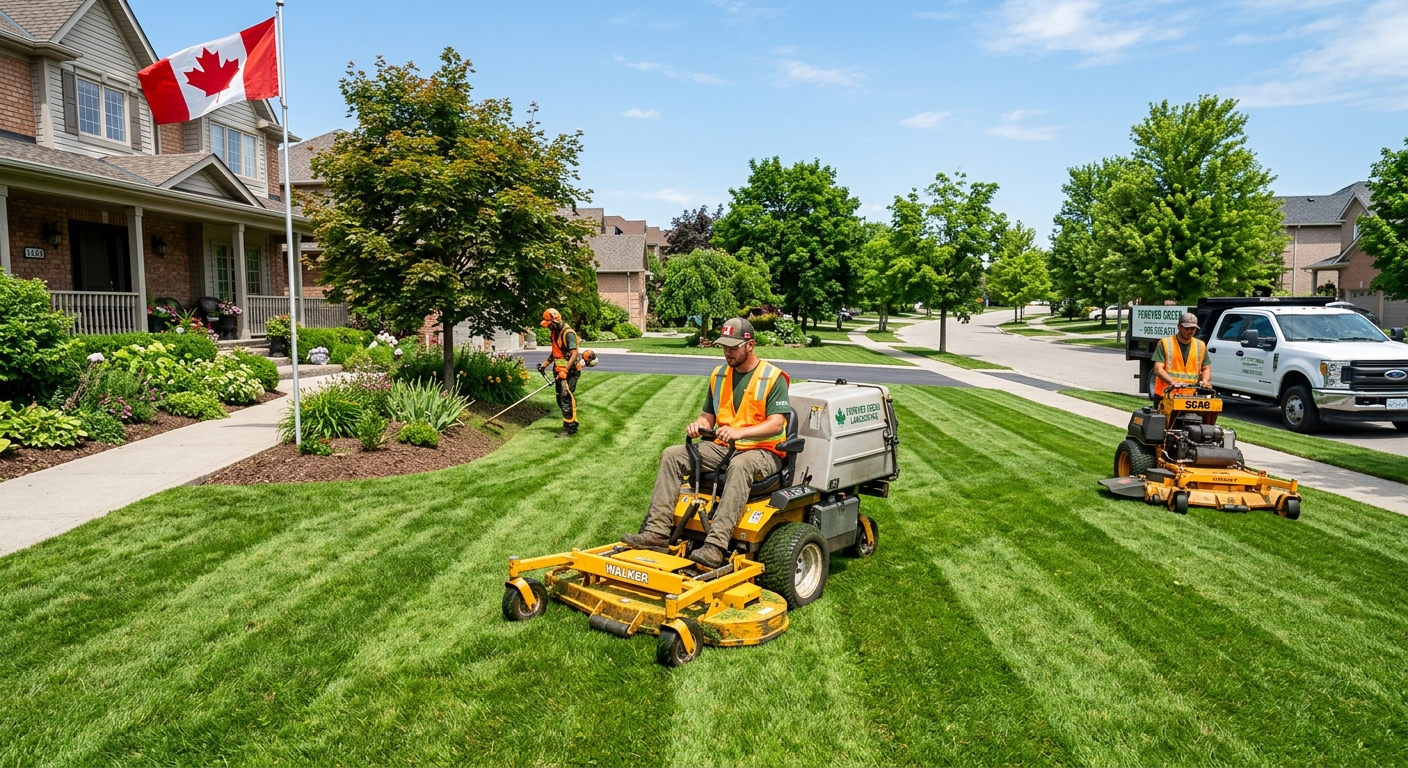
Landscaping options and costs in Constance Bay
Constance Bay is a great place to invest in a landscape, and in a community of about 2,314 residents (Statistics Canada, 2021 Census) you’ll typically find contractors who know the local rhythm of thaw, frost, and winter wind. Pricing is often driven by whether your property is a detached home with yard space and the incentive to spread improvements over time—so many homeowners start with something visible like a patio, edging, or shrub border, then add plants and lawn later. In the Toronto-area market, that demand is especially steady around the Constance Bay waterfront and the village core, where curb appeal matters year-round and drainage details are critical after spring melt.
Toronto-area landscaping costs are shaped by hardiness zones 6a–7a, freeze–thaw cycles, and clay/fill soils that can hold water and shift. Those conditions push more labour into excavation, granular base prep, and proper drainage under patios and walkways. They also affect contractor availability: the short, reliable planting window (roughly May to October) means crews calendar quickly in spring and early summer—so ordering early can help keep your project on budget.
If you’re comparing scopes, use the ranges below as a starting point. Once you decide whether you want a full design-and-install approach or smaller elements like sod and planting, your total project can land anywhere from a clean refresh to a full front-yard transformation.
| Service |
Description |
Season |
Price Range |
| Full landscape design and installation |
Site visit, concept + grading plan, planting plan, soil amendments, base prep, softscape and hardscape build, cleanup |
May–October |
$8,000–$40,000 |
| Sod installation (supply, grade, lay, roll) |
Grading/levelling, topsoil (as needed), sod supply, rolling, initial watering plan |
Late April–June; early September–October |
$2,500–$8,000 |
| Lawn seeding (grade, seed, starter fertilizer) |
Light grading, seed + starter fertilizer, raking/rolling, first-season watering guidance |
May–June; September |
$1,600–$4,200 |
| Interlocking patio or walkway |
Excavation, geotextile, granular base, interlocking stone, polymeric sand, edging |
May–October (freezing precautions in shoulder season) |
$6,000–$30,000 |
| Retaining wall (interlocking block) |
Base excavation, compacted granular layers, drainage stone + weeping tile (when required), block installation |
May–October |
$6,000–$30,000 |
| Tree and shrub planting |
Planting layout, soil amendment, staking (where needed), mulch rings, watering schedule |
April–June; September–October |
$800–$6,000 |
Prices are estimates only and vary by project scope, site access and material selection.
What affects the price of landscaping in Constance Bay
In Constance Bay and across the Toronto region, two contractors can quote the “same” landscaping job and still be 30–50% apart. The biggest reason isn’t just profit—it’s differences in how each company handles site conditions: Toronto-area clay and fill often require more excavation, soil amendment, and drainage protection. Labour pricing also changes with crew size and the timing of the job in the May-to-October window when frost-free conditions allow reliable grading and planting.
Plant hardiness zones 6a–7a and local frost timing matter because they define both what grows and when we can install it without risking winter dieback. In southern Ontario (Zone 5–6) the growing season is moderate, but we still typically budget for irrigation during summer dry spells. Prairie regions (Zone 2–4) face shorter growing seasons and colder winters, so designs there lean harder into ultra-hardy, drought-tolerant choices and more wind protection—often lowering maintenance costs but sometimes increasing establishment costs for certain plantings. Coastal BC (Zone 7–8) can support lush palettes with a longer window, while dry BC interior municipalities often restrict water use and require drip irrigation and xeric layouts. In Constance Bay, those contrasts show up in plant selection and watering plans, which influence the line items inside your quote.
Two local examples that move the needle in Constance Bay: (1) if your site has a low spot, fixing pooling before laying sod can add drainage bed or French drain work—pushing you toward the higher end of sod and grading scopes. (2) if you’re building a patio or walkway over soft soil, proper base depth and reinforcement for freeze–thaw can turn a “simple” install into a larger hardscaping budget. If you start with “add sod + mulch only,” you may stay nearer the lower ranges (for example, planting around $800–$6,000), but moving into a full design-and-install package often lands within the broader $8,000–$40,000 band.
| Price Factor |
Why It Matters |
Cost Impact |
| Yard size in sq ft — the primary cost driver for softscape |
More area means more labour days, more topsoil, seed/sod, mulch and edging |
Often the largest swing factor; total can change dramatically with even modest size increases |
| Grading and drainage work — slope corrections add significant cost |
Clays and fill can hold water; correcting slope protects foundations and plant health |
Can add major excavation, hauling, and re-compaction labour |
| Drainage bed or French drain installation |
Relieves hydrostatic pressure and reduces washouts in freeze–thaw seasons |
Material + labour increases; commonly raises hardscape and sod budgets |
| Plant material tier — native shrubs vs. ornamental vs. mature specimen trees |
Mature specimens cost more to purchase and install, and may require heavier equipment and staking |
Large variance; can move a “planting” quote from the low thousands to several thousand more |
| Hardscape vs. softscape ratio — walls and patios cost more per sq ft than lawn |
Stonework needs excavation depth, base layers, and precise compaction |
Shifts the project toward retaining wall & interlocking bands |
| Irrigation system design and installation |
Zone-targeted watering prevents winter washout and summer stress; uneven coverage increases plant loss |
Usually adds to the mid-to-high end of full landscape installs |
| Soil amendment and topsoil required |
Low-quality fill or compacted clay needs amendment to support root establishment and drainage |
Increases hauling and material costs; may be required before sod or seeding |
| Tree removal or stump grinding before new planting |
Vegetation clearing affects access, disposal, and regrading |
Often adds unexpected costs if not included in the original scope |
Permits & regulations in Ontario
In Ontario, most landscaping and planting work—like installing sod, lawn seeding, mulch, most shrub and tree planting, and typical softscape grading—usually does not require a permit. Where homeowners often get caught is with work that changes drainage patterns or creates new structures. Retaining walls are the most common trigger: in many Ontario municipalities, retaining walls above a threshold (often around 1.0 m / 3.3 ft, depending on the local by-law) may require a building permit and sometimes engineered drawings. If your plan includes stairs, additions to existing walls, or any engineered structural elements, confirm early.
Also pay attention to grading: if you plan to change lot grading in a way that affects drainage toward a neighbour’s property or ties into storm connections, approvals may be required. Before any digging—planting holes, footings, or drain trenches—utility locates are essential. In Ontario, calling for locates helps prevent accidental strikes to buried services.
To verify a contractor for Constance Bay projects, do it step-by-step. First, confirm Ontario licence/registration where applicable for the scope they’re performing, using the appropriate online registry. Second, request a certificate of insurance showing liability coverage that matches the job’s value and access conditions. Third, confirm WSIB/WCB coverage status (and request proof/clearance letter where provided). Don’t rely on “we’re insured” in emails—ask for documents and match the names to the quote agreement.
Planning a landscape that thrives in Constance Bay's climate
Designing for Constance Bay is about working with the local freeze–thaw cycle and Zone 6a–7a hardiness realities, not trying to force plants to behave. Start with plant selection: choose native and zone-appropriate perennials and woody plants that handle winter lows near –23 to –18°C, and group them by sun/shade and soil moisture so you don’t “over-fix” with constant watering. Where you can, use deeper-rooted plants and winter-sturdy groundcovers to reduce spring heaving impacts from soggy clay.
For lawn, sod gives instant curb impact but costs roughly 3–4x more per sq ft than seeding. If you need a quick appearance for resale or a summer event, sod can be justified—especially within the $2,500–$8,000 sod band. If you can wait a bit, seeding is usually the more economical route, and it’s a good fit for backyards where foot traffic is manageable while seedlings establish (often aligning closer to the lower thousands depending on area). The “best” choice depends on how soon you need the lawn look and whether you can maintain consistent moisture during establishment.
Drainage and grading are non-negotiable in Toronto-area clay. Make sure runoff is directed away from foundations and into safe discharge points. For patios and retaining walls, base preparation should respect the frost line realities: compacted granular layers, proper geotextile use, and drainage stones where water pressure can build. Low-maintenance strategies—mulched shrub borders, repeatable groundcovers, and a curated mix of perennials—reduce annual upkeep without sacrificing structure.
If you want a water-smart approach, consider a rain garden in low spots to capture spring melt, or xeriscape elements (like mulched planting islands and drought-tolerant perennials) where summer drying happens. Done well, these reduce irrigation time while improving long-term plant survival.
| Element |
Climate Consideration |
Maintenance Level |
Price Band |
| Sod lawn installation |
Needs reliable establishment during the frost-free season; winter prep is critical |
Low after establishment; higher watering effort first season |
$2,500–$8,000 |
| Native perennial garden |
Handles winter cold and spring melt better when grouped by sun/moisture |
Low to moderate (mulch refresh and seasonal pruning) |
$1,200–$4,500 |
| Mulched shrub border |
Mulch buffers freeze–thaw and helps moderate soil moisture swings |
Low (weed suppression and topping up mulch) |
$800–$6,000 |
| Interlocking stone patio |
Base layers and drainage prevent heaving from freeze–thaw |
Low (occasional joint sand and weed control at edges) |
$6,000–$30,000 |
| Retaining wall (block) |
Needs proper drainage stone and compacted base to handle winter water pressure |
Low after installation (inspect for settling) |
$6,000–$30,000 |
| Drip irrigation system |
Improves watering efficiency during summer dry spells; reduces overspray on clay |
Moderate (winterisation and seasonal checks) |
$1,500–$7,500 |
How to choose a landscaping contractor in Constance Bay
Choosing the right contractor in Constance Bay starts with verification. First, confirm Ontario licensing/registration for the work they’re selling (and ask which parts of your scope it covers). Second, request proof of liability insurance and review that the certificate lists your project address or the company name exactly as quoted—never accept a blanket statement. Third, verify WSIB/WCB coverage by asking for proof/clearance documentation, not just verbal assurances. If a contractor can’t provide these documents quickly, that’s a practical sign to keep looking.
Next, get 2–3 itemised written quotes. You want line items that show labour and materials separately (for example: excavation/hauling, granular base, stone units, drainage stone, fabric, and disposal). Ask whether the quote includes permits (if needed), utility locates, and site protection. Confirm whether disposal/hauling of excess soil is included or billed separately. A true scope comparison should also specify what’s excluded—like tree removal, stump grinding, topsoil depth, or irrigation tie-in—because those omissions are a common source of change orders.
Warranty matters: ask for a workmanship warranty length and what it covers (settlement, stone movement, drainage performance) and whether product/manufacturer warranties apply to plants/stone suppliers. Finally, use a sensible payment schedule: never pay more than 10–15% upfront, and hold back until completion and final walkthrough. Get a written start date and completion estimate so you can plan around the short planting season.
- Verify Ontario licence/registration relevant to the work they’re performing.
- Ask for liability insurance certificate and ensure names match the contracting company.
- Confirm WSIB/WCB clearance or proof of coverage in writing.
- Request 2–3 itemised quotes (labour vs materials, not a single lump sum).
- Confirm excavation, haul-away, and disposal inclusions/exclusions.
- Ask what soil amendment/topsoil depth is allowed and how it’s measured.
- For hardscaping, ensure base thickness, geotextile use, and compaction method are specified.
- For drainage, confirm whether a French drain is included and where discharge goes.
- Ask for planting list specifics: species, size (caliper/height), spacing, and supplier tier.
- Clarify warranty duration for workmanship and what conditions void it.
- Confirm watering/establishment plan for sod/seed and who handles initial watering days.
- Use a payment schedule with ≤10–15% upfront and a holdback until final completion.
Red flags I commonly see around Constance Bay: quotes that exclude drainage then blame “weather” later, no written scope (especially for base prep on patios), reluctance to provide insurance/WSIB proof, unusually low pricing that omits compaction/disposal, and payment requests that ask for most funds upfront with no retention or completion terms.
Frequently asked questions — landscaping in Constance Bay
How do I design a low-water yard in Constance Bay?
In Constance Bay, low-water design works best when you plan around how southern Ontario dries in summer and how clay holds water in spring. Start by grouping plants by moisture need (dry-tolerant at the top of slopes, moisture-tolerant where water naturally gathers). Add 2–3 inches of mulch in shrub and perennial beds to reduce evaporation and buffer freeze–thaw. If your yard has a low area, a rain garden can capture spring runoff and reduce summer irrigation demand. For lawns, consider whether you truly need sod everywhere—sod is typically in the $2,500–$8,000 band, but even then it needs establishment watering. Where appearance allows, seeding can reduce cost and still perform with proper moisture during germination. Finally, design irrigation zones carefully or switch to drip for targeted watering so you’re not wetting non-plant areas.
How do I find a licensed landscaper in Constance Bay?
Begin by asking any contractor you’re considering for proof of Ontario licence/registration that applies to their scope, plus liability insurance and WSIB/WCB coverage documentation. In practice, you should request a certificate of insurance (confirm the company name matches the quote) and a WSIB/WCB clearance/proof letter rather than relying on verbal statements. You can also verify business details through online registry tools relevant to your area. Then compare quotes based on itemised scope, not just price. For example, ask whether they include soil amendment depth, base preparation for patios/walkways, drainage where needed, and disposal/haul-away. A reputable Constance Bay contractor will answer these questions clearly and provide documents without pressure. If a company won’t provide insurance/coverage proof or can’t break down labour vs materials, that’s a strong sign to move on.
How much does landscaping cost in Constance Bay?
Landscaping cost in Constance Bay typically depends on how much softscape and hardscape you’re adding, plus how much drainage and grading is required. For many homeowners, a full design-and-install project lands in the $8,000–$40,000 range. If you’re focusing on a lawn refresh, sod installation commonly falls in the $2,500–$8,000 band depending on area and whether grading/topsoil changes are included. Tree and shrub planting is often a smaller add-on, frequently within the $800–$6,000 band for multi-plant installations, while patios and interlocking work commonly overlap with retaining wall pricing (also often within the $6,000–$30,000 band). Because Constance Bay uses the same Zone 6a–7a constraints as the GTA, freeze–thaw and clay soils can increase excavation and base prep costs if they’re not already handled.
What plants thrive in Constance Bay's climate zone?
Constance Bay sits in the Toronto-area hardiness range of Zones 6a–7a, so choose plants that tolerate winter lows near –23 to –18°C and can handle hot, sometimes humid summers. Generally, that means sturdy shrubs, hardy perennials, and woody plants with good winter structure. In practice, we often prioritize natives and region-appropriate cultivars because they establish well in local soil conditions and resist winter burn better than many delicate ornamentals. For best results, match plants to the yard’s moisture zones: wetter areas near downspouts or low spots benefit from moisture-tolerant species, while raised beds and well-drained slopes can use drier-tolerant selections to reduce watering. Also, plan for winter protection where needed—mulch is your friend. If you’re starting from scratch, a planting scope in the $800–$6,000 range can still deliver strong curb appeal when the layout is designed around sun and drainage, not just plant “list” variety.
Sod vs seed — which is better for a Constance Bay lawn?
Sod vs seed in Constance Bay mostly comes down to timing, budget, and how much watering attention you can give during establishment. Sod gives instant coverage and a clean look, but it’s more expensive—often within the $2,500–$8,000 band depending on area, grading, and topsoil needs. Sod also requires proper preparation so seams don’t fail during freeze–thaw; on clay soils, good grading and base prep matter. Seeding is usually less costly, and it can be very effective if you can keep moisture consistent during germination and early growth. The best choice for many homeowners is: sod for front-yard appearance needs (or thin/eroding spots where you want immediate coverage), and seed for larger areas where you can be patient and maintain watering during establishment. In Ontario, we typically aim for late spring to early summer, plus early fall seeding when conditions suit growth.
How much does a retaining wall cost in Constance Bay?
Retaining wall costs in Constance Bay often fall within the $6,000–$30,000 band because retaining work includes excavation, compacted granular base, drainage stone (and sometimes a weeping tile), and the block system itself. Total price also changes with wall height, length, soil conditions, and whether there’s access for equipment and disposal of excess material. In Toronto-area clay, proper drainage behind the wall is crucial to prevent water build-up during spring melt and freeze–thaw cycles. Permit requirements can also affect the timeline and cost: many Ontario municipalities require a building permit for retaining walls above a threshold (commonly around 1.0 m / 3.3 ft, but always confirm locally). If you’re considering a wall, ask for a drainage detail in the quote—not just the wall blocks.