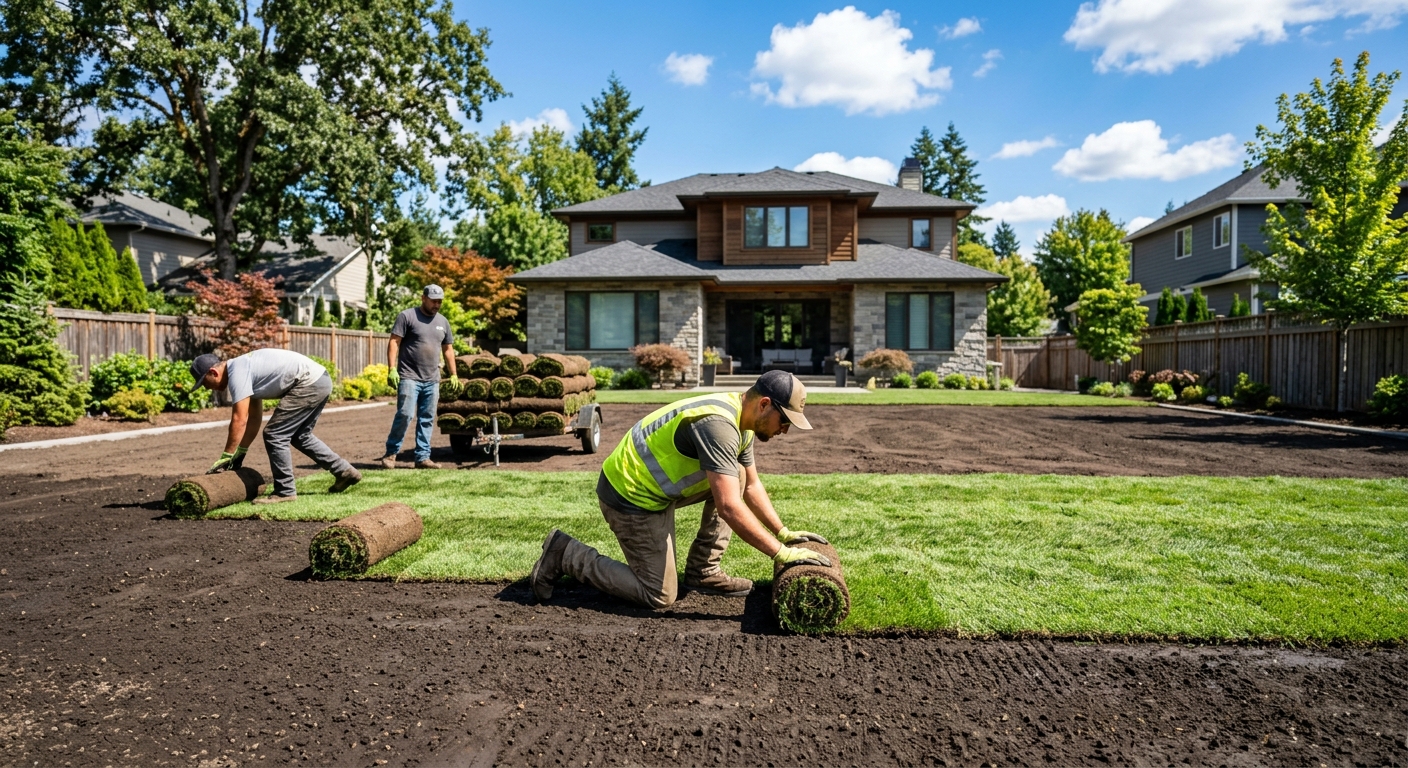
Landscaping options and costs in Long Branch
Long Branch homeowners often want curb appeal that looks sharp in every season, and the costs are usually justified by how much usable yard you have and how well the design handles Toronto’s freeze–thaw winters. With Long Branch’s population at 10,084 (Statistics Canada, 2021 Census), demand is steady, and contractors price with a real sense of neighbourhood turnaround time. In this part of Toronto, many properties are detached with enough outdoor space to truly “build” a landscape—patios, borders, and planting beds—rather than only doing small touch-ups. That yard depth, combined with older fill-and-clay soils common across the GTA, is why excavation, base prep, and drainage often show up early in estimates.
Toronto-area landscaping is shaped first by climate and soil: the GTA sits in hardiness zones 6a–7a, which supports hardy trees and perennials, but deep winter frost and frequent freeze–thaw cycles raise the bar for patio and retaining wall foundations. Late spring and summer humidity also affect sod/lawn work and the timing of seeding, while contractor availability typically peaks around the May-to-October frost-free stretch. In Long Branch—especially around the village core and along the Lakeshore corridor—higher foot traffic and tighter driveway/side-yard access can add labour for equipment staging and material handling.
To help you compare apples to apples, here are the typical ranges for common landscape projects in Long Branch, Ontario—then you can match your scope to the line items in the table.
| Service |
Description |
Season |
Price Range |
| Full landscape design and installation |
Site visit, concept + planting plan, grading/drainage coordination, supply and install of selected softscape and hardscape components |
Spring–Fall |
$8,000–$40,000 |
| Sod installation (supply, grade, lay, roll) |
Topsoil/grade verification, sod delivery and installation, rolling, starter watering, cleanup |
May–September |
$2,500–$8,000 |
| Lawn seeding (grade, seed, starter fertilizer) |
Fine grading, seed blend selection, starter fertilizer, light raking, watering guidance |
April–May, or late summer |
$1,500–$5,500 |
| Interlocking patio or walkway |
Excavation, compacted base, jointing sand, edge restraints, labour and installation of interlocking stone |
Spring–Fall (weather dependent) |
$6,000–$30,000 |
| Retaining wall (interlocking block) |
Layout, excavation, base/sub-base design, block installation, weeping tile/drainage rock (as needed), finishing |
Spring–Fall |
$6,000–$30,000 |
| Tree and shrub planting |
Plant selection, digging, soil amendment, staking (if required), mulch rings, initial watering schedule |
Spring–Fall |
$800–$6,000 |
Prices are estimates only and vary by project scope, site access and material selection.
What affects the price of landscaping in Long Branch
Even when two homeowners describe the “same” project, quotes in Toronto can diverge by 30–50% because the work is rarely identical once you account for grading, drainage, soil condition, and the number of plants or square footage being installed. In Long Branch, contractors are also managing the practical realities of a May-to-October installation window: in zones 6a–7a, plant selection is more forgiving than colder Prairie areas, but freeze–thaw cycles still force proper base depths and drainage for patios, steps, and retaining walls. That’s a big reason the GTA’s “softscape” and “hardscape” costs can’t be compared using only material prices.
Here’s how the regional climate context shifts costs: Prairie regions (zone 2–4) typically require ultra-hardier, drought-tolerant choices and simpler palettes because seasons are shorter; they also often plan differently for freeze penetration. Coastal BC (zone 7–8) can support lush planting longer into the year, but heavy rainfall makes drainage design a must. Dry BC interior municipalities often restrict irrigation, so drip systems and xeric planting are common. Southern Ontario offers a moderate season, but summer dry spells still mean you may pay for irrigation setup—especially if you want reliable establishment.
Concrete examples from Long Branch pricing: (1) clay-and-fill soils frequently mean more excavation and soil amendment before sod or stone goes in—this can push a $2,500–$8,000 sod job toward the upper end if grade correction and topsoil import are needed; (2) if your interlocking patio sits near a downspout or foundation, drainage revisions can add to the $6,000–$30,000 hardscaping range; and (3) choosing larger, nursery-grown specimen trees can move a $800–$6,000 planting package upward due to heavier digging, staking, and careful root-ball handling.
Next, use the cost factors below to pinpoint what’s driving your estimate—because the “scope” line items are where the real differences hide.
| Price Factor |
Why It Matters |
Cost Impact |
| Yard size in sq ft — the primary cost driver for softscape |
More area means more labour hours, more material (topsoil, seed, sod), and longer cleanup and watering time |
Large yards often scale from the low end to the upper end of the band quickly |
| Grading and drainage work — slope corrections add significant cost |
Toronto clay and fill often need re-profiling so water flows away from foundations and doesn’t pool in corners |
Can add noticeable cost and increase the hardscaping base requirements |
| Drainage bed or French drain installation |
Reduces saturated soil near patios, steps, and retaining walls, protecting long-term stability |
Frequently pushes projects toward the higher tier for hardscape/retaining work |
| Plant material tier — native shrubs vs. ornamental vs. mature specimen trees |
Mature plants cost more and require larger root balls, more labour, and sometimes professional handling |
Small shrub borders are usually budget-friendly; mature trees raise total cost fast |
| Hardscape vs. softscape ratio — walls and patios cost more per sq ft than lawn |
Stone, block, edge restraints, compacted base, and geotextile/geogrid (when needed) add up |
High hardscape designs typically land in the upper ranges |
| Irrigation system design and installation |
Long establishment period plus summer humidity means reliable coverage matters for survival |
Can add a meaningful line item, especially for full-yard coverage |
| Soil amendment and topsoil required |
Improves drainage and rooting for sod, seed, and planting beds |
Importing or hauling soil can be a hidden driver when starting soil quality is poor |
| Tree removal or stump grinding before new planting |
Removal changes access, adds disposal/haulage, and creates additional site preparation work |
Often increases overall job cost and timeline |
Permits & regulations in Ontario
In Ontario, most planting and softscape work—like sodding, seeding, mulching, and installing typical garden beds—generally doesn’t require a permit. You also usually don’t need a permit for basic lawn regrading and adding topsoil as long as you’re not materially changing how water drains across the lot. Retaining walls are different. In many Ontario municipalities, retaining walls above a height threshold (commonly around 1.0 m / 3.3 ft) typically require a building permit, and in some cases you may need engineered drawings depending on the wall height, soil conditions, and how it’s restrained.
Another area that can trigger approvals is significant lot grading that affects drainage toward neighbouring properties or ties into storm sewer connections. If you’re digging for drainage beds, footings, or wall bases, always plan for utility locates before any digging. Even for planting holes, “call before you dig” is essential—Ontario utility markings prevent costly disruptions and safety issues.
For contractor verification in Long Branch, Ontario: (1) confirm the company’s Ontario business information and eligibility to do construction work; (2) request a current certificate of insurance (liability) naming the homeowner as applicable; and (3) confirm WSIB coverage (or the equivalent coverage status as applicable for the contractor type) for workers on site. Ask for a clearance letter or proof document, not a verbal statement. Then keep those documents with your contract and quote paperwork.
Planning a landscape that thrives in Long Branch's climate
To plan a landscape that thrives in Long Branch, design around what zone 6a–7a and Toronto’s weather actually do—especially winter frost and the freeze–thaw rhythm. Start with plant selection: choose zone-appropriate and, where practical, native plants that can handle wet spring conditions and colder snaps without excessive winter protection. For lawns, understand sod vs. seed economics: sod gives instant results, but it costs about 3–4x more per sq ft than seeding because you’re buying and handling ready turf. In Long Branch, that can make sense when you need a quick, presentable yard fast (for a move-in or sale) and you can commit to proper watering during establishment.
Drainage and grading are make-or-break in Toronto. Pooling water and foundation moisture can damage both softscape and hardscape, so grading should move water away from the house, and a well-prepared base is essential for patios and block walls. Hardscape base prep matters as much as the stone choice: the goal is a stable layer system that resists heaving during freeze cycles.
Low-maintenance strategies pay off here: mulched shrub borders, groundcovers in appropriate zones, and perennials that repeat year-to-year reduce annual upkeep while still looking intentional. You can also consider rain gardens or smart water zones to manage spring runoff and late-season dryness. If you’re dealing with a sunny, dry stretch, a drip-ready planting approach can lower ongoing watering time.
Dollar example: if your goal is a 600 sq ft lawn refresh, a sod-based approach might land in the $2,500–$8,000 range depending on grading needs. Seeding is often meaningfully cheaper for the same area, but it won’t look “finished” immediately—so it’s justified when you can wait for full coverage and you’re okay with a longer establishment period.
| Element |
Climate Consideration |
Maintenance Level |
Price Band |
| Sod lawn installation |
Needs consistent watering during establishment in May–September; edges can dry out if grading isn’t corrected |
Medium (watering and monitoring first season) |
$2,500–$8,000 |
| Native perennial garden |
Better resilience through zone 6a–7a winters; designed for Toronto’s seasonal swings |
Low (mulch + seasonal tidy) |
$2,000–$10,000 |
| Mulched shrub border |
Mulch moderates soil moisture through freeze–thaw and summer humidity |
Low–Medium (weeding early, then reduced) |
$1,000–$6,000 |
| Interlocking stone patio |
Requires a properly compacted base to resist heaving; drainage prevents foundation-related issues |
Low (occasional cleaning/joint maintenance) |
$6,000–$30,000 |
| Retaining wall (block) |
Freeze–thaw stability depends on correct base depth, reinforcement, and drainage behind the wall |
Low (visual inspection over time) |
$6,000–$30,000 |
| Drip irrigation system |
Helps manage drought periods and humid summers efficiently; reduces reliance on overhead watering |
Low–Medium (seasonal adjustments and checks) |
$1,500–$8,000 |
How to choose a landscaping contractor in Long Branch
Start by verifying the contractor can legally and safely work on your property in Ontario. Ask for: (1) Ontario business registration information or the appropriate company credentials; (2) a current certificate of liability insurance (and confirm whether it covers property damage and general liability); and (3) WSIB coverage for their workers (request proof such as a clearance letter or documentation). Don’t accept screenshots with missing details—get full copies and review the effective dates.
Next, request 2–3 itemised written quotes—not just a lump sum. The best quotes break out labour and materials by scope: excavation and haulage, base materials, geotextile/geogrid (when needed), drainage items, plant list with sizes, delivery charges, and disposal/landfill. Also ask what’s excluded (tree removal? stump grinding? topsoil supply? permit handling for retaining wall permits?). If you have interlocking stone or a retaining wall, confirm whether drainage rock and weeping tile are included where required.
Warranty matters in the GTA’s climate. Ask for a workmanship warranty length for installation (not just a vague “we stand behind our work”), plus the product/manufacturer warranty for materials like pavers and block systems. Confirm whether the warranty is transferable if you sell your home.
For payment, use a sensible schedule: never pay more than 10–15% upfront. Hold back a portion until completion and final cleanup. Finally, get the start date and completion estimate in writing, including weather contingencies common to Long Branch’s spring and fall swing.
- Provide Ontario documentation and confirm the contractor’s business status
- Share proof of liability insurance and verify coverage dates
- Show WSIB coverage proof for workers on site
- Get quotes itemised with line-by-line labour and material quantities
- Confirm disposal/haulage is included for soil and debris
- Ask if grading and drainage corrections are included (and how they’ll be tested/finished)
- For patios/walls, confirm base thickness, compaction approach, and edging restraints
- Verify plant list includes species, variety, container size/root ball size
- Confirm irrigation scope (materials, controller, coverage, and start-up programming)
- Ask about warranty for workmanship and whether it covers settling, joint washout, and plant establishment
- Use a payment plan with a holdback until final walk-through
- Require a written timeline with milestone dates, not only a “sometime in spring” estimate
Concrete red flags I see in Long Branch: paying most of the total up front without a written schedule, quotes that don’t list plants by size/species, vague language like “we’ll level the yard” without mentioning drainage, missing proof of WSIB/liability, and contractors who won’t explain base prep or drainage details for interlocking stone or retaining walls.
Frequently asked questions — landscaping in Long Branch
How much does professional landscape design cost?
In Long Branch, professional landscape design is often priced as a separate step from installation, or bundled into a full project when you proceed with the contractor’s build team. For many GTA jobs, design and installation together commonly fall within the broader $8,000–$40,000 range depending on how much hardscape (patios/retaining) and how many planting zones you add. The practical reason is that a real design accounts for Toronto’s freeze–thaw stability needs (base preparation, drainage, and plant hardiness in zones 6a–7a), not just aesthetics. (Statistics Canada, 2021 Census) shows Long Branch’s population is 10,084, which supports steady local contractor scheduling, but it doesn’t change the engineering requirements.
How do I compare landscaping quotes?
Compare long-form, itemised quotes side-by-side—don’t compare totals only. Look for the same scope: excavation depth, base materials, drainage provisions, and whether disposal and topsoil/soil amendment are included. For lawns, check whether you’re being priced for sod installation ($2,500–$8,000) versus seeding, because sod is materially more expensive and needs different establishment practices. For hardscape, confirm what’s included within $6,000–$30,000: the base thickness, edge restraints, and jointing sand. Also check timing and warranty terms—installations in Long Branch are weather-dependent, so good quotes describe weather hold points and how they protect finished surfaces.
How long does a landscaping project take in Long Branch?
Typical timelines in Long Branch vary by season and complexity, but most projects follow a predictable pattern: site prep and excavation first, then drainage/grading, then hardscape, and finally softscape planting and mulching. Simple planting jobs (tree and shrub planting) can be done in days, especially if access is easy and there’s no stump grinding. Interlocking patios and retaining wall work can take longer because base prep needs proper excavation and compaction, and drainage details must be installed correctly to handle Toronto’s freeze–thaw cycles. Because the frost-free stretch is roughly May to October, many builds target summer completion, while spring seeding and fall plantings are scheduled to match soil temperatures and moisture.
What is the best grass type for a Long Branch lawn?
For Long Branch (zone 6a–7a), homeowners typically do best with cool-season grass blends that handle Toronto’s hot, humid summers and winter cold. In practice, that often means fine fescue for shade and drought tolerance, or a mix that includes Kentucky bluegrass and perennial ryegrass depending on sun exposure and traffic. The “best” choice depends more on your site—sun vs. shade, drainage, and how often you can water—than on brand. If you choose sod installation, you’ll get instant cover in the May–September window; if you choose seeding, plan for a longer establishment period before expecting a dense, walkable lawn. Either way, correct grading and drainage matter more than most people expect.
When should I aerate and overseed my lawn in Long Branch?
In Ontario and especially in Long Branch, aeration and overseeding are usually timed around periods when the grass can recover quickly without extreme heat or deep frost. Many homeowners schedule aeration in spring or early fall, then overseed shortly after so new seedlings can root before winter. If you’re on a cool-season lawn, fall often helps because temperatures are milder and moisture is steadier, but the exact timing should match your turf condition and soil moisture. If your lawn is patchy or compacted, prioritize aeration and correct watering after overseeding. If you’re comparing options and are budget-conscious, remember that seeding is generally less costly than sod—while sod ($2,500–$8,000) is often the faster visual fix.
What trees grow best in Long Branch's climate zone?
Long Branch sits in hardiness zones 6a–7a, so you have a good selection of hardy, Toronto-friendly trees—especially when you choose varieties matched to your soil moisture and sun exposure. In many GTA yards, homeowners do well with trees like serviceberry (Amelanchier), hardy ornamental crabapples, and disease-conscious selections that tolerate the seasonal swings common to the region. If you’re planting near foundations or sidewalks, soil drainage and freeze–thaw movement become critical: ask for the mature size so you plant far enough away from structures. For shade and long-term structure, well-spaced deciduous options can be a great fit. For pricing, a tree and shrub planting package often falls in the $800–$6,000 range depending on tree size and number of plants.