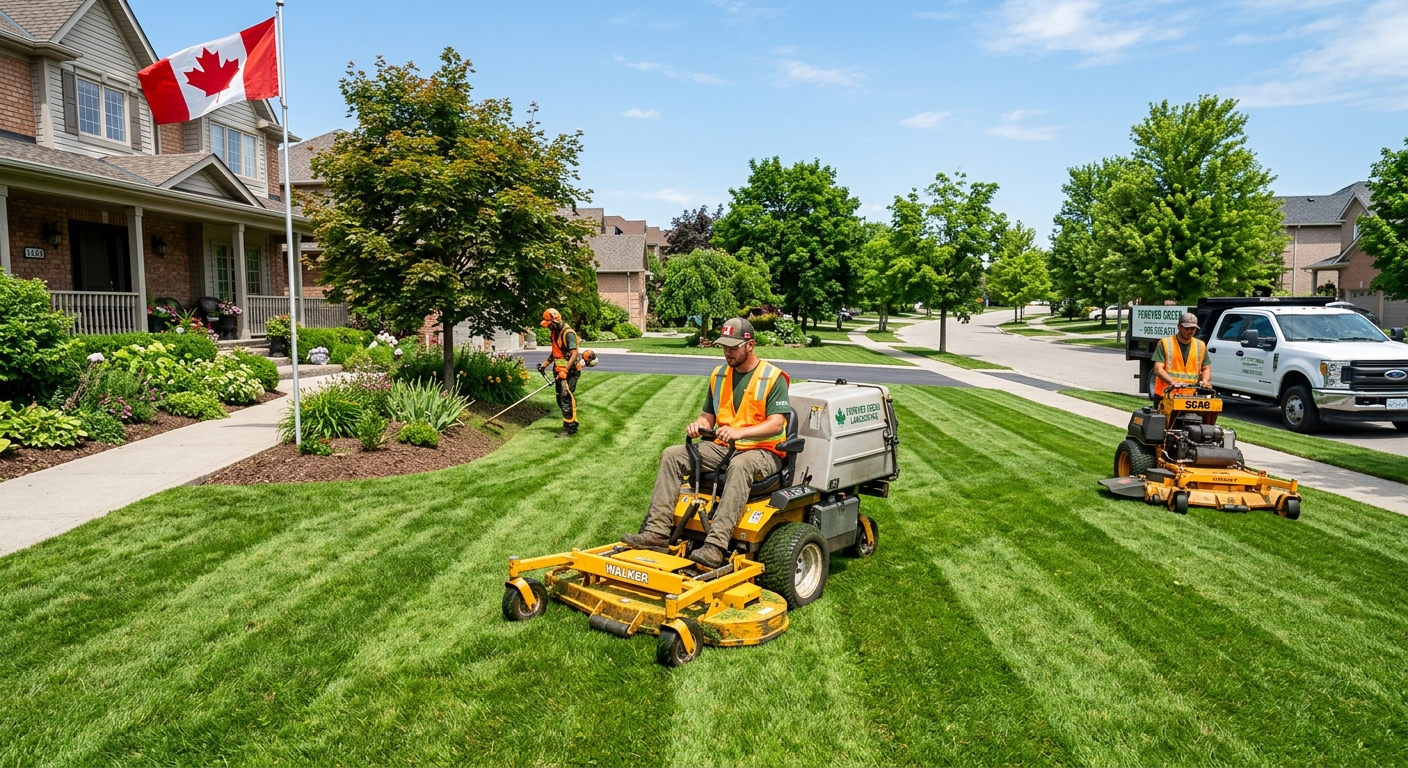
Landscaping options and costs in Humber Summit
In Humber Summit, most homeowners start with a practical question: what will actually hold up through Toronto’s freeze–thaw winters and summer humidity. With Humber Summit’s population at 12,416 (Statistics Canada, 2021 Census), there’s steady demand for both curb-appeal upgrades and drainage corrections, especially on older properties where soil may have been brought in around the foundation. The housing stock here is typically family-oriented, and many lots have enough yard space to invest in softscape—tree/shrub planting, lawns, and layered borders—rather than only hardscaping.
Toronto-area landscaping costs are shaped by local soil and climate: clay and fill soils often need excavation, soil amendment, and sometimes subdrains before patios or retaining walls will stay stable. The working season is also limited by frost and frequent temperature swings, which increases labour intensity for stonework and base preparation. In Humber Summit, that trade is especially busy for projects around Humber College and the main residential pockets where neighbours share similar grading challenges and expect clean, finished edges near driveways and property lines.
Because the same “look” can be built with different levels of drainage engineering, soil amendment, and plant quality, quotes can move widely. The table below compares common options—so you can align your budget with the scope that matters most before you book a site visit.
| Service |
Description |
Season |
Price Range |
| Full landscape design and installation |
Layout, grading/drainage plan (as required), hardscape/softscape buildout, planting, topsoil, and cleanup |
Late April to November (best success: May–October) |
$8,000–$40,000 |
| Sod installation (supply, grade, lay, roll) |
Light grading, base prep, sod delivery/labour, rolling, and initial watering plan |
Mid-April to early July; re-sod in September if weather cooperates |
$2,500–$8,000 |
| Lawn seeding (grade, seed, starter fertilizer) |
Regrading as needed, seed mix, starter fertilizer, light covering, and first-cut schedule |
April/May and early September |
$1,200–$4,500 |
| Interlocking patio or walkway |
Excavation, base/granular layers, edging, interlocking stone, and joint sand |
May to October (concrete/stone bases depend on dry conditions) |
$6,000–$30,000 |
| Retaining wall (interlocking block) |
Block wall, compaction, proper drainage gravel/weep details, geogrid (if required) |
May to October |
$8,500–$25,000 |
| Tree and shrub planting |
Soil prep, planting holes, staking (if needed), mulch rings, and initial watering guidance |
Spring and fall; light planting possible in mild winters |
$800–$6,000 |
Prices are estimates only and vary by project scope, site access and material selection.
What affects the price of landscaping in Humber Summit
In Toronto and across Ontario, you can see the same “interlocking patio + garden refresh” swing by roughly 30–50% between quotes. The biggest reason isn’t aesthetics—it’s what’s happening under the surface: drainage, soil condition, base depth for stonework, and the amount of excavation needed to build on clay or disturbed fill. In Humber Summit specifically, clay-heavy soils and freeze–thaw cycling raise the importance of getting base and drainage right the first time, particularly near foundations and driveways.
Climate also sets the window for safe work. Ontario sits around hardiness zones 6a–7a with winter lows roughly near –23 to –18°C and a frost-free period roughly May to October. That matters because it determines what survives (woody plants and perennials) and what contractors can reliably install without risking plant loss or incomplete hardscape bases. When you compare regions: Prairie areas (Zone 2–4) face shorter seasons and colder ground, so they often need drought- and wind-tolerant species and more schedule discipline; Coastal BC can support a longer growing season, but heavy rain makes drainage detailing non-negotiable; the dry BC interior often requires purpose-built irrigation (drip and xeric layouts). Southern Ontario is the “middle”: moderate seasons, but summer dry spells still drive irrigation decisions.
Two examples from Humber Summit: (1) if your patio area requires extra excavation and soil amendment to reach stable base depth, labour and aggregate quantities can jump fast, pushing a mid-range project toward the higher end of the $6,000–$30,000 hardscape band; (2) if a wall needs deeper footing and proper drainage gravel behind it to manage water infiltration, a retaining-wall scope often trends upward from the $8,000–$25,000 type of band toward the upper end. As a rough guide, older homes with settled grade near the foundation can add several thousand dollars when we correct slope and add drainage—because the foundation protection work is tied to the same excavation.
| Price Factor |
Why It Matters |
Cost Impact |
| Yard size in sq ft — the primary cost driver for softscape |
More square footage means more labour, topsoil, seed/sod, mulch and materials |
Can shift total softscape spend by several thousand dollars |
| Grading and drainage work — slope corrections add significant cost |
Correcting slope prevents pooling and foundation moisture |
Often adds 10–25% to landscape installation costs |
| Drainage bed or French drain installation |
Captures subsurface water common in clay/fill soils |
Can add $1,500–$7,000 depending on length and tie-in |
| Plant material tier — native shrubs vs. ornamental vs. mature specimen trees |
Hardiness matters, but so does size at install (and soil preparation for larger stock) |
May double plant-and-planting labour costs |
| Hardscape vs. softscape ratio — walls and patios cost more per sq ft than lawn |
Stone bases require excavation, granular layers and compaction |
Raises spend toward the retaining/walkway bands |
| Irrigation system design and installation |
Summer humidity plus dry spells can require targeted watering |
Typically adds $1,800–$6,500 depending on zones |
| Soil amendment and topsoil required |
Clay soils often need amendment for root health and drainage |
Can add $800–$4,000 based on volume hauled |
| Tree removal or stump grinding before new planting |
Clearing affects schedule, excavation, and disposal |
Commonly adds $500–$3,500 depending on site access |
Permits & regulations in Ontario
In Ontario, most routine landscaping work—like planting, sodding, seeding, and general softscape—typically does not require a permit. If your plan is focused on grass, mulch rings, perennial beds, and standard shrub/tree planting (with proper utility locating), you usually won’t need additional approvals beyond normal contractor compliance and property-by-law rules that affect setbacks.
Work that DOES commonly require a permit (or may trigger municipal review) includes retaining walls above a height threshold—often around 1.0 m (3.3 ft), depending on the municipality—and any changes to lot grading that affect drainage, surface runoff direction, or connections to storm sewer infrastructure. Structural or engineered details may be required if the wall is retaining significant height or if soil conditions warrant it. Also, before any digging for planting holes or wall footings, call for utility locates so you can avoid hidden services.
For irrigation and water use: Ontario municipalities can have watering restrictions or seasonal guidelines, and contractors should follow current local bylaws. Even though the dry BC interior is where restrictions are most stringent, Toronto-area summers still bring dry stretches—so a sensible irrigation design (often with smart controllers) is a practical compliance and cost-control step.
To verify a Humber Summit contractor: check their Ontario licence/registration (if applicable for your scope), request a Certificate of Insurance showing liability coverage (and confirm limits), and confirm WSIB/WCB coverage for employees. Ask for proof of coverage documents and verify clearance letters when provided. A reputable contractor will give these up front before signing.
Planning a landscape that thrives in Humber Summit's climate
To build a yard that thrives in Humber Summit, plan around Toronto-area hardiness and the realities of winter wetness and freeze–thaw. Humber Summit sits in hardiness zones 6a–7a, so choose hardy woody plants and perennials that tolerate winter lows near –23 to –18°C and rebound after spring thaw. Equally important: don’t treat drainage as an afterthought—pooling water in spring can kill sod and rot roots before summer even arrives.
Start with plant selection. Native and zone-appropriate shrubs and perennials usually establish better and can reduce watering once they’re rooted. For turf, decide between sod and seed: sod gives instant curb appeal, but it’s typically 3–4x the per-square-foot cost of seeding because of product and labour intensity. If your budget is tight, seeding in spring or early September is a strong option—especially for areas that don’t have foot traffic pressure.
Next is drainage and grading. For patios and walkways, proper base preparation below the frost line and correct compaction help stonework resist shifting. For softscape, add topsoil/soil amendment where needed and build gentle slopes away from foundations.
Low-maintenance design can still look polished: mulch layers under shrubs, groundcovers to suppress weeds, and perennials that bloom in sequence. If you want a water-smart approach, consider a small rain-garden pocket in a downspout-receiving area and group plants by watering needs (hydrozones). Just be careful: “xeriscape” isn’t usually one single rock-and-cactus look in Ontario—it’s more often drought-tolerant perennials and smart irrigation where necessary.
Example of when the higher cost is worth it: if you want a lawn that stays usable quickly for a family schedule, sod is often the justified route—on a typical 500–700 sq ft area, it can land in the $2,500–$8,000 band—provided the grade is corrected. If the grade is off, starting with seeding and fixing drainage later will cost more in the long run.
| Element |
Climate Consideration |
Maintenance Level |
Price Band |
| Sod lawn installation |
Best installed during spring/early summer and fall windows to reduce winter heave and summer stress |
Medium early-season care (watering and first-cuts), then lower |
$2,500–$8,000 |
| Native perennial garden |
Native stock supports Ontario winters and handles humid summers when planted in suitable soil |
Low to medium (annual weed control and occasional pruning) |
$1,500–$6,000 |
| Mulched shrub border |
Mulch moderates soil temperature swings and helps retain moisture through dry spells |
Low (refresh mulch 1x per year, light shaping) |
$800–$4,500 |
| Interlocking stone patio |
Freeze–thaw requires deep, compacted base and good drainage away from the house |
Low (occasional joint sand and inspection) |
$6,000–$30,000 |
| Retaining wall (block) |
Wall stability depends on footing depth, compaction and behind-wall drainage |
Low (periodic inspection; avoid water pooling behind the wall) |
$8,500–$25,000 |
| Drip irrigation system |
Targeted watering helps during humid summers and dry stretches; supports water-efficient design |
Low once tuned (seasonal checks and filter maintenance) |
$1,800–$6,500 |
How to choose a landscaping contractor in Humber Summit
Choosing the right contractor in Humber Summit starts with verification. In Ontario, confirm the contractor’s licensing/registration relevant to your scope (especially if they are doing hardscape or work that may involve regulated activities), then request liability insurance documents—your Certificate of Insurance should clearly name you as the certificate holder if offered. For workers, confirm WSIB/WCB coverage (ask for the proof documents and/or clearance letter). Don’t accept “we’re covered” without documentation.
Next, get 2–3 itemised written quotes, not a single lump-sum. The quote should separate labour and materials: excavation/base materials, disposal, interlocking stone quantities, topsoil/soil amendment volume, drainage components, and plant lists with sizes. Ensure exclusions are explicit: what’s not included (softscape beyond a certain depth, grading beyond a certain area, stump removal, utility locates, or disposal)? Ask whether permit pulling is included if a retaining wall or grading change triggers municipal approval.
Warranty matters. Look for a workmanship warranty (often covering settlement or installation defects for a stated period) and ensure manufacturer warranties for trees/shrubs or specific products are noted. Ask whether warranties are transferable if you sell your home.
Payment schedule: never pay more than 10–15% upfront. Use milestone payments and hold a portion back until completion and final cleanup. Finally, lock in a timeline with a written start date and a completion estimate—especially important in Toronto where spring weather can delay excavation and base prep.
- Ask for a site visit and written measurements (yard area, patio/wall dimensions, slopes).
- Confirm utility locate responsibility before digging (you want it documented).
- Require itemised labour + materials (no hidden “allowances” without explanation).
- Make sure drainage/grading scope is spelled out in writing.
- Request plant lists with common/scientific names and pot sizes or caliper where applicable.
- Verify insurance (liability limits) and WSIB/WCB coverage with documents.
- Ask about disposal: is it included in the price or an extra haul fee?
- Confirm base specs for interlocking/stonework (granular layers, compaction method).
- Check warranty terms for workmanship and product replacement criteria.
- Use a payment schedule with a holdback until final inspection.
- Get a written start date and contingency plan for heavy rain/freeze conditions.
- Verify who is responsible for protecting existing landscaping, fencing and nearby structures.
Common red flags in Humber Summit: (1) quotes with no drainage/grading details for projects near foundations, (2) refusal to provide insurance/WSIB/WCB proof, (3) large upfront payments, (4) vague scopes like “includes all prep” without describing excavation/base depth or disposal, and (5) no written timeline or warranty terms.
Frequently asked questions — landscaping in Humber Summit
How do I prevent weeds in my Humber Summit garden?
Weed prevention in Humber Summit starts with the boring basics: soil preparation and a properly layered planting bed. When contractors remove weeds but leave thin topsoil or poor weed-control under mulch, the regrowth is usually back within the season. I recommend removing existing weeds (including roots), then adding a quality topsoil/soil amendment layer and finishing with 2–3 inches of mulch around shrubs and perennials. Landscape fabric can help in some areas, but it’s not a substitute for good soil prep—especially in beds where you’ll want to plant into the fabric later. Also choose dense, zone-appropriate plants (native perennials and hardy shrubs) so bare soil doesn’t stay exposed. For lawns, weed pressure often indicates grading or compaction issues; fixing drainage and then addressing turf (often starting with seeding) costs less than repeated spot spraying.
How do I design a low-water yard in Humber Summit?
A low-water yard in Ontario isn’t about zero watering—it’s about watering efficiently and only where plants need it. Start by grouping plants by moisture need (hydrozones). In Humber Summit’s zone 6a–7a conditions, native perennials, hardy shrubs, and deeper-rooted plants typically handle summer humidity and dry spells better once established. Replace high-stress turf areas with mulch beds or resilient groundcovers, and consider a drip irrigation system only for the beds and the first season of new plantings. If you want a rain-garden approach, direct downspout overflow to a designed depression with proper soil mix and selected plants, so heavy spring rainfall doesn’t pool next to foundations. If you’re comparing budgets, a basic lawn seeding plan can start lower than sod (often aligning with the $2,500–$8,000 sod band only when you need the immediate look), while drip and targeted planting typically keeps long-term watering costs down.
How do I find a licensed landscaper in Humber Summit?
In Humber Summit and across Ontario, your best protection is verification of coverage and a clear, itemised scope—not just a name on a truck. Ask the contractor for proof of Ontario licensing/registration relevant to the work (where applicable), a Certificate of Insurance showing liability coverage, and confirmation of WSIB/WCB coverage for their workers. Where to look: request documents directly, and for any online registry you can confirm the business details and status. When you get a quote, insist on itemised breakdowns and written scope: excavation, base/grading, drainage, disposal, and plant lists. Also ask for warranty terms and whether it covers workmanship and what happens if materials fail. A legitimate contractor won’t hesitate to share insurance and coverage paperwork before you sign.
How much does landscaping cost in Humber Summit?
Landscaping costs in Humber Summit typically land within Toronto-area price bands that reflect excavation, clay/fill conditions, and freeze–thaw base requirements. For example, sod installation (supply, grade, lay, roll) commonly falls around the $2,500–$8,000 band depending on yard size and prep. Interlocking patios or walkways often land in the $6,000–$30,000 range because base depth and compaction are labour-intensive in Ontario winters. Tree and shrub planting is usually about $800–$6,000 depending on plant sizes and soil prep. For full design-and-install projects, many homeowners budget roughly $8,000–$40,000 depending on how much hardscape, drainage, and planting is included. Your exact number depends heavily on grading/drainage corrections and site access—two items that can add significant cost if not included in the initial scope.
What plants thrive in Humber Summit's climate zone?
Humber Summit sits in Ontario’s hardiness zone 6a–7a, so you want plants that can tolerate winter lows and rebound after spring thaw. In practice, this means selecting hardy woody plants and perennials rather than tender species. Native shrubs and perennials are usually a strong starting point because they’re adapted to local conditions and often establish with less fuss. For structure, choose hardy upright forms and layered textures (shrubs with different heights) so the yard still looks good in shoulder seasons. Make sure your planting pockets have correct soil and drainage—clay-heavy sites can fail plants if drainage isn’t improved. A good contractor will match plant spacing to mature size, add mulch rings, and provide a watering plan for the first season. If you’re also installing a wall or patio, the plant list should consider heat reflection and wind exposure near hardscape edges.
Sod vs seed — which is better for a Humber Summit lawn?
Sod and seed can both work in Ontario, but the better choice depends on timing, budget, and how well your grade drains. Sod is best when you need instant coverage and a quick visual improvement, and when the ground is prepped properly—because sod failures often come from poor grading or drainage rather than the sod itself. That said, sod is usually more expensive than seeding, often landing in the $2,500–$8,000 range for typical projects, while seeding is commonly a lower-cost route when you can wait for establishment. Seeding is often ideal for larger areas where you don’t mind nurturing the lawn through early growth and first mowing cycles. In Humber Summit, I recommend seeding in spring or early September, and choosing sod for smaller, higher-traffic areas—provided drainage is corrected first.