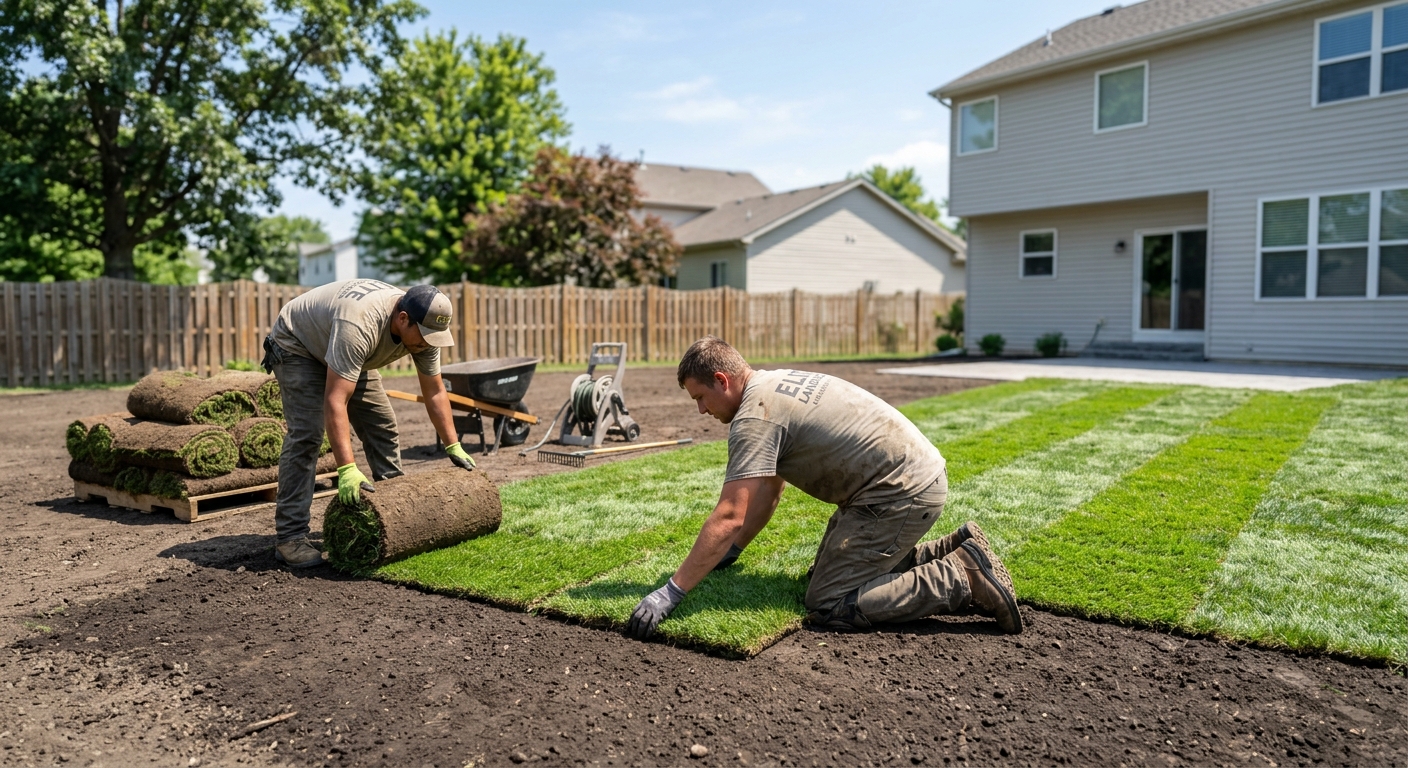
Landscaping options and costs in Deseronto
In Deseronto, Ontario, many homeowners are working with yards attached to single-detached homes, and with 73.8% of dwellings being detached, there’s often room to add both hardscape and planting. With 70.1% of households owning their homes (Statistics Canada, 2021 Census), you’ll also see more value placed on curb appeal and long-term maintenance—especially for older properties. In fact, 73.6% of homes in the area were built before 1981 (Statistics Canada, 2021 Census), so we frequently modernize beds, fix drainage around mature foundations, and replace outdated walkways.
Kingston–Pembroke sits mostly in plant hardiness zones 5a–5b, meaning we select winter-hardy shrubs, perennials, and trees that handle freeze–thaw cycling and winter wind exposure. That climate also shapes scheduling: we typically plant and establish turf in the frost-free window (roughly May–October), and we build heavier granular bases for patios and retaining walls to manage heaving risk. Contractor availability across the corridor is generally stronger for standard patios, sod, and planting packages than for complex engineered drainage, so quote ranges can widen when a site needs significant grading or subsurface work.
In Deseronto, work is often especially in demand near waterfront and central residential pockets where driveways and soil conditions vary—homes in these areas commonly need drainage corrections and refreshed walkways. With that in mind, here’s a practical comparison of common landscaping services you’ll see in local estimates, before we get into what drives those numbers up or down.
| Service |
Description |
Season |
Price Range |
| Full landscape design and installation |
Site walk, concept + planting plan, grading/drainage allowances, soil prep, beds, planting, mulch, and chosen hardscape components |
May–October |
$4,500–$28,000 |
| Sod installation (supply, grade, lay, roll) |
Remove/prepare existing turf, grade to drainage, add topsoil/compaction layer, install sod, roll and water-in |
Late April–June or Aug–Sept (weather permitting) |
$3,000–$7,500 |
| Lawn seeding (grade, seed, starter fertilizer) |
Light grading, seed selection, starter fertilizer, raking, protective watering plan |
May–June or Aug–mid Sept |
$2,000–$6,000 |
| Interlocking patio or walkway |
Excavate, granular base, compaction, edging, interlocking stones/bricks, joint sand, clean-up |
May–October |
$6,000–$30,000 |
| Retaining wall (interlocking block) |
Remove/prepare, granular base, block layout, drainage behind wall (weep/drain lines as needed), backfill + compaction |
May–October |
$7,000–$35,000 |
| Tree and shrub planting |
Plant layout, soil amendments, planting, staking (where needed), mulch rings, first watering plan |
May–October (spring and early fall preferred) |
$1,200–$8,000 |
Prices are estimates only and vary by project scope, site access and material selection.
What affects the price of landscaping in Deseronto
In the Kingston–Pembroke region, quotes for the “same” landscaping job can vary by about 30–50% because the real drivers aren’t just materials—they’re site conditions, how much labour is required to make drainage and subgrades correct, and how much of the work is truly included. Across Ontario, landscaping pricing also swings with contractor scheduling, disposal costs, and whether crews can use equipment efficiently (wide access vs. tight gates and steep driveways).
Climate and planting economics matter too. Deseronto’s zone 5a–5b reality (with freeze–thaw cycling) limits the working season to roughly May–October, so labour demand rises during peak months. Also, the frost dates determine what can be installed without compromising establishment—especially for sod and newly planted trees. When you’re comparing with prairie regions, the short growing season and wind exposure in those areas often pushes costs toward hardier, more drought-tolerant choices. In contrast, we usually see adequate rainfall, but summer dry spells still happen, so we plan mulch depth, soil improvement, and efficient irrigation design rather than only using “dry” palettes.
Concrete examples: (1) Older lots (many pre-1981) may have compacted clay or inconsistent grading; correcting slope and subgrade can add thousands to a project, even before you buy any plants. (2) If a patio base needs a deeper granular section to prevent heaving, that can shift a walkway from a typical $6,000–$30,000 band closer to the upper end. (3) If you’re installing a wall with proper drainage behind it, that “hidden” system often explains why one retaining wall quote might sit near $7,000–$35,000 while another looks similar on the surface but omits drainage components.
| Price Factor |
Why It Matters |
Cost Impact |
| Yard size in sq ft — the primary cost driver for softscape |
More area means more excavation, topsoil, labour hours, and plant/sod/seeding quantities |
Typically the biggest variable; small changes in area can swing totals by thousands |
| Grading and drainage work — slope corrections add significant cost |
Wrong slope causes pooling near foundations and can ruin new turf and beds |
Often adds substantial labour + hauling; can be a major reason quotes differ |
| Drainage bed or French drain installation |
Manages water movement through clay/loam soils and freeze–thaw cycles |
Increases excavation depth, pipe/stone, and restoration; commonly mid-to-high cost add-on |
| Plant material tier — native shrubs vs. ornamental vs. mature specimen trees |
Mature stock costs more and needs more labour (root protection, staking, planting depth) |
Can shift projects from “budget” to “premium” quickly, especially with trees |
| Hardscape vs. softscape ratio — walls and patios cost more per sq ft than lawn |
Stone, base materials, and compaction are labour-intensive and require more layers |
Higher hardscape share usually pushes total toward the upper hardscaping bands |
| Irrigation system design and installation |
Drip lines and smart controllers improve establishment during summer dry spells |
Can meaningfully increase cost, but prevents wasted plants and patchy lawns |
| Soil amendment and topsoil required |
Clay-heavy sites need conditioning for roots and long-term lawn performance |
Hauling and material quantity can add hundreds to thousands depending on depth |
| Tree removal or stump grinding before new planting |
Clearance affects planting layout and prevents root competition and future lifting |
Can be a significant add-on with disposal and equipment time |
Permits & regulations in Ontario
In Ontario, most residential landscaping work—such as planting beds, sodding, seeding, and typical softscape installations—generally does not require a permit. That means you can usually build mulch beds, install lawn and plantings, and place garden edging without municipal approvals. The permits conversation becomes important for retaining structures and changes that affect drainage.
Work that typically does require a permit includes retaining walls above a local height threshold—commonly around 1.0 m (3.3 ft) in many municipalities—because the structure can fall under building rules and may need engineered drawings depending on height, soil conditions, and design. Also, if you plan grading/lot alteration that changes how water drains toward a neighbour or toward a storm connection, it may trigger approval requirements.
Before digging in Deseronto, call for utility locates so you don’t hit buried services when installing planting holes, French drains, or wall footings. Confirm irrigation and water-use bylaws if you’re adding a system—while Deseronto isn’t subject to the strict restrictions you hear about in the BC interior, Ontario municipalities still encourage efficient watering during dry periods.
To verify contractor credentials step-by-step: (1) check the Ontario business/licence information online for the contractor/firm, (2) request a current certificate of insurance listing you as a certificate holder for liability coverage, (3) confirm WSIB/WCB coverage where applicable and ask for proof/clearance information, and (4) keep all documents on file before work starts.
Planning a landscape that thrives in Deseronto's climate
To build a yard that thrives in Deseronto, you want to work with zone 5a–5b hardiness, Ontario rainfall patterns, and the frost calendar—not against it. Start with plant selection: choose native and zone-appropriate shrubs, perennials, and trees that tolerate freeze–thaw cycling and winter wind. That reduces winter burn, dieback, and the need for replanting after spring cleanup. Where possible, use plants that are tolerant of clay/loam once properly amended—because roots perform better when soil is loosened and fed.
Sod vs. seed is another climate-based decision. Sod gives near-instant curb appeal, but it costs roughly 3–4 times more per square foot than seeding and is less forgiving if installation timing is off. In our area, seeding is often preferred when you have time to establish the lawn in May–June or again in August–mid September. As a ballpark, sod projects frequently land around $3,000–$7,500, while seeding is commonly in the $2,000–$6,000 range depending on area and soil prep—if your base is good, seeding can be the better value.
Drainage and grading are critical around Kingston–Pembroke homes because pooling can creep toward foundations during spring melt. For patios and retaining walls, base preparation should account for frost heave: deeper, well-compacted granular layers and proper drainage behind walls help keep stone and block stable over cycles.
For low-maintenance design, use mulch, groundcovers, and layered perennials to reduce weeding and watering. Rain-garden elements and selective xeriscape-style pockets (where appropriate) can help manage stormwater and summer dry spells—especially when paired with drip irrigation and smart scheduling.
| Element |
Climate Consideration |
Maintenance Level |
Price Band |
| Sod lawn installation |
Needs timely installation in a frost-free window and solid compaction to prevent heaving |
Low during establishment; moderate after (watering adjustments, mowing) |
$3,000–$7,500 |
| Native perennial garden |
Zone-appropriate plants overwinter well and handle spring melt and winter wind |
Low; seasonal pruning, light mulch top-ups |
$1,200–$5,000 |
| Mulched shrub border |
Mulch buffers freeze–thaw and helps soil retain moisture through summer dry spells |
Low to moderate (weed control first year) |
$1,800–$6,500 |
| Interlocking stone patio |
Requires deep granular base and correct slopes to manage freeze–thaw movement |
Low (occasional joint sand top-up) |
$6,000–$30,000 |
| Retaining wall (block) |
Needs granular base and drainage behind wall to reduce frost-driven shifting |
Low after installation (inspect drainage outlets as needed) |
$7,000–$35,000 |
| Drip irrigation system |
Targets root zones and reduces waste during Ontario summer dry spells |
Low (spring/start-up checks and winter winterization) |
$1,000–$6,000 |
How to choose a landscaping contractor in Deseronto
Start with credentials. In Ontario, you want a landscaping contractor who can show liability coverage (certificate of insurance—ask for it before work begins), and who has WSIB/WCB coverage where required for their workers. How to check: (1) ask for their certificate of insurance and verify the policy is current; (2) confirm WSIB/WCB status (request clearance or proof documents), and (3) verify the business/licence information through Ontario’s business registry or the contractor’s publicly listed registration details. If they won’t share documents, that’s your first warning sign.
Get 2–3 itemised written quotes. An itemised quote should separate labour, materials (stone, block, sod/seed, topsoil), and key allowances (excavation depth, drainage components, disposal/haul-away). Avoid lump-sum-only proposals that don’t define what’s included—especially for grading and drainage, where the cost driver is often subgrade prep and compaction.
Read exclusions: Is permit/approval work included if needed? Is disposal of removed sod, soil, or stump grinding included? Are repairs to lawn areas or edges part of the scope? Ask about warranty: workmanship warranty length, product/manufacturer warranty details, and whether warranties transfer to you if you sell the home.
Payment schedule matters: never pay more than 10–15% upfront. Hold back a portion until the job is complete and cleanup is done. Finally, demand a timeline in writing with a start date and target completion date—weather can shift schedules in zone 5a–5b, but the contractor should still plan and communicate realistically.
- Ask for a recent reference list of similar Deseronto projects (patios, walls, or lawn builds).
- Confirm liability insurance certificate is current and includes you as certificate holder if offered.
- Verify WSIB/WCB clearance/proof before crews start work.
- Use itemised quotes: labour line items, materials quantities, and disposal/haul-away clearly listed.
- Require drainage and grading details in writing (slopes, granular base depth, compaction notes).
- Confirm sod/seed specs: cultivar, application rate, and seeding mix/fertilizer type.
- Ask who provides topsoil/soil amendments and what it is (source/quality assumptions).
- Clarify permit responsibility if a retaining wall triggers an approval.
- Check warranty: workmanship duration and whether it covers settlement, lifting, or joint issues.
- Payment: cap deposits at 10–15%, and keep retainage until final inspection and cleanup.
- Get a written start and completion window, plus weather-stop and reschedule expectations.
- Ensure they clean and protect landscaping during construction (no unmanaged rutting or mud on sidewalks).
Red flags to watch for in Deseronto: (1) no proof of insurance or they won’t provide WSIB/WCB documentation, (2) quotes that omit granular base depth/compaction and drainage notes for patios or walls, (3) high deposits beyond 10–15% without a written contract and schedule, (4) vague scope language like “install as needed” with no measurements, and (5) lack of warranty terms or refusal to put warranties in writing.
Frequently asked questions — landscaping in Deseronto
How much does landscaping cost in Deseronto?
Landscaping in Deseronto typically spans a wide range depending on whether you’re doing softscape only (beds, mulch, seeding/sod) or adding drainage and hardscape. For many homeowners, a full design-and-install package commonly lands in the $4,500–$28,000 band when grading, planting, and selected features are included. Lawn work alone is often more predictable: sod installs usually fall in the $3,000–$7,500 range, while seeding projects are commonly $2,000–$6,000 depending on how much grading and soil amendment is needed. Your biggest cost swing is usually site prep—especially around older (pre-1981) properties where soil compaction and drainage issues show up.
What plants thrive in Deseronto's climate zone?
Because Deseronto sits mainly in plant hardiness zones 5a–5b (Statistics Canada, 2021 Census shows local housing context, but the climate comes from regional hardiness data), your best results come from zone-appropriate, winter-hardy species that tolerate freeze–thaw and winter wind. In practice, homeowners do well with native shrubs and perennials, and with trees that establish reliably after spring and fall planting windows. We typically prioritize plants that can handle Ontario’s clay/loam soils once amended, and that don’t require constant watering through summer dry spells. If your yard is exposed, we’ll often recommend additional winter protection strategies (mulch depth, correct planting height, and wind-tolerant placement) to reduce winter dieback.
Sod vs seed — which is better for a Deseronto lawn?
Sod is usually better when you want instant results and can keep the new lawn properly watered during establishment. However, it costs more per square foot and can be less forgiving if it’s installed at the edge of the season. Seeding is often the better value if your base is well graded and you can follow the watering plan during germination. In Deseronto, sod projects often fall around $3,000–$7,500, while seeding is commonly in the $2,000–$6,000 range depending on area and soil prep. For many older lots, getting drainage and soil conditioning right first matters more than choosing sod vs seed.
How much does a retaining wall cost in Deseronto?
A retaining wall in Deseronto commonly sits in the $7,000–$35,000 range depending on wall length, height, and how much drainage work is required behind the wall. The cost difference you see between quotes is often due to the “non-visible” parts: granular base depth, proper compaction, drainage stone/weep elements, and backfill quality. Freeze–thaw cycling and clay/loam soils can make base and drainage details especially important in the Kingston–Pembroke region, so the cheapest quote may not include the right layers. If you’re near a foundation or dealing with a steeper slope, budget toward the upper part of the band to avoid future shifting.
When is the best time to landscape in Deseronto?
For most landscaping in Deseronto, the practical season is roughly May–October, aligned with the area’s frost-free growing window. Spring is ideal for planting trees and shrubs, and for building patios/paths once ground conditions are workable. Summer is good for mulch, bed expansion, and irrigation installation, but sod establishment needs careful watering during dry spells. Late summer into early fall is often one of the best times for lawns (particularly seeding), because temperatures are cooler and soil moisture can hold better for germination. We generally recommend avoiding major turf installation right at the first cool snaps, because winter wind and freeze cycles can stress weak root establishment.
Do I need a permit for a retaining wall in Ontario?
In Ontario, many landscaping tasks don’t require permits, but retaining walls often do—especially once you reach the common height threshold around 1.0 m (3.3 ft) in many municipalities. Since rules can vary based on height, design, and local drainage impacts, you should confirm with your municipality (or ask your contractor to confirm the requirement in writing before starting). Also note that changes to lot grading that affect drainage toward neighbouring properties or storm services may trigger approval requirements. If you’re planning a wall with drainage behind it, you’ll also want utility locates before digging wall footings. A good contractor will tell you when permits are likely and include that responsibility clearly in the scope.