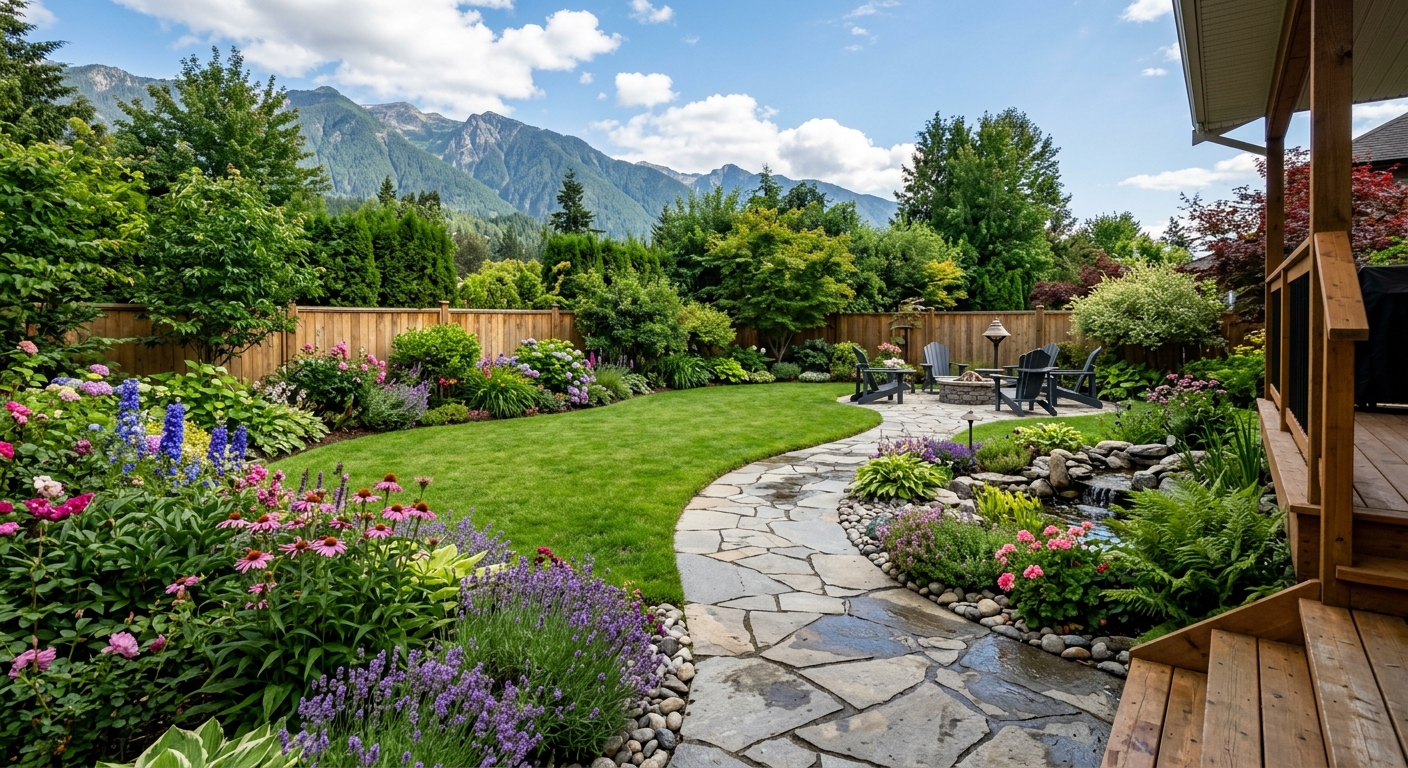
Landscaping options and costs in Kingston
Landscaping in Kingston, Ontario is where practical design meets real winter performance. With Kingston having 132,485 residents and a strong homeowner base (32,295 owner households, or 55.8% of households own (Statistics Canada, 2021 Census)), many properties—especially the 48.0% of dwellings that are single-detached homes—have the space and incentive to invest in curb appeal upgrades like patios, gardens, and mature tree plantings. On top of that, Kingston–Pembroke sits largely in plant hardiness zones 5a–5b, so we plan for freeze-thaw cycles, winter wind exposure, and spring thaw conditions that can change soil softness quickly. That’s why prices here can move noticeably across the city depending on access and how much grading or drainage correction is needed before any sod, stone, or planting goes in.
Contractor availability also matters. In demand areas such as the west end around Sydenham Road and extending through parts of the Westwood/Montcalm corridor, crews often have tighter schedules during the ideal planting and turf windows (roughly May–October, when establishment is realistic). If your project touches clay/loam soils or involves foundation-adjacent drainage, we typically recommend deeper, well-compacted granular bases and properly detailed drainage—work that costs more than “surface” landscaping but prevents heaving and pooling later. With that context, the table below compares common options and realistic price bands you’ll see in Kingston quotes.
| Service |
Description |
Season |
Price Range |
| Full landscape design and installation |
Consultation, site measurement, concept + planting plan, grading/drainage guidance, materials take-off, and installation of softscape and hardscape components |
May–October |
$4,000–$30,000 |
| Sod installation (supply, grade, lay, roll) |
Minor grading/leveling, topsoil amendments where needed, sod delivery, lay pattern, rolling, and initial watering plan |
Late spring to early fall |
$2,500–$8,000 |
| Lawn seeding (grade, seed, starter fertilizer) |
Rake/grade prep, seed blend selection, starter fertilizer, light topdressing if required, and establishment care |
Late spring or early fall |
$1,500–$6,000 |
| Interlocking patio or walkway |
Excavation, granular base design, compaction, edging, paver installation, jointing sand, and clean-up |
May–October |
$5,000–$20,000 |
| Retaining wall (interlocking block) |
Excavation to stable depth, base/granular drainage layers, block installation, weeping/drainage provisions where needed |
May–October |
$7,000–$35,000 |
| Tree and shrub planting |
Plant selection for zones 5a–5b, digging, soil amendment, staking where necessary, and initial watering/establishment guidance |
May–October (with planning) |
$1,000–$8,000 |
Prices are estimates only and vary by project scope, site access and material selection.
What affects the price of landscaping in Kingston
In Kingston–Pembroke, the same landscaping scope can come in 30–50% apart between contractors and crews. The main reason is that “landscaping” often bundles very different realities—how much grading is required, whether drainage is failing, how tight the access is for stone delivery, and what level of materials you’re getting. Kingston’s zone 5a–5b climate defines both what can be installed successfully and how long crews can work before soils get too wet or too cold. Your frost-free growing season is roughly May–October, so labour availability and scheduling can tighten during spring and early summer.
To understand cost differences, it helps to compare regional conditions: Ontario’s moderate season supports a broader plant palette than Zones 2–4 (Prairies), but we still design for winter hardiness and freeze-thaw. Unlike coastal BC (Zones 7–8) where growth is longer, we pay attention to winter survival, salt/wind exposure, and spring drainage. Unlike the BC interior where water restrictions drive irrigation changes, Kingston typically isn’t restricted as harshly; however, smart irrigation design still matters for consistent establishment during Ontario summer dry spells.
Here are concrete Kingston examples: (1) If your yard has clay/loam and a sloped driveway that sends water toward a foundation, correcting grading plus adding proper drainage can push a patio project toward the higher end of the retaining wall & hardscaping band, especially if the base needs to be rebuilt to prevent future heaving. (2) A 1–2 mature tree install can stay in the lower planting band, but if it requires removal of an existing stump first, you may see the total shift closer to the middle of the $1,000–$8,000 planting range. (3) Sod looks simple, but when you add topsoil, compaction, and precise grade, the project can move from the $2,500–$8,000 sod band toward the upper range—especially on uneven lawns common in older home areas where 52.7% of homes were built before 1981 (Statistics Canada, 2021 Census).
| Price Factor |
Why It Matters |
Cost Impact |
| Yard size in sq ft — the primary cost driver for softscape |
More area means more labour hours for prep and more materials (soil, seed/sod, mulch, plants) |
Low to high variance; can multiply total cost quickly on larger lots |
| Grading and drainage work — slope corrections add significant cost |
Regrading is labour-intensive and requires correct slope away from foundations |
Often adds several thousand dollars to a design/installation scope |
| Drainage bed or French drain installation |
Prevents pooling and helps manage freeze-thaw stress in wet soils |
Can shift a project toward the upper end of hardscaping bands |
| Plant material tier — native shrubs vs. ornamental vs. mature specimen trees |
Mature specimens require larger root balls and more careful planting/stabilization |
Strong influence; can double plant line-item totals |
| Hardscape vs. softscape ratio — walls and patios cost more per sq ft than lawn |
Stone bases, compaction, and edging increase material and equipment needs |
Usually pushes totals into retaining wall & hardscaping pricing |
| Irrigation system design and installation |
Design must match Kingston precipitation patterns and ensure even coverage |
Typically adds a noticeable but controlled cost if drip/sprinkler zoning is needed |
| Soil amendment and topsoil required |
Clay/loam improvements affect rooting, lawn density, and long-term survival |
Can materially increase material delivery and labour |
| Tree removal or stump grinding before new planting |
Removal/disposal and stump prep adds equipment and time |
Often moves small planting projects into the higher end of planting bands |
Permits & regulations in Ontario
In Ontario, most planting and softscape work typically does not require a permit. That means tasks like sodding, seeding, installing mulch beds, and planting shrubs and trees usually proceed without a building permit. Likewise, simple grading for landscaping that doesn’t alter lot drainage patterns or foundation conditions is often straightforward—but the key is whether you’re changing how water flows across your property.
Retaining walls are where permit requirements commonly come in. In many Ontario municipalities, retaining walls above a threshold height—typically around 1.0 m (3.3 ft)—require a building permit, and sometimes engineered drawings depending on conditions. Also, if your project includes significant changes to lot grading that affect drainage toward neighbouring properties or storm sewer connections, approvals may be triggered. Before digging for wall footings or planting holes, you should ensure utility locates are completed to protect underground services.
Step-by-step for Kingston homeowners: (1) Verify the contractor’s Ontario licensing status through the appropriate online government business/contractor search tools where applicable for their trade category; (2) request a certificate of insurance showing general liability and confirm the coverage limits are adequate; (3) ask for WSIB clearance (or the appropriate coverage documentation for the employer) and ensure it’s current; (4) obtain itemised, written scope and ask whether permits are included or handled by the contractor for permit-required work. For water-aware irrigation designs, confirm local irrigation and water-use bylaw requirements—while Kingston generally isn’t in the same situation as drought-restricted BC interior regions, you still want efficient, weather-responsive watering.
Planning a landscape that thrives in Kingston's climate
Planning for Kingston’s climate (zone 5a–5b in most areas) is about working with freeze-thaw, wind exposure, and the way Kingston soils behave when spring thaws hit. Start with plant selection: choose native and proven cold-hardy species that don’t require constant winter protection. For many homeowners, a mixed border with winter-tolerant shrubs and perennials reduces repeat watering and spring replanting. Next is the sod vs. seed decision. Sod gives instant curb appeal, but in Kingston it typically costs about 3–4 times more per sq ft than seeding because you’re paying for materials and installation at once. Seeding is slower, but it’s often the best value if you can manage establishment.
Drainage and grading are critical here. Kingston’s clay/loam soils can hold water; if you ignore drainage, you risk pooling, poor lawn rooting, and foundation moisture. Make sure downspouts and surface water are directed correctly, and use proper granular base prep for patios and retaining walls—base depths generally need to be more substantial to handle Ontario freeze penetration and heaving risk. Low-maintenance design strategies help without looking “plain”: mulch layers to reduce weeds and evaporation, groundcovers in problem areas, and perennials that return reliably year after year.
In terms of water context, consider rain-garden style planting beds in low spots to absorb runoff, plus drip lines for shrub borders. For a concrete budget example: if you’re choosing lawn options, spending toward the higher end of the $2,500–$8,000 sod band can be worth it when you need a finished look quickly for a front elevation or when your existing lawn is thin and erosion-prone. If time is flexible, seeding can achieve long-term coverage with less upfront cost, allowing you to redirect budget into drainage corrections or better planting stock—often the difference between “looks good this month” and a yard that performs for years.
| Element |
Climate Consideration |
Maintenance Level |
Price Band |
| Sod lawn installation |
Establishment depends on frost-free planting window (roughly May–October) and consistent watering until rooting |
Low after establishment; higher early watering and monitoring |
$2,500–$8,000 |
| Native perennial garden |
Cold-hardy species tolerate winter wind and freeze-thaw; mulch helps insulate roots |
Moderate (weeding first season, then lighter) |
$1,500–$6,000 |
| Mulched shrub border |
Winter structure and layered heights reduce wind burn; mulch protects against soil heave around crowns |
Low (annual top-up and targeted pruning) |
$1,000–$5,500 |
| Interlocking stone patio |
Needs deep, well-compacted granular base and drainage detailing to prevent heaving |
Low (occasional joint sand top-up and cleaning) |
$5,000–$20,000 |
| Retaining wall (block) |
Freeze-thaw demands proper drainage layers behind the wall and stable base depth |
Low after correct build; inspect weeping/drainage performance |
$7,000–$35,000 |
| Drip irrigation system |
Efficient watering supports establishment without saturating clay soils unnecessarily |
Low to moderate (winterization and seasonal checks) |
$1,500–$6,500 |
How to choose a landscaping contractor in Kingston
Choosing a landscaping contractor in Kingston should start with verification. First, confirm Ontario trade credentials where applicable, then protect yourself with insurance and work coverage. Ask for a certificate of insurance (general liability) and verify it names you as certificate holder if offered/appropriate; check that coverage is active on the job dates. Next, request documentation for WSIB coverage (or the employer’s appropriate coverage status/clearance letter if they’re exempt under specific circumstances). A credible contractor will provide these without hesitation.
Then get 2–3 itemised written quotes—not just a lump sum. You want line items that separate labour from materials: excavation, base materials, drainage work, stone/pavers, topsoil, seed/sod, and plant list quantities. Read the scope closely: what’s excluded (e.g., tree removal, disposal fees, utility locate fees, extra trucking distances)? Will the contractor pull any necessary permits for retaining walls or drainage-related approvals? Confirm whether topsoil is screened and how much depth is guaranteed.
Warranty matters too. Ask for the workmanship warranty length (for example, how they handle settlement or base issues on patios and walkways) and note whether product warranties apply and whether they are transferable to you. Keep payment schedules safe: never pay more than 10–15% upfront; agree on holdback until completion and final cleanup. Finally, insist on a written start date and realistic completion timeline based on Kingston’s May–October working season.
- Request WSIB clearance (or coverage documentation) and confirm it’s current
- Review the certificate of insurance for active dates and adequate liability limits
- Get a written contract with an itemised scope and quantities (not “allowance” only)
- Ask who handles disposal and whether dump fees are included
- Confirm utility locates responsibility before any digging
- For sod/seed: specify grade prep, topsoil amendment depth, and seed/sod type
- For patios: require base construction details (depth and compaction methods)
- For retaining walls: require drainage layer and weeping provision details
- Confirm plant list includes scientific/variety names and container sizes
- Clarify irrigation responsibility: supply + installation vs. connection-only
- Ask for a written warranty and what triggers service claims
- Keep payments in stages with holdback until final inspection and cleanup
In Kingston, a few red flags show up repeatedly: (1) quoting a “flat rate” without site measurement or drainage discussion, (2) no proof of WSIB and insurance when requested, (3) vague exclusions like “permit not included” without defining what might trigger permits, (4) asking for large upfront payments beyond 10–15%, and (5) no written warranty terms for patios/walls—only verbal reassurance.
Frequently asked questions — landscaping in Kingston
What is the best grass type for a Kingston lawn?
For Kingston lawns, homeowners usually do best with a blend of hardy turfgrasses adapted to Ontario winter conditions and summer dry spells. In practice, most durable choices are perennial ryegrass (for quick establishment and traffic tolerance) blended with fine fescues (for long-term performance in cooler weather and better persistence). Kingston’s working season is roughly May–October, and grass that can hold colour and density after spring thaw is important. If your lawn gets sun and some shade, a blend generally outperforms single-type sod alternatives because it’s more forgiving under freeze-thaw. If you’re budgeting, sod is often in the $2,500–$8,000 band depending on yard size and prep; seeding is often a cheaper path to the same long-term goal when time allows.
When should I aerate and overseed my lawn in Kingston?
In Kingston, aeration and overseeding are usually timed around the periods when grass can regrow strongly before winter. For most lawns, that means late spring (after the worst frost risk) or early fall—when soil temperatures support rooting but heat stress is lower. If your lawn is compacted (common in older properties and high-traffic areas), aerating first helps seed-to-soil contact and reduces bare patches. If you’re planning both, a typical approach is aerate, then overseed with a blend matched to sun/shade, followed by light fertilization and consistent watering until germination. Avoid overseeding too late in the fall; otherwise, seedlings may be vulnerable during Kingston’s freeze-thaw swings.
What trees grow best in Kingston's climate zone?
Kingston largely sits in hardiness zones 5a–5b, so the “best” trees are those proven to handle winter cold, wind, and wet spring soils. Popular, reliable options often include serviceberry (Amelanchier) for colour and cold tolerance, white/red pines for structure, and some varieties of maples and crabapples for fall interest—provided you match the mature size to your yard. If your property has clay/loam and drainage concerns, we favour trees with stronger root performance in typical Ontario soils and we address drainage around planting holes. For homeowners in older neighbourhoods where 52.7% of homes were built before 1981 (Statistics Canada, 2021 Census), we also pay close attention to underground service locations and space constraints before any planting plan is finalized.
How much does sodding a yard cost in Kingston?
Sodding costs in Kingston commonly land in the $2,500–$8,000 range, depending on lawn size and how much prep is needed. Simple, flat yards that only require minor grade correction usually sit closer to the lower end. If the job includes more topsoil amendments, more extensive grading, or repairs to low spots that hold water, it can move toward the higher end. Timing also matters: sodding is best during late spring to early fall so the roots can establish before Kingston’s first frosts. If you want a budget trade-off, seeding is generally less expensive upfront; sod is a “fast outcome” option when you need the yard looking finished quickly.
How do I prevent weeds in my Kingston garden?
Weed control in Kingston is best handled as a system: reduce bare soil, improve ground cover, and use mulch strategically. Start with good bed preparation—remove established weeds by digging or targeted removal before planting. Then add a 2–3 inch layer of quality mulch (not thin landscaping dust) to block light and slow weed growth. Choose competitive plants for your site (sun/shade) so weeds can’t easily take over. For existing perennial borders, avoid disturbing soil repeatedly; disturbance brings weed seeds up. If you use edging, keep it tight so lawn grasses don’t spill into beds. For problem areas, a drip line paired with mulch helps you water plants without constantly wetting weed-prone ground.
How do I design a low-water yard in Kingston?
“Low-water” in Kingston usually means efficient irrigation and smart soil/plant pairing—not a desert-style yard. Start by improving soil structure with compost/topsoil so it holds moisture longer through summer dry spells. Use mulch to reduce evaporation and choose zone-appropriate shrubs and perennials that tolerate cold winters and are drought-tolerant once established. If you want irrigation, drip systems for shrub beds are typically the most efficient because they deliver water directly to roots instead of wetting surrounding soil. In lawns, match sprinkler heads to your coverage pattern and use smart controllers that respond to weather. If your project includes hardscape and drainage corrections, it often supports low-water design by preventing oversaturation and pooling that can stress plants.