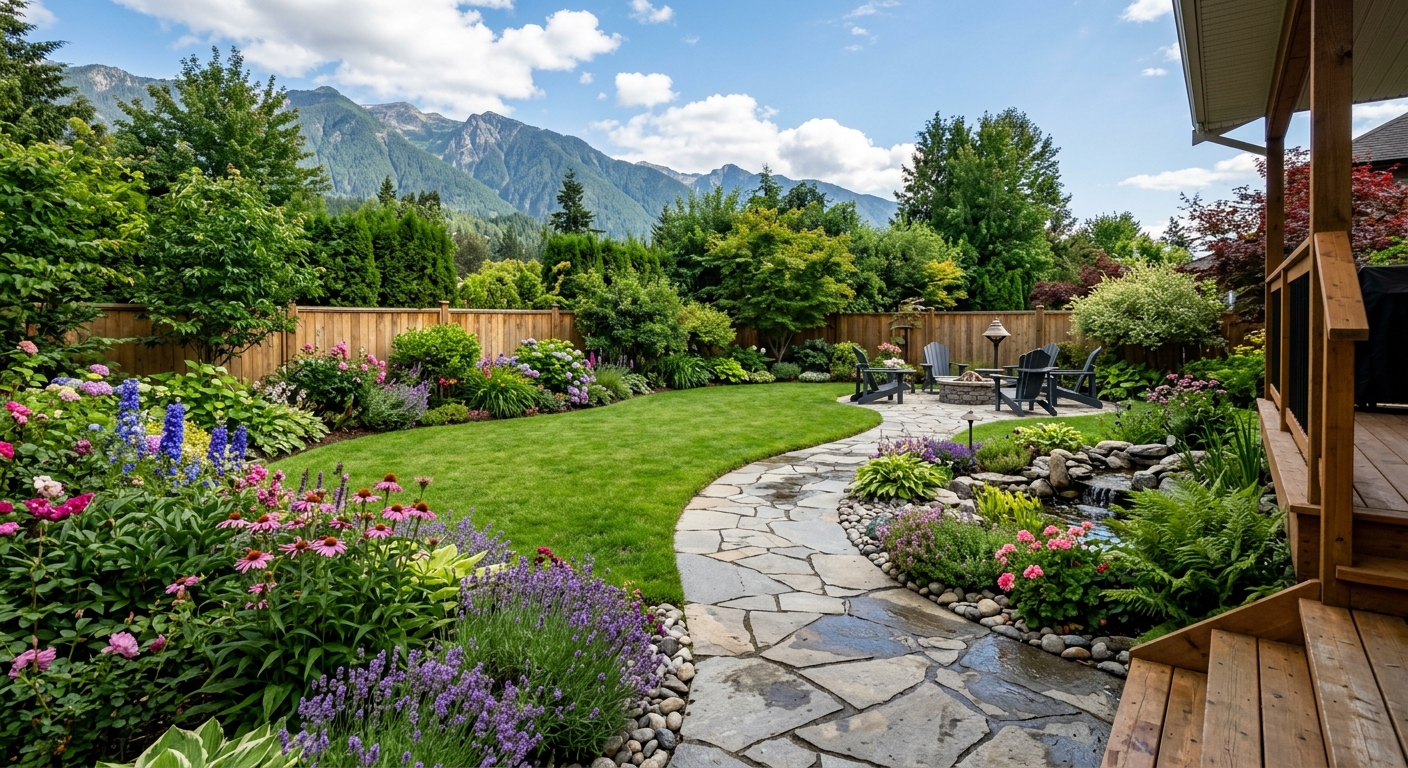
Landscaping options and costs in Fallingbrook
In Fallingbrook, landscaping choices start with what your property can physically support—most homes sit on lots with enough yard depth to add curb appeal, privacy planting, and functional walkways. According to the 2021 Census, the Toronto economic region includes a large share of households living in single-detached homes (Statistics Canada, 2021 Census), which typically means homeowners are more willing to invest in complete front-and-back makeovers rather than only small touch-ups. With a total population of about 25,000 in Fallingbrook (Statistics Canada, 2021 Census), you’ll also find a steady mix of local contractors for spring and fall installs, though demand spikes when frost lifts and when homeowners rush to finish before summer weather.
Pricing is shaped by the GTA’s plant hardiness zones (6a–7a) and freeze–thaw cycles. Deep winter frost near –23 to –18°C means concrete/stone work needs properly compacted granular bases, and retaining walls typically require deeper, engineered-style footings and drainage. Labour availability also affects cost: the GTA’s main working season is roughly May to October, so schedule compression in late spring can push rates upward.
In Fallingbrook, work is especially in demand along established residential corridors—often where older neighbourhoods have more uneven grades and mature trees that need removal before replanting. If you’re planning a redo that mixes grading, sod, and stone, it helps to compare the common service bundles below before you request itemised quotes.
| Service |
Description |
Season |
Price Range |
| Full landscape design and installation |
Site visit, concept + layout, plant/stone selection, grading plan, soil amendments, planting, and hardscape/softscape install |
May–Oct |
$8,000–$40,000 |
| Sod installation (supply, grade, lay, roll) |
Weed kill/clean-up, minor grading, soil prep, sod supply and installation, rolling and initial watering plan |
Apr–Jun / Aug–Sep |
$2,500–$8,000 |
| Lawn seeding (grade, seed, starter fertilizer) |
Topdressing, seeding, starter fertilizer, light raking, and establishment watering guidance |
Apr–May / Aug |
$1,800–$5,500 |
| Interlocking patio or walkway |
Excavation, base/gravel compaction, geotextile, edging, pavers, and joint sand + minor adjustments to meet drainage |
May–Oct |
$6,000–$20,000 |
| Retaining wall (interlocking block) |
Block wall layout, excavation, compacted base, drainage gravel/weep system, geogrid as required, and finish landscaping |
May–Sep |
$6,000–$30,000 |
| Tree and shrub planting |
Soil preparation, compost and root-zone amendment, staking as needed, planting holes, and mulching |
Apr–Jun / Sep–Oct |
$800–$6,000 |
Prices are estimates only and vary by project scope, site access and material selection.
What affects the price of landscaping in Fallingbrook
Even when two homeowners request the same “final look” in the Toronto area, quotes can diverge by 30–50% because the real drivers—grading, drainage, plant sizing, base construction, and how much labour fits into the short GTA season—aren’t always obvious at the consultation stage. Design complexity also changes costs: a simple lawn refresh versus a full front re-grade with a patio tie-in can dramatically shift excavation and material quantities.
Toronto’s plant hardiness zones 6a–7a and the frost calendar define both what can survive and what contractors can schedule reliably. In Prairie regions (Zone 2–4), the shorter growing season and colder winters often force drought-tolerant, wind-hardy palettes and simplify layouts; retaining-wall base work must still reach below the frost line, but the overall approach is different. Coastal BC (Zone 7–8) can support lush broadleaf growth for longer, yet heavy-rain areas still demand disciplined drainage. In the dry BC interior, water restrictions usually mean drip irrigation design and low-precipitation heads. For Southern Ontario, you typically get a moderate season with irrigation needed during summer dry spells—so the cost hinges on how your lawn and planting are established and watered, not just on “plant type.”
In Fallingbrook specifically, clay and fill soils can raise costs: you may need excavation and soil amendment before sod or interlocking stone can sit correctly. Also, freeze–thaw cycles create a bigger premium for hardscape stability: compared with a smaller planting job that might fall in the $800–$6,000 band, a patio or wall that involves deeper bases can push into the $6,000–$30,000 range or higher when drainage upgrades are required. Home age matters too—older lots often have settled grades and compacted subsoil, so contractors may add topsoil, granular leveling, and sometimes a subdrain to protect foundations.
| Price Factor |
Why It Matters |
Cost Impact |
| Yard size in sq ft — the primary cost driver for softscape |
More area means more topsoil, sod/seed, labour, and watering/maintenance materials |
Low to high; large lawns can shift the project by thousands |
| Grading and drainage work — slope corrections add significant cost |
Fixing runoff patterns prevents pooling and foundation moisture issues in winter freeze–thaw |
Often the biggest variable; can add major excavation and haul-off |
| Drainage bed or French drain installation |
Intercepts groundwater and reduces hydrostatic pressure behind walls and near patios |
Meaningful add-on cost; typically increases total by thousands |
| Plant material tier — native shrubs vs. ornamental vs. mature specimen trees |
Mature sizes cost more and require more labour for handling, staking, and proper root preparation |
Can swing from budget-friendly to premium install budgets |
| Hardscape vs. softscape ratio — walls and patios cost more per sq ft than lawn |
Stone and retaining work require deep bases, compaction, and drainage detailing |
Hardscape-heavy designs push pricing toward the higher bands |
| Irrigation system design and installation |
Zones, backflow prevention considerations, and head selection affect materials and labour |
Often adds several thousand when retrofitting |
| Soil amendment and topsoil required |
Improves drainage and root growth, especially in clay/fill conditions common in Southern Ontario |
Can add significant material and hauling costs |
| Tree removal or stump grinding before new planting |
Clearing affects access, excavation, and safety; it can also change what can be replanted |
Variable; may reframe the whole plant layout and budget |
Permits & regulations in Ontario
In Ontario, most everyday landscaping work—planting new trees and shrubs, sodding, seeding, and typical softscape upgrades like mulching—does not usually require a permit. Homeowners in Fallingbrook can typically proceed with these projects without municipal approval, as long as drainage isn’t redirected in a way that harms neighbouring properties.
Where permits often become relevant is when you change structures and lot grades. Retaining walls above a common municipal threshold—often 1.0 m (3.3 ft), depending on the specifics of your lot and municipality—typically require a building permit and sometimes engineered details. Also, changes to lot grading that affect how water drains (for example, directing runoff toward a neighbour or tying into storm connections) can trigger approval requirements.
Before digging for planting holes, footing trenches, or French drains, arrange utility locates. This isn’t optional—hitting buried services is dangerous and expensive, and it can delay your timeline.
To verify a contractor in Ontario, do it in this order: (1) confirm they’re properly registered (where applicable) and in good standing, (2) ask for a current certificate of insurance—liability coverage should be active and match your project value, and (3) check WSIB/WCB coverage documentation for the crew performing the work. If they can’t provide clear proof, ask for it in writing before you sign. A contractor who won’t show documentation upfront is usually a schedule risk.
Planning a landscape that thrives in Fallingbrook's climate
For a yard that thrives in Fallingbrook, plan around the GTA’s hardiness zones (6a–7a), the pattern of spring-to-fall growing, and the reality of winter freeze–thaw. Start with plant selection: choose hardy, zone-appropriate perennials and shrubs (many native options do well) so you’re not “buying” winter protection every year. Add mulch, and group plants by sun and moisture so you don’t overwater one area to compensate for another.
When deciding between sod and seed, factor in both cost and timing. Sod gives an instant finish, but in practice it’s typically 3–4x more per sq ft than seeding because of material price, prep intensity, and installation labour. Seeding is slower for visual impact but can be a smart move if your budget is tight or if you’re improving soil first. For example, a lawn refresh might be closer to $2,500–$8,000 for sod depending on size, while seeding and starter inputs can land in a lower band (often around $1,800–$5,500 for typical front-yard areas).
Drainage and grading are non-negotiable in Toronto-like clay and fill conditions. Grading that keeps water away from foundation walls prevents pooling and helps plants survive wet winters. Hardscape base prep also matters: patios and block retaining walls need compacted granular base and proper drainage detailing to avoid shifting in freeze–thaw.
For low maintenance, use groundcovers, layered mulch, and repeatable plant masses instead of scattered ornamentals. In water-conscious stretches of the GTA summer, consider rain-garden pockets or drip irrigation for beds—especially where lawns can be replaced with drought-tolerant planting or structured groundcover. In Fallingbrook’s market, this approach often improves curb appeal while reducing annual upkeep.
| Element |
Climate Consideration |
Maintenance Level |
Price Band |
| Sod lawn installation |
Grows best with reliable spring/warm spells; establishment watering is key before winter cold sets in |
Medium during establishment, then lower |
$2,500–$8,000 |
| Native perennial garden |
Zone-appropriate plants handle local winters better with less repeat watering when mulched |
Low to medium (seasonal pruning/cleanup) |
$1,200–$6,000 |
| Mulched shrub border |
Mulch buffers temperature swings and helps reduce moisture loss during humid summers |
Low after establishment |
$1,000–$5,500 |
| Interlocking stone patio |
Requires deep base and drainage to resist frost lift and freeze–thaw movement |
Low (occasional cleaning and joint sand top-up) |
$6,000–$20,000 |
| Retaining wall (block) |
Needs compacted base below frost influence and proper weeping/drainage gravel |
Low (periodic inspection of drainage) |
$6,000–$30,000 |
| Drip irrigation system |
Helps manage watering during summer dry spells and improves bed performance in Toronto soils |
Low ongoing (check lines and seasonal adjustments) |
$3,000–$10,000 |
How to choose a landscaping contractor in Fallingbrook
Choosing a contractor in Fallingbrook comes down to verification, clarity, and workmanship standards. First, confirm Ontario licensing/registration where it applies to landscape construction and any applicable trade work, then verify liability insurance by requesting a current certificate of insurance that covers your job site. Next, ensure the crew has WSIB/WCB coverage for workers who will be on site—ask for documentation rather than verbal promises. If a contractor can’t provide these items quickly, you’re taking on unnecessary risk.
For quotes, ask for 2–3 itemised written proposals with a labour + materials breakdown (not a single lump sum). Good quotes show excavation and base construction details for patios/walls, the sod or seed product (including variety), and what soil amendment is included. Read exclusions carefully: is disposal/haul-away included? Is permit work included for retaining walls that exceed the common height threshold? Are repairs to lawn edges or foundation trim included after grading? Ask who is responsible for restoring damaged turf, fences, or walkways caused by construction access.
Warranty matters. Look for a clear workmanship warranty length for install items (sod/seed establishment terms, paver settling policy, and wall drainage components) and separate manufacturer/product warranties for trees, shrubs, and hardscape materials. Also clarify whether warranties are transferable if you sell your home.
Payment scheduling should be conservative. Never pay more than 10–15% upfront; hold back a portion until key milestones are complete and you’ve had a chance to inspect workmanship. Finally, ask for a written start date and a completion estimate—weather can shift timelines, but you should still have a target window.
- Request proof of liability insurance (current certificate) before signing.
- Confirm WSIB/WCB clearance for workers who will be on site.
- Get itemised labour + materials pricing for each line item.
- Ask what’s included for site protection (driveway protection, tarps, walkway coverings).
- Verify sod/seed type and whether a starter fertilizer is included.
- For patios/walls, confirm base depth expectations, compaction approach, and drainage details.
- Ask if disposal/haul-off of excess soil is included.
- Clarify who handles topsoil sourcing, delivery fees, and soil amendment quantities.
- Confirm whether geotextile, joint sand, and edging are included for interlocking stone.
- Request a clear timeline with start date and estimated completion.
- Check warranty terms in writing for workmanship and plant replacement policies.
- Agree on a payment schedule with a 10–15% maximum upfront and milestone-based payments.
Red flags to watch for in Fallingbrook: (1) refusal to show insurance/WSIB documentation, (2) vague scopes like “we’ll handle drainage” without specifics, (3) quotes that don’t list sod/seed type or quantities, (4) demanding large upfront payments, and (5) no written timeline or warranty details.
Frequently asked questions — landscaping in Fallingbrook
How deep should a retaining-wall base be for local frost?
For Fallingbrook and the Toronto area, a retaining wall base must be designed to resist freeze–thaw movement. In practice, that means excavation to the required depth for the wall system you’re using—typically deeper than you’d expect for a small garden wall, and supported by a compacted granular base plus proper drainage gravel and weeping details. If your wall is near or above the common Ontario height threshold (often around 1.0 m/3.3 ft, depending on the municipality and conditions), you should assume engineering-style detailing may be required. The safest approach is to ask your contractor to describe base depth, compaction method, and how drainage will be handled so water doesn’t build up behind the wall during winter freezes.
How much does professional landscape design cost?
In Fallingbrook, design pricing varies based on whether you’re doing a full concept-and-spec package or only a consult. For many GTA projects, design plus installation budgets commonly fall within the $8,000–$40,000 range when the contractor is providing layout, plant/stone selections, and then building the plan. If you’re hiring design as a separate step, many homeowners still compare it against what they spend on installation: the right design can prevent costly rework (wrong plant spacing, grading issues, or paver base mistakes). A full design is especially valuable when you’re planning drainage changes and hardscape tie-ins, because those elements are the most sensitive to freeze–thaw and slope behavior in Southern Ontario.
How do I compare landscaping quotes?
To compare quotes in Ontario effectively, ask for itemised pricing and scope details—not just totals. Confirm each quote includes the same work: excavation and disposal, soil amendment/topsoil quantities, base prep for patios/walkways, geotextile and joint sand for interlocking, and drainage solutions like French drains where needed. For lawns, verify the turf approach (sod vs seeding) and the establishment plan (fertilizer, watering guidance, and time of year). If one quote lands at the low end of the $6,000–$30,000 band for hardscaping while another is higher, it may be because the higher quote includes deeper base prep, better drainage, or higher-tier materials. Finally, look at warranty terms and payment schedules; the cheapest quote with weak warranty often costs more later.
How long does a landscaping project take in Fallingbrook?
Timelines in Fallingbrook usually depend on season, weather, and what trades are involved. Most softscape and planting work can be completed within days to a couple weeks during the May to October window, but a full landscape that includes grading, drainage, and hardscape can take several weeks. Freeze–thaw risk means we avoid rushed installs when conditions are borderline, and interlocking stone or retaining walls require time for excavation, base compaction, drainage setup, and curing/settling considerations for different materials. If your job includes sod, installation is typically quick once prep is done, but establishment continues after the contractor leaves through proper watering guidance. Ask each contractor for a written start date and completion estimate, plus a weather contingency plan.
What is the best grass type for a Fallingbrook lawn?
In Southern Ontario like Fallingbrook, homeowners usually do best with cool-season turf grasses that can handle humid summers and winter conditions. The “best” choice depends on whether your yard is sunny, partially shaded, or frequently wet. Many contractors recommend a mix that balances wear tolerance for walk-on areas and durability for shaded sections, while still fitting Ontario winter recovery needs. The key is matching seed/turf type to your microclimate and maintaining proper mowing height and watering during establishment. If you’re comparing options, remember sod can be a fast path to coverage (often in the $2,500–$8,000 range depending on area), but long-term success comes from soil prep and drainage just as much as the grass variety.
When should I aerate and overseed my lawn in Fallingbrook?
For Fallingbrook lawns, aeration and overseeding work best in the shoulder seasons when temperatures support germination and young roots can establish before winter. In Southern Ontario, many homeowners target late summer into early fall (commonly August through September) to overseed, because the ground retains warmth while weeds and pests are more manageable than peak midsummer. If you aerate, do it on a day when the soil isn’t waterlogged—so you get clean cores without smearing. Then apply a suitable seed mix and light starter fertilizer, and keep watering consistent through germination. Avoid late fall schedules that leave seedlings too little time to develop before cold weather sets in. If you’ve installed sod recently, follow the establishment guidance first and aerate only once the root system has fully knit.