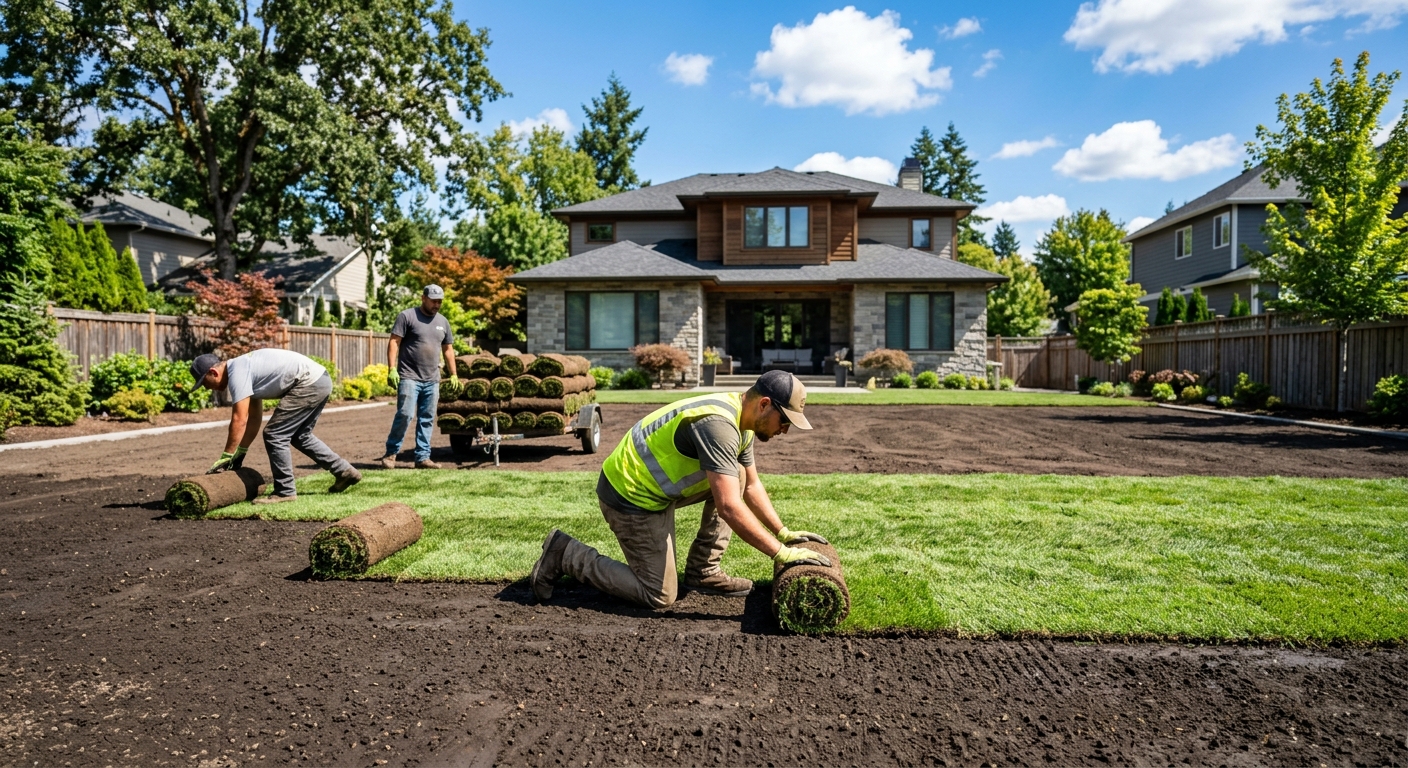
Landscaping options and costs in Downtown Cambridge
In Downtown Cambridge, landscaping decisions usually start with how you want to use your yard—entertaining, kids/pets, privacy, or simply curb appeal. With the 2021 Census showing a small but distinct local population of 3,117, you’ll often find fewer contractors than in larger cores, so scheduling and availability can influence pricing. Many homes are also built with yard space that invites upgrades; detached ownership patterns are common in the surrounding Cambridge communities, which typically means ongoing demand for seasonal maintenance and spring installs. (Statistics Canada, 2021 Census)
Kitchener–Waterloo–Barrie sits in Zone 5b–6a, so winter cold and freeze–thaw drive both material choices and how deep we build bases and drainage. Most full-scope work is concentrated roughly from mid-April through October—shorter than Ontario’s “ideal,” but long enough for a solid planting season. Freeze–thaw is a cost driver for retaining walls, patios, and walks because deep, well-compacted granular bases plus drainage detailing are required to prevent frost heave. At the same time, summer dry spells are common, so efficient irrigation design (zoned coverage and rain-sensing controls) can be a smart add-on rather than a luxury.
In Downtown Cambridge, demand is especially strong around the east-end residential pockets closer to Hespeler Road and the downtown core, where homeowners tend to prioritize neat front-yard presentation and quick seasonal curb impact. Below is a practical comparison of common options you’ll see in local quotes—use it as a starting point before we fine-tune scope and material selections.
| Service |
Description |
Season |
Price Range |
| Full landscape design and installation |
Site walk, layout plan, grading/soil prep, planting + lawn + basic hardscape as specified |
Mid-April–October |
$8,000–$60,000 |
| Sod installation (supply, grade, lay, roll) |
Remove debris, grade and compact base, supply topsoil/loam mix, lay sod, roll and initial watering plan |
Late April–September (weather dependent) |
$5–$10 |
| Lawn seeding (grade, seed, starter fertilizer) |
Light grading, seed selection, starter fertilizer, rake-in, and watering schedule |
April–June or late August–September |
$1–$3 |
| Interlocking patio or walkway |
Excavate, granular base, screed and compaction, edge restraint, interlocking stone installation |
May–September |
$120–$300 |
| Retaining wall (interlocking block) |
Excavation, block system with proper drainage layer + backfill, compaction lifts |
May–September |
$120–$300 |
| Tree and shrub planting |
Soil amendment, planting holes, staking/tying where needed, mulch rings, watering plan |
May–June and September (best survival window) |
$500–$15,000 |
Prices are estimates only and vary by project scope, site access and material selection.
What affects the price of landscaping in Downtown Cambridge
In Downtown Cambridge, it’s common to see quotes for the “same” landscaping idea swing by 30–50% across Kitchener–Waterloo–Barrie and Ontario. The biggest reason isn’t just labour—it’s how contractors price the unseen work: excavation depth, drainage detailing, base prep for frost protection, and the quality/size of plant material. In older housing areas and infill lots, small changes in site conditions can turn a straightforward softscape into heavy groundwork.
Climate and plant hardiness shape both materials and the working season in Zone 5b–6a. What survives our freeze–thaw cycles and what can be planted within the practical window are different from Prairie zones (Zone 2–4), where short growing seasons push homeowners toward drought-tolerant, wind-hardy species and earlier planning. Coastal BC (Zone 7–8) typically offers longer growing seasons and lush palettes, but contractors still have to price drainage carefully in wet areas—while the BC interior faces water-restriction-driven irrigation design and Alberta’s cold swings can raise winter-prep labour. For Southern Ontario, we typically get a moderate season, but summer dry spells mean efficient irrigation and soil amendments can affect long-term cost-to-maintain.
Here are concrete Downtown Cambridge examples of how costs rise or fall: (1) If your lot needs deeper base and improved drainage to prevent frost heave, a patio or walk can move toward the higher end of the local hardscape band (for example, approaching the $120–$300 range you’ll see in estimates). (2) If you’re upgrading from seeding to sod, you’re paying for instant coverage—often landing closer to the sod band ($5–$10 per unit priced in local quotes) rather than the lower seeding approach. (3) If your yard includes mature trees or heavy roots, adding removal/stump grinding and extra topsoil amendment can push a “planting-only” job toward the upper end of the $500–$15,000 planting range.
Finally, housing age matters. In older neighbourhoods, compacted soils and legacy drainage routes can mean more labour—sometimes adding thousands to account for regrading and drainage improvements rather than simply dropping in new shrubs.
| Price Factor |
Why It Matters |
Cost Impact |
| Yard size in sq ft — the primary cost driver for softscape |
More area requires more topsoil/loam, labour hours, and plant/sod or seed coverage |
Small yards can be priced at a minimum; larger yards scale up quickly |
| Grading and drainage work — slope corrections add significant cost |
Proper water shedding protects foundations and prevents winter pooling |
Often adds major scope and can swing total cost by 30%+ |
| Drainage bed or French drain installation |
Captures groundwater and reduces freeze–thaw damage risk |
Material + excavation + stone layers increase labour and totals |
| Plant material tier — native shrubs vs. ornamental vs. mature specimen trees |
Hardiness and size affect survival, spacing, and long-term appearance |
Starter plantings are lower; mature trees can dominate the budget |
| Hardscape vs. softscape ratio — walls and patios cost more per sq ft than lawn |
Hardscape needs excavation, base prep, and longer installations |
Higher percentage of stone/block work pushes pricing to the upper band |
| Irrigation system design and installation |
Zoning, efficient heads, and controls protect new turf/planting through dry spells |
Can add thousands, but reduces watering labour and plant stress |
| Soil amendment and topsoil required |
Improves drainage and rooting in compacted or clay-leaning areas |
Heavy amendments can add trucking and material costs |
| Tree removal or stump grinding before new planting |
Stump grinding reduces trip hazards and allows proper grading and root-free planting |
Unexpected site conditions raise costs rapidly |
Permits & regulations in Ontario
In Ontario, most day-to-day landscaping work—planting, sodding, and routine softscape installation—typically does not require a building permit. For Downtown Cambridge homeowners, that usually means you can plan shrub beds, seeding, mulch refreshes, and lawn replacement without permit paperwork. However, there are important exceptions. Retaining walls above a height threshold—commonly around 1.0 m (3.3 ft) in many municipalities—often require a building permit and, in some cases, engineered drawings, especially where loads or soil conditions warrant it. Changes to lot grading can also trigger approvals if they alter drainage patterns toward neighbouring properties or tie into storm sewer connections.
Before any digging, confirm utility locates. Even for small planting holes or drainage trenching, you should have utilities marked so excavations don’t damage buried services. Also, review irrigation and water-use bylaws with local guidance—Ontario is generally less restrictive than the drier interior regions, but drought conditions can still bring temporary limits that affect how and when you water.
Step-by-step checks homeowners should do: (1) Verify the contractor’s Ontario licence/registration status using the relevant provincial and business directories where applicable; (2) Ask for a current certificate of liability insurance and confirm it covers landscaping/excavation; (3) Request proof of WSIB coverage (or WCB coverage where relevant) before work starts; (4) For any work that may require a permit, request that the contractor confirms whether permits are included and who pulls them.
Planning a landscape that thrives in Downtown Cambridge's climate
Planning a yard that thrives in Downtown Cambridge means working with Zone 5b–6a realities—cold winters, a defined frost window, and freeze–thaw cycles—rather than relying on “good weather” optimism. Start with plant selection: choose hardy, zone-appropriate trees, shrubs, and perennials that can handle winter burn and spring thaw swings. Native and locally proven plants usually need less watering once established, and they tend to be more resilient with our precipitation pattern. In wet seasons, well-chosen plants also help prevent soil erosion where the surface is exposed.
Next, decide between sod and seed. Sod gives immediate curb appeal, but it’s typically more expensive—often about 3–4 times the per-area cost of seeding when labour and preparation are included. Where the price difference is justified: if you need your lawn to look “finished” fast for a listing, a family event, or to stabilize soil in high-foot-traffic areas, sod can be worth it because it reduces erosion risk right away. If you can wait and you’re prepared for the first-season management, seeding is usually the better value.
Drainage and grading are the make-or-break steps in Kitchener–Waterloo–Barrie. Pooling water near foundations during spring thaw can increase foundation moisture and lift frost-affected materials. For patios and retaining walls, base prep must extend to the proper depth and be built with well-compacted granular layers so frost heave doesn’t crack your surface.
Finally, design for low maintenance: mulch, groundcovers, and grouped perennials reduce weeding, while drip irrigation and efficient zoned watering help you respond to summer dry spells without overspending. Rain-garden concepts (where you have suitable grading) and xeriscape-style planting in drier pockets can also cut annual upkeep—especially if your yard has one area that always dries faster than the rest.
| Element |
Climate Consideration |
Maintenance Level |
Price Band |
| Sod lawn installation |
Needs steady early watering during warmer spells; protects against erosion through freeze–thaw transition |
Medium-high in first season, then low |
$5–$10 |
| Native perennial garden |
Zone-appropriate hardiness and better coping with temperature swings |
Low once established |
$500–$15,000 |
| Mulched shrub border |
Mulch buffers soil temperature and helps limit winter heave stress |
Low to medium (mulch refresh, light pruning) |
$500–$15,000 |
| Interlocking stone patio |
Base thickness and drainage control frost heave and settling |
Low (periodic cleaning; occasional sand-level tune-ups) |
$120–$300 |
| Retaining wall (block) |
Drainage layer and backfill compaction are essential through freeze–thaw cycles |
Low (inspect weep holes/drainage performance) |
$120–$300 |
| Drip irrigation system |
Zoned watering helps through summer dry spells without waste |
Medium (winterization and seasonal checks) |
$1,000–$5,000 |
How to choose a landscaping contractor in Downtown Cambridge
Choosing a landscaping contractor in Downtown Cambridge starts with proof, not promises. First, verify Ontario coverage: ask for a certificate of liability insurance and confirm the policy is active and includes landscaping/excavation activities. Next, request proof of WSIB coverage (or the applicable worker coverage documentation for the contractor) so you’re not exposed if an on-site injury occurs. If a contractor is hesitant to provide documentation, that’s usually a signal to pause.
Then get 2–3 itemised written quotes. You want labour and materials broken out (excavation, base materials, stone/block, topsoil/loam, plant counts and sizes, and irrigation components if included), not a single lump sum. Carefully read what’s excluded: permit pulling, disposal of excess soil, tree removal conditions, temporary fencing, site protection, and any restoration (grass repair, stump cleanup, or replacement of damaged sod elsewhere on your property).
Warranty matters. Ask for a workmanship warranty (and its length) and separate it from manufacturer warranties on plants and materials. Confirm whether warranties are transferable to you as the homeowner if required. For payment scheduling, never pay more than 10–15% upfront; hold back a portion until completion and final cleanup are verified. Finally, insist on a written timeline with a start date and estimated completion date, including weather contingencies for planting and hardscape sequencing.
- Provide licence/registration details (where applicable) before any work begins.
- Show current certificate of liability insurance.
- Provide WSIB/WCB coverage proof for workers on-site.
- Quote is itemised: labour vs materials, and quantities/units are clear.
- Scope states exactly what drainage and base work includes.
- Specify plant sizes (container size/girth) and quantities—no vague “assorted shrubs.”
- Clarify disposal/trucking of excess soil and construction waste.
- Confirm whether utility locates are requested and who coordinates them.
- Ask if irrigation is included and whether it’s designed for zoned coverage.
- Review warranty terms: workmanship length and manufacturer terms.
- Payment schedule: small deposit only, remaining tied to milestones.
- Get start/completion dates in writing, plus weather stop/start rules.
Red flags in Downtown Cambridge: (1) “One-price-fits-all” quotes with no excavation/drainage details; (2) refusing to provide insurance or worker coverage documentation; (3) only quoting per square foot without explaining frost-safe base prep; (4) vague plant lists with no sizes, making it impossible to compare bids; and (5) requesting large deposits (over 15%) before any site work starts.
Frequently asked questions — landscaping in Downtown Cambridge
How do I find a licensed landscaper in Downtown Cambridge?
Start by asking the contractor directly for proof of Ontario business status, active liability insurance, and proof of worker coverage (WSIB/WCB) before you sign anything. For Downtown Cambridge, reputable companies should be comfortable sharing a certificate of insurance and coverage documents during your initial quote—no pressure required. Then compare how they quote: an itemised estimate that explains base prep (especially for patios/walkways and any retaining work) is a good sign of a contractor who understands frost-heave risks in Zone 5b–6a. You can also check online directories for business listings and read reviews that mention workmanship and winter survival. When you’re comparing bids, don’t choose only on price—choose the contractor who can show documentation and clearly states what’s included (disposal, drainage, and permit responsibility if applicable).
How much does landscaping cost in Downtown Cambridge?
Landscaping cost in Downtown Cambridge depends heavily on scope, yard size, and how much drainage/grading work is needed. For a full design-and-install project, local bands commonly land around $8,000–$60,000. For lawn work, sod installation often shows up as a per-unit line item in the $5–$10 range, while seeding is typically far lower per area but needs more time to look “complete.” Hardscape elements such as interlocking patios and retaining walls often get quoted within $120–$300 depending on thickness, base depth, drainage detailing, and surface size. If your lot is older or sloped, expect grading and drainage to increase the budget because freeze–thaw protection requires deep, well-compacted granular bases and correct water shedding.
What plants thrive in Downtown Cambridge's climate zone?
Downtown Cambridge is in a cold, frost-focused part of Southern Ontario (Zone 5b–6a), so “thrive” means plants that handle temperature swings and freeze–thaw stress. In practice, that often includes hardy native shrubs, well-branched perennials, and trees selected for winter hardiness and local soil drainage. Plants that tolerate colder winters and modest summer dry spells typically establish better with less watering once rooted. If your yard has compacted or clay-leaning spots, prioritize soil amendment and drainage before you spend on premium ornamentals. For long-term results, ask your contractor to propose a mix of: (1) backbone shrubs for structure, (2) perennials for continuous colour, and (3) a few accent trees sized appropriately for mature growth. This approach reduces replacement costs and keeps the landscape looking solid through spring and into fall.
Sod vs seed — which is better for a Downtown Cambridge lawn?
Sod vs seed comes down to timing and budget—and what your site needs right now. Sod provides instant coverage and helps stabilize soil quickly, which is especially useful if your yard sees foot traffic or erosion during spring thaw and early summer dry spells. However, sod is usually more expensive because it includes supply and installation; many local estimates reflect a band around $5–$10 per unit. Seeding is typically the better value and can be an excellent option if you can manage the first-season watering and care. If you’re choosing seeding, ask about grade prep, starter fertilizer, and the seed blend suited to our Ontario growing conditions. For most homeowners in Downtown Cambridge, sod is best when you need a finished look quickly; seed is best when you want long-term value and have time to nurse new grass.
How much does a retaining wall cost in Downtown Cambridge?
Retaining wall costs vary mainly by height, length, base construction requirements, and drainage detailing. In Downtown Cambridge, a properly built interlocking block wall needs excavation, compacted backfill, and a drainage layer to reduce water pressure and frost-related movement. That’s why pricing is not just “wall blocks”—it’s the whole system. Local estimates often place retaining wall hardscape in the $120–$300 range depending on the design and site difficulty. If your wall approaches or exceeds a typical permit threshold around 1.0 m (3.3 ft) in many Ontario municipalities, your total may increase due to permitting and potentially engineered requirements. Your best move is to request an itemised quote that includes drainage (weep holes/French drain components) and the compaction plan.
When is the best time to landscape in Downtown Cambridge?
For Downtown Cambridge, most installation work runs from mid-April through October, with best results when soil conditions are workable and frost risk is lowering. Planting is typically strongest in spring (after the worst cold) and again in early fall—both windows help plants establish before winter. Hardscape work (patios, walkways, and retaining walls) is usually scheduled for late spring through summer because base materials and compaction depend on not-too-wet ground. If you’re doing sod, installers often target late April through September depending on weather and soil temps. Also consider freeze–thaw: foundations and drainage need to be correct so new hardscape doesn’t shift. If you’re planning irrigation, it’s often more efficient to install it during landscape work rather than retrofitting later, especially in a season with summer dry spells.